
Dark Mode Light Mode

Keep Up to Date with the Most Important News

By pressing the Subscribe button, you confirm that you have read and are agreeing to our Privacy Policy and Terms of Use
Join us on a journey where chemistry meets creativity, and the wonders of science unfold. Quench your intellectual thirst with thought-provoking articles that transcend the boundaries of conventional knowledge.

If You Want Animals to Understand You, Speak Slowly

If You Want Animals to Understand You, Speak Slowly If You Want Animals to Understand You, Speak Slowly


Birds chirp, sing, and squawk. Cats purr and snarl. Insects click and hiss. Most of these sounds are meant for members of the same species. And yet, one surprising feature seems to connect nearly all of them: a singular rhythm, of around 2.7 hertz, or about three vocalizations per second.

A team of scientists from Switzerland and France propose that animals learned to communicate at this rhythm hundreds of millions of years ago, before the emergence of mammals, because it’s the speed at which a brain can best process the structure of sounds. Animals who wanted other animals to hear and understand them had to pace themselves.

To analyze sound, animal and human brains may in fact operate in two complementary modes, the scientists propose, so that they can integrate both larger scale acoustic sequences and finer-grained details. To track the sequence and structure of sounds, the brain would rely on slow oscillations in the delta band of 1-4 Hz, which is the rhythm they found across analyses of more than 2,000 sound recordings produced by 98 species of mammals, birds, amphibians, insects, reptiles, and fish. To identify individual speakers or sound sources, the brain would depend on timbre and pitch, which vary with body size. The scientists published their findings in PLOS Biology.

I spoke with study co-author Théophane Piette, postdoctoral neuroscience researcher at the UNIGE Faculty of Medicine, about the evolution of animal communication, the outliers, and whether the new findings could help us communicate better with animals.

Read more: “How Animals Understand Death”

What kinds of things do animals most commonly communicate with one another?

I guess that really depends on the animal, but also on your scientific view of animal communication. The view that’s most supported in the scientific world at the moment is that animals vocalize to communicate their emotional states—basically how they feel inside. I’m not sure I agree, however. It’s pretty tough to understand what one animal is communicating to another, because the only way we have to do that is using something called a playback experiment, where we play a certain sound to a group of animals and see how they react.

If we were to do a playback experiment with humans on the street, in most of the world, we’d get no reaction at all. We’d only see reactions to things that provoke fear arousal, which is exactly what we see with animals. That’s why it’s pretty tough to answer that question. Also because it depends on the species, the environment, the situation, the moment. They’re going to want to communicate about a predator being around, about the food that they found, and things like that, for sure. But they can also communicate things that we don’t have any idea about.

In your study, you found that the vast majority of species have been vocalizing at a shared rhythm for millions of years. What can you tell me about this shared rhythm?

Basically, we found that most animals communicate at a similar frequency. We think that they’re doing that because even though all the animals seem very different, our brains and especially our neurons are pretty similar across the animal kingdom. We believe the brain needs that rhythm to process information, that animals send out communication signals at that rhythm so that the information can be received.

How is the rhythm that humans use to communicate similar or different?

With humans, it’s a bit more complicated because we use complex language. The rate at which we speak words and syllables is usually a bit faster. But when we’re in a situation where there’s a lot of noise, or it’s difficult to understand, we have a tendency to speak slower, to go back to that ancestral rate to make it easier for us to actually process and understand language.

Do you have any hypotheses about why humans might have departed from that slower rhythm for speech?

The only hypothesis we have is that maybe, the more complex our social interaction became, the more information we wanted to pass along in a given time. And so, we started to communicate a bit faster, knowing that this could alter the transfer of information, but because we could send a lot more information in a short time, that was a good trade-off to make. But that’s only a hypothesis.

Did you find any outliers that could reveal anything about this relationship between rhythm and communication?

There are a few outliers, but they have absolutely nothing in common. It’s a random set of species. We have a few birds, a few mammals, but they don’t share the same environment. They don’t share the same type of sexual interaction. They don’t share anything in common, so we cannot really make anything out of it.

Read more: “How Whales Could Help Us Speak to Aliens”

You write in the paper that rhythm may be more important than timbre or pitch in animal communication. Why is that?

I don’t think rhythm is more important. It just serves a different purpose. A lot of information can be passed through a timbre and pitch. For example, the size of the animal. It’s often in a lot of species a good proxy for reproductive success. An animal with a lower pitch, especially for the male, is going to mean a bigger animal with more testosterone. But the rhythm is important because it’s there to make sure that we understand the information that’s been communicated, since the brain needs time to process information. If we go way faster or way slower, we’re going to lose some of that information basically.

How would you test your hypothesis about shared rhythm in an experiment?

The best thing would be to perform some EEG (electroencephalogram) recordings in which we can see the phenomenon we see in humans, where the brain waves match the rhythm of the sound we’re listening to. If we can see that in different species of animals and we can see that the entrainment is always stronger at this common rhythm, then that would be a good way to confirm our hypotheses. It’s highly difficult to do, but it would be a good way to do it.

Is there any evidence that animals of different species actually communicate with one another successfully?

Most of the evidence that we have is about basically eavesdropping. Some animals in an environment can listen to, for example, the alarm cues of other animals. We have examples of a squirrel that can listen to the alarm call of a marmot and then go hiding. But the main example that we have of cross-species communication would be humans and pets, especially humans and dogs, or humans and cats, in which we know that there’s a lot of understanding.

Can knowing about the shared rhythm between animal species help us better understand what animals are saying?

The first thing that we can take from this study, but also the one we did on dogs before, is that information is better communicated at a rhythm that’s slower than natural human speech. It’s a good idea then to try to communicate more slowly with the animals. But also, knowing that most of the animals use the same rhythm could actually help us with AI for species monitoring through bioacoustics.

Enjoying Nautilus? Subscribe to our free newsletter.

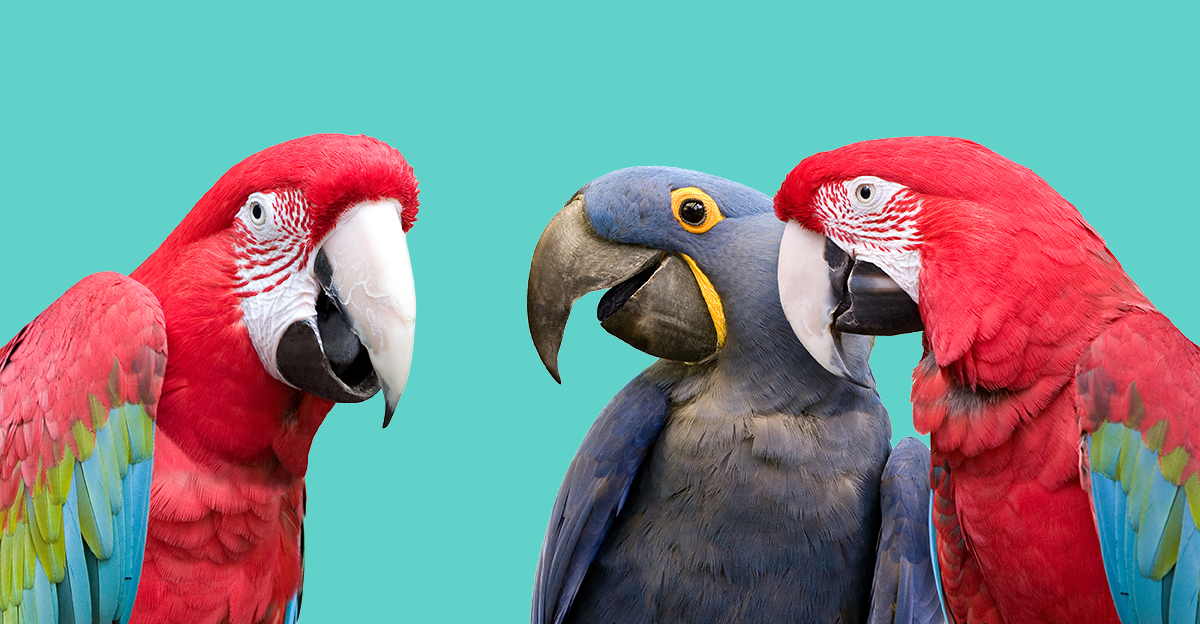
Lead image: Vivid Pixels / Adobe Stock



Source link

Keep Up to Date with the Most Important News

By pressing the Subscribe button, you confirm that you have read and are agreeing to our Privacy Policy and Terms of Use
Add a comment Add a comment

Leave a Reply

Your email address will not be published. Required fields are marked *

Previous Post
Hummingbirds and pineapples: why this ancient relationship hits the evolutionary sweetspot

Hummingbirds and pineapples: why this ancient relationship hits the evolutionary sweetspot

Next Post
The 1X Neo Robot Has Freaky Fast Fingers

The 1X Neo Robot Has Freaky Fast Fingers

Advertisement