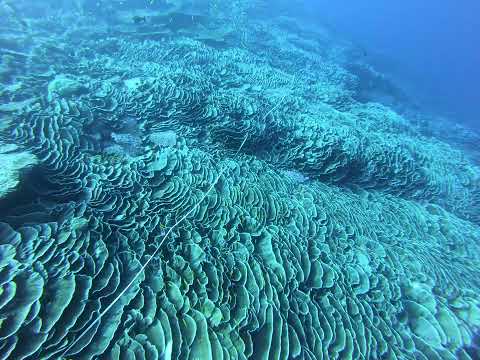
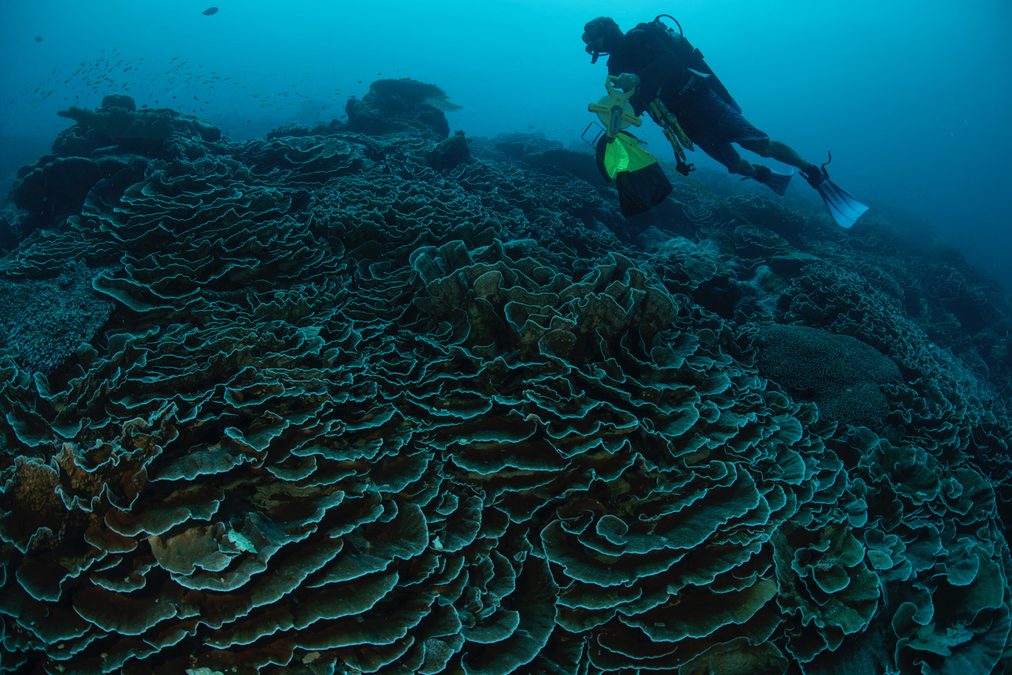
On the deep outer slope of a tropical reef in the middle of the Indian Ocean, there lives a coral colony 1.5 kilometers (almost 1 mile, or 100 buses parked behind each other) long, and potentially thousands of years old.
The colony is growing on the edge of an atoll, near the remote Cocos Islands, and marine biologist JP Hobbs says he has never seen anything like it.
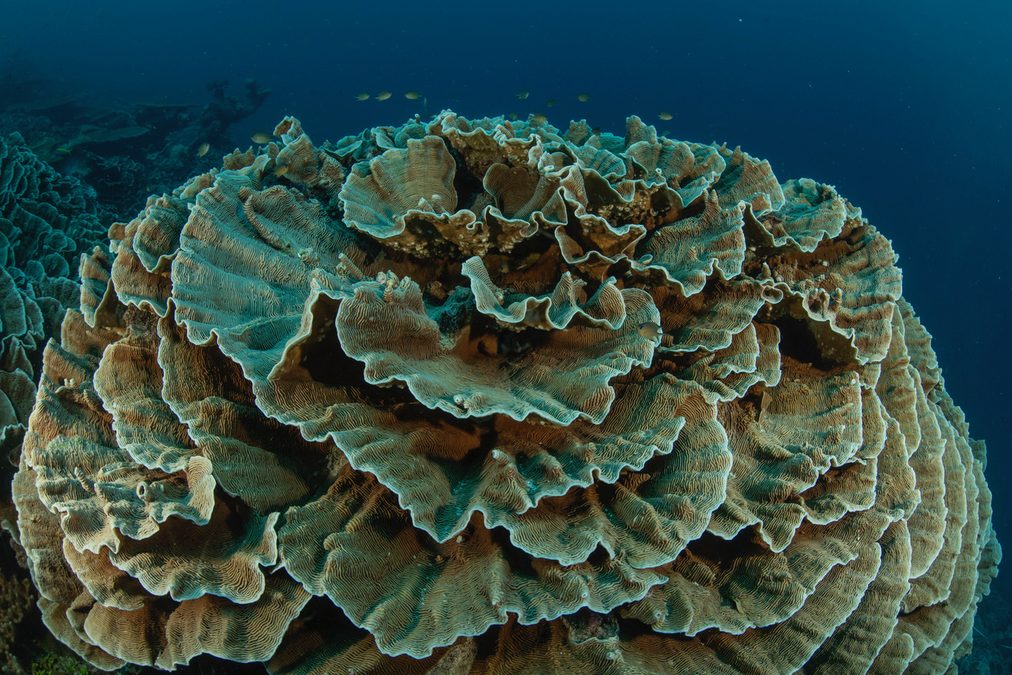
It’s a rose coral, in the genus Pachyseris.
For reference, Pachyseris colonies normally max out at about 2 meters in diameter.
Dieter Gerhard, a dive operator based at the Cocos Islands, first noticed the gigantic coral about 30 years ago.
But it’s only recently that marine biologist and SCUBA diver JP Hobbs found the funding to properly survey this behemoth.
“I started at Dieter’s first dive site and just kept swimming, and I ran out of air basically… Then there was a second dive, and a third dive,” Hobbs told ScienceAlert.
“I was just waiting for the end, and the end never came.”
frameborder=”0″ allow=”accelerometer; autoplay; clipboard-write; encrypted-media; gyroscope; picture-in-picture; web-share” referrerpolicy=”strict-origin-when-cross-origin” allowfullscreen>
At one point, he tried having a boat pull him along on a line to cover ground more quickly, but the sharks were a bit too excited by that.
Finally, after 12 separate dives, he mapped out the entire colony.
Even when he got to the end, he could see that more Pachyseris continued on the other side of a 10-meter gap, stretching out into the blue.
“It could have been more than two kilometers long in the past, because that break was where the reef had crumbled down,” he said.
Along the way, he collected specimens of the coral from 50 different points across the colony.
Historically, coral samples were preserved for taxonomy by bleaching them and drying them out, leaving behind only the dead skeleton. Many historic museum specimens are in this state, and many coral species were named on this basis.
But while the coral skeleton is really useful for identifying and comparing the physical features of different species, the traditional preservation process also destroys the specimen’s DNA.
Now, when scientists like Hobbs retrieve coral specimens to study, they also collect a tissue sample, which gets stored in a bath of ethanol in a very cold freezer.
When the time comes for a museum to sequence the coral’s DNA, its whole genome is still intact.
The giant Pachyseris samples have been sent to the Queensland Museum, where marine genomicist Peter Cowman is looking forward to delving into the data.
“One side of the story is confirming the species identity of this mega coral,” Cowman told ScienceAlert.
It could be any one of the known Pachyseris species, or it could represent a species yet unknown.
But the question of its species identity is not the only mystery with this coral.
“Is this one genetically identical organism? Something that came from a tiny larva that settled there and grew into this monstrosity that we we’ve now mapped?” Cowman posited.
“Or is it individual colonies that could be closely related, that have grown into each other and sort of fused together to form a sort of chimera organism?”
Hobbs said either one of those scenarios defies the odds, which is why it’s not every day they find a 1.5-kilometer-long coral colony.
If it is one organism, made up of many clones that have accumulated, replicated and expanded over the years, Cowman said it could be hundreds or even thousands of years old.
“I think if it is one single individual, it might be one of the largest corals that has been found,” he added. “And it’s very different to the other [giant] corals that have been found previously… because those are these large boulder-type corals, they’re more dome-shaped, they build up and outwards.”
As a member of Pachyseris, the colony is made up of rows of concentric plate-like structures. These sharp ridges are prone to breaking, which could explain how one colony can get so large.
“If a fragment falls down the slope a bit, and then begins to grow from that fragment, and then it merges with the main colony, that’s still the same individual, but it’s expanding its range,” Cowman said.
“Another thing that I’m really interested in is mapping the mutations. If it is one organism, you can you can map the number of mutations that have happened in the DNA… to create what’s called a molecular clock.
“Then we can estimate how many hundreds or thousands of years old this actually is. Potentially, you could pinpoint the origin of the larva that’s first settled on that reef.”
The colony spans depths of 14 to 65 meters along the deep outer slope of the reef.
That means it reaches into the mesophotic (or ‘twilight’) zone, where light levels really start to drop. That’s relatively normal habitat for Pachyseris, though it also means this colony exists across a very broad gradient of light and temperature conditions.
“We’re interested in the environmental conditions that allow this coral to persist… under either those two scenarios, it means that the environment has been favorable for that coral for a very long period of time,” Hobbs said.
As in many other tropical reefs, shallow corals near the Cocos Islands have been damaged by bleaching, disease, and crown of thorn starfish, but things seem a little safer in the deep.
“Down deep, it seems like the conditions have been favorable for really long periods of time,” Hobbs added.
Perhaps the reefs provide a refuge for marine life when the shallow waters go through such stressful events.
The researchers are curious to see if this colony’s size could help it weather climate change in the future.
Now they’ve established a baseline, scientists can monitor any changes that come with bleaching events, heatwaves, and any other climate events.
“I think it’s good now that we have a map of its size and of its range and that can be our baseline for surveying it in years to come,” Cowman concluded.
This article was fact-checked by Fiona MacDonald and edited by Fiona MacDonald. While we pride ourselves on our process, we are only human. If you spot a mistake, please let us know.