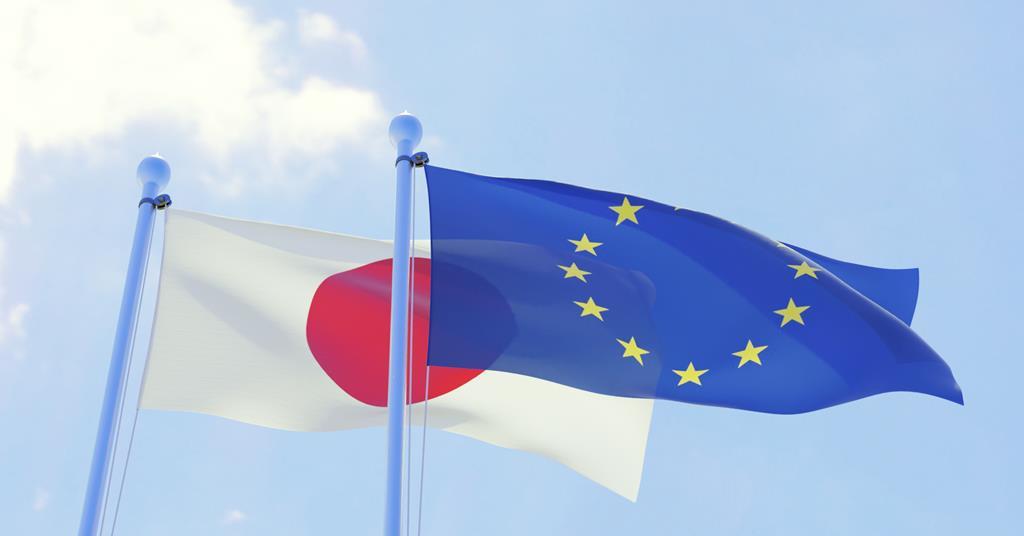
Japan brings a whole new research and innovation ecosystem to Europe’s network of scientific cooperation, with reduced barriers around participation and funding.
The agreement allows Japanese researchers and organisations to take part in Horizon Europe on equal terms with those from EU Member States and other associated countries.
They will be able to join and lead international research consortia, receive EU funding, and work alongside top research institutions to help address global challenges.
Japanese research has been easing into Horizon Europe since January 2026
Negotiations on Japan’s accession were successfully concluded by the European Commission and the Government of Japan in December 2025. Since January 2026, transitional arrangements have already enabled Japanese entities to apply to Horizon Europe Pillar II calls and to be evaluated as prospective beneficiaries.
Japan’s association marks an important step in the EU–Japan Strategic Partnership and underlines a shared commitment to scientific excellence, innovation, open and rules-based international research cooperation.
Japan is the most populous of the 22 non-EU countries associated to the programme, with a 123 million people. Other associated members include Canada, South Korea and the UK, with Australia in the process in joining.
Countries can become associated either through the European Economic Area membership, the enlargement process, the European Neighbourhood Policy, or as other third countries and territories that meet the programme’s eligibility criteria.
The EU and Japan will now further expand cooperation to address shared global challenges, notably in the digital transition, health, and technologies that support climate neutrality.
The association covers Horizon Europe Pillar II
This €52.4 billion pillar funds multinational research and innovation projects addressing major societal challenges related to climate, energy, health and the digital economy. Japan will also contribute financially to the programme’s budget covering for the participation of Japanese entities.
In addition, Japanese participants will continue to have access to other parts of Horizon Europe that are open to third countries, including the Excellent Science pillar, the Innovative Europe pillar and the Marie Skłodowska-Curie Actions, which support doctoral education, postdoctoral training and international research collaboration.
Ekaterina Zaharieva, Commissioner for Startups, Research and Innovation, commented: “Science thrives when talent, ideas and innovation cross borders. As Horizon Europe’s 23rd associated country, Japan strengthens a growing global community that believes openness, excellence and international cooperation are essential to turning research into innovation and innovation into prosperity.”