
.jpg "Thieves Stole ‘Nvidia’ Trailers. They Got 20 Tons of Sand")


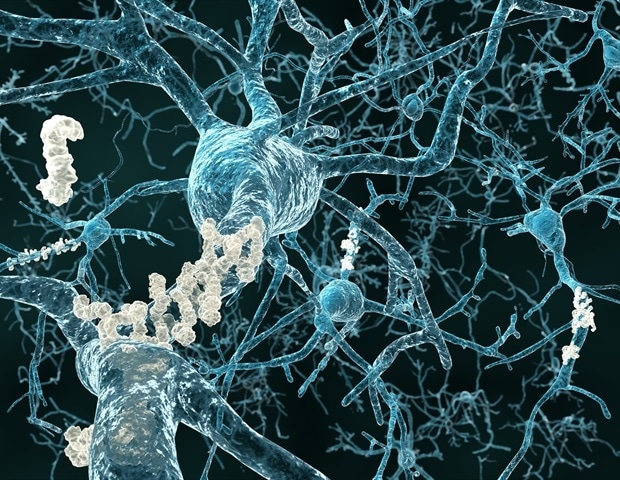
What can mathematics reveal about Alzheimer’s disease? Mississippi State Associate Professor Shantia Yarahmadian is using mathematical modeling to examine how common metals may influence a protein that forms plaque associated with Alzheimer’s disease-and how potential therapies could alter these processes.
The work, published recently in Bulletin of Mathematical Biology, builds on Yarahmadian’s research into mathematical models of Alzheimer’s disease.
Every biological phenomenon occurs in the physical world-in space and time-and involves changes in shape, quantity and matter. Because of its abstract power, mathematics allows us to uncover patterns, test hypotheses and make predictions that may not be possible through observation alone. Mathematics does not replace laboratory or clinical research; it complements it by helping us understand the larger system, identify the most influential mechanisms and guide future experiments.”
Shantia Yarahmadian, Associate Professor, Mississippi State University
Yarahmadian developed a framework that simulates the chain of reactions through which metals such as copper and zinc may influence amyloid-beta protein aggregation and plaque formation. The model also allows researchers to examine two potential approaches to disrupting that process. To test it, Yarahmadian and his collaborators compared its results with experimental data from atomic force microscopy, a technique used to examine microscopic aggregates.
The model successfully reproduced the patterns seen in the laboratory, an important step to prove the model is not just a theoretical calculation. It can accurately predict real-world behavior, giving scientists greater confidence in understanding how aggregates form and potentially how they might be controlled.
“What drew me to Alzheimer’s research is the combination of its profound human impact and its extraordinary biological complexity,” he said. “My goal is to use mathematical modeling to identify important mechanisms and generate insights that may help guide future experimental and therapeutic research.”
Source:
Journal reference:
Yarahmadian, S., et al. (2026). Metal-Ion-Mediated Amyloid-$$\beta $$ Aggregation in Alzheimer’s Disease: A Mathematical Model of Chelation and Inhibitory Therapies. Bulletin of Mathematical Biology. DOI: 10.1007/s11538-026-01732-1. https://link.springer.com/article/10.1007/s11538-026-01732-1