


A decade ago, if you asked Jasmine Clark, a PhD microbiologist and professor at Emory University, if she saw herself getting into politics, her answer would have been “absolutely not.” But unexpected events have placed Clark on a path toward Congress.
In April of this year, US Rep. David Scott (D-GA) unexpectedly died a month before the primary, throwing a curveball into the race. That sent Clark, 43, then a member of Georgia’s state House of Representatives, into a sprint for the suddenly vacant seat. With roughly 56% of the vote, Clark won the primary outright on May 19, avoiding a runoff.
“We need science voices at every single level of government. And there are lots of different ways to get involved in politics without necessarily running for office.”
Now Clark will face Republican Jonathan Chavez in the general election this November. Georgia’s 13th District leans heavily Democrat and gives Clark a clear route to the US House. If she succeeds, Clark, who was born in Atlanta, will be the first Black woman with a science PhD to serve in Congress.
Clark spoke to C&EN about her path from science to politics, what her science background brings to government, and how scientists everywhere can help make an impact in their communities. This interview has been edited for length and clarity.
Tell me a bit about your microbiology PhD. Why did you first choose to pursue your doctorate, and what was your thesis on?
I actually thought I was going to be a medical doctor growing up. My dad is a doctor, and my mom is a nurse. I went to University of Tennessee, and in my last year, I joined a microbial ecology lab, and I did a project on looking for the gene that breaks down polyaromatic hydrocarbons in bacteria. I enjoyed being in the lab and the lab environment and just the discovery part. So I then decided—this probably sounds a little crazy—I decided to take the MCAT [Medical College Admissions Test], the LSAT [Law School Admission Test], and the GRE [Graduate Record Examination]. I took all three, and I landed on graduate school.
I eventually joined a lab at Emory that focused on retroviruses. My work was on a retrovirus similar to HIV called Mason-Pfizer monkey virus. And I used live-cell imaging microscopy to track viruses inside of those cells and to get an idea of how those viruses act inside of a cell. After that, I did a short postdoc on HIV transmission, and then after the postdoc, I joined the classroom because I found that I enjoyed being more of a science educator than having to do the bench science all the time.
How and why did you make your transition into politics?
If you had asked me when I first went to graduate school if I would get into politics, the answer would have been absolutely not. The truth of the matter is, Donald Trump got elected on a night in November of 2016. I went to sleep a scientist, and I woke up the next morning a mad scientist. That is what propelled me into the world of activism first, followed by politics.
I was democratically chosen to be the leader of the Atlanta March for Science [April 22, 2017]. And when 10,000 people showed up to that march, I said to myself, “People actually do care about science; we are not an afterthought.”
What do you think your science background brings to the table? How did it help during your tenure in the Georgia House of Representatives, and how do you think it would help you if you’re elected to Congress?
I had a big learning curve going into politics, because I was a straight-up science nerd. I’ve been one my whole life, and I didn’t see myself in this world. But once I got in, I really saw why we need more science voices in it.
I get into the legislature, and I realize I ask a lot of questions, more questions than most of my colleagues ask. But I think that’s a part of science: we ask questions because we want to understand. The other thing I will say [that helps] is attention to detail, reading things to understand, similar to reading a scientific journal article. That helped me see that in one of the bills that we had in the Georgia General Assembly, they had made up a fake organization and then quoted that fake organization. When I went to look at the source, I realized the source didn’t exist and neither did the quote. That was kind of an eye-opening moment for me.
And then also having some expertise in the room does matter to people. During the pandemic, I really found that a lot of my constituents and colleagues really leaned on me. Because all of a sudden, we’re dealing with this thing that is happening, and we have a person with a virology background in the room with us—not only a virology background, but I actually have studied viral transmission.
How do you think those skills will transfer to the US Congress?
I’m seeing a lot of misinformation that is not being challenged in a way that I think it should be challenged. And I’m not saying that people aren’t pushing back; I just don’t think they know how to push back from a position of expertise and from a scientific lens. As we watch certain preventable childhood contagious diseases being spread in our communities and unfortunately taking lives of children when they shouldn’t, because of misinformation, it activates something in me. We need someone in Congress that knows how to push back against this in a way that I’m just not seeing.
I’ve had so many of my colleagues at the state House say to me, “You have a knack for explaining things that are difficult concepts, but you figured out how to make it plain for people.” Being a college professor has helped in that a lot.
Do you find that your science background matters to voters? What’s your read on how your constituents feel about science and its role in politics?
When I first decided to run, I was like, “Who’s even going to care that I have a science background?” But when you’re able to connect it to health care, when you’re able to connect it to a cancer diagnosis, or their kid that is applying for college, all of the things that actually do impact their life, they really do get it. I leaned very heavily on running as a science voice for Congress, the same way I leaned very heavily on running for the state House as a science voice for Georgia, and in both of those instances, that was very well received. As a scientist, not only do I ask questions, but I take the next step. I want to try to solve the problem. I want to seek a solution, and they get that, and so it has worked very well. On the campaign trail, a lot of people say we just need smart people in Congress.
“Donald Trump got elected on a night in November of 2016. I went to sleep a scientist, and I woke up the next morning a mad scientist.”
How do you view the relationship between science and politics? Do you believe the role of scientists has changed in the current political climate?
I think that more and more, the science community is recognizing that they are not unmarried from policy and politics. Let’s be real: policy and politics play a big role in science. Grant funding is very political—depending on what administration is in power at any moment can determine whether or not you’ve got your grants funded and your experiments are running, or whether or not you’re on a shoestring budget and you’re trying to make ends meet. The current administration just doesn’t see value in the work that [many scientists] are doing, so we just cannot be completely divorced from politics. When I was first just in the lab side and the classroom side, I did not necessarily recognize that.
What advice would you give to scientists who want to get more involved in politics?
If you’re interested, don’t talk yourself out of it. Just look for where you can be helpful. I started at the state level because I really wanted to see if this is even something that would work, and I don’t really feel like Congress is the best way to start that experiment. We need science voices at every single level of government. And there are lots of different ways to get involved in politics without necessarily running for office. As I tell my students in my health and social policy and ethics class, oftentimes when you walk into the room and you give public comment on something that is really important to you, you do not have to be a bona fide subject-matter expert; you know way more about that subject than the people making the policy. Tell them what you know.
If elected, you would be the first Black woman with a PhD to hold a seat in Congress. What are your general reflections on that potential achievement?
It is a big role to fill, because whenever you’re first, you set the bar. I would be dishonest if I didn’t say that it comes with a little trepidation, because everyone’s looking at you to see how this is going to work. I just don’t want to let people down. I don’t think I will—I haven’t so far.
But overall, I am absolutely elated for this opportunity to be the first Black woman with a science PhD to ever serve in Congress. I think it is needed. I think it is way past due. We are celebrating our nation’s 250th birthday, and we haven’t had this voice in the room yet. Like, what are we waiting for? Let’s get this done.
Any other thoughts you would like to leave our readers with?
Do not be afraid to be that voice that stands up for what is right. Scientists a lot of times discount themselves or don’t realize what they are capable of doing. People will listen to you when they feel like you know what you’re talking about. So just tell them what they need to hear.
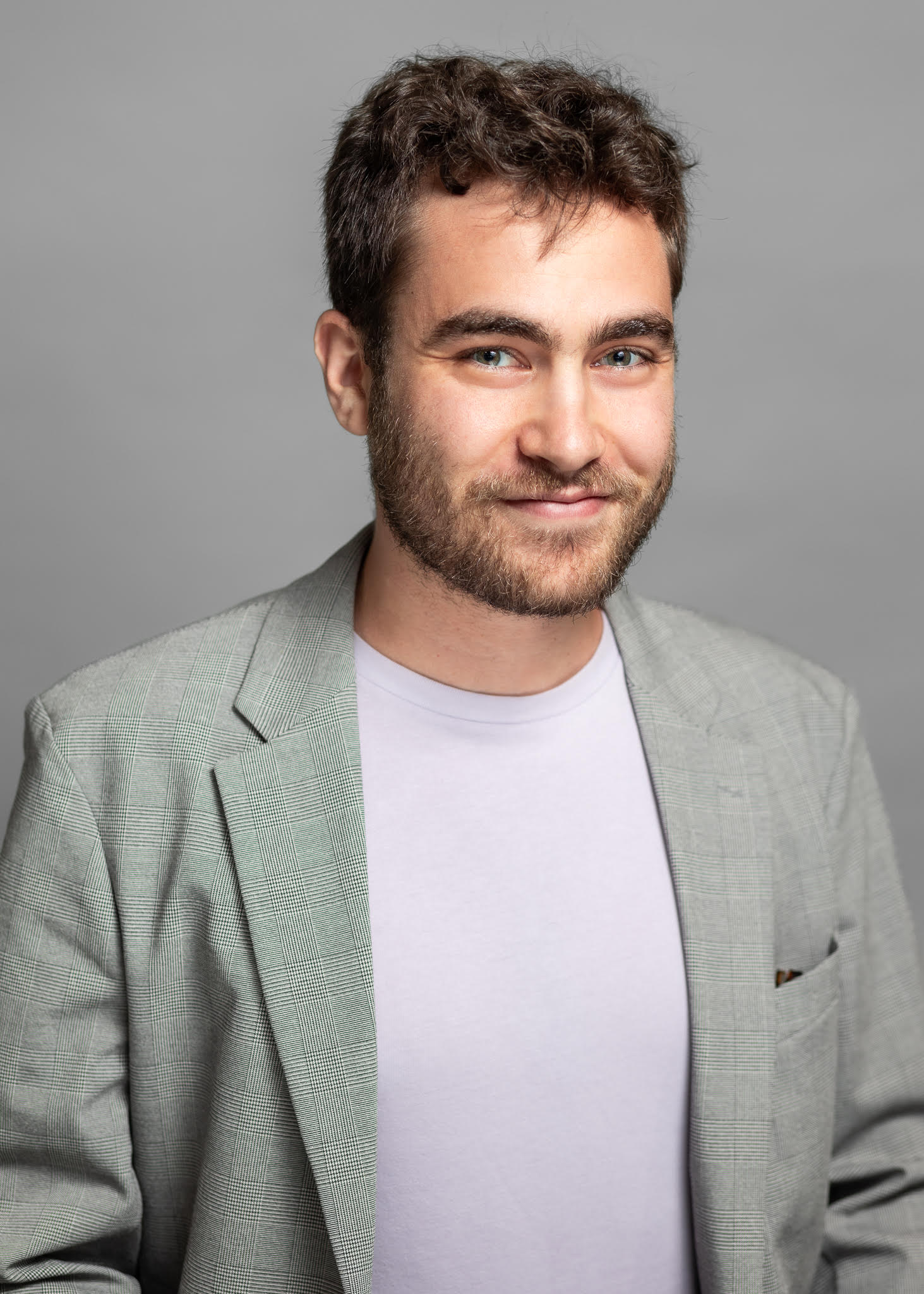
Max Barnhart is an assistant editor and life sciences reporter at C&EN.


