




Pancreatic cancer is incredibly difficult to shake.
Even after surgery or chemotherapy, the disease may never go away completely.
By some estimates, malignant tumors in the pancreas can recur in up to 80 percent of patients.
Those with certain gene mutations appear particularly at risk of the disease returning.
A new clinical trial, led by a researcher at the Mayo Clinic, has put a potential vaccine to the test.
In a randomized phase 2 trial, nearly every patient who received this vaccine developed an immune response against a mutated gene called KRAS.
Mutations in KRAS are found in about 90 percent of pancreatic ductal adenocarcinomas, which is the most common type of pancreatic cancer.
If a medicine can target cells that express these mutations, it could theoretically keep the cancer at bay.
This does not prove that this vaccine can stop pancreatic cancer from coming back, but these are hopeful signs, especially since other cancer vaccines have shown similar immune responses are linked to improved survival.
The findings are published in Nature Medicine.
“Historically, pancreatic cancer has been very difficult to treat with immunotherapy,” explains first author and medical oncologist Ben George.
“What is encouraging is that we were able to generate a strong immune response against KRAS mutations in nearly every patient we evaluated. In an exploratory analysis, patients with greater immune responses to the vaccine appeared protected with longer disease-free survival times.”
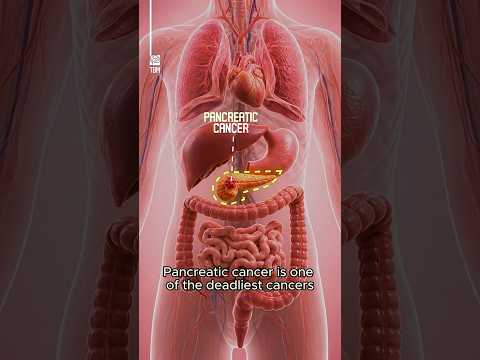
frameborder=”0″ allow=”accelerometer; autoplay; clipboard-write; encrypted-media; gyroscope; picture-in-picture; web-share” referrerpolicy=”strict-origin-when-cross-origin” allowfullscreen>
The novel vaccine is called camupepimut, and it is designed to teach the body’s immune cells to recognize and attack cancer cells that express seven common mutations in the KRAS gene.
These mutations can help pancreatic cancer survive and thrive.
The phase 2 trial included 144 patients who had been treated for KRAS-mutated pancreatic cancer with surgery and chemotherapy.
When they started the trial, none of these patients showed visible signs of cancer in imaging tests.
George and colleagues randomly assigned 96 of these patients to receive the vaccine, while another 48 served as controls.
Importantly, there was no statistically significant difference in disease-free survival between the two groups.
But those who received the vaccine showed a stronger immune response compared with before vaccination.
Of the 90 patients who received this medicine and could be assessed, 98.9 percent developed increased T-cell responses against mutated KRAS.
In more than 80 percent of patients, the T-cell response was more than nine times greater than before vaccination.
“We’ve shown that we can teach the immune system to recognize these KRAS mutations,” George says.
“The next step is finding out whether doing that can change the course of the disease for patients.”
The results from the phase 2 trial provide a proof-of-concept for the potential clinical benefit of the vaccine, the authors argue.
The novel medicine targets the body’s lymph nodes, and so far it seems to reach these sites and alter immune responses with success.
Beyond that, however, its benefits are unclear.
A planned phase 3 trial will add additional boosters of the vaccine to the roster, and possibly test how this medicine works in combination with other cancer treatments.
Recently, for instance, the first personalized mRNA cancer vaccine succeeded in a phase 3 clinical trial when combined with standard immunotherapy, according to results presented at a major cancer conference.
The two drugs in combination reduced the risk of melanoma returning or causing death by 42 percent compared with standard treatment alone.
This melanoma vaccine also triggers an immune response, similar to the pancreatic vaccine. But the difference is that the melanoma one has shown clear clinical benefits.
Even if this pancreatic vaccine doesn’t extend survival, there is another in the pipeline.
This drug, however, is a personalized mRNA vaccine, like the melanoma one.
The vaccine is still in clinical trials, but as of this year, researchers said seven patients with pancreatic cancer whose immune systems mounted a response to the mRNA vaccine are alive and well.
One of the patients was diagnosed with the deadly cancer at age 66 and received nine doses of the vaccine.
She is now 72 years old.
The future for cancer vaccines is looking brighter than ever.
The research has been published in Nature Medicine.
This article was fact-checked by Rebecca Dyer and edited by Rebecca Dyer. While we pride ourselves on our process, we are only human. If you spot a mistake, please let us know.