
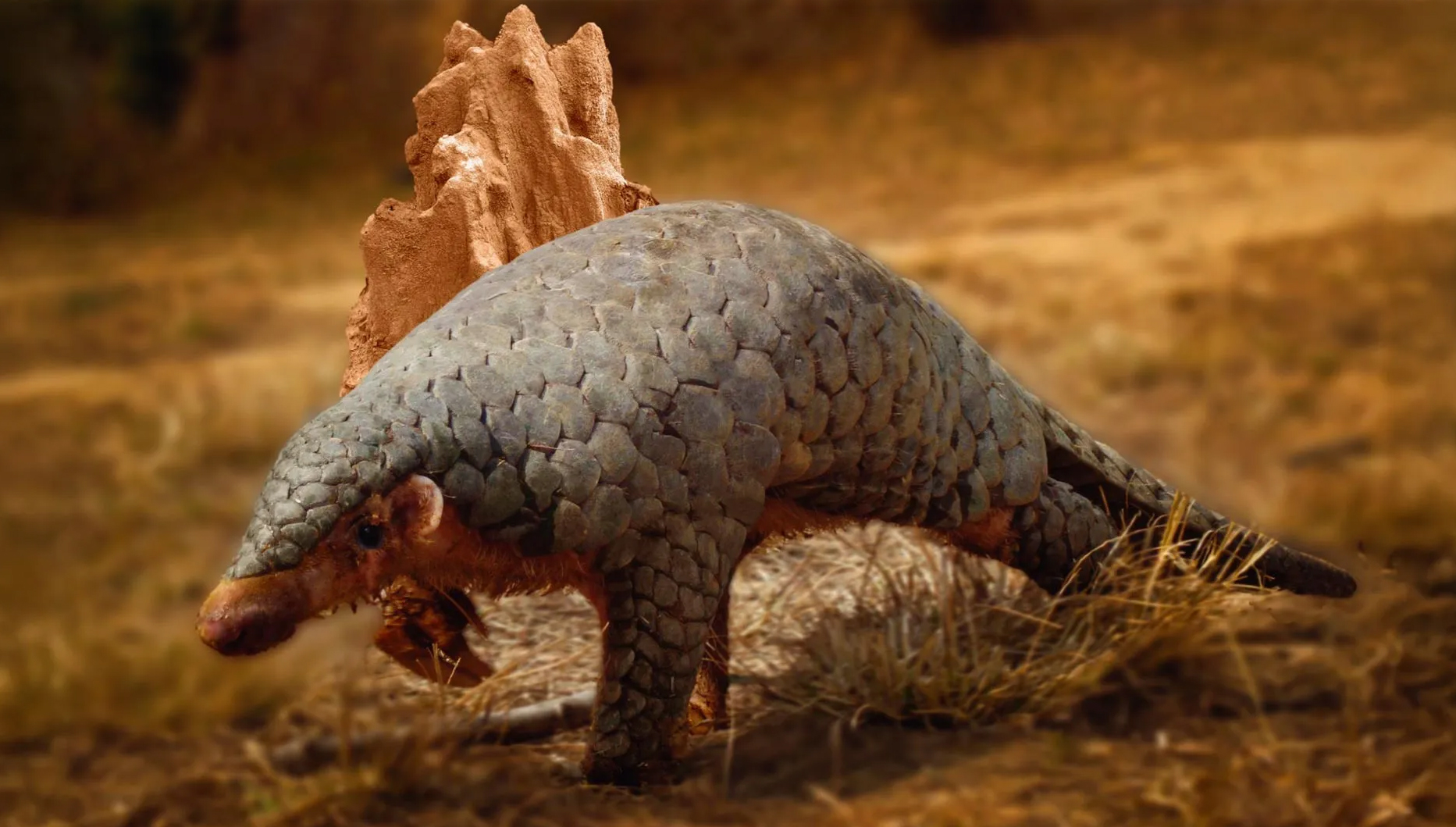



Researchers have identified a new species of pangolin hiding in plain sight after more than five years of careful study.
Well, that’s not exactly right. It’s more accurate to say that this discovery has restored the status of an older species that was first named almost 190 years ago.
Pangolins are mammals found across Africa and Asia that are highly trafficked—poached for their scales (used in traditional medicines) and meat (considered a luxury in some parts of the world)—and critically endangered. The new species, Manis aurita, lives in the forests of Nepal and Northern India, and is distinct from other pangolin species that inhabit China. It’s bigger, with a longer tail and smaller ears (hence “aurita”).
Read more: “The Perilous Life of the Solitary Pangolin”
The new species was named Manis indoburmanica when the initial study was published last year. But now, a new study published in Communications Biology has connected the species to an older description of a lost M. aurita species first recorded in 1836. The rules of scientific discovery state that the first naming takes precedence, and thus, the M. aurita species name is back.
But how can researchers be so sure this new species is the same one described nearly 200 years ago? The skin of the 19th-century animal, found in Nepal, is still preserved at the Natural History Museum in London, and its DNA information confirmed the species split.
“The confirmation of Manis aurita as a valid species demonstrates the importance of long-term research, international collaboration, and museum collections,” the study’s first author Narayan Koju said in a statement. “Most importantly, it provides a strong scientific basis for conservation planning, wildlife forensics, and efforts to protect one of the world’s most trafficked mammals from extinction.”
The new species knowledge is also good news for protecting these trafficked animals. Identifying scales being sold at a market is difficult, but more research means that scales can be more accurately traced to specific regions and specific poaching activity. It helps to ensure that conservation efforts can reintroduce pangolins to their proper habitats as well.
“We can’t protect what we do not know, and now that we have confirmed that this other species of pangolin exists, we can use that information to help protect these endangered animals,” study co-corresponding author Anderson Feijó said in a statement.
Welcome back M. aurita.
Enjoying Nautilus? Subscribe to our free newsletter.
Lead Image: Tulshi Laxmi Suwal