





Today, the average human lives for about 71 years.
A rare few people will see their 100th birthday, earning the title of centenarian, and even fewer will live past 110.
We call these folks supercentenarians.
New research published in Cell Press reveals one possible explanation for how these superagers might be dodging the mounting risk of cancer and illness as the years progress.
At around 100 years, a rare form of T helper cells seems to proliferate in these lucky people, expanding and adapting as time marches on.
“These cells exhibit stepwise differentiation and cytokine plasticity, suggesting adaptive responses to persistent antigens during healthy aging,” the study’s authors write.
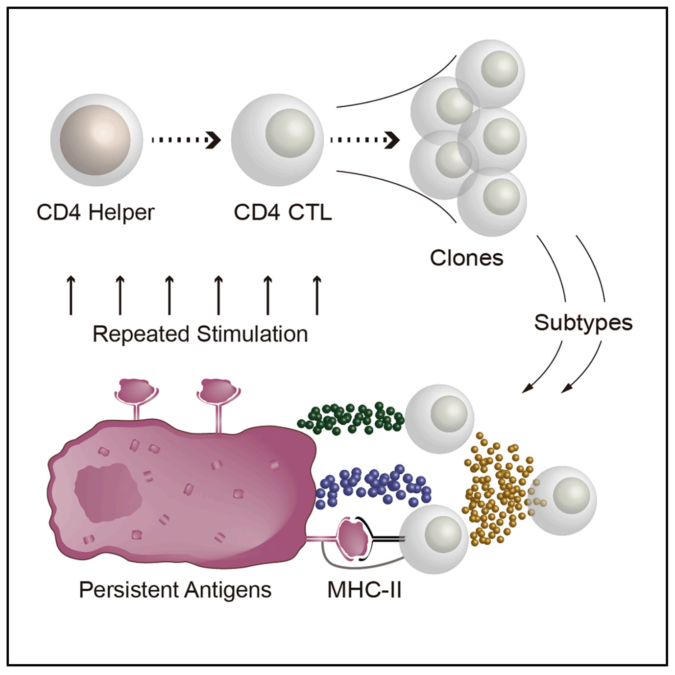
We all have T helper cells (aka CD4 cells) as part of our adaptive immune system.
There are many different kinds of CD4 cells, some rarer than others. Cytotoxic CD4 T cells (CD4 CTLs), for instance, are usually quite infrequent in the human body.
These T cells are killers rather than helpers: their job is to patrol the body looking for infected, damaged, or cancerous cells to destroy before further damage is done.
However, as people age into their 90s and beyond, these usually rare CD4 CTLs seem to become increasingly prolific.
This statistically significant pattern appeared in blood samples from a group of 28 Japanese participants (which, admittedly, is a very small sample size, and with citizens of just one country, not necessarily representative of the global human population).
In the samples from eight people in their 70s, 80s, and 90s, the median proportion of CD4 CTLs was 4 percent.
Among the 10 centenarians in the study, the median was 9.6 percent – and in supercentenarians, it was 17.6 percent.
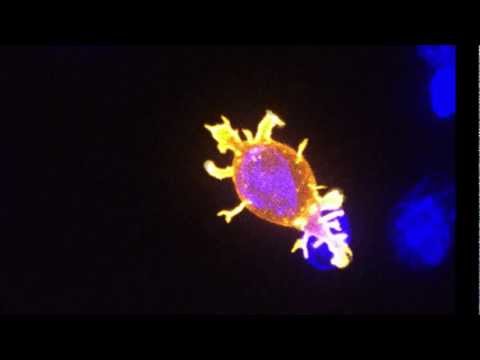
frameborder=”0″ allow=”accelerometer; autoplay; clipboard-write; encrypted-media; gyroscope; picture-in-picture; web-share” referrerpolicy=”strict-origin-when-cross-origin” allowfullscreen>
But even in this small sample, there were outliers: one participant who had yet to turn 100 actually had the highest proportion of these cells in their blood.
These cells were active, showing no signs of exhaustion.
“Immune aging is not simply a process of decline,” says immunologist Kosuke Hashimoto, of the University of Osaka in Japan.
“The selective expansion of certain T cells suggests that, even in extreme old age, the immune system may continue to adapt to age-related challenges.”
By examining proteins on the surface of the cells, the researchers found that these CD4 CTLs emerged when helper cells lost the protein CD27, and then CD28.
Killer T cells are known to clone themselves in response to an immune attack, to form a microscopic army.
This is exactly what the researchers saw in the older adults’ blood samples.

On average, around 33 percent of the CD4 CTLs in their blood were clones of just one original cell.
In a sample from one centenarian, about half of their CD4 CTLs were copies of the same cell.
This suggests that past a certain age, the human body is faced with increasing immune threats. An abundance of CD4 CTLs could be helping supercentenarians (at least, those living in Japan) survive them.
Related: The Blood of Centenarians Reveals 37 Proteins Linked With Slower Aging
“As we age, abnormal cells, including senescent and cancerous cells, become more common,” Hashimoto says.
“Our findings suggest that immune adaptation to these changes may contribute to exceptional longevity.”
The research was published in Cell Press.
This article was fact-checked by Clare Watson and edited by Clare Watson. While we pride ourselves on our process, we are only human. If you spot a mistake, please let us know.


