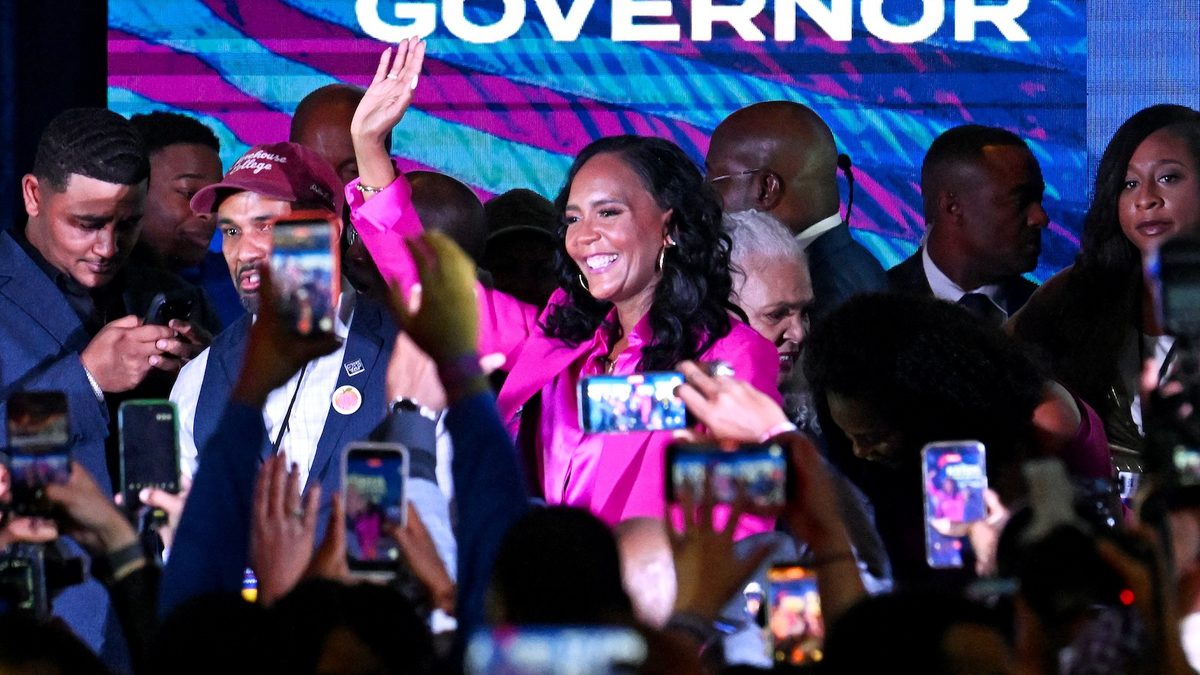


After their sweeping victories in the midterm elections, Democrats will control both houses of Congress, meaning they will be able to shape the budget, conduct vigorous oversight and investigations, and refuse to confirm nominees for judgeships and other high positions — but their power will be constrained. Any ambitious new bill to tackle climate change, for example, will face President Trump’s veto pen.
But there are other ways for Democrats to make progress on climate, energy, and the environment — by wielding their newfound power in the states.
In the November 3 elections, Democrats flipped control of governors’ offices in Georgia, Iowa, Ohio, Nevada, and Texas, and are on track to win in Alaska, where votes are still being counted. They also attained trifectas — control of the governor’s office and both houses of the state legislature — in Arizona, Michigan, Minnesota, Nevada, Pennsylvania, and Wisconsin.
This brings to 29 or 30 the number of states that will have Democratic governors in January, and to 22 the states in which Democrats have unified control of government. Meanwhile, Republican trifectas were broken in Georgia, Iowa, New Hampshire, Ohio, and Texas.
In Texas, which is facing a massive buildout of gas power, the incoming governor pledged a moratorium on new data centers.
While climate change was barely mentioned in these elections, many races were dominated by two closely related issues: data centers and utility regulation. Public outcry over the growth of data centers, which are driving ever more burning of natural gas, and the rising cost of electricity mean that Democrats have a mandate to advance energy reforms in the states they control.
By one estimate, tech companies are intent on spending more than $647 billion over the coming years to develop natural gas infrastructure in the U.S. to serve the voracious power demands of data centers. The planned expansions would grow the existing fleet of gas generators by roughly two-thirds. Natural gas is already the second largest source of greenhouse gas emissions in the U.S. (behind petroleum, but far greater than coal), and this investment would lock in its use for decades.
Against this backdrop, public opposition to data centers has rocketed. In the midterm elections, ballot measures to restrict data centers passed in 44 cities across the country and failed in only one. In her successful campaign for governor of Texas, which is facing the largest natural gas buildout in the nation, Gina Hinojosa pledged an immediate moratorium on new data centers. Many other winning candidates also promised more controls on data center construction.
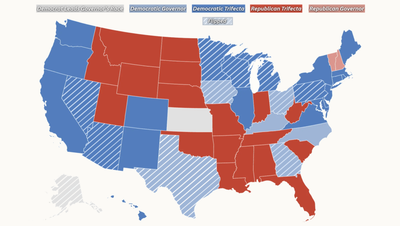
State-level results of the 2026 midterm elections. States “flipped” where Democrats attained a governorship or a trifecta, meaning control of the governorship and both houses of the state legislature. Votes in the Alaska and Kansas gubernatorial races are still being counted, but at the time of this publication, Democrats lead in the vote totals. (Nebraska is labeled as having a trifecta, but it has a unicameral legislature.)
Yale Environment 360 / Made with Flourish
Looking ahead, governors have the opportunity to appoint regulators who will further rein in data centers and the power utilities profiting from rising energy prices. Retail electricity rates are set by state public utility commissions, and in 38 states the commissioners are named by the governors. The newly elected Democratic governors of Ohio, Michigan, Wisconsin, Nevada, and Maine all campaigned on promises to appoint commissioners who would work to favor the interests of ratepayers over those of monopoly utilities.
In practice, that could mean laying more costs on data centers and utility shareholders and less on consumers. It could also mean encouraging more rooftop and community solar to help lower electric bills. Utilities have long campaigned against such projects, which cut into their profits.
In Georgia, where commissioners are elected, Democrats just won a majority of seats on the five-member commission, promising greater scrutiny of the utilities. In Pennsylvania, legislation to lower power bills by reducing utility profits recently stalled in the Republican-controlled state senate, but under the new Democratic trifecta, this legislation is expected to be signed into law. In Michigan, about 80 percent of voters approved a ballot measure that will block utilities from campaign spending (which the utilities are already challenging in court). And in Colorado, voters rejected a ballot measure, championed by gas utilities, that would have established a “right to natural gas” and blocked local moves to phase out gas appliances.
Most federal environmental laws set the floor, not the ceiling, for pollution standards. States may set stricter rules if they choose.
Beyond hemming in data centers and utilities, several other election outcomes hold promise for the environment. The Texas Railroad Commission, which regulates the state’s oil and gas industry, has long consisted of three Republican members. A Democrat won election to the body with a platform that included capping orphan wells and banning gas flaring — two important means of stemming emissions from drilling. He can now put these issues on the agenda. His election also makes it possible for Democrats to win control of the commission in 2028.
Democratic candidates for state attorney general triumphed over Republicans in Texas, Georgia, Iowa, Ohio, and Kansas. Republican attorneys general have been at the forefront of litigation aimed at weakening environmental regulations, and they have moved in concert to protect oil and gas companies from being held accountable for climate damages. These states are expected to reverse their positions in many cases, which might tilt the scales in some.
What else might Democrats do with all their new power?
Given the focus of almost all campaigns on affordability, not many states are likely to adopt measures that would transparently increase consumer costs, such as a tax on carbon. However, states have many other tools. Most federal environmental statutes, such as the Clean Air Act, set the floor, not the ceiling, for pollution standards. States may set stricter rules if they choose.
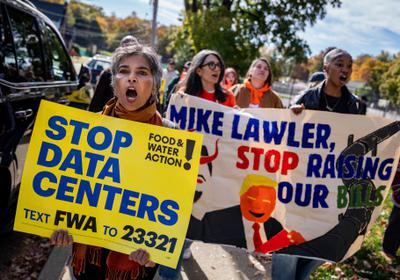
Demonstrators protest outside a forum for congressional candidates in Peekskill, New York, in October.
Adam Gray / Bloomberg via Getty Images
Of the 10 states that burn the most coal for power, Democrats will now control the governor’s office in seven: Texas, Kentucky, Illinois, Ohio, Wisconsin, Georgia, and Iowa. Governors in those states have considerable ability to shut coal plants down, for example, by setting air pollution standards that are too expensive for plants to meet.
If coal plants are to be shuttered and the use of natural gas slashed, the nation will need much more renewable energy, particularly wind and solar, to meet its growing electricity demand. One way to ramp up wind and solar is through renewable portfolio standards, which require utilities to acquire a certain percentage of their power from renewable sources. Today, 27 states have such standards, but many are so low that they have already been met. Democratic wins mean that more states can adopt renewable portfolio standards or strengthen and enforce those already on the books.
State leaders can also clear roadblocks for new renewable energy development. Over the last 30 years, more than 850 cities and counties have adopted restrictions on wind and solar, often spurred on by residents’ objections to large renewable installations proposed in their communities. In response, several states have adopted laws that centralize authority over such facilities, allowing them to override local bans. New York’s law has been especially successful at boosting wind and solar installations. Other states that now have Democratic trifectas could adopt similar laws.
States can encourage the uptake of electric vehicles by building more charging stations and providing rebates to EV buyers.
States may also encourage household solar by making it easier for homeowners to obtain approvals for rooftop arrays; enabling net metering; legalizing balcony solar; easing the siting of battery storage systems; and facilitating virtual power plants, which allow energy companies to link together and control home batteries, solar panels, thermostats, and other assets to balance the grid.
While states cannot require citizens to buy electric vehicles, they may encourage their uptake by building more charging stations, requiring new parking lots and garages to install fast chargers, and providing rebates to EV buyers to offset the recent loss of federal subsidies.
States can reduce emissions from the residential sector by incentivizing the installation of heat pumps, strengthening energy efficiency standards for buildings, and — though federal courts are split on whether this is permissible — barring new natural gas hookups.
These measures are only a fraction of what states can do. The Model Climate Laws Initiative, a joint project of the Sabin Center for Climate Change Law and Environmental Advocates NY, has posted more than 2,000 model and actual state and local laws, and it stands ready to draft many more. Thoughtful policies aimed at cutting power bills, curbing pollution, and advancing clean energy have been circulating for a long time. It is time to put those policies into action.