




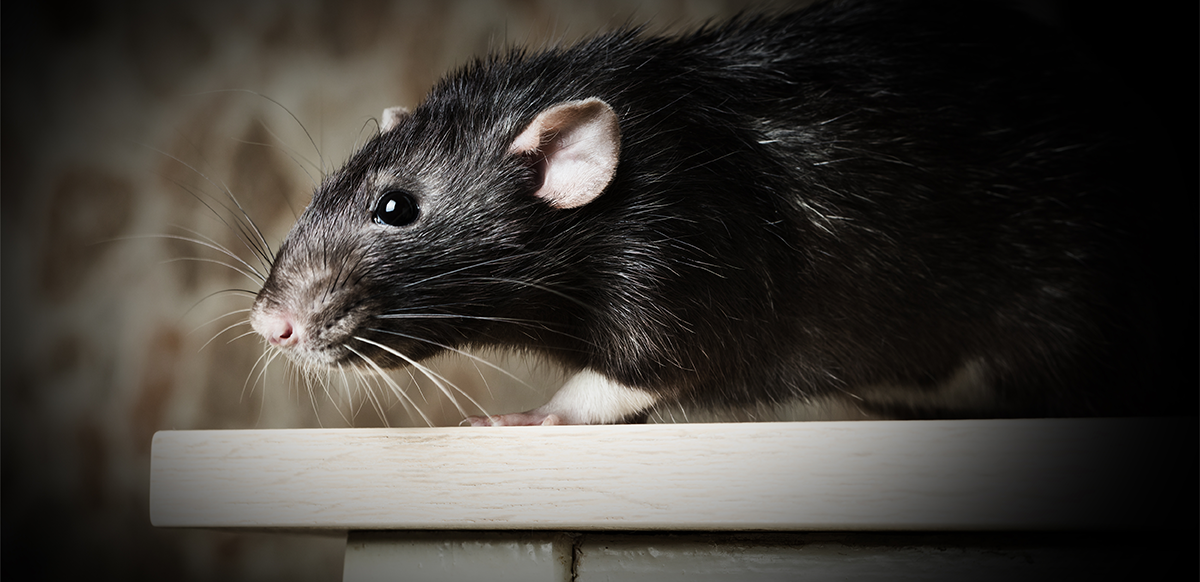
Rats possess a singular talent for carrying diseases that make humans sick. These global colonizers live in closer proximity to humans than almost any other mammal. Some deadly and dangerous maladies hitch a ride via fleas and ticks: the plague, Lyme disease, tularemia, and murine typhus, for instance. Others simply skip directly from rats to humans when we come into contact with their feces, urine, and saliva, including hantavirus, leptospirosis, rat bite fever, and salmonellosis.
Now we’re learning that human waste may play a role in how disease spreads from rats to humans. A group of scientists from Sweden, the United Kingdom, and Brazil recently found that a common antidepressant known as Celexa is ending up in the brains of rodents in Brazil via human excretion of the drug into wastewater, which then flows back into rivers, streams, and lakes. The celexa seems to make rats more adept at giving a free ride to Capillaria, a group of parasites that can be fatal to humans.
Other drugs that end up in the water supply through human waste can be protective: Rats with the antibiotic azithromycin in their brain tissue were 91 percent less likely to be infected with Leptospira, a bacteria that causes 60,000 human deaths a year globally, the scientists found. They identified 18 different pharmaceutical ingredients in their furry subjects out of the 97 they tested. They published their findings in Environmental Science & Technology Letters.
Hussein Khalil, a senior lecturer at the Swedish University of Agricultural Sciences and one of the authors of the study, says the Celexa might be making the rats bolder, causing them to move about more and increasing exposure to the parasites. If rats with antidepressants and anxiety drugs in their system are shown to be more exploratory and social and less afraid of humans, “then these ‘bold’ behaviours could contribute to higher transmission of pathogens,” says Khalil, over email—both within rat populations and from rats to humans, either directly or through contaminated food and water.
Read more: “Blissed-Out Fish on Prozac”
Whether the human drugs and infections in rats are directly linked or dependent on other factors still needs teasing out, says Kathryn Arnold, a professor of ecology at the University of York in the U.K. who was not involved in the research. She pointed out that the volume of prescriptions and the incidence of infections vary over time, by season and by year.
“Could it be that both citalopram prescription rates and Capillaria incidences have been increasing over time—so it appears that the two are associated?” she asks, over email. “Looking at different countries with different prescription patterns, sanitation infrastructure, and parasite incidences would help to support the findings.” Arnold also wondered whether the methods shaped the outcome, in particular the way the researchers trapped the rats. “Food baits tend to be taken by larger, older, and male individuals (i.e. more dominant individuals),” she points out.
Khalil and his colleagues couldn’t confirm that Celexa-induced changes in behavior in the rats were to blame for the elevated rates of infection. But Khalil says they’re working on ways to test it. One option could be controlled-lab experiments: injecting the rats with the same pharmaceutical concentrations present in the environment and watching for behavioral changes. Another approach, which these researchers are already pursuing, involves tracking the behavior of individual rats with GPS or other devices and testing their droppings for contamination.
To understand whether a similar effect extends to other drugs in places outside the poor communities of Salvador, Brazil where the rats were trapped, they have launched similar studies of rats from places like Kisangani in the Democratic Republic of Congo; Niamey, the capital of Niger; and Nairobi, to see whether the relationships suggested by the Salvador study crop up there as well. They will also be testing for substances they had not previously covered, such as antivirals.
Pharmaceutical residue in the environment is more pervasive in communities with open sewers and poor rainwater drainage—like the favelas of Salvador—than in the cities and towns of wealthier countries. But even in the United States, these compounds can evade wastewater treatment. About 14.8 million prescriptions of citalopram, the generic for Celexa, are written in the U.S. each year, and the human body does not fully metabolize the drug, so anywhere from 10 percent to 70 percent of the active compound is excreted into wastewater. Treatment plants typically only remove a small fraction of it.
If our drugs are shaping disease risk in rats, the phenomenon could apply to other animals, such as bats and birds, as well. For example, dabbling ducks—a group of waterfowl species that includes the mallard—developed antiviral resistant influenza strains when they ingested Tamiflu in the environment, according to recent studies. And bats exposed to high levels of antivirals through the consumption of aquatic insects may shed more drug-resistant viruses, a recent preprint from scientists at the Cary Institute of Ecosystem Studies and Sweden’s Umea University suggests. Bioaccumulation in the food web can lead small insect-eating animals to gobble up volumes of pharmaceuticals that are far higher than the therapeutic dose in humans, as pointed out by a 2020 letter to Reviews on Environmental Health.
How human drugs travel through the environment has become a new point of focus for the Environmental Protection Agency, which recently put pharmaceuticals on a priority list as “candidate contaminants,” unregulated substances that could require regulation in the future. This opens the door for it to monitor them and their potential health effects. Rats could help humans get a better grasp of just how much pharmaceutical residue and microplastics are circulating in our urban environment. The EPA has also established human health benchmarks for 374 pharmaceuticals, a move aimed at helping communities determine whether the levels in their water are concerning.
Chelsea Himsworth, an associate professor at the School of Population and Public Health at the University of British Columbia in Canada, who didn’t participate in the study, says over email that while the findings are interesting, she doesn’t think it would “be practical for cities to monitor for this, given that it is a challenge for municipalities to even monitor the rats themselves.”
But if the additional research validates the results of the Salvador study, Khalil is hoping it will raise awareness among health authorities about the potential for pharmaceuticals to change disease-transmission patterns in rats. Preventing drugs from entering the water supply in the first place is likely a bigger challenge.
Enjoying Nautilus? Subscribe to our free newsletter.
Lead image: Olexandr / Adobe Stock