


A humanoid robot running 100 metres in 9.39 seconds sounds extraordinary. At this
week’s World Humanoid Robot Games in Beijing, one machine reportedly beat the
world record held by Usain Bolt, while another jumped higher than Javier
Sotomayor’s long-standing high jump mark.
On the surface, these achievements appear to represent a new frontier in sport. But
comparing robotic and human performance is fundamentally flawed. The World Humanoid Robot Games brought together more than 2,000 robots competing in events ranging from athletics and football to boxing and weightlifting.
The scale of the competition and the technological progress on display were
genuinely impressive. According to organisers, participation increased dramatically
from previous events, while performance levels improved substantially across
several disciplines.
These machines have the shape, appearance and physical characteristics of a
human. However, their achievements are the product of entirely different
biomechanics, making direct comparisons with athletes problematic.
And sport has never been solely about producing the fastest time, highest jump or heaviest lift. When we watch athletes compete, we are not simply witnessing physical feats.
We are watching people contend with fatigue, pressure, uncertainty, emotion and
risk. The Olympic movement itself defines sport through human development and
experience as much as results.
Mastering these challenges is just as important as mastering the physical skills
required to perform. It is this human experience that gives sporting achievements
their meaning and creates the connection between athletes, spectators and the
wider sporting community.
A robot may resemble a person, but it does not experience sport in the way humans
do. It does not feel nervous standing on a start line, overcome self doubt after injury, or experience the joy of victory and disappointment of defeat.
That is why comparing a robot’s sprint time with Bolt’s world record is ultimately misleading. The real achievement is not athletic excellence. It is technological progress.
The rapid development of humanoid robots is prompting important discussions about
how technology will shape the future of sport. Robotics could help coaches analyse performance, improve training methods and push the limits of human achievement even further.
At the same time, sport’s relationship with technology has rarely been
straightforward. The introduction of video assistant referees (VAR) in football, for example, remains controversial despite its aim of improving decision-making.
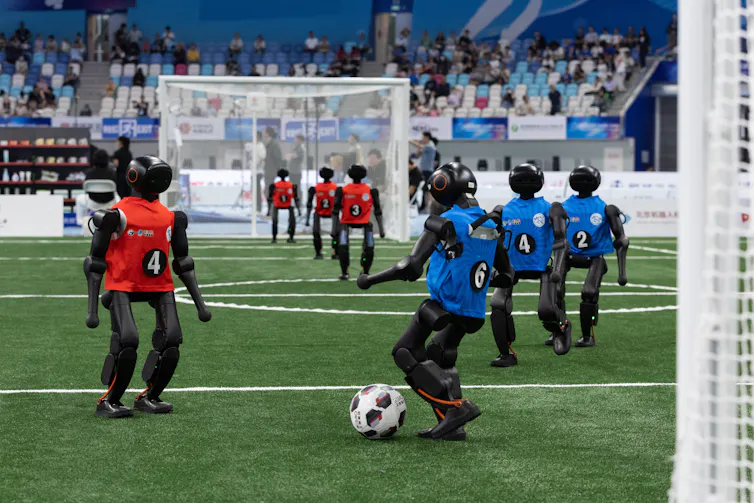
Jessica Lee
Debates continue over whether technology enhances sport or detracts from the
experience for players, officials and fans alike. Humanoid robotics raises even bigger questions. Who will have access to these technologies?
Will they be available across sport, or only to the wealthiest countries, organisations and teams? As with many innovations, there is a risk that robotics
could widen existing inequalities by providing greater advantages to those who
already possess significant resources.
Although some parts of the western media remain critical of the Games and
humanoids, it is important to remember that western sporting culture does not
represent all of world sport. Different societies have different relationships with
technology and different expectations of what sport can be.
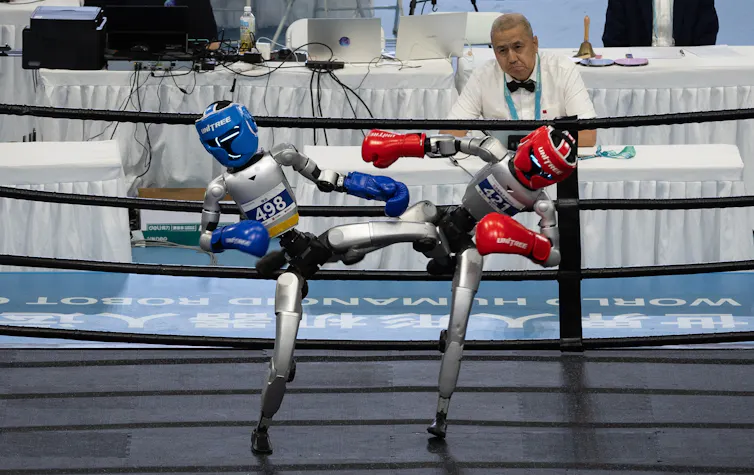
Jessica Lee
This matters because sport has long been valued as something relatively accessible.
Football, often described as the people’s game, became a global phenomenon
because participation was possible almost anywhere. Increasing reliance on
advanced technologies risks moving sport further away from some of these
foundations.
The robot games also revealed how far the technology still has to go. For every
record-breaking performance, there were robots falling over, colliding with barriers, crashing into equipment and, in some cases, breaking apart during competition.
One sprinting robot reportedly had to be carried away after hitting a safety barrier and catching fire. Another crashed into a judge’s table during a weightlifting event.
These moments may seem amusing, but they highlight an important reality:
humanoid robotics remains a developing technology rather than a finished product.
Even so, the direction of travel is clear. In China, robotics is already becoming increasingly integrated into everyday life and industry. As humanoid technologies continue to develop and spread internationally, debates about their place in sport will only intensify.
For now, robots are not replacing athletes. But in the future, the governing bodies of certain sports may need to answer difficult questions about where robots belong, how they should be regulated and what role they should play in sporting competition.