

Dark Mode Light Mode
This Once-Daily Pill Helps The Skin Regain Its Color in People With Vitiligo
Scientists Discover a Bizarre New Way Life Can Make DNA… Without DNA
Join us on a journey where chemistry meets creativity, and the wonders of science unfold. Quench your intellectual thirst with thought-provoking articles that transcend the boundaries of conventional knowledge.

Scientists Discover a Bizarre New Way Life Can Make DNA… Without DNA

Scientists Discover a Bizarre New Way Life Can Make DNA… Without DNA Scientists Discover a Bizarre New Way Life Can Make DNA… Without DNA


To replicate information, life usually has fairly straightforward ways of doing things.

To copy DNA, you generally use DNA as a template. To make RNA, cells generally use DNA as a template, while RNA in turn provides the instructions for making proteins.

But now a bacterium has revealed a different path, and it’s deeply surprising.

In one half of this newly discovered system, a protein acts as a molecular template for building a specific repeating DNA sequence – basically allowing information written in amino acids to determine information written in DNA.

And that’s the wrong way round – a bit like using a cake as the template for writing a recipe, rather than using a recipe as the template for making a cake.

“Rather than copying one DNA strand to make the other, as happens in normal DNA replication, the system uses two different reverse transcriptases to independently generate the two complementary strands,” biochemist Samuel Sternberg of Columbia University told ScienceAlert.

“One enzyme copies an RNA template, while the other uses amino acids in the protein itself to determine which DNA building blocks get added. The two resulting DNA strands then find each other and pair up to produce double-stranded DNA, which ultimately helps the bacterium defend itself against viruses.”

The structure of DNA, showing how its two strands are joined by complementary base pairs: A with T, and C with G. (National Human Genome Research Institute)

DNA is basically life’s information storage system. Its famous double-helix structure consists of two strands constructed from four chemical bases: adenine (A), cytosine (C), guanine (G), and thymine (T). These four ingredients make up the genetic material of all living things.

They can’t just be thrown together willy-nilly, though. They’re paired based on specific rules – A with T, and C with G. This means that the sequence of either strand will contain the information needed to build the other.

When a cell replicates DNA, it pulls the two strands apart like a zipper, and each single strand then acts as a template for building the new strand that winds around it. A strand whose sequence reads A-G-C-T, for example, obviously will require the sequence T-C-G-A.

In some cases, enzymes called reverse transcriptases can make DNA using RNA as the template instead; that’s a trick retroviruses use, for example. But either way, a nucleic acid is involved in the process.

That’s where bacteria get a little weird, Sternberg and his colleagues found.

These organisms are known to use a system called defense-associated reverse transcriptases (DRT) as part of their immune response against viruses, but it wasn’t clear how this system actually worked.
Scientists Discover a Bizarre New Way Life Can Make DNA... Without DNA
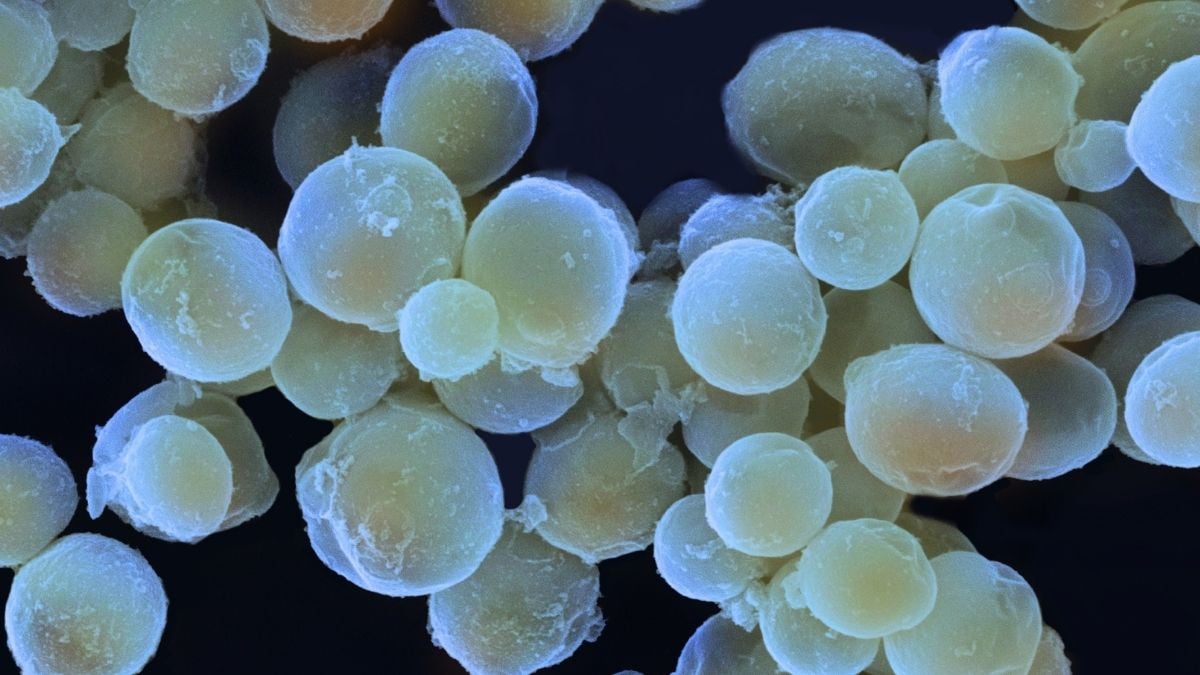
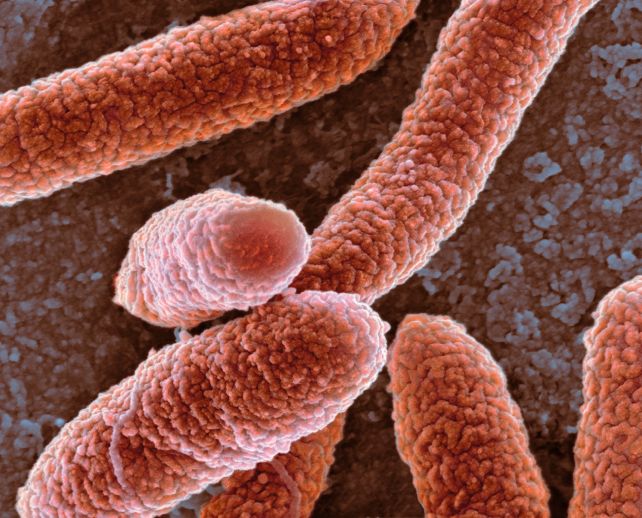
The bacterium Escherichia coli, which uses an arsenal of molecular defenses against invading viruses. (Science Photo Library/Getty Images)

Sternberg and his colleagues studied one such system, called DRT3, in Escherichia coli, using a suite of experiments to work out what its two reverse transcriptases were doing.

When they examined the structure of one of those enzymes, DRT3b, using cryo-electron microscopy, they found something they hadn’t expected.

“We knew from our experiments that DRT3b could make this very specific repetitive DNA sequence without the RNA that the other reverse transcriptase requires. But we didn’t know how it was doing that,” Sternberg said.

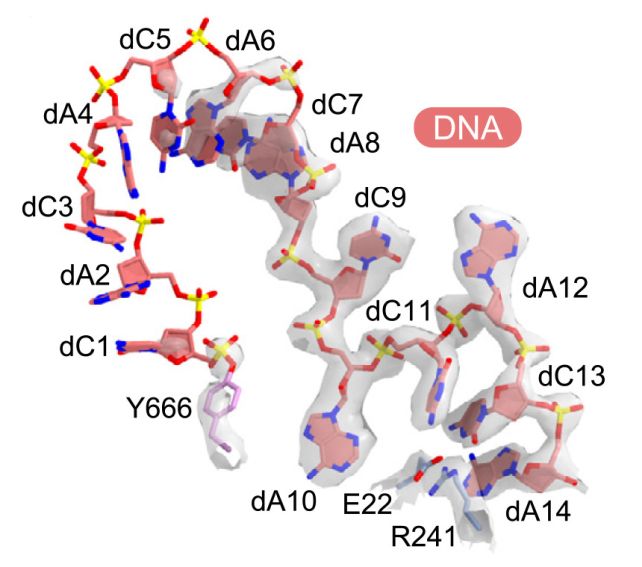
“The real ‘aha’ moment came from biochemical experiments and the cryo-EM structure. Hiroshi Nishimasu and his team could actually see the DNA product sitting in the enzyme, and the structure put these two amino acids in exactly the right positions to explain the alternating sequence.

“That immediately suggested a pretty wild possibility: the protein itself was specifying the sequence.”

The structure alone wasn’t enough to prove it, however. So the researchers altered the two amino acids they suspected were responsible for specifying the sequence.

When they did, both DNA synthesis and the bacterium’s antiviral defense broke down, confirming that the amino acids were critical to the process.

More remarkably, DRT3b was doing this without a nucleic acid template at all. Instead, the two amino acids positioned beside the enzyme’s active site effectively acted as the template themselves: one favored the incorporation of A, and the other C.
Scientists Discover a Bizarre New Way Life Can Make DNA... Without DNA
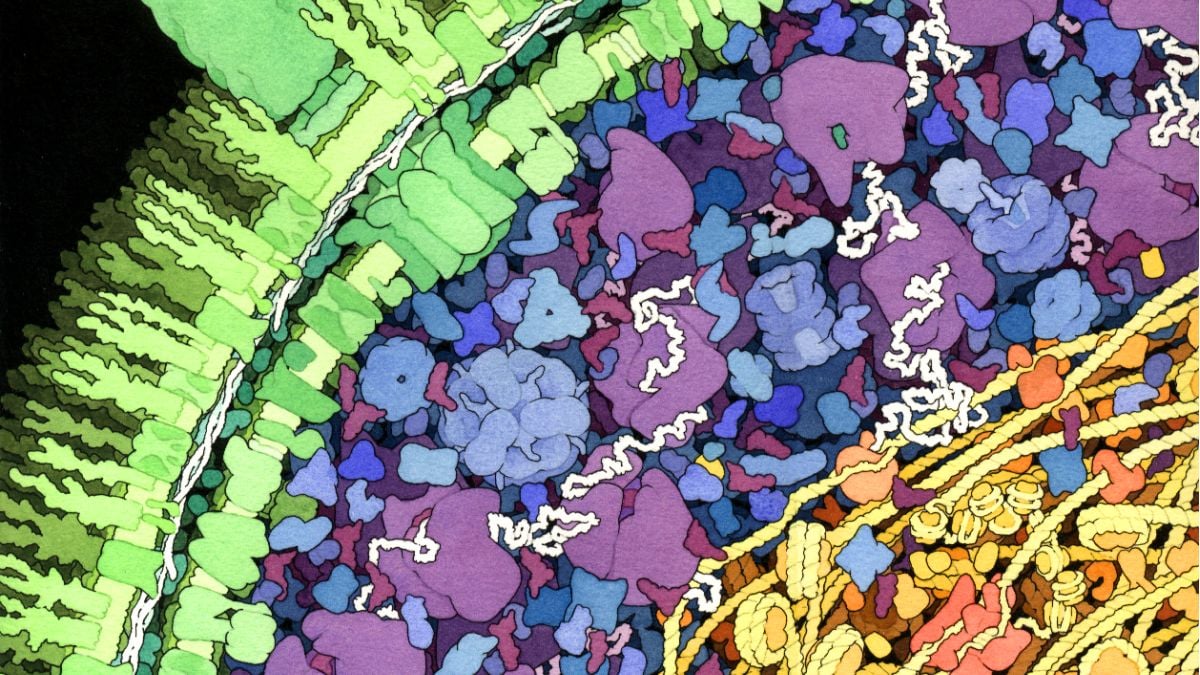
The repeating DNA strand produced by DRT3b, as revealed by cryo-electron microscopy. The enzyme uses amino acids in the protein itself to determine the alternating C-A-C-A sequence. (Wang et al., Cell, 2026)

The result is an extraordinarily simple strand of DNA, consisting of the repeating sequence C-A-C-A-C-A.

“So in a very literal sense, information in the protein’s amino-acid sequence is being translated into a DNA sequence,” Sternberg said. “That’s a very different flow of biological information from what we normally think about.”

But that’s only half of what DRT3 is doing.

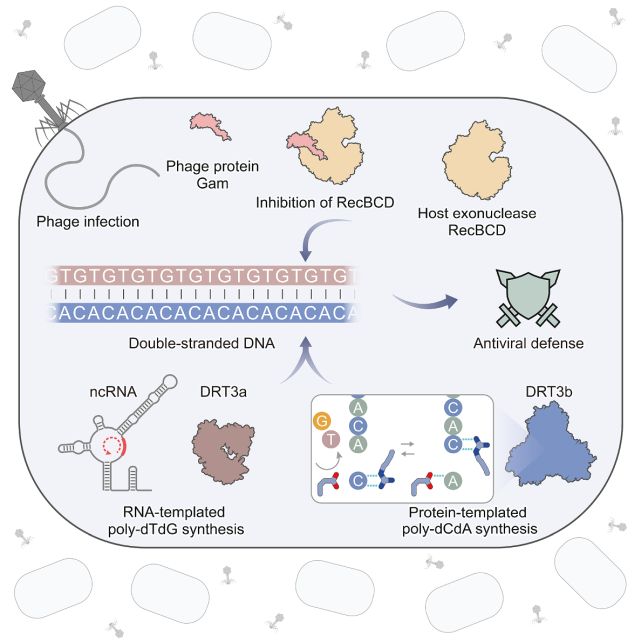
DRT3b’s protein-templated DNA strand is just one of two strands made by the system. A second reverse transcriptase, DRT3a, independently builds another repeating strand of DNA – but this time, in the more conventional way, using RNA as its template.

The two strands are complementary. Once made, they spontaneously find each other and pair up, forming the familiar double helix of double-stranded DNA.

This, too, is backward from the usual way of doing things. Normally, the two strands of DNA aren’t made independently: An existing strand provides the template for its new partner.

Here, neither newly made strand provides the instructions for the other. One gets its sequence information from RNA, the other from protein, and only afterwards do they come together.

“One additional aspect of the study that I find especially fascinating is that it challenges the usual picture of how double-stranded DNA gets made,” Sternberg said.

“Normally, we think of one strand as carrying the information needed to make the other. Here, the two strands are synthesized independently, using two completely different kinds of templates – RNA for one and protein for the other – and only afterward come together to form a double helix.

“To me, that’s a pretty remarkable example of how inventive evolution can be with very familiar molecular building blocks.”
Scientists Discover a Bizarre New Way Life Can Make DNA... Without DNA
The DRT3 defense system in action. (Wang et al., Cell, 2026)

But DRT3 isn’t performing this elaborate molecular trick just to show off. It’s a defense system, and the strange DNA appears to act as a kind of booby trap for invading viruses.

Under normal conditions, an enzyme called RecBCD continually destroys the DNA produced by DRT3, preventing it from accumulating. RecBCD is itself part of the bacterium’s defenses, helping destroy invading viral DNA. Some viruses, as part of their attack toolkit, produce proteins that disable RecBCD.

Subscribe to ScienceAlert's free fact-checked newsletter

“The virus is trying to disable RecBCD because RecBCD is itself an important antiviral defense,” Sternberg explained. “But by disabling it, the virus inadvertently removes the brake on DRT3.”

Related: Your DNA Isn’t Just a Double Helix. Scientists Just Found What Else It’s Hiding

As DRT3-produced DNA builds up, the bacterium stops growing – and, in turn, that prevents the virus from efficiently replicating itself. The bacterial cell is sacrificed to prevent the virus from spreading to the surrounding population.

Further investigation is needed to determine how DRT3 stops the bacterium from growing. The researchers are also keen to investigate whether similar systems are capable of writing different DNA sequences.

“My suspicion is that this is the tip of the iceberg,” Sternberg said.

“I doubt that DRT3b is the only enzyme capable of this kind of unconventional DNA synthesis. Whether there are many other proteins that use exactly this amino-acid-templating mechanism remains to be seen, but I’d be surprised if nature only invented it once.

“More broadly, I think there is a huge amount of unexplored enzymology hiding in bacterial immune systems.”

The findings have been published in Cell.

This article was fact-checked by Fiona MacDonald and edited by Fiona MacDonald. While we pride ourselves on our process, we are only human. If you spot a mistake, please let us know.




Source link

Keep Up to Date with the Most Important News

By pressing the Subscribe button, you confirm that you have read and are agreeing to our Privacy Policy and Terms of Use
Add a comment Add a comment

Leave a Reply

Your email address will not be published. Required fields are marked *

Previous Post
This Once-Daily Pill Helps The Skin Regain Its Color in People With Vitiligo

This Once-Daily Pill Helps The Skin Regain Its Color in People With Vitiligo

Advertisement