


Life is like a deep-sea expedition; you never know what you’re going to get.
Earlier this year, scientists from the Norwegian government dug up quite the surprise in the Arctic abyss – teeth, bones, and all.
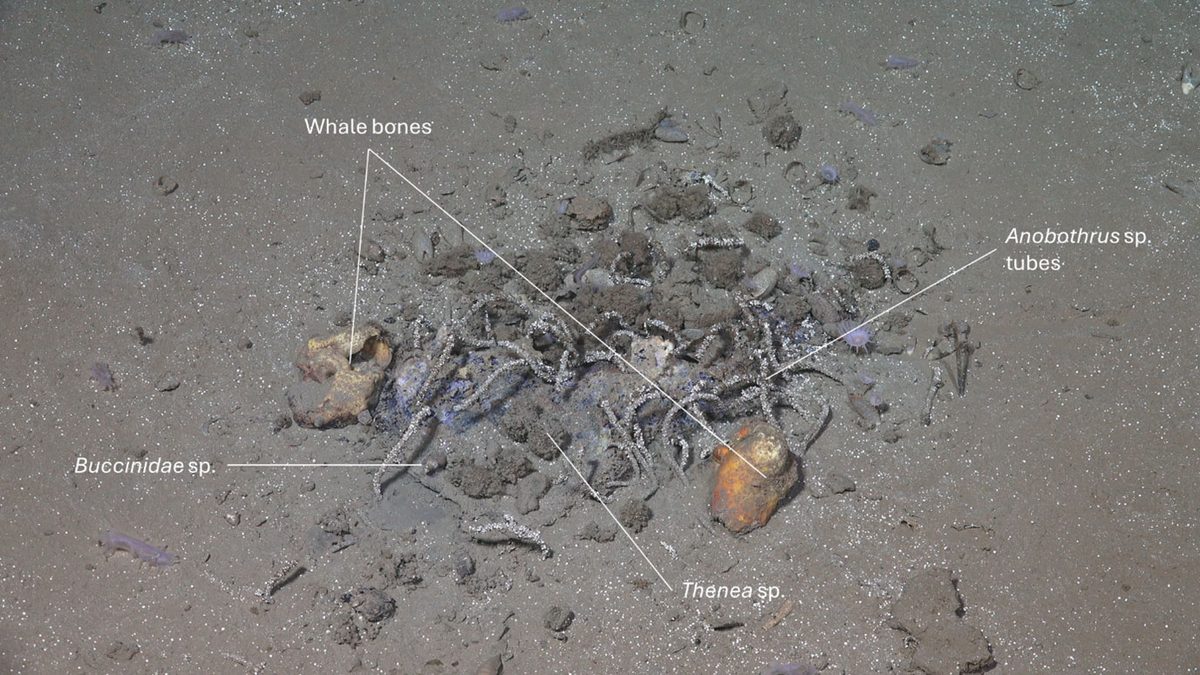
The research team was guiding a remotely operated vehicle (ROV) along the deep-sea floor when they suddenly caught sight of an anomaly in the distance.
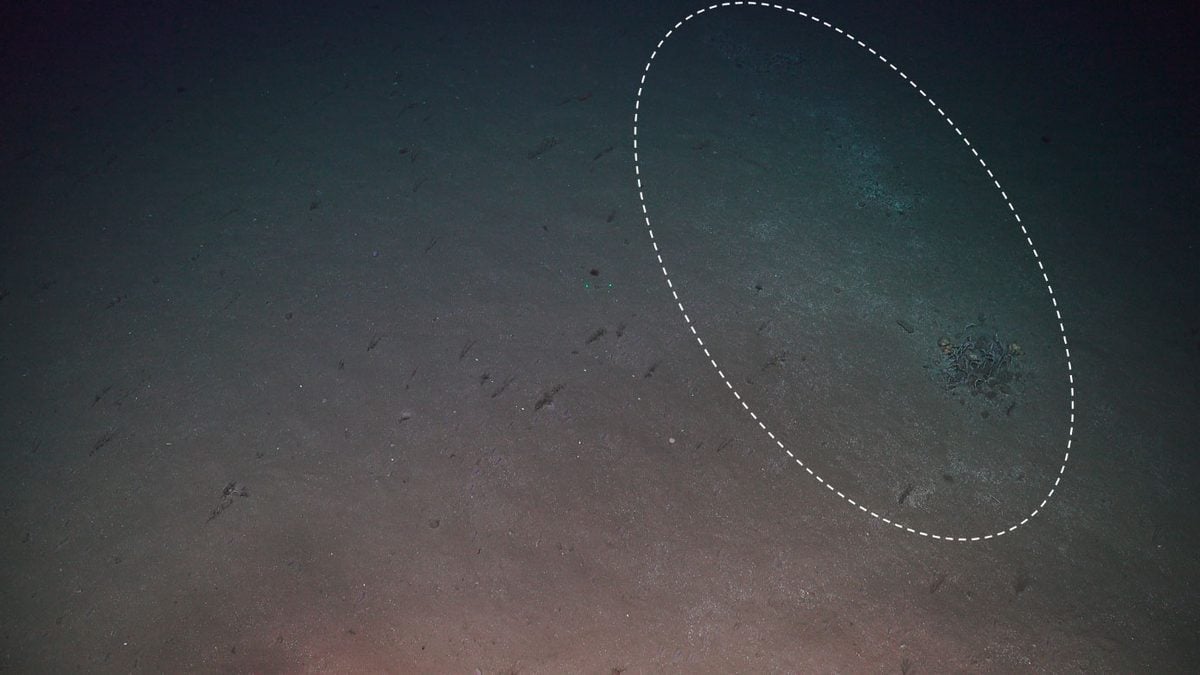
(MAREANO/IMR/taken byÆgir6000/NORMAR)
The landscape was all but uniform, and yet there, in the corner of the ROV’s eye, was a spark of curiosity.
It was a dense pile of tube worms, their long, thin bodies held erect above the seafloor, like little hairs.
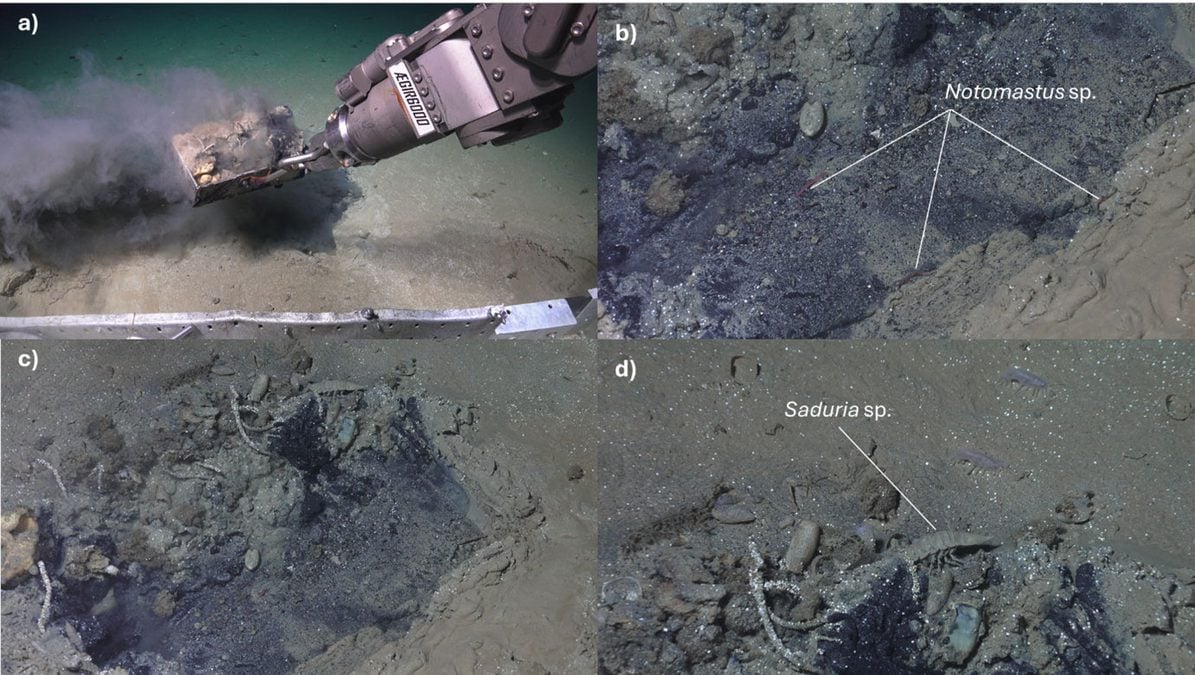
When the ROV scooped up a sample, a dark black cloud briefly smothered its view.
As it faded, researchers saw a rich habitat of wrigglers below, scattered amongst bones and teeth.
It appeared to be a watery grave.
Black plumes often occur where there is lots of organic material hidden in marine sediments. They are a sign of bacterial growth and heavy oxygen consumption.
The ROV tucked a sample from the strange site in its drawer and returned to the surface.
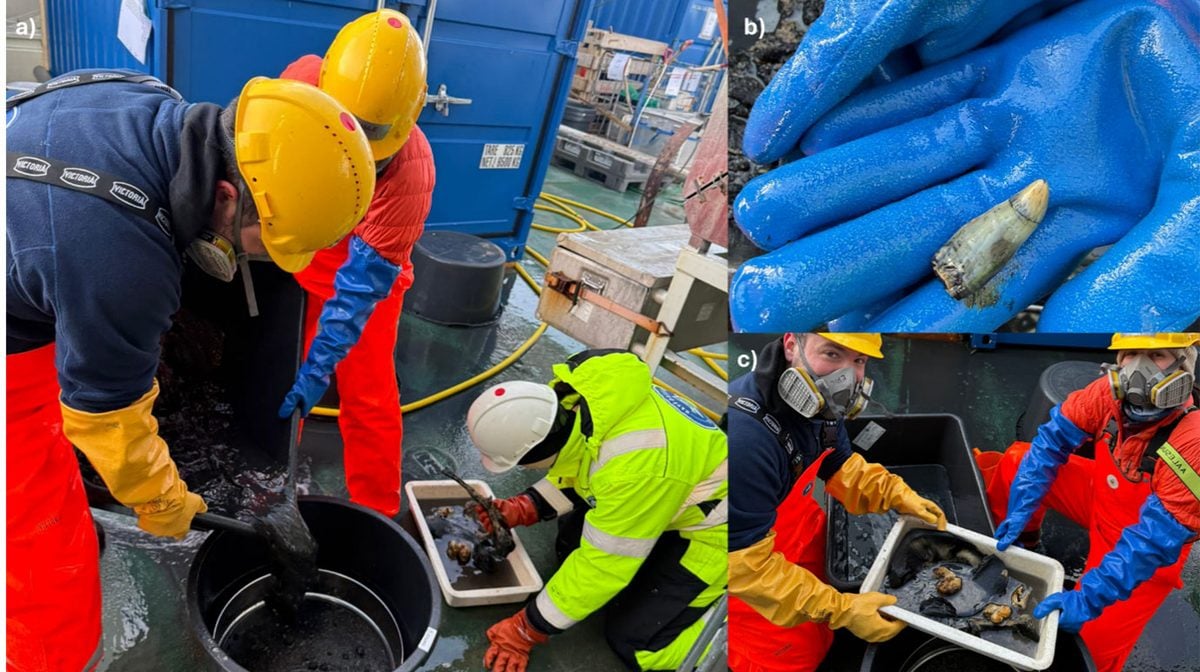
“The smell was not so bad after all, but we used gas masks as precaution,” reads a cruise diary from the scientific team, published online in May.
“We really felt like true archaeologists – like the Indiana Jones of the deep sea!”
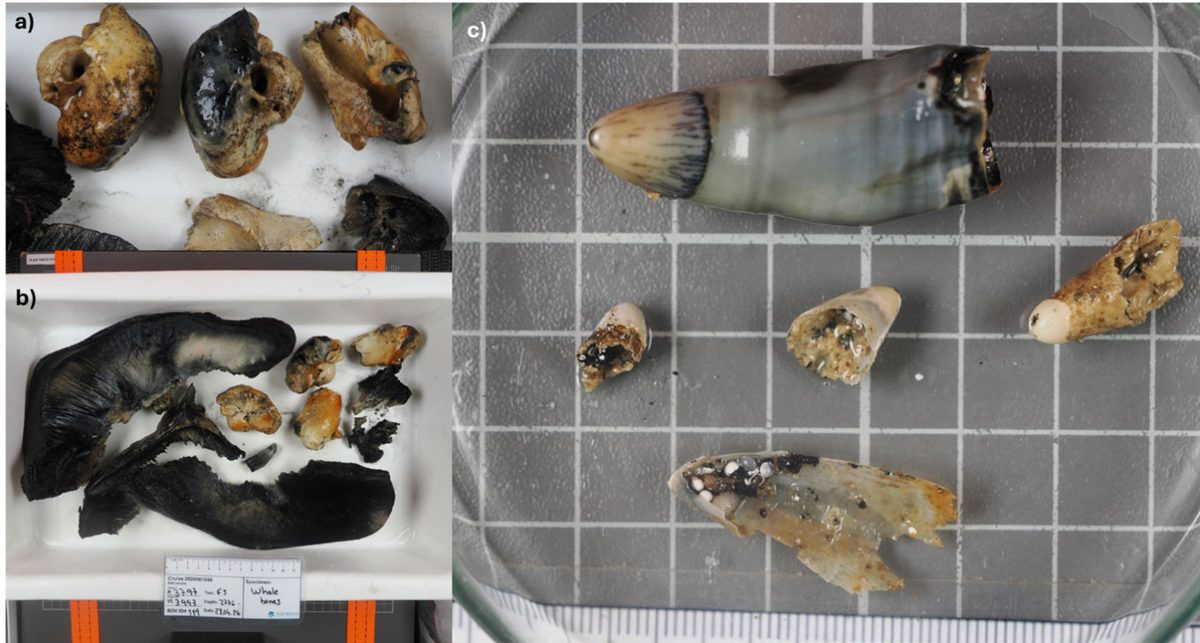
It was soon obvious what they were dealing with.
The researchers had accidentally unearthed a whale grave.
“These observations serve as a powerful reminder that even seemingly unremarkable deep-sea landscapes can occasionally host extraordinary events such as whale falls,” the team wrote for MAREANO, Norway’s national seabed-mapping program.
It’s also a good reminder of what is potentially at stake from future seabed mining.
The ocean floor is rich in mineral resources, but it is also rich in life.
Some marine scientists are concerned that deep-sea mining could disturb precious habitats that we still know so little about.
Whale falls occur when a whale ‘falls’ after its death, providing life to the ocean floor, like an oasis in a desert.
As the mammal’s decaying meat and bones feed the local ecosystem, its corpse enhances species richness and serves as a crucial ‘stepping stone’ for some species to move and disperse.

frameborder=”0″ allow=”accelerometer; autoplay; clipboard-write; encrypted-media; gyroscope; picture-in-picture; web-share” referrerpolicy=”strict-origin-when-cross-origin” allowfullscreen>
Whale falls also help sequester carbon and cycle sulfur, nitrogen, and phosphorus.
They are crucial to deep-sea ecosystems, and digging them up could be risky for local habitats.
A whale’s skeleton isn’t always obvious, either.
The recent unearthing in the Arctic is proof of that. Whale bones sometimes sink beneath the sediment and become much harder to see.
That could make them vulnerable to future mining interests.
During a 2017 expedition off the coast of Australia, for instance, a natural whale fall was trawled at a depth of roughly 1,000 meters (3,280 feet).
If future investigations aren’t careful, they could bulldoze right over some of the deep ocean’s most important food sources.
“These rare inputs of organic matter sustain highly specialized and often transient communities, whose dispersal, distribution, ecological roles, and connectivity across the deep ocean remain largely unexplored,” the team from Norway’s MAREANO explained.
This article was fact-checked by Rachel Garner and edited by Rebecca Dyer. While we pride ourselves on our process, we are only human. If you spot a mistake, please let us know.


