
Dark Mode Light Mode

Keep Up to Date with the Most Important News

By pressing the Subscribe button, you confirm that you have read and are agreeing to our Privacy Policy and Terms of Use
Join us on a journey where chemistry meets creativity, and the wonders of science unfold. Quench your intellectual thirst with thought-provoking articles that transcend the boundaries of conventional knowledge.

Scientists fear that microplastics may be helping bacteria outsmart antibiotics | News

Scientists fear that microplastics may be helping bacteria outsmart antibiotics | News Scientists fear that microplastics may be helping bacteria outsmart antibiotics | News


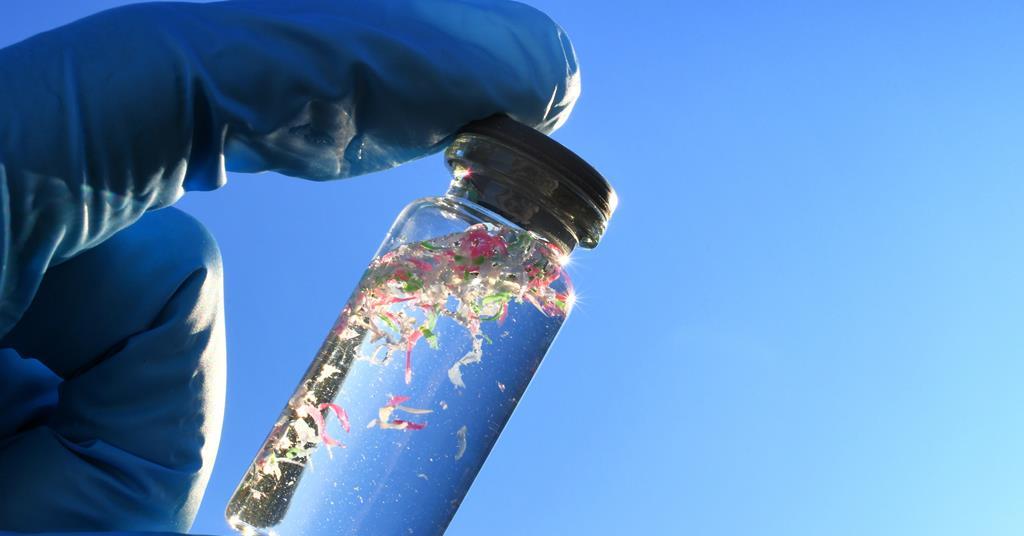
Scientists are discovering that the world’s plastic pollution problem could be worsening antimicrobial resistance (AMR). A growing body of research suggests that micro- and nanoplastics can lead to bacteria developing resistance to antibiotics more quickly.

Antibiotics that once cured common infections are becoming less effective as bacteria evolve resistance. AMR, which was responsible for 1.14 million deaths in 2021, is commonly framed as a clinical problem driven by antibiotic misuse in healthcare and livestock farming. ‘Plastic pollution may be an additional environmental factor that makes resistance genes easier to maintain and spread,’ says Bing-Jie Ni, an environmental engineer at the University of New South Wales in Sydney.

Laboratory and environmental studies have found that these particles can bring microbes into close contact, trigger biological stress that makes gene exchange easier and even create conditions that favour drug-resistant strains. While the direct risk to human health is still unclear, the findings are raising concerns that plastic pollution could be worsening a global public health crisis, with 39 million people already predicted to die from AMR in the next 25 years.

Now, research is offering clues into how microplastics could be altering bacteria. For instance, when Salmonella typhimurium, a bacterium that can cause food poisoning, was exposed to different kinds of microplastics produced by degradation of widely used packaging, consumer products and industrial materials, resistance increased to ciprofloxacin, a commonly used antibiotic.1 Smaller plastic particles, between 0.09 and 1.25mm, exerted the strongest effect.

In another experiment, the presence of polyethylene and polystyrene microplastics increased the rate at which Escherichia coli exchanged resistance genes, compared with plastic-free conditions.2 Smaller particles and those with rougher or more reactive surfaces tended to exert a stronger effect, suggesting that not all microplastics pose the same risk.

Real-world conditions

The findings extend beyond individual bacterial species. To reflect real-world conditions, micro- and nanoplastics were examined in mixed microbial communities and exposure increased both the abundance and diversity of resistance genes, with the smallest particles, especially nanoplastics, having the strongest effect.3 The type of plastic also mattered. Polyurethane increased resistance to sulfonamide antibiotics by nearly 20%, while polystyrene drove a 25% rise in resistance to aminoglycoside antibiotics, a class of drugs used to treat serious bacterial infections.

Ni, a corresponding author on this paper, says the findings help explain how microplastics seem to be driving resistance. They provide surfaces where bacteria can gather and form biofilms, sticky communities of microbes that cling to surfaces. ‘These biofilms bring different species into close physical contact, which is exactly the kind of setting where horizontal gene transfer becomes easier, ’ he adds, referring to the process through which bacteria exchange resistance genes.

Other real-world examples of microplastics’ impact on microbial communities are emerging. Researchers analysing water and sediment from the Oder River in Poland added microplastic particles to samples and tracked changes over seven and 14 days under controlled laboratory conditions.4 Microplastics led to an increase in harmful bacteria and antibiotic resistance genes, compared with samples without plastics. In water samples, for example, the abundance of Aeromonas salmonicida increased from 2% to 10% after seven days of exposure to microplastics.

But plastics do more than simply bring bacteria together. In Ni’s research, especially on nanoplastics, the particles damaged the outer membranes of bacteria, triggering stress responses. ‘Once bacteria are under this kind of stress, they can become more permissive to DNA exchange,’ he explains.

His team also found that resistance genes were often located together with mobile genetic elements – genetic material that can help these genes spread between bacteria. ‘A resistance gene sitting next to a mobile element is much more likely to move,’ Ni explains.

Limiting risk

Thanigaivel Sundaram, an AMR expert at the SRM Institute of Science and Technology, India, points to another concern. Microplastics can ‘adsorb antibiotics, heavy metals and other pollutants onto their surfaces’, he says. This creates what is known as ‘co-selection pressure’, where bacteria already carrying resistance traits are more likely to survive and multiply.

‘Most studies are short-term and laboratory-based, so they do not fully reflect real environmental conditions,’ says Sundaram. While the mechanistic evidence is compelling, he notes, the field still lacks large-scale epidemiological studies, quantitative assessments of human health risk and clearer data on how different levels of microplastics exposure affect AMR.

That makes it difficult to know the risks this poses for people. ‘It would be an overinterpretation to say that every microplastic particle will generate a clinical superbug. We are not there, and we should be careful with that kind of language,’ Ni says, adding that there is currently little evidence that it poses a danger to people.

At the same time, he says that the field appears to be underestimating the ecological role of micro- and nanoplastics. Many studies focus mainly on the presence of resistance genes, rather than whether they are capable of moving between bacteria. The risk, he says, ‘should be taken seriously, but framed accurately’.

Limiting the risks, experts say, will require reducing the amount of plastic entering the environment. Sundaram pointed to measures like reducing single-use plastics, improving waste management and promoting biodegradable alternatives. As wastewater treatment plants are a major pathway through which microplastics enter the environment, better filtration systems are essential, he adds.

Ni adds that agriculture needs closer scrutiny too, including reducing plastic mulch residues, improving the recovery of agricultural films, and monitoring compost, manure and biosolids that may carry plastic particles. ‘We should monitor the plastisphere: which bacteria are living on the particles, what resistance genes are present and whether those genes are linked to mobile genetic elements,’ he says.



Source link

Keep Up to Date with the Most Important News

By pressing the Subscribe button, you confirm that you have read and are agreeing to our Privacy Policy and Terms of Use
Add a comment Add a comment

Leave a Reply

Your email address will not be published. Required fields are marked *

Previous Post
Greatest science books: Carl Sagan’s The Demon-Haunted World is still supremely relevant today

Greatest science books: Carl Sagan's The Demon-Haunted World is still supremely relevant today

Next Post
Long Live the Morbid Book Review – Improbable Research

Long Live the Morbid Book Review – Improbable Research

Advertisement