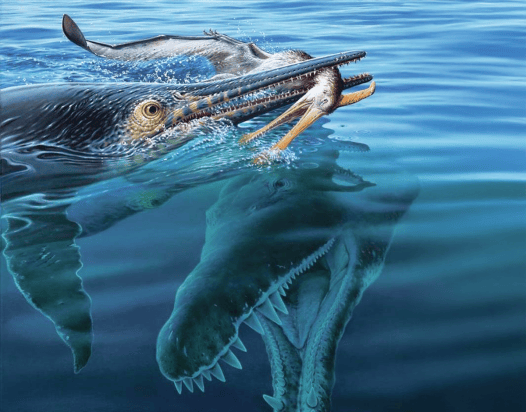
A small population of dolphins in Shark Bay, Australia, do something very unique: They use a marine sponge to cover their snouts as they probe the seafloor for fish that are hidden just under a layer of sand.
The sponge not only protects their mouths from the abrasive sand, it also allows them to sweep over a larger area than their snout alone would, and they can forage in deeper waters too.
Humans have known about this ingenious technique for over 25 years, and it’s just one example of dolphins using tools.
Dolphins in Shark Bay have also been spotted using a shell to scoop up and gulp down fish – a trick called shelling that, as researchers discovered in 2020, the animals learn from their friends.
On the other hand, sponging is a skill passed from mother to calf. It’s a tricky task to learn because the sponge messes with the dolphins’ echolocation abilities. Yet it seems useful enough for these dolphins to perpetuate over generations.
Now, researchers have discovered that these sponge-loving Shark Bay dolphins aren’t just distinct in their behaviors.

frameborder=”0″ allow=”accelerometer; autoplay; clipboard-write; encrypted-media; gyroscope; picture-in-picture; web-share” referrerpolicy=”strict-origin-when-cross-origin” allowfullscreen>
Dolphins that practice this learned sponging behavior also carry subtle differences in their epigenome, the collection of reversible chemical modifications that influence how genes are used without altering the DNA sequence itself.
In other words, this kind of cultural practice may leave a biological fingerprint.
“The potential interplay between culture and epigenetics has been little explored outside humans,” the team, led by evolutionary biologist Michael Krützen of the University of Zurich in Switzerland, explains in their new paper.
“Understanding these interactions will not only provide novel insights for behavioral ecologists but might also shed light on human evolution, bridging the gap between cultural practices and their biological underpinnings.”
Only a subset of Shark Bay’s Indo-Pacific bottlenose dolphins (Tursiops aduncus) practice sponging, primarily females, and it’s energetically costly, though it also seems to have specific benefits.
Spongers spend more time foraging, rest less, and often hunt alone. But they also eat different prey, have distinct social networks – and their resourcefulness might help them be more resilient in the wake of marine heatwaves, when typical food sources are scarce.
Despite sharing the same waters and often being closely related, some dolphins learn the technique while others never do.
That made the population an ideal natural experiment for asking whether a culturally transmitted behavior might be associated with epigenetic differences.
To investigate, researchers analyzed skin samples from 96 dolphins collected over more than two decades. Twenty-three were confirmed spongers, while 73 overlapping neighbors were non-spongers.
The team examined nearly 30,000 sites across the dolphins’ genomes where DNA methylation – a common epigenetic modification – can occur.
DNA methylation acts like a dimmer control rather than an on-off switch. By attaching tiny chemical tags called methyl groups to DNA, cells can dial gene activity up or down without changing the genetic code itself.
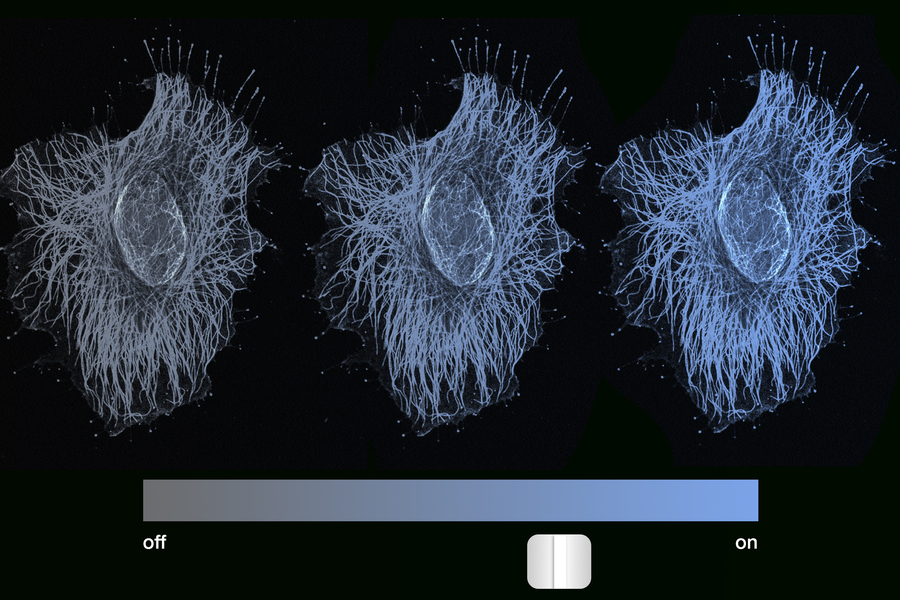
These patterns are known to shift in response to age, diet, stress, and environmental conditions, making them plausible candidates for reflecting differences in lifestyle.
The researchers trained a machine-learning model to see whether methylation patterns alone could distinguish spongers from non-spongers. It could – but only moderately well.
No single methylation site stood out after correcting for the tens of thousands of statistical comparisons.
Instead, the predictive signal appeared to be spread across many small differences. The final model relied on methylation patterns at 21 DNA sites rather than one standout genetic marker.
That fits with what biologists increasingly see in complex behaviors: They’re rarely controlled by a single gene or molecular pathway.

But this raises a chicken-and-egg question.
Cultural behaviors like sponging don’t just change an animals’ actions – they can reshape their diets, social lives, energy expenditure, and exposure to environmental challenges, as it has with these dolphins.
Those factors could, in theory, alter methylation patterns over an individual’s lifetime. But research in roundworms suggests that epigenetic changes can also be inherited, transferred from one generation to the next.
So the researchers don’t know whether learning to sponge changes methylation, whether pre-existing methylation differences somehow make dolphins more likely to adopt the behavior, or whether both are shaped by other factors linked to the sponging lifestyle.
Another study limitation here is ethical; the research team analyzed skin, the only tissue that can be collected safely from wild dolphins. But it may not fully reflect changes occurring in the brain or other organs involved in behavior.
But this is another great example of how researchers can better understand the biology of culture.
Related: Your Biological Age Has A Surprising Link to Your Grandparents’ Education
Evolutionary biologists have long understood that culture can eventually shape genetics over many generations – the spread of lactose tolerance in dairy-farming humans is one example.
This study, and others looking at epigenetic changes, suggest that there may be a faster way for bodies to communicate survival strategies (or just better nutrition) using the biological messaging of the epigenome.
Research findings in The Royal Society Publishing’s Philosophical Transactions B.
This article was fact-checked by Rachel Garner and edited by Clare Watson. While we pride ourselves on our process, we are only human. If you spot a mistake, please let us know.