Gene editing can make larger tomato varieties sweeter
Paul Maguire/Shutterstock
If you like your tomatoes sweet, the smaller cherry tomato varieties are currently the ones to go for. But bigger tomato varieties could soon get a sweetness boost with the help of CRISPR gene editing.
The bigger a tomato is, the lower its sugar content usually is, says Jinzhe Zhang at the Chinese Academy of Agricultural Sciences in Beijing. Efforts to boost the sweetness of larger varieties have had downsides such as lowering yields.
So Zhang and colleagues compared different varieties to identify genetic variants that affect sweetness. They found that two closely related genes called SlCDPK27 and SlCDPK26 are more active in large varieties. These genes code for proteins that lower the levels of an enzyme that produces sugars.
When the team used CRISPR gene editing to disable these genes in a variety called Moneymaker, the levels of glucose and fructose in the fruits increased by up to 30 per cent with no decrease in yield. The fruits were also rated as sweeter in a taste test. The only other effect was fewer and smaller seeds, which consumers may prefer.
“We are working with some companies to develop some commercial varieties by knocking out these genes,” says Zhang. “It is still at the beginning stages.”
Besides tasting sweeter, another potential benefit is that fewer tomatoes will be needed to make tomato ketchup with the same sweetness level.
The gene-edited Moneymaker tomatoes aren’t as sweet as cherry varieties such as Sungold, but it should be possible to boost sweetness even further, says Zhang. “There are still many important genes that regulate sugar waiting to be discovered.”
A CRISPR-edited tomato that has high levels of a beneficial nutrient called GABA is already being sold in Japan – the first CRISPR food to go on sale – as well as being given away as seedlings.
The first ever genetically modified food to be sold commercially was also a tomato. Called Flavr Savr, it was sold in the US in paste form from 1994, but was later discontinued. Since last year, a purple GM tomato high in anthocyanins has been available in the US in fruit and seedling form.
Several countries, including Japan and China, have regulations that make it easier for gene-edited crops to get approval compared with other forms of genetic modification, not counting conventional breeding. China approved its first gene-edited crop last year, a soya bean with raised levels of oleic acid.
Nature, Published online: 13 November 2024; doi:10.1038/d41586-024-03302-8
A genetic regulator of tomato sweetness has been identified through comparison of wild and domesticated varieties of the plant. Genetically engineering tomatoes to alter this gene increases sugar content without affecting fruit size.
A unique event, Collaborating for Impact: Ireland and Europe working together on agri-food research, was jointly hosted by Teagasc and the European Commission Representation in Ireland.
The event took place at the European Commission Representation to Ireland offices in Dublin and focused on Ireland’s significant contributions to European agri-food research and innovation.
Mairead McGuinness, EU Commissioner for Financial Services, Financial Stability and Capital Markets Union, explained: “Researchers from Ireland are driving essential parts of these European projects, including several agricultural initiatives led by Teagasc.
“The initiatives launched, Climate Farm Demo, SafeHabitus and RefreSCAR, are excellent examples of what we can achieve with Horizon Europe funding.
“These initiatives will tackle emission reductions, improve farm sustainability and address the significant data gaps on farm accidents and fatalities, helping to make real progress on vital topics.”
New projects to advance agri-food research
Updates on three Horizon Europe-funded initiatives to advance agri-food research were presented at the event. They are:
Who Gets Counted? Improving EU Farm Safety Data – from the Safe Habitus project
Annual Campaign of Farm Demonstration Visits – from the Climate Farm Demo project
SCAR Engage: enhancing member state involvement in research & innovation cooperation – from the REFRESCAR project
Safe Habitus project
19 partner organisations from across the EU developed the SafeHabitus project, which seeks to improve understanding and awareness of how farmer health and safety challenges impact their working conditions and quality of life.
Despite Eurostat data indicating that there are an average of 315 occupational deaths on farms each year, the reality is that the true figure is at least 545 deaths.
This finding helps improve our understanding of the scale of the challenges faced by farmers, farm workers, farm families, and rural communities.
It also highlights the need for continued support for investment in farm facilities and equipment that improve safety and the development or adoption of safer farming practices.
Climate Farm Demonstration
Climate Farm Demo is an EU network of pilot demo farmers covering 28 countries. It aims to accelerate farmers’ adoption of climate-smart farming practices.
The project connects the 1,500 Pilot Demo Farmers and their Climate Farm Advisors at the European and National levels to increase knowledge exchange and the implementation of climate adaptation and mitigation measures.
Thanks to interactive and peer-to-peer learning, the Climate-Smart Farming practices will be demonstrated to the wider farming community across six annual demo campaigns (4,500 demo events).
SCAR-Engage Programme
The SCAR-Engage Programme is an initiative designed to boost European countries’ engagement in research and innovation coordination activities. It supports involvement in a European committee called the Standing Committee on Agricultural Research (SCAR).
This committee brings together European countries and the European Commission to share information on research priorities across Europe and coordinate investments at the national and EU levels.
SCAR covers the areas of agriculture, food systems, fisheries, forestry, and the wider bioeconomy.
India stands at a turning point in its agricultural journey. Its fertilizer subsidy programme, a cornerstone of its food-security strategy, now threatens the sustainability it aims to ensure1. The programme needs reform.
In the current system, the government pays subsidies to fertilizer manufacturers so they don’t need to charge as much for their products. This means that farmers are often unaware of the true cost of urea and other chemical fertilizers, so tend to overuse the products (see ‘India’s rising fertilizer use’). This is resulting in severe soil degradation, water pollution and increased greenhouse-gas emissions2,3. For example, in 2017, overuse of nitrogen-based fertilizers added 57% to the country’s agricultural greenhouse-gas emissions4.
The overuse is also straining the national purse5. For the 2024 fiscal year, India has allocated one-ninth of its total agricultural budget to fertilizer subsidies, almost US$20 billion (1.6 trillion rupees). Yet around $715 million of that spend will be lost: a lot of India’s subsidized urea is diverted to non-agricultural uses (plywood manufacturing and textile processing) or smuggled to neighbouring countries.
Compounding these issues, some 70% of Indian farmers apply fertilizers without first testing the soil properly or adhering to nutrient-management recommendations. This is degrading the health of the soil, which could have long-term effects on soil fertility and agricultural productivity6. Excessive fertilizer use in the Indo-Gangetic plains, for instance, has led to soil acidification and reduced crop yields7.
Furthermore, the current system discourages innovation in the fertilizer industry. Manufacturers have little incentive to improve the efficiency of their production processes or develop more environmentally friendly products.
All these problems are widely acknowledged. In 2018, India took a step towards addressing leakages by recording sales of subsidized fertilizers to farmers through point-of-sale devices. Although this has reduced losses, it hasn’t addressed the underlying issues — lack of farmer awareness around soil health, injudicious fertilizer use and low environmental sustainability.
After consultations with several government representatives and researchers in India, here I propose a way to overhaul the existing model for fertilizer subsidies. Transferring subsidies directly to farmers’ bank accounts and linking them to soil-health programmes would empower farmers to make more-informed decisions. Knowing the true costs, they should use less fertilizer. This could reduce fertilizer run-off into water bodies by millions of tonnes and save the government billions of dollars.
A path to sustainability
A series of adjustments would make India’s agricultural system more sustainable (see Figure S1 in Supplementary information). These build on India’s existing digital infrastructure, including the ‘Aadhaar’ identification system and the Pradhan Mantri Jan-Dhan Yojana financial inclusion programme. Aadhaar is a 12-digit unique identity number issued to all Indian residents and based on their biometric and demographic data. The Pradhan Mantri Jan-Dhan Yojana aims to ensure that every household in India has access to bank accounts and other financial services.
Direct transfer of subsidies to farmers’ bank accounts. If farmers have control over the subsidy funds, they would be incentivized to optimize their fertilizer use because they would experience the financial impact of their decisions directly. If they use less fertilizer than expected, they can keep any remaining subsidy for other agricultural inputs or personal use.
India budget: Modi bets big on nuclear energy and space
Payments would be scaled on the basis of landholding size, crop type and local soil conditions, ensuring that farmers receive subsidies only for the amount of fertilizer they would need if they farmed sustainably. For example, a farmer with a two-hectare plot growing rice in a region with nitrogen-deficient soil might receive a higher subsidy than would a farmer with the same size plot growing lentils in an area with naturally nitrogen-rich soil.
One study8 suggests that optimizing nitrogen use in Indian agriculture could reduce nitrous oxide emissions by at least 30%. This reduction, combined with the potential for increased carbon sequestration in healthier soils, could make a substantial contribution to India’s commitments under the Paris climate agreement.
Direct transfers would also reduce leakages in the subsidy system by up to 40%, according to pilot studies9. This could potentially save the government billions of dollars annually, which could then be reinvested in farmers or in the betterment of farmers through agricultural research and rural development. And by making sure that all farmers have bank accounts, the system could accelerate financial inclusion in rural areas, opening up opportunities for credit access and digital financial services.
Market-driven pricing of fertilizers. A dynamic pricing mechanism, with a subsidy that is adjusted according to market prices, environmental conditions and crop-specific needs, would ensure that the subsidy remains effective while promoting sustainable practices. For instance, during periods of high market prices, the subsidy could be increased to maintain affordability for farmers. Conversely, in regions experiencing good rainfall and soil conditions, the rate might be lowered, because less fertilizer would be needed.
Improved soil-management practices would help to ensure sustainable production of coffee berries in India.Credit: Abhishek Chinnappa/Getty
To illustrate: if the market price of urea rises from 5,000 to 6,000 rupees per tonne, the government could increase the subsidy from 90% to 95% of the price to keep the farmer’s costs relatively stable. Similarly, in a drought-prone area during a good monsoon year, the subsidy might be reduced from 50% to 40%, encouraging farmers to rely more on natural soil fertility.
This mechanism would also encourage fertilizer companies to develop more efficient and environmentally friendly products, potentially positioning India as a global leader in sustainable agricultural inputs. Although there might be initial cost increases as companies invest in research and development, the long-term benefits of more-efficient fertilizer use could lead to overall cost reductions for farmers.
Integration of subsidies with soil health data. Subsidy payments could be linked to a scheme known as the Soil Health Card. Run by the Department of Agriculture and Farmers Welfare, this scheme provides farmers with detailed information about their soil’s nutrient status and recommends appropriate doses of fertilizers. It currently covers all 150 million farm holdings in India.
Genetic modification can improve crop yields — but stop overselling it
When a farmer applies for a subsidy, the system would automatically check their Soil Health Card data. By combining these data with information about the farmer’s crop plans and local climate conditions, the system would calculate the optimal fertilizer requirement. The subsidy amount would then be tailored to this requirement, effectively discouraging overuse.
Data on fertilizer-use patterns could also be used to inform policies because they would be obtained through the point-of-sale devices used for fertilizer purchases and linked to the farmer’s Aadhaar identification number. The digital infrastructure required would enable more targeted agricultural policies and research initiatives, catalysing a broader shift towards precision agriculture in India.
A digital platform for managing subsidies and advising farmers. This platform would serve as a one-stop solution for farmers, integrating subsidy management, soil health information and agricultural advisory services. It would be accessed through smartphones or through local community service centres. It would include a subsidy calculator that could show farmers the money they would receive on the basis of their land, crops and soil health data, as well as real-time market prices for fertilizers and other agricultural inputs. It could also provide personalized crop and fertilizer recommendations according to the current soil health and local weather conditions. Educational resources on sustainable farming practices could be shared. A help desk for technical support and grievance redressal should be included.
I propose integrating this platform with government initiatives such as crop insurance (Pradhan Mantri Fasal Bima Yojana) and minimum support price schemes that guarantee payments to farmers for certain crops (called PM-KISAN), creating a holistic support system for farmers.
Incentives for adopting sustainable farming practices. The digital platform could incorporate principles of behavioural economics, using ‘nudges’ to help farmers to make sustainable choices. For example, farmers who opt for organic fertilizers or practise crop rotation might receive extra subsidy points or priority in other government schemes. Recognition and awards might be given for ‘model farmers’ who demonstrate best practices.
These incentives would be customized for different agro-climatic zones. For instance, in water-stressed regions, there might be extra incentives for adopting water-efficient farming methods along with optimal fertilizer use.
Addressing challenges
The proposed model offers a path towards sustainable intensification of agriculture, aligning with India’s commitments under the Paris agreement and to the United Nations Sustainable Development Goals. However, there are challenges to its implementation, requiring a comprehensive approach.
One hurdle is the lack of complete and robust land-ownership records, which has impeded other targeted subsidy schemes in India. To tackle this, I advocate for a phased implementation, starting with regions that have more reliable records (such as Punjab state) and accelerating land-record digitization.
A parched paddy field near Ahmedabad, India.Credit: Amit Dave/Reuters
In the long run, satellite imagery could be used to verify land use and crop patterns, while blockchain technology could ensure secure and transparent record-keeping of land ownership and subsidy disbursements. Monitoring other crop input purchases or sales of products would confirm eligibility, too.
Farmer adaptation is crucial, and I propose extensive awareness campaigns, hands-on training and a user-friendly mobile app with voice-based instructions in local languages. To include tenant farmers, I propose a registration system with provisions for tenancy agreements, verified by local government bodies.
Another challenge is the readiness of the nation’s infrastructure, particularly in rural areas, which have limited Internet connectivity and banking services. To mitigate this, I suggest collaborating with telecommunications companies through public–private partnerships, establishing mobile banking units and digital service centres in remote areas, and developing offline modes of subsidy disbursement with periodic synchronization. Recognizing the digital literacy gap, I propose a network of local support centres to assist farmers with registration, subsidy claims and troubleshooting.
M. S. Swaminathan (1925–2023), leader of India’s ‘green revolution’
Data privacy and security concerns can be addressed through robust protection measures, including end-to-end encryption and strict access controls, along with clear, transparent data-use policies. To prevent misuse, biometric verification, periodic audits and machine-learning algorithms can detect fraudulent activity.
Financial literacy and inclusion challenges can be tackled through education programmes, partnerships with local financial institutions and accelerated efforts to open bank accounts for farmers who do not already have them.
To ensure timely disbursement, I propose streamlining the subsidy calculation and disbursement process. This would involve automating the calculation of subsidy amounts according to real-time data inputs, including soil health, crop type and market prices. The disbursement process could be expedited by using blockchain technology to ensure transparent and nearly instantaneous transfers. For example, smart contracts on a blockchain network could automatically trigger subsidy payments when specific conditions (such as verified fertilizer purchases) are met.
Advance subsidy credits could also be offered. As with a pre-approved credit line, farmers could be allocated a certain amount of subsidy in advance according to their historical use patterns and current cropping plans. They could draw on this credit as needed, with the final subsidy amount being reconciled at the end of the season on the basis of actual use.
Biases in ‘sustainable finance’ metrics could hinder lending to those that need it most
To address market volatility concerns in a deregulated fertilizer market, I recommend implementing price monitoring mechanisms, considering using price ceilings during the transition and encouraging long-term contracts between farmer cooperatives and manufacturers.
To tackle potential industry resistance, I suggest a gradual transition period and efforts to highlight the incentives for companies to innovate, including benefits such as real-time transactions and improved supply chains that could overcome current long wait times for payments.
To allay food-security concerns and ensure long-term success, I propose careful monitoring of agricultural output during the transition, with provisions to adjust the model if necessary. That should be supported by a comprehensive monitoring and evaluation framework that uses remote-sensing technologies, soil health cards and crop-yield data.
This multi-faceted approach aims to address the complex challenges associated with transforming India’s fertilizer subsidy programme, paving the way for a more sustainable and efficient agricultural sector.
The path forwards
To implement this transformative model, a series of coordinated actions across government bodies and institutions are needed. The Ministry of Agriculture and Farmers’ Welfare can spearhead a pilot programme in selected districts, chosen to represent diverse agro-climatic zones and land ownership patterns. This pilot should span at least two agricultural seasons, to capture seasonal variations and enable iterative improvements.
In Asia, alternative proteins are the new clean energy
Concurrently, the Ministry of Electronics and Information Technology must fast-track the development of a robust digital platform for subsidy disbursement, seamlessly integrating it into PM-KISAN and other existing schemes (as happened with PM-KISAN, which provides income support to small and marginal farmers, and the Soil Health Card). The Department of Fertilizers should engage in collaborative dialogue with industry stakeholders to chart a roadmap for transitioning to a market-driven pricing model, incorporating incentives for the development of innovative, sustainable fertilizer products.
State governments, with support from the central government, need to accelerate efforts to digitize land records. Agricultural universities and research institutions should be tasked with conducting extensive studies on this system’s impact on soil health, crop yields and farmer incomes, providing crucial data-driven insights to help refine the policies.
The Ministry of Finance must allocate funds to farmer-education programmes. And, for oversight, a task force should be established to manage implementation efforts across government departments.
This coherent multi-pronged approach, involving key stakeholders at various levels, is essential for the successful transformation of India’s fertilizer subsidy programme. The path to implementing such a model will undoubtedly be complex, requiring careful planning and wide engagement. However, the potential rewards — in terms of improved environmental sustainability, economic efficiency and farmer welfare — make it not just desirable, but necessary.
Agronomists examine a field where the cash crop, maize, has been harvested and a cover crop, radishes, has been planted to protect soil health.Credit: Paul Chiasson/The Canadian Press/Alamy
As climate change threatens farmers’ ability to produce the world’s food, researchers and environmental advocates think they have a solution: playing in the dirt.
How farming could become the ultimate climate-change tool
Experimental evidence is accumulating, they say, that by improving soil health, crops can be made more resilient to drought and extreme weather — and they want governments to offer financial incentives to farmers who use ‘regenerative’ practices to climate-proof farmland. These agricultural practices include boosting the soil microbiome — that is, its microbial community — by rotating crops between fields, rather than repeatedly planting the same crop in the same field, and by adding ‘cover crops’ to fields. These comprise plants that won’t necessarily be harvested, but that prevent soil erosion and boost soil nutrients.
“There are lots of ripple effects from the changing climate that are creating challenges for our food system,” says Rob Myers, the director of the Center for Regenerative Agriculture at the University of Missouri in Columbia. “The ways we combat that are with biological diversity, more organic matter in the soil — and more integrated approaches.”
But switching to such practices requires upfront investment. Researchers and farmers who spoke to Nature say that regenerative agriculture does work, but it can take a few years of implementing it before farms start to see a profit. In the United States, advocates are calling on the US Congress to include more subsidies for regenerative agriculture in the Farm Bill, a massive piece of legislation that is updated every five years or so and includes funding for disaster aid and farmer training. The most recent version expired on 30 September. Meanwhile, the latest version of the European Union’s Common Agricultural Policy entered into force last year, and included funding for farmers using these types of sustainable practice.
Nurturing the soil
Industrial agriculture usually relies on fertilizers, pesticides and mechanical equipment to produce high-yielding monocultures — single crops such as maize (corn) or wheat. Excessive use of chemicals on these crops disrupts ecological processes in the soil and is one of the leading causes of water pollution in the United States. Unhealthy soil struggles to soak up water or retain nutrients.
CRISPR-edited crops break new ground in Africa
An estimated 8,505 million tonnes of topsoil on US farmland was lost to erosion between 2013 and 2017. The United Nations Food and Agriculture Organization warns that more than 90% of Earth’s soils are at risk of becoming degraded by 2050; this could lead to a rise in famine.
Regenerative agriculture lacks a formal definition, but scientists who spoke to Nature say that its general goal is to rebuild healthy soil. That starts with increasing the proportion of organic matter — including living roots and manure — to feed the soil microbiome and recycle nutrients for plants.
Although the term is modern, regenerative principles are ancient. Implementing them means “returning to some of the practices that we’ve relied upon as a human species for thousands of years”, says Rich Smith, an agricultural ecologist at the University of New Hampshire in Durham.
Keeping cover
One practice that is considered regenerative is cover cropping: planting species that typically won’t be harvested, such as crimson clover, when the cash crop is out of season instead of leaving the soil bare. Roots from the cover crop prevent erosion and take up excess nitrate from fertilizers that would otherwise leach into streams and groundwater. When a farmer cuts down the cover crop to prepare for the next round of cash-crop planting, they work it into the soil where it feeds the bacteria and invertebrates underground, improving soil fertility. Only about 5% of cultivated land in the United States was cover cropped in 2022, but that figure has been increasing: by 2022 it was 17% higher than in 2017.
Farmer Brandon Kaufman plants the grain kernza on his fields in Moundridge, Kansas, as a cover crop and grazes cattle on it to fertilize the soil.Credit: Brandon Kaufman
During a major drought that destroyed maize and soya bean crops across the US Midwest in 2012, Myers heard farmers say that cover-cropped fields hadn’t been hit as hard as fields without the extra plants. So he worked with the Conservation Technology Information Center, a non-profit organization in West Lafayette, Indiana, that promotes conservation in agriculture, and a sustainable farming programme funded by the US Department of Agriculture (USDA) to launch the National Cover Crop Survey. Researchers polled roughly 700 farmers, and found an average 9.6% greater maize yield and 11.6% greater soya bean yield during the drought on fields in which cover crops had been grown.
This was surprising, because “at the time, many people thought that cover crops would take moisture away” and not leave any for the cash crops, Myers says.
The USDA has offered subsidies to farmers who use cover crops. Of the farmers who responded to the 2022–23 National Cover Crop Survey and had received payments to plant cover crops, 90% said that they would probably continue the practice after the funding stopped.
Valuing variety
There is also evidence that crop rotation can improve soil health and resilience. Swapping out crops, rather than growing the same monoculture on the same field for years on end, can improve soil health without sacrificing productivity, Smith says.
Eat less meat: will the first global climate deal on food work?
This can be done by rotating different crops, including cover crops, on the same field over time, or by planting several crops on the same field at the same time, including the ‘three sisters’ trio of maize, beans and squash that has been grown by some Native American tribes for centuries.
A review of 20 studies that analysed the effects of crop rotation on soil life found that rotating various species increased the amount of microorganisms in soil by about 15% compared with monoculture fields, and boosted microbial diversity by more than 3%1. Rotating two or more different crops also generates more of the nutrients carbon and nitrogen in soil than does monoculture2. A review of 33 papers that assessed fields in which legumes and grains were grown together revealed an increase in the stability of yields year-to-year compared with those of monoculture fields3, suggesting that biodiverse farms could improve food security.
“Those types of systems can often be more resilient to weather variation and have some enhanced disease resistance,” Smith says. “The evidence is relatively strong that they maintain, if not increase, yields.”
Seeding incentives
But the switch to regenerative agriculture can take about three years to pay off, say farmers and researchers who spoke to Nature.
Genetic modification can improve crop yields — but stop overselling it
Brandon Kaufman, a fourth-generation farmer in Moundridge, Kansas, rotates crops and also grazes cattle on fields in the autumn and winter to fertilize the soil. When he got started with regenerative agriculture at the industrial operation he inherited, he “didn’t have a safety net to fall back on”, he says. Government subsidies “incentivized me to try some things, and I’ve gained a tremendous amount of knowledge because of that”.
Federal, state and business programmes that incentivize cover cropping usually stop after farmers make the transition. To support producers supplying the nation’s food who institute these practices over the long term, the US Farm Bill should include a measure to reduce farmers’ federal crop insurance premiums, Kaufman and others say. The USDA trialled this idea during the COVID-19 pandemic by offering farmers who planted cover crops an insurance discount of US$5.00 per acre. The federal programme has now ended, but states including Iowa, Wisconsin and Illinois have implemented their own versions.
Farms can move away from industrial agricultural practices and move towards healthier soil, Kaufman says. “It just takes time” and financial incentives to get producers to change, he says. But it’s important, he adds, because “if you think about your kids and your grandkids … where’s their food going to come from in 100 years?”
A common sunscreen ingredient, zinc nanoparticles, may help protect rice from heat-related stress, an increasingly common problem under climate change.
Zinc is known to play an important role in plant metabolism. A salt form of the mineral is often added to soil or sprayed on leaves as a fertiliser, but this isn’t very efficient. Another approach is to deliver the zinc as particles smaller than 100 nanometres, which can fit through microscopic pores in leaves and accumulate in a plant.
Researchers have explored such nanoparticle carriers as a way to deliver more nutrients to plants, helping maintain crop yields while reducing the environmental damages of using too much fertiliser. Now Xiangang Hu at Nankai University in China and his colleagues have tested how these zinc oxide nanoparticles affect crop performance under heat wave conditions.
They grew flowering rice plants in a greenhouse under normal conditions and under a simulated heat wave where temperatures broke 37°C for six days in a row. Some plants were sprayed with nanoparticles and others weren’t treated at all.
When harvested, the average grain yield of the plants treated with zinc nanoparticles was 22.1 per cent greater than the plants that had not been sprayed, and this rice also had higher levels of nutrients. The zinc was also beneficial without heat wave conditions – in fact, in these cases, the difference in yield between treated and untreated plants was even greater.
Based on detailed measurements of nutrients in the leaves, the researchers concluded the zinc boosted yields by enhancing enzymes involved in photosynthesis and antioxidants that protect the plants against harmful molecules known as reactive oxygen species.
“Nanoscale micronutrients have tremendous potential to increase the climate resilience of crops by a number of unique mechanisms related to reactive oxygen species,” says Jason White at the Connecticut Agricultural Experiment Station.
The researchers also found the rice treated with zinc nanoparticles maintained more diversity among the microbes living on the leaves – called the phyllosphere – which may have contributed to the improved growth.
Tests of zinc oxide nanoparticles on other crops like pumpkin and alfalfa have also shown yield increases. But Hu says more research is needed to verify this could benefit other crops.
“Growth, growth, fast growth,” Strey says of what investors were after. “You burn money to grow.” Before its introduction to venture capital, the Plantix team had imagined success as simply making a profitable business. But a modest goal “hasn’t always been that sexy for investors,” who prefer to rapidly build toward a single giant payout, Strey says.
The team quickly realized that if Plantix was going to survive as a brilliant idea with no clear business model, they would have to give venture capitalists what they wanted: More downloads, more users who could somehow, someday be monetized.
At that point, Plantix was considering operating in Mali, population 23 million. After learning at an innovation conference that India was home to approximately 150 million smallholders, Strey jumped to shift the company’s focus to the subcontinent. The team quickly established a partnership with a local research group and set up a field office in Hyderabad and began teaching the algorithm to recognize local pests and crops in Indian languages. By the end of January 2018, Plantix had grown to about 300,000 monthly users and raised $4.9 million in one more round of VC funding.
Moving to India, where food and agriculture is an $800 billion industry, has become an obvious choice for aspiring agritech startups. In recent years, its government has aggressively expanded telecommunications infrastructure, increasing the number of smartphone users to about 450 million people and doubling coverage in rural areas. That meant a farmer walking through an ailing field in Jharkhand could be scrolling Plantix in search of remedies.
To use the app, farmers provide their crop selection, acreage, and input applications, then upload photos with embedded GPS coordinates. Some growers use the app weekly or even daily, contributing to a deep and detailed real-time image of farming across India. Their use has helped Plantix’s AI grow more accurate while collecting information that could prove invaluable to crop buyers, seed sellers, tool manufacturers, loan lenders, insurance providers, and pesticide sellers.
During pitches, Strey told me, she saw how investors lit up at just the mention of data. “[The idea] sold good toward the investors, even though we never proved that we could make money out of it.”
The problem, as many companies have discovered, is that every buyer of data wants some particular slice of the information presented in a specific way. Plantix would need to be reorganized around producing and packaging marketable data products, and the economics never penciled out.
Here is a recipe for a thought-provoking, if not wholly appetising, snack: slice up a large tomato and pour over five or six tablespoons of your favourite cooking oil. Depending on where you got your tomato, that oil represents roughly the amount of diesel fuel needed to grow and deliver it to your plate. Bon appétit!
The influential environmental scientist and historian of energy Vaclav Smil came up with this illustration a few years ago – he recommends using dark sesame oil in your salad for the best visual effect. His aim was to highlight the utter dependence of our current food system on fossil fuels, used to run farm machinery, make fertiliser, heat greenhouses, power ships and even generate the electricity that keeps your fridge cool.
As he explains in his new book, How to Feed the World, this makes our food system productive enough to feed 8 billion people and rising. It also leaves it rife with inefficiencies and waste, so that food production takes up more than a third of all land not covered in ice, slurps most of the water we use and generates nearly a third of our global greenhouse gas emissions.
Based at the University of Manitoba in Canada, Smil is best known for his work on energy use throughout human history. But several of his more than 30 books have focused on what we eat, including Feeding the…
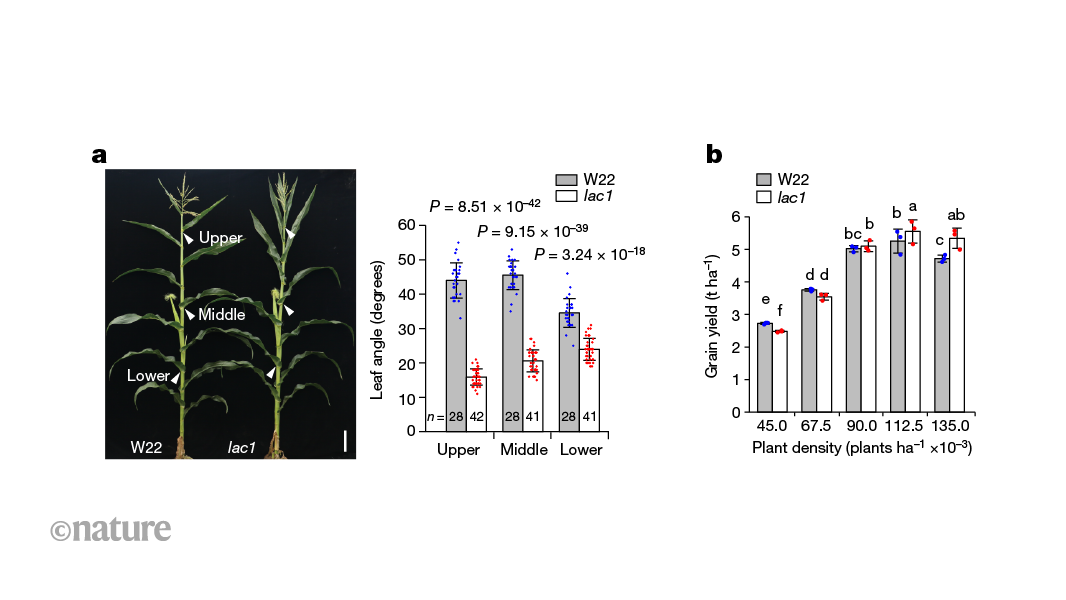
Adapting plant architecture to tolerate dense planting is an important strategy for enhancing maize yields. A newly identified mutant gene confers a ‘smart canopy’ architecture, with upright upper leaves, less-erect middle leaves and relatively flat lower leaves. Plants with this gene yield more grain under high-density planting than their wild-type counterparts do.
The University of Tennessee and the UT Institute of Agriculture have received a grant to develop and test a decision support tool to protect farmers from the risks of extreme weather events.
The $434,038 Seeding Solutions grant from the Foundation for Food & Agriculture Research will help farmers better manage crop production from risks of extreme weather events across the Tennessee River Basin and surrounding southeast US regions.
UT is providing matching funds for a total investment of $966,119 over the three year project.
The impact of extreme weather events on crop loss
The U.S. Department of Agriculture estimates that extreme weather events are responsible for 90% of crop losses. These estimates are generally based on annual climate conditions.
However, extreme short-term weather events, termed ‘flash’ droughts and floods, can severely impact crop production.
These events have not been researched to the same extent, which has led to the development of better crop management tools for farmers.
Preparing for unpredictable conditions
Using novel combinations of watershed hydrology models and monitoring data, including satellites and on-site field monitoring, researchers are developing a decision-support tool that will allow stakeholders to prepare for unpredictable conditions brought about by extreme weather events such as flash floods and drought.
The collaborative research team is led by John Schwartz, the director of the Tennessee Water Resources Research Center and a professor in the Department of Civil and Environmental Engineering. It also includes Ming Jin, director of the Institute for a Secure and Sustainable Environment, Brian Leib, and Shawn Hawkins with the UT Institute of Agriculture.
The researchers are exploring how existing hydrologic and crop models can be combined with historical trends and current monitoring data to inform crop choice, irrigation needs, and farm management.
Minimising crop loss
Results are expected to help minimise crop losses and increase yield, maximise water use efficiency, and enhance the resilience of agricultural systems to climate change.
“The decision support tool for row crop producers being developed by our UT research team will provide them useful predictive information,” Schwartz said.
“It will be particularly useful for short-term, extreme weather hazards, considering in recent years weather patterns in this region have more often shifted to a wetter spring followed by a flash drought early summer, which creates producer challenges of when to plant and whether irrigation is needed.”