Tag: animals

  • Dogs really do understand that words stand for objects

    Dogs really do understand that words stand for objects

    [ad_1]

    Dogs can learn the names of objects

    Gorodenkoff/Shutterstock​

    Dogs seem to understand that words represent specific objects, recordings of their brain activity suggest.

    Although some dogs can fetch a wide range of different objects on command, few do well on such tests in the lab. In addition, it is unclear if dogs understand words as object names, rather than instructions.

    To explore this question, Marianna Boros at Eötvös Loránd University in Budapest, Hungary, and her colleagues tested 18 dogs from a wide range of breeds, including Border collies, toy poodles and Labrador retrievers.

    Their owners chose five objects familiar to each dog. In the test, they said the name of an object and then showed the dog either the named object or a different object.

    Each dog’s brainwaves were monitored via electroencephalography (EEG) to see whether there was a difference in activity when the dog’s owner said “ball”, but showed a stick, for example, compared with when the word and object were the same.

    “The idea was that if dogs understand the meaning of the words, their brain responses will differ between the presentation of matching and mismatching objects,” says Boros.

    The researchers found that the EEG signals were different when the objects didn’t match and the effect was stronger for words that individual dogs knew well. This is similar to results seen in humans and suggests that dogs know that certain words represent certain objects.

    “The most important realisation of this study is not only that non-humans are capable of understanding words referentially, but this capacity seems to be generally present in dogs as well,” says Boros. “This study demonstrates that dogs may understand more than they show.”

    No breed appeared to show a greater language ability than any other, says Boros.

    Susan Hazel at the University of Adelaide, Australia, says the study adds to the knowledge of dog cognition.

    “I think dogs both understand more and less than what we realise,” says Hazel. “This research shows dogs appear to make a mental representation of a word they know – for example a ball – which is not at all surprising to most dog owners who know how their dogs understand some words.”

    On the other hand, she says, many dog owners anthropomorphise their pets and attribute emotions and comprehension abilities to them that don’t exist.

    “Dog cognition is now one of the most studied areas around the world,” says Hazel. “I love all the research on dogs, but would love to see more on other animals we live closely with – cats, rabbits, horses.”

    Topics:

    [ad_2]

    Source link

  • Ant queens have good reasons for eating their own babies

    Ant queens have good reasons for eating their own babies

    [ad_1]

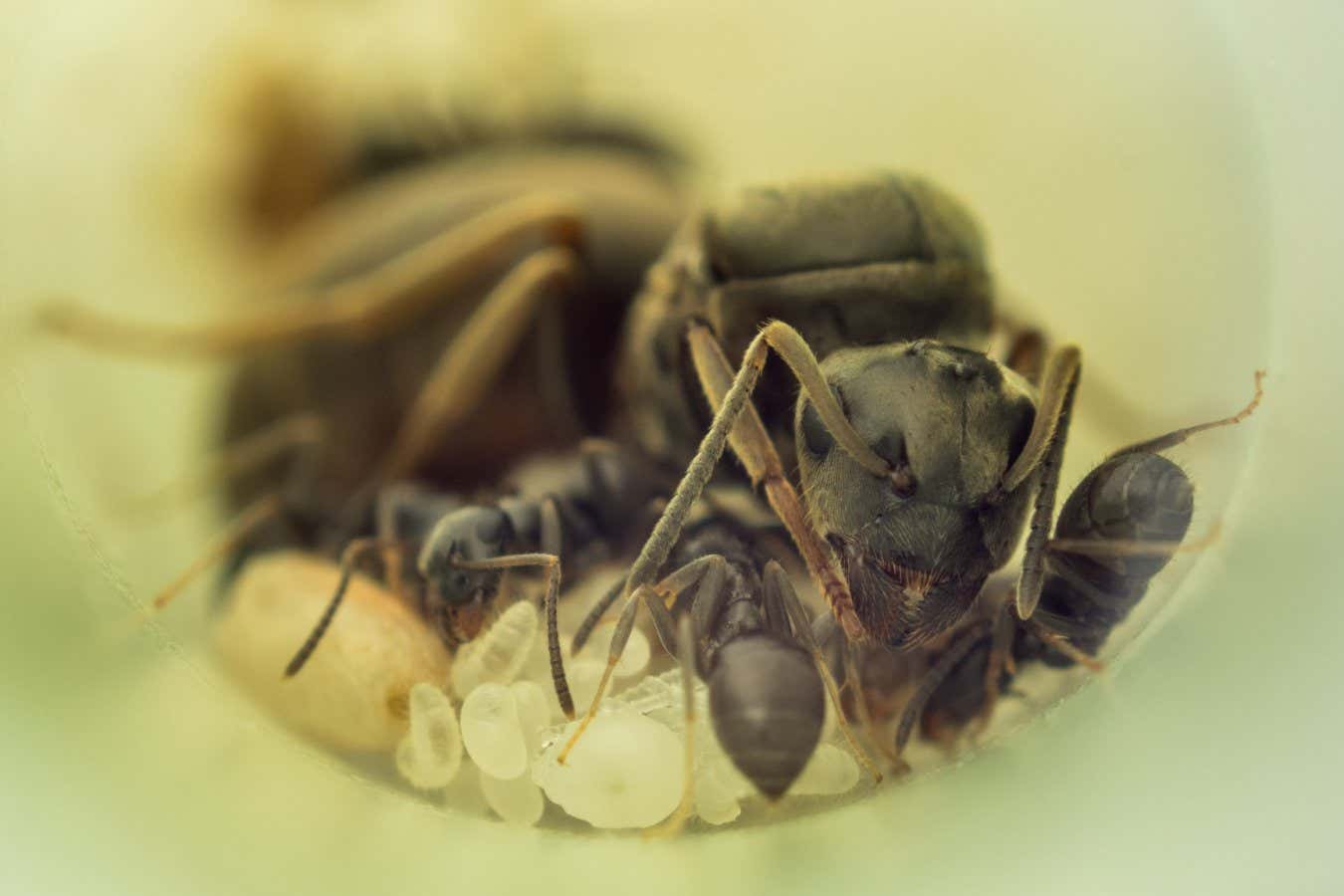
    A black garden ant colony in its nest with a few eggs, pupae, larvae and a large queen

    Nik Bruining/Shutterstock

    When black garden ant queens notice their young are sick, they eat them before the illness spreads to the rest of the nest.

    A cannibal queen may not win any “mother of the year” awards, but the strategy could be an effective way to protect her kingdom, research suggests. The findings provide insights into the evolution of “filial cannibalism”, the practice of parents consuming their offspring.

    Ants and other colony-dwelling social insects can thwart the spread of diseases by having workers self-isolate when sick or by removing infected nestmates. These “social immunity” duties are well known, write Flynn Bizzell and Christopher Pull at the University of Oxford. But ant queens start their colonies alone, so how do they defend against disease as they establish and grow a nest?

    To find out, Bizzell and Pull collected newly mated black garden ant (Lasius niger) queens and brought them into the lab. Once the ants started laying eggs and establishing fledgling colonies, the researchers took the larvae away from the queens and exposed some of them to spores of the lethal Metarhizium fungus, which infects wild ant nests. After those larvae had time to develop infections that would become fatal, but were not yet contagious, the team returned all the larvae to their mother.

    The queens ate 92 per cent of their sick young, but only 6 per cent of the uninfected larvae, showing they could detect the infection and intervene. Failing to catch the infection could have disastrous consequences. When the team exposed colonies to very infectious larval cadavers sprouting with spore-producing fungi, all the broods died. And only 20 percent of the queens survived, even after they sprayed the corpses with acidic, antimicrobial venom.

    Despite these risks, the queens that eat their infected larvae seem to avoid harm. The queens may be swallowing their own antimicrobial venom to make their guts hostile to fungal spores, the researchers suggest. They base this conclusion on previous observations of worker ants swallowing venom and the team’s observations of queens grooming their venom gland openings.

    “If the queen gets infected and dies, the colony dies,” says Sebastian Stockmaier at the University of Tennessee, Knoxville, since she is the only reproductive individual. So, it makes sense that an evolved strategy for dealing with disease would emphasise the survival of the queen.

    Eating the sick babies yields other benefits too. The researchers found queens that ate their sick young went on to lay 55 per cent more eggs than those that didn’t, suggesting they had recycled those caloric resources. This advantage, plus the removal of disease risk, might illustrate a way filial cannibalism could evolve in some species, the researchers argue.

    Joël Meunier at the University of Tours in France wonders if offspring hatched after their older siblings are eaten have immune systems that better protect against the fungal infection. If so, proving this could reveal “dual benefits” of filial cannibalism, for both mother and offspring.

    The findings suggest the behaviours necessary for caring for young and for disease protection in fledgling colonies overlap. As a result, Bizzell and Pull argue that worker ants’ disease-preventing behaviour could have evolved from the kind of generalised parental care seen in many types of insects.

    Topics:

    [ad_2]

    Source link

  • Male and female spiders pair up to look like a flower

    Male and female spiders pair up to look like a flower

    [ad_1]

    A brown male Thomisus guangxicus spider, centre, and a pale amber female female just below, among Hoya pandurata flowers

    Shi-Mao Wu

    A species of spider found in China may have evolved so that a male-female pair together resembles a flower, helping them blend in with their background.

    “This may be the world’s first case of cooperative mimicry,” says Shi-Mao Wu at Yunnan University, who made the observation with his colleague Jiang-Yun Gao.

    Spiders from the Thomisidae family, also known as crab spiders, are ambush predators that usually live on or near flowers.

    They are known for their great camouflage abilities, which prevent them from being spotted by their prey or predators. Some species can even change their colour to match that of the flower they are sitting on.

    Wu and Gao were in a tropical rainforest in Yunnan province in south-west China when a male crab spider of the Thomisus guangxicus species caught Wu’s attention. The spider was sitting on a flower of Hoya pandurata, an plant that lives on the forest’s ancient tea trees.

    “When I first observed the male spider, I did not observe the female spider,” says Wu. Only when he got closer did he notice that the male spider was lying on the back of a female. “They successfully deceived my eyes,” he says.

    The researchers hypothesise that the smaller and darker male might mimic the pistil – the female organs in the centre of the flower – while the female mimics the fused petals.

    They only match the appearance of the flower when individual spiders of both sexes come together, the researchers say.

    However, Gabriele Greco at the Swedish University of Agricultural Sciences isn’t convinced. “It is very difficult to establish the nature of the behaviour that has been observed,” he says.

    In fact, during mating, it is common in many spider species for the males to stand on top of the females. “The easier explanation could be a simple interaction linked to courtship and mating,” says Greco.

    Topics:

    [ad_2]

    Source link

  • Fluffy beetle discovered in Australia may be the world’s hairiest

    Fluffy beetle discovered in Australia may be the world’s hairiest

    [ad_1]

    A new species of fluffy longhorn beetle found in Queensland, Australia

    A new species of fluffy longhorn beetle found in Queensland, Australia

    James Tweed

    An entomologist camping with his partner in Queensland, Australia, has found what may be a contender for Australia’s, and perhaps the world’s, fluffiest beetle.

    The discovery was made by James Tweed at the University of Queensland during Christmas 2021 at Binna Burra Lodge in Queensland’s Gold Coast Hinterland.

    As he emerged from his tent, Tweed, who normally studies the insects of Norfolk Island in the South Pacific, noticed what he thought were droppings on a common, flax-like shrub of the genus Lomandra. But on closer examination, he saw it was actually a spectacular, 10-millimetre-long red and black beetle covered in hair, which was especially thick around the top half of its body.

    He quickly realised it was a type of longhorn beetle – a family with around 36,000 described species – but there was nothing comparable to it that was known elsewhere. It has been designated as a new genus and species named Excastra albopilosa, which translates to “from the camp, white and hairy”.

    “There’s quite a few beetles that are very hirsute,” says Tweed. “But this one is really unique in the length of the hairs and the patterning. It’s not uncommon for a beetle to be hairy, but it’s uncommon to be this hairy.”

    While it isn’t known why the beetle is so hairy, one possible explanation is that it makes it look as though it is infected with a fungus and hence unpalatable to predators, says Tweed.

    The individual he collected, which is now kept as the type specimen in the Australian National Insect Collection, is the only one that has been found in spite of numerous searches around the campsite since the discovery.

    It is likely to be a relatively rare species, says Tweed. “However, it may also be common but we just haven’t found where it lives yet – for all we know, it may be living in the tops of trees where we haven’t surveyed.”

    Topics:

    [ad_2]

    Source link

  • Blue tits shared a tree hollow with bird-eating bats – and survived

    Blue tits shared a tree hollow with bird-eating bats – and survived

    [ad_1]

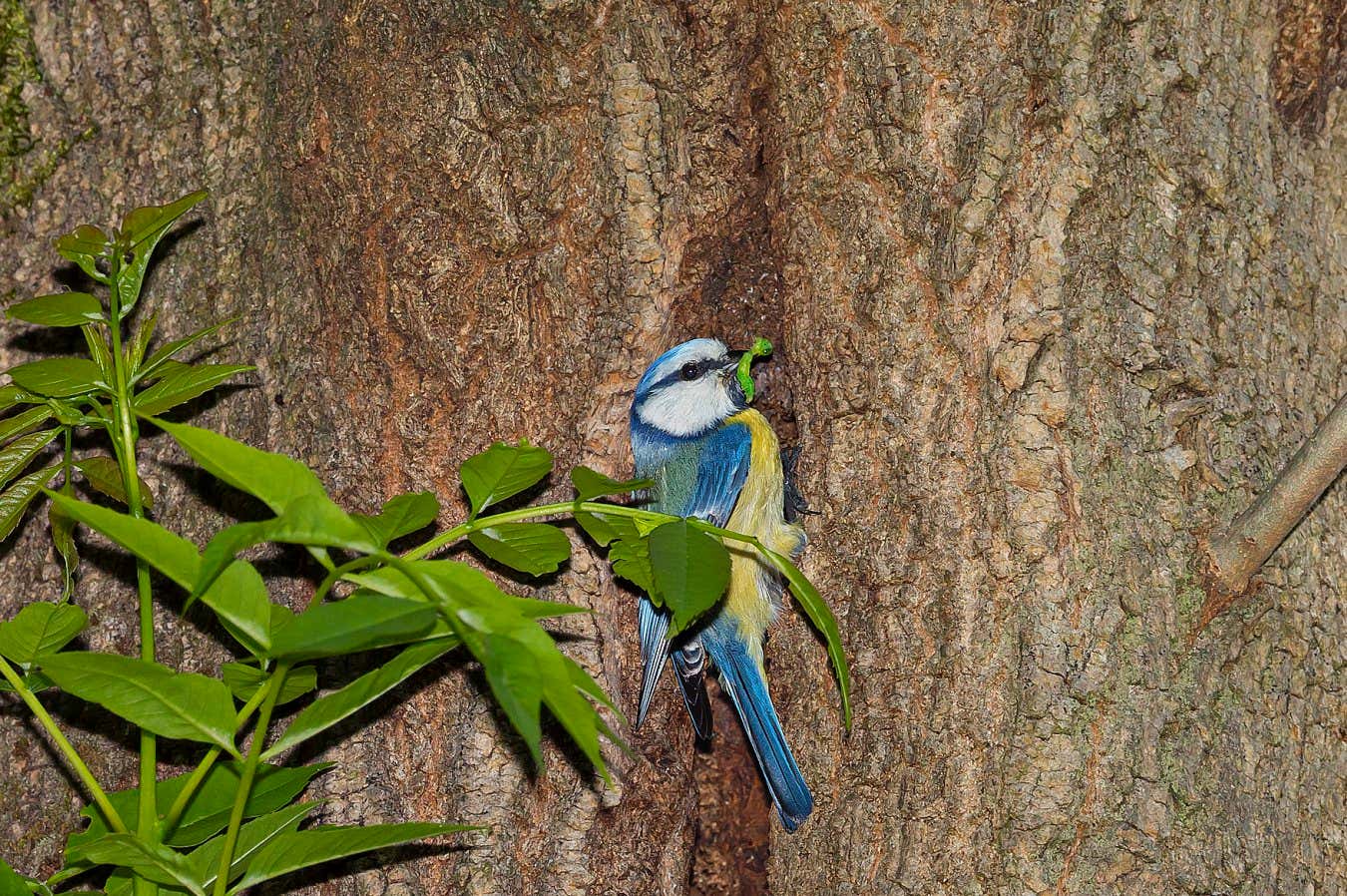
    A pair of blue tits were seen nesting in a tree cavity that was also inhabited by about 25 greater noctule bats, which commonly eat blue tits, but the birds lived to tell the tale

    [ad_2]

    Source link

  • Europe Is Struggling to Coexist With Wild Bears

    Europe Is Struggling to Coexist With Wild Bears

    [ad_1]

    It was around 5 pm on March 15, and the light was fading fast, when Constantin and Tatiana were attacked by the bear. The young couple, aged 29 and 31 and identified in local media reports only by their first names, were Belarusians living in Poland. But Constantin had been working for the winter as a ski instructor in Jasná, a popular resort in neighboring Slovakia. The winter season was coming to an end, and on a day off he’d decided to go hiking with his girlfriend beneath the 4,718 foot-high peak of Na Jame, in the Slovak national park surrounding the resort.

    What happened next is not exactly clear, but newspaper reports suggest that when the couple encountered the bear—a young male weighing about 265 pounds—they ran in different directions. Finding himself alone, Constantin tried calling Tatiana. When he failed to get a response, he called mountain rescue. It was dark when they eventually found Tatiana’s body, with the help of a search dog. She’d apparently fallen down a ravine, sustaining fatal injuries to her head.

    As with previous bear-related fatalities, both in Slovakia and across Europe, the incident has sparked accusations that conservationists are protecting bears at the expense of people’s safety. In 2021, a 57-year-old man was killed by a bear in the same national park, stoking community tensions about their presence and leading to calls for a cull. As it stands, however, hunting the animals is banned under both Slovakian and European law, and experts argue vociferously that a lack of education—rather than a focus on conservation—is the primary cause of the problem.

    “It’s really kicked off here, with the press and politicians I think making some unjustified statements,” says British-born zoologist Robin Rigg. A specialist in large carnivores, Rigg is the chair of the Slovak Wildlife Society, which he set up in 1998, two years after moving to the country. Initial reports suggested that Tatiana might have been killed by the bear itself rather than by her fall, Rigg explains. “And it’s been said in public—actually by someone from the Ministry of the Environment—that it was a predatory attack. But I don’t see the evidence for that.”

    Although the animal was near the body when rescuers found Tatiana, “that doesn’t mean the bear was intending to kill and consume her,” Rigg says. He stresses that he hasn’t seen all the evidence, so any conclusions are provisional. But he has seen some of the grisly photos that were leaked to the media, “and none of them show signs of consumption.” Puncture marks found in the young woman’s leg, he says, “look like claw marks—they’re not signs of feeding.”

    “It’s extremely rare in Europe to have predatory attacks, and it’s not a common thing anywhere in the world,” Riggs says. This incident occurred in an area where bears are known to hibernate, at a time of year when they are just waking up. “And what can sometimes happen is that the bear reacts aggressively in defending itself, which is what I think is most likely to have happened in this case—that it was startled by these two people appearing,” Rigg says.

    Unfortunately, this kind of nuance doesn’t often feature in coverage of bear attacks. “You’re actually more likely, statistically, to get hit by lightning or have an allergic reaction to a bee sting,” Rigg says, “but people don’t worry as much about that as they do about a big animal with sharp teeth and claws. It goes back to an instinctive fear that’s been with us since prehistoric times.”

    The argument that Slovakia’s bears are nothing to be afraid of was further undermined when footage emerged of an animal galloping down a main street in Liptovský Mikuláš just two days after Tatiana’s death. The animal was filmed lunging aggressively at pedestrians, who jumped over fences to escape. No one was seriously hurt, but the video went viral. “And now,” Rigg says, “we’ve had these two incidents within 48 hours of each other, within a few kilometers of each other. So the tendency is to look at them together and ask, ‘What should we do about bears?’”

    It’s a question that’s become increasingly pressing in recent years—not just in Slovakia but throughout Europe. Having been hunted to the point of extinction in many countries, brown bears had their “strictly protected” status enshrined in EU law in 1992. In most areas where they’re present, bear populations are increasing, and there are now an estimated 17,000 brown bears living in rural areas across the continent. The recovery of this keystone species has been celebrated as a huge win by biologists and biodiversity experts—but it’s not been without its problems.

    In the Pyrenees, the mountains that straddle the border between France and Spain, French and Spanish farmers’ unions, sick of dealing with damage to crops, beehives, and livestock, have called for bear numbers to be cut. In the northern Italian province of Trentino, where bears were reintroduced as part of an EU-funded rewilding project, the tragic death of trail runner Andrea Papi in April 2023 brought simmering resentments bubbling up to the surface. To the horror of local scientists, Trentino’s right-wing populist president, Maurizio Fugatti, proposed killing half of the carefully nurtured population of around 120 bears overnight.

    Yet, experts say, culling bears is far from the best way to prevent future tragedies. In the wake of Andrea Papi’s death, the local natural history museum invited Tom Smith, a bear management specialist from Utah’s Brigham Young University, to give a talk about how such issues are dealt with in North America. In a sign of how high community tensions were running, the museum took the unusual step of posting an armed guard at the entrance.

    In his talk, Smith suggested that the solutions were relatively simple: “What you have here isn’t necessarily a bear problem, it’s a people problem,” he said. Unlike in North America, where people in bear areas have grown up with the animals, Europeans living near recently recovered populations don’t necessarily know how to behave. But with some basic bear-awareness training—of the kind that’s taught “in kindergarten” in some Canadian provinces—the number of dangerous or fatal encounters could be vastly reduced.

    Smith runs the North American Human-Bear Conflict Database, which contains detailed information on 2,175 historic attacks, with “a quarter-million data points.” “What I’ve learned by studying these events,” he told the crowd, “is that 60 percent of them were totally unnecessary—and could have been avoided if people had behaved differently.” In an interview a few days later, Smith talked specifically about Papi’s death, telling WIRED, “I can go through the details and say, ‘You should never do that, or that, or that,’ and it’s not victim blaming, it’s trying to say, look, this was fully preventable.”

    Tragically, this also appears to have been the case in Slovakia. “Unfortunately, the route that they chose was a very risky one,” Rigg says. “It’s not a recognized hiking route, and it’s a part of the park that’s strictly protected, so they shouldn’t have been there. Added to that, it’s a limestone area, and that’s an area I’d expect there would be denning bears.” The encounter happened around dusk, when crepuscular creatures like brown bears tend to be more active.

    [ad_2]

    Source link

  • Citizen Zoo Is Rewilding the UK, One Grasshopper at a Time

    Citizen Zoo Is Rewilding the UK, One Grasshopper at a Time

    [ad_1]

    The large marsh grasshopper was once ever-present across Eastern England’s wetlands. But after decades of habitat destruction, these handsome insects are now fragmented and locally extinct, holding out in the wettest fens, valleys, and peat bogs of the New Forest and Dorset.

    Now, London-based Citizen Zoo is trying to bring them back—and it’s planning to do it by turning regular people into zookeepers. Reintroducing the grasshoppers to restored wetland sites across their historic range can bring huge benefits to ecosystems and food chains, says Citizen Zoo’s 30-year-old CEO Lucas Ruzo. “We came up with this citizen keeper concept, which is basically normal people being zookeepers in their own homes, breeding and rearing grasshoppers,” he says.

    After a crash course in grasshopper husbandry, an initial group of about a dozen zookeepers were given a kit that included between 30 and 50 eggs, a heat-emitting incandescent bulb, and a glass enclosure. For the volunteer keepers—so far including retired wildlife professionals, a mother of two eager kids, and corporate teams raising a brood together in an office block—each day requires little more than incubating and collecting food. “It’s as simple as a light bulb and then a jar of fresh grass every morning,” says Ruzo.

    Each keeper can raise a brood every four or five weeks, and they’re then released at two secret locations. Since the first release in Norfolk in 2019, several hundred hand-reared grasshoppers have helped to build self-sustaining wild populations, with the “end mission” of restoration throughout their range, says Ruzo.

    On kitchen tables and in kids’ bedrooms, this zookeeping experiment aims to show that the regular person has a role to play in a crowdsourced response to the Holocene extinction. The project, named A Hop of Hope, is typical of Citizen Zoo’s approach, which invites supporters to get their hands dirty in captive breeding programs, translocating species and reintroducing them to restored sites.

    Crucially, this process takes the job of captive breeding out of the hands of zoological institutions and democratizes a so-far prohibitively expensive process. And while such DIY rewilding might sound like a recipe for ecological disaster (or at least the occasional grasshopper prison-break), Citizen Zoo has earned support from UK conservation agency Natural England and environment minister Zac Goldsmith, plus financial backing from Cambridge University’s Social Ventures incubator and the United Nations Environment Programme.

    When not tasking volunteers with hand-rearing animals, Citizen Zoo gets them involved in upgrading habitats, such as in its Get inVOLEd project, which aims to bring back endangered water voles—the UK’s fastest declining wild mammal—to Kingston’s Hogsmill River. Ruzo says Citizen Zoo aims to “rewild people” first, starting in Kingston by reaching out to thousands of locals to educate them about the charismatic rodent’s disappearance, training 60 volunteers, and working with local carers to clear overgrowth, build wildlife ponds, and improve local floral biodiversity. In spring 2022, they’ll release 150 voles.

    Most eye-catching is its goal of reintroducing beavers—hunted to extinction in the UK four centuries ago—to London. In January, Citizen Zoo set up the London Beaver Working Group, an informal partnership with conservation organizations such as the Beaver Trust and private landowners, to establish how. “We really want to see beavers return to London, and they’re going to arrive in London sooner or later,” says Ruzo. Beavers have been in London’s rural hinterlands since being reintroduced by Kent Wildlife Trust in 2001. “They have really good powers of dispersal. They’re a species that’s really good at moving upstream into new areas, so we’ve taken a proactive approach.” Ruzo hopes they will soon be reintroduced to Hackney Wick marshes, his local go-to spot for natural connections.

    [ad_2]

    Source link

  • A Pill That Kills Ticks Is a Promising New Weapon Against Lyme Disease

    A Pill That Kills Ticks Is a Promising New Weapon Against Lyme Disease

    [ad_1]

    If you have a dog or cat, chances are you’ve given your pet a flavored chewable tablet for tick prevention at some point. What if you could take a similar pill to protect yourself from getting Lyme disease?

    Tarsus Pharmaceuticals is developing such a pill for humans—minus the tasty flavoring—that could provide protection against the tick-borne disease for several weeks at a time. In February, the Irvine, California–based biotech company announced results from a small, early-stage trial showing that 24 hours after taking the drug, it can kill ticks on people, with the effects lasting for up to 30 days.

    “What we envision is something that would protect you before the tick would even bite you,” says Bobby Azamian, CEO of Tarsus.

    Lyme disease is a fast-growing problem in the United States, where approximately 476,000 people are diagnosed and treated for it each year, according to the most recent data from the Centers for Disease Control and Prevention. That number is likely an overestimate, because many patients are treated after a tick bite even if an infection isn’t confirmed, but it underscores the burden of Lyme disease on the health care system—which researchers at the CDC and Yale University put at nearly $1 billion per year.

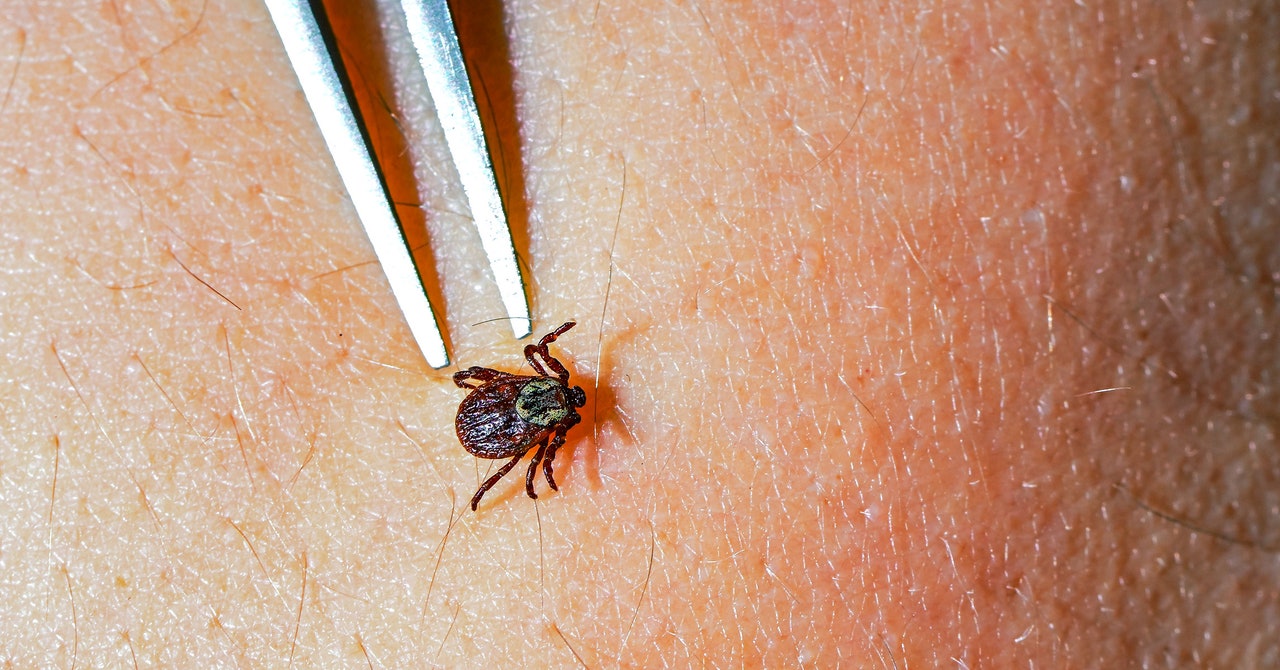
    The disease is caused by the bacteria Borrelia burgdorferi, which gets passed to humans through the bite of an infected tick. In most cases, a tick has to be attached for around 36 to 48 hours before the bacteria can be transmitted. Symptoms include fever, headache, fatigue, and a characteristic skin rash that looks like a bullseye.

    Without a vaccine for Lyme disease on the market, current prevention includes using insect repellents such as DEET and permethrin and wearing closed shoes, long pants, and long sleeves when in a tick-infested area.

    “We’ve seen increasing rates of tick-borne diseases over the years, despite being told to do tick checks, use DEET, and impregnate your clothes with permethrin,” says Paul Auwaerter, a professor of medicine at the Johns Hopkins University School of Medicine who studies Lyme disease.

    A more effective treatment strategy would be welcome, Auwaerter says, especially because Lyme disease can sometimes cause serious health issues. Antibiotics are usually effective when taken early, although about 5 to 10 percent of patients can have lingering symptoms for weeks or months. If left untreated, the infection can spread to the joints and cause arthritis. It can also become established in the heart and nervous system, causing persistent fatigue, numbness, or weakness.

    The experimental pill that Tarsus Pharmaceuticals is testing is a formulation of lotilaner, a drug that paralyzes and kills parasites by interfering with the way that signals are passed between their nerve cells. Lotilaner is already approved as a veterinary medicine under the brand name Credelio to control fleas and ticks in dogs and cats.

    “Our animals have better options than we do for tick prevention,” says Linden Hu, a professor of immunology at Tufts Medical School who led the Tarsus trial. “There are quite a few drugs and vaccines available for dogs and cats, but there’s nothing for us.”

    [ad_2]

    Source link

  • Chimp mothers play with their youngsters even when times are tough

    Chimp mothers play with their youngsters even when times are tough

    [ad_1]

    A chimpanzee mother and infant in Kibale National Park, Uganda

    Dr. Kris Sabbi, Tufts University

    When there isn’t much food to go around, most chimpanzees stop playing altogether to conserve energy, but mothers continue to spend lots of time playing with their young. Play is vital for the physical and psychological development of young chimps, so it might be that mothers invest energy in this behaviour to nurture their child, even when times are tough.

    Great apes such as gorillas, bonobos and chimpanzees all have a penchant for playing, which includes tickling, poking and chasing each other. “Play helps to develop both motor and social skills,” says Zarin Machanda at Tufts University in Massachusetts. “It is something that babies really need to do in order to develop properly.”

    For over a decade, Machanda and her colleagues have been observing a community of around 60 eastern chimpanzees (Pan troglodytes schweinfurthii) living in Kibale National Park in Uganda. In total, the team recorded 3891 bouts of play between 2010 and 2019.


    “In 2016 or 2017, we had this incredible summer where there was just food everywhere at our field site,” says Manchanda. “And one of the things that we noticed was lots of adult chimps playing with each other.”

    During times of food abundance, the team recorded at least one instance of play on 97 per cent of observation days, but this dropped to just 38 per cent when food was scarce.

    Mother chimps, however, kept playing with their children at even higher rates during these low food availability periods.

    “That was really surprising,” says team member Kris Sabbi at Harvard University, as food is generally more important to female chimps because the energetic cost of reproduction is so high.

    During periods of food stress, chimps tend to spend more time alone to avoid competition for resources, which means mothers often become the only social partner for their babies. As a result, mothers spend even more time playing with their children to make up for the lack of socialising with peers and other adults.

    “The fact that moms are continuing to play with their babies at a cost to themselves indicates how important it is for their development,” says Machanda. “It’s almost like the hidden cost of motherhood.”

    Topics:

    [ad_2]

    Source link

  • Blind cave fish offers lessons in how to survive starvation

    Blind cave fish offers lessons in how to survive starvation

    [ad_1]

    Unlike most other animals, the cave-dwelling Mexican tetra doesn’t get a fatty liver when it is malnourished – and its secrets could lead to medical benefits for other species

    [ad_2]

    Source link