Black-backed jackals may urinate on sweet melons that grow in the Namib desert to stop other jackals pinching the fruit as it ripens.
The jackals, which are native to eastern and southern Africa, hunt small prey or scavenge on the carcasses left by larger predators, but they are also partial to fruit.
Jeremy Midgley at the University of Cape Town, South Africa, and his colleagues set up camera traps to…
A hingemouth extending its proboscis to feed at the bottom of a tank
Allyson Evans
A fish found only in West African rivers and forest pools can stick out a trunk-like snout to suck up food or breathe air like a snorkel.
The hingemouth (Phractolaemus ansorgii) has what biologists call a deployable proboscis, a tubular structure folded into its head that can extend upwards or downwards. The lips of the proboscis are lined with tooth-like structures made out of keratin, which the fish uses to scrape up algae or other detritus.
Allyson Evans at the George Washington University in Washington DC and her colleagues used dissection, videography and CT scans to reveal the complicated construction of its jaws.
Unlike all other fish, whose jaw joint sits behind their mouth, the hingemouth’s jaw joint is at the front of its head. The lower jaw is flipped backwards, pointing towards the throat. The upper jaw, which is connected to the lower jaw by a ligament, is part of the proboscis. “You can think of the upper jaws as being more or less suspended in the skin of the proboscis,” says Evans. This is why the structure can extend so far out of the head.
The hingemouth offers “a novel mechanical solution to a ubiquitous challenge all fish face, which is how to acquire food within a viscous, fluid medium”, says Evans.
She has also observed the fish swimming up to the surface and taking a gulp of air, using the proboscis “like a snorkel”, she says. This could be a useful ability in forest pools where oxygen levels can run low.
Scientists aren’t sure how the hingemouth evolved, as the fossil evidence is sparse. “The family that Phractolaemus belongs to, Kneriidae, is believed to be mid-Cretaceous in origin, but there’s simply no intermediary form found yet in the fossil record,” says Evans.
“What’s most important to me is that scientists remain curious about the little freaks of the world,” she says.
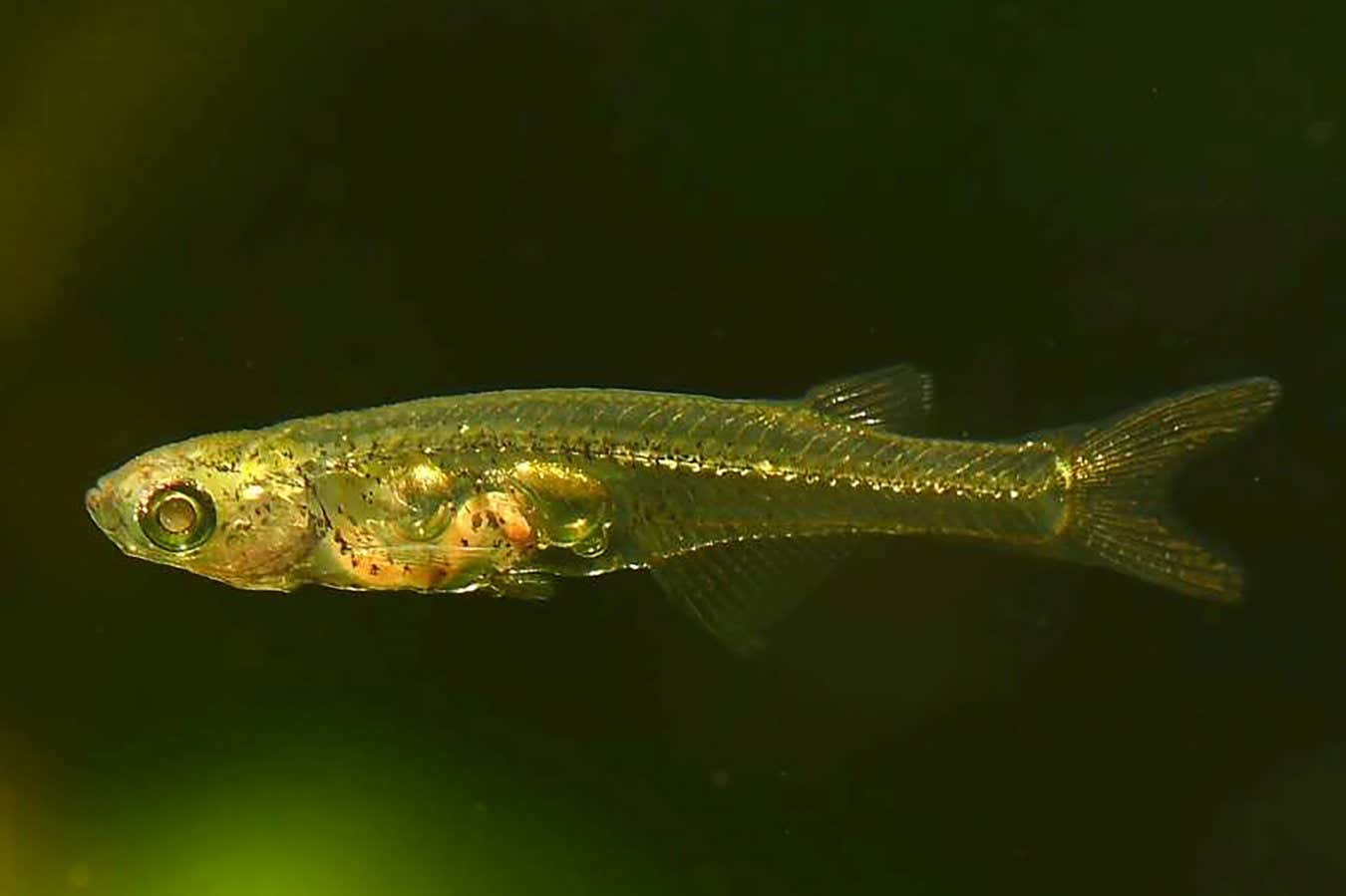
One of the world’s smallest fish, measuring just 12 millimetres long, can make a sound registering more than 140 decibels – about as loud as firecrackers being set off.
Danionella cerebrum is a tiny species of fish that is native to small streams along the Bago Yoma mountain range in Myanmar. It has the smallest known brain of any vertebrate in the world.
“We study this fish primarily for neuroscience, because they’re so small and transparent,” says Verity Cook at Charité – Berlin University Medicine in Germany. But the fish are so loud that, even when just walking past their tanks, you can hear audible pulsing sounds, she says.
To investigate how the tiny fish make these sounds, Cook and her colleagues gathered groups of three or four fish into a small tank and took high-speed videos of them.
When the fish produce sound, the rib that sits adjacent to their swim bladder – the organ that helps to control their buoyancy – gets pulled by a specialised muscle into a piece of cartilage with a small indentation.
“There’s tension built up in this contraction,” says Cook. “When that is very rapidly released, [the rib] strikes the swim bladder, which produces the drumming sound.”
Based on analysis of gene expression, these specialised muscles are more resilient to fatigue compared with other muscles in the fish, which allows them to produce lots of hits in quick succession.
The reason why these fish make such a loud noise is unclear. D. cerebrum normally live in murky, turbid waters, so they might have evolved this behaviour to help locate each other when visibility is poor, says Cook.
“But the fact that it’s only males that make sound suggests that it’s to do with aggressive behaviour towards other males or mating behaviour with females,” she says.
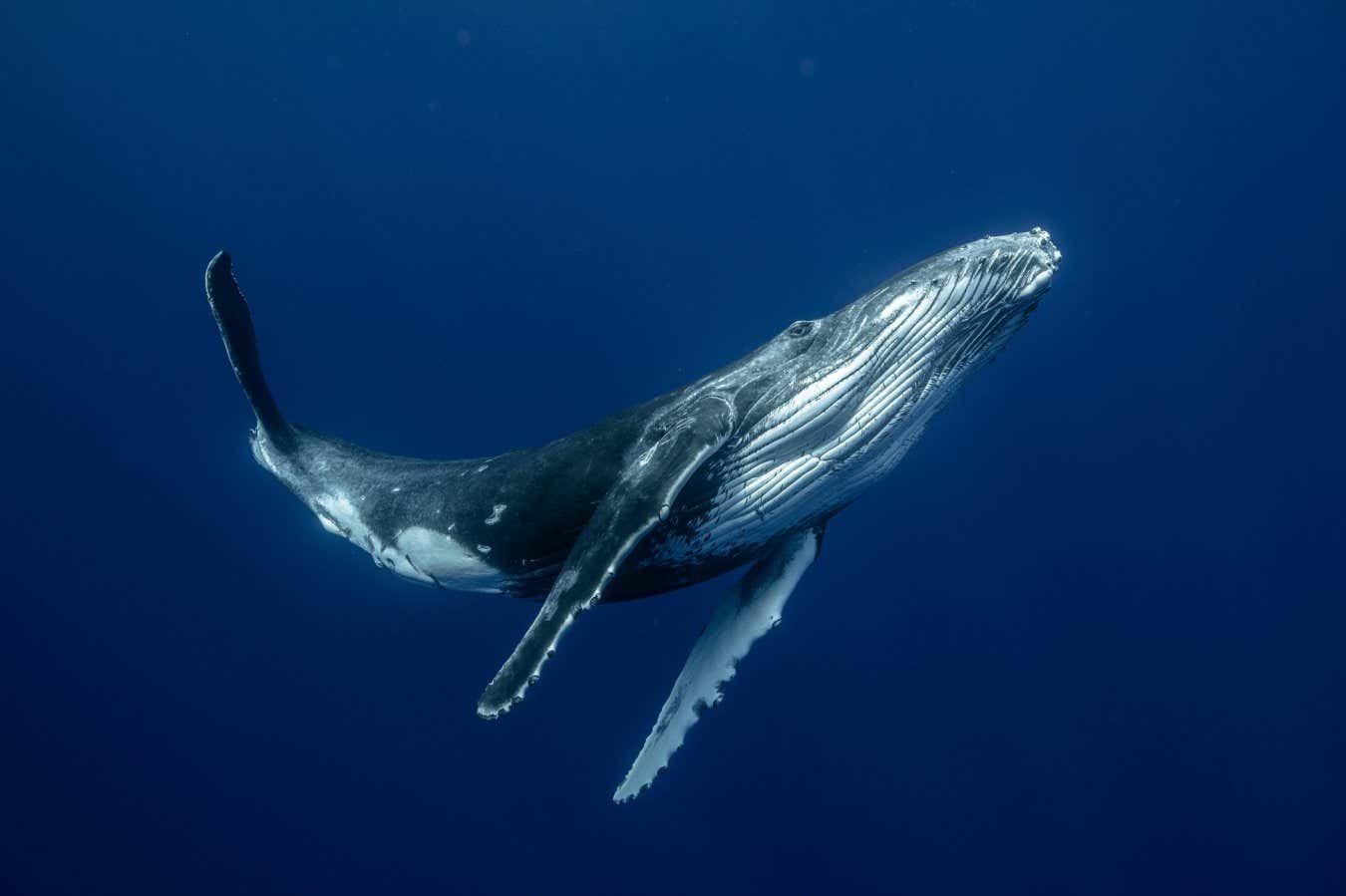
Humpback whales use songs to communicate with each other across the ocean
KARIM ILIYA
Biologists have figured out how baleen whales produce their signature songs – and it involves their uniquely shaped larynx.
Baleen whales, including humpbacks, communicate with complex songs that can be heard over vast distances. “People recorded the first whale sounds in the 1970s, but it was only very recently that we started to appreciate the different sounds these animals actually made,” says Coen Elemans at the University of Southern Denmark. “Now, the question is, how do they even do this?”
To learn more, Elemans and his team extracted the larynxes of three recently deceased baleen whales: a sei whale (Balaenoptera borealis), a humpback whale (Megaptera novaeangliae) and a northern minke whale (Balaenoptera acutorostrata).
The larynx, commonly known as the voice box, is an organ that sits at the top of the neck in mammals. When air flows through the organ, folds of tissue vibrate, resulting in sound.
But that isn’t the case with baleen whales, says Elemans. Upon examination of the whales’ larynxes, the team found that they had an unexpected shape – with a cushion of fat sitting on one side of the organ.
As these whales breathe, the air is pushed against the fatty material, which causes it to vibrate and make sounds. “We’ve never seen this in any other animal,” says Elemans. “It’s totally unique to baleen whales.”
The whales also can recycle the air in their lungs, which comes in handy when they are submerged for long periods of time. When they breathe out through their windpipe and larynx, the air goes into a sac with a contracting wall that expels the air back into their lungs.
From a computer model of the larynx, the team found that baleen whales could produce frequencies up to 300 Hertz, at a maximum depth of 100 metres below the surface of the sea. That is within the frequency range of noise made by ships, raising concerns that shipping noise could drown out their songs.
“These whales cannot escape this,” says Elemans. “So we need take steps to reduce the noise we make.”
The first-ever photograph of the yellow-crested helmetshrike
Matt Brady/The University of Texas at El Paso
A rare bird with a stunning yellow crest has been photographed for the first time in the tropical mountains of the Democratic Republic of the Congo – almost two decades after its last confirmed sighting.
The yellow-crested helmetshrike (Prionops alberti), also known as King Albert’s helmetshrike, is a small bird that lives in the humid forests of the Albertine Rift mountains in central Africa. Adults are covered in glossy black plumage with a splendid crown of bright, golden feathers on their heads. Their eyes are surrounded by distinctive orange tissue called a wattle.
After going unseen for many years, the helmetshrike was listed as a lost species by the Search for Lost Birds partnership.
Michael Harvey at the University of Texas at El Paso and his colleagues finally encountered it again during a six-week expedition to the Itombwe mountains between December 2023 and January 2024.
The team members were wandering through the cloud forests when they stumbled across a group of the elusive birds.
“It was a mind-blowing experience to come across these birds. We knew they might be possible here, but I was not prepared for how spectacular and unique they would appear in life,” said Harvey in a statement.
In all, 18 helmetshrikes were spotted at three locations during the expedition. This suggests there may be a healthy population of the birds, which are currently considered vulnerable by the International Union for Conservation of Nature.
The group also spotted other species that were considered lost during the trip, including the red-bellied squeaker frog (Arthroleptis hematogaster), last seen in the 1950s.
“Right now is a golden opportunity to protect these tropical forests, so that we don’t lose species like the helmetshrike before they are known and studied,” said Harvey.
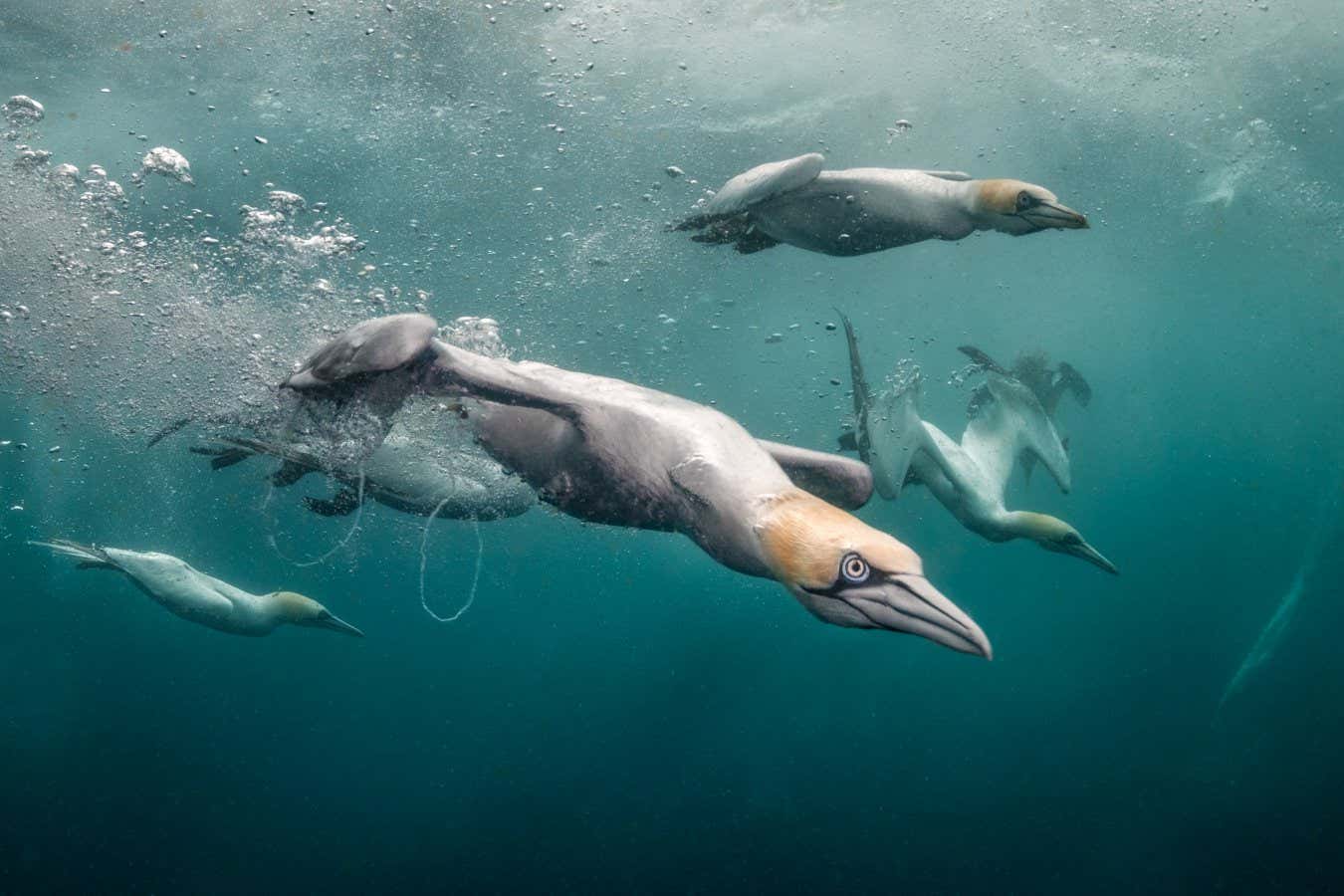
Snowy-white northern gannets (Morus bassanus) plunge into icy waters off the Shetland Islands in Scotland in search of food in this action-packed photograph. The seabirds are almost as big as an albatross, with a wingspan of up to 180 centimetres. They are also uniquely adapted to high-speed diving, with strong neck muscles and nostrils inside their bills that can be closed to prevent water entering.
The shot was one of the most spectacular in the 2024 Underwater Photographer of the Year competition, which celebrates the wonders of the marine world. Here are some of New Scientist’s top picks from the many entries.
Virgo wreck near Recife, Brazil
Fabi Fregonesi/UPY 2024
In this photo by Fabiana Fregonesi, a school of fish swarm around a wreck, forming a shape resembling a boat’s sail for a fleeting moment. The vessel, called Virgo, was deliberately sunk in 2017 to become a dive site near Recife, Brazil.
“The feeling I had at the time was that the ship was ready to set sail, beginning its journey towards an unknown adventure,” Fregonesi said in a statement.
The eye of a grey whale
Rafael Fernandez Caballero/UPY 2024
The eye of an eastern grey whale (Eschrichtius robustus) pierces this mysterious shot taken from just above the surface of a saltwater lagoon in west Mexico. These marine giants are friendly creatures, often showing their curiosity by approaching boats. The whales make one of the longest annual migrations of any mammal – from summer feeding grounds in the Arctic southwards along the west coast of North America to the warm lagoons of Baja California, Mexico.
An octopus ringed by a pyrosome
Dennis Corpuz/UPY 2024
In stark contrast to the gigantic grey whale, this 10-centimetre-wide organism was captured up close in deep waters off the Philippines. The circular subject of the image is a pyrosome – a colonial animal that is made up of hundreds or thousands of minuscule individuals called zooids. Enveloped inside the bizarre pyrosome is a little octopus, just peeking out.
A diving cormorant
Jon Anderson/UPY 2024
This ravenous cormorant makes a beeline towards photographer Jon Anderson’s camera, after mistaking it for a fish. The extraordinary image was taken in a kelp forest at a dive site in Monterey, California, during a bright summer afternoon. Many cormorant species rely on these special marine ecosystems to survive; however, local kelp forests have declined 80 per cent in the past decade.
A stranded sperm whale
Nuno Sá/UPY 2024
Dozens of beachgoers in southern Portugal attempt to save a sperm whale (Physeter macrocephalus) in this incredible aerial shot.
“Together they push and chant, trying to help the giant back into the sea, as it slowly slaps its tail back and forth and breathes heavily,” said photographer Nuno Sá in a statement. Despite their best efforts, the whale died several hours after beaching – crushed under its own weight without the support of water.
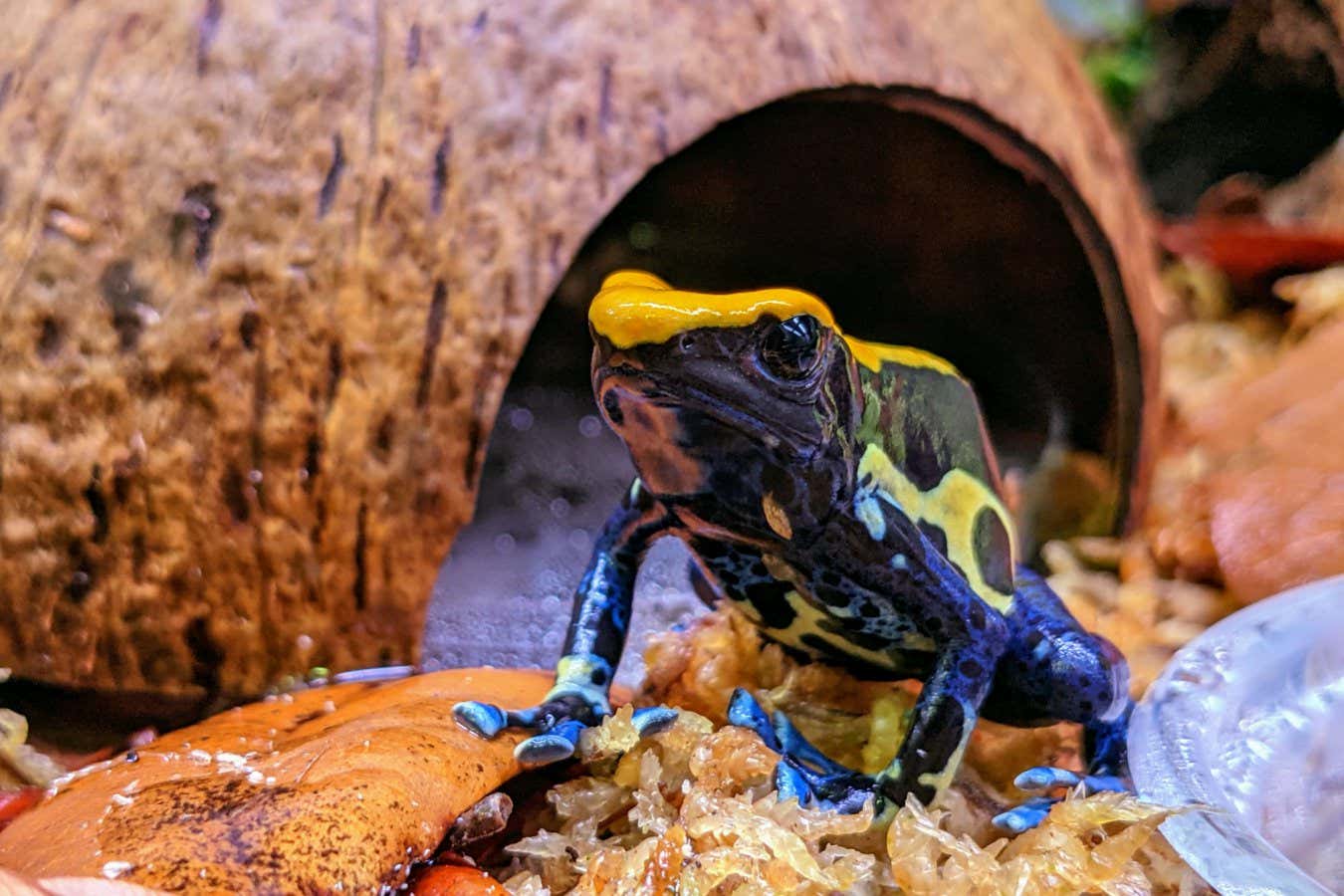
Dyeing poison frogs tap their toes the most when standing on leaves in their natural habitat
Sarah Westrick
Poison frogs have a curious habit of tapping their toes, and scientists may have finally uncovered why – to create vibrations that flush out unsuspecting prey.
Colourful and highly toxic poison frogs dwell in warm, moist habitats, such as rainforests and swamps, in Central and South America.
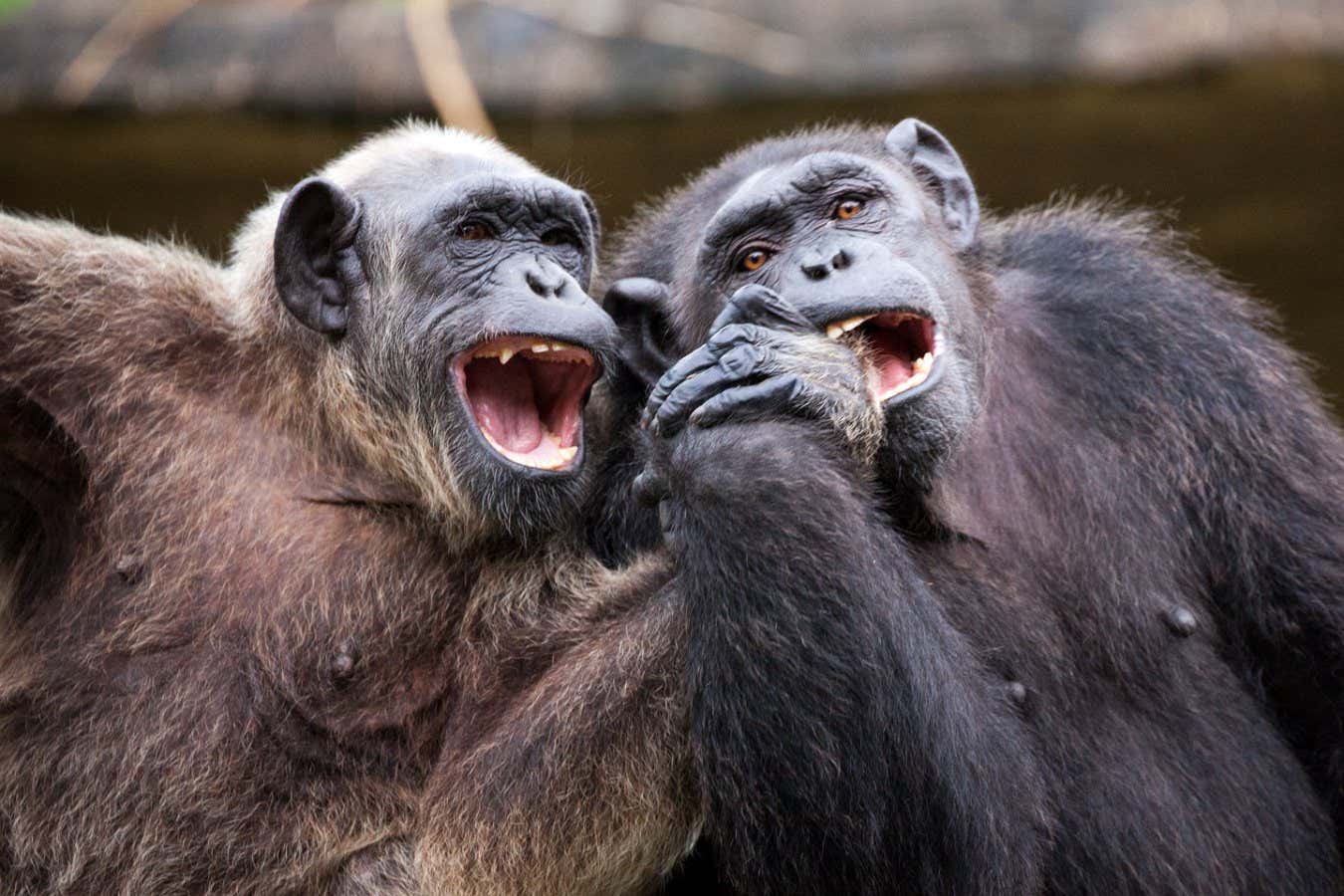
Bonobos, orangutans, gorillas and chimpanzees all poke, tickle and even steal from their peers as a form of playful teasing. Understanding these apes’ mischievous behaviour could help biologists work out the origins of humans’ sense of humour.
Previous studies have found that chimpanzees may engage in agonistic teasing, or harassment, to reinforce their hierarchical positions. But when the right balance of enjoyment and aggression is struck, teasing can also be a form of play and amusement, says Isabelle Laumer at the Max Planck Institute of Animal Behavior in Germany.
“So far, the playful side of teasing has not yet been systematically studied,” she says. “So our goal was to identify and create a criteria for playful teasing in apes.”
To do that, Laumer and her colleagues collected videos of five species of great ape: bonobos (Pan paniscus), Sumatran orangutans (Pongo abelii), western and eastern gorillas (Gorilla gorilla and Gorilla beringei) and chimpanzees (Pan troglodytes). There were a total of 34 apes, all housed in zoos.
From 75 hours of video footage, the team documented 504 social interactions between individuals. Of those, 142 were classified as playful teasing events, consisting of 18 behaviours such as poking, hitting, pulling on hair, hindering movement and stealing.
“Teasing is characterised by a provocative element,” says Laumer. “It’s usually coming from the teaser and often one-sided, with lots of repetition.”
The researchers found that the teaser tended to look at their target’s face straight after an action, which suggests that the teaser anticipated a response. When there was no response from the target, the teaser would usually escalate the teasing, for example by poking them even more.
One of the most important signs that the teasing was playful, instead of antagonistic, was that it typically happened in a calm, comfortable setting. “The individuals tended to be relaxed during the interaction,” says Laumer.
Cases of stealing were considered playful when the object presented no obvious benefit to the teaser or if they lost interest in the object soon after pinching it.
“We find that playful teasing is present in all four great apes,” says Laumer. Much like play in general, this behaviour could be useful in building relationships between groupmates and even testing out social boundaries, she says.
The last common ancestor between humans and the other great apes may well have engaged in playful teasing too, which could have been the forerunner of our fondness for jokes, adds Laumer.
“Studying great apes is critical to understanding which features of human cognition and behaviour are shared and likely evolved millions of years ago in a common ancestor,” says Christopher Krupenye at Johns Hopkins University in Maryland. “This study provides exciting evidence that all apes seem to engage in playful teasing behaviour and also charts a path for future research in other species.”