Tag: Chemistry

  • Earthquakes may explain how huge gold nuggets form in quartz rock

    Earthquakes may explain how huge gold nuggets form in quartz rock

    [ad_1]

    A replica of the Welcome Stranger, a gold nugget weighing almost 100 kilograms found in Australia in 1869

    Ian Dagnall/Alamy

    Earthquakes may cause gold nuggets to form in quartz by generating an electric field that attracts gold dissolved in fluid forced up from deep underground.

    Enormous gold nuggets are often associated with quartz, a ubiquitous but chemically inert mineral. The world’s largest gold nuggets can reach weights of nearly 100 kilograms, but until now no one has been able to explain how such valuable lumps of metal were formed.

    “The mystery has been how do you make a large gold nugget in a single spot when there’s no obvious chemical or physical trap,” says Chris Voisey at Monash University in Melbourne.

    Voisey and his colleagues have now discovered a possible mechanism. When quartz is subjected to pressure, it produces a voltage that attracts gold that is dissolved in water.

    The secret is in the structure of the quartz, Voisey explains. Quartz is the only abundant mineral whose crystals lack a centre of symmetry. This means that when these crystals are distorted or subjected to pressure by seismic activity, their internal electromagnetic configuration is altered and they produce electricity. Electricity generated in response to mechanical stress is known as piezoelectricity.

    Gold-bearing hydrothermal fluids from Earth’s mid to lower crust, 15 to 20 kilometres below the surface, are driven up through fissures during seismic activity. However, the gold is so dilute that it would take the equivalent of five Olympic swimming pools of this hydrothermal fluid to produce 10 kilograms of gold.

    Voisey and his colleagues hypothesised that gold is concentrated into nuggets within veins by the piezoelectricity of the quartz during repeated earthquakes. To test this idea, the team conducted experiments with quartz crystals placed in a solution containing gold and subjected to moderate pressures from an actuator.

    Quartz samples that weren’t subjected to pressure didn’t attract gold, but those that were subjected to force generated a voltage and attracted the metal. Some of the samples were coated in iridium, which accentuates the piezoelectric response of quartz, artificially mimicking greater seismic activity. These samples grew larger pieces of gold – upwards of 6000 nanometres – compared with 200 to 300 nanometres for uncoated quartz.

    Once gold started depositing on the quartz, it rapidly attracted more, says Voisey. “Because gold is a conductor, there’s a preferential bias for gold in solution to deposit on pre-existing gold,” he says. “It becomes like a lightning rod that attracts more gold.”

    Topics:

    [ad_2]

    Source link

  • India’s pioneering mission bolsters idea that Moon’s surface was molten

    India’s pioneering mission bolsters idea that Moon’s surface was molten

    [ad_1]

    An image of the waxing Moon.

    The Moon probably originated from material scattered into space when a large impactor struck the newly formed Earth.Credit: David Gannon/AFP via Getty

    India’s Chandrayaan-3 mission has obtained the first measurements of the composition of the soil near the Moon’s south pole1. The minerals found offer further evidence that the lunar surface was entirely molten shortly after the Moon formed.

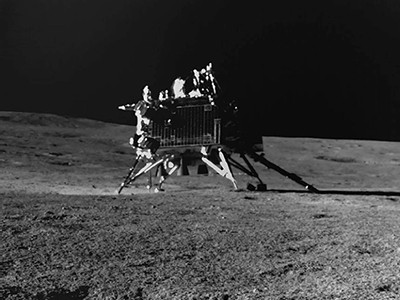
    Chandrayaan-3’s Vikram lander touched down on 23 August 2023. It released a rover called Pragyan, which collected data ranging from temperature to seismological measurements over 10 days.

    Pragyan also studied the chemical composition of the regolith: the fine material that covers much of the lunar surface. The rover stopped and deployed an instrument called an alpha-particle X-ray spectrometer (APXS) 23 times.

    Santosh Vadawale, an X-ray astronomer at the Physical Research Laboratory in Ahmedabad, India, and his colleagues analysed radiation data collected by the APXS, and used this information to identify the elements in the regolith and their relative abundances, which, in turn, revealed the soil’s mineral composition. The team found that all 23 samples comprised mainly ferroan anorthosite, a mineral that is common on the Moon. The results were reported in Nature today.

    “It’s sort of what we expected to be there based on orbital data, but the ground truth is always really good to get,” says Lindy Elkins-Tanton, a planetary scientist at Arizona State University in Tempe.

    Previous landers obtained similar results. However, the Chandrayaan-3 samples are the first from the subpolar region: previous landers visited equatorial and mid-latitude zones. Together, this suggests that the composition of the regolith is uniform across the Moon’s surface.

    Vadawale says that this is direct confirmation that the lunar surface was a molten magma ocean immediately after it formed. The lunar magma ocean theory was first proposed by two independent groups in 1970, after rock collected during the 1969 Apollo 11 landing was analysed.

    Moon’s origin

    The best model for the origin of the Moon is that the newly formed Earth was struck by a large impactor, called Theia, which vaporized the planet’s surface and blasted a large amount of material into orbit. The scattered material swiftly accreted to form the Moon. This impact theory explains why lunar rocks have an isotope composition similar to those on Earth.

    The material that formed the Moon had a lot of energy, which had to be dissipated. It escaped in the form of heat and, as a result, the young Moon’s surface melted into a magma ocean. Dense mafic rocks, rich in metals such as magnesium, sank into the Moon’s interior. Lighter rocks, including anorthosite, floated to the top, forming highlands similar to those visited by Chandrayaan-3.

    “It gives more support to the lunar magma ocean hypothesis,” says Mahesh Anand, a planetary scientist at the Open University in Milton Keynes, UK.

    Vadawale and his colleagues found that their samples contained elevated levels of magnesium compared with those of calcium. This suggests that deeper mafic material has been mixed into the regolith.

    The researchers attribute this to the events that formed a huge crater called the South Pole–Aitken basin, the rim of which is 350 kilometres from Chandrayaan-3’s landing site. “When such a large impact basin forms, it is supposed to excavate some deeper material,” says Vadawale, because the impactor drives deep into the crust. This deeper, magnesium-rich material would have been scattered over a huge area, slightly altering the make-up of the regolith Pragyan sampled.

    But one problem with that idea is that the South Pole–Aitken basin seems to be dominated by a mineral called pyroxene, which doesn’t quite fit Pragyan’s data, says Anand. Resolving this will probably require samples to be brought back to Earth, he says.

    The next Chandrayaan mission, which is in an early phase of development, intends to do just that.

    “To me, it’s a story about the success of the Indian space programme,” says Elkins-Tanton.

    [ad_2]

    Source link

  • The Cure for Disposable Plastic Crap Is Here—and It’s Loony

    The Cure for Disposable Plastic Crap Is Here—and It’s Loony

    [ad_1]

    There’s a term of art for this whole system: reverse logistics. For the first 100 years of the plastics revolution, companies essentially sprayed products at customers—it was a one-way movement of atoms. Successful recycling requires doing this process in reverse, an entirely new set of skills. How do you get stuff back? What new economics, technologies, and policies do you need?

    And what social engineering? Customers might decide, Eh, who cares about the 20 cents, and throw their bottles away. So Infinitum runs playfully encouraging ads. One shows a tennis player in a locker room hurling a bottle in the trash. A voiceover notes that making a new one takes as much energy as running a ball machine for an hour-plus. Suddenly he’s pelted with balls as he runs and ducks for cover.

    Altogether, the strategy has worked. In Norway consumers are now so environmentally conscious that they’ve started actively choosing to buy beverages made from recycled bottles. Even though recycled PET costs anywhere from 1.5 to 1.75 times more expensive than virgin plastic, bottle makers buy it up and use it.

    I wondered: Would it be possible to turn plastic bottles into a completely closed loop? Let’s imagine every country pulled a Norway—a politically hallucinogenic “if,” sure, but let’s go there. Could bottle makers keep on reusing those plastic molecules over and over, and never need virgin plastic?

    Not entirely. When PET molecules are repeatedly recycled, they start “yellowing and darkening,” Michael Joyes, the sustainability director for Petainer, a European bottle maker, said. Eventually they turn black. You can lighten the stuff with “anti-yellow” chemicals or mix it with virgin materials. Or you can use these older plastics to bottle up drinks like Coke. “The inside’s dark too, so people don’t mind so much,” Joyes said.

    Even so, repeatedly recycled PET becomes less useful over time. The polymer chains in the plastic get shorter. Clever chemistry hacks can lengthen them, and some recyclers predict recycled PET can be used up to eight times. EU legislation is mandating that by 2030, 30 percent of PET in bottles be recycled—and Joyes predicts that some countries and brands will push much higher, to 70 or even 100 percent recycled PET.

    I was impressed by Infinitum’s success. But PET bottles are, chemically and structurally, the easiest plastic to recycle. They basically want to be reborn (until they don’t). Many other forms are more truculent. Consider food containers: They can consist of several plastics with different recycling processes. Pricey! Recyclers are experimenting with “chemical” recycling, where a bunch of different plastics are tossed into a vat and the various molecules separate out like the layers in a salad dressing. Thus far, though, chemical recycling is energy-intensive. Plastic would be recycled, sure, but it would cost a lot and emit mountains of CO2, trading one environmental problem for another.

    Maldum is more optimistic. He thinks Infinitum’s strategy for PET recycling could work for all plastics. The trick is to redesign the packaging so just about anything can be tossed into a reverse vending machine. “Why do you need to use a tray for meat? You can use a tube,” he said. It was an intriguing idea, but I couldn’t quite picture the wild welter of food wrappers all somehow reconfigured for a vending machine. Would people be as willing to carry empty tubes with raw-meat residue to the grocery store to shove in a machine?

    What’s more, recycling of any sort has its own searing critics. Some American environmental groups regard plastic recycling as a naked form of greenwashing. They doubt recycling rates will ever escape the low digits in the US and outside Europe—because most politicians won’t enact serious penalties, and the quality of recycled plastics will be too low. And because plastic might be a big market for petroleum companies in the future, those corporations will likely fight hard to keep society hooked on it.

    [ad_2]

    Source link

  • The US Is Being Flooded by Chinese Vapes

    The US Is Being Flooded by Chinese Vapes

    [ad_1]

    In late March, a smoke shop in Dyersburg, Tennessee, announced the arrival of a new product in its store: a disposable nicotine vape with an LCD display that can be connected to a smartphone via Bluetooth. Marketed under the brand name RAMA, the strawberry- and kiwi-flavored vape looks more like a cell phone from the early 2000s than a typical e-cigarette. It allows users to customize the screen background, see how many puffs of nicotine are left, and even track the device’s location using an accompanying app. “NEVER LOSE YOUR VAPE AGAIN!!!!” Mk Smoke Shop said in a Facebook post.

    Far from a one-off novelty, the RAMA model is part of a wave of technologically sophisticated and highly potent disposable vapes that have begun appearing on shelves in smoke shops and convenience stores across the United States in recent months, according to industry data, social media posts, and other records viewed by WIRED.

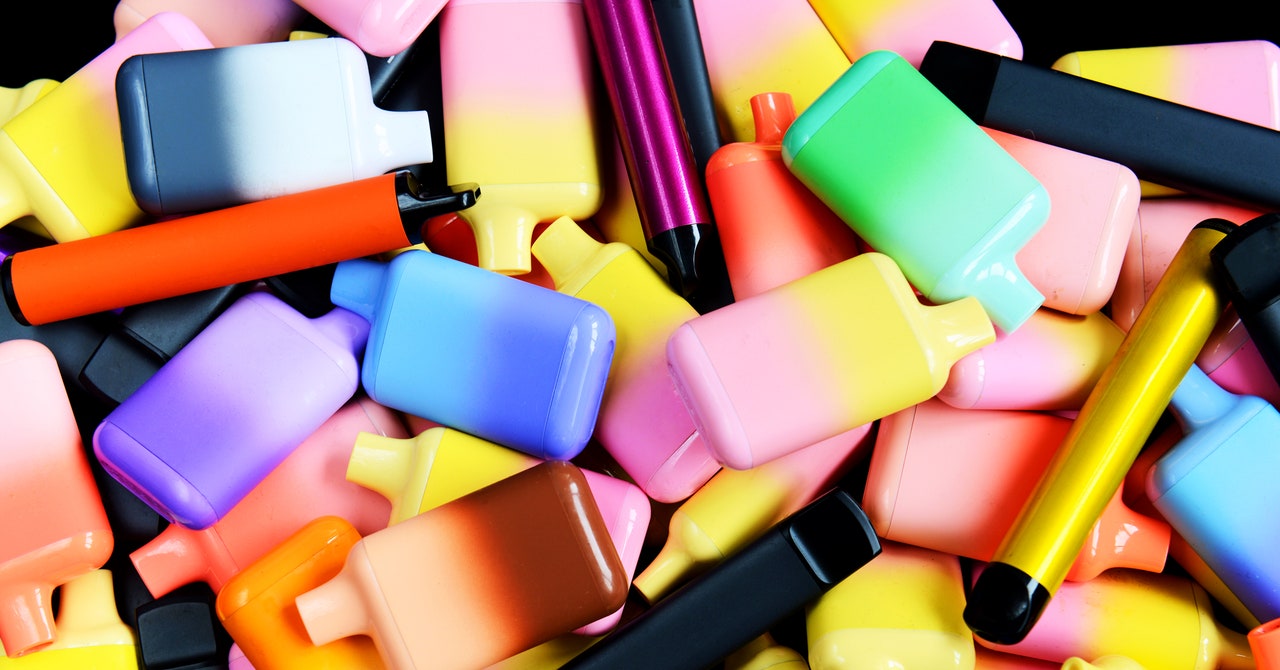
    Almost exclusively manufactured in China, the vapes are colorful and come in eye-catching metallic finishes, squishy silicone textures, and rounded shapes that fit comfortably in a person’s hand. But what really sets them apart are LCD screens, which make the devices even more harmful for the environment than normal disposable vapes. And like the vast majority of all e-cigarettes available in stores, they are technically illegal and haven’t been approved for sale by the US Food and Drug Administration.

    These so-called smart vapes are the product of an innovation boom taking place in China’s $28 billion e-cigarette export industry. It was spurred, in part, by the United States’ lax enforcement of nicotine regulations. The US accounts for nearly two-thirds of Chinese vape exports, according to the China Electronics Chamber of Commerce. From 2020 to 2023, the CDC foundation estimates that sales of non-tobacco-flavored vapes in the US surged more than 60 percent, increasing from 11.2 million to 18 million units.

    As competition for the American market intensified, vape producers in Shenzhen needed to find ways to make their products stand out. So they developed vapes that were more affordable, better designed, and delivered higher doses of nicotine compared to their predecessors. In many cases, these innovations allowed them to move up the value chain for e-cigarettes.

    Robert Jackler, an emeritus professor of head and neck surgery at Stanford University and the founder of an interdisciplinary research group studying the impacts of tobacco advertising, said that American companies have long manufactured vapes in Shenzhen. But after the Chinese government banned the sale of flavored vapes in 2022, Chinese suppliers began focusing more on marketing their own products directly to overseas customers.

    “They cut out the Americans,” Jackler says. As of last year, the Associated Press reported there were over 9,000 kinds of vaping products available for sale in the US, a nearly threefold increase since 2020.

    The proliferation of disposable flavored vapes from China has alarmed lawmakers in both the US and Europe. Regulators say they are especially worried about the impact the devices are having on children, who may find the sweet flavors and flashy designs they come in particularly appealing.

    [ad_2]

    Source link

  • Glassy gel is hard as plastic and stretches 7 times its length

    Glassy gel is hard as plastic and stretches 7 times its length

    [ad_1]

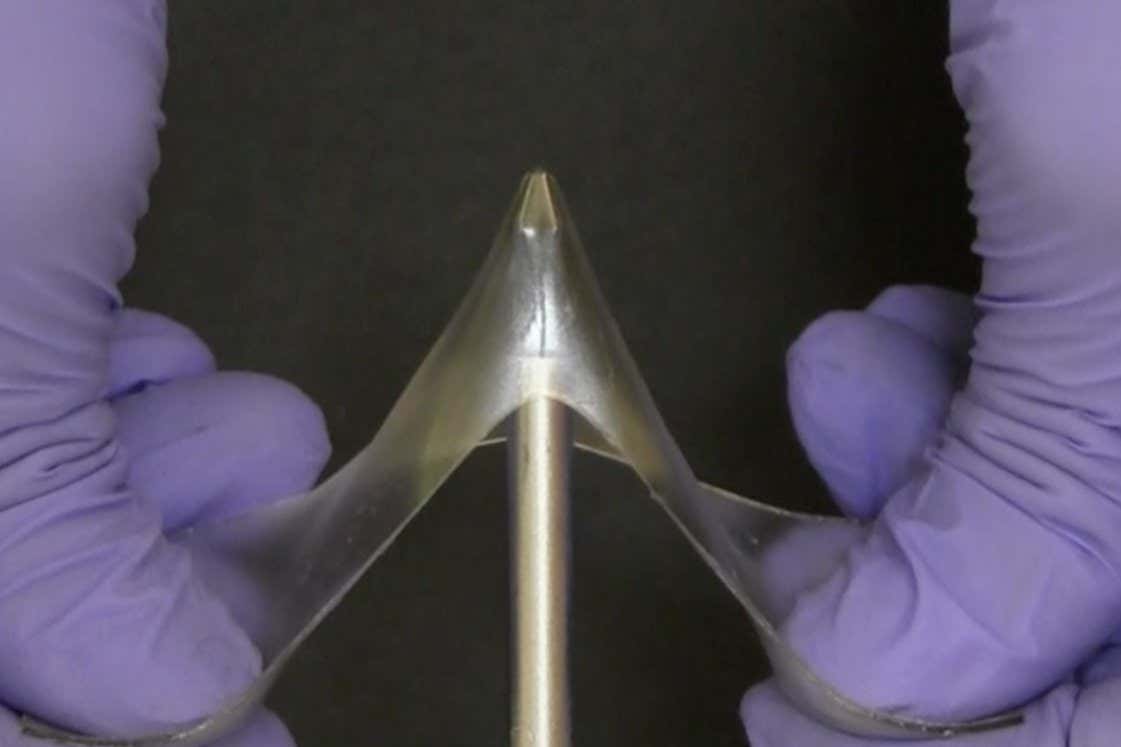
    Glassy gels are a new class of materials that are as hard as plastic but extremely stretchy

    Meixiang Wang, NC State University

    When you think of gel, you might imagine goo – but a new gel-like material has been engineered to be soft enough to stretch to almost seven times its original length while still being strong and clear, like glass.

    Michael Dickey at North Carolina State University says his team discovered these “glassy gels” when his student, Meixiang Wang, was experimenting with ionic liquids and kept finding unexpected mechanical properties. The materials they devised are more than 50 per cent liquid, but as strong as the plastics used for water bottles, while also being very stretchy and sticky. “There are a bunch of cool things about them,” he says.

    Each glassy gel consists of long molecules called polymers mixed with an ionic liquid, a fluid that is essentially a salt in liquid form. The gel is a transparent solid that can withstand up to 400 times atmospheric pressure, but also stretch very easily up to 670 per cent. Dickey says that this could make it well-suited for building soft robotic grippers or 3D printing deformable materials.

    He and his colleagues made glassy gels from several different mixtures of polymers and liquid salts and found that their strength and stretch depended on the precise ratio used.

    “Just by changing the ratio of two ingredients, you can go from something very stretchy like a rubber band, to something almost as hard as glass,” says Dickey.

    This is because the materials get their stretchiness from the ionic liquid settling into spaces between the stiffer polymer molecules and pushing them apart, while their strength comes from the electrostatic attraction between the liquid’s charged particles and the polymers, which prevents them from fully breaking away from each other.

    The glassy gels can also self-heal – a cut or break can be repaired by applying heat, which makes molecules on the broken edges reconnect. Richard Hoogenboom at Ghent University in Belgium says this could make them useful in some instances when conventional plastics are used, but the formula may have to be tweaked so that it only softens at temperatures high enough so this doesn’t happen accidentally.

    Topics:

    [ad_2]

    Source link
  • Chemists invoke bizarre Maxwell’s demon on the largest scale yet

    Chemists invoke bizarre Maxwell’s demon on the largest scale yet

    [ad_1]

    Physicist James Clerk Maxwell proposed his demonic thought experiment in 1867

    SSPL/Science Museum/Getty Images

    A chemical pump based on a 19th-century thought experiment involving an invisible “demon” could be used to help separate chemicals in drug manufacturing.

    Maxwell’s demon, first proposed by physicist James Clerk Maxwell in 1867, involves two boxes of gas separated by a weightless door that is controlled by a tiny demon. The demon only lets faster-moving particles pass through in one direction and slower particles pass in the other direction, which makes one box hotter and the other cooler. But this seems to violate the …

    [ad_2]

    Source link

  • Self-healing glass from a simple peptide — just add water

    Self-healing glass from a simple peptide — just add water

    [ad_1]

    Nature, Published online: 12 June 2024; doi:10.1038/d41586-024-01505-7

    A simple peptide has been found to make disordered interactions with water, forming a self-healing glass that can also be used as an adhesive coating. The findings point the way to sustainable alternatives to conventional glass.

    [ad_2]

    Source link

  • A glass that builds and heals itself

    A glass that builds and heals itself

    [ad_1]

    Researchers have discovered that a peptide, when mixed with water, can self assemble into a rigid glass. Peptides are chains of amino acids, like smaller versions of proteins, and they make for attractive chemical building blocks due to their ability to self-assemble into structures with unique properties. Normally these structures are crystalline in nature — not much use if you want a glassy material.

    But while looking for something else entirely, a team of researchers discovered that a certain peptide will develop unusual bonds with water, allowing it to form into a glass-like structure. What’s more, the unique properties of this peptide glass allow it to self heal if cracked, and act as a strong adhesive between water-loving surfaces.

    Subscribe to Nature Briefing, an unmissable daily round-up of science news, opinion and analysis free in your inbox every weekday.

    [ad_2]

    Source link

  • Chinese science still has room to grow

    Chinese science still has room to grow

    [ad_1]

    Strong potential

    Chemistry and physical sciences are clear areas of focus for China, accounting for 85% of the country’s total Share in the Nature Index in 2023*. But output in other subjects is growing fast. China’s adjusted Share in biological sciences increased by 15.8% from 2022 to 2023* — the highest percentage among the four natural-sciences subjects shown below.

    Line chart showing China’s change in adjusted Share in four natural-science subjects from 2019 to 2023

    Source: Nature Index. Analysis by Bo Wu. Infographic by Simon Baker, Bec Crew and Tanner Maxwell

    Topic trends

    The top fields of research (FORs) in each of the five subjects tracked by Nature Index are shown. The most dominant FORs across the respective areas are biochemistry and cell biology, at 36% of biological-sciences output, and materials engineering, which represents 34.7% of physical-sciences output. FORs can relate to more than one subject: biochemistry and cell biology is also among the top five FORs for health sciences, for instance.

    Bar chart showing China’s top field of research for the five subject areas covered by Nature Index

    Source: Nature Index. Analysis by Bo Wu. Infographic by Simon Baker, Bec Crew and Tanner Maxwell

    Looking outwards

    China’s areas of relative weakness have the highest percentage of internationally collaborative papers. For most subject areas, China’s international-article percentage was lower than every other leading country in the Nature Index in 2023*. In biological sciences, however, it is 54.1%, a higher proportion than the United States (52.7%).

    Bar chart showing the proportion of China’s research articles with international collaboration in the five subject areas covered by Nature Index

    Source: Nature Index. Analysis by Bo Wu. Infographic by Simon Baker, Bec Crew and Tanner Maxwell

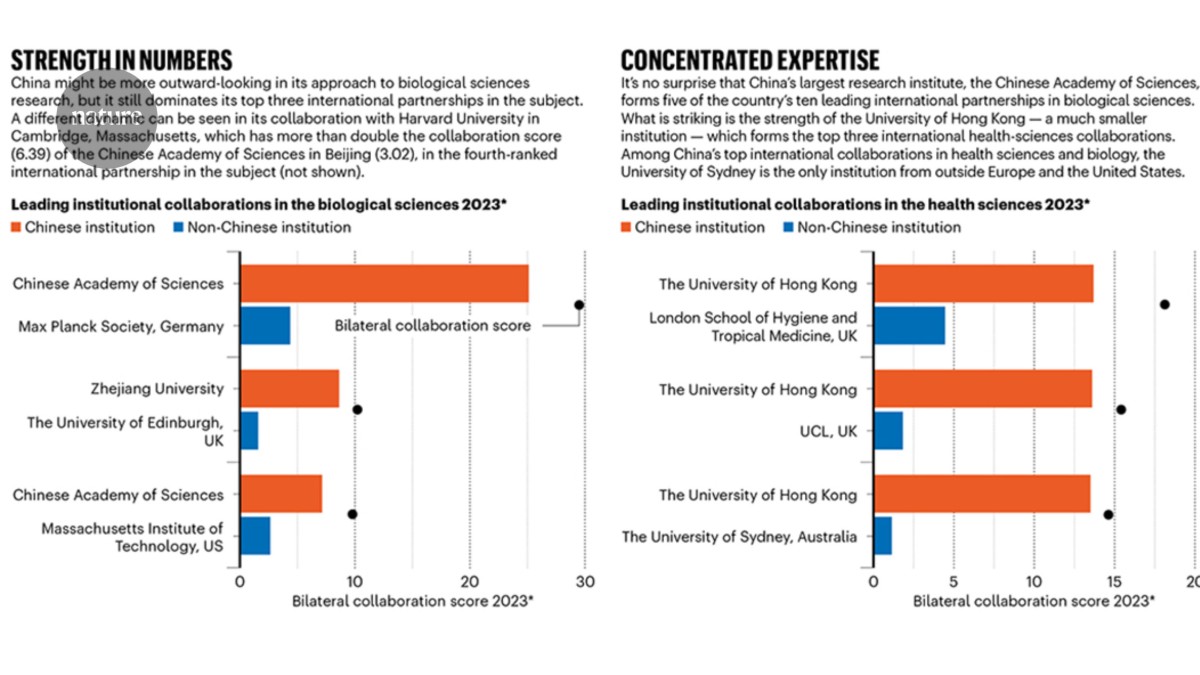
    Strength in numbers

    China might be more outward-looking in its approach to biological sciences research, but it still dominates its top three international partnerships in the subject. A different dynamic can be seen in its collaboration with Harvard University in Cambridge, Massachusetts, which has more than double the collaboration score (6.39) of the Chinese Academy of Sciences in Beijing (3.02), in the fourth-ranked international partnership in the subject (not shown).

    Bar and dot chart showing the leading three international research collaborations between a Chinese and non-Chinese institution in the biological sciences in the Nature Index

    Source: Nature Index. Analysis by Bo Wu. Infographic by Simon Baker, Bec Crew and Tanner Maxwell

    Concentrated expertise

    It’s perhaps no surprise that China’s largest research institute, the Chinese Academy of Sciences, forms five of the country’s ten leading international partnerships in biological sciences. What is striking is the strength of the University of Hong Kong — a much smaller institution — which forms the top three international health-sciences collaborations. Among China’s top international collaborations in health sciences and biology, the University of Sydney is the only institution from outside Europe and the United States.

    Bar and dot chart showing the leading three international research collaborations between a Chinese and non-Chinese institution in the health sciences in the Nature Index

    Source: Nature Index. Analysis by Bo Wu. Infographic by Simon Baker, Bec Crew and Tanner Maxwell

    This article is part of Nature Index 2024 China, an editorially independent supplement. Advertisers have no influence over the content. For more information about Nature Index, see the homepage.

    [ad_2]

    Source link

  • A window on molecular chirality at the timescale of electron motion

    A window on molecular chirality at the timescale of electron motion

    [ad_1]

    • RESEARCH BRIEFINGS

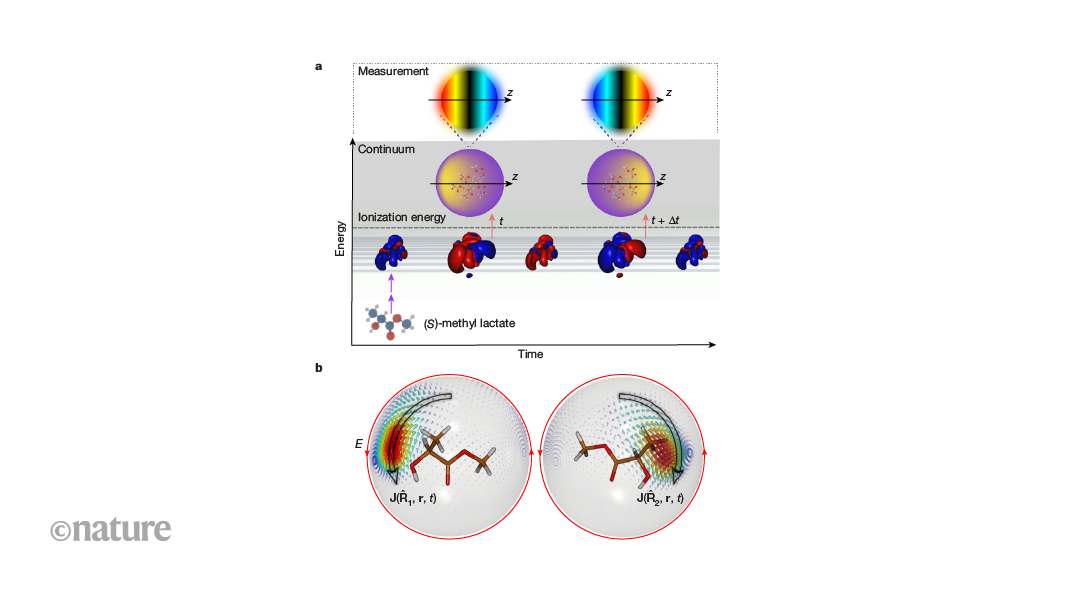
    A laser technique, which has a time resolution of only a few femtoseconds, captures how photoexcited electrons can influence the chirality — or handedness — of neutral molecules. The resulting helical currents could be used to control physical and chemical properties that result from chiral interactions. This technology could have applications in fields ranging from solid-state electronics to drug design.

    [ad_2]

    Source link