Plastic wrappers are known to leach some chemicals into food.Credit: Carl Court/Getty
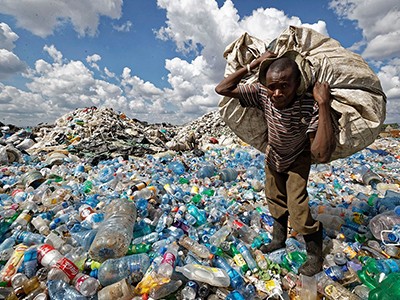
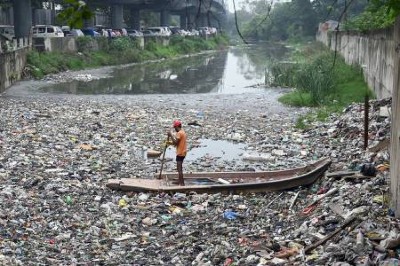
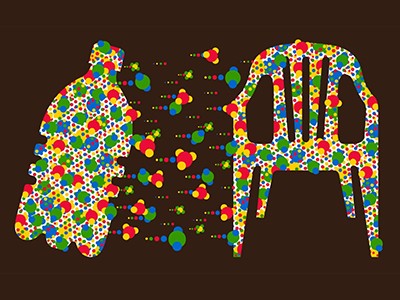
After a year of trawling through scientific reports and national regulatory databases, scientists funded by the Norwegian Research Council have compiled a list of more than 16,000 ‘plastic chemicals’ — compounds found in plastics or thought to be used in them, including raw ingredients and additives such as stabilizers and colourants.
Plastic pollution: Three problems that a global treaty could solve
Of these, at least 4,200 are “persistent, bioaccumulative, mobile and/or toxic”, the group found. That “is quite staggering”, says lead author Martin Wagner, an environmental toxicologist at the Norwegian University of Science and Technology in Trondheim. The group also discovered that hazard data were unavailable for more than 10,000 chemicals, and for more than 9,000 there was no publicly available information about which plastics they are used in.
Solid information on all these chemicals is difficult to come by, in part because industry doesn’t always share proprietary information, Wagner says. That makes the effort to compile the known data all the more important, researchers say. “This is the most comprehensive report to date,” says Bethanie Carney Almroth, an ecotoxicologist at the University of Gothenburg in Sweden, who was not involved with the effort. “The numbers presented are jarring.”
The report was released on 14 March, in time for the next round of negotiations for a United Nations treaty on global plastic pollution. Scientists have been campaigning for the treaty, which deals with all aspects of plastic production and waste management, to include a list of plastic polymers and chemicals of concern — some of which are known to leach into food, water and the environment, with impacts for human and ecosystem health.Discussions regarding the treaty continue in Ottawa next month and are scheduled to conclude in Busan, South Korea, in December.
Landmark study links microplastics to serious health problems
The report notes that although nearly 1,000 concerning chemicals are regulated by global efforts such as the Stockholm Convention on Persistent Organic Pollutants, more than 3,600 are not. The authors assign these chemicals to a ‘red list’ that should be regulated, they argue. “The message is very clear,” says Wagner, who is a member of the Scientists’ Coalition for an Effective Plastics Treaty, a grass-roots group that has formed to advise the treaty process. “Something needs to happen,” he adds, although the report’s authors decline to be proscriptive about whether treaty delegates should put in place bans or other regulatory measures.
The Plastics Industry Association, a group based in Washington DC that aims to “protect, promote and grow the plastics industry”, did not respond to Nature’s request for comment. A statement from Kimberly Wise, vice-president of regulatory and technical affairs at the American Chemistry Council (ACC), a trade group in Washington DC representing US chemical companies, says: “Plastic additives provide many important benefits that enhance the function and durability of plastic products, enabling us to do more with less….Unfortunately, today’s report seeks to advance a hazard framework that ignores real-world exposures and paints an incomplete picture for regulators and the public.”
Pervasive hazards
Many attempts to regulate chemicals, such as the 1976 US Toxic Substances Control Act, take a risk-based approach, evaluating a chemical by taking into account both its hazards and the likelihood of exposure to it.The authors of the report instead use a more precautionary approach that looks only at hazards — in part because plastics are so pervasive that evaluating exposure would be logistically problematic. “This is necessary,” agrees Miriam Diamond, an environmental chemist at the University of Toronto, Canada.
How to make plastic less of an environmental burden
Wagner was surprised by how many chemicals of concern the team found, and how prevalent they are. In the past, many researchers and others have argued that most chemicals of concern were “legacy compounds”, no longer really used in plastics production, he says. But the team found convincing evidence that plenty are still in use. “We found more than 400 chemicals of concern across all major polymer types. That was surprising,” Wagner adds.
Given the huge number of chemicals of concern and the lack of data for many, the team divides them into 15 groups for priority action. These include phthalates (often used to make polyvinyl chloride more flexible) and bisphenols (used to make durable polycarbonate).
The report also recommends getting companies to be more transparent about what is in their plastics, to fill in many of the information holes. “It is not possible to mitigate harm, to the environment or to humans, given these knowledge gaps, and it is completely irresponsible [for policymakers] to allow this to continue,” says Carney Almroth.
“We are encouraged that today’s report emphasizes the need for greater transparency,” says Wise in the ACC statement. “The International Council of Chemical Associations (ICCA) supports these efforts and is already developing an additives database and risk assessment framework to provide critical information to regulators around the globe.”
Scientists can help, Wagner says, by finding out about the hazards of chemicals with data gaps and performing meta-analyses on well-studied compounds. The world also needs better analytical techniques, he says — such as improved bioassays that can measure the effect of a chemical on living organisms.
It’s unclear whether the plastics treaty will be completed in December. So far, the negotiations have been hampered by a few petrochemical states that are resisting strong regulation of plastics production, Wagner says. “We’re at a stalemate, I’d say,” he adds. “My view is, the evidence is very clear. Governments just need to get their act together.”
In 2020, Ranga Dias was an up-and-coming star of the physics world. A researcher at the University of Rochester in New York, Dias achieved widespread recognition for his claim to have discovered the first room-temperature superconductor, a material that conducts electricity without resistance at ambient temperatures. Dias published that finding in a landmark Nature paper1.
Nearly two years later, that paper was retracted. But not long after, Dias announced an even bigger result, also published in Nature: another room-temperature superconductor2. Unlike the previous material, the latest one supposedly worked at relatively modest pressures, raising the enticing possibility of applications such as superconducting magnets for medical imaging and powerful computer chips.
Most superconductors operate at extremely low temperatures, below 77 kelvin (−196 °C). So achieving superconductivity at room temperature (about 293 K, or 20 °C) would be a “remarkable phenomenon”, says Peter Armitage, a condensed-matter researcher at Johns Hopkins University in Baltimore, Maryland.
But Dias is now infamous for the scandal that surrounds his work. Nature has since retracted his second paper2 and many other research groups have tried and failed to replicate Dias’s superconductivity results. Some researchers say the debacle has caused serious harm. The scandal “has damaged careers of young scientists — either in the field, or thinking to go into the field”, says Paul Canfield, a physicist at Iowa State University in Ames.
Why a blockbuster superconductivity claim met a wall of scepticism
Previous reporting by The Wall Street Journal, Science and Nature’s news team has documented allegations that Dias manipulated data, plagiarized substantial portions of his thesis and attempted to obstruct the investigation of another paper by fabricating data.
Three previous investigations into Dias’s superconductivity work by the University of Rochester did not find evidence of misconduct. But last summer, the university launched a fourth investigation, led by experts external to the university. In August 2023, Dias was stripped of his students and laboratories. That fourth investigation is now complete and, according to a university spokesperson, the external experts confirmed that there were “data reliability concerns” in Dias’s papers.
Now, Nature’s news team reveals new details about how the scandal unfolded.
The news team interviewed several of Dias’s former graduate students, who were co-authors of his superconductivity research. The individuals requested anonymity because they were concerned about the negative impact on their careers. Nature’s news team verified student claims with corroborating documents; where it could not do so, the news team relied on the fact that multiple, independent student accounts were in agreement.
The news team also obtained documents relevant to the acceptance of the two Nature papers and their subsequent retractions. (Nature’s news and journal teams are editorially independent.)
The investigation unearths fresh details about how Dias distorted the evidence for room-temperature superconductivity — and indicates that he concealed information from his students, manipulated them and shut them out of key steps in the research process. The investigation also reveals, for the first time, what happened during the peer-review process for Dias’s second Nature paper on superconductivity. Dias did not respond to multiple requests for comment.
Together, the evidence raises questions about why the problems in Dias’s lab did not prompt stronger action, and sooner, by his collaborators, by Nature’s journal team and by his university.
Zero resistance
Dias came to the University of Rochester in 2017, fresh from a postdoctoral fellowship at Harvard University in Cambridge, Massachusetts, where he worked under physicist Isaac Silvera. “He’s not only a very talented scientist, but he’s an honest person,” Silver told Nature’s news team.
Once Dias settled at Rochester, he pursued high-temperature superconductivity. Three years earlier, the field had been electrified when researchers in Germany discovered superconductivity in a form of hydrogen sulfide with the formula H3S at 203 K (70 °C) and at extremely high pressures3. This was a much higher temperature than any superconductor had achieved before, which gave researchers hope that room-temperature superconductivity could be around the corner.
Dias proposed that adding carbon to H3S might lead to superconductivity at even higher temperatures.
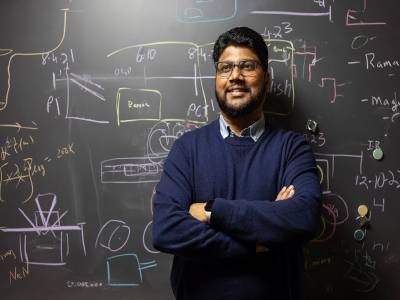
Ranga Dias at the University of Rochester, New York.Credit: Lauren Petracca/New York Times/Redux/eyevine
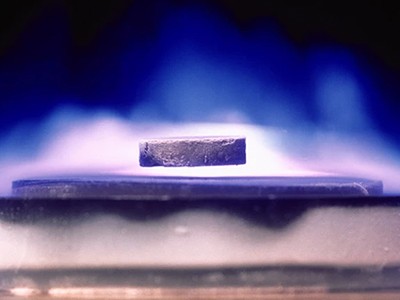
His former graduate students say they synthesized samples of carbon, sulfur and hydrogen (CSH), but did not take measurements of electrical resistance or magnetic susceptibility that showed superconductivity. When a superconducting material is cooled past a critical temperature, its electrical resistance drops sharply to zero, and the material displays a similarly sharp change in its magnetic properties, called the Meissner effect. Students say they did not observe these key signs of superconductivity in CSH.
Because of this, students say they were shocked when Dias sent them a manuscript on 21 July 2020 announcing the discovery of room-temperature superconductivity in CSH. E-mails seen by the news team show that the students had little time to review the manuscript: Dias sent out a draft at 5.13 p.m. and submitted the paper to Nature at 8.26 p.m. the same evening.
When the students asked Dias about the stunning new data, they say, he told them he had taken all the resistance and magnetic-susceptibility data before coming to Rochester. The news team obtained e-mails that show Dias had been making similar claims since 2014. In the e-mails, Dias says he has observed a sulfur-based superconductor with a temperature above 120 K — which is relatively high, but far from room temperature. The students recall that they felt odd about Dias’s explanation but did not suspect misconduct at the time. As relatively inexperienced graduate students, they say, they trusted their adviser.
During peer review, however, Dias’s claims about CSH met more resistance. Nature’s news team obtained the reports of all three referees who reviewed the manuscript. Two of the referees were concerned over a lack of information about the chemical structure of CSH. After three rounds of review, only one referee supported publication.
The news team showed five superconductivity specialists these reports. They shared some of the referees’ concerns but say it was not unreasonable for the Nature editors to have accepted the paper, given the strongly positive report from one referee and what was known at the time.
The paper was published on 14 October 2020 to fanfare. Dias and a co-author, Ashkan Salamat, a physicist at the University of Nevada, Las Vegas (UNLV), also announced their new venture: Unearthly Materials, a Rochester-based company established to develop superconductors that operate at ambient temperatures and pressures.
At the time, students say, they trusted Dias’s explanations of where the resistance and magnetic-susceptibility data came from. Now, however, they no longer believe the result, or Dias’s explanation for the data. “I don’t think any of the other data was collected,” one student says.
Matters arise
Soon after the CSH paper was published, Jorge Hirsch, a condensed-matter theorist at the University of California, San Diego, began pressing Dias to release the raw magnetic-susceptibility data, which were not included in the paper. More than a year later, Dias and Salamat finally made the raw data public.
In January 2022, Hirsch and Dirk van der Marel, a retired professor at the University of Geneva in Switzerland, posted an analysis of the raw data on the preprint server arXiv4. They reported that the data points were separated by suspiciously regular intervals — each exactly a multiple of 0.16555 nanovolts. Hirsch and van der Marel stated that this feature was evidence of data manipulation.
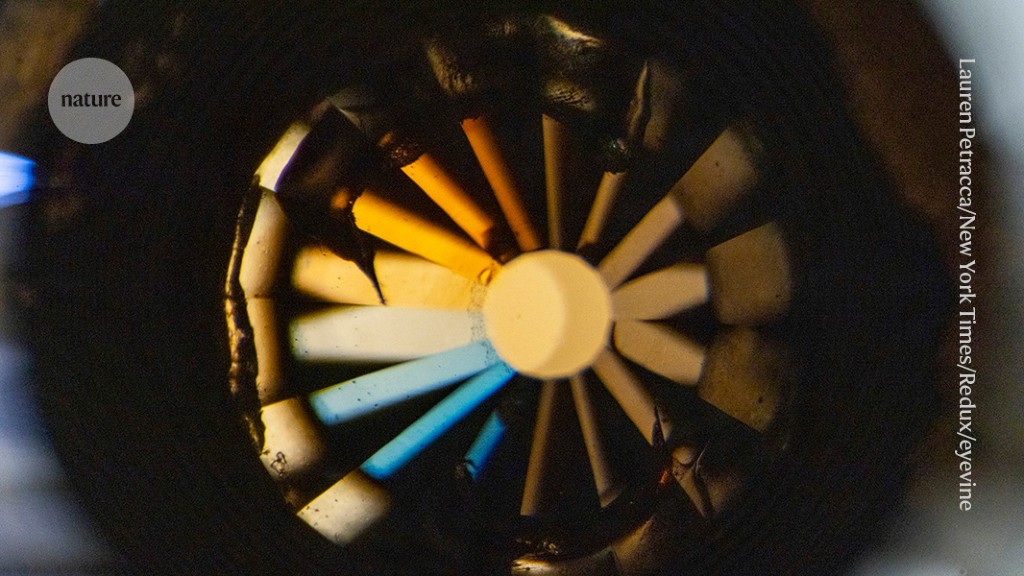
Dias’s team used laser spectroscopy to measure the pressure of samples in diamond anvil cells.Credit: Lauren Petracca/New York Times/Redux/eyevine
Dias and Salamat responded in an arXiv preprint, arguing that the voltage intervals were simply a result of a background subtraction5 (the preprint was subsequently withdrawn by arXiv administrators). In high-pressure experiments, the signal of a sample’s superconductivity — a drop in voltage — can be drowned out by background noise. Researchers sometimes subtract this background, but the CSH paper did not mention the technique.
Questions about the data prompted Nature’s journal team to look further. In response to the concerns from Hirsch and van der Marel, editors at Nature asked four new referees to participate in a post-publication review of the CSH paper, which, like most peer review, was confidential.
Now, Nature’s news team has obtained the reports, which show that two of the anonymous referees found no evidence of misconduct. But two other reviewers, whom the news team can identify as physicists Brad Ramshaw at Cornell University in Ithaca, New York, and James Hamlin at the University of Florida in Gainesville, found serious problems with the paper.
In particular, Hamlin found evidence that led him to conclude the raw data had been altered. Nature applied an editor’s note to the CSH paper on 15 February 2022, alerting readers to concerns about the data.
On 4 March 2022, Dias and Salamat sent a rebuttal to the referees, denying data manipulation. But the rebuttal, seen by the news team, does not provide an explanation for the issues that Hamlin and Ramshaw found in the raw magnetic-susceptibility data. “I don’t know of any reasonable way this could come about,” Ramshaw wrote in a 13 March e-mail to Nature’s manuscript team in response to the rebuttal. “The simplest conclusion would be that these data sets are all generated by hand and not actually measured.”
On 27 March 2022, Hamlin sent Nature’s journal team his response to the rebuttal, which proposed an explanation for the odd data: rather than deriving the published data from raw data, Dias had added noise to the published data to generate a set of ‘raw’ data.
To assess the evidence for data fabrication, Nature’s news team last month asked two superconductivity specialists to review the post-publication reports. They said that Hamlin’s analysis gives credence to claims of misconduct.
In July 2022, using a different analysis, van der Marel and Hirsch independently came to the same conclusion and posted their findings on arXiv as an update to their original preprint. In it, they state that the raw data must have been constructed from the published data6.
Why superconductor research is in a ‘golden age’ — despite controversy
In light of these concerns, Nature started the process of retracting the CSH paper. On 11 August, Nature editors sent an e-mail to all the co-authors asking them whether they agreed to the retraction. Students who spoke to the news team say that they were surprised by this, because Dias had kept them out of the loop about the post-publication review process. They remained unaware of any of the referees’ findings, including that there was evidence for data fabrication.
Nature retracted the CSH paper on 26 September 2022, with a notice that states “issues undermine confidence in the published magnetic susceptibility data as a whole, and we are accordingly retracting the paper”. Karl Ziemelis, Nature’s chief applied and physical sciences editor, says the journal’s investigation ceased as soon as the editors lost confidence in the paper, which “did leave other technical concerns unresolved”.
The retraction does not state what Hamlin and Ramshaw found in the post-publication review process instigated by Nature: that the raw data were probably fabricated. Felicitas Heβelmann, a specialist in retractions at the Humboldt University of Berlin, says misconduct is difficult to prove, so journals often avoid laying blame on authors in retractions. “A lot of retractions use very vague language,” she says.
Publicly, Dias continued to insist that CSH was legitimate and that the retraction was simply down to an obscure technical disagreement.
As Nature journal editors were investigating the CSH paper, the University of Rochester conducted two investigations into Dias’s work; a separate one followed the retraction. One of the university’s inquiries was in response to an anonymous report, which included some of the evidence indicating possible data fabrication that surfaced during Nature’s post-publication review.
The university told Nature’s news team that the three investigations regarding the CSH study did not find evidence of misconduct.
A spokesperson for Nature says that the journal took the university’s conclusions into account during its deliberations, but still decided to retract the paper.
The lack of industry-wide standards for investigating misconduct leaves it unclear whether the responsibility to investigate lands more on journals or on institutions. Ziemelis says: “Allegations of possible misconduct are outside the remit of peer review and more appropriately investigated by the host institution.”
Heβelmann says the responsibility to investigate can “vary from case to case”, but that there is a trend of more journals investigating misconduct, regardless of institutional action.
Funding agencies can also investigate alleged misconduct. In this case, Dias has received funding from both the US National Science Foundation (NSF) and the Department of Energy (DoE). The DoE did not respond to questions from Nature’s news team about Dias’s grant. The NSF declined to say whether it is investigating Dias, but it noted that awards can be terminated and suspended in response to an investigation.
The students who spoke to Nature’s news team say that none of them were interviewed in the three investigations of the CSH work by the university, which they were not aware of at the time. “We were hoping someone would come talk to us,” one student says. “It never happened.”
A new claim
By the time the CSH paper came under scrutiny by Nature journal editors in early 2022, Dias’s graduate students were starting to grow concerned. In summer 2021, Dias had tasked them with investigating a compound of lutetium and hydrogen (LuH), which he thought might be a high-temperature superconductor.
They began testing commercially purchased samples of LuH and, before long, a student measured the resistance dropping to zero at a temperature of around 300 K (27 °C). Dias concluded the material was a room-temperature superconductor, even though there was extremely little evidence, several students told Nature. “Ranga was convinced,” one student says.
Physicist James Hamlin raised concerns about data reported by the Rochester group.Credit: Zach Stovall for Nature
But the measurements were plagued by systematic errors, which students say they shared with Dias. “I was very, very concerned that one of the probes touching the sample was broken,” one student says. “We could be measuring something that looks like a superconducting drop, but be fooling ourselves.” Although students did see resistance drops in a few other samples, there was no consistency across samples, or even for repeated measurements of a single sample, they told Nature’s news team.
Students were also worried about the accuracy of other measurements. During elemental analysis of a sample, they detected trace amounts of nitrogen. Dias concluded that the samples included the element — and the resulting paper refers to nitrogen-doped lutetium hydride. But further analysis, performed after the paper was submitted, indicated that nitrogen was not incorporated into the LuH. “Ranga ignored what I was saying,” one student says.
Because they were not consulted on the CSH paper, the students say they wanted to make sure they were included in the process of writing the LuH paper. According to the students, Dias initially agreed to involve them. “Then, one day, he sends us an e-mail and says, ‘Here’s the paper. I’m gonna submit it,’” one student says.
E-mails seen by Nature’s news team corroborate the timeline. Dias sent out the first draft of the LuH paper in an e-mail at 2.09 a.m. on 25 April 2022. “Please send me your comments by 10.30 AM,” Dias wrote. “I am submitting it today.” The manuscript they received did not contain any figures, making it difficult to assess. The students convinced Dias to hold off on submitting until the next day, when they could discuss it in person.
One student was upset enough by the meeting that they wrote a memorandum of the events four days afterwards. The memo gives details of how students raised concerns and Dias dismissed them. Students worried that the draft was misleading, because it included a description of how to synthesize LuH; in reality, all the measurements were taken on commercially bought samples of LuH. “Ranga responded by pointing out that it was never explicitly mentioned that we synthesized the sample so technically he was not lying,” the student wrote.
The students say they also raised concerns about the pressure data reported in the draft. “None of those pressure points correspond to anything that we actually measured,” one student says. According to the memo, Dias dismissed their concerns by saying: “Pressure is a joke.”
Students say that Dias gave them an ultimatum: remove their names, or let him send the draft. Despite their worries, the students say they had no choice but to acquiesce. “I just remember being very intimidated,” one student says. The student says they regret not speaking up more to Dias. “But it’s scary at the time. What if I do and he makes the rest of my life miserable?”
Dias made some changes that the students requested, but ignored others; the submitted manuscript contained a description of a synthesis procedure that had not been used. He sent the LuH manuscript to Nature that evening.
Paper problems
After Nature published the LuH paper in March 2023, many scientists were critical of the journal’s decision, given the rumours of misconduct surrounding the retracted CSH paper. They wanted to know on what basis Nature had decided to accept it. (In the case of both papers, neither the peer-review reports nor the referees’ identities were revealed.) Nature’s news team obtained those reviews and can, for the first time, reveal what happened during the review process for the LuH paper. Nature editors received the manuscript in April 2022 (about a month after Nature received the CSH post-publication review reports) and sent it out to four referees.
Physicist Brad Ramshaw, together with James Hamlin, investigated data questions surrounding Dias’s superconductivity research.Credit: Kim Modic
All four referees agreed that the findings, if true, were highly significant. But they emphasized caution in accepting the manuscript, because of the extraordinary nature of the claims. Referee 4 wrote that the journal should be careful with such extraordinary claims to avoid another “Schön affair”, referring to the extensive data fabrication by German physicist Jan Hendrik Schön, which has become a cautionary tale in physics and led to dozens of papers being retracted, seven of them in Nature. Referees 2 and 3 also expressed concern about the results because of the CSH paper, which at the time bore an editor’s note of concern but had not yet been retracted. Referees raised a plethora of issues, from a lack of details about the synthesis procedure to unexplainable features in the data.
Although Dias and Salamat managed to assuage some of those concerns, referees said the authors’ responses were “not satisfactory” and the manuscript went through five stages of review. In the end, only one referee said there was solid proof of superconductivity, and another gave qualified support for publication. The other two referees did not voice support for publication, and one of them remained unsatisfied with the authors’ responses and wanted more measurements taken.
The news team asked five superconductivity specialists to review key information available to Nature journal editors when they were considering the LuH manuscript: the referee reports for the LuH paper and the reports indicating data fabrication in the CSH paper. All five said the documents raised serious questions about the validity of the LuH results and the integrity of the data.
“The second paper — from my understanding of timelines — was being considered after the Nature editors and a lot of the condensed-matter community were aware there were profound problems” with the CSH paper, Canfield says. The specialists also pointed to negative comments from some of the LuH referees, such as the observation by Referee 1 that “raw data does not look like a feature corresponding to superconducting transition”.
When asked why Nature considered Dias’s LuH paper after being warned of potential misconduct on the previous paper, Magdalena Skipper, Nature’s editor-in-chief, said: “Our editorial policy considers every submission in its own right.” The rationale, Skipper explains, is that decisions should be made on the basis of the scientific quality, not who the authors are.
Many other journals have similar policies, and guidelines from the Committee on Publication Ethics state that peer reviewers should “not allow their reviews to be influenced by the origins of a manuscript”. But not all journals say they treat submissions independently. Van der Marel, who is the editor-in-chief of Physica C, says that he would consider past allegations of misconduct if he were assessing a new paper by the same author. “If you have good reasons to doubt the credibility of authors, you are not obliged to publish,” he says.
Under review
Soon after the LuH paper was published in March 2023, it came under further scrutiny. Several teams of researchers independently attempted to replicate the results. One group, using samples from Dias’s lab, reported electrical resistance measurements that it said indicated high-temperature superconductivity7. But numerous other replication attempts found no evidence of room-temperature superconductivity in the compound.
As previously reported in Science, Hamlin and Ramshaw sent Nature a formal letter of concern in May. Dias and Salamat responded to the issues later that month, but the students say they were not included in the response, and learnt about the concerns much later.
A recording of a 6 July 2023 meeting between Dias and his students, obtained by Nature’s news team, shows that Dias continued to manipulate the students. Throughout the hour-long meeting, Dias said he wanted to involve the students in deciding how the team would respond to concerns about the LuH paper. But he didn’t tell them that he and Salamat had already responded to the technical issues raised by Hamlin and Ramshaw.
One of Dias’s students adjusts a diamond anvil cell, which the team used in its experiments.Credit: Lauren Petracca/New York Times/Redux/eyevine
The recording also reveals how Dias tried to manipulate the Nature review, because he believed the process would turn against him once more. “We can pretend we’re going to cooperate and buy time for a month or so, and then gather some senior scientists from the community,” Dias says in the recording. Dias explains how he wants to use the credibility of senior scientists — or the University of Rochester — to pressure Nature and avert a retraction.
But Dias’s plans were thwarted. Later that month, the students received an e-mail from Nature’s editors that showed Dias and Salamat had, in fact, already responded to the concerns. The students realized that Dias had sent them a document with the dates removed, apparently to perpetuate the falsehood.
On 25 July 2023, the journal initiated a post-publication review and asked four new referees to assess the dispute. All of the referees agreed that there were serious problems with the data, and that Dias and Salamat did not “convincingly address” the issues raised by Hamlin and Ramshaw. A spokesperson for Nature says the journal communicated with University of Rochester representatives during the post-publication review.
Separately, Dias’s students were beginning to mobilize, re-examining the LuH data they were able to access. The students hadn’t done this before, because, they say, Dias produced almost all of the figures and plots in both of the Nature papers.
Several other researchers told the news team that the principal investigator does not typically produce all the plots. “That’s weird,” Canfield says.
The students say they were especially concerned about the magnetic susceptibility measurements — again, the raw data seemed to have been altered. Looking at the real raw data, one student says, the material does not look like a superconductor. But when Dias subtracted the background, the student says, that “basically flips that curve upside down and makes it look superconducting instead”.
They continued finding problems. For the resistance measurements, too, the alleged raw data didn’t match data actually taken in the lab. Instead, it had been tweaked to look neater. “Science can be really messy … some of these plots just look too good,” a student says.
Back to school
By this point, some students were deeply concerned about their careers. “My thesis is going to be full of fabricated data. How am I supposed to graduate in this lab?” one student says. “At that point, I was thinking of either taking a leave of absence, or of dropping out.”
During the summer, Dias began facing other issues. One of his papers in Physical Review Letters8 — unrelated to room-temperature superconductivity — was being retracted after the journal found convincing evidence of data fabrication. Around the same time, Dias was stripped of his students and the University of Rochester launched a fourth investigation — this time, the students say they were interviewed.
‘A very disturbing picture’: another retraction imminent for controversial physicist
In late August, the students decided to request a retraction of the LuH paper and compiled their concerns about the data and Dias’s behaviour. Before they sent a letter to Nature, Dias apparently caught wind of it and sent the students a cease-and-desist notice, which the news team has seen. But, after consulting a university official who gave them the green light, the students sent their letter to Nature editors, precipitating the retraction process. Eight out of 11 authors, including Salamat, signed the letter and the LuH paper was retracted two months later, on 7 November.
According to multiple sources familiar with the company, Salamat left Unearthly Materials in 2023 and is under investigation at UNLV. He did not respond to multiple requests for comment, and a spokesperson for UNLV declined to comment publicly on personnel issues.
The scandal has also had an impact on Nature’s journal team. “This has been a deeply frustrating situation, and we understand the strength of feelings this has stirred within the community,” Ziemelis says. “We are looking at this case carefully to see what lessons can be learnt for the future.”
With the university’s investigation now complete, Dias remains at Rochester while a separate process for addressing “personnel actions” proceeds. He has no students, is not teaching any classes and has lost access to his lab, according to multiple sources. Dias’s prestigious NSF grant — which has US$333,283 left to pay out until 2026 — could also be in jeopardy if the NSF finds reason to terminate it.
Dias has not published any more papers about LuH, but on X (formerly Twitter), he occasionally posts updates about the material. In a 19 January tweet, Dias shared an image of data, which he said showed the Meissner effect — “definitive proof of superconductivity!”
The researchers’ electrocatalysis approach has been demonstrated to be effective at remedying pollution caused by per- and polyfluoroalkyl substances (PFAS), commonly known as ‘forever chemicals‘.
PFAS chemicals have been widely used in various products such as clothing, food packaging, and firefighting foams, posing significant environmental and health risks due to their persistence in the environment.
This novel approach to removing PFAS chemicals could herald a new era in environmental remediation efforts, ensuring a safer and healthier future for communities worldwide.
Targeting PFAS contamination
Led by Assistant Professor of Chemical Engineering Astrid Müller, the research team focused on addressing the contamination caused by Perfluorooctane sulfonate (PFOS), a type of PFAS extensively used in stain-resistant products.
Despite being banned in many parts of the world due to its detrimental effects on human and animal health, PFOS remains prevalent in the environment, particularly in water supplies.
Innovative nanocatalysts
To overcome this significant environmental issue, Müller and her team developed nanocatalysts using a novel combination of ultrafast lasers, materials science, chemistry, and chemical engineering expertise.
Müller explained: “Using pulsed laser in liquid synthesis, we can control the surface chemistry of these catalysts in ways you cannot do in traditional wet chemistry methods.
You can control the size of the resulting nanoparticles through the light-matter interaction, basically blasting them apart.”
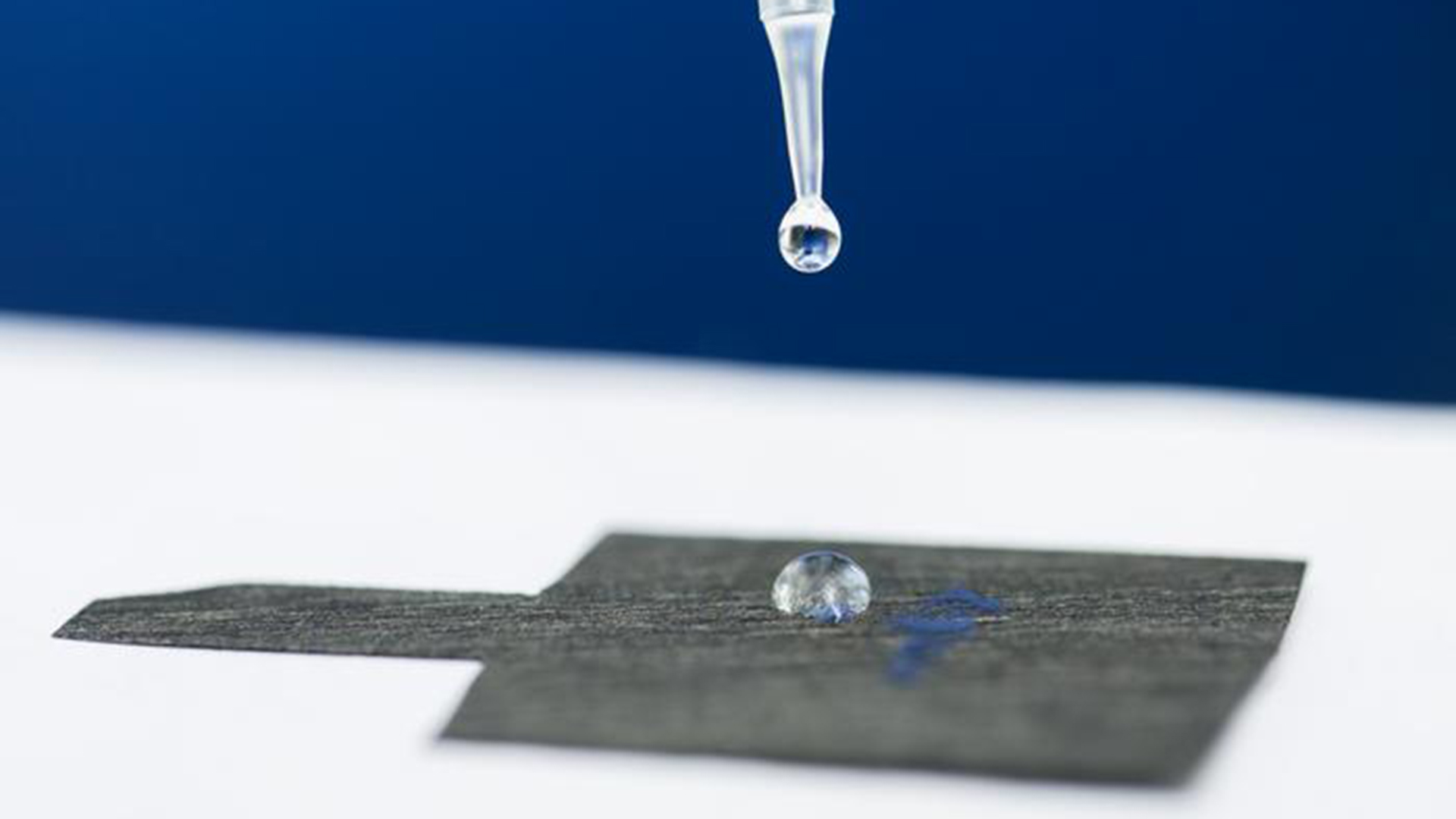
One of the key breakthroughs of this research is the cost-effectiveness of the method. By adhering the nanoparticles to hydrophilic carbon paper and utilising lithium hydroxide, the team achieved complete defluorination of PFOS chemicals.
Importantly, the process utilises nonprecious metals, making it significantly more economical compared to existing methods, potentially reducing the cost by nearly 100 times.
In contrast, treating a cubic metre of polluted water with existing methods that use boron-doped diamonds would cost $8.5m.
Future prospects and sustainability
Looking ahead, Müller aims to further optimise the process by exploring alternative materials to enhance cost efficiency.
She also plans to extend the application of the method to other prevalent PFAS chemicals associated with various health issues.
Despite acknowledging the utility of PFAS in consumer products and green technologies, Müller advocates for their sustainable usage through electrocatalytic solutions.
She explained: “I would argue that in the end, a lot of decarbonisation efforts — from geothermal heat pumps to efficient refrigeration to solar cells — depend on the availability of PFAS.
“I believe it’s possible to use PFAS in a circular, sustainable way if we can leverage electrocatalytic solutions to break fluorocarbon bonds and get the fluoride back out safely without putting it into the environment.”
Müller also emphasised the social justice aspect of the research, highlighting its potential to address pollution disparities, particularly in economically disadvantaged areas.
“Often in areas with lower income across the globe, there’s more pollution,” said Müller. “An advantage of an electrocatalytic approach is that you can use it in a distributed fashion with a small footprint using electricity from solar panels.”
The University of Rochester’s research offers a promising avenue for tackling the pervasive issue of PFAS chemical pollution.
With its cost-effective and sustainable approach and its potential for widespread application, this breakthrough could prove instrumental in the fight against harmful PFAS chemicals.
Large scientific facilities do more than just deliver breakthroughs — they build capacity. Regions that host them benefit from the creation of jobs and skills as well as infrastructures, from computing to electricity and transport.
The benefits can be especially great for advanced light sources, which generate intense beams of light for a range of uses in academia and industry. Such sources use free-electron lasers or synchrotron radiation (generated by accelerating electrons to near-light speeds around a ring that measures up to 1.5 kilometres in large-scale facilities) to create beams of photons with energies across the electromagnetic spectrum — from X-rays to ultraviolet and infrared wavelengths.
These light beams can be used in condensed-matter physics and to study the structures and properties of materials, catalysts, drugs and vaccines, as well as to characterize soils and follow biological processes. The implications of these studies stretch from climate, energy, health and agriculture to the preservation of cultural heritage.
Yet access to synchrotrons is uneven around the world, and especially scant in low- and middle-income countries (LMICs). In particular, researchers in Africa and the Greater Caribbean — a region including the Caribbean islands, Mexico, Central America, Venezuela and Colombia — struggle to access synchrotrons (see ‘Advanced light sources: patchy access’). Many researchers in Africa and the Greater Caribbean could benefit from these facilities1. Both regions face great social and environmental challenges. They also stand to benefit most from the types of science that synchrotrons enable. Funding remains a challenge, however, as does access to the necessary technologies, infrastructure and staff.
We are part of the Latin American International Synchrotron for Technology, Analysis and Development (LAMISTAD) project, which aims to construct a Greater Caribbean Light Source (GCLS). Established in 20212, this project follows on from a handful of national proposals from Mexico, Colombia and Cuba that struggled to get off the ground individually.
The LAMISTAD project has much in common with that for a pan-African synchrotron facility, the African Light Source (AfLS)3. Both projects have yet to become reality, but the completion of two similar facilities in LMICs in the past seven years is cause for optimism. The SESAME facility (Synchrotron-light for Experimental Science and Applications in the Middle East)4, which opened in 2017 in Jordan and was two decades in the making, is a significant achievement in science diplomacy. This initiative prioritized international cooperation in a region characterized by political sensitivity and diversity. In Campinas, Brazil, a facility called Sirius was inaugurated in 2018 and opened for research in 2020. It played a part in enabling researchers to promptly determine the structures of proteins on the SARS-CoV-2 virus. This was crucial in understanding some aspects of the virus’s behaviour — an important step in the development of drugs against COVID-19.The success of projects of this nature requires support from researchers, policymakers and global organizations that fund scientific development. This is crucial for driving scientific discoveries, but also for addressing regional social and economic challenges. Here, we outline five steps that are necessary to make the Greater Caribbean Light Source a reality.
Choose a site and technical scope
Decisions must be taken over where to put the Greater Caribbean synchrotron. Several sites are being considered. One possibility, yet to be confirmed, is land in the state of Hidalgo, Mexico, that was generously offered by the local government for the country’s previous national initiative. This site is geologically stable, doesn’t present risks to the environment and has good water and electrical supplies. It is accessible by road, rail and air, and has high-speed Internet and modern telecommunications. The eventual choice, however, will depend on political considerations and on existing commitments from the governments of participating countries.
On the technical side, the energy level at which the synchrotron will operate needs to be agreed. The decision must be supported by a council that comprises representatives from all participating countries and be in accordance with the budget. A strong case can be made for opting for a 1.5-gigaelectronvolt (GeV) synchrotron, to complement Sirius’s 3-GeV energy ring. A lower-energy ring would limit the energy achievable in the electromagnetic spectrum, but it is more cost-effective to run. Beyond financial considerations, such low-energy beams also cause less damage to biological and organic materials. They can serve, for example, to determine the chemical composition, structure and atomic environment of samples including soft matter, soil and plants — making them well suited to analytical studies in the fields of biodiversity, water and agriculture.
Clean sources of energy might be considered. SESAME is the first — and so far only — synchrotron facility that runs solely on electricity from renewable sources. This was made possible through a collaboration between Jordan and the European Union. Beyond the environmental benefits, it also saves between US$2 million and $3.75 million per year compared with using conventional energy sources, so is an approach the Greater Caribbean region could emulate.
Make a training plan
Each synchrotron’s success relies on skilled users. Mexico, for example, has such a community, and Brazil’s long previous experience with advanced light sources is an advantage. Before Sirius, Campinas hosted the Southern Hemisphere’s first synchrotron, UVX, which operated between 1997 and 2019. Sirius has built on that legacy, and its scientific network represents a base of initial users for the Greater Caribbean facility. Local specialists can help to train and produce a skilled workforce through courses, workshops, staff exchanges and conferences.
Furthermore, synchrotron techniques are easy to pick up for researchers who are adept in related methods, such as spectroscopy and X-ray studies. International programmes, including the Hercules European School supported by Grenoble Alpes University in France, offer training through lectures, practical sessions, tutorials and visits to key facilities. The example of SESAME shows that it is possible to launch a vigorous, large-scale training programme successfully in a region with scarce experience.
Secure funding
Any major facility requires an enormous up-front investment in construction, equipment and staff. The cost of the 3-GeV pan-African synchrotron, for example, has been put at $1 billion, with running costs of around $100 million per year. Although these are rough estimates, and depend on a variety of factors, such as the energy of the beams, it seems likely that the Greater Caribbean project might be built for a few hundred million dollars and cost around $50 million per year to run. Those costs might be brought down further by relying on solar energy, as SESAME does.
In any case, a wide base of financial support will be needed, from governments of the countries in the region, the private sector and international research and development organizations.
US particle physicists want to build a muon collider — Europe should pitch in
As a flagship for international co-operation, SESAME’s $110-million construction costs were met largely by public funding from multiple sources: Jordan, Israel, Turkey, Iran, the European Union and (in equipment) CERN, Europe’s particle-physics laboratory near Geneva, Switzerland. By contrast, the construction of Sirius in Brazil, which cost $400 million, was financed only by the federal government, and Brazilian firms were involved in 85% of the project. This was a by-product of the previous investment in UVX, which aimed to support the technological development of the country.
The viability of establishing large facilities in LMICs, in light of other social and economic priorities, is often questioned. We argue that the wider benefits are important5 — scientific and societal, but also economic.
Since the first working group on the Greater Caribbean proposal in 2021, the project has garnered increasing interest from leading laboratories around the world. Next, getting support from the UN cultural organization UNESCO is crucial, because it would prompt governments, funders and international organizations to engage in the endeavour.
Other organizations should recognize the role these synchrotrons would have in the areas their missions cover, and lend their support — including financially. These include agencies such as the UN Food and Agriculture Organization, the UN Industrial Development Organization, the UN Development Programme, the European Union, the Organization of American States, the Central American Higher Education Council (CSUCA) and the Caribbean Community (CARICOM), as well as development banks.
Foster interregional cooperation
Collaborations will be crucial for supporting these synchrotrons. African–Latin American cooperation and global south collaborations more generally are strengthening and gaining global recognition (see go.nature.com/48qfypj). During the COVID-19 pandemic, for example, a large part of the Southern Hemisphere supported liberalizing vaccines and temporarily waiving intellectual-property rights for them, a request that originated in India and South Africa.
Such collaborations have been limited in scientific research, however. In this respect, the joint participation of the African Light Source Foundation and the LAMISTAD project in the Cape Town World Science Forum in December 2022 is a milestone. It led to a partnership based on exchanging experiences, participation in conferences (see go.nature.com/3htqkuf) and continuing work towards securing international support for the two light sources. This synergy opens up possibilities for joint training efforts, which would be cost-effective as well as scientifically enriching.
CERN has a long tradition of supporting big-science projects in the global south. In 1993, it encouraged Latin America’s participation in high-energy physics6, and in 2004 launched the HELEN programme (High Energy Physics Latin-American-European Network). These interactions have proved to be mutually beneficial, resulting in advancements throughout Latin America as well as a pool of skilled researchers from the region who can now participate in international experiments, such as CERN’s flagship accelerator, the Large Hadron Collider.
The example of SESAME is motivational — its inception by Nobel laureate Abdus Salam and CERN garnered support as a scientific initiative, and as a way to promote peace in the region and bolster the participation of global south countries in international organizations. It not only received broad support and funding internationally4,7, but also collaborates with the International Centre for Theoretical Physics (ICTP) in Trieste, which Salam founded, through training scholarships and visiting agreements. The African and Greater Caribbean synchrotron projects might seek to establish similar collaborations.
Get together
Discussions to lead projects on this scale are difficult to do in person because of the number of people involved, the distances between participating countries and the need to engage local and national authorities. Virtual and hybrid events can help8. For example, in May and June 2023, the LAMISTAD project organized a hybrid event in Colombia, Jamaica, Spain, Mexico, El Salvador and the Dominican Republic over six days to put together the backbone of its proposal (see go.nature.com/42tpcdy).
Each host country focused on its specific interests in synchrotron radiation techniques, from fundamental research in physics and the preservation of cultural heritage to agriculture, climate and health applications. This format allowed both governmental and scientific involvement, and fostered international cooperation and local participation.
The session held in Spain emphasized the role of the Greater Caribbean scientific diaspora in Europe. These researchers could have a key role in enabling inter-regional collaborations, participating in training workshops, advising scientific committees or hosting research visits in the country they work in.
Hopefully, the LAMISTAD project will receive the societal and political endorsement it deserves. That the network has already become established among researchers from across Latin and South America as well as Africa is already a positive outcome. It is also a testimony to its vast possibilities.
Some scents are at risk of vanishing forever. Can AI replicate them?
blickwinkel/Alamy
Artificial intelligence can whip up the formula to recreate a perfume based on its chemical composition. One day, it could use a lone sample to reproduce rare smells at risk of being lost, such as incense from a culturally specific ritual or the smell of a forest that is changing because of rising temperatures.
Idelfonso Nogueira at the Norwegian University of Science and Technology and his colleagues profiled two existing fragrances, categorising them by scent family – subjective words such as “spicy” or “musk” commonly used to describe perfume – and so-called “odour value”, a measure of how intense a certain smell is. For instance, one of the fragrances scored the highest odour value for “coumarinic”, a family of scents similar to vanilla. The other received the highest odour value for the scent family “alcoholic”.
To train a neural network, the researchers used a database of known molecules associated with specific fragrance notes. The AI learned to generate an array of molecules that matched the odour scores for each scent family of the sample fragrances.
But merely generating those molecules was not enough to reproduce the target fragrances, says Nogueira, because the way we perceive smell is affected by the physical and chemical processes molecules go through when they interact with air or skin. Immediately after being sprayed, a perfume’s “top notes” are most noticeable, but they vanish within minutes as molecules evaporate, leaving “base notes” that can linger for days. To address this, the team chose molecules generated by the AI that evaporated under similar conditions as those in the original fragrances.
Finally, they again used AI to minimise any mismatches between the odour values of the original mixture and the AI-generated mixture. Their ultimate recipe for one of the fragrances showed small deviations with respect to its “coumarinic” and “sharp” notes, while the other seemed to be a very precise replica.
Predicting what a chemical will smell like is notoriously difficult, so the researchers used a limited number of molecules in their training data. But the process could be even more precise if the database is expanded to contain more – and more complex – molecules, says Nogueira. He suggests AI could help the perfume industry create recipes that produce a cheaper, more sustainable version of a fragrance. Currently, experts estimate developing a new perfume with traditional techniques can take up to three years and cost as much as $50,000 per kilogram.
Richard Gerkin at Arizona State University and Osmo, a start-up aiming to teach computers how to generate smells like AI can do with images, says combining AI with physics and chemistry is a strength of this approach because it accounts for often overlooked subtleties such as how smells evaporate. But the effectiveness of this process still has to be confirmed in studies with people, he says.
Nogueria and his colleagues have already nearly gotten there. In a few weeks, he will be off to a colleague’s lab in Ljubljana, Slovenia, to experience some of the AI-generated fragrances himself. “I am very excited to smell them,” he says.
A host of chemical compounds contribute to the flavour of oranges
Photoongraphy/Shutterstock
Chemical analysis has revealed 26 compounds responsible for the distinctive flavour of oranges. The findings will help plant scientists create disease-resistant orange hybrids that taste just as good as the original.
In recent decades, citrus greening disease, also known as huanglongbing, has devastated the production of citrus fruits around the world. Oranges (Citrus sinensis) have been particularly affected by the disease, says Anne Plotto at the US Horticultural Research Laboratory in Florida.
Plotto and her colleagues wanted to see if it was possible to create hybrids that are tolerant to citrus greening disease while preserving the signature flavour of oranges.
To identify the chemicals responsible for this flavour, the researchers analysed 179 juice samples from a range of citruses, including oranges, mandarins (Citrus reticulata), trifoliate oranges (Citrus trifoliata) and their hybrids. Trained citrus testers also tried each sample and rated how much it tasted like orange juice.
They found that the juices with the strongest orange flavour all contained 26 specific compounds. Seven of these compounds are a type of chemical called esters, which seemed to be the key to distinguishing the taste of oranges and mandarins.
Plotto and her team then conducted a genetic analysis of the fruits and found a gene responsible for the synthesis of all seven esters, which they dubbed C. sinensis alcohol acyltransferase 1.
“This gene is expressed much more in the cultivars that produce a lot of esters,” says team member Zhen Fan at the University of Florida.
The research could ultimately help to achieve disease-tolerant hybrids with a rich orange flavour, says Plotto. “The findings could be used to screen citrus hybrid seedlings for desired orange flavour at an early stage, instead of waiting 10 to 15 years for the tree to bear fruits,” she says.
A new technique can precisely steer drops of water around obstacle courses and into chemical reactions
Jonathan Knowles/Getty Images
Putting tiny magnetic particles inside ordinary water droplets can turn them into liquid acrobats – the droplets can climb steps, leap over obstacles and jump-start chemical reactions. This level of control could be useful in drug delivery or to make more complex lab-on-a-chip technologies.
Shilin Huang at Sun Yat-sen University in China and his colleagues made a surface with tiny grooves and covered it in a varnish that is superhydrophobic, or nearly impossible to wet. They knew water droplets sitting on top of such grooves can spontaneously jump up because of the pressure difference between a droplet’s bottom, which is deformed by the small channel, and its rounder and less restrained top.
The researchers wanted to create this pressure difference on demand. They added a tiny magnetic particle into each droplet and placed an electromagnet underneath the groove. When they turned on the electromagnet, it pulled the particle – and therefore some of the droplet – into the groove. When they switched it off, the droplet’s shape rebounded and it flew upwards as if flying from a slingshot.
With this technique, the team made liquid droplets hop up millimetre-scale stairs and over miniature obstacles. The researchers even steered a droplet into a narrow space between two wires, thus connecting a circuit and lighting a light bulb.
Xiao Yan at Chongqing University in China says this is a creative way to take control of pressure-based droplet jumping, and it could be a valuable tool for precisely transporting droplets of chemicals.
In one experiment, researchers caused a droplet to jump into and mix with a liquid chemical sample under a microscope lens, enabling them to watch the resulting chemical reaction from start to finish. In another, they made two droplets mix with a third inside a closed box, remotely starting a reaction that would have been ruined if a researcher had needed to open the box and let air in.
Such precise chemical control has applications for drug delivery. Huang hopes the technique will also advance “lab-on-a-chip” technologies, efforts to miniaturise complex biochemistry experiments that usually require lots of space and glassware. He proposes “lab-on-stacked-chips”, where droplets vertically jump between levels to allow many reactions to happen in parallel.
Nature, Published online: 28 February 2024; doi:10.1038/d41586-024-00378-0
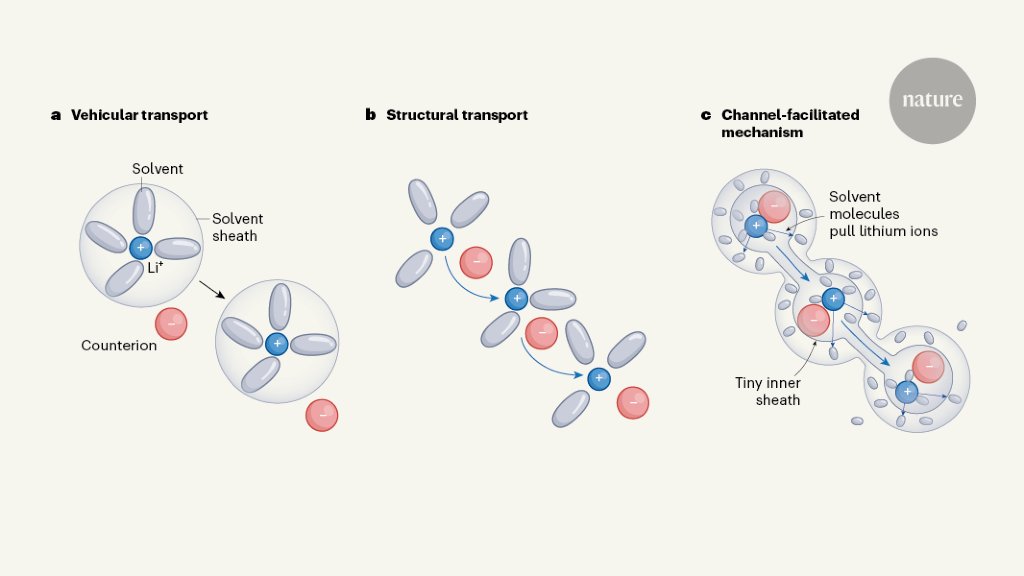
Small solvent molecules have been found to enable a previously unknown ion-transport mechanism in battery electrolytes, speeding up charging and increasing performance at low temperatures.
Nature, Published online: 28 February 2024; doi:10.1038/d41586-024-00421-0
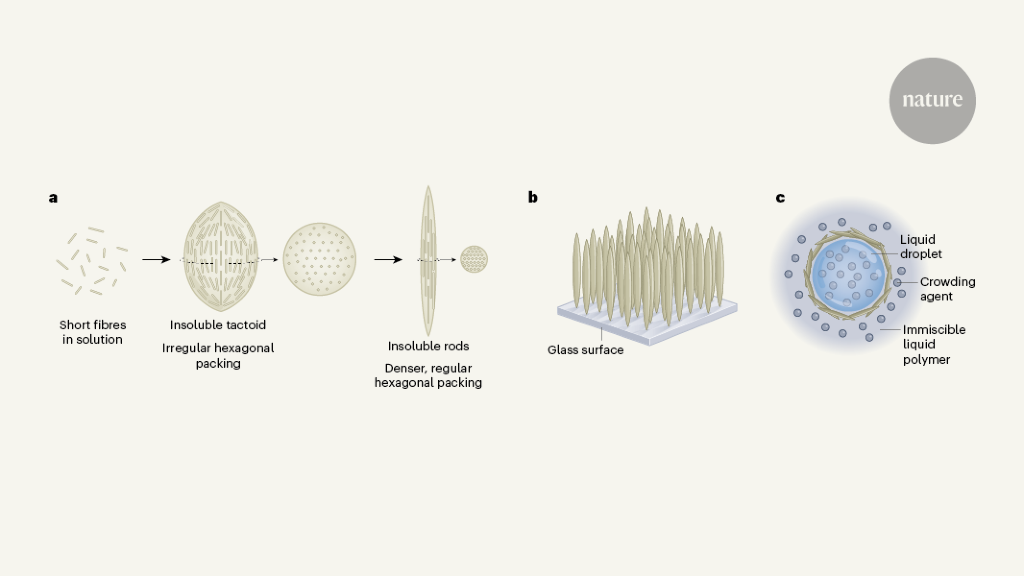
The molecules of liquid crystals and proteins can form liquid-like condensates, but such a phenomenon had not been observed for supramolecular polymers, which are held together by non-covalent bonds — until now.
The origin of life is one of the greatest challenges in science. It transcends conventional disciplinary boundaries, yet has been approached from within those confines for generations. Not surprisingly, these traditions have emphasized different aspects of the question.
Or rather, questions. The origin of life is really an extended continuum from the simplest prebiotic chemistry to the first reproducing cells, with molecular machines encoded by genes — machines such as ribosomes, the protein-building factories found in all cells. Most scientists agree that these nanomachines are a product of selection — but selection for what, where and how?
There is no consensus about what to look for, or where. Nor is there even agreement on whether all life must be carbon-based — although all known life on Earth is. Did meteorites deliver cells or organic material from outer space? Did life start on Earth in the hot waters of hydrothermal systems on land or in deep seas?
Observations alone cannot constrain these possibilities. The few geological traces that hint at early life are enigmatic. Is a bacterium-like imprint really a fossil, or some geochemical structure? Is a weak carbon isotope signature on the surface of a mineral a fingerprint of life (which accumulates the lighter carbon-12) or the result of another type of chemical activity?
Genes are not directly helpful either. Comparing gene sequences in modern organisms allows researchers to reconstruct a ‘tree of life’ going back to some of the earliest cells that have genes. Although the exact genetic make-up of this ancestral population is disputed, by definition it already had genes and proteins and so can tell us little about how they arose.
How did life begin? One key ingredient is coming into view
None of this precludes understanding the origin of life, but it does make competing hypotheses hard to prove or disprove unambiguously. Combine that with the overarching importance of the question and it’s clear why the field is beset with over-claims and counter-claims, which in turn warp funding, attention and recognition.
This context has splintered the field. Strongly opposed viewpoints have coexisted for decades over basic questions such as the source of energy and carbon, the need for light and whether selection acts on genes, chemical networks or cells.
To understand how life might have begun, researchers must stop cherry-picking the most beautiful bits of data or the most apparently convincing isolated steps, and explore the implications of these deep differences in context. Depending on the starting point, each hypothesis has different testable predictions. For example, if life started in a warm pond on land, the succession of steps leading from prebiotic chemistry to cells with genes is surprisingly different from those that must be posited if the first cells emerged in deep-sea hydrothermal vents.
Building coherent frameworks — in which all the steps in the continuum fit together — is essential to making real progress. To see why, here we highlight two of the most prominent frameworks, which propose radically distinct environments for the origin of life.
Prebiotic soup
Most people have heard of prebiotic soup. That’s in part because the hypothesis is grounded in the chemistry that works best for making many of the building blocks of living things. In the modern version of this idea, the synthesis of organic molecules begins with derivatives of cyanide, energized by ultraviolet radiation. This chemistry can produce relevant products, such as the nucleotide building blocks of genes, in high yields — although different reactions occur in distinct environments, ranging from laboratory equivalents of the atmosphere to geothermal ponds and streams1.
Where did all this cyanide come from? Meteorite impacts might be one source, but there is little agreement about that among geologists. Nor does this approach explain just how these “reservoirs of material … come to life when conditions change”2. That is, how compounds that formed under disparate conditions could persist for long periods (potentially millions of years) before somehow coming together and self-assembling into growing cells.
It’s time to admit that genes are not the blueprint for life
This framework posits that nucleotides are concentrated in a small pond. To form RNA, the simplest and most versatile genetic material, nucleotides must polymerize. That is most easily achieved by drying them out (polymerization is a type of dehydration reaction). Proponents imagine a succession of wet–dry cycles, in which the pond dries out to form polymers of RNA, then fills again with water containing more nucleotides and so on, cycle after cycle, making more and more RNA3.
But this concept raises some difficult questions. It places the onus on an ‘RNA world’, in which RNA acts both as a catalyst (in a similar way to enzymes) and as a genetic template that can be copied. The problems are that there is little evidence that RNA can catalyse many of the reactions attributed to it (such as those required for metabolism); and copying ‘naked’ RNA (that is not enclosed in compartments such as cells) favours the RNA strands that replicate the fastest. Far from building complexity, these tend to get smaller and simpler over time. Worse, by regularly drying everything out, wet–dry cycles keep forming random groupings of RNA (in effect, randomized genomes). The best combinations, which happen to encode multiple useful catalysts, are immediately lost again by re-randomization in the next generation, precluding the ‘vertical inheritance’ that is needed for evolution to build novelty.
If selection on RNA in drying ponds could somehow be made to generate greater complexity, what must it achieve? To make cells that grow and reproduce, RNA must encode metabolism: the network of hundreds of reactions that keeps all cells alive. Modern-day metabolic reactions bear no resemblance to the cyanide chemistry that makes nucleotides in this model. Evolution would therefore need to replace each and every step in metabolism, and there is no evidence that such a wholesale replacement is possible.
Unlike evolving an eye, a process in which intermediates have function, encoding only half the steps of a metabolic pathway (or half the pathways needed for a free-living cell) has little, if any, benefit. Can genes that encode multiple metabolic pathways have arisen at once? The odds against this are so great that the astrophysicist Fred Hoyle once compared it to a tornado blowing through a junkyard and assembling a jumbo jet. It is not good enough to counter that evolution will find a way: a real explanation needs to specify how.
On balance, we would say that prebiotic chemistry starting with cyanide can produce the building blocks of life, but most of the downstream steps predicted by this framework remain problematic.
Hydrothermal systems
Our own favoured scenario is that the chemistry of life reflects the conditions under which life began, in deep-sea hydrothermal systems on the early Earth4. In broad brush strokes, this means that gases such as carbon dioxide (the near-universal source of carbon in cells today) and hydrogen feed a network of reactions with a topology resembling metabolism. Genes and proteins arise within this spontaneous protometabolism and promote the flux of materials through the network, leading to cell growth and reproduction. There are plenty of problems here, too, but they differ from those in the prebiotic soup framework.
Origin of life theory involving RNA–protein hybrid gets new support
The first problem is that H2 and CO2 are not particularly reactive — indeed, their chemistry was largely ignored for decades, although rising interest in green chemistry is changing that. But deep-sea vents are labyrinths of interconnected pores, which have a topology resembling cells — acidic outside and alkaline inside. The flow of protons from the outside to the inside of these pores can drive work in much the same way that the inward flow of protons can drive CO2 fixation in cells today5. Research in the past few years shows that these conditions can drive the synthesis of carboxylic acids6 and long-chain fatty acids7, which can self-assemble into cell-like structures bounded by lipid bilayer membranes5.
But many chemists are troubled by the idea that, in the absence of enzymes to serve as catalysts, hydrothermal flow could drive scores of reactions through a network that prefigures metabolism, from CO2 right up to nucleotides. The chemist Leslie Orgel once dismissed this scenario as an “appeal to magic”. Certainly, further data are required, supporting or otherwise. Multiple steps have now been shown to occur spontaneously in core metabolic pathways (such as the Krebs cycle and amino-acid biosynthesis) without being driven by enzymes8, but this is still far from demonstrating flux through the entire network.
Polymerization is another stumbling block. Nucleotides have been polymerized in water on mineral surfaces9, but this raises similar questions to those noted for wet–dry cycles about how selection could act. If the problem is solved by polymerizing nucleotides inside growing protocells, mineral surfaces would not have been available. Polymerization would then have needed to happen in cell-like (aqueous gel) conditions, but without enzymes. If serious attempts to synthesize RNA under those conditions fail, the overall framework would need to be modified.
A 13-metre-tall carbonate chimney in the Lost City hydrothermal field in the Atlantic Ocean.Credit: Deborah Kelley and Mitch Elend, University of Washington
Conversely, if these difficult problems are resolved, then the hydrothermal scenario offers a promising route to the emergence of genetic information, overcoming Hoyle’s jumbo-jet argument. Patterns in the genetic code suggest direct physical interactions between amino acids and the nucleotides that encode them, especially for those formed most easily by metabolism5. Such associations mean that random RNA sequences could act as templates for non-random peptides that have a function in growing protocells. The first genes wouldn’t have had to encode metabolism, but just enhance flux through a spontaneous protometabolism — for example, by enabling the reaction between H2 and CO2.
Thus, in short, the two frameworks have different advantages and disadvantages, and it is premature to dismiss either.
Findings can be true but irrelevant
Similarly probing questions apply to other origins-of-life scenarios. If organic molecules were delivered from space — for instance, in carbonaceous chondrites such as the Murchison meteorite10 — then how and where did they come together, how did they polymerize, and so on? The delivery of organics from space simply stocks a soup and doesn’t solve most of the downstream problems — with the further issue that such a delivery method is unlikely to have been reliable and consistent at specific locations.
If life started out as droplets known as coacervates, in which immiscible liquids separate into distinct phases that promote different types of chemistry, then one must ask where all the precursors to feed their growth came from. And how did these phase-separated droplets morph into cells with different topology, in which these distinct chemistries now mostly occur under aqueous-gel conditions?
Prebiotic chemistry
Similar questions can be asked about ‘eutectic freezing’ (in which growing ice crystals concentrate the surrounding soup) and layered minerals or pores in volcanic rocks, such as basalt or floating pumice, that catalyse organic synthesis.
All of these fragments of scenarios are ‘true’, in that there is empirical evidence supporting each snapshot moment. But the fact that it is possible to make amino acids by passing electrical discharges through a Jovian mixture of gases, as the US chemist Stanley Miller famously did 70 years ago, does not mean that is how life began — merely that this chemistry is possible. Likewise, the fact that analogous chemistry can occur in hydrothermal systems, or from cyanide in terrestrial geothermal systems, or in interstellar space, does not mean that all of these environments were required for life to start, just that this chemistry is favoured under many conditions. The question is always: what happens next?
If none of these scenarios is ‘wrong’, then there is space in the field to pursue multiple frameworks. No one needs to abandon their favoured positions (yet). But brash claims for a breakthrough on the origin of life are unhelpful noise if they do not come in the context of a wider framework. The problem is ultimately answerable only if the whole question is taken seriously.
Look for convergence points
An important feature of these competing frameworks is that they must ultimately converge on cells with genes and proteins — on life as we know it on Earth. This convergence offers new possibilities for collaboration, because any answer will probably feature aspects of more than one framework. Exactly where these convergences occur will depend on which hypothetical steps are disproved.
Cofactors offer a possible convergence point. They got their name because they work together with an enzyme to catalyse a reaction. But from an origins-of-life perspective, the term is misleading because cofactors usually catalyse the same reaction on their own, albeit more slowly. Many cofactors derive from nucleotides, such as nicotinamide adenine dinucleotide. These might prove hard to make when starting with CO2. Could it be that cofactors were initially synthesized from cyanide, but, once in circulation, tended to catalyse CO2 chemistry, now driving a lifelike protometabolism that included their own synthesis11?
Bringing space rocks back to Earth could answer some of life’s biggest questions
Perhaps, but this idea also shows how important it is to test predictions within a specific framework first. In the simplest scenario, all of biochemistry begins from CO2 in a hydrothermal system, whereas the alternative scenario calls for at least two places and two types of chemistry — adding up to much more uncertainty. Occam’s razor says that the simplest scenario should be tested thoroughly first. If the simplest chemistry is shown not to work — that is, if it is not possible to synthesize cofactors from CO2 without cofactors — then the alternative can be taken seriously.
This question could be approached experimentally or using modern computational chemistry tools, but either way, the best way to make progress is to test the simplest idea to destruction first. If it can be shown not to work, then the convergence point might be real, and should be explored seriously.
Towards an answer
The origins-of-life field faces the same problems with culture and incentives that afflict all of science — overselling ideas towards publication and funding, too little common ground between competing groups and perhaps too much pride: too strong an attachment to favoured scenarios, and too little willingness to be proved wrong. These incentives are amplified by the difficulty of disproving complex interrelated hypotheses involving different disciplines when there is so little direct evidence — no ‘smoking gun’ to be discovered.
Changing this culture will take some work, given the political reality of science — the relentless pressure to publish, to secure funding, tenure or promotion — but it is necessary if the field wishes to continue attracting students. This requires that scientists, but also editors and funders, are aware of the issues that fragmented the field and work to overcome them. We highlight four priorities to begin to move in the right direction.
Train interdisciplinary scientists. Pursuing hypotheses across conventional disciplinary boundaries calls for a new generation of scientists — PhD students, postdoctoral researchers and early-career principal investigators (PIs) — with wide-ranging expertise and a willingness to test specific hypotheses within coherent wider frameworks. The field will clearly benefit from doctoral training that stresses collegiality, interdisciplinarity and the rigorous, open-minded testing of competing hypotheses.
Foster good communication. To promote such a culture, one of us (J.C.X.) co-founded the Origin of Life Early-career Network (OoLEN) in 2020, which has grown to more than 200 international researchers, from students to early-career PIs. It is run by volunteers and has no institutional ties, financial or otherwise. Members engage in debates through regular meetings (online or in-person), disseminate research and write articles together. There is still no shortage of disagreements, but that is part of scientific research and OoLEN promotes a healthy approach to them12.
For later-career researchers, conferences could help to reach across divides in similar ways. Physics meetings have provided examples. In one, proponents of loop quantum gravity and string theory switched sides in a debate, framing good-humoured but strong arguments against their own position in a constructive form of ‘steel manning’.
Embrace open science. Accepting that specific hypotheses will be disproved and that frameworks will be reshaped requires the publication of negative results — too often undervalued and unpublished. But it is clearly important for the field to know whether, for example, attempts to synthesize cofactors from CO2 fail — and, specifically, under what conditions.
Dissemination of negative data could be promoted in several ways. Most valuable is a more systematic use of open-access, community-driven knowledge bases that would host and curate data. These would help to collate experimental conditions, highlight genuine gaps in empirical evidence and enable analysis of large data sets through machine-learning studies.
Improve publishing practices. Researchers should aspire to contextualize their findings in cover letters, papers and press releases, to give a sense of how the work fits into a wider framework. Refraining from hype might seem unrealistic but could work if researchers implemented this practice in their roles as peer reviewers for papers and grants as well as authors.
Journal editors and grant-awarding bodies should also consider how polarized the field is to ensure fair reviews. One way to improve the peer-review process would be to enlist more early-career researchers, who tend to be less entrenched in their positions. Transparent peer review (in which anonymous reports are published with a paper) could also curb bias, because it enables constructive criticism without concealing prejudice.
It is too soon to aim for consensus or unity, and the question is too big; the field needs constructive disunity. Embracing multiple rigorous frameworks for the origin of life, as we advocate here, will promote objectivity, cooperation and falsifiability — good science — while still enabling researchers to focus on what they care most about. Without that, science loses its sparkle and creativity, never more important than here. With it, the field might one day get close to an answer.