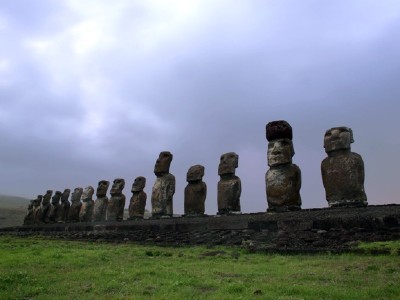
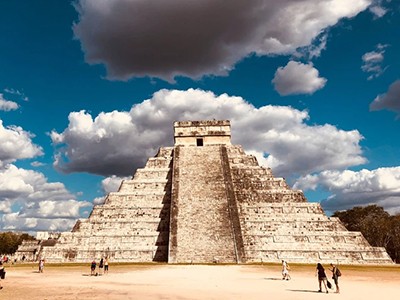
Rapa Nui is known for its giant stone figures, called moai.Credit: Sébastien Lecocq/Alamy
More than 800 years ago, Polynesians sailed thousands of kilometres across the Pacific Ocean to one of the most remote islands on Earth, Rapa Nui.
Now, a study of ancient genomes from descendants of these voyagers has answered key questions about the island’s history, dispelling the idea of a population collapse hundreds of years ago, and confirming precolonial contact with Indigenous Americans.
Ancient voyage carried Native Americans’ DNA to remote Pacific islands
The theory that the early Indigenous inhabitants of Rapa Nui — also known as Easter Island — ravaged its ecosystem and caused the population to crash before the arrival of Europeans in the early eighteenth century was popularized in the 2006 book Collapse, by geographer Jared Diamond, but some other scholars have since criticized that theory.
The latest analysis, published on 11 September in Nature1, “serves as the final nail in the coffin of this collapse narrative”, says Kathrin Nägele, an archaeogeneticist at the Max Planck Institute for Evolutionary Anthropology in Leipzig, Germany. “It’s correcting the image of Indigenous people.”
The study was done with the endorsement of and input from officials and Indigenous community members in Rapa Nui. The authors say that their data could contribute to the repatriation of the remains sampled in the study, which were collected in the nineteenth and twentieth centuries and sit in a Paris museum.
Answers from DNA
After settling Rapa Nui by around ad 1200, ancient Polynesian people developed a flourishing culture famous for its hundreds of colossal stone statues, called moai.
When Europeans first reached the island in 1722, they estimated that it had a population of between 1,500 and 3,000 people and found a landscape denuded of the palm-tree forests that would have once covered the island. By the late nineteenth century, the Indigenous population, called the Rapanui, had dwindled to 110 people, owing to a smallpox outbreak and the kidnap of one-third of the inhabitants by Peruvian slave traders.
The ‘ecocide’ theory, that a pre-contact population of 15,000 or more plundered the once-pristine island’s resources, has been challenged by researchers who have questioned humans’ role in deforestation and its effects on food production, as well as the large estimates for the population.
Indigenous groups look to ancient DNA to bring their ancestors home
Anna-Sapfo Malaspinas, a population geneticist at the University of Lausanne, Switzerland, and Víctor Moreno-Mayar, an evolutionary geneticist at the University of Copenhagen, were hopeful that ancient Rapanui DNA could address the ecocide theory, as well as another lingering question: when ancient islanders mixed with Native Americans.
Their team’s 2014 study of genomes from contemporary Rapanui identified that these people had some Native American ancestry that seemed to have been acquired before European arrival2, hinting at voyages to the Americas. But a 2017 study found no signs of Native American ancestry in the genomes of three individuals people who lived in Rapa Nui before 17223.
To find answers, the researchers turned to human remains in France’s National Museum of Natural History that were collected in the nineteenth and early twentieth centuries. Genome sequences from the teeth or inner-ear bones of 15 individuals, and comparisons with other ancient and modern populations, suggested they were Rapanui, and radiocarbon dating showed that they lived between 1670 and 1950.
No population collapse
Both ancient and modern genomes carry information about how a population’s size has changed over time. When the population is small, segments of DNA shared between individuals — which are inherited from a common ancestor — tend to be longer and more abundant, compared with DNA segments from periods when numbers are higher.
In the genomes of the ancient Rapanui, there were signs of a population bottleneck around the time the island was settled, as would be expected when a founder group arrives. But after that, the island’s population seemed to grow steadily until the nineteenth century.
Divided by DNA: The uneasy relationship between archaeology and ancient genomics
Translating these trajectories into actual population numbers is not straightforward, but further modelling suggested that the genetic data are not consistent with, for example, a drop from 15,000 to 3,000 people before the eighteenth century. “There’s no strong collapse,” says Malaspinas. “We’re quite confident that it did not happen.”
All the ancient Rapanui carried Native American ancestry in their genomes, which the researchers determined had probably resulted from mixing dated to the fourteenth century. The Native American segments most closely resembled DNA from ancient and modern-day inhabitants of the central Andean highlands in South America, but the dearth of ancient and modern human genomes from the Americas makes it impossible to pinpoint the people the ancient Rapanui encountered, adds Moreno-Mayar. Still, the finding that Rapanui encountered Native Americans hundreds of years before Europeans arrived is “a banger result”, says Nägele. “We can look for where this happened and who travelled.”
Community input
Keolu Fox, a genome scientist at the University of California, San Diego, says the finding that Rapanui reached the Americas will come as no surprise to Polynesian people. “We’re confirming something we already knew,” he says. “Do you think that a community that found things like Hawaii or Tahiti would miss a whole continent?”
The researchers received a similar reaction when presenting their initial findings in Rapa Nui. Malaspinas recalls being told that ‘of course we went to the Americas’. She, Moreno-Mayar and other colleagues made multiple trips to the island to consult with officials and residents throughout the study.
From Vikings to Beethoven: what your DNA says about your ancient relatives
Malaspinas and her colleagues got approval for the study from committees that oversee land use and cultural heritage on the island. The researchers sought their permission after sampling the remains in Paris — something Malasipinas now regrets. “I would do things differently if I had started the project today,” she says, adding that her team was prepared to shelve the work if the committees had said no.
Community outreach in Rapa Nui shaped the questions the project tackled, says Malaspinas, such as trying to settle the relationship between ancient and present-day Rapanui. There was also a strong interest in repatriating the remains, something the researchers hope will eventually happen.
Nägele, who works in Polynesia, thinks the researchers did a good job of engaging with people in Rapa Nui. But she adds that scientists should have a stronger role in pressuring foreign institutions to return Indigenous remains to their place of origin.
Nature, Published online: 11 September 2024; doi:10.1038/d41586-024-02620-1
By analysing the ancient genomes of individuals from Rapa Nui, researchers have overturned a contentious theory that the remote Pacific island experienced a self-inflicted population collapse before European colonization.
Nature, Published online: 10 September 2024; doi:10.1038/d41586-024-02669-y
Authors in the 1920s and 1970s had different takes on how science would shape the future. Nature’s reviewers had similarly diverse views on how accurate these predictions would be.
Thank you for visiting nature.com. You are using a browser version with limited support for CSS. To obtain
the best experience, we recommend you use a more up to date browser (or turn off compatibility mode in
Internet Explorer). In the meantime, to ensure continued support, we are displaying the site without styles
and JavaScript.
On 5 March 2024, the International Commission on Stratigraphy (ICS) — the body responsible for defining units of geological time — announced it was rejecting a proposal to formalize the Anthropocene as a geological epoch that represents an interval of overwhelming human impact on the planet. The Subcommission on Quaternary Stratigraphy (SQS) of the ICS had initiated this process in 2009 by setting up an Anthropocene working group (AWG), which we represent. The aim of the AWG was to clarify whether there was sufficient evidence to formalize the Anthropocene, a process that involves identifying a precise starting point in a specific geological layer, or stratum.
The rejection has prompted much debate, with strong views expressed on both sides. In the past decade or so, however, the term Anthropocene has been adopted widely to describe, analyse and interpret the transformed conditions in which humans now live.
It’s final: the Anthropocene is not an epoch, despite protest over vote
It’s currently used in four main ways by different groups. First, the Earth-system science community, in which the concept arose, and allied scientific disciplines use it to model, assess and warn of the effects of human activities, including the transgression of environmental ‘planetary boundaries’1. Second, scholars in the humanities and social sciences use it to seek to understand how human impacts eventually came to overwhelm many powerful forces of nature, and what that means to the analysis of history, philosophy, politics, economics, society and culture2. Third, the Anthropocene is inspiring many works in museums and in the arts. And fourth, the public and policymakers, urban planners and others use the concept to understand the human transformation of the climate and biosphere, which is essential to formulating and implementing policies of stewardship, mitigation and adaptation1.
With a formal geological definition of the Anthropocene now off the table, at least for the moment, we here explore how the concept can be best understood and used with these wider communities in mind. What should the term fundamentally mean, for both specialized and general use?
Geological origins
The Anthropocene was initially proposed by atmospheric chemist Paul Crutzen in 2000, at a meeting of the Scientific Committee of the International Geosphere–Biosphere Programme (IGBP), a forum dedicated to discussing processes of global change. Crutzen’s intention was for it to represent a new geological epoch3 consistent with the goals of this community. The purpose was not simply to denote an anthropogenically modified Earth. Geologically important anthropogenic impacts stretch back through the Holocene epoch, the post-ice-age chunk of geological time in which we still formally live, and into the Pleistocene epoch that preceded it. Conditions typical of the Holocene include relatively stable atmospheric and ocean chemistries and climate (especially temperature) and, after around 7,000 years ago, a relatively constant sea level. As proposed by Crutzen, the Anthropocene represents an Earth system that has changed irreversibly from those conditions to a state that is still evolving, for which the name Holocene could no longer be regarded as appropriate.
Strikingly similar patterns of various environmental markers, such as levels of different greenhouse gases, bear witness to an abrupt transition, approximating to the change from a horizontal to a vertical line on a graph of the extent of the Holocene (see Supplementary information, Fig. S1). Crutzen initially suggested that departure from Holocene conditions began with the start of the Industrial Revolution and increased coal burning in late eighteenth-century Europe4, although he proposed this before the IGBP data extended that far back. Once further data had come in, a mid-twentieth-century onset was more evident4, linked to the concept of the ‘Great Acceleration’ of many socio-economic drivers and Earth-system responses after the Second World War5.
The transformation this represents has been extensively detailed6–8. Among its main characteristics are: altered atmospheric chemistry; a warming climate; now-irreversible ice-sheet melting and sea-level rise; accelerated erosion and sedimentation; a proliferation of industrial goods, many made of artificial materials such as plastics; a biosphere transformed through species invasions, domestications and extinctions; and the rapid growth of a ‘technosphere’ of globally interlinked human-devised technological systems9.
Background to the proposal
This initial research propelled efforts to pin down the beginning of the Anthropocene, by identifying its start in a geological reference layer known as a global boundary stratotype section and point (GSSP; often called a golden spike). Between 2020 and 2023, 12 research teams formulated proposals for candidate GSSPs and other reference sections in eight distinct geological environments across five continents6.
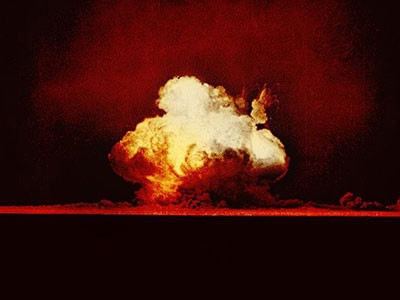
After much discussion and formal voting, the AWG chose a level that separates the summer and autumn sediment layers laid down in 1952 at Crawford Lake in Canada. The autumn layer is characterized by a marked upturn in plutonium isotopes, coinciding with the first atmospheric hydrogen-bomb test10. This signal is clearly seen in many of the proposed sites (see ‘Consistent boundary’). Crawford Lake was selected because of its undisturbed, seasonally deposited sediment layers that preserve a precise and continuous chronology, its ease of access for future investigations and its protected status in a conservation area. The annually resolved plutonium data are supported by fly ash, nitrogen-isotope and biological markers. To give a specific date and time, a nominal start that coincides with the first atmospheric hydrogen-bomb detonation (codenamed Ivy Mike) was chosen: 1 November 1952 at 7:15 local time at the site on Enewetak Atoll, part of the Marshall Islands, in the Pacific Ocean (19:15 Greenwich Mean Time on 31 October).
Source: Ref. 7
These strata can be precisely correlated around the world — in some places to the nearest year — by a plethora of stratigraphic signals6, enabling a systematic quantitative comparison of processes before and after the time boundary represented by their deposition. The proposal was formally submitted7 by the working group to the SQS on 31 October 2023.
The Anthropocene’s extent
The idea behind defining the Anthropocene within the geological timescale was to provide a precise reference point for the integrated study of a wide variety of phenomena as outlined above, placing contemporary changes in a deep-time context. But it is the lived, experienced and observationally recorded phenomena that go beyond geology and produce the intense broader interest in the Anthropocene: a fully legitimate interest, because the original guiding concept of the Anthropocene addresses the conditions of Earth’s habitability.
During the Anthropocene, Earth’s surface conditions have changed substantially compared with those prevailing throughout most of the Holocene: the planet is now hotter, more contaminated and biologically more degraded. These negative trends are set to intensify and extend further outside the Holocene envelope1. Some of the changes involved are long lasting (such as climate change) and some are irreversible (such as extinctions). They are already exerting pressure on political institutions, legal frameworks and economic relations, all of which are meant to protect human communities and give them meaning.
The detonation of the first hydrogen bomb, codenamed ‘Ivy Mike’, in 1952 marked the proposed beginning of the Anthropocene epoch.Credit: Bettmann/Getty
A precise geological definition of the year, day and hour is often not so relevant when the Anthropocene is discussed in these wider contexts. We note also that modest changes in formal boundaries of older geological time units do not generally result in a difference in how they are fundamentally understood. For instance, in 2008, the definition of the Holocene was changed by a different SQS working group from beginning at 10,000 radiocarbon years before present to a formally, stratigraphically defined 11,700 years before present (taken as 2000)11, without changing its fundamental meaning as the most-recent post-glacial interglacial phase.
The definition of the Quaternary period is also informative. This unit encompasses the Pleistocene and Holocene epochs, and was set in 2009 to begin at around 2.6 million years ago, using for practical purposes a pre-existing GSSP and a major reversal of Earth’s magnetic field. Intensification of Northern Hemisphere glaciation had in fact begun slightly earlier, at around 2.7 million years ago, but this does not change the period’s general meaning as representing the commonly considered ‘ice age’12. Other such examples can be found for older time periods. It isn’t the precise boundary that controls the concept of geological time units, but the fundamental characteristics of the periods that they bound. Nevertheless, increasing the precision of their boundaries makes geological time units more consistently useful.
We argue here that an understanding of the Anthropocene as the result of a mid-twentieth-century planetary transformation remains broadly useful across disciplines. This period is closely associated with the beginning of the Great Acceleration — a term coined by US historian John McNeill — and its near-synonyms, such as the ‘post-Second World War economic boom’, ‘the Japanese economic miracle’ from 1946 to 1990s, and Les Trentes Glorieuses, a term describing France’s 30 years of uninterrupted economic growth from 1945 to 1975. Many indicators of human impacts — including greenhouse-gas emissions, metal and mineral production, meat consumption and plastic use — show strong upward trends from the middle of the last century (see ‘Turning point’).
Sources: CO2: Our World in Data (go.nature.com/3tab6kt); others: J. Zalasiewicz et al.
For historians, this post-war period is characterized by a far-reaching transformation of societal values in many parts of the world, including a spread of socialism, communism, liberal democracy, social-welfare programmes and women’s education. These changes were powered by growth in the globalization of industry, trade and commerce in almost all sectors. National and international institutions in both communist and liberal-democratic countries guided these transitions even as these two blocs contended for power. Institutions such as the International Monetary Fund, the World Bank and the precursor of the World Trade Organization were created through international agreements near the end of or shortly after the Second World War. Technological advances also saw an explosion in agricultural food production and contributed to high rates of human population growth globally2,13.
Ditching ‘Anthropocene’: why ecologists say the term still matters
For researchers in anthropology, political theory, international law and ethics, questions arise about the implications of the human forces that start to dominate the web of life and non-organic processes during this interval. Around the world, people are contending with a transformed Earth system, which different cultures experience, understand and respond to according to their distinct world views. The expanding technosphere necessary to power, feed, house and clothe the growing human population has been accompanied by rising global inequality, with the poorest people having seen only a minuscule rise in real incomes. Neoclassical economics and its assumptions of an unlimited capacity for growth are also challenged by an understanding of an increasingly destabilized Earth system and finite planet2.
Older boundary levels have been suggested for the Anthropocene’s beginning, but we argue that they do not capture the fundamental step change, measurable across a wide range of metrics, that a mid-twentieth-century transition does. Alternative suggestions include an ‘Orbis spike’ level at around 1610, which corresponds to a dip of around 10 parts per million (p.p.m.) in atmospheric carbon dioxide concentrations14. This dip has been proposed to result from a decline in population and reduction of farming and forest regrowth in the Americas after mass deaths of Indigenous peoples following the arrival of European colonists. But this dip is small and short-lived compared with the increase in CO2 of around 140 p.p.m. over the past two centuries, which is set to endure. And stratigraphic signals related to a ‘Columbian exchange’ in species between the Americas and Europe — such as the presence of maize (corn) pollen — occur at distinct times in different places over several centuries. They do not capture an abrupt, fundamental transition globally on a par with that seen in the mid-twentieth century.
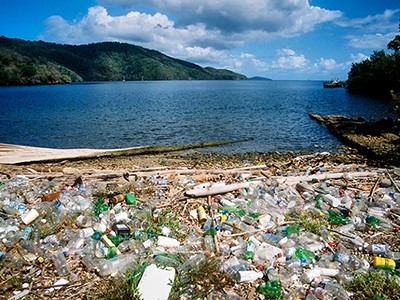
The production plastics and other waste has increased hugely since the 1950s.Credit: Jason Swain/Getty
Similar objections can be raised against other boundary suggestions based on stratigraphic signals — for example, lead-smelting signals dating to around 3,000 years ago found in European peat bogs and Greenland ice15. Some proposed ‘Anthropocenes’ extend yet further back in time, including an ‘Anthropocene event’ that includes all major preserved human impacts at least as far back as 50,000 years ago — a definition that would encompass the Parthenon in Ancient Greece, the Great Wall of China, the pyramids of Egypt, early deforestation, Mesolithic arrowheads and even the Late Pleistocene megafaunal extinctions16.
The recognition of a profound planetary transition in the mid-twentieth century would be strengthened by geological formalization. But even recognizing it as a quasi-formal boundary reflects reality17,18 and encourages clear communication in all disciplines in which the term Anthropocene has come to be used as shorthand for overwhelming environmental change. Interpretations that encompass all significant anthropogenic impacts over time differ markedly and, if all are labelled as Anthropocene, risk avoidable confusion of meaning.
What the Anthropocene is and isn’t
Beyond discussions about when it can most usefully be considered to have begun, the Anthropocene has been interpreted in many ways by the various disciplines in which it has circulated. Questions commonly reflect increasingly divergent perspectives, and diminishing mutual understandings, in our still strongly siloed academic landscape. These differences need to be explored and, when necessary, challenged.
Does the Anthropocene disregard sociopolitical inequalities? In coining and using the word Anthropocene, Earth-system scientists and geologists are said by some to be assigning blame equally to all humans, rather than just to those whose disproportionate consumption of resources is mainly behind the altered (and still changing) planetary state.
Humans versus Earth: the quest to define the Anthropocene
This misconception has arisen because the aims and procedures of Anthropocene physical science differ from those of the humanities and social sciences. The physical sciences are here concerned mostly with measuring and describing Earth’s responses to impacts that are currently overwhelmingly anthropogenic. Researchers are not typically interested in ascribing responsibility to particular people or to specific social, economic and political systems — although a strongly unequal responsibility for anthropogenic change has been noted ever since the concept’s introduction2 and some studies5 include such correlations. The physical sciences also rarely explore the resulting social, economic and political responses or the values that underlie people’s desires and hopes.
In approaches to the Anthropocene, there is thus a division, or spectrum, of disciplinary labour. Physical scientists study Earth’s responses to human impacts during the Anthropocene, whereas social scientists and humanities scholars explore the people and societies behind those impacts. For most scholars in the humanities and social sciences, inequality is central to sociopolitical analyses of the Anthropocene. There is no reason for these approaches to be in opposition; the Anthropocene as understood here provides a framework that implies complementarity and multidisciplinarity.
Does the Anthropocene equate to climate change? Rapid, recent climate change caused by rising atmospheric greenhouse-gas levels poses a clear threat to human societies. Despite efforts to control emissions, more than 100 million tonnes of CO2 are added to Earth’s atmosphere daily. Although climate change is now the most important force destabilizing the Earth system, the Anthropocene includes many other physical, chemical and biological transformations, interlinked with global economic, political, social and technological phenomena.
Expanding activities such as mining industries make their mark on the planet.Credit: Anton Petrus/Getty
When Crutzen introduced the term in 2000, atmospheric CO2 levels were ‘only’ around 370 p.p.m., or about 85 p.p.m. above pre-industrial maximum concentrations. Average global temperatures were some 0.5 °C above pre-industrial levels (taken as the average from 1850 to 1900), and so still within the envelope of conditions reached at other times during the Holocene. In 2000, warming might have been said to be incipient: but even then, the total changes to the Earth system justified Crutzen’s proposal of a new epoch. By 2022, atmospheric CO2 levels were nearly 420 p.p.m., with an average temperature of 1.5 °C above pre-industrial values. Factoring in the effects of other greenhouse gases, notably methane, nitrous oxide and chlorofluorocarbons, brings the CO2 equivalent to around 523 p.p.m. in 2022, a level perhaps not seen since the mid-Miocene epoch, some 17 million years ago. Not surprisingly, then, Earth overall is now hotter than at any time in the Holocene. Meanwhile, biodiversity loss and the increasing homogenization of the planet’s once-distinct biogeographical assemblages make up another key aspect of the Anthropocene19. Climate change is an important component of the Anthropocene, but it does not define it.
Did the Anthropocene begin when its causes did? The boundaries of geological epochs are not generally taken at the beginnings of planetary transitions, but at points at which they can be readily recognized and practically used. Many evolving developments, activities and ideas ultimately led to the transformation of the Earth system in the mid-twentieth century. They reach back to the emergence of Homo sapiens and the mastery of fire and complex communication skills, across the development of animal domestication, agriculture, urban societies, writing systems, globalized trade, the steam engine, capitalism, the Haber–Bosch process for fertilizer production and so on. The causes of the Anthropocene necessarily precede the start of the epoch. By analogy, the formal definition of the Holocene at 11,700 years ago comes towards the end of a long, complex, stepped pattern of warming and sea-level rise caused by deglaciation that had started around 8,000 years earlier10. Subsequently, the Holocene, operating as an interglacial interval not greatly different from previous ones, provided the physical circumstances for civilization to develop, conditions that the Anthropocene is now overriding.
A common sense
The Anthropocene was originally understood by Crutzen as not only representing humanity’s influence on Earth’s geological record (he was well aware of earlier anthropogenic impacts), but also reflecting a system with physical characteristics that had, since widespread industrialization, departed from the prolonged, relatively stable conditions of the Holocene.
An Anthropocene concept anchored to begin in the mid-twentieth century is aligned with both the Great Acceleration and a fundamental shift in Earth’s state. Understanding the Anthropocene in this way would prevent the current confusion of the term meaning different things in different contexts. It complies with the term’s originally intended meaning, and also reflects a clear evidence-based geological signature20. The concept is congruent with the term’s use in Earth-system science21 and more widely, such as by new and emerging institutions, such as the Center for Anthropocene Studies at the Korea Advanced Institute of Science & Technology, Daejeon, South Korea, the Centre of Excellence for Anthropocene History at Stockholm’s KTH Royal Institute of Technology and the Max Planck Institute of Geoanthropology in Jena, Germany. It highlights geology’s role in addressing problems of societal concern and is also applicable in the social sciences and humanities with respect to the enormous societal upheavals, changes in energy production and globalization of trade that have taken place. Policy and international law will also benefit from an unambiguous definition, putting beyond doubt that we are now in a time of transformed planetary functioning wrought by overwhelming human impacts.
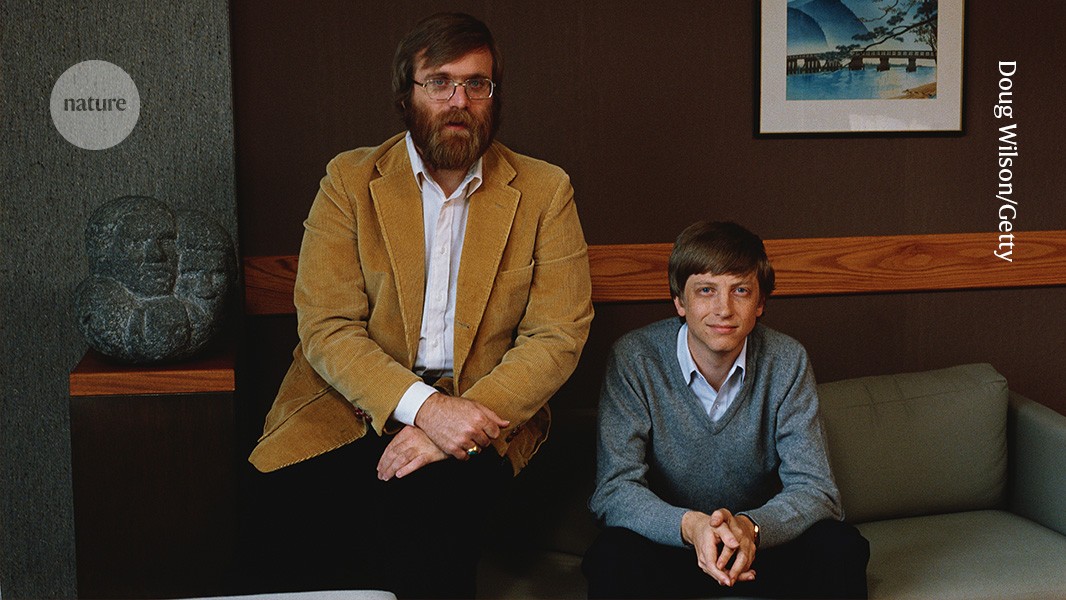
Paul Allen (left) and Bill Gates, who co-founded Microsoft, pictured in 1984.Credit: Doug Wilson/Getty
Science-history lovers, check your bank balances.
Virtual bidding opened today on a trove of science-history treasures from the estate of Microsoft mogul Paul Allen. Some of the most prized pieces will be auctioned live next month in New York City, including physicist Albert Einstein’s 1939 letter alerting then-US president Franklin D. Roosevelt that the Germans had discovered fissionable uranium; a spacesuit that was part of NASA’s Gemini IV mission, the first in which an astronaut ‘walked’ in space; and correspondence from the pioneering primatologists Jane Goodall, Dian Fossey and Louis Leakey.
Economics Nobel for auctions rewards work that has modern-age urgency
Allen amassed the items — which scientists and museum curators alike are ogling — over the course of his life. At the time of his death in 2018, Allen’s net worth was estimated to be more than US$20 billion, the result of his having developed software for the first personal computers and co-founded Microsoft with Bill Gates in 1975. After leaving Microsoft, Allen dabbled in various ventures, including founding the Allen Institutes for brain science, artificial intelligence and cell science, and funding SpaceShipOne — which in 2004 became the first private ship to carry people into space.
“It’s a testament to Paul Allen that he put this [collection] together,” says Randall Berry, a computer engineer at Northwestern University in Evanston, Illinois. “You could tell he was really trying to capture something that he lived partly through, for posterity.”
Nature spoke to researchers and curators about the items they are drooling over, and their hopes for what will happen to them after the auction.
Four-rotor Enigma cipher machine
This Enigma machine offered high-level encryption and was used by Germany to send military messages during the Second World War.Credit: Christie’s Images Ltd 2024
This machine from 1941 was central to the “dawn of computing”, says Voula Saridakis, a curator at the Griffin Museum of Science and Industry in Chicago, Illinois. During the Second World War, the Nazis used Enigma machines to encrypt top-secret military plans. British mathematician Alan Turing, along with other code breakers, came up with a system to crack the ciphers using maths and logic. This work was instrumental to the development of Colossus, the world’s first programmable electronic computer, which decoded another type of encrypted message and could solve more than 100 codes for the Allied powers per week. “This problem that no human mind could tackle, unaided, necessitated the development of computers,” says Sam Lemley, a curator at Carnegie Mellon University Libraries in Pittsburgh, Pennsylvania, home to a computing-history collection.
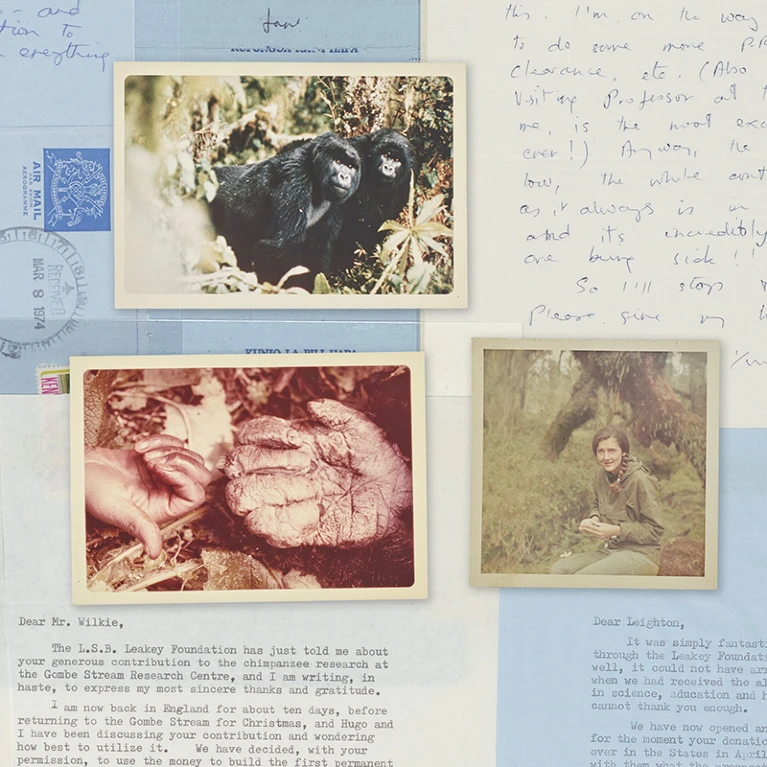
Correspondence from Louis Leakey, Jane Goodall and Dian Fossey
Photographs and letters relating to work Dian Fossey (pictured, right) and Jane Goodall did with primates in Rwanda and Tanzania, respectively.Credit: Christie’s Images Ltd 2024
These iconic figures in primatology put human evolution into the public spotlight in the 1970s and 1980s. With funding from the Wilkie Brothers Foundation in Illinois, Leakey sent Goodall and Fossey to study wild chimpanzees and gorillas in the African wilderness. They shared their research with the Wilkie family through letters and photographs, and sent the family tools that chimpanzees used to extract ants from anthills, which Goodall had collected. “The things that chimpanzees did, that we thought were exclusively human behaviours, turned out to be shared by our closest relatives,” says Karen Strier, a primatologist at the University of Wisconsin–Madison. “It made people feel a part of nature.”
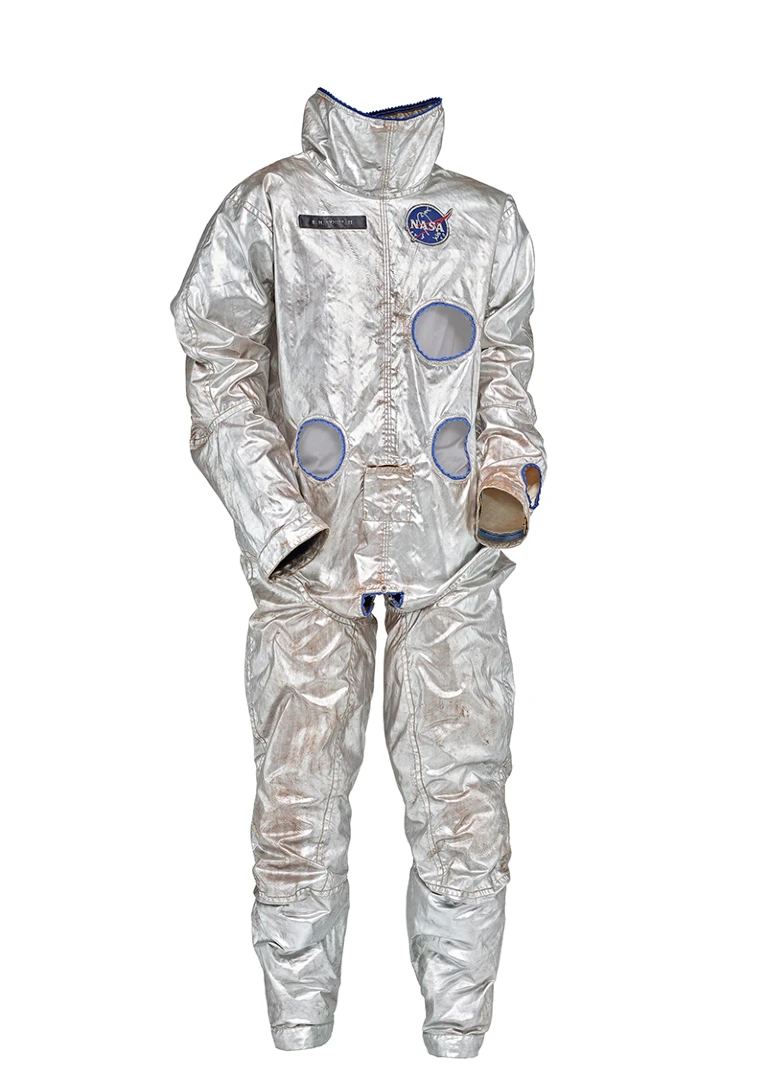
Astronaut Ed White’s back-up spacesuit
The cover layer of Ed White’s NASA spacesuit, made of aluminium-coated nylon fabric.Credit: Christie’s Images Ltd 2024
Although White did not float in space in this particular suit in 1965, Pablo de León, leader of the Human Spaceflight Laboratory at the University of North Dakota in Grand Forks, says it will probably go for a higher price than the upper estimate of $120,000 listed because the suit that White did wear has been damaged. “UV [ultraviolet] light degraded the bladder of the spacesuit,” he says, and the Smithsonian Institution’s National Air and Space Museum in Washington DC, which owns it, removed it from display and treated it to prevent further damage. The back-up suit is reportedly in excellent condition.
Apple I personal computer
The Apple I computer went on sale in 1976 with a price tag of US$666.66.Credit: Christie’s Images Ltd 2024
Apple I was the first pre-assembled, commercially available personal computer. This particular one from 1976 sat in the office of Steve Jobs, who co-founded the technology firm Apple. Before this machine came onto the scene, hobbyists bought kits and parts to build their own computers. Only about 200 Apple I computers were made, and many of them were returned when the company brought out Apple II in 1977 and offered discounts and trade-ins for customers to upgrade. Lemley thinks that this computer will probably see the most competitive bidding in the auction, “not because it’s necessarily the most interesting or the most important item in the sale, but because Apple has just really captured the imagination of so many people”.
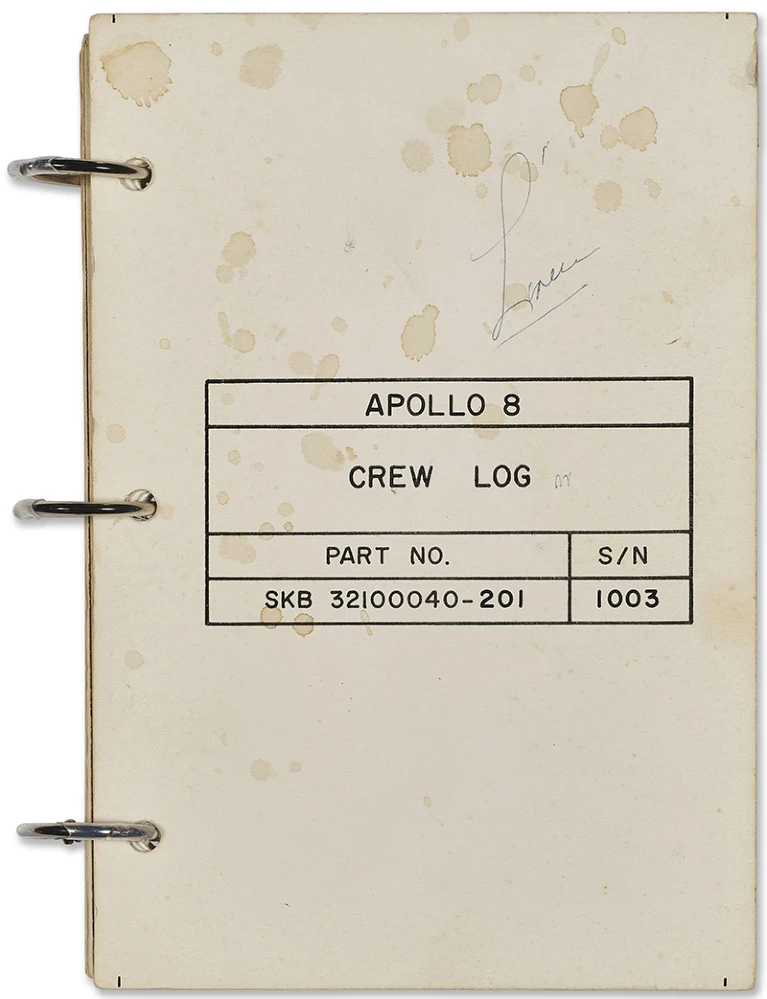
Astronaut James Lovell’s handwritten logbook from Apollo 8
Annotated logbook kept by Apollo 8 command module pilot James Lovell.Credit: Christie’s Images Ltd 2024
NASA’s Apollo 8 was the first crewed mission to fly around the Moon. The 1968 mission was important not only for setting the stage for the historic Apollo 11 landing of astronauts on the Moon, but also for “seeing the far side of the Moon for the first time with human eyes, and seeing Earth as a planet for the first time”, Saridakis says. As the mission’s command module orbited the Moon, astronaut William Anders captured the iconic ‘Earthrise’ photo, and Lovell, who piloted the module, made navigational notes in this logbook.
Finding a home
Many of these objects will probably end up in the hands of private collectors, at least initially. Museum curators who spoke to Nature say that most artefacts in their collections — about 80% — were donated. Of the remainder, a small percentage were purchased, and some are on loan from private collectors. Saridakis says it’s uncommon for the Griffin Museum of Science and Technology to bid at such “big, high-profile collection auctions”. Instead, private collectors bid on expensive items, which they might gift to museums.
One concern scientists have about historical artefacts winding up in private hands is that the objects might not be cared for properly, Saridakis says. Her message to collectors is to “do your homework” and consult with professional conservators to ensure that items are stored or displayed correctly, to preserve them “for hundreds of years, if not longer”.
Museums more often end up with rare texts and archaeological remains, Lemley says, than with modern items such as mainframe computers. That’s because modern artefacts “are really cumbersome objects to curate and store and conserve”, he adds, noting that they are made with a diverse range of materials, including plastic, silicon, lithium and cadmium, for which there isn’t as much precedent for preserving. “How do you preserve these things that really were never built to last longer than a decade?” Lemley asks.
Whether Allen’s prized possessions end up in private or museum collections, what matters to Strier and Berry is that the items are protected, and that people interested in them know where they are. “I think it would be a shame for these things to be just squirrelled away somewhere where no one gets to see them,” Berry says.
The auction will be held in three parts; the first two are virtual, beginning today and ending on 12 September. The third will be live on 10 September at Christie’s auction house in New York City.
This month, I am in Amman, Jordan, teaching on the annual Palestine Social Medicine Course. This course, now in its second year, aims to educate educators, public-health workers, physicians and medical students about the limitations of the biological model of medicine in settings of fragmentation, violence and dispossession. It examines the effects of conflicts and violence on public health and human rights, emphasizing the need for resilience and commitment to these values in the face of adversity.
The course is organized by the Palestine Program for Health and Human Rights, a partnership between the François-Xavier Bagnoud Center for Health and Human Rights at Harvard University in Boston, Massachusetts, and the Institute of Community and Public Health at Birzeit University in the West Bank. Last year, it was taught in Birzeit. It was moved to Amman this year because of escalating violence and restrictions imposed by the Israeli military and settlers in the West Bank.
I’m a Palestinian scientist building a more inclusive future
Since violence escalated on 7 October 2023, many scientific and medical gatherings in the Middle East have been postponed or cancelled. Travel to the region is difficult, because many airlines have stopped flying there. Yet the organizers felt strongly that it was important to keep the course running, because the exchanges it enables are crucial. They provide students with access to cutting-edge knowledge and methods that help to prepare them to contribute to science and medicine — to the benefit of society.
The war in Gaza is harming thousands of people now, but will have ripple effects on all nations for decades, if not centuries, to come. Violence and war anywhere harm us all — not just in terms of people killed and places destroyed, but in the loss of capacity for exploring solutions to problems that plague humanity. People who are having to fight or run for their lives, or who spend their time finding shelter or trying to advocate for fundamental human rights and dignity, do not have time for wider problem-solving.
Scientists, physicians and health-care providers usually address the ills of the patient or population in front of us. Social medicine is occupied with a larger challenge: healing the hurts of a region or population with a long history of pain. This means identifying the social determinants of health that affect the population — including, for example, sexism, racism, economic inequality and historical, multigenerational traumas — and seeking to heal the people living under their shadow.
The Taliban ‘took my life’ — scientists who fled takeover speak out
Recent history could easily make us throw up our hands in despair. In the Middle East, especially, peace seems so far away. Progress on so many fronts — social, scientific, diplomatic — seems to be retreating while exposure to horrifying trauma increases daily.
Yet the region has a rich history of medical and scientific advancements. Crucial contributions came from ancient civilizations such as the Persian Empire, Mesopotamia and Egypt, culminating in the Islamic Golden Age from the eighth to the thirteenth century. Philosopher-scientists such as Abū Bakr al-Rāzī (often known in the West as Razi or Rhazes), al-Zahrawi (Abulcasis) and Ibn Sina (Avicenna) shaped science and medicine in the Islamic world and Europe in ways that lasted for centuries.
Years of experience in the Middle East and North Africa have shown me that scientific training and other events held in the region, rather than in Europe or the United States, can provide a valuable historical perspective and cultural context while fostering global collaboration.
For example, hosting a scientific symposium in Tehran, despite geopolitical pressures against it — as I did in 2012 — exposed participants to contemporary Iranian advances in medical research, such as work in stem-cell research and medical nanotechnology, which have since gained international recognition.
Tracking women’s mental health amid trauma in Yemen
By connecting international scholars with local practitioners, the Palestine Social Medicine Course highlights the specific health challenges faced by Palestinians, while creating a platform for cross-cultural dialogue and knowledge exchange.
Immersing ourselves in the settings where historical advances in science and medicine were made provides deeper insights into how societal values and needs have shaped scientific discoveries and medical practices. Studying pioneers such as Ibn Sina and al-Rāzī can inspire current and future practitioners to innovate and push the boundaries of their fields. And fostering global collaborations and building connections with scholars and institutions in the Middle East enriches the collective understanding and application of medical and scientific knowledge.
We scientists and medical professionals need to do what we can to change the sad trajectory of violence. Those of us who want peace, understanding and progress towards humanity’s well-being must dig in and push for that vision.
During what is sometimes called the Dark Ages in Europe, scientific and medical innovations from the Middle East and North Africa shone a guiding light to bring humanity a reasoned approach to health and problem-solving. Perhaps looking through the lens of history can inspire us to find new solutions to address contemporary challenges, in this region and worldwide.
The views expressed are the author’s own and do not necessarily represent those of her institution.
Janice Sellers, a professional genealogist in Gresham, Oregon, has studied her family’s history for decades, and she’s uncovered a few twists along the way. In 2016, genetic testing revealed that her grandfather was not biologically related to his own father, for example. Another surprise came in 2022, when she learnt that she was related to a woman who had died at least 600 years ago and was buried in a medieval Jewish cemetery in Erfurt, Germany.
The woman’s genome had been analysed as part of an ancient-DNA study1 and uploaded to a genetic genealogy website called GEDmatch. A Jewish historian and genetic genealogist named Kevin Brook found numerous living people who shared long stretches of DNA with the fourteenth-century Erfurt woman, and contacted Sellers to let her know that she was one of them. Sellers remembers being intrigued: “I was thrilled to find out I had some DNA left from a line that can be traced back that far,” she says. “Who would have guessed?”
In the decade or so since scientists reported the first ancient human genome sequence, they have generated genome data for more than 10,000 ancient individuals. Most of these are people who lived so long ago that it’s not possible to detect meaningful links with modern individuals. But, because ancient-DNA researchers have forged closer ties with archaeologists and historians, the number of ancient human genomes from the recent past — just a few hundred years ago — has grown.
How Denisovans thrived on top of the world: mysterious ancient humans’ survival secrets revealed
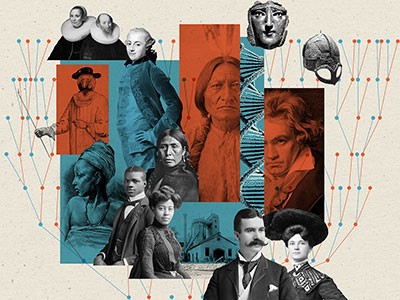
Now, scientists are finding connections to modern relatives of African American ironworkers in eighteenth-century Maryland and to notable historical figures, such as Ludwig van Beethoven and the Native American leader known as Sitting Bull. Unravelling these relationships, researchers say, could provide information about historical individuals’ identities and their descendants’ subsequent migrations. Such investigations could also help to fill in the genealogical histories of people for whom such information has been obscured or erased, such as the descendants of enslaved people. It is “the next thing in the field of ancient DNA”, says Éadaoin Harney, a population geneticist at consumer-genetics firm 23andMe in Menlo Park, California. “It’s a new way to study human history.”
But the connections aren’t always meaningful or informative. And that murky reality might be lost on consumers who subscribe to genetic-testing services that offer to tell them about the DNA they share with people who lived many hundreds and even thousands of years ago, such as European Vikings or Bronze Age farmers in China. The relevance of such information can easily be misunderstood and, some researchers worry, misused. “You have to be careful how to interpret this,” says Harald Ringbauer, a computational geneticist who works on ancient DNA at the Max Planck Institute for Evolutionary Anthropology in Leipzig, Germany.
From a long line
The stretch of DNA that Sellers and the Erfurt woman share — a couple of million DNA bases spanning chromosome 11 — is known as an identical by descent (IBD) segment. Consumer-genetics companies have long used IBD segments to match relatives, such as distant cousins who share a great-great-grandparent, in their databases. But for genomes older than a few hundred years, these links are less informative.
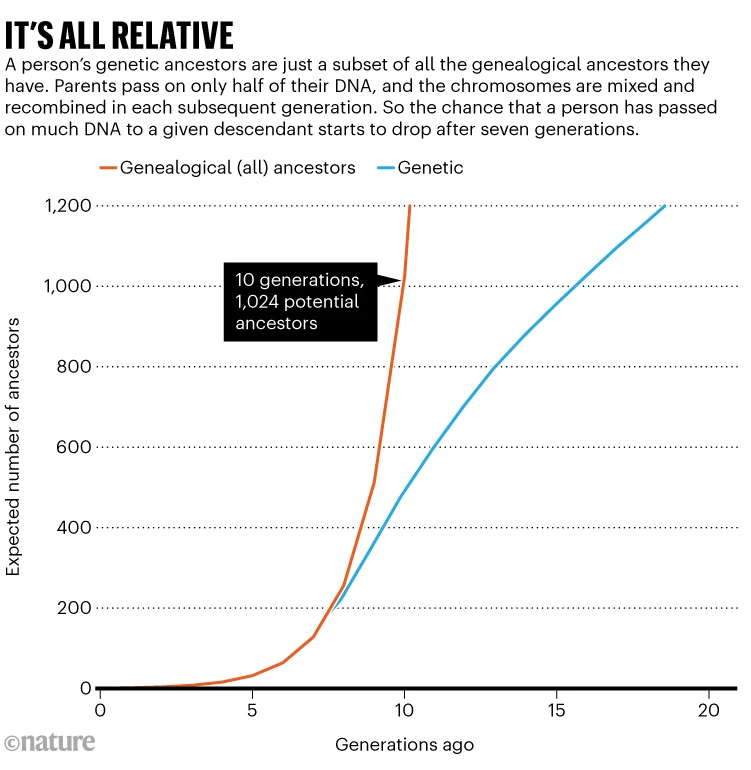
For one thing, the information is incomplete. Scientists make a distinction between genealogical ancestors, who include everyone in a family tree, and genetic ancestors — the subset of people in that tree with whom someone actually shares stretches of DNA. The potential number of genealogical ancestors a person has doubles with each generation. So going back 20 generations, or about 600 years, a person has up to one million ancestors. Add just ten more generations, and they’ve got more than one billion possible ancestors. The actual number of genealogical ancestors is much smaller, however, because people in every generation are mating with people who share common ancestors.
But because each parent shares only half of their genome with their child, and that half gets chopped up and redistributed with each subsequent generation, a person has fewer genetic than genealogical ancestors. They will share at least some DNA with each of their 16 great-great-grandparents. But further up the family tree, the chance that any segment of a given person’s genome will end up in a particular present-day descendant starts to fall. What gets passed along mostly comes down to chance (see ‘It’s all relative’).
“Once you go back to very ancient times, or even the early Middle Ages, these IBD segments don’t tell you anything about genealogy,” says Shai Carmi, a population geneticist at the Hebrew University of Jerusalem, who co-led the Erfurt ancient-DNA study. This is because present-day people from a particular population are all genealogically related to a medieval ancestor in highly similar ways. The Erfurt woman lived so long ago, says Carmi, that it’s likely that all Ashkenazi Jewish people alive today have a genealogical relationship to her that is similar to Sellers’. So, sharing an IBD segment is a matter of luck, with all present-day people from the population having the same odds of doing so.
Sellers knows from experience that people don’t share IBD segments with everyone in their family tree and so she didn’t expect that her ancient match indicated a close connection. “I didn’t assume it meant anything,” says Sellers, who identifies as culturally Jewish.
Exactly when IBD matches between ancient and modern people become genealogically informative isn’t completely clear, and depends on population size, mating patterns and other demographic factors. Generally speaking, however, different people from the same population can have mostly distinct family trees going back 300 or 400 years (see ‘Shared ancestry’). So, an IBD segment shared with an ancient person from this period has the potential to reveal that someone is related to them — most likely through a common ancestor who lived even longer ago, says Carmi. As population geneticist David Reich at Harvard Medical School in Boston, Massachusetts, puts it, “Once you get within artillery range to the present, you can actually find connections.”
Some of the first efforts to link ancient and modern genomes through IBD segments have been what Ringbauer calls “celebrity genomics”. The comparisons have been used to authenticate remains of famous individuals or confirm genealogical relationships. But the results are mixed. Last year, for instance, researchers analysed DNA from several locks of hair proposed to have come from the German composer Ludwig van Beethoven, who died in 1827 and had no known children2.
When they compared the genome sequence of one sample to those of three known living descendants of Beethoven’s nephew, Karl van Beethoven, the scientists were unable to detect any long IBD segments. Meanwhile, more than 600 people in a database maintained by the consumer-genetics company FamilyTreeDNA shared detectable IBD segments with the hair. Many lived in regions of Germany that were home to Beethoven’s ancestors, but even those with the longest IBD segments could not be linked to the family through genealogical records.
Ancient DNA from Maya ruins tells story of ritual human sacrifices
Researchers also investigated hair from the nineteenth-century Lakota Sioux leader Tatanka Iyotake, or Sitting Bull. In 2007, on the basis of historical records, the Smithsonian Institution in Washington DC had repatriated a hair sample to the family of Ernie LaPointe, who said he was Iyotake’s great-grandson. In 2021, a team that included LaPointe confirmed the relationship by exploring IBD segments3. LaPointe and his family now hope to use this connection to have other remains thought to belong to Iyotake — currently buried in South Dakota — reinterred at a location that is more relevant to his origins and culture.
In the near future, it might be possible to connect unknown individuals to their modern relatives using ancient DNA, says Tom Booth, a bioarchaeologist at the Francis Crick Institute in London who is part of a project aiming to analyse DNA from thousands of human remains across the United Kingdom.
Known, named individuals are sometimes exhumed from cemeteries as part of development projects, for instance, and traceable descendants have been consulted over what to do with the remains, Booth says. Similar procedures could be followed with individuals who have been identified through genetics, but Booth isn’t so sure that an ancient IBD match should be grounds for making such decisions, at least not in the United Kingdom.
“The people we’re talking about lived so long ago, if they have any descendants, they’re likely to have hundreds,” Booth says. “Just because someone has established a genetic connection to a genetic relative, should they have proprietary access to them?”
Linking past and present
Identifying descendants of ancient people can help to fill in other details about the past, say scientists. Last year, Reich, Harney and their colleagues used IBD technology to identify the living relatives of 27 individuals who were buried in a Maryland cemetery connected to Catoctin Furnace, an iron forge that operated between 1776 and 19034. Until 1850, the forge relied mainly on the labour of enslaved and free African Americans. The remains were excavated in the late 1970s as part of a motorway construction project and stored at the Smithsonian Institution in Washington DC.
Historian Elizabeth Comer, president of the Catoctin Furnace Historical Society in Thurmont, Maryland, has long been interested in establishing a community of modern people with links to the site. But after years of scouring documents to identify living descendants, Comer and her colleagues had found just two families. Comer, who is white, sees the quest as a way of educating people about industrial slavery and the contributions of enslaved people to American prosperity. “I want people to be able to come to Catoctin and embrace it as their legacy,” she told Nature last year.
The scientists who worked with her also saw that linking past and present genomes could reveal long-lost details about people who were buried at the site. But to make those connections at scale, it was necessary to use consumer DNA databases. “It was clear that it wouldn’t be possible to do things that the Catoctin Furnace Historical Society was interested in without having access to a database like 23andMe,” says Harney.
Among 23andMe’s database of nearly 9.3 million anonymized customers who have opted in to research, Harney and Reich found more than 41,000 people who shared IBD segments with individuals from the Catoctin Furnace burial. The vast majority are ‘collateral relatives’ who have a distant ancestor in common with someone who was buried at Catoctin Furnace.
But nearly 3,000 individuals shared significantly more and longer IBD segments, indicating a closer relationship. One family from southern California shared so much DNA with a woman buried at the site that its members are probably direct descendants of the individual or of a very close relative. In some cases, the researchers were able to reconstruct family trees linking 23andMe customers to individuals who were buried at Catoctin Furnace.
The research hints at the origins of some of the workers and their families. Among present-day people found to have a connection with individuals buried at the site, those with known connections to Senegal, Gambia, Angola and the Democratic Republic of the Congo tend to share the most DNA. This is consistent with historical records linking ships that transported enslaved people from these regions to Maryland and other US states.
Many of the most closely related living individuals reside in Maryland — suggesting that some people who worked at Catoctin Furnace didn’t move far when the forge transitioned to mainly having paid white workers. And the presence of small clusters of people living in the southeastern United States who share especially close genetic connections could support historical evidence that some enslaved workers were sold and transported to the south.
A consumer question
Some scientists question whether this kind of research will benefit living descendants. When the Catoctin Furnace study was published, in August 2023, none of the 23andMe customers with links to the site, including those with very close ties, had been informed of their connections by the company. But this March, the firm started giving customers the option to learn whether they shared DNA segments with nine of the individuals from the burial (those with the highest quality genome data), as well as with Beethoven, Viking-era individuals and people represented in ancient-DNA data sets from the Caribbean, Asia, southern Africa and elsewhere.
Most of these samples are too old to provide genealogically meaningful connections, says Harney. But, for the Catoctin Furnace individuals and Beethoven, the company will indicate whether people share enough DNA that it might indicate a closer genealogical connection.
Neanderthal–human baby-making was recent — and brief
For the nearly 3,000 customers who fit this category, 23andMe will provide the information without charge (other than the initial fee for analysing their DNA). But more-distant relatives and people interested in discovering other historical matches will need to pay the US$69 annual subscription fee that 23andMe charges to update customers about new discoveries, such as medically relevant genetic links.
Comer wishes that everyone who is interested in knowing about their genetic links to Catoctin Furnace could access that information freely. But she says that genetic links to African Americans who were buried at Catoctin Furnace are just one of many ways of identifying with the site and the people who lived, worked and died there. “We don’t want to leave anybody out,” she says.
Jazlyn Mooney, a population geneticist at the University of Southern California in Los Angeles, questions whether the team adequately sought out and listened to the concerns of people, including possible descendants, who might object to analysing the DNA of people who were enslaved and identifying living relatives. “It’s all very one-sided,” she says. “I can imagine there are a lot of people who would not be very happy who are also descendants.”
Mooney, who is African American, also has concerns about how genetic links to Catoctin Furnace could be communicated to people, and the role of a for-profit company as gatekeepers to that information. It doesn’t promote equity, she says.
Reich says that he and his colleagues listen to a variety of perspectives before going ahead with projects such as the Catoctin Furnace study, including from people who have the same kinds of misgivings as Mooney. “If that means not doing a study, which we’ve done on many occasions, so be it.”
He hopes the resulting study and an accompanying paper exploring its ethics reflect those conversations5. “We think that that’s better than just blasting ahead and not acknowledging those issues,” Reich says.
Connecting carefully
23andMe isn’t the only company that matches customers to ancient and historical individuals. And because many of the ancient-DNA data are freely available, companies can analyse them on their own and present conclusions to customers any way they wish. A firm called My True Ancestry, based in Bäch, Switzerland, looks for IBD segments in a database of thousands of ancient and historical individuals, including people buried at Catoctin Furnace, according to chief executive Markus Kangas.
Comer has received hundreds of e-mails from people who were told by My True Ancestry that they were related to individuals buried at Catoctin Furnace. But she has concerns about the accuracy of information being provided to people. She is aware of at least one discrepancy between results supplied by 23andMe and those provided by My True Ancestry.
Ancient DNA reveals the living descendants of enslaved people through 23andMe
Reich says that identifying shared IBD segments in ancient and modern genomes isn’t straightforward. Drawing IBD matches requires filling in patchy ancient-DNA sequences with modern data from a similar population, and this can lead to false negatives and positives. “There are lots of ways to go wrong,” Reich says. Regarding the methods used by My True Ancestry and others, he says, “Maybe they’re great. I don’t know. They’re not publicly available.”
Kangas, who has a background in data science, stands by the methods he developed and says the results his company provides can be confirmed with resources such as GEDmatch — but he has no plans to make the technology publicly available.
Regarding concerns about how ancient genome connections are communicated, Harney says that 23andMe tries to be careful when specifying what a link to ancient individuals actually indicates. “One of the things we really emphasize is that most of the connections we’re finding are very, very distant,” she says. “There’s a lot of people who see they share any genetic connection, they jump to ‘that’s my direct ancestor’.”
Giulia Gallio, collections and archives manager at the non-profit organization York Archaeology, UK, has seen that sort of confusion at first hand. She oversees collections that include human remains analysed for ancient-DNA studies, such as Roman-era individuals who lived around 2,000 years ago.
She has received numerous letters from people claiming to be descendants on the basis of tests from My True Ancestry and other companies. One person asked for access to a skeleton to get it 3D-printed, and a separate group wanted to hold a vigil in its collections room; she declined both requests. But, for the most part, “the enquiries were quite benign”, she says. “There was no, ‘You have to return my ancestors to me.’”
Scientists expect that the number of connections being drawn will balloon over the next few years, as researchers increase their work with publicly available collections of modern genomes, and more ancient human genomes become available. The chances of finding IBD matches increase vastly with the size of the databases, Ringbauer says. So resources such as the UK Biobank, a public repository of genome and health data from 500,000 UK residents, and the All of Us study of more than one million US residents could allow researchers to ask and answer many questions about ancient genomes.
A 2024 ancient-genome study on the effects of the Black Death in Cambridge, UK, for example, identified participants in the UK Biobank who share IBD segments with individuals who lived between 1550 and 18556.
And as these links to the past swell in number, scientists are imagining new ways of studying history. For the African Americans buried at Catoctin Furnace, Reich, Harney and their team created ‘fingerprints’ of modern ancestry — patterns of inheritance that varied from person to person. It’s not yet clear what these differences indicate, says Reich. But it’s possible that fingerprinting ancient human genomes could offer fresh insights into mobility patterns, birth rates and other facets of life. “This is a frontier for demographic research”, says Reich, that could enhance the study and understanding of both modern and ancient populations.