Nature, Published online: 06 August 2024; doi:10.1038/d41586-024-02443-0
Pupil and teacher characteristics underpinning successful physics classes, and the astronomical appeal of planetarium light shows, in our weekly dip into Nature’s archive.
The US molecular biologist Maxine Singer made discoveries about the role of enzymes in assembling genetic material. Work in the same field led to the first experiments in genetic engineering (or recombinant DNA) — a topic that sparked debate among scientists and the public alike. She fully engaged with these concerns and became a key advocate for dialogue between scientists and society. In later life, as an influential scientific administrator, she championed the cause of marginalized people in science and founded innovative programmes to support science teaching in schools. She has died aged 93.
In 1972, Paul Berg, who would go on to win the Nobel Prize in Chemistry, successfully inserted DNA from a monkey virus into the genome of the bacterium Escherichia coli, in the first such genetic-recombination experiment. In 1974, Berg and others sent a letter to several journals, including Nature, calling for a voluntary moratorium on recombinant-DNA research — to quell fears of genetically modified organisms escaping and spreading disease — and a scientific conference to address potential hazards. Singer co-organized the 1975 conference at Asilomar, California, at which scientists, lawyers and other interested parties thrashed out a way forward, and she co-authored its report (see Nature255, 442–444; 1975).
It’s time to admit that genes are not the blueprint for life
At the US National Institutes of Health (NIH), Singer helped to draw up guidelines on the safety and use of genetically modified organisms in the laboratory. She helped to head off attempts to ban recombinant-DNA research, giving media interviews and testifying to the US Congress. She and a colleague, co-wrote the guidelines’ environmental-impact statement, judging that it would be quicker and less expensive to write it themselves than to teach molecular biology to environmental consultants. “I think we succeeded in what we were trying to do,” she later said, “which was to demystify things and have reasonable regulations but not legislation”.
Born Maxine Frank in New York City, Singer grew up in Brooklyn and attended local public schools, where a teacher encouraged her love of chemistry. She went to Yale University in New Haven, Connecticut, for a PhD in protein chemistry. It was there that she first learnt of exciting developments in nucleic acids — including work by geneticist James Watson, biophysicist Francis Crick and chemist Rosalind Franklin on the double helical structure of DNA.
In 1956, she moved to the biochemistry lab at what is now the US National Institute of Arthritis and Musculoskeletal and Skin Diseases in Bethesda, Maryland. There, she explored the role of enzymes in forming artificial nucleic acid polymers (such as UUU). These studies contributed to the work of geneticist Marshall Nirenberg and others that cracked the genetic code by working out how the sequence of bases in nucleic acids corresponded to the sequence of amino acids in a protein.
She found the research environment at the NIH welcoming and, unlike colleagues at universities, initially experienced little prejudice on the grounds of her gender. She recalled that, between 1959 and 1964, she was “essentially pregnant all the time” (she had four children), but no one objected. It was only when she had her own independent group at the NIH that she realized that postdoctoral researchers, of all genders, were reluctant to work for a woman. After that, Singer did all she could to reduce the numerous barriers facing women in scientific careers.
In 1971, she went on a year’s sabbatical to the Weizmann Institute of Science in Rehovot, Israel, to learn about monkey tumour viruses and animal cell culture, having previously worked with bacterial nucleic acids. She began using restriction endonuclease enzymes to incorporate viruses into animal genomes, which put her at the centre of the debate on recombinant DNA. Her informed perspective, combined with her commitment to science as a public good, made her a trusted negotiator, and she was not afraid to cross swords publicly with powerful figures such as Watson, who called for an end to the moratorium within six months of having voted for its introduction.
Guidelines on lab-grown embryo models are strong enough to meet ethical standards — and will build trust in science
In 1975, she moved to the US National Cancer Institute (NCI) in Bethesda, setting up its first nucleic-acid biochemistry section and later heading its biochemistry lab. There, she discovered that LINE-1, a group of DNA sequences, is a transposon, or jumping gene, that can move around the chromosome and cause mutations.
Frustrated with increasing levels of bureaucracy at the NIH, in 1988 she became president of what is now Carnegie Science in Washington DC, keeping her NCI lab going for the first ten years of her term. She threw herself into initiatives to improve resources for pupils and science teachers in public schools, bring science to the public through lectures and hands-on activities and promote the participation of marginalized groups, including women of any ethnicity, in science. She also steered through the construction of telescopes at Carnegie’s astrophysics observatory at Las Campanas in Chile, and established a research department in global ecology.
Singer retired from Carnegie in 2002, but continued to work on outreach programmes in Washington DC. In 2003, with Paul Berg, she co-authored a biography of the geneticist George Beadle, who discovered the connection between genes and proteins. Among many other honours, she received the National Medal of Science from then-US president George H. W. Bush in 1992.
“Science is not an inhuman or superhuman activity,” Singer told the journalist Bill Moyers on a television programme in 1998. “It’s something that humans invented, and it speaks to one of our great needs — to understand the world around us.”
Liberty’s Grid: A Founding Father, a Mathematical Dreamland, and the Shaping of AmericaAmir Alexander Univ. Chicago Press (2024)
Fly over the United States or walk its city streets and you can’t help but notice the country’s seemingly endless patchwork of rectangular blocks of land. The origins of this ‘grid’ lie in the eighteenth and nineteenth centuries, when the early US early leaders sent surveyors out to carve up vast tracts of land acquired under treaties and to expand settlement westwards to the Pacific coast.
In Liberty’s Grid, historian of science and mathematics Amir Alexander relates how this rectilinear grid was imposed and how it has fed into the US consciousness. In Alexander’s telling, the grid is grand, ambitious and uniquely American. It is not only a blank, boundless canvas, but also a causal factor of different aspects of the United States’s trajectory and character. And it is in that latter regard that the author both goes so very wrong yet makes his book so compelling.
Landscapes of reason
“Written not on parchment but into the mountains, valleys, and plains of North America, the Great American Grid embodies an ideal of America as a land of unconstrained freedom and infinite opportunity,” Alexander writes. His central thesis is that, although dividing up much of the United States into a geometric grid might seem like a convenient solution to a difficult problem, when viewed from a historian’s perspective it becomes an expression of American exceptionalism and a means to fulfil the idea of the country as an “empire of liberty”.
The early US leaders saw scientific learning as “a shining beacon showing the way to an enlightened, peaceful, and prosperous future anchored in the rule of reason”. Alexander describes how the US statesman Thomas Jefferson viewed these vast lands objectively and abstractly, as “the embodiment of Newtonian space” — limitless, empty and uniform, without history, hierarchy or tradition. Although these ‘empty’ lands were already occupied by Native Americans, as the author correctly points out, the lands came to be viewed by Jefferson as the perfect site for building “a new society, based on universal principles and the free exercise of reason”.
Surveyors took a century to map the topography of the United States.Credit: Bettmann/Getty
Alexander portrays Jefferson as “America’s Newton”, a devoted student of science and mathematics, whose intent in developing a gridded landscape was not merely to survey the land but to imbue ideas of equality, freedom and prosperity in the people moving to the lands. The blocks of Manhattan, Alexander describes, were purposefully planned to “serve as the grounds on which industrious and enterprising Americans would pursue their ambitions” and create fortunes for themselves as well as for the young nation.
Two-dimensional view
As a scholar engaged in the technological and societal dimensions of energy and the environment in the United States, I often look to historical precedents for insights. Liberty’s Grid has provoked my thinking on US expansion and the environment. And Alexander’s conceptualization of the lands beyond the 13 original colonies and the struggles of early leaders with how to survey those lands and enable population expansion is a distinctive contribution to the scholarship of US history. Nonetheless, I found many of his arguments to be flawed.
The ‘ghost roads’ driving tropical deforestation
First, portraying Jefferson as “America’s Newton” and using this moniker to assert his motivations does a disservice to both, in my view. Although the physicist Isaac Newton did enter politics briefly as a member of parliament for the University of Cambridge, UK, he was foremost a scientist and mathematician. It was other enlightenment scholars, such as philosopher John Locke, that provided the philosophical foundation for seeing these empty Newtonian spaces as perfect for freedom and democracy.
By contrast, Jefferson was a polymath — and a huge collector of stuff — with his library becoming the foundation for the Library of Congress. He is also a complex character, whose intentions are hard to read. Whereas Jefferson drafted the words “all men are created equal” in the US Declaration of Independence, he owned slaves and probably fathered children with one of them, Sally Hemings. Jefferson encouraged farming, but failed at it himself. He championed austerity, yet returned from his one trip to France with more than 100 rolls of wallpaper. And one probably would not have wanted to bring up the subject of mastodons in his presence lest they wanted a whole night spent debating the likelihood of finding one alive. With there being few historical accounts on why Jefferson chose the grid, some of Alexander’s inferences might be questioned.
Second, I disagree with Alexander’s assertion that the rectilinear grid was never a utilitarian choice. The author proposes that this block structure was adopted in opposition to conventions of land ownership and city planning in Europe. Yet, he also offers evidence that grids have been used to define property lines for centuries. In my opinion, there was no viable alternative to the early leaders.
Are we all doomed? How to cope with the daunting uncertainties of climate change
The areas involved were huge — the Louisiana Purchase alone added more than 200 million hectares to the size of the country. Yet, keeping a straight line going across a whole continent proved extremely difficult, as the book describes nicely. But using different rules for surveying different bits of land would have created even more problems, and opportunities for nefarious practices.
Not surveying the land would have stifled the aspirations of Jefferson and others to settle farther west. It would also have prevented mapping of the third Cartesian axis, the z axis, which is forgotten in Alexander’s story. The first US land survey provided the basis for more-comprehensive mapping, including the century-long topographic survey, begun under geologist John Wesley Powell, that culminated in the US Geological Survey’s National Map in 2001.
Third, Alexander’s repeated statements that the imposition of the gridded survey defines the lands as a uniform and monotonous mathematical space turns the lands into a trackless expanse viewed from above. By lumping together the steep canyons and uplands of the Allegheny Plateau, the flat glacial terrain of the Midwest, the arid lands of the Great Plains and the towering peaks and high alpine parks of Inner Mountains West into the “Great Western Grid”, Alexander dismisses two-thirds of the nation as a mere checkerboard.
A sketched survey of Indiana.Credit: The Picture Art Collection/Alamy
Whatever it looks like on Google maps, residents of North Dakota would surely disagree that a square of their badlands is indistinguishable from one on the agricultural plains of Nebraska. Perhaps that’s why Nebraska adopted the slogan “honestly, it’s not for everyone” when enticing the flyover crowd to see the landscape from the ground.
Fourth, Alexander goes too far in linking the grid to societal changes, in my view. He often conflates correlation with causation, inferring that disparate events that occurred while the grid was being deployed or on gridded lands were caused by the grid itself. Industrialization, population growth, racism, immigration, wealth disparities and local geographies are more compelling explanations, in my opinion.
For example, in one passage on the forced relocation of Native Americans, the grid becomes an independent actor as opposed to a tool of humans: Indigenous peoples “proved helpless to stop the juggernaut of the grid as it rolled across the West, transforming a living landscape into a blank mathematical space”. He blames the grid for the armed takeover of the Malheur National Wildlife Refuge in Oregon in 2016 by extremists, glossing over disputes over local land use and the policies of the US Bureau of Land Management.
Liberty’s Grid closes by asserting that the grid is so invisible and its effects so fundamental that they are easily missed. Alexander argues that geometrical constructs introduced millennia ago shape human attitudes, beliefs and lives, and yet are unseen. And, in that way, the author has made this reviewer see the world in a new light.
Many of the large language models powering AI systems are described as ‘open source’ but critics say this is a misnomer, with restricted access to code and training data preventing researchers from probing how these systems work. Although the definition of open source in AI models is yet to be agreed, advocates say that ‘full’ openness is crucial in efforts to make AI accountable. New research has ranked the openness of different systems, showing that despite claims of ‘openness’ many companies still don’t disclose a lot of key information.
Nature News: Not all ‘open source’ AI models are actually open: here’s a ranking
06:12 Why longer freight trains are more prone to derailment
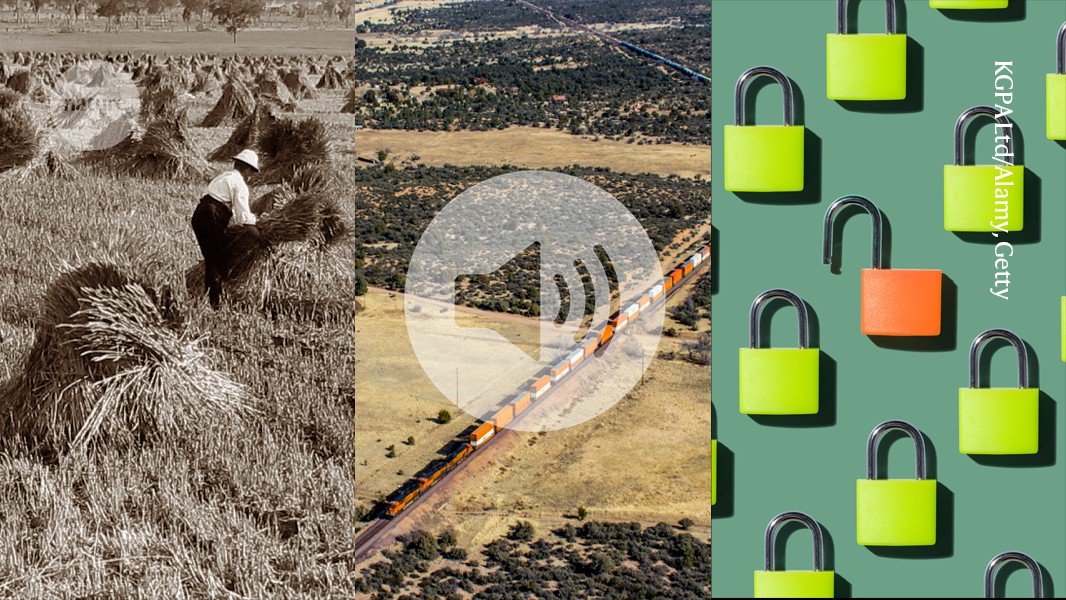
In the US, there are no federal limits on the length of a freight train, but as companies look to run longer locomotives, questions arise about whether they are at greater risk of derailment. To find out, a team analysed data on accidents to predict the chances of longer trains coming off the tracks. They showed that replacing two 50-car freight trains with one 100-car train raises the odds of derailment by 11%, with the chances increasing the longer a train gets. Although derailments are uncommon, this could change as economic pressures lead the freight industry to experiment with ever-longer trains.
11:44 How historic wheat could give new traits to current crops
Genes from century-old wheat varieties could be used to breed useful traits into modern crops, helping them become more disease tolerant and reducing their need for fertilizer. Researchers sequenced the genomes of hundreds of historic varieties of wheat held in a seed collection from the 1920s and ’30s, revealing a huge amount of genetic diversity unseen in modern crops. Plant breeding enabled the team to identify some of the areas of the plants’ genomes responsible for traits such as nutritional content and stress tolerance. It’s hoped that in the long term this knowledge could be used to improve modern varieties of wheat.
Nature, Published online: 25 June 2024; doi:10.1038/d41586-024-02088-z
Imports threaten the natural environment of Darwin’s favourite islands, and a reader ponders the longevity of carps, in the weekly dip into Nature’s archive.
150 years after they were discovered, researchers have identified how specific nerve-cell structures on the penis and clitoris are activated. Although these structures, called Krause corpuscles, are similar to touch-activated corpuscles found on people’s fingers and hands, there was little known about how they work, or their role in sex. Working in mice, a team found that Krause corpuscles in both male and females were activated when exposed to low-frequency vibrations and caused sexual behaviours like erections. The researchers hope that this work could help uncover the neurological basis underlying certain sexual dysfunctions.
News: Sensory secrets of penis and clitoris unlocked after more than 150 years
Research article: Qi et al.
News and Views: Sex organs sense vibrations through specialized touch neurons
07:03 Research Highlights
Astronomers struggle to figure out the identity of a mysterious object called a MUBLO, and how CRISPR gene editing could make rice plants more water-efficient.
Research Highlight: An object in space is emitting microwaves — and baffling scientists
Research Highlight: CRISPR improves a crop that feeds billions
09:21 How fish detect the source of sound
It’s long been understood that fish can identify the direction a sound came from, but working out how they do it is a question that’s had scientists stumped for years. Now using a specialist set-up, a team of researchers have demonstrated that some fish can independently detect two components of a sound wave — pressure and particle motion — and combine this information to identify where a sound comes from.
Research article: Veith et al.
News and Views: Pressure and particle motion enable fish to sense the direction of sound
D. cerebrum sounds: Schulze et al.
20:30: Briefing Chat
Ancient DNA sequencing reveals secrets of ritual sacrifice at Chichén Itzá, and how AI helped identify the names that elephants use for each other.
Nature News: Ancient DNA from Maya ruins tells story of ritual human sacrifices
Nature News: Do elephants have names for each other?
Subscribe to Nature Briefing, an unmissable daily round-up of science news, opinion and analysis free in your inbox every weekday.
This Nature Q&A series celebrates people who fight racism in science and who champion inclusion. It also highlights initiatives that could be applied to other scientific workplaces.
It’s rare for a scientist to be revered by beer brewers and human-rights campaigners alike. But this is just one of the distinctions enjoyed by Geoff Palmer, the chancellor of Heriot-Watt University in Edinburgh, UK. Palmer, who in 1989 became Scotland’s first Black professor, has also been knighted and awarded the Order of the Thistle, Scotland’s highest honour, for his contributions to food science, human-rights advocacy and public service.
Palmer’s work on cereal science includes the development of the barley abrasion process — a way to speed up the malting of grains that saves brewers time and money. His antiracism writing includes Mr White and the Ravens, a 2005 children’s book on prejudice, and The Enlightenment Abolished: Citizens of Britishness (2007), which covers slavery from the perspective of a Jamaican British immigrant whose ancestors were enslaved. Palmer also advised the Edinburgh & Lothians Regional Equality Council on its inclusion policy and campaigns to improve understanding and recognition in museums and other areas of public discourse of Scotland’s role in the trans-Atlantic slave trade.
Who has been your biggest influence or mentor and why?
I might have to choose two people: Garth Chapman and Anna MacLeod. They did not see my colour or my race when they helped me to develop my potential while I was at university.
I left secondary school in North London with very poor marks. I went to work at London’s Queen Elizabeth College as a laboratory technician. Chapman, who hired me, was a professor of biology, botany and zoology. One day in 1959, he said, “I think you’re more intelligent than people make out. I’m going to give you a day off now and again and I want you to go to night school. And I want you into university by 1961.”
When 1961 came, I told him I had applied to various universities, and not one would take me. After half an hour, he came out of his office and he said, “You’re going to the University of Leicester.” I ended up getting an honours degree in botany there, and in 1964, MacLeod took me on as her PhD student at Heriot-Watt. (At the time, the university didn’t award PhD degrees, so I was also registered at the University of Edinburgh.)
That’s how I managed to start a PhD, and I often say it’s a result of what the Scottish poet Robert Burns called “the goodness that mitigates woe”. It’s the goodness of people that got me where I am, and that’s why I do the historical work I do: to show that there are good, as well as bad, people. So don’t be too disappointed when you run into the bad ones — there are good people out there, too.
I did not get where I am on my own, and without these people I would not have developed the concept of barley abrasion.
What is the great passion that has driven you as a scientist?
To try to find out the truth of how things work.
For my PhD, I was asked to do some research on barley. The truth was that I didn’t know anything about it. So instead of going straight to work in the laboratory, I spent my first two months in the library. MacLeod, my supervisor, was wondering where I’d gone.
My approach to research is to first find out what has been done already, so that I can work out what still needs to be done. After my time in the library, I realized that there was very little information on how germination, enzyme development and hormonal action affect the barley embryo. I said to my supervisor, “I’m now ready to start.” Eventually, we found that the germ layer, or embryo, of the barley produces a hormone that triggers enzyme production in the outer layer of the surrounding endosperm1, known as bran, which helped to settle a debate in the field.
Why is antiracism work important to you?
I feel that this wee boy from Kingston, Jamaica — who joined his mum in London at age 14 — has been more than lucky for the opportunities I have received and for the teachers and professors who took a chance on me. And that’s why I do my work on slavery and history, to try to show that philosophers such as David Hume and Immanuel Kant were wrong: Black people are not inferior to whites.
For example, in 2017 I joined a committee for the City of Edinburgh Council, the city’s governing authority, which was looking at the narrative on the statue of Henry Dundas, who was born in Edinburgh in 1742 and held important positions in UK politics, including home secretary. His is one of the largest statues in central Edinburgh. I noticed that the plaque on the column that bears his statue didn’t mention that he was the reason the slave trade was gradually — instead of immediately — abolished. I looked up what people at the time said about the use of ‘gradual’ in political discussions. It meant slow and refusing to act until there were favourable circumstances. That might be never.
The council set up a committee to examine this, but the members of the committee did not agree with me. The council disbanded the committee.
After George Floyd was murdered by a police officer in Minneapolis, Minnesota, in May 2020, I gave a talk at a Black Lives Matter protest, near the Scottish Parliament about our failure to revise Dundas’s plaque and the importance of educating children about the history of the slave trade to avoid similar inhumanities.
The leader of the council contacted me the next day. That chat led to the council rewriting Dundas’s plaque in 2021, to say “he was instrumental in deferring the abolition of the Atlantic slave trade. Slave trading by British ships was not abolished until 1807. As a result of this delay, more than half a million enslaved Africans crossed the Atlantic.”
The plaque detailing the role of Henry Dundas.Credit: Monika Deupala for Nature
But the decision was criticized. In September 2023, a monument group led by a descendant of Dundas removed the plaque. In March 2024, the council replaced it. I and other people are so pleased about that, because it tells the truth. I know that from the research I’ve done.
How do you deal with criticism and blowback?
My critics have said that I’m not a historian, I’m a brewer, and that’s supposed to negate what I’m saying. It’s not fun when people try to demean your work.
In doing my historical work to try to enlighten the public, I’ve used the same scientific principle that I’ve used for my barley and cereal science research — basing conclusions on the evidence. It’s not been popular. But it got Dundas’s plaque changed.
What is your best piece of advice to a 20-something researcher in your field?
Make sure you’re aware of previous work, and make sure you check that the methodology of any scientific paper you read is sound. If it’s unsound, be very wary of the conclusion. Methodology is crucial.
What single thing would you change about the way science is done?
We need to spend more time looking at subjects for which there might not be as much funding. We must do research on topics that might not seem immediate. For instance, I feel that COVID-19 has told us that we should be doing more research on the possibility that we could have more viruses like the one that causes COVID-19. We should be doing a lot more innovative research.
There’s this concept now of skills as a crucial aspect of our science and technology. Yes, people have to be skilled, but we must still have an education system that produces innovative thinkers.
What do you do to get away from science?
When I was a boy, I was very good at cricket. I don’t play cricket any more, but I will watch it on TV.
I have enough side issues to occupy my time. I do a lot of speaking in the community. I try to do as much community work as possible by Zoom, telephone calls and speaking to people in shops, many of whom are now very much aware of this history. I get beautiful responses from people in my local supermarket.
I’ve also spoken to banks, large organizations and finance companies about how they can improve equality. I tell them that a diverse society needs diverse management to be fair and efficient and that training must include education. The history of racism must be taught, so that racism is removed from society, rather than simply managed.
The Temple of Kukulcan is the largest Mayan structure in the ceremonial centre of Chichén Itzá in present-day Mexico.Credit: Johannes Krause
The ruins of the Maya metropolis Chichén Itzá are filled with signs of ritual sacrifice. An engraving near the ancient city’s famous ballcourt depicts a severed head, blood spurting out. The remains of hundreds of victims have been recovered from the Sacred Cenote, a 60-metre-wide sinkhole.
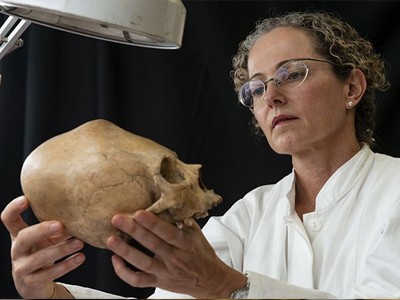
Now, ancient DNA from some of the city’s youngest victims adds to this story. A study published today in Nature analysed genomes from skulls of dozens of children and babies recovered from an underground chamber at the site in modern Mexico. It found that they were all boys, and a surprising number were close relatives, including identical twins1.
Maya bones bring a lost civilization to life
“This was very, very astonishing,” says study co-author Oana Del Castillo-Chávez, a biological anthropologist at the Yucatán National Institute of Anthropology and History in Mérida, Mexico. Remains from the Sacred Cenote included those of boys and girls, and there is no evidence from Chichén Itzáor other ancient Maya cities of close relatives being sacrificed, she adds.
The young victims in the current study are closely related to people now living near Chichén Itzá, whose genomes carry changes potentially linked to their ancestors’ exposure to epidemics in the sixteenth century.
Regular sacrifices
Chichén Itzá was one of the most important cities in ancient Maya civilization, especially between ad 800 and 1000, when other regions were in decline. Ritual child sacrifice seems to have been a regular event at Chichén Itzá, but many aspects of the practice remain unclear.
The children Del Castillo-Chávez and her colleagues analysed were found in the 1960s in an underground chamber called a chultún and an adjacent cave, near the Sacred Cenote. The remains showed no signs of violence, but they were found as part of a shrine, now destroyed by construction work.
A section of the reconstructed stone tzompantli, or skull rack, at Chichén Itzá.Credit: Johannes Krause
In the hope of identifying the sex of the remains and to glean other genetic insights, Del Castillo-Chávez teamed up with immunogeneticist Rodrigo Barquera and palaeogeneticist Johannes Krause at the Max Planck Institute for Evolutionary Anthropology in Leipzig, Germany, and their colleagues. The team obtained ancient genome data from the skulls of 64 of the roughly 106 individuals buried at the chultún.
The children were sacrificed between the seventh and mid-twelfth century ad, radiocarbon dating suggested. In addition to revealing that all the victims were boys, the genome data showed that one-quarter had a first- or second-degree relative — probably a sibling or cousin — in the chultún, including two pairs of identical twins. The presence of twins and close relatives could be linked to rituals that involved twin figures from Mayan mythology, the researchers suggest.
Victim profiles
It’s not fully clear why these children were selected for sacrifice. Isotopic analysis of their bones suggested that their plant-heavy diets — probably maize (corn) — were typical of ancient Maya. Related individuals tended to have similar isotopic profiles, suggesting that they were raised in a similar way.
“Probably it was part of preparing them for this sacrifice,” says Barquera, who is from Mexico. “Death and sacrifice for them means something completely different to what it means to us. For them, it was a big honour to be part of this.”
Carvings on the stone tzompantli depict human skulls.Credit: Christina Warinner
The children from the chultún belonged to the same genetic population as present-day Maya people from a village near Chichén Itzácalled Tixcacaltuyub. But this doesn’t necessarily mean they were locals, the researchers say. Many of the sacrificed people from the Sacred Cenote grew up far from the Yucatán Peninsula2. Previously, Del Castillo-Chávez and her colleagues found that the shape of the victims’ teeth was distinct from that of people from other ancient Maya sites, and proposed that the sacrificed individuals belonged to a group of long-distance traders who had settled in Chichén Itzá3.
“The ancient Maya did a lot of profiling of victims in their ritual liturgies,” says Vera Teisler, a bioarchaeologist at the Autonomous University of Yucatán in Mérida, so it’s not surprising to her that select groups — in this case closely related boys — were part of the ceremonies linked to the chultún remains.
Early epidemics
The children’s genomes, which are the first from Maya people that pre-date the arrival of Europeans, also offer clues to how colonial-era epidemics affected Indigenous Mexicans. The researchers found that some versions of genes involved in recognizing pathogens — called HLA alleles — have become more common in modern Maya, whereas others have grown rarer. This could be evidence of natural selection.
Collapse of Aztec society linked to catastrophic salmonella outbreak
An HLA allele that has become more than twice as common has been linked to protection against severe Salmonella infections. A previous study by Krause’s team has linked the bacterium Salmonella enterica sp. Paratyphi to a sixteenth-century disease outbreak called the cocoliztli epidemic4, which killed millions of people in Mexico and beyond.
But María Ávila Arcos, a palaeogenomicist at the National Autonomous University of Mexico in Mexico City, is “still not convinced” that S. enterica Paratyphi was behind cocoliztli, or by evidence that the epidemic caused a large shift in the abundance of certain HLA alleles. Demographic changes, such as a crash in the number of Indigenous people due to other factors, could cause similar changes in the absence of natural selection, she says.
Teisler hopes the study will reveal how more than 1,000 years of upheaval have shaped the genomes of contemporary Maya. “This study is decisively new,” she says, and “a cornerstone for more intricate inquiries about the convoluted trajectory of the Maya”.
The Cavendish Laboratory’s director, Brian Pippard, comments on the landscape of physics research in 1974, plus the benefits of applying thermodynamics to physiology, in the weekly dip in Nature’s archive.