Tag: History

  • Trumbore, S. E. in Quaternary Geochronology: Methods and Applications (eds Stratton Noller, J. et al.) 41–60 (AGU, 2000).

  • Karkanas, P. & Goldberg, P. Reconstructing Archaeological Sites: Understanding the Geoarchaeological Matrix (Wiley, 2018).

  • Bailey, G. Time perspectives, palimpsests and the archaeology of time. J. Anthropol. Archaeol. 26, 198–223 (2007).

    Article 

    Google Scholar
     

  • Mallol, C. & Hernández, C. M. Advances in palimpsest dissection. Quat. Int. 417, 1–2 (2016).

    Article 

    Google Scholar
     

  • Binford, L. R. Willow smoke and dogs’ tails: hunter-gatherer settlement systems and archaeological site formation. Am. Antiq. 45, 4–20 (1980).

    Article 

    Google Scholar
     

  • Kelly, R. L. Hunther-gatherer mobility strategies. J. Anthropol. Res. 39, 277–306 (1983).

    Article 

    Google Scholar
     

  • Bettinger, R. L., Garvey, R. & Tushingham, S. Hunter-Gatherers: Archaeological and Evolutionary Theory (Springer, 2015).

  • Hamilton, M. J., Milne, B. T., Walker, R. S. & Brown, J. H. Nonlinear scaling of space use in human hunter-gatherers. Proc. Natl Acad. Sci. USA 104, 4765–4769 (2007).

    Article 
    ADS 
    CAS 
    PubMed 
    PubMed Central 

    Google Scholar
     

  • Hamilton, M. J., Milne, B. T., Walker, R. S., Burger, O. & Brown, J. H. The complex structure of hunter-gatherer social networks. Proc. R. Soc. B 274, 2195–2203 (2007).

    Article 
    PubMed 
    PubMed Central 

    Google Scholar
     

  • Draper, P. Crowding among hunter-gatherers: The !Kung bushmen. Science 182, 301–303 (1973).

    Article 
    ADS 
    CAS 
    PubMed 

    Google Scholar
     

  • Ember, C. R. Residential variation among hunter-gatherers. Behav. Sci. Res. 10, 199–227 (1975).

    Article 

    Google Scholar
     

  • Winterhalder, B., Baillargeon, W., Cappelletto, F., Daniel, I. R. Jr & Prescott, C. The population ecology of hunter-gatherers and their prey. J. Anthropol. Archaeol. 7, 289–328 (1988).

    Article 

    Google Scholar
     

  • Vandevelde, S., Brochier, J. E., Petit, C. & Slimak, L. Establishment of occupation chronicles in Grotte Mandrin using sooted concretions: rethinking the Middle to Upper Paleolithic transition. J. Hum. Evol. 112, 70–78 (2017).

    Article 
    PubMed 

    Google Scholar
     

  • Vandevelde, S. et al. Identification du rythme annuel de précipitation des carbonates pariétaux pour un calage micro-chronologique des occupations archéologiques pyrogéniques: cas de la Grotte Mandrin (Malataverne, Drôme, France). BSGF Earth Sci. Bull. 192, 1–22 (2021).

    Article 

    Google Scholar
     

  • Slimak, L. et al. Modern human incursion into Neanderthal territories 54,000 years ago at Mandrin, France. Sci. Adv. 8, eabj9496 (2022).

    Article 
    CAS 
    PubMed 
    PubMed Central 

    Google Scholar
     

  • Lugli, F. et al. Tracing the mobility of a Late Epigravettian (~13 ka) male infant from Grotte di Pradis (Northeastern Italian Prealps) at high-temporal resolution. Sci. Rep. 12, 8104 (2022).

  • Galván, B. et al. New evidence of early Neanderthal disappearance in the Iberian Peninsula. J. Hum. Evol. 75, 16–27 (2014).

    Article 
    PubMed 

    Google Scholar
     

  • Garralda, M. D. et al. Neanderthals from El Salt (Alcoy, Spain) in the context of the latest Middle Palaeolithic populations from the southeast of the Iberian Peninsula. J. Hum. Evol. 75, 1–15 (2014).

    Article 
    PubMed 

    Google Scholar
     

  • Mallol, C. et al. The black layer of Middle Palaeolithic combustion structures. Interpretation and archaeostratigraphic implications. J. Archaeolog. Sci. 40, 2515–2537 (2013).

    Article 

    Google Scholar
     

  • Leierer, L. et al. Insights into the timing, intensity and natural setting of Neanderthal occupation from the geoarchaeological study of combustion structures: a micromorphological and biomarker investigation of El Salt, unit xb, Alcoy, Spain. PLoS ONE 14, e0214955 (2019).

    Article 
    CAS 
    PubMed 
    PubMed Central 

    Google Scholar
     

  • Mayor, A., Hernández, C. M., Machado, J., Mallol, C. & Galván, B. On identifying Palaeolithic single occupation episodes: archaeostratigraphic and technological approaches to the Neanderthal lithic record of stratigraphic unit xa of El Salt (Alcoi, eastern Iberia). Archaeol. Anthropol. Sci. 12, 84 (2020).

    Article 

    Google Scholar
     

  • Machado, J., Molina, F. J., Hernández, C. M., Tarriño, A. & Galván, B. Using lithic assemblage formation to approach Middle Palaeolithic settlement dynamics: El Salt Stratigraphic Unit x (Alicante, Spain). Archaeol. Anthropol. Sci. 9, 1715–1743 (2017).

    Article 

    Google Scholar
     

  • Sternberg, R. & Lass, E. H. E. in Kebara Cave, Mt. Carmel, Israel. The Middle and Upper Palaeolithic Archaeology. Part I (eds Bar-Yosef, O. & Meignen, L.) 123–130 (Peabody Museum of Archaeologyand Ethnology, Harvard University, 2007).

  • Carrancho, Á., Villalaín, J. J., Vallverdú, J. & Carbonell, E. Is it possible to identify temporal differences among combustion features in Middle Palaeolithic palimpsests? The archaeomagnetic evidence: a case study from level O at the Abric Romaní rock-shelter (Capellades, Spain). Quat. Int. 417, 39–50 (2016).

    Article 

    Google Scholar
     

  • Zeigen, C., Shaar, R., Ebert, Y. & Hovers, E. Archaeomagnetism of burnt cherts and hearths from Middle Palaeolithic Amud Cave, Israel: tools for reconstructing site formation processes and occupation history. J. Archaeolog. Sci. 107, 71–86 (2019).

    Article 

    Google Scholar
     

  • Molina-Cardín, A. et al. Updated Iberian Archeomagnetic Catalogue: new full vector paleosecular variation curve for the last three millennia. Geochem. Geophys. Geosyst. 19, 3637–3656 (2018).

    Article 
    ADS 

    Google Scholar
     

  • Pavón Carrasco, F. J., Osete, M. L., Torta, J. M. & De Santis, A. A geomagnetic field model for the Holocene based on archaeomagnetic and lava flow data. Earth Planet. Sci. Lett. 388, 98–109 (2014).

    Article 
    ADS 

    Google Scholar
     

  • Schanner, M., Korte, M.- & Holschneider, M. ArchKalmag14k: a Kalman–Filter based global geomagnetic model for the Holocene. J. Geophys. Res. 127, e2021JB023166 (2022).

    Article 
    ADS 

    Google Scholar
     

  • Constable, C., Korte, M. & Panovska, S. Persistent high paleosecular variation activity in southern hemisphere for at least 10000 years. Earth Planet. Sci. Lett. 453, 78–86 (2016).

    Article 
    ADS 
    CAS 

    Google Scholar
     

  • Osete, M. L. et al. Two archaeomagnetic intensity maxima and rapid directional variation rates during the Early Iron Age observed at Iberian coordinates. Implications on the evolution of the Levantine Iron Age Anomaly. Earth Planet. Sci. Lett. 533, 116047 (2020).

    Article 
    CAS 

    Google Scholar
     

  • Herrejón Lagunilla, Á., Carrancho, Á., Villalaín, J. J., Mallol, C. & Hernández, C. M. An experimental approach to the preservation potential of magnetic signatures in anthropogenic fires. PLoS ONE 14, e0221592 (2019).

    Article 
    PubMed 
    PubMed Central 

    Google Scholar
     

  • Sistiaga, A., Mallol, C., Galván, B. & Summons, R. E. The Neanderthal meal: a new perspective using faecal biomarkers. PLoS ONE 9, e101045 (2014).

    Article 
    ADS 
    PubMed 
    PubMed Central 

    Google Scholar
     

  • Leierer, L. et al. It’s getting hot in here—microcontextual study of a potential pit hearth at the Middle Paleolithic site of El Salt, Spain. J. Archaeolog. Sci. 123, 105237 (2020).

    Article 
    CAS 

    Google Scholar
     

  • Galván, B. El Salt (Alcoi, Alicante): estado actual de las investigaciones. Recerques del Museu D’Alcoi 1, 73–80 (1992).


    Google Scholar
     

  • Fumanal García, M. P. El yacimiento musteriense de El Salt (Alcoi, País Valenciano). Rasgos geomorfológicos y climatoestratigrafía de sus registros. SAGVNTVM 27, 39–55 (1994).


    Google Scholar
     

  • Galván, B. et al. in Pleistocene and Holocene Hunter-Gatherers in Iberia and the Gibraltar Strait: The Current Archaeological Record (ed. Sala Ramos, R.) 380–388 (Fundación Atapuerca, Servicio de Publicaciones de la Universidad de Burgos, 2014).

  • Machado, J. & Pérez, L. Temporal frameworks to approach human behaviour concealed in Middle Palaeolithic palimpsests: a high-resolution example from El Salt Stratigraphic Unit x (Alicante, Spain). Quat. Int. 417, 66–81 (2016).

    Article 

    Google Scholar
     

  • Dunlop, D. J. & Özdemir, Ö. Rock Magnetism. Fundaments and Frontiers (Cambridge Univ. Press, 1997).

  • Carrancho, Á. & Villalaín, J. J. Different mechanism of magnetisation recorded in experimental fires: archaeomagnetic implications. Earth Planet. Sci. Lett. 312, 176–187 (2011).

    Article 
    ADS 
    CAS 

    Google Scholar
     

  • Panovska, S., Constable, C. G. & Korte, M. Extending global continuous geomagnetic field reconstructions on timescales beyond human civilization. Geochem. Geophys. Geosyst. 19, 4757–4772 (2018).

    Article 
    ADS 

    Google Scholar
     

  • Fisher, R. Dispersion on a sphere. Proc. R. Soc. Lond. A 217, 295–305 (1953).

    Article 
    ADS 
    MathSciNet 

    Google Scholar
     

  • Wessel, P. et al. The Generic Mapping Tools version 6. Geochem. Geophys. Geosyst. 20, 5556–5564 (2019).

    Article 
    ADS 

    Google Scholar
     

  • Carrancho, Á., Villalaín, J. J., Vergès, J. M. & Vallverdú, J. Assessing post-depositional processes in archaeological cave fires through the analysis of archaeomagnetic vectors. Quat. Int. 275, 14–22 (2012).

    Article 

    Google Scholar
     

  • Chadima, M. & Hrouda, F. Remasoft 3.0—a user-friendly paleomagnetic data browser and analyzer. Travaux Géophysiques XXVII, 20–21 (2006).


    Google Scholar
     

  • Leonhardt, R. Analyzing rock magnetic measurements: the RockMagAnalyzer 1.0 software. Comput. Geosci. 32, 1420–1431 (2006).

    Article 
    ADS 

    Google Scholar
     

  • Bargalló, A., Gabucio, M. J. & Rivals, F. Puzzling out a palimpsest: testing an interdisciplinary study in level O of Abric Romaní. Quat. Int. 417, 51–65 (2016).

    Article 

    Google Scholar
     

  • Machado, J., Hernández, C. M., Mallol, C. & Galván, B. Lithic production, site formation and Middle Palaeolithic palimpsest analysis: in search of human occupation episodes at Abric del Pastor stratigraphic unit IV (Alicante, Spain). J. Archaeolog. Sci. 40, 2254–2273 (2013).

    Article 

    Google Scholar
     

  • Machado, J., Mayor, A., Hernández, C. M. & Galván, B. Lithic refitting and the analysis of Middle Palaeolithic settlement dynamics: a high-temporal resolution example from El Pastor rock shelter (eastern Iberia). Archaeolog. Anthropol. Sci. 11, 4539–4554 (2019).

    Article 

    Google Scholar
     

  • Spagnolo, V. et al. Climbing the time to see Neanderthal behaviour’s continuity and discontinuity: SU 11 of the Oscurusciuto rockshelter (Ginosa, southern Italy). Archaeolog. Anthropol. Sci. 12, 1–30 (2020).


    Google Scholar
     

  • PaleomagUCM/El-Salt: v1.0 (v1.0). Zenodo https://doi.org/10.5281/zenodo.10931465 (2024).

[ad_2]

Source link
  • Problem-solving PhD students are prepared for careers in industry

    Problem-solving PhD students are prepared for careers in industry

    [ad_1]

    Nature, Published online: 04 June 2024; doi:10.1038/d41586-024-01589-1

    PhD programmes in an industrial setting were on the rise in the 1970s, and a reflection on Darwin’s rich accomplishments, in the weekly dip into Nature’s archive.

    [ad_2]

    Source link

  • Pollen problems: May brings dismay to a hay-fever sufferer in 1874

    Pollen problems: May brings dismay to a hay-fever sufferer in 1874

    [ad_1]

    Nature, Published online: 28 May 2024; doi:10.1038/d41586-024-01369-x

    A book on everyday biology that appeals to non-specialists and specialists alike, and a trek through hay fields causes one Nature reader to experience relentless ‘sneezings’, in the weekly dip into Nature’s archive.

    [ad_2]

    Source link

  • I study artefacts left in prehistoric caves

    I study artefacts left in prehistoric caves

    [ad_1]

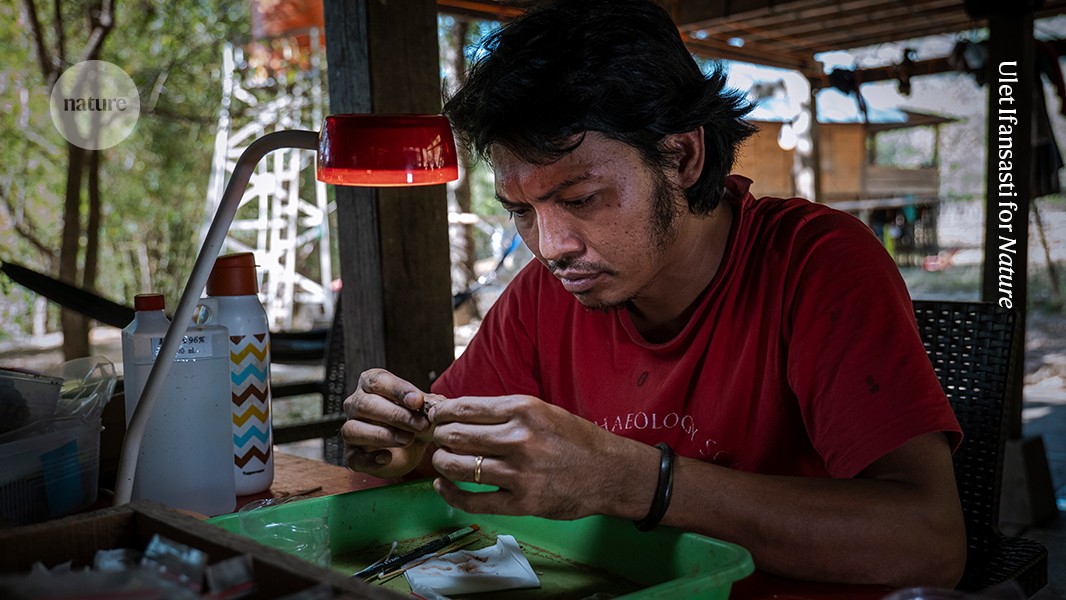
    “The piece of ochre in my hands in this picture was once held by some of the earliest artists in human history. Before I found it, this ancient specimen had lain buried in a cave in southwest Sulawesi, Indonesia, for around 30,000 years. After I cleaned the dirt from its surface, I could see scratch marks where the artists had scraped off powder to create their cave wall art.

    The karst limestone mountains of Sulawesi’s Maros–Pangkep region contain hundreds of prehistoric caves, many of which contain rock art. In 2019, I was part of a team that dated a hunting scene at one of these caves to at least 43,900 years ago — making it the earliest piece of figurative artwork yet discovered.

    I was working as an independent researcher at the time, but the focus of my current research — a PhD project supervised by archaeologist Adam Brumm at Griffith University, Australia — is an archaeological dig into the floor of a different cave, known as Leang Bulu Bettue, in the same region. We have dug down to a sediment layer that’s the same age as the hunting scene, to find out more about the people who created it. As well as ochre, we have found animal bones, stone tools and carved stone jewellery depicting buffalo and the Sun. We’ve also found a small piece of human skull.

    We know from digs at other sites on Sulawesi that, before the arrival of Homo sapiens around 50,000 years ago, an earlier group of archaic hominins lived here. I would like to find out whether there was any overlap or exchange between the two cultures before the hominins vanished. During our next field trip to Leang Bulu Bettue, scheduled for mid-2024, we will dig into older and older sediments until we reach the bedrock of the cave.

    Next year, I expect to finish my PhD, but I hope to continue my research here. I have fallen in love with this area, and there are still so many questions to answer.”

    This interview has been edited for length and clarity.

    [ad_2]

    Source link

  • Save the forest to save the tiger — why vegetation conservation matters

    Save the forest to save the tiger — why vegetation conservation matters

    [ad_1]

    Nature, Published online: 21 May 2024; doi:10.1038/d41586-024-01368-y

    The Royal Botanic Gardens, Kew, emphasizes the importance of conserving wild plant species, plus a wonderstruck sky-watcher spots a brilliant meteor, in the weekly dip into Nature’s archive.

    [ad_2]

    Source link

  • Nomads thrived in Greece after the collapse of the Roman Empire

    Nomads thrived in Greece after the collapse of the Roman Empire

    [ad_1]

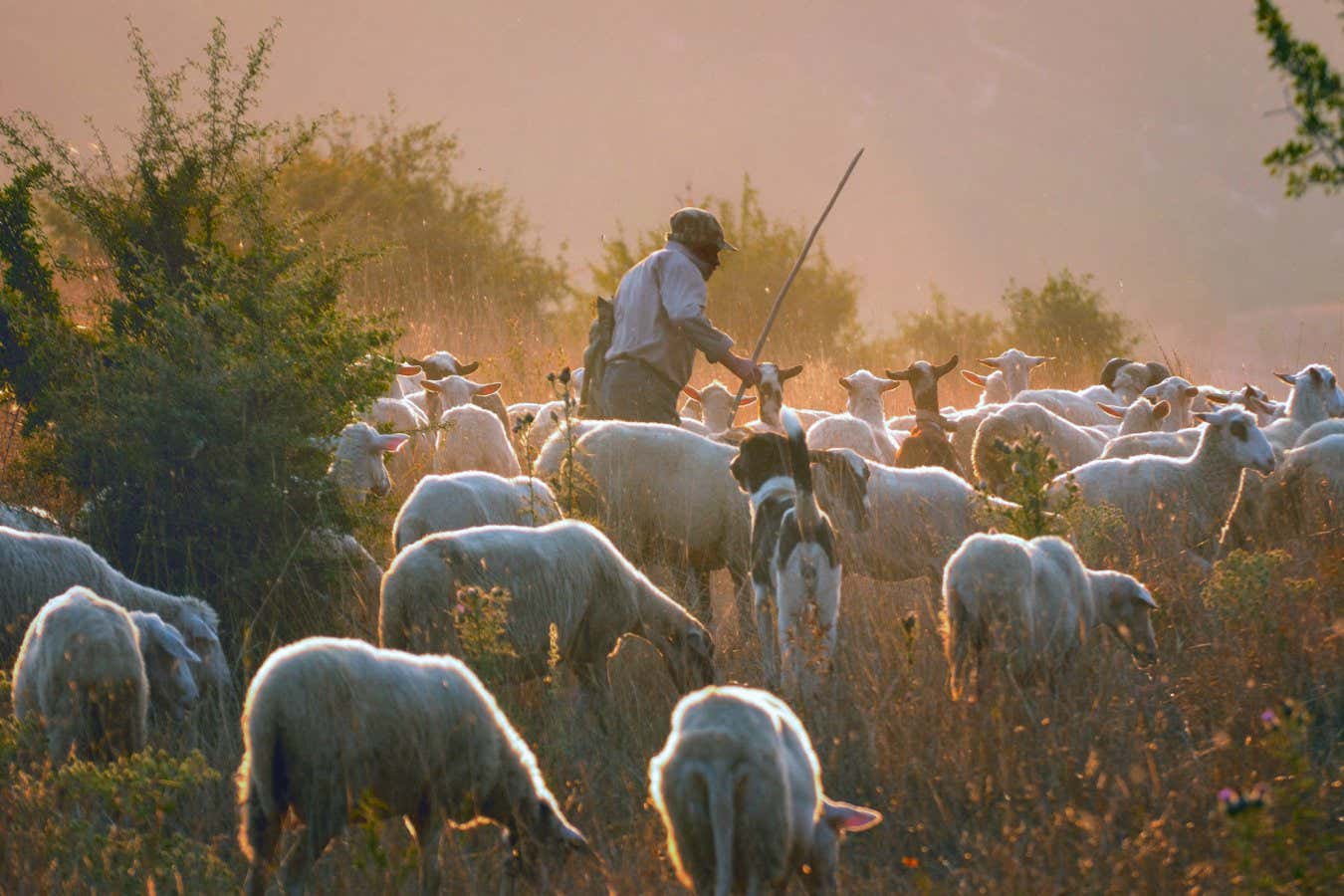
    Pollen records show the landscape was dominated by pasture animals, suggesting the presence of nomadic herders

    DIMITRIOS TILIS/Getty Omages

    An analysis of pollen from Lake Volvi in Greece has unexpectedly revealed that nomads thrived in this region for centuries after the chaos unleashed by the collapse of the Roman Empire.

    Adam Izdebski at the Max Planck Institute of Geoanthropology in Germany and his colleagues were studying sediment cores from the lake as part of a larger study. As lake sediments build up, changes in the abundance of various kinds of pollen in the sediment layers can record how nearby vegetation changed over time.

    In some other places around the Mediterranean, the team has found signs of reforestation after the collapse of the Western Roman Empire around AD 476. But at Lake Volvi, from around AD 540, the team found less tree pollen but more pollen from plants associated with nomadic livestock herders. These nomads were returning to the same areas seasonally, so planted some crops, such as barley.

    “We have this moment when the Roman agriculture disappears almost completely due to plague, climate change and warfare, but you don’t get reforestation – you actually get less forest very quickly,” says Izdebski.

    “The landscape was dominated by pasture animals even in the high mountain areas. This was a complete shift from how the Romans farmed the lowlands for several hundred years.”

    This means those earlier farmers moved away, died or adopted a nomadic lifestyle, he says.

    Greece was nominally under the control of the Eastern Roman, or Byzantine, Empire around at the time of this shift. It is known that the region was raided by Bulgar nomads around AD 540, but it wasn’t known that nomads lived in this region for several centuries.

    The only historical information that correlates with the team’s findings is an account of a Byzantine emperor being ambushed by Bulgar nomads around AD 700.

    “It seems that there was a local society that didn’t want any emperor to be around,” says Izdebski, who presented the findings at the meeting of the European Geosciences Union in Vienna, Austria, last month.

    Around AD 850, the Byzantine Empire reasserted control and the signs of nomads disappear. Instead, there was reforestation.

    The findings provide rare evidence of the presence of nomadic peoples at a particular place and time, says Izdebski. “We know very little about their history because the states were not interested in recording them.”

    Historians didn’t write about nomadic peoples as they weren’t part of the elites, he says. And because nomads were difficult to tax, there are no tax records either – tax records can be a rich source of information about past populations.

    Topics:

    [ad_2]

    Source link

  • long-lost branch of the Nile that ran by the pyramids

    long-lost branch of the Nile that ran by the pyramids

    [ad_1]

    The Red Pyramid at the Dahshur necropolis.

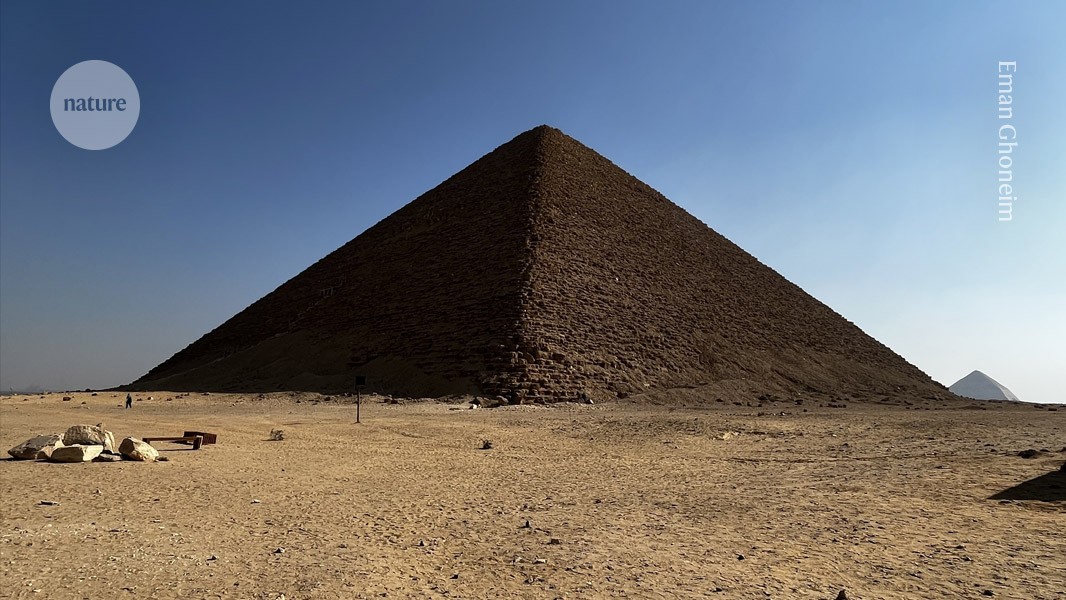
    The Red Pyramid, the largest of the pyramids at the Dahshur necropolis, was built more than 4,500 years ago.Credit: Eman Ghoneim

    Stretching beneath the ground near the Giza pyramid complex in Egypt lie the remains of an ancient branch of the Nile River that might once have helped ancient Egyptians to build their monuments.

    The highest concentration of pyramids in Egypt can be found in a stretch of desert between Giza and the village of Lisht. These sites are now several dozens of kilometres away from the Nile River. But Egyptologists have long suspected that the Nile might once have been closer to that stretch than it is today.

    Satellite images and geological data now confirm that a tributary of the Nile — which researchers have named the Ahramat Branch — used to run near many of the major sites in the region several thousand years ago. The discovery, reported on 16 May in Communications Earth and Environment1, could help to explain why ancient Egyptians chose this area to build the pyramids (See ‘Ancient river’).

    Ancient river: Location of an ancient branch of the Nile River that may have flowed past many of Egypt's pyramids.

    Source: Ref. 1 Image source: NASA Visible Earth

    “The pyramids seem like pretty monumental work,” says Judith Bunbury, a geoarchaeologist at the University of Cambridge, UK. “But it’s less arduous if you can bring big stones up by boat rather than carrying them over land.”

    Wandering waterways

    For thousands of years, the Nile and its flood-plain have provided food, agriculture and water to Egypt’s inhabitants. The majority of the country’s population still lives in the Nile basin.

    But the river is prone to migrating, and in the past, populations have had to relocate to keep up. Over the last few hundred years, the Nile has moved several kilometres to the east, possibly owing to shifting plate tectonics.

    There is evidence that some of Egypt’s important archaeological sites do not have the same relationship to the river as they would have had at the time they that were built. There are remains of harbours and other such clues at sites between Giza and Lisht. But scientists have found it difficult to chart the scope or locations of these lost waterways.

    While looking for traces of ancient water, a team led by Eman Ghoneim, a geomorphologist at the University of North Carolina at Wilmington, spotted what looked like a dried-up river channel several kilometres west of the Nile. The channel ran for around 60 kilometres through agricultural areas and had a similar depth and width to the modern Nile.

    Members of the research team organises a table covered in collected soil samples.

    The research team prepares to analyse soil samples collected from an area in the Nile Valley close to the pyramids.Credit: Eman Ghoneim

    To investigate whether the channel could be part of an ancient riverbed, the researchers collected core samples of sediment from the channel. Beneath the wet mud of the fields, they found an layer of gravel and sand consistent with that of a riverbed. Combining this sample data with satellite imagery allowed the team to map the branch’s location. They found that it would have flowed past more than 30 Old- and Middle-Kingdom pyramids dating from between 2686 to 1649 bc — thus the decision to called it the ‘Ahramat’ branch, using the Arabic word for pyramid.

    The Ahramat “connected all these different pyramid fields”, says Suzanne Onstine, an egyptologist at the University of Memphis in Tennessee. “Their valley temples and causeways all oriented exactly to where the water would have been.”

    Riverside sites

    Researchers have long debated the significance of the pyramids’ locations. The waterway running right past them could have been an important factor, because it would have provided a convenient way for builders to transport materials to the sites.

    This theory aligns with documents from the era which state that building materials were brought in by boat, says Bunbury.

    Eventually, the movement of the Nile and sand blowing in from the Sahara Desert would have caused the Ahramat Branch to dry up and become unnavigable. Today, only a few stray lakes and channels remain where the major branch once ran.

    But knowing the ancient river’s location provides a blueprint that archaeologists can use to try and uncover more ancient Egyptian settlements, says Onstine. And the finding that Egyptians were probably using boats rather than land transportation to move materials to build the pyramids hints that they were “a lot more pragmatic than perhaps we realized before”, says Bunbury.

    [ad_2]

    Source link

  • Balls of lightning and flames from the sky: can science explain?

    Balls of lightning and flames from the sky: can science explain?

    [ad_1]

    Nature, Published online: 14 May 2024; doi:10.1038/d41586-024-01367-z

    A book cataloguing mysterious events challenges scientists to provide some answers, and Charles Darwin continues his investigations of crimes against primroses, in the weekly dip into Nature’s archive.

    [ad_2]

    Source link

  • The dream of electronic newspapers becomes a reality — in 1974

    The dream of electronic newspapers becomes a reality — in 1974

    [ad_1]

    Nature, Published online: 07 May 2024; doi:10.1038/d41586-024-01220-3

    Efforts to develop an electronic newspaper providing information at the touch of a button took a step forward 50 years ago, and airborne bacteria in the London Underground come under scrutiny, in the weekly dip into Nature’s archive.

    [ad_2]

    Source link

  • Red squirrels were hosts for leprosy in medieval England

    Red squirrels were hosts for leprosy in medieval England

    [ad_1]

    Red squirrels can carry bacteria that cause leprosy

    Karin Greevy/Shutterstock

    The DNA of leprosy-causing bacteria has been found in the remains of people and a red squirrel unearthed at medieval sites in the UK. This makes red squirrels the earliest known non-human hosts of the infection and suggests it may have spread between the rodents and people at the time.

    In 2016, scientists found that red squirrels (Sciurus vulgaris) around the UK carry strains of Mycobacterium leprae, the bacterium that causes the chronic disease leprosy. Some of the strains were similar to ones that infected people in England more than 700 years ago.

    “So, we had an inkling that maybe medieval red squirrels have had it too,” says Sarah Inskip at the University of Leicester in the UK.

    To investigate further, Inskip and her colleagues examined the remains of 25 people uncovered at the site of a medieval hospital for people with leprosy in Winchester and 12 red squirrels found at a nearby site that was home to at least one fur shop between the 11th and 13th centuries.

    Most of the human bones exhibited the characteristic lesions associated with leprosy, while the squirrel bones showed signs of inflammation, another possible sign of the disease.

    By analysing the DNA in the bones, the team found genetic sequences from M. leprae in three people and one red squirrel.

    “There really was leprosy circulating among medieval squirrels,” says Inskip, making the species the earliest reported non-human carrier of leprosy.

    The DNA showed that the strain of M. leprae found in the medieval red squirrel was more closely related to those in the three medieval people than to those in modern red squirrels. This indicates that the infection probably spread back and forth between squirrels and people in England in the Middle Ages.

    “There were a lot of opportunities for transmission in medieval Winchester,” says Verena Schünemann at the University of Basel, Switzerland, who also worked on the study. In addition to the hospital and well-known fur trade in the city, historical reports from the period suggest that people in the area often kept squirrels as pets, she says.

    The findings also suggest that the leprosy strains found in modern squirrels may not necessarily have descended from the strain found in this specimen. “It may be that there has been more than one transmission event between humans and squirrels over history,” says Inskip.

    Although some small populations of red squirrels have leprosy today, it is important to stress that the transmission risk to people is basically zero, says Schünemann.

    “Leprosy has definitely been around for a long time and M. leprae likely has a far more robust ecological history than our previous modern-day observations might have suggested,” says Richard Truman, formerly at the US Public Health Service. “It is important that we understand this better.”

    Topics:

    [ad_2]

    Source link