A photographic archive has been discovered in Lyon, France, that adds precious detail to what we know about the founding of the world’s first police crime laboratory in 1910 and its creator, Edmond Locard, a pioneer of forensic science.
The huge collection, which comprises more than 20,000 glass photographic plates that document the laboratory’s pioneering scientific methods, crime scenes and Locard’s personal correspondence, is thrilling historians at a time when many consider that forensic science has lost its way. “There is a movement to look back to the past for guidance as to how to renew the science of policing,” says Amos Frappa, a historian affiliated with the Sociological Research Centre on Law and Criminal Institutions in Paris, who is overseeing the analysis of the images.
She was convicted of killing her four children. Could a gene mutation set her free?
In the late nineteenth and early twentieth centuries, many people in Europe and beyond were thinking about how criminals might be accurately identified by using techniques such as fingerprint, blood and skeletal analysis. Locard was the first person to create the semblance of forensic science. He established the first scientific lab that came under the aegis of the police, and that was dedicated to studying ‘traces’ of criminal activity collected from crime scenes.
Garage find
The collection of photographic plates almost didn’t survive. It languished for decades in a garage belonging to the National Forensic Police Department in Ecully, a Lyon suburb. In 2005, the glass plates were rescued from the garage and stored in Lyon’s municipal archives. But at the time, the Lyon archives lacked the resources to treat the collection properly, says director Louis Faivre d’Arcier. It wasn’t until 2017 that an inspection revealed that the plates’ gelatine layer containing the image information was, in many cases, infected with mould. After a sorting and decontamination project in 2022, conservators saved around two-thirds of the plates.
Left: A tattooed woman named Marie-Clémentine in 1934; Edmond Locard’s team used tattoos as a way of identifying potential criminals. Right: Handwriting analysis as a means of identification was investigated but later spurned by Locard, who deemed it unreliable.Credit: Archives municipales de Lyon
The mammoth task of digitizing the contents of the fragile plates, which are mostly unindexed and disordered, became possible only when a local publisher and historian of funerary practices, Nicolas Delestre, offered to finance it. In collaboration with the municipal archives, his team developed a photographic protocol to capture as much information from the plates as possible. The digitization will be completed this spring, to coincide with the publication of Frappa’s French-language biography of Locard. The slow rebuilding of the indexes continues.
Locard, who worked in the early to mid-twentieth century, is famous for his maxim, which is usually formulated in English as “Every contact leaves a trace.” Trained as a forensic pathologist, he turned to the study of trace evidence after a French political scandal called the Dreyfus affair, in which a Jewish army officer called Alfred Dreyfus was falsely accused of espionage. During the affair, Locard’s mentor Alphonse Bertillon, who had invented a method of identifying people through bodily measurements, was called on as a handwriting specialist, despite having no expertise in the field. He wrongly identified Dreyfus as the author of an incriminating note.
Forensic science: The soil sleuth
Locard, seeing other countries adopt fingerprint identification, embraced that method instead. In 1910, he set up his laboratory in the attic of Lyon’s main courthouse, and gradually expanded his scientific analyses to include traces such as blood, hair, dust and pollen.
Sherlock Holmes connection
This much was known from published sources, but the photographic archive offers details about the social and intellectual milieu that produced Locard, onthe scientific networks in which he was embedded, and on how his thinking evolved as he experimented and made errors. His exchanges with contemporaries in countries including Germany, Switzerland, Italy and the United States shaped his approach, which might be why he did not consider himself a founder of a new field. But Locard’s ideas — his scientific methods and his insistence on meticulously studying crime scenes — fell on fertile ground in Lyon’s police chiefs and judges, who, unlike their Parisian counterparts, accepted the evidence that such approaches generated. “Lyon was a receptacle,” says Frappa.
Edmond Locard using a photographic bench in the 1920s.Credit: Archives municipales de Lyon
The new collection reveals Locard’s team at work. It captures their equipment and experiments, and the forensic traces they analysed. The close-knit group socialized together, received international visitors and investigated myriad means by which people could be identified. One way was to look at people’s tattoos, and the collection contains a large set of tattoo images. Locard took inspiration from many sources, including the Lyon-based Lumière brothers, who were pioneers of cinematography, and the creator of the fictional detective Sherlock Holmes, Arthur Conan Doyle, with whom he corresponded. In time, Locard discarded some techniques — notably, handwriting analysis — deeming them unreliable.
Since 2009, when a report from the US National Research Council found that many modern forensic techniques were inadequately grounded in science, the discipline has struggled to reorient itself. “By the late 20th century, it’s fair to say that forensic science had become an adjunct of law enforcement without allegiance to science,” says Simon Cole, who studies criminology, law and society at the University of California, Irvine, and directs the US National Registry of Exonerations. Cole has written about the problems with fingerprint identification, and last year reported on the fallibility of microscopic hair comparison. These techniques are routinely used to investigate crimes in the United States and elsewhere, and the evidence they generate is admissible in court.
Modern troubles
The 2009 report suggested that improving forensic science would require larger labs in which diverse specialists were insulated from each other and from the police to prevent bias. The trouble with that view, says Olivier Ribaux, director of the School of Criminal Sciences at the University of Lausanne in Switzerland, is that, when considering the potentially infinite number of traces that a crime scene can generate, some subjective selection by humans is inevitable. To ensure that this selection is as informative and as unbiased as possible, the forensic scientist must understand a trace in its context — as Locard’s maxim in French originally implied. “The problem with the big labs is that they have severed the connection with the crime scene,” Ribaux says.
He favours an alternative model in which smaller labs employ generalists, who can oversee specialists in certain fields, such as ballistics and DNA, but can also offer a more holistic view of a case. These generalists would work closely with the police — a return to Locard’s approach, in other words. But the two aren’t mutually exclusive, Ribaux says. They are just snapshots of the ongoing debate about how the field should reinvent itself.
That debate will surely be fuelled by the emerging portrait of Locard, sometimes dubbed the French Sherlock Holmes, whom Frappa describes as “a man so visionary he predicted, correctly, that he would be forgotten”.
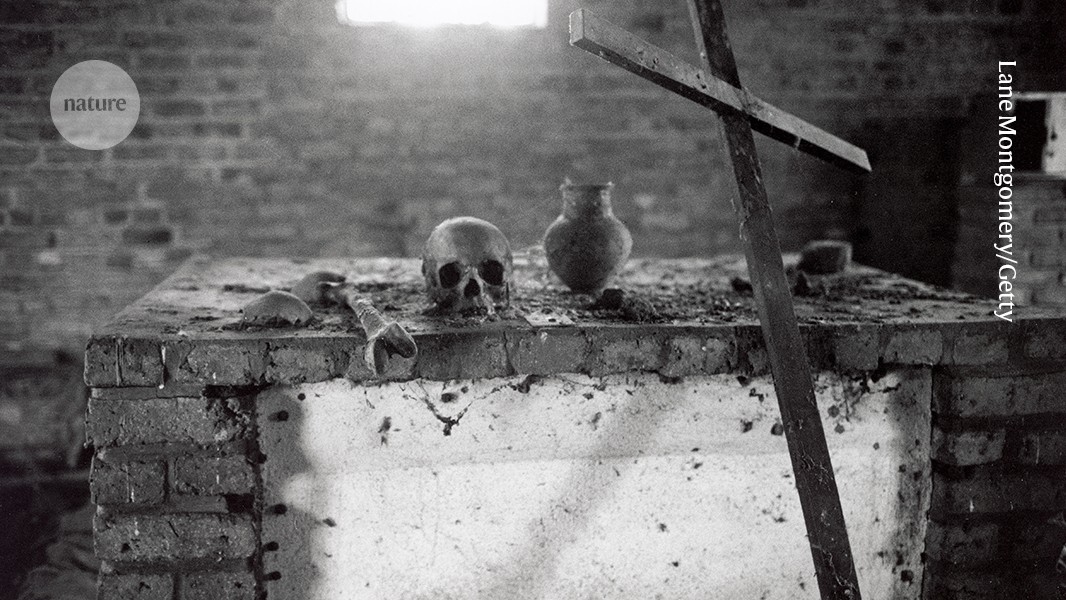
The church at Ntarama, a 45-minute drive south of Rwanda’s capital, Kigali, is a red-brick building about 20 metres long by 5 metres wide. Inside are features seen in Catholic churches around the world: pews for congregation members, an altar, stained-glass windows and a cross adorning the entrance. Then there are the scars of the unimaginable: piles of blood-stained clothing hanging along the walls and glass cabinets containing more than 260 human skulls, many fractured or shattered, some with rusted weapons still penetrating them. Nearby, wooden sticks and roughly carved clubs lean against the altar.
Ntarama is the site of one of the many massacres that occurred during the 1994 genocide against the Tutsi in Rwanda — one of the worst atrocities of the late twentieth century. Starting on 7 April that year, in 100 days of horrifying violence, members of the Hutu ethnic group systematically killed an estimated 800,000 Tutsi — or more than one million, according to the Rwandan government and other sources. The killers ranged from militias to ordinary citizens, with neighbours turning on neighbours. Many moderate Hutu and some of the Twa minority group were also killed.
Rwanda: From killing fields to technopolis
More than 5,000 Tutsi were murdered at Ntarama, among them babies, children and pregnant women, many of whom were raped before they were killed, says Evode Ngombwa, site manager at the Ntarama Genocide Memorial, one of six sites in Rwanda that commemorate the atrocity. “People used money to bribe the perpetrators so that they could choose the way of being eliminated. Instead of killing them with machetes, they could choose to be shot,” says Ngombwa as he walks me through the church. With more remains being found each year, about 6,000 people are now buried there in mass graves.
This month, Rwanda and the world begin commemorations to mark 30 years since the start of this atrocity. The genocide is now one of the most studied of its kind. Researchers from social and political scientists to mental-health specialists, geneticists and neuroscientists have investigated the event and its aftermath in a way that hadn’t been possible for previous atrocities.
This work is especially important now in light of violent crises in several parts of the world, including in Ukraine, Israel and Gaza, Sudan and the Democratic Republic of the Congo. Although there is debate about whether these conflicts meet the definition of genocide, some share similar characteristics. Research conducted into atrocities such as the genocide in Rwanda can help to inform responses and longer-term approaches to healing.
Despite the difficulties of these studies, researchers say that they are working towards developing a theory of genocide and the conditions that spur mass violence. They are providing guidance for first responders, as well as those involved in peacebuilding and supporting survivors of other systematic mass murders and of war. Some of their approaches have been used in other conflicts. And the research on Rwanda is offering lessons for how scholars can improve studies of similar events.
At a vigil in April 2019, young Rwandans commemorate the 25th anniversary of the genocide.Credit: Yasuyoshi Chiba/AFP/Getty
“Genocide studies are important,” says Phil Clark, an international-politics researcher at SOAS, part of the University of London, who has studied Rwanda for more than two decades. “If we can start to understand why and how genocides happen, and especially if we can compare genocides across the world, we should ideally be able to build a general theory of how these terrible events are even possible.”
One of the lessons emerging from Rwanda is the importance of involving — and supporting — local researchers, whose work, language skills and access to traumatized communities can be essential for understanding the roots of violence and the best techniques for reconciliation. This can be difficult — in Rwanda’s case because the genocide wiped out almost its entire academic community. Now, through programmes aimed at elevating local scholars’ voices, their work is finally reaching a wider audience.
Patterns of violence
Before 1994, the field of genocide studies was dominated by the Holocaust — the systematic killing of 6 million Jewish people by Nazi Germany during the Second World War. “It’s only in the last 20 years that other genocides have entered the discussion,” says Clark. But research on Rwanda didn’t start immediately. “It was only maybe 10–15 years after the genocide that scholars started to really interrogate this question of what drove hundreds of thousands of everyday civilians to participate in mass violence.”
Scholars say that it’s important not to forget the genocide’s strong link to colonialism in Rwanda. In the early 1900s, Belgian colonizers began formally dividing Rwandan people into social classes: Hutu, Tutsi and Twa. Designations were often based on pseudoscientific ideas, including phrenology and arbitrary observations, such as how many cattle a person owned. Ethnic tensions between Hutu and Tutsi intensified over the decades and several massacres of Tutsi occurred in the period leading up to 1994. This set the stage for a descent into genocide — a legal term that is defined by the perpetration of certain crimes that are intended to destroy a particular group, and is codified by the United Nations’ 1948 Genocide Convention.
Each genocide is unique, says Timothy Longman, a political scientist at Boston University in Massachusetts, who first went to Rwanda in 1992 and returned in 1995 as a researcher with Human Rights Watch, an international non-governmental organization that was one of the first to investigate the event. “But there also are some common patterns,” he says. Researchers can learn a lot from studying cases such as Rwanda, the Holocaust and other genocides, he says. “It helps you to prevent violence from happening elsewhere.”
One of the main scientific contributions of studies so far are the insights from mental-health researchers, many of whom were on the ground in the immediate aftermath. Over the past three decades, they have documented the initial trauma of an entire country and the slow recovery of survivors and their children, many of whom are prone to being retraumatized. With few available resources, Rwanda had to build up its mental-health services and it has gained unique experience in responding to the atrocity’s aftermath.
Source: Y. Kayiteshonga et al. Rwanda Mental Health Survey 2018 (Govt of Rwanda, 2021).
At the Rwanda Biomedical Centre (RBC) in Kigali, the nation’s main health organization, Jean Damascène Iyamuremye recalls his experience of 1994. “I witnessed everything that happened.” Iyamuremye was a 28-year-old training to be a medical assistant, but the genocide spurred him to specialize in mental health. He was among the first medical staff supporting survivors. “We were like firefighters,” says Iyamuremye, who is now director of the psychiatric unit in the RBC’s mental-health division, which oversees countrywide services.
The first care came mostly from outsiders. Non-governmental organizations provided psychological interventions such as counselling for the survivors, most of whom had experienced physical violence as well as unimaginable emotional trauma from the mass killings they’d witnessed. After the genocide, 96% of Rwandans experienced post-traumatic stress disorder (PTSD) as a result of the extreme violence1.
It took time for the country to develop its own mental-health resources. In 1994, Rwanda had only one psychiatrist, Naasson Munyandamutsa, who was living in Switzerland at the time and lost most of his family in the violence. Munyandamutsa returned quickly to Rwanda to work at the country’s sole psychiatric hospital, where he began training mental-health responders and psychiatrists.
While Munyandamutsa, who died in 2016, led the training of practitioners in Rwanda, many Rwandans went overseas to train. But about half didn’t return, says Iyamuremye.
It wasn’t until 2014 that Rwanda had its own school of psychiatry, at the University of Rwanda in Kigali. Even now, the country has only 16 psychiatrists, 13 of whom graduated from that facility, to serve a fast-growing population of 13.5 million.
Evidence-based interventions for survivors, such as counselling, cognitive behavioural therapy and medication, have continued — but people still bear significant mental scars from their experiences (see ‘Complex consequences’). In Rwanda’s most comprehensive mental-health survey yet, conducted by the RBC in 2018, about 28% of genocide survivors reported PTSD symptoms, compared with 3.6% of the general population (see ‘Trauma’s long shadow’).
Sources: Ref. 1; A. Eytan et al. Int. J. Soc. Psychiatr.61, 363–372 (2015); Y. Kayiteshonga et al. Rwanda Mental Health Survey 2018 (Govt of Rwanda, 2021).
Long-term support for survivors is important, because many can become retraumatized. For example, media reports about violence in nearby parts of the Democratic Republic of the Congo can bring back memories, says Iyamuremye. And yearly commemorations that last from April to July, called kwibuka in the national language, Kinyarwanda, bring challenges. “You will see people who fall, who are agitated, who cry” because what they experience triggers a memory, says Iyamuremye.
For this year’s commemorations, the RBC and other organizations have trained 5,000 responders around Rwanda to support distressed people. But Iyamuremye and his colleagues have learnt that the commemorations themselves can be therapeutic: they give people the opportunity to talk about their trauma and support each other.
And researchers have found that even people who weren’t alive during the genocide are suffering. “Intergenerational trauma is a challenge and a reality in Rwanda. This needs to be targeted with strong, strong interventions,” says Iyamuremye.
Trauma across generations
At the Rwanda Military Hospital on Kigali’s outskirts, Léon Mutesa, a physician and, for a long time, the nation’s only geneticist, is seeing mothers and babies at his paediatric clinic. Mutesa, who directs the Center for Human Genetics at the University of Rwanda, was the first to explore the effects of Rwandans’ trauma at the genetic level. As an undergraduate in the early 2000s, Mutesa saw that children born to women who had been pregnant in 1994 also exhibited signs of trauma. During commemorations, the children expressed symptoms such as PTSD, depression, anxiety and hallucinations from an event that they hadn’t experienced.
Inspired by studies of Holocaust survivors2, Mutesa devised a small study to investigate whether the trauma from the genocide had left epigenetic marks on individuals’ DNA through the addition of methyl groups to certain regions.
In that study3, conducted in 2012, Mutesa’s team sampled blood from women who were pregnant in 1994 and their children, as well as control participants who weren’t exposed to the genocide. The team found evidence that genocide survivors and their children bore similar epigenetic marks on certain sections of DNA.
Geneticist Léon Mutesa has studied DNA markings in genocide survivors and their children.Credit: AP Photo
Hoping to start a larger study, Mutesa collaborated with Stefan Jansen, a Belgian neuroscientist who had been at the University of Rwanda since 2011. In 2017, the pair, with US partners, won funding from the US National Institutes of Health to extend their investigations.
“We found that those mothers who were exposed had around 24 differentially methylated regions, which is really high compared to the control group,” says Clarisse Musanabaganwa, a medical research analyst at the RBC who was part of Mutesa and Jansen’s team. The team found that many of the methylated regions were the same in mothers and in the children that they were pregnant with during the genocide4,5. The research indicates a way in which trauma can transcend at least one generation, and the researchers suggest that lasting effects could be passed down through multiple generations through a mechanism of epigenetic inheritance.
But the idea of multigenerational epigenetic inheritance is controversial. Many scientists are sceptical about whether methylation marks on DNA in humans can be inherited.
“I’m not aware of any really convincing case where the transgenerational inheritance — inheritance of methylation patterns — has been demonstrated,” says Timothy Bestor, a molecular biologist in Gaylordsville, Connecticut, who holds an emeritus position at Columbia University in New York City.
But Mutesa and Jansen are seeing some practical benefits of their work. When the scientists discussed with study participants that their trauma could influence their children, they saw the participants’ resilience increase. For instance, if survivors’ children were performing poorly in school, parents now saw a possible reason. The researchers could support children with psychotherapy. “They could now understand why this is happening to their children,” says Mutesa.
Biological studies also have a broader importance, says Jansen. “We want to evidence that, and have that recorded for history: this is what happened.” The evidence helps to fight genocide denial, he says.
Beyond the epigenetic analyses, Jansen and his colleagues have strengthened methodological approaches to studying community mental health in Rwanda. These studies have informed research on conflicts elsewhere, such as in Iraq, says Jansen.
Lessons from Rwanda
The bulk of the research on the genocide in Rwanda has been in the social sciences and humanities — studying topics from reconciliation, peacebuilding and justice to the role of ethnic designations in a society after conflict. For instance, neighbouring Burundi, which experienced ethnic violence in a roughly decade-long civil war that started in 1993, chose to recognize ethnicities, whereas the Rwandan government eradicated formal ethnic distinctions after the genocide. In a global study6 that compared countries that had taken either approach after war, those that chose to recognize ethnic groups scored better on societal markers such as peace, democracy and economics.
Some of the skulls of people who were killed while seeking refuge at Ntarama in April 1994 are on display in the church.Credit: Nichole Sobecki/VII/Redux/eyevine
The growing literature on genocides has revealed that they have huge ramifications that extend well beyond the borders of the countries where they happen, say researchers.
“In terms of the scale of violence, the scale of disruption, the scale of suffering, they are enormously important events,” says Scott Straus, a political scientist at the University of California, Berkeley.
Studies had been conducted almost exclusively by Western scholars — although that’s starting to change. In the past decade, as discussions of decolonizing research began in academia, Clark started working with the UK-based Aegis Trust, which runs the Kigali Genocide Memorial. An analysis by Clark and his colleagues of 12 relevant journals showed that from 1994 to 2019, just 3.3% of studies on post-genocide Rwanda had been done by scholars from the nation (see go.nature.com/3qapae7). In 2014, with funding from the Swedish and UK development agencies, the Aegis Trust launched the Research, Policy and Higher Education (RPHE) programme, an effort to invite Rwandan scholars to submit research proposals.
“There are cultural nuances that have to be told by the very people that go through those experiences,” says Sandra Shenge, who is director of programmes at the Aegis Trust based at the Kigali Genocide Memorial, and former RPHE manager. The grants were modest — just £2,500 (US$3,150) each. But the response to the programme was amazing, says Shenge. The first call received more than 500 applications.
The aim was for Rwandan scholars to share their stories and for external researchers to provide support with advice on methodology, publishing and how best to disseminate results. These studies are collected in a resource called the Genocide Research Hub.
“The RPHE was the best thing that happened to Rwandan researchers,” says Munyurangabo Benda, a philosopher of religion at the Queen’s Foundation, an ecumenical college in Birmingham, UK. “It is the only space where Rwandan research has begun to have impact on policy.”
Photos of lives cut short by the 1994 killings are on display at the Kigali Genocide Memorial.Credit: Chris Jackson/Getty
Benda’s research7,8,supported by the RPHE, has already influenced policy. His project examined a state programme on reconciliation that had grown from a grassroots effort. His work exploring the guilt felt by children of Hutu people was inspired by the experience of his young nephew in Denmark, whose father was a Hutu. One day, his nephew’s class was studying the genocide in Rwanda and classmates asked him: “Were your family killers or survivors?” His nephew was traumatized.
The research helped to shape programmes that the Rwandan government offers for students of various ages, says Benda.
The RPHE programme also holds lessons for making the broader academic community more inclusive. According to Clark, “the problem is with journal editors and peer reviewers”, who often dismiss work from Rwanda and other countries because of preconceived ideas of quality based on where the work has been produced.
A theory of genocides
Another author whose work has been published through the Genocide Research Hub is sociologist Assumpta Mugiraneza9. From a hilltop office with views over Kigali, Mugiraneza runs an organization called the IRIBA Centre for Multimedia Heritage. Iriba means ‘source’ in Kinyarwanda, and the centre collects audio-visual archives of testimonies from the genocide and of life before 1994.
Mugiraneza says she started this work to capture Rwanda’s heritage, which was in danger of disappearing. The country’s historic oral traditions were eroded by colonization, which imposed reading and writing. As a result, Rwanda’s history is written without this richer heritage, says Mugiraneza. “Let’s go back to what we have in common: sound and image.”
Sociologist Assumpta Mugiraneza runs the IRIBA Centre for Multimedia Heritage.Credit: Carl De Keyzer/Magnum Photos
The centre, she says, is designed “to support the process of reappropriating the past”. To think about genocide, “we must dare to seek humanity where humanity has been denied”.
IRIBA’s work is extraordinary, says Zoe Norridge, who studies African literature and culture at King’s College London. “That’s the kind of work that can be done by Rwandan scholars in depth in a way that I think outsiders never really reach.”
Researchers agree that studying atrocities is a difficult undertaking. “Research involves talking to survivors who have endured unimaginable horror and putting yourself in the position to listen and hear and be empathetic,” says David Simon, who directs the Genocide Studies Program at Yale University in New Haven, Connecticut.
Still, scholars say that, through these studies, they are developing a broader understanding by identifying similarities among different genocides. These include what happened in Rwanda and the Holocaust, as well as in the genocide of the Armenian people in 1915 and of the Herero and Nama people in what is now Namibia, starting in 1904.
All of them shared common ingredients, according to researchers. The first is racializing members of society and identifying an ‘inferior’ segment of the population to be eliminated. Other factors include planning organized massacres and spreading an ideology across a whole society. The last component is the involvement of the state and its institutions, such as religious establishments and schools, as participants in the killings, says historian Vincent Duclert, who is France’s leading scholar on the 1994 genocide.
Studies in Rwanda helped to solidify the theory, says Duclert. “This pattern was really reinforced by the genocide of the Tutsi.”
Another lesson from Rwanda, say researchers, is the need to seek multiple narratives — from people inside and outside the region, and from perpetrators as well as survivors. “In 1994, and in the years immediately after, there was a very simple narrative about the Rwandan genocide being driven by ancient tribal hatreds, and that it almost explained itself away,” says Elisabeth King, who studies peace, conflict and education at New York University. Scholars, says King, have a crucial part to play in developing nuanced accounts of the complex political and social factors that underlie these events. Those explanations, in turn, can help researchers and others to understand why people commit atrocities, and could ultimately contribute to developing approaches that help to stop them.
Belongings of people killed at Ntarama, including identity cards, which showed people’s ethnicities.Credit: Ben Curtis/AP Photo/Alamy
Straus is also studying causal factors shared by different genocides, and why some conflicts that have the ingredients of genocide do not escalate into them — violence in Mali in the 1990s and Côte d’Ivoire in the early 2010s are two examples10.
Some scholars say that studying genocides can yield many benefits, but that stopping them from happening is ultimately a political matter decided by nations and international bodies.
Aggée Shyaka Mugabe, acting director of the Centre for Conflict Management at the University of Rwanda, is pessimistic about the extent to which studying genocides can ultimately stop them. “What we publish informs public policies,” says Mugabe, who studies transitional justice and peacebuilding11. But that doesn’t translate into something everyday people can understand, he adds.
Some have also raised concerns that it can be difficult for Rwandan researchers to study topics related to genocide freely, because of pressure from the government to follow a certain narrative on politically sensitive issues. But Mugabe rejects the idea that research done inside Rwanda isn’t useful because of the perceived political pressure. “Some of my papers have a critical aspect,” he says. “There is no police trying to tell me what to write or what not to write.”
Survivors’ stories
One concern among scholars is that there has been less focus on elevating the voices of survivors, given that judicial inquiries focused so much on perpetrators.
Jean Pierre Sagahutu is one of those survivors. “I can’t tell you everything that happened in 1994 because it’s too hard,” he says. “I remember everything as if it were yesterday,” he says. “It’s as if I’m seeing it now.” Sagahutu survived by hiding in a septic tank for more than two months. In that time, his father and mother were killed. Originally trained as an accountant, Sagahutu began driving taxis after the genocide and worked as a ‘fixer’ for people visiting the country for projects, often interviewing génocidaires, the perpetrators of the violence against the Tutsi. “Sometimes my ears hurt, but it made me understand what the people had really done. And in the end, it became therapy.”
In 2019, he met Duclert, whom French President Emmanuel Macron had commissioned to conduct a study on France’s role in the genocide, owing in part to the French government’s support of Rwanda’s pre-genocide Hutu government. In 2021, Duclert presented his 1,000-page report12, which concluded that French authorities saw evidence of a coming genocide as early as 1990 but didn’t take enough measures to stop it.
Sagahutu takes positives from Duclert’s report, but says that scholars have more work to do: “I’d like researchers to try to learn, to really dig and find out what the real causes of the genocide were,” he says. “Because the genocide was not a game of chance, it was something that had been well prepared for a long time.”
One of the most important tools for researchers is recording the testimony of survivors, says Yolande Mukagasana, who wrote the first comprehensive survivor’s account of the genocide, which was published in French in 199713. Mukagasana, now 69, has remained a writer and activist, and is determined to keep the memory of the genocide against the Tutsi alive. As part of her work, she has talked to survivors of other genocides and mass killings and she sees similarities in these events, regardless of where in the world they happened. “The ideology of hate is the same,” she says, adding that survivors experience “exactly the same suffering”.
Yolande Mukagasana wrote the first comprehensive account of the genocide by a survivor.Credit: Chris Schwagga
In 1994, Mukagasana was a nurse and a successful Tutsi woman who ran her own health clinic. When the killings started, Mukagasana and her husband separated, hoping that their three children would be safer with him. During the months of the genocide, in which she was protected by Hutu people, she began writing her testimony on scraps such as cigarette packets.
Mukagasana’s husband and children were killed. When she reached safety at the Hôtel des Mille Collines — featured in the 2004 film Hotel Rwanda — one of the first things she wanted was a pen and paper to record what had happened.
At IRIBA, Mugiraneza knows the importance of documenting the events of 1994. But she also strives to collect evidence of life before. “The marriages. The love songs. The buildings, the proverbs, the stories — all those things that are so magnificent but are seen as trivial.”
“People negotiate a space for thinking, for giving meaning to life — which allows us to better understand what extermination and death are.”
The complexity of fitting brakes to all four wheels of a car and the simplicity of John Maynard Smith’s ecological models, in the weekly dip into Nature’s archive.
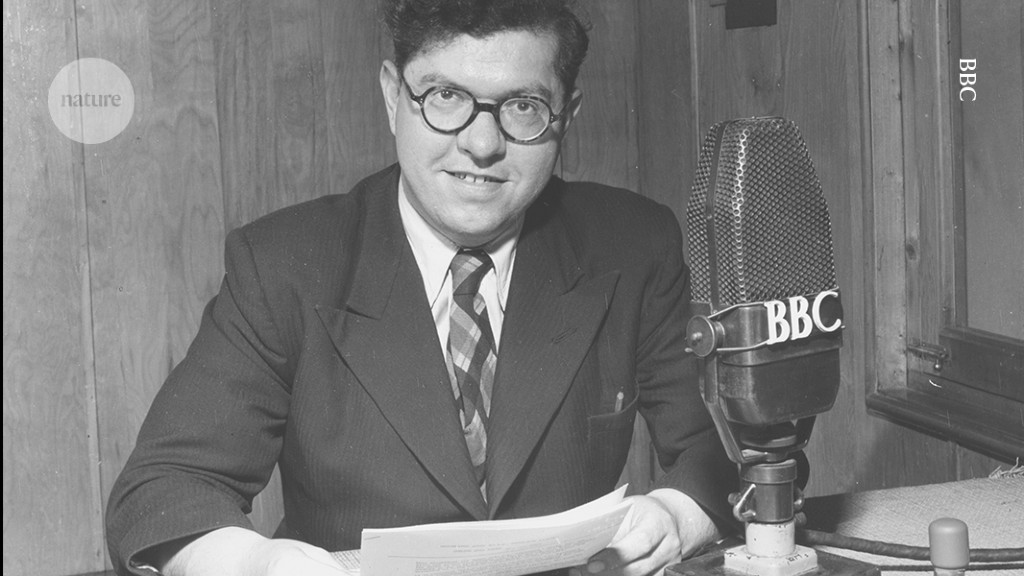
“Words are like harpoons,” UK physicist and astronomer Fred Hoyle told an interviewer in 1995. “Once they go in, they are very hard to pull out.” Hoyle, then 80 years old, was referring to the term Big Bang, which he had coined on 28 March 1949 to describe the origin of the Universe. Today, it is a household phrase, known to and routinely used by people who have no idea of how the Universe was born some 14 billion years ago. Ironically, Hoyle deeply disliked the idea of a Big Bang and remained, until his death in 2001, a staunch critic of mainstream Big Bang cosmology.
Several misconceptions linger concerning the origin and impact of the popular term. One is whether Hoyle introduced the nickname to ridicule or denigrate the small community of cosmologists who thought that the Universe had a violent beginning — a hypothesis that then seemed irrational. Another is that this group adopted ‘Big Bang’ eagerly, and it then migrated to other sciences and to everyday language. In reality, for decades, scientists ignored the catchy phrase, even as it spread in more-popular contexts.
This new map of the Universe suggests dark matter shaped the cosmos
The first cosmological theory of the Big Bang type dates back to 1931, when Belgian physicist and Catholic priest Georges Lemaître proposed a model based on the radioactive explosion of what he called a “primeval atom” at a fixed time in the past. He conceived that this primordial object was highly radioactive and so dense that it comprised all the matter, space and energy of the entire Universe. From the original explosion caused by radioactive decay, stars and galaxies would eventually form, he reasoned. Lemaître spoke metaphorically of his model as a “fireworks theory” of the Universe, the fireworks consisting of the decay products of the initial explosion.
However, Big Bang cosmology in its modern meaning — that the Universe was created in a flash of energy and has expanded and cooled down since — took off only in the late 1940s, with a series of papers by the Soviet–US nuclear physicist George Gamow and his US associates Ralph Alpher and Robert Herman. Gamow hypothesized that the early Universe must have been so hot and dense that it was filled with a primordial soup of radiation and nuclear particles, namely neutrons and protons. Under such conditions, those particles would gradually come together to form atomic nuclei as the temperature cooled. By following the thermonuclear processes that would have taken place in this fiery young Universe, Gamow and his collaborators tried to calculate the present abundance of chemical elements in an influential 1948 paper1.
Competing ideas
The same year, a radically different picture of the Universe was announced by Hoyle and Austrian-born cosmologists Hermann Bondi and Thomas Gold. Their steady-state theory assumed that, on a large scale, the Universe had always looked the same and would always do so, for eternity. According to Gamow, the idea of an ‘early Universe’ and an ‘old Universe’ were meaningless in a steady-state cosmology that posited a Universe with no beginning or end.
Over the next two decades, an epic controversy between these two incompatible systems evolved. It is often portrayed as a fight between the Big Bang theory and the steady-state theory, or even personalized as a battle between Gamow and Hoyle. But this is a misrepresentation.
Soviet–US nuclear physicist George Gamow was an early proponent of Big Bang cosmology.Credit: Bettmann/Getty
Both parties, and most other physicists of the time, accepted that the Universe was expanding — as US astronomer Edwin Hubble demonstrated in the late 1920s by observing that most galaxies are rushing away from our own. But the idea that is so familiar today, of the Universe beginning at one point in time, was widely seen as irrational. After all, how could the cause of the original explosion be explained, given that time only came into existence with it? In fact, Gamow’s theory of the early Universe played almost no part in this debate.
Rather, a bigger question at the time was whether the Universe was evolving in accordance with German physicist Albert Einstein’s general theory of relativity, which predicted that it was either expanding or contracting, not steady. Although Einstein’s theory doesn’t require a Big Bang, it does imply that the Universe looked different in the past than it does now. And an ever-expanding Universe does not necessarily entail the beginning of time. An expanding Universe could have blown up from a smaller precursor, Lemaître suggested in 1927.
An apt but innocent phrase
On 28 March 1949, Hoyle — a well-known popularizer of science — gave a radio talk to the BBC Third Programme, in which he contrasted these two views of the Universe. He referred to “the hypothesis that all the matter in the universe was created in one big bang at a particular time in the remote past”. This lecture was indeed the origin of the cosmological term ‘Big Bang’. A transcript of the talk was reproduced in full in the BBC’s The Listener magazine, and Hoyle mentioned it in his 1950 book The Nature of the Universe, which was based on a series of BBC broadcasts he made earlier the same year.
How dwarf galaxies lit up the Universe after the Big Bang
Although Hoyle resolutely dismissed the idea of a sudden origin of the Universe as unacceptable on both scientific and philosophical grounds, he later said that he did not mean it in ridiculing or mocking terms, such as was often stated. None of the few cosmologists in favour of the exploding Universe, such as Lemaître and Gamow, was offended by the term. Hoyle later explained that he needed visual metaphors in his broadcast to get across technical points to the public, and the casual coining of ‘Big Bang’ was one of them. He did not mean it to be derogatory or, for that matter, of any importance.
Hoyle’s ‘Big Bang’ was a new term as far as cosmology was concerned, but it was not in general contexts. The word ‘bang’ often refers to an ordinary explosion, say, of gunpowder, and a big bang might simply mean a very large and noisy explosion, something similar to Lemaître’s fireworks. And indeed, before March 1949, there were examples in the scientific literature of meteorologists and geophysicists using the term in their publications. Whereas they referred to real explosions, Hoyle’s Big Bang was purely metaphorical, in that he did not actually think that the Universe originated in a blast.
The Big Bang was not a big deal
For the next two decades, the catchy term that Hoyle had coined was largely ignored by physicists and astronomers. Lemaître never used ‘Big Bang’ and Gamow used it only once in his numerous publications on cosmology. One might think that at least Hoyle took it seriously and promoted his coinage, but he returned to it only in 1965, after a silence of 16 years. It took until 1957 before ‘Big Bang’ appeared in a research publication2, namely in a paper on the formation of elements in stars in Scientific Monthly by the US nuclear physicist William Fowler, a close collaborator of Hoyle and a future Nobel laureate.
How Einstein built on the past to make his breakthroughs
Before 1965, the cosmological Big Bang seems to have been referenced just a few dozen times, mostly in popular-science literature. I have counted 34 sources that mentioned the name and, of these, 23 are of a popular or general nature, 7 are scientific papers and 4 are philosophical studies. The authors include 16 people from the United States, 7 from the United Kingdom, one from Germany and one from Australia. None of the scientific papers appeared in astronomy journals.
Among those that used the term for the origin of the Universe was the US philosopher Norwood Russell Hanson, who in 1963 coined his own word for advocates of what he called the ‘Disneyoid picture’ of the cosmic explosion. He called them ‘big bangers’, a term which still can be found in the popular literature — in which the ultimate big banger is sometimes identified as God.
A popular misnomer
A watershed moment in the history of modern cosmology soon followed. In 1965, US physicists Arno Penzias and Robert Wilson’s report of the discovery of the cosmic microwave background — a faint bath of radio waves coming from all over the sky — was understood as a fossil remnant of radiation from the hot cosmic past. “Signals Imply a ‘Big Bang’ Universe” announced the New York Times on 21 May 1965. The Universe did indeed have a baby phase, as was suggested by Gamow and Lemaître. The cosmological battle had effectively come to an end, with the steady-state theory as the loser and the Big Bang theory emerging as a paradigm in cosmological research. Yet, for a while, physicists and astronomers hesitated to embrace Hoyle’s term.
Work by US physicists Arno Penzias and Robert Wilson vindicated the Big Bang theory.Credit: Bettmann/Getty
It took until March 1966 for the name to turn up in a Nature research article3. The Web of Science database lists only 11 scientific papers in the period 1965–69 with the name in their titles, followed by 30 papers in 1970–74 and 42 in 1975–79. Cosmology textbooks published in the early 1970s showed no unity with regard to the nomenclature. Some authors included the term Big Bang, some mentioned it only in passing and others avoided it altogether. They preferred to speak of the ‘standard model’ or the ‘theory of the hot universe’, instead of the undignified and admittedly misleading Big Bang metaphor.
Nonetheless, by the 1980s, the misnomer had become firmly entrenched in the literature and in common speech. The phrase has been adopted in many languages other than English, including French (théorie du Big Bang), Italian (teoria del Big Bang) and Swedish (Big Bang teorin). Germans have constructed their own version, namely Urknall, meaning ‘the original bang’, a word that is close to the Dutch oerknal. Later attempts to replace Hoyle’s term with alternative and more-appropriate names have failed miserably.
The many faces of the metaphor
By the 1990s, ‘Big Bang’ had migrated to commercial, political and artistic uses. During the 1950s and 1960s, the term frequently alluded to the danger of nuclear warfare as it did in UK playwright John Osborne’s play Look Back in Anger, first performed in 1956. The association of nuclear weapons and the explosive origin of the Universe can be found as early as 1948, before Hoyle coined his term. As its popularity increased, ‘Big Bang’ began being used to express a forceful beginning or radical change of almost any kind — such as the Bristol Sessions, a series of recording sessions in 1927, being referred to as the ‘Big Bang’ of modern country music.
In the United Kingdom, the term was widely used for a major transformation of the London Stock Exchange in 1986. “After the Big Bang tomorrow, the City will never be the same again,” wrote Sunday Express Magazine on 26 October that year. That use spread to the United States. In 1987, the linguistic journal American Speech included ‘Big Bang’ in its list of new words and defined ‘big banger’ as “one involved with the Big Bang on the London Stock Exchange”.
Today, searching online for the ‘Big Bang theory’ directs you first not to cosmology, but to a popular US sitcom. Seventy-five years on, the name that Hoyle so casually coined has indeed metamorphosed into a harpoon-like word: very hard to pull out once in.
International trade may have helped medieval elites acquire the best horses for jousting tournaments
PRISMA ARCHIVO / Alamy
Horses owned by the elite in medieval England were probably imported from continental Europe, possibly travelling hundreds of kilometres, according to tooth analysis of horses unearthed at a cemetery in London.
In the 1990s, commercial excavators stumbled across an unusually large horse burial site in central London. Subsequent digs at the site, now known as the Elverton Street cemetery, have uncovered 70 whole or partial horse remains. Some of the graves have been dated to between 1425 and 1517, but the cemetery may have been used over a wider period.
“It’s medieval Britain’s only real, good example of a horse cemetery,” says Oliver Creighton at the University of Exeter in the UK. “We usually find [horse remains] scattered across archaeological sites in very small numbers.”
To learn more about the origin and lives of these medieval horses, Creighton and his colleagues collected and analysed the molars from 15 horses buried at the site.
Plants from different parts of the world contain varying levels of carbon, oxygen and strontium isotopes – atoms with different numbers of neutrons. When an animal eats these plants, these isotopes accumulate in their bones and teeth over time. So, by analysing the chemical signatures of the horses’ teeth, the team could pinpoint where they probably came from.
This revealed that at least seven came from abroad, possibly from Scandinavia or the western Alps, says Alexander Pryor, also at the University of Exeter.
“These were also some of the largest medieval horses yet discovered in the UK,” says Pryor, which suggests that English elites may have sought out the best horses from Europe.
The arrangement of their teeth seemed to suggest the use of a special mouthpiece typically reserved for horses groomed for battle or jousting tournaments.
“There’s a good chance the horses could have come from the jousting arena at Westminster Palace, which was just a kilometre away,” says Creighton.
“The nature of horse teeth – with very high crowns that develop over quite a long time – gives them huge potential for studies using isotopes to track movements over the course of an individual horse’s life,” says David Orton at the University of York, UK. “But this is the first paper I’ve seen that really seems to make full use of that potential.”
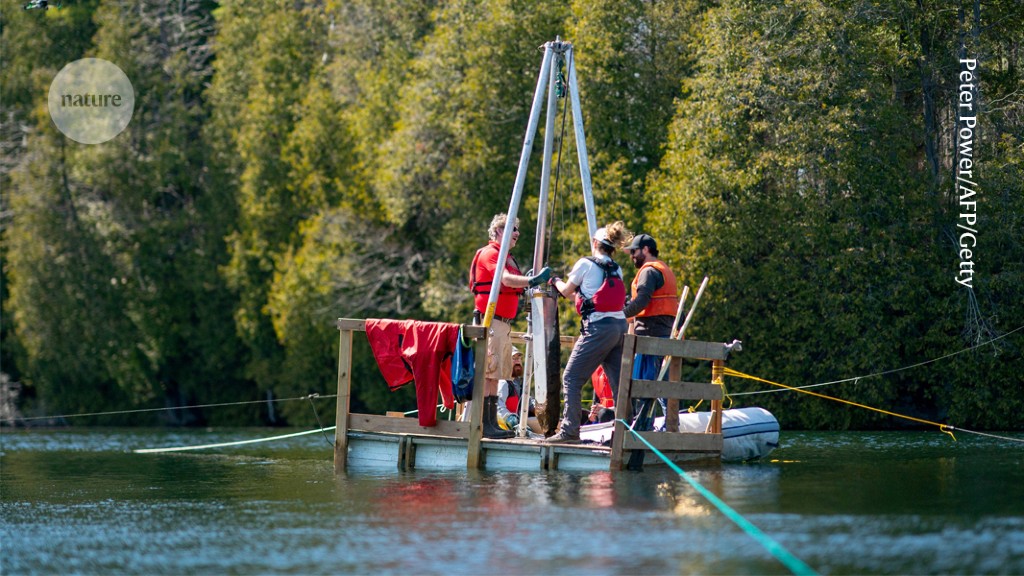
Researchers are investigating plutonium traces in the sediment of Crawford Lake in Canada as a marker for the start of the Anthropocene.Credit: Peter Power/AFP/Getty
For 15 years, geologists have been involved in a complicated technical process to determine whether human impacts on Earth systems amount to a new geological epoch. Earlier this month, 12 members of a subgroup of one of their professional bodies, the International Commission on Stratigraphy (ICS), voted that the ‘Anthropocene’ is not a new epoch that would have ended the Holocene epoch, which started some 11,700 ago at the end of the last ice age. Four voted in favour of the proposed new epoch. Some members want to annul the vote because of disagreements about whether ICS rules were followed, including during the voting process.
News of the vote, and the ensuing controversy, has created both confusion and concern, including among those currently working on Anthropocene science. This confusion arises because the term is understood and widely used by scientists, as well as people outside research, to mean a time in Earth’s history when humans are having severe biophysical impacts on the planet.
Geologists reject the Anthropocene as Earth’s new epoch — after 15 years of debate
The concept is used by researchers in natural sciences, engineering, humanities and social sciences; by authors of books on the topic, film-makers, editors of journals with Anthropocene in the title and, indeed, by the Nature Portfolio. In 2023, we launched a newsletter called ‘Nature Briefing: Anthropocene’, highlighting research about humanity’s footprint on Earth.
The difficulty is that the concept has taken off while geologists have been locked in discussion about how the Anthropocene should be measured, and when it started. One concern is that a rejection of the proposed epoch could lead to the perception that scientists somehow doubt that there is a human fingerprint on global change.
The Anthropocene concept, in its wider sense, is more than one century old1. The word was used at least as long ago as 1922 by Russian geologist Aleksei Pavlov. The term was popularized after Dutch atmospheric chemist Paul Crutzen and US biologist Eugene Stoermer reintroduced it in 2000. At the time, Crutzen and Stoermer were less concerned with finding a precise start date than researchers are now, but they did have a preference2: “To assign a more specific date to the onset of the ‘anthropocene’ seems somewhat arbitrary, but we propose the latter part of the 18th century, although we are aware that alternative proposals can be made (some may even want to include the entire holocene).” In 2002, Crutzen wrote in Nature3: “It seems appropriate to assign the term ‘Anthropocene’ to the present, in many ways human-dominated, geological epoch, supplementing the Holocene. [It] could be said to have started in the latter part of the eighteenth century, when analyses of air trapped in polar ice showed the beginning of growing global concentrations of carbon dioxide and methane.”
Ditching ‘Anthropocene’: why ecologists say the term still matters
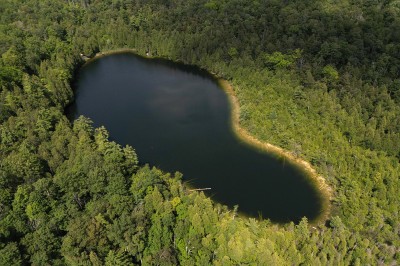
But words such as ‘epoch’ and ‘period’ have precise meanings in the study of Earth’s history, which is where the ICS, as a standards-setting body, comes in. According to conventions in geology, a new geological unit of time such as the Anthropocene needs permanent signals in rocks, sediment or glaciers. Candidates for such signals include microplastics, particulates from burnt fossil fuels, pesticide residues or radioactive isotopes from nuclear-bomb tests. The proposed marker location is Crawford Lake near Toronto, Canada, where plutonium from hydrogen-bomb tests, detected in 1952, settled in the lake’s sediment. As the latest vote demonstrates, there’s some way to go before this issue is resolved.
The current lack of agreement on a start date and which marker to use should not detract from the Anthropocene as a concept. The Sustainable Development Goals (SDGs) provide a useful comparison. The principle of a set of global goals and associated targets to end poverty and achieve environmental sustainability was agreed on by the international community in 2015. But the task of defining the goals, targets and indicators came later and was left to specialists, with policymakers pledging to stay out of the process.
The measurement of progress towards each of the 17 SDGs is the responsibility of a set of ‘custodian’ agencies. These are relevant international expert bodies, working with United Nations agencies. The custodians are charged with proposing measures for the goals and targets in their area of expertise. Periodically, the agencies come together to compare notes — for example, on targets for which data could be improved — and exchange ideas before returning to their individual groups to refine their knowledge. Working in this way, involving specialists from a variety of fields, undoubtedly helps to improve knowledge.
That process is still continuing. Even now, some nine years later, around one-third of the 231 unique data indicators for SDG targets are recorded in the second-highest category of accuracy. Whether countries are able to regularly produce data, a requirement of the highest tier, does not negate the necessity of achieving the goals. The same overarching principle could be applied to the Anthropocene. The absence of an agreed marker and a specific start date should not detract from the reality of a discernible human fingerprint on Earth systems.
Measurement matters. It is needed not least so that the world is confident that the Anthropocene’s start date and marker are grounded in the broadest consensus of scholarly knowledge. Geologists must quickly resolve their disagreements. At the same time, there is little doubt that the world is in an Anthropocene, as understood by researchers who use the term, and that course correction is needed.
Some geoscientists argue that humans have transformed the planet with plastic trash, radioactive debris and fossil-fuel emissions, among other things — and that the changes should be recognized with a new geological epoch.Credit: Mark Meredith/Getty
A high-profile battle over whether to designate the ‘Anthropocene’ as a new geological epoch has come to an end. On 20 March, the International Union of Geological Sciences (IUGS) — the final arbiter in the matter — announced that it is upholding a decision made earlier this month by a group of geoscientists. That group voted on 4 March to reject a proposal that would have established the current era, in which humans are altering the planet, as a formal epoch in Earth’s geological timetable.
Geologists reject the Anthropocene as Earth’s new epoch — after 15 years of debate
The IUGS decision effectively terminates a dramatic challenge to that earlier vote: the chair and a vice-chair of the Subcommission on Quaternary Stratigraphy (SQS), which held the vote, said that it was illegitimate. Among other things, they said that 11 of the 16 SQS members who voted on the Anthropocene proposal were ineligible, because they had been members of the subcommission for too long.
In a statement, the IUGS called the 4 March vote and subsequent appeal “a difficult process” that was conducted “fully in accordance with the statutory requirements”. Stanley Finney, a stratigrapher at California State University, Long Beach, who is the IUGS secretary-general, told Nature that it was long-standing practice among such subcommissions to allow members who had overextended their terms to vote anyway. “You can’t just throw them off if you want something done,” he says.
The IUGS is the parent organization for the International Commission on Stratigraphy (ICS), to which the SQS belongs. “There is no further supreme court one can go to,” says Jan Zalasiewicz, a palaeontologist at the University of Leicester, UK, who is the SQS chair who protested against the subcommission’s vote. “I have no immediate plans for a challenge.”
A tangled quest
The controversy underscores the long-running quest to bring the Anthropocene proposal to a vote, and the tangle of international geological organizations involved. In 2009, the SQS set up an Anthropocene working group to assess whether the current era of human-induced change should be codified as a new ‘stratigraphic unit’ in the geological time scale. After 14 years of discussion and exploration, the working group submitted its proposal last October, arguing that a new epoch should be established. Its start, the group said, should be marked by plutonium residue from hydrogen-bomb tests in 1952 appearing in Earth’s geology.
This quiet lake could mark the start of a new Anthropocene epoch
Under ICS rules, such a proposal would normally be discussed for a 30-day period and then voted on for another 30 days. Zalasiewicz says that he and vice-chair Martin Head, a stratigrapher at Brock University in St. Catharines, Canada, recused themselves from moderating the discussion because of conflicts of interest from their earlier participation in the Anthropocene working group. When the discussion period ended and other SQS members moved to vote on the proposal, Zalasiewicz and Head objected, saying that it had not been given serious consideration and that the vote was rushed.
Voting began in early February and ended on 4 March, with four SQS members voting in favour of establishing an Anthropocene epoch and 12 voting against it. Three people abstained and three did not vote, including Zalasiewicz and Head. The results of the vote were then approved by the full ICS and, as of today, the IUGS.
Participation in ICS subcommissions, which deal with geological periods from the ancient to the modern, typically happens in four-year terms. Anyone who has been a member of a subcommission for more than 12 years is no longer a voting member, according to ICS statutes. Zalasiewicz says that this restriction applies to him, as well as to many other SQS members — and that, for this reason, the 4 March vote is illegitimate.
Stricter compliance
The discussion has prompted other ICS subcommissions to re-examine their membership rosters for people who might have passed the 12-year limit and thus be no longer eligible to vote, says Philip Gibbard, a geologist at the University of Cambridge, UK. More broadly, the IUGS has been working towards refreshing its committee membership more frequently, to increase gender, racial and geographic equity, Finney says.
Ditching ‘Anthropocene’: why ecologists say the term still matters
David Harper, a palaeontologist at Durham University, UK, and current chair of the ICS, says that the commission will be enforcing stricter compliance on term limits from now on.
For his part, Zalasiewicz says he has been asked to step down as SQS chair and does not expect to be part of any other ICS group. He and other Anthropocene-epoch advocates are likely to continue their campaign in other venues, he says: “Another means will have to be found” to codify the Anthropocene as a concept outside the official geological timescale.
Regardless of there being no formal Anthropocene epoch, the term will continue to be used in broad popular and scientific usage as the era of human-induced change. “As such, it will remain an invaluable descriptor in human-environment interactions,” the IUGS says.
In hindsight, it seems prophetic that the title of a Nature paper published on 1 March 1974 ended with a question mark: “Black hole explosions?” Stephen Hawking’s landmark idea about what is now known as Hawking radiation1 has just turned 50. The more physicists have tried to test his theory over the past half-century, the more questions have been raised — with profound consequences for how we view the workings of reality.
In essence, what Hawking, who died six years ago today, found is that black holes should not be truly black, because they constantly radiate a tiny amount of heat. That conclusion came from basic principles of quantum physics, which imply that even empty space is a far-from-uneventful place. Instead, space is filled with roiling quantum fields in which pairs of ‘virtual’ particles incessantly pop out of nowhere and, under normal conditions, annihilate each other almost instantaneously.
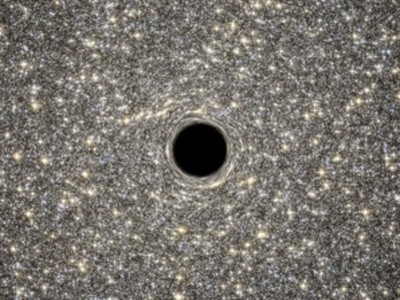
However, at an event horizon, the spherical surface that defines the boundary of a black hole, something different happens. An event horizon represents a gravitational point of no return that can be crossed only inward, and Hawking realized that there two virtual particles can become separated. One of them falls into the black hole, while the other radiates away, carrying some of the energy with it. As a result, the black hole loses a tiny bit of mass and shrinks — and shines.
Unexpected ramifications
The power of Hawking’s 1974 paper lies in how it combined basic principles from the two pillars of modern physics. The first, Albert Einstein’s general theory of relativity — in which black holes manifest themselves — links gravity to the shape of space and time, and is typically relevant only at large scales. The second, quantum physics, tends to show up in microscopic situations. The two theories seem to be mathematically incompatible, and physicists have long struggled to find ways to reconcile them. Hawking showed that the event horizon of a black hole is a rare place where both theories must play a part, with calculable consequences.
Science mourns Stephen Hawking’s death
And profoundly unsettling ones at that, as quickly became apparent. The random nature of Hawking radiation means that it carries no information whatsoever. As Hawking soon realized2, this means that black holes slowly erase any information about anything that falls in, both when the black hole originally forms and subsequently as it grows — in apparent contradiction to the laws of quantum mechanics, which say that information can never be destroyed. This conundrum became known as the black-hole information paradox.
It has since turned out that black holes should not be the only things that produce Hawking radiation. Any observer accelerating through space could, in principle, pick up similar radiation from empty space3. And other analogues of black-hole shine abound in nature. For example, physicists have shown that in a moving medium, sound waves trying to move upstream seem to behave just as Hawking predicted. Some researchers hope that these experiments could provide hints as to how to solve the paradox.
A scientific wager
In the 1990s, the black-hole information paradox became the subject of a celebrated bet. Hawking, together with Kip Thorne at the California Institute of Technology (Caltech) in Pasadena, proposed that quantum mechanics would ultimately need to be amended to take Hawking radiation into account. Another Caltech theoretical physicist, John Preskill, maintained that information would be found to somehow be preserved, and that quantum mechanics would be saved.
But in 1997, theoretical physicist Juan Maldacena, who is now at the Institute for Advanced Study in Princeton , New Jersey, came up with an idea that indicated Hawking and Thorne might be wrong4. His paper now has more than 24,000 citations, even more than the 7,000 or so times Hawking’s paper has been cited. Maldacena suggested that the Universe — including the black holes it contains — is a type of hologram, a higher-dimensional projection of events that occur on a flat surface. Everything that happens on the flat world can be described by pure quantum mechanics, and so preserves information.
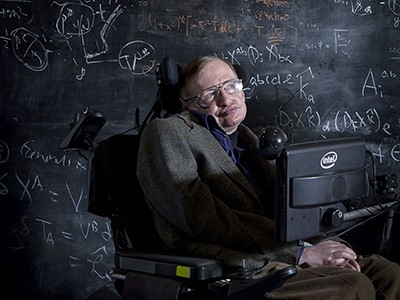
Stephen Hawking worked on the black hole information paradox throughout his life.Credit: Santi Visalli/Getty
At face value, Maldacena’s theory doesn’t fully apply to the type of Universe that we inhabit. Moreover, it did not explain how information could escape destruction in a black hole — only that it should, somehow. “We don’t have a concrete grasp of the mechanism,” says Preskill. Physicists, including Hawking, have proposed countless escape mechanisms, none of which has been completely convincing, according to Preskill. “Here it is, 50 years after that great paper, and we’re still puzzled,” he says. (Maldacena’s ideas were enough to change Hawking’s mind, however, and he conceded the bet in 2004.)
A quantum conundrum
Attempts to solve the information paradox have grown into a thriving industry. One of the ideas that has gained traction is that each particle that falls into a black hole is linked to one that stays outside through quantum entanglement — the ability of objects to share a single quantum state even when far apart. This connection could manifest itself in the geometry of space-time as a ‘wormhole’ joining the inside of the event horizon with the outside.
Entanglement is also one of the crucial features that make quantum computers potentially more powerful than classical ones. Moreover, in the past decade, the link between black holes and information theory has become only stronger, as Preskill and others have investigated similarities between what happens in holographic projections and the types of error-correction algorithm developed for quantum computers. Error correction is a way of storing redundant information that enables a computer — whether classical or quantum — to restore corrupted bits of information. Some researchers see quantum computation theory as the key to solving Hawking’s paradox. When creating a black hole, the Universe could be similarly storing several versions of its information — some inside the event horizon, some outside — so that the destruction of the black hole does not erase any history.
Hawking’s latest black-hole paper splits physicists
But other researchers think that the full resolution of the information paradox might have to wait until another big problem is solved — that of reconciling gravity with quantum physics. Hawking continued working on the problem almost up until his death, but with no clear outcome.
As for the title of Hawking’s paper, seeing actual black-hole explosions is a possibility that astronomers take seriously. Large black holes act like very cold bodies, but smaller ones are hotter, which makes them shrink faster; and the particles they shed should become more and more energetic, reaching a culmination when the black hole disappears. Hawking showed that ‘ordinary’ stellar-mass black holes, which form when massive stars collapse in on themselves at the end of their lives, take many times longer than the age of the Universe to get to this point. But, in principle, black holes with a range of smaller masses could have formed from random fluctuations in the density of matter during the first moments after the Big Bang. If a primordial black hole of the right mass were to fizzle into non-existence somewhere near the Solar System, it could be picked up by neutrino and γ-ray observatories.
Astronomers have not seen any black holes explode so far, but they are still on the lookout5. Such an observation would have certainly earned Hawking the Nobel Prize that eluded him all his life. As it is, the questions produced by his simple, inquisitive paper title look set to nourish the intersection between cosmology and physics for a good few years yet.