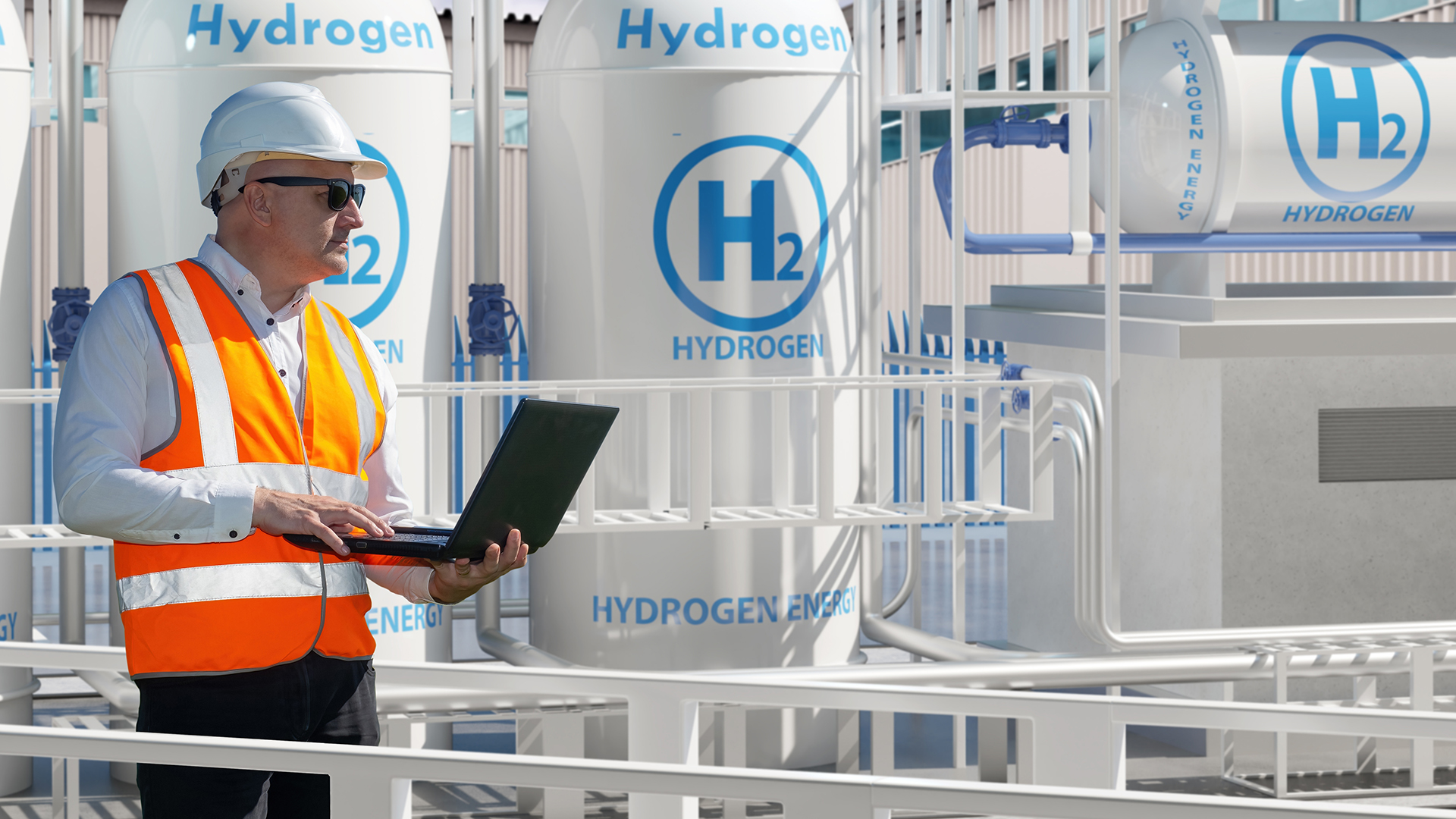
The ROAD2X research project, with an investment of DKK 18 million from the Innovation Fund, is working on a breakthrough to improve the operation of high-temperature electrolysis plants.
The goal is to extend the lifespan of these electrolysis plants to over ten years, a significant improvement from the current two-year average.
Power2X: A key to a sustainable future
Power2X refers to the use of renewable electricity, such as from wind turbines and solar panels, to produce synthetic fuels.
This technology is seen as crucial in the transition to greener energy systems, enabling the production of sustainable fuels like methanol.
High-temperature electrolysis plays a key role in this process, converting electricity into fuel. However, these electrolysis plants currently have a limited operational life, primarily due to technical challenges like impurities and temperature fluctuations that damage the units over time.
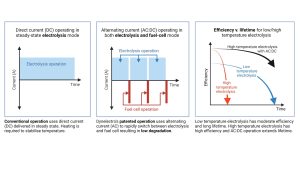
Addressing technical issues with AC:DC operation
The ROAD2X project aims to solve these problems by developing a new operating method called AC:DC operation.
This innovative technique, patented by Dynelectro’s founder, Søren Højgaard Jensen, is designed to combat the two main issues that shorten the lifespan of electrolysis plants—temperature fluctuations and contamination by impurities.
By stabilising the conditions within the electrolysis units, AC:DC operation could extend their life well beyond the current average of two years.
Søren Højgaard Jensen highlights the potential of this new method, stating: “The ROAD2X project is of great importance for making AC:DC operation and high-temperature electrolysis ready for commercialisation.
“When the project is completed, it will open up new possibilities for electrolysing CO2 and producing, for example, green methanol.”
Collaboration for innovation
The ROAD2X project brings together five key partners: Dynelectro, Finnish-Estonian electrolysis company Elcogen, Ålborg University, the Technical University of Denmark, and European Energy.
Each partner plays a crucial role, from advanced testing to analysing the business potential of high-temperature electrolysis for producing green methanol.
With a total budget of DKK 24 million and a timeline of three years, the ROAD2X project could pave the way for more reliable and longer-lasting electrolysis plants, advancing the Power2X technology and supporting the transition to a sustainable energy future.
The UK and Chilean governments have recently unveiled a partnership aimed at boosting financing for green hydrogen projects.
With over £5bn in UK export credit support on offer, the collaboration is set to drive significant investment into Chile’s burgeoning renewable energy sector.
This marks a critical step in the global transition to sustainable energy sources, positioning both nations as key players in the clean energy revolution.
UK and Chile sign landmark green hydrogen agreement
The agreement was signed by Tim Reid, CEO of UK Export Finance (UKEF), and José Miguel Benavente, Executive Vice-President of Chile’s economic development agency CORFO, during a formal event at the Embassy of Chile.
UKEF, the UK’s official export credit agency, is tasked with supporting international projects that utilise British goods and services.
By pooling resources, UKEF and CORFO aim to jointly finance green hydrogen projects that will drive Chile’s renewable energy ambitions.
Under the partnership, UKEF will provide over £5bn in credit support, giving Chilean companies access to funding for large-scale green hydrogen initiatives.
The move is expected to significantly boost liquidity in Chile’s renewable energy sector while creating lucrative export opportunities for UK-based clean technology firms.
“This is a win-win agreement,” said Tim Reid. “UK businesses are world-renowned for their leadership in the clean energy sector. This partnership not only paves the way for major UK export contracts but also supports Chile’s ambitious transition to renewable energy.”
Boosting Chile’s renewables sector
Chile has set an ambitious target of sourcing at least 70% of its total energy production from renewables by 2050.
Green hydrogen, produced using renewable energy sources, is set to play a key role in achieving this goal.
The Chilean government has already committed $50m towards the development of its green hydrogen sector, and the newly signed agreement with the UK is expected to provide an additional boost.
The partnership is particularly focused on enabling long-duration energy storage through low-carbon hydrogen.
Green hydrogen allows for the flexible generation and storage of renewable energy, utilising surplus electricity that would otherwise be wasted.
By investing in these projects, Chile hopes to reduce its carbon footprint, enhance energy security, and position itself as a global leader in renewable energy.
Green Hydrogen: A cornerstone of the UK’s energy transition
The recent announcement of the UK’s National Wealth Fund, which includes a £500m investment into hydrogen infrastructure and industrial clusters, underscores the growing importance of this technology.
Green hydrogen presents several key benefits to the UK’s energy transition, helping to reduce carbon emissions and ensure a more sustainable energy future.
As a clean, flexible energy carrier, hydrogen can be used to decarbonise industries that are otherwise difficult to electrify, such as steel production, shipping, and aviation.
Additionally, green hydrogen can be stored for long periods, providing an effective solution for balancing supply and demand in an increasingly renewable energy grid.
By using renewable energy to produce green hydrogen, the UK can make better use of its growing wind and solar capacities, storing excess energy that might otherwise be wasted.
This will help ensure that renewable energy can meet the country’s energy demands, even during periods of low generation.
Furthermore, green hydrogen’s potential for export offers new economic opportunities, allowing the UK to remain competitive in the global energy market.
A step towards a greener future
As both the UK and Chile ramp up efforts to scale green hydrogen production, this partnership stands as a key milestone in the global push for renewable energy.
By unlocking new financing opportunities and creating export-driven growth, the UK-Chile collaboration offers a model for international cooperation in the fight against climate change.
First Hydrogen Corp. has announced a major step in its global expansion by targeting the European market.
The company has partnered with several international firms specialising in renewable energy, infrastructure, and mergers to support the growth and expansion of its hydrogen fuel cell vehicles.
The company plans to establish an office in Germany, a country known for its advanced technology and leadership in the automotive industry.
This move aligns with First Hydrogen’s mission to introduce its hydrogen fuel cell vehicles to the European market, positioning itself as a key player in the growing hydrogen economy.
Germany is an ideal starting point for First Hydrogen’s expansion, given its significant focus on hydrogen technology.
The country is home to major automakers like Volkswagen, BMW, and Mercedes-Benz, which align perfectly with the company’s goal of promoting hydrogen-powered vehicles.
Germany’s national hydrogen strategy
In 2020, Germany unveiled a national hydrogen strategy aimed at promoting green hydrogen as a primary energy source. This shift is part of the country’s larger goal to reduce its reliance on fossil fuels.
In late 2023, Germany took another step forward by drafting legislation for a 9,700-kilometer hydrogen highway.
This network will use existing natural gas infrastructure to support hydrogen transportation and distribution across the country, similar to the extensive autobahn system.
Germany is already home to 17 hydrogen hubs, known as ‘Hydrogen Valleys,’ which are either operational or in development.
These hubs are designed to foster the production, storage, and use of hydrogen, and will play a crucial role in building a fully integrated hydrogen ecosystem.
First Hydrogen’s entry into Germany is well-timed, as the country’s hydrogen infrastructure continues to grow rapidly, creating opportunities for the company’s hydrogen fuel cell vehicles to enter the market.
First Hydrogen’s role in Europe’s hydrogen ecosystem
Europe has made significant progress in building a hydrogen economy, with the European Commission approving multiple Integrated Projects of Common European Interest (IPCEIs) for hydrogen development.
These projects, valued at €43bn, are intended to support over 120 hydrogen initiatives across the continent, covering everything from production to end-use.
Germany alone has committed €4.6bn to these efforts, making it a central player in Europe’s hydrogen transformation.
First Hydrogen’s entry into the German market positions it to benefit from this growing hydrogen infrastructure.
The company’s hydrogen fuel cell vehicles have already proven successful in trials in the UK, and now, First Hydrogen aims to replicate that success across Europe.
Supporting Europe’s net zero target
The European Union has set an ambitious goal to achieve Net Zero carbon emissions by 2050, and hydrogen is central to this strategy.
First Hydrogen’s expansion into Europe, and particularly Germany, reflects its commitment to supporting Europe’s clean energy targets.
The company has announced the award of 2,050,000 incentive stock options to its directors, officers, and consultants.
These options have an exercise price of $0.40 per share and will expire five years from the grant date. The issuance of these options is contingent upon approval from the TSX Venture Exchange.
As First Hydrogen continues its expansion into the European market, further developments are expected, particularly regarding its role in Germany’s hydrogen infrastructure.
With its cutting-edge fuel cell technology and strategic positioning, First Hydrogen is well on its way to becoming a leader in the global hydrogen economy.
Dynelectro, a pioneering company in sustainable energy solutions, announces its first commercial-scale Dynamic Electrolyser Unit (DEU), after exceeding two years performance testing with low degradation.
Demonstration of the first dynamic electrolysis unit reaches initial investment decision at European Energy’s green methanol facility in Denmark:
FID reached to develop and deploy the commercial-scale fully modular 1-MW Dynamic Electrolyser Unit (DEU) at European Energy’s Danish renewable energy facility.
Technology maturation funding reaches €20m, with nearly 50% from innovation funds.
Performance testing exceeds two years and shows very low degradation rates of 3µΩcm2/hour.
About Dynelectro
Founded in 2018, Dynelectro is at the forefront of developing advanced, sustainable energy solutions. Utilising cutting-edge solid-oxide electrolysis technology, Dynelectro achieves unprecedented system performance and lifespan. Co-founders Søren Højgaard Jensen and Samantha Phillips bring more than 50 years of combined experience, respectively, within high-temperature electrolysis and resource deployment focused on innovation and technology.
Their innovations enable operators to seamlessly adjust production based on the availability of cost-effective renewable energy. The company commercialises MW-scale Dynamic Electrolyser Units (DEUs), delivering clean hydrogen to unlock syngas and e-fuel production.
Dynelectro green hydrogen technology
Dynelectro’s technology focuses on next-generation solid-oxide electrolysis (SOE) and offers unparalleled system performance and longevity. SOE aids decarbonisation in hard-to-abate sectors by efficiently producing hydrogen and utilising industrial waste heat. It supports heavy industries and chemical production by providing on-site hydrogen, reducing emissions, generating synthetic fuels, and enabling the green energy transition in these sectors. SOE is poised to revolutionise the energy sector by enhancing energy efficiency, reducing costs, and facilitating broader renewable integration.
Dynelectro’s journey, thus far, has culminated in over €20m, which has been solely directed to technology and innovation development. Comprised of €11m in equity funding with early-stage investors, including Export & Import Fund of Denmark (EIFO), Yara Growth Ventures, Vsquared Ventures, PSV Deeptech, The Footprint Firm and the European Innovation Council (EIC) Fund. Furthermore, €9m in grant funding has been achieved from the European Innovation Council, Shell Gamechanger, the Danish Energy Technology Development and Demonstration Program (EUDP) and other innovation programmes.
According to the European Innovation Council technical evaluation: “The technology may significantly transform and strongly accelerate a major new market. It, therefore, justifies a breakthrough characterisation. It supports the adoption of hydrogen as a major clean energy carrier and strongly contributes to the EU’s Green Deal.” The European Investment Bank’s involvement in this round marks a step change in our maturity, transitioning our investor profile toward industrial investors.
Performance testing
After surpassing 16,000 hours of operation, the performance has shown a degradation of less than 3µΩ · cm² per hour, with downtime remaining below 2%. The load factor has consistently exceeded 92%, even with 6% of the time allocated for standby during performance measurements. It’s worth noting that the typical degradation rate for alkaline systems falls within the range of 2-5µΩ · cm² per hour, highlighting the efficiency and stability of the system in comparison, as seen in the following image.
Benefit of SOE
Current electrolysis technologies waste 25-50% of input electricity, limiting their commercial and sustainability potential. Solid oxide electrolysis (SOE) offers the highest conversion efficiency but has been hindered by its short lifespan, making it cost-prohibitive. Dynelectro’s innovative AC:DC technology addresses this issue, extending SOE lifespan from two years to ten years, thereby aligning it with other electrolyser technologies. This advancement reduces costs and enables quick production adjustments, aiding in grid balancing through ancillary services. Consequently, Dynelectro becomes a crucial partner for Power-to-X developers striving to lower green hydrogen costs.
The completion of the first 1-MW unit installation at European Energy’s renewable energy facility in Denmark is scheduled for the first half of 2025, demonstrating the practical applications and benefits of this advanced energy solution.
The United States Department of Energy (DOE) has announced a significant $62m investment in 20 clean hydrogen projects across 15 states.
These projects aim to fast-track the development and deployment of clean hydrogen technologies, focusing on crucial areas like hydrogen fuelling infrastructure, hydrogen-powered port equipment, and enhancing processes for the equitable deployment of hydrogen solutions.
The selected projects include innovative efforts to ensure the benefits of clean energy reach all Americans, reinforcing the nation’s commitment to building a robust, equitable, clean hydrogen economy.
Secretary of Energy Jennifer Granholm emphasised the significance of the funding: “Today’s announcement builds on the historic clean hydrogen investments made possible by the Investing in America agenda and will help deliver new economic opportunities across the nation while also reinforcing America’s global leadership in clean energy technologies for generations to come.”
Key areas of focus
The DOE’s Hydrogen and Fuel Cell Technologies Office (HFTO) will oversee projects across five main areas:
Hydrogen fuelling for medium- and heavy-duty vehicles: $8.5m will fund the development of advanced components for hydrogen fuelling systems tailored to medium- and heavy-duty vehicles.
Standardised hydrogen refuelling stations: $40m is dedicated to creating low-cost, replicable hydrogen refuelling stations to support commercial-scale truck fuelling.
Hydrogen fuel cell-powered port equipment: A $2.5m project at the Port of Oakland will demonstrate hydrogen-powered equipment for port operations.
Permitting and safety for hydrogen deployment: Seven projects will share $7m to address challenges in hydrogen infrastructure deployment, from siting to permitting.
Equitable community engagement: Four projects, supported by $4m, will improve DOE’s engagement with disadvantaged communities and develop best practices for Community Benefits Plans (CBPs).
The advantages of clean hydrogen
Clean hydrogen is a versatile energy carrier, essential in various industries such as fertiliser production and steelmaking.
It can be produced from diverse clean energy sources, including renewables and nuclear power. Its role is crucial in decarbonising challenging sectors like heavy-duty transportation and industrial processes, as well as in long-duration energy storage.
By advancing clean hydrogen technologies, the US aims to strengthen energy independence, reduce emissions, and support economic growth. Clean hydrogen technologies are also expected to contribute significantly to job creation.
Commitment to equity in clean energy
These projects not only drive advancements in clean hydrogen technologies but also focus on equity and environmental justice.
All selected initiatives are expected to implement comprehensive Community Benefits Plans (CBPs), ensuring that clean hydrogen development benefits all communities, particularly those historically underserved.
In alignment with the Justice40 initiative, over $14m is dedicated to community benefits, with more than 20 minority-serving institutions involved as partners.
These efforts underscore the US’ commitment to an inclusive clean energy transition, ensuring that the clean hydrogen economy delivers prosperity and sustainability for all Americans.
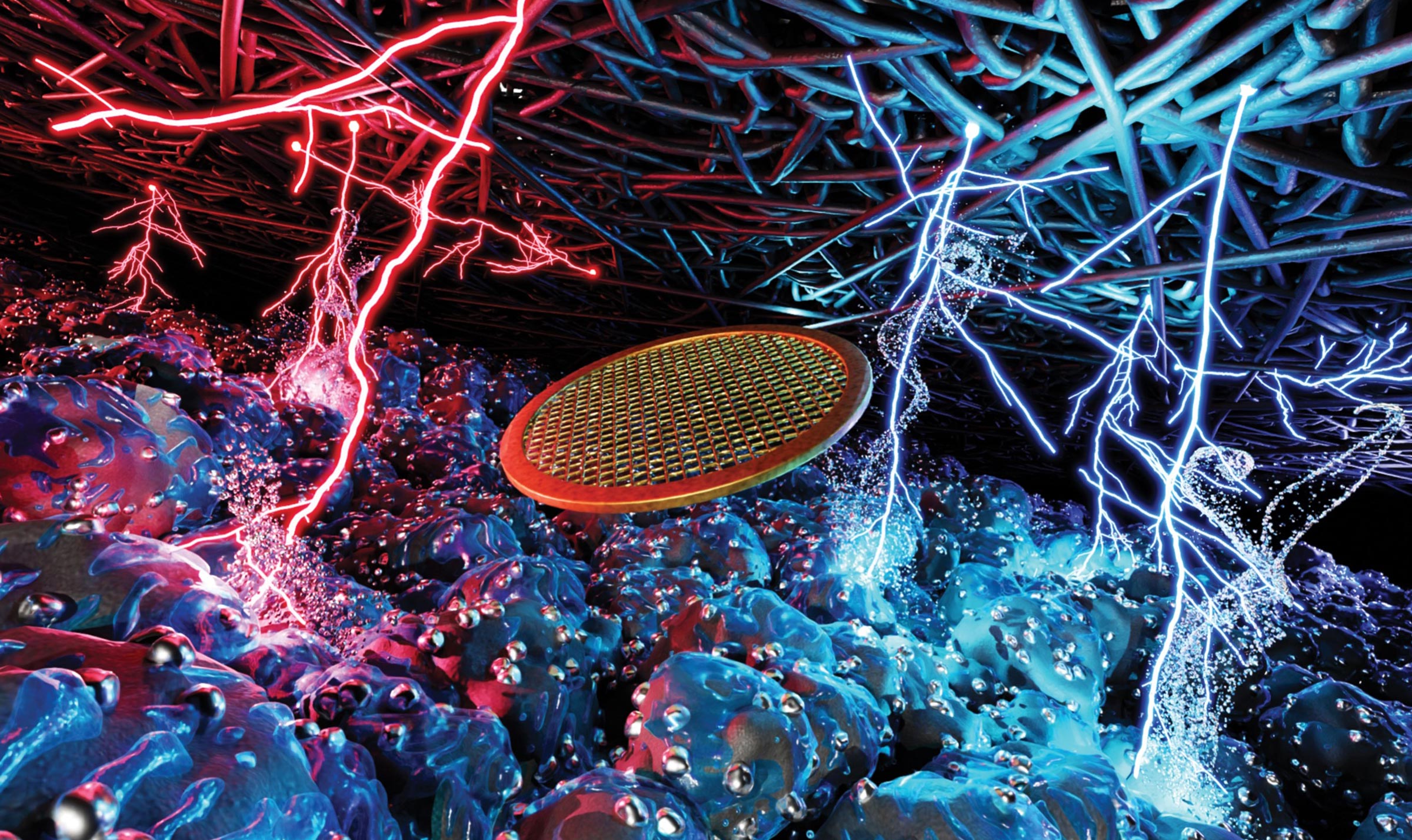
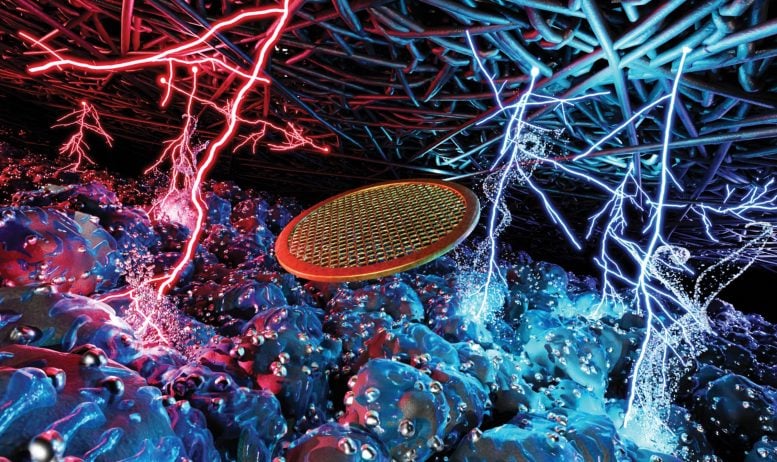
Researchers at Chalmers University of Technology, Sweden, have developed an innovative method to study and understand how fuel cells degrade over time, using advanced electron microscopes. This is an illustration of a catalyst layer sample on a transmission electron microscope grid, placed between an electrode and a gas diffusion layer. Credit: Chalmers University of Technology | Linnéa Strandberg and Victor Shokhen
Chalmers University researchers have developed a method to study and understand the degradation processes within hydrogen fuel cells, potentially leading to advancements that could extend the lifespan of hydrogen-powered vehicles.
Hydrogen has become an appealing fuel alternative for heavy-duty vehicles. Hydrogen-powered vehicles only emit water vapor as exhaust, and when the hydrogen is produced using renewable energy, they are entirely free of carbon dioxide emissions. Unlike battery-powered electric vehicles, hydrogen-powered vehicles do not strain the electricity grid because hydrogen can be produced and stored when electricity is inexpensive.
In some hydrogen-powered vehicles, propulsion is provided by what is known as a fuel cell. Unfortunately, the lifespan of these hydrogen fuel-cell-powered vehicles is relatively short because fuel cell components, such as electrodes and membranes, degrade over time.
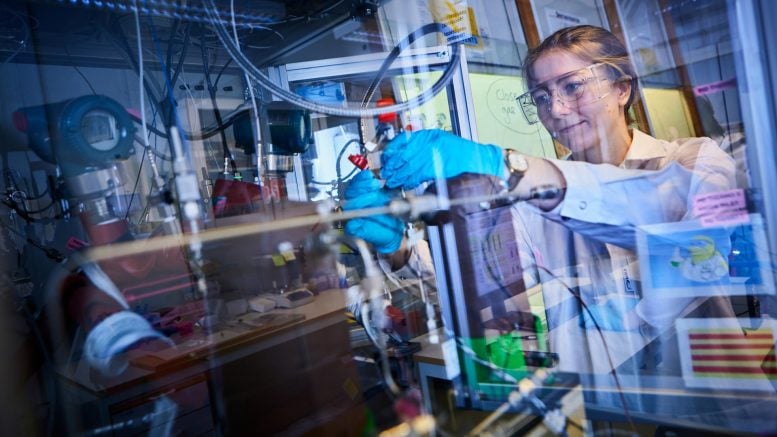
Linnéa Strandberg in the lab where the researchers have built a control system to monitor the fuel cell. Credit: Chalmers University of Technology | Henrik Sandsjö
Facts: How a Fuel Cell Works
The core of a fuel cell consists of three active layers, two electrodes – anode and cathode respectively – with an ion-conducting membrane in the middle. Each individual cell provides a voltage of about 1 volt. The electrodes contain catalyst material, and hydrogen and oxygen are added to them. The resulting electrochemical process generates clean water and electricity that can be used to power a vehicle.
Advancements in Fuel Cell Durability Research
Now, researchers at Chalmers University of Technology, Sweden have developed a new method for studying what affects the aging of fuel cells by tracking a specific particle in the fuel cell during use. The researchers studied an entire fuel cell by taking it apart at regular intervals.
Using advanced electron microscopes, they have then been able to follow how the cathode electrode degrades in specific areas during the cycles of use. Previous studies have been done on so-called half-cells, which are similar (but not the same as) half of a fuel cell and are carried out under conditions that differ significantly from the real fuel cell.
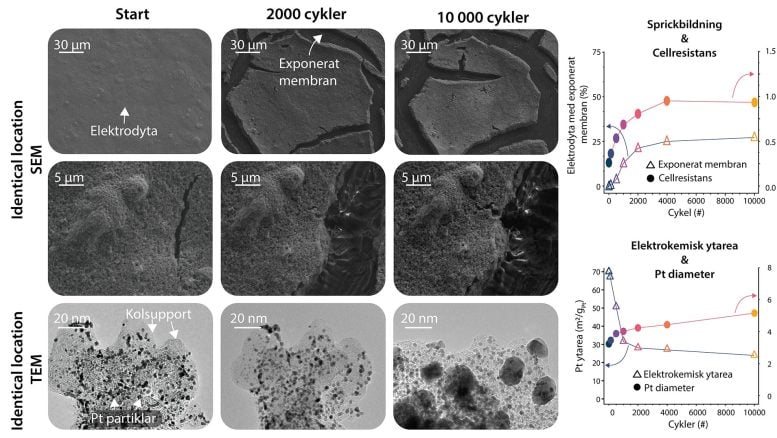
Using scanning electron microscopy (SEM) and transmission electron microscopy (TEM), the researchers have been able to show how the electrode degrades during use, when performing a standardized stress test. It is clear how cracks grow in the electrode film in the upper two rows. In the lower row, carbon substrates and platinum particles are visible. During use, the carbon decreases in volume and changes shape, while the platinum particles grow. The graphs on the right show how the data correlates with the electrochemical performance. Credit: Chalmers University of Technology | Linnéa Strandberg
Breakthrough in Fuel Cell Analysis
Lead researcher Björn Wickman, an Associate Professor at the Department of Physics at Chalmers, said: “It has previously been assumed that the performance would be affected by the fuel cell being disassembled and studied in the way we have done, but it turned out that this assumption is not correct, which is surprising.”
The team was able to explore how the material in the fuel cell degrades at both the nano and micro level and pinpoint exactly when and where the degradation occurs. This provides valuable information for the development of new and improved fuel cells with a longer lifespan.
The sample is taken from the cell housing for analysis in a scanning electron microscope after a stress test. Credit: Chalmers University of Technology | Lisa Gahnertz
“From previously only looking at how the fuel cell has aged after use, we have now been able to look into the middle stage,” says doctoral student Linnéa Strandberg at Chalmers. “Being able to follow a single, chosen particle within a specific area, provided a much better understanding of the degradation processes. Greater knowledge of these is an important step on the way to designing new materials for fuel cells or to adjust the control of the fuel cell.”
After the scanning electron microscopy, the cell housing is assembled with the sample inside for further stress tests. Credit: Chalmers University of Technology | Lisa Gahnertz
Future Directions for Hydrogen Fuel Cell Technology
“We have now laid a foundation on which to build for the development of better fuel cells. Now we know more about the processes that take place in the fuel cell and at what point over the lifetime of the fuel cell they occur. In the future, the method will be used to develop and study new materials that can give the fuel cell a longer lifespan,” says Björn Wickman.
Björn Wickman, Associate Professor, Department of Physics, Chalmers University of Technology, Sweden. Credit: Chalmers University of Technology | Anna-Lena Lundqvist
The research has been presented in three different scientific articles:
“Carbon Support Corrosion in PEMFCs Followed by Identical Location Electron Microscopy” published in ACS Catalysis.
“Fuel cell electrode degradation followed by identical location transmission electron microscopy” published in Journal of Material Chemistry.
“Impact of Accelerated Stress Tests on the Cathodic Catalytic Layer in a Proton Exchange Membrane (PEM) Fuel Cell Studied by Identical Location Scanning Electron Microscopy” published in ACS Applied Energy Materials.
References:
“Carbon Support Corrosion in PEMFCs Followed by Identical Location Electron Microscopy” by Linnéa Strandberg, Victor Shokhen, Magnus Skoglundh and Björn Wickman, 16 May 2024, ACS Catalysis. DOI: 10.1021/acscatal.4c00417
“Fuel cell electrode degradation followed by identical location transmission electron microscopy” by Victor Shokhen, Linnéa Strandberg, Magnus Skoglundh and Björn Wickman, 4 September 2023, Journal of Materials Chemistry A. DOI: 10.1039/D3TA01303K
“Impact of Accelerated Stress Tests on the Cathodic Catalytic Layer in a Proton Exchange Membrane (PEM) Fuel Cell Studied by Identical Location Scanning Electron Microscopy” by Victor Shokhen, Linnéa Strandberg, Magnus Skoglundh and Björn Wickman, 18 August 2022, ACS Applied Energy Materials. DOI: 10.1021/acsaem.2c01790
This project was financially supported by the Swedish Foundation for Strategic Research and the Swedish Research Council and performed within the Competence Centre for Catalysis, which is hosted by Chalmers University of Technology and financially supported by the Swedish Energy Agency and the member companies Johnson Matthey, Perstorp, Powercell, Preem, Scania CV, Umicore, and Volvo Group.
The landscape of hydrogen production in the US is shaped by a complex interplay of historical foundations and modern advancements.
From its industrial roots to a growing focus on clean energy solutions, hydrogen holds vast potential. Exploring the country’s resources and strategic initiatives reveals a promising future for this versatile energy carrier.
But what does this mean for the US in the broader context of sustainable energy transition and decarbonisation efforts?
History and current outlook of hydrogen production in the US
Hydrogen production in the US dates back to the early 1800s, when it was first utilised for industrial purposes.
Initially, hydrogen was primarily produced through steam reforming of natural gas. Over time, advancements in hydrogen technology have led to more efficient and sustainable production methods, such as electrolysis using renewable energy sources like wind and solar power.
This shift toward renewables has not only improved the energy efficiency of hydrogen production but also reduced its environmental impact, aligning with the growing emphasis on clean energy.
Currently, the outlook for hydrogen production in the US is one of promising growth. The integration of hydrogen into various industrial applications—such as refining, ammonia production, and transportation—is driving demand for this versatile energy carrier.
Moreover, the push for decarbonisation and the transition to a low-carbon economy has further fuelled interest in hydrogen as a clean energy solution.
With ongoing research and development, the US is well-positioned to expand its hydrogen production capabilities and play a significant role in the global hydrogen market.
US potential for hydrogen exploration and development
With abundant natural gas reserves and a rapidly growing renewable energy sector, the US holds substantial potential for hydrogen exploration and development.
The country’s diverse resources and established infrastructure make it particularly well-suited for hydrogen production.
This potential is further amplified by a national commitment to clean energy initiatives, positioning hydrogen as a key player in the transition toward sustainable energy solutions.
Hydrogen exploration and development in the US are supported by several factors. Vast natural gas reserves enable cost-effective hydrogen production through steam methane reforming—a process that can be made even cleaner with carbon capture technology.
Additionally, the increasing focus on renewable energy sources like wind and solar presents opportunities for green hydrogen production through electrolysis, which uses electricity from clean sources to split water molecules into hydrogen and oxygen.
The US government’s emphasis on clean energy and carbon reduction aligns with the promotion of hydrogen as a clean fuel alternative.
This support, combined with advancements in hydrogen technologies and infrastructure, positions the US as a significant player in the global hydrogen market.
As demand for clean energy solutions continues to rise, the US holds a promising future in hydrogen exploration and development, contributing to a more sustainable energy landscape.
Hydrogen’s role in the US clean energy transition
Hydrogen has the potential to play a significant role in the US clean energy transition by serving as a versatile and sustainable energy carrier.
As a clean fuel, hydrogen technology offers a promising solution for reducing greenhouse gas emissions and meeting climate goals. Its versatility allows for integration across various sectors, including transportation, industry, and power generation.
In the context of renewable energy, hydrogen is crucial for energy sustainability. By using renewable sources such as wind, solar, and hydropower to produce green hydrogen through electrolysis, the US can reduce its dependence on fossil fuels and move toward a more sustainable energy mix.
This aligns with national climate goals by promoting decarbonisation and reducing environmental impact.
Moreover, hydrogen technology enables energy storage and grid balancing, addressing the intermittency of renewable sources and enhancing overall system reliability.
By leveraging hydrogen as a storage medium, the US can optimise its renewable energy resources and establish a more resilient and efficient energy infrastructure.
Key points of the US National Clean Hydrogen Strategy and Roadmap
The strategy focuses on promoting clean energy through the development of a vibrant hydrogen economy, with an emphasis on reducing greenhouse gas emissions, enhancing energy security, and creating new economic opportunities.
One of the main points of the strategy is the commitment to scaling up clean hydrogen production to decrease costs and increase competitiveness.
This involves significant investment in research and development to drive innovation and improve efficiency in hydrogen production technologies.
Additionally, the roadmap emphasises the importance of establishing strategic partnerships between the government, industry, and academia to accelerate the deployment of hydrogen infrastructure across various sectors.
It also highlights the significance of international collaboration, aiming to align with global partners to advance clean hydrogen technologies on a worldwide scale.
Ultimately, the strategy aims to position the US as a leader in clean hydrogen production and utilisation, driving innovation, economic growth, and environmental sustainability.
Future direction of the US hydrogen landscape
The envisioned future of hydrogen production in the US involves establishing sustainable partnerships and driving innovation to solidify the nation’s position as a global leader in clean hydrogen.
Future development in the US hydrogen sector will depend heavily on technological advancements to enhance efficiency and reduce costs associated with production, storage, and transportation.
Research and development efforts are focused on improving electrolysis technologies, exploring novel materials for fuel cells, and enhancing hydrogen infrastructure to support a growing market.
Policy support is crucial in shaping the future of the US hydrogen landscape. Implementing supportive regulations, fiscal incentives, and investment frameworks will be essential for fostering market expansion and encouraging private sector engagement in hydrogen-related projects.
By creating a conducive policy environment, the US aims to attract investments, stimulate innovation, and accelerate the deployment of hydrogen technologies across various industries.
Market expansion is another key objective for the US hydrogen sector. Developing a robust hydrogen market will involve diversifying end-use applications, such as transportation, industrial processes, and power generation, to create sustainable demand for hydrogen products.
By expanding market opportunities and promoting cross-sector collaboration, the US can establish a thriving hydrogen economy that contributes to decarbonisation efforts and strengthens long-term energy security.
In conclusion, the US has a rich history of hydrogen production and a promising future ahead. With abundant natural gas reserves and a growing renewable energy sector, the country is well-positioned for hydrogen exploration and development.
As a key player in the clean energy transition, hydrogen offers a versatile and sustainable solution for reducing greenhouse gas emissions across various sectors.
The US National Clean Hydrogen Strategy and Roadmap provide a clear direction for the future of hydrogen production in the US, setting the stage for continued innovation, economic growth, and environmental sustainability.
An overview of the ongoing EU-funded Project ‘LH2CRAFT’, dealing with the safe and efficient marine transportation of liquid hydrogen in large quantities.
Transport is a cornerstone of both the European Union’s internal cohesion and its global trade, driving economic growth, employment, and social equality. Yet, as the world’s reliance on transportation has deepened, the same has applied to its environmental impact.
Global transport challenges and opportunities
The carbon footprint of transport activities has surged to concerning levels. According to the European Investment Bank’s Transport Lending Policy 2022: “The negative climate, environmental, safety and congestion externalities of transport as well as its unequal availability to users have reached unacceptable levels.”
In response, the European Green Deal Strategy has set a bold target of a 90% reduction in transport emissions, compared to 1990 levels, by 2050, achieved through the adoption of more sustainable, affordable, accessible, healthier, and cleaner alternatives.
Exacerbating this challenge is the global energy crisis that began long before Russia invaded Ukraine. The conflict has only intensified Europe’s energy woes, with the continent facing the looming winter with dwindling energy reserves and little hope of replenishment. The pandemic temporarily masked these energy security issues, as reduced industrial activity led to lower energy demand. With economic recovery underway, the energy security is becoming increasingly apparent, creating what some describe as a perfect storm.
However, amidst these challenges lies a significant opportunity. Decarbonisation policies are gaining traction, with both industry and governments recognising the potential for transformative change. Leading companies like Maersk have committed to carbon-neutral operations by 2050, while MSC and France’s CMA CGM are investing heavily in carbon-neutral shipping technologies.
At the heart of these efforts is liquid hydrogen (H2), a fuel with the highest energy per mass of any fuel. Yet, its low ambient temperature density poses a challenge. It requires advanced storage and transportation solutions to enable its use over long distances – as the liquid hydrogen must be transported from production sites to regions with high demand.
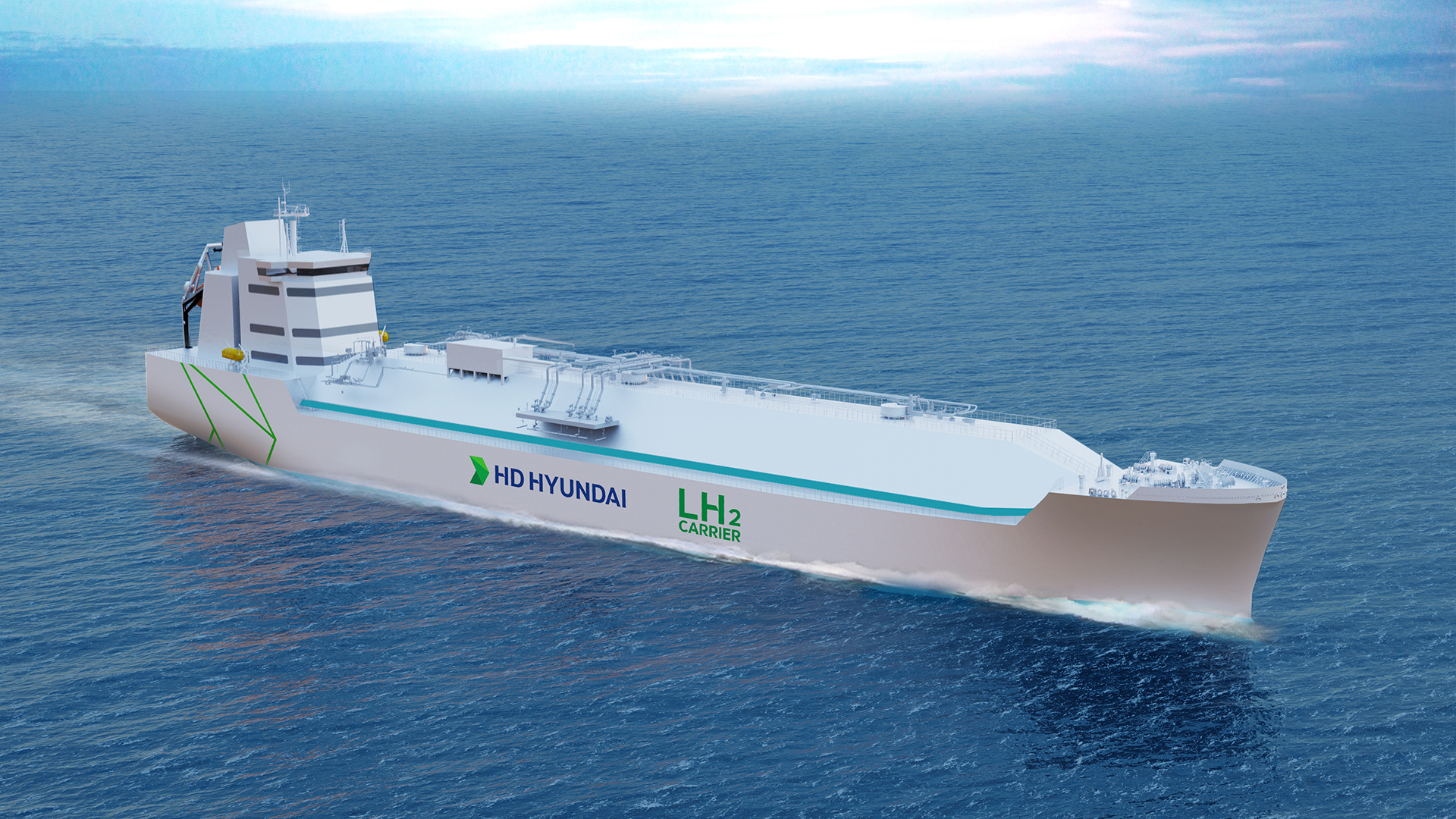
In this context, the LH2CRAFT project is pioneering a new generation of sustainable, commercially attractive, and safe technologies for the long-term storage and long-distance transportation of liquid hydrogen (LH2) on ships. The project aims to develop innovative storage solutions that can operate at temperatures as low as 20 K (-253oC), with a 180m³ containment system serving as the project’s demonstration model.
By advancing these technologies, LH2CRAFT not only addresses societal energy needs but also strengthens the EU’s leadership in global maritime innovation. The project is expected to significantly impact Europe’s innovation-driven industry, creating highly skilled jobs, delivering efficient technological solutions, and setting international regulatory standards.
LH2CRAFT project outline and objectives
LH2CRAFT is an ongoing Research & Innovation project, being mainly funded by the Clean Hydrogen Joint Undertaking of the EU while also receiving grants from the UK Research & Innovation (UKRI) for the UK-based partners as well as contributions from the private sector. The project was the only proposal that was awarded by the EU within the Call for Proposals (HORIZON-JTI-CLEANH2-2022-02-06: ‘Development of large scale LH2 containment for shipping.’
The project is coordinated by the Greek-based company HYDRUS ENGINEERING SA, a global engineering organisation offering comprehensive and integrated solutions across the maritime, energy and defence sectors.
The main objectives of the project are summarised as follows:
Ensuring the safe, cost-effective, and energy-efficient storage and transportation of large quantities of liquid hydrogen (LH₂) over long distances.
Developing a Cargo Containment System (CCS) for LH₂ shipping that surpasses the size limitations of current technological developments in the waterborne sector.
Designing a modular and scalable LH₂ storage system with dimensions comparable to those of existing liquefied natural gas (LNG) carriers.
Securing Approval in Principle (AiP) and General Approval (GA) for the CCS, as well as AiP for the auxiliary systems, from ABS IACS Classification Society (partner of the consortium).
Demonstrating the viability of the CCS through the detailed design, construction, and validation of a reduced-size prototype with a capacity of 180m³.
Developing a safe and innovative conceptual integrated ship design, along with a comprehensive cost estimation.
Strengthening the European Union’s position as a global maritime leader by fostering the creation of highly skilled jobs, advancing efficient technological solutions, and setting international regulatory standards, thereby contributing to industry and society.
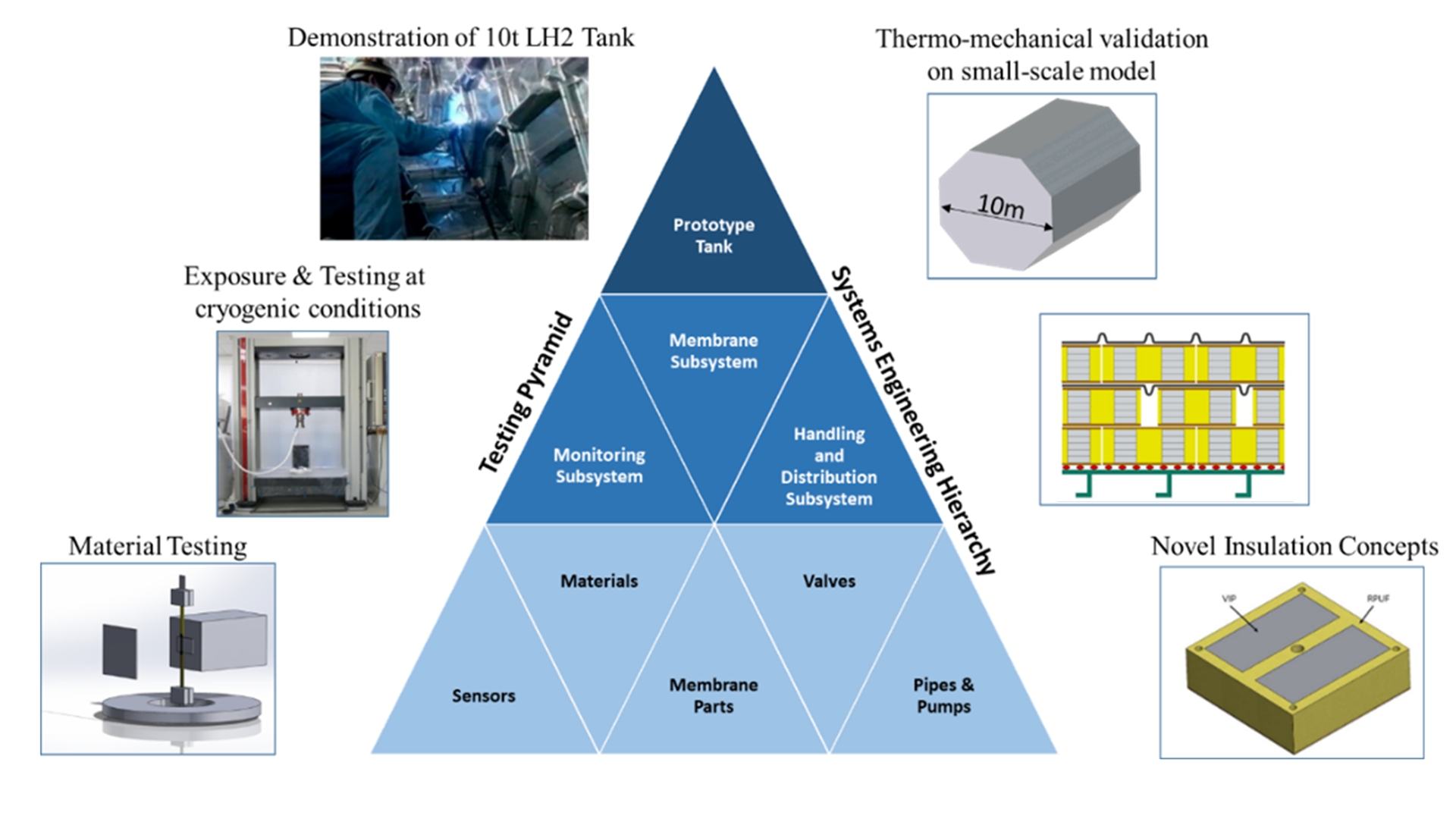
The aforementioned objectives are complemented by an extended and detailed series of testing activities throughout the project, ranging from material characterisation under cryogenic conditions, subsystem performance validation and small-scale system specimens performance verification.
LH2CRAFT in numbers
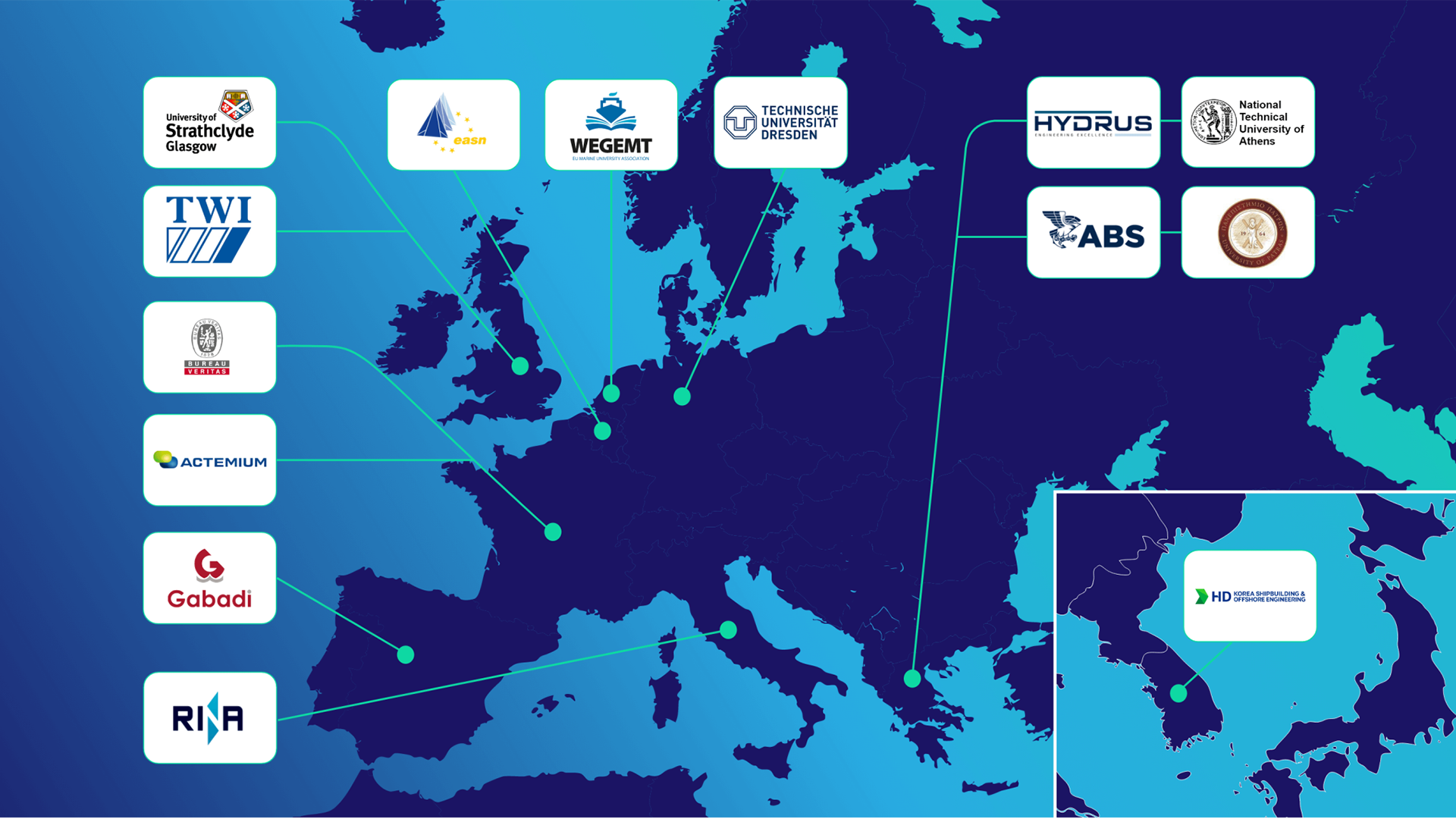
The LH2CRAFT project, initiated in June 2023, is a 48-month endeavour. It is a joint effort of 14 partners from nine countries, comprising a consortium of engineering consultants, academic institutions and research organisations, IACS classification societies, and industrial partners.
More specifically, the following partners’ categories are cooperating in a harmonised way to successfully implement the project and achieve its main goals:
Major Classification Societies / IACS Members: ABS (American Bureau of Shipping – Greece), RINA (Registro Italiano Navale – Italy) & BV (Bureau Veritas – France)
Technical Universities: TUD (Technische Universiteit Dresden – Germany), NTUA (National Technical University of Athens – Greece), UOS (University of Strathclyde – UK), UPAT (University of Patras – Greece)
Industry Partners: HYD (Hydrus Engineering SA – Greece), HD KSOE (HD Korea Shipbuilding & Offshore Engineering – Republic of Korea), GBD (Gabadi – Spain), ACT (Actemium – France),
Research Organisations & Network Associations: TWI (The Welding Institute – UK), WEGEMT (European Association of Universities in Marine Technology and Related Sciences – the Netherlands), EASN (European Aeronautics Science Network – Belgium).
The overall budget of the project is approximately €7.7m, with the majority being supplied by the Clean Hydrogen JU (€5.6m). The remaining funding derives from the UKRI (€800,000) and self-funding by HD KSOE, one of the largest shipyards in the world from the Republic of Korea, acting as the partner responsible for the CCS design.
Disclaimer
UK participation in the LH2CRAFT Project is funded by UK Research & Innovation (UKRI) under the UK Government’s Horizon Europe guarantee (grant numbers 10070575 & 10082044). HE Project Number: 101111972
Please note, this article will also appear in the 19th edition of our quarterly publication.
The UK seeks to establish itself as a world leader in low-carbon hydrogen production. Celia Greaves, CEO of the Hydrogen Energy Association, discusses current challenges and strategies for progress in the coming year.
Following the General Election results, Labour is already making progress on its ambition for the UK to become a clean energy superpower. This includes appointing Chris Stark, former CEO of the Committee on Climate Change, as head of Mission Control for Clean Power and bringing together experts and officials to troubleshoot, negotiate, and clear the way for energy projects.
Their resolve to deliver 2030 clean power – described by the Department for Energy Security and Net Zero to be Prime Minister Sir Kier Starmer’s ‘North Star’ – is set to be supported by plans for Great British Energy, the National Wealth Fund, the British Jobs Bonus and an energy system reform as well as reviews into national policy, planning systems and projects.
The time is ripe to take forward the momentum built up in the last decade; we have a government that is serious about delivering, and there are ambitious, world-leading projects ready to deploy at scale, creating jobs and saving carbon. These trailblazers will help us bring down costs, confirm safe operation and showcase what low-carbon hydrogen has to offer.
However, there remain hurdles and several key steps we need to take in the coming months and years to deliver against the promise that hydrogen presents.
Ten quick wins
The Hydrogen Energy Association has been driving the low-carbon hydrogen agenda in the UK for almost 20 years, and at our recent annual conference, we focused heavily on ambition for the next stage.
As part of this, we brought together ten leading trade groups in hydrogen – representing thousands of businesses in the sector – to join forces to highlight ten ‘quick wins’ to accelerate the growth of the hydrogen economy.
The Hydrogen Coordination Forum – convened by the HEA and including Renewables UK, the REA, Hydrogen East, the North-West Hydrogen Alliance, Scottish Renewables, Hydrogen Southwest, the Carbon Capture and Storage Association, the Decarbonised Gas Alliance, and the Midlands Hydrogen and Fuel Cell Network– came together as one collective voice to announce these ten actions of hydrogen in the UK.
The policy reforms include stimulating supply, simplifying the planning framework, bolstering investor confidence, mitigating risk, improving cost competitiveness, assessing employment benefits and developing refuelling infrastructure standards.
Our ambition for hydrogen is to support the industry in developing sustainable, home-grown supply chains, creating high-quality jobs, and capitalising on innovation and expertise so that our transition to net zero delivers a range of real economic benefits for the UK.
Green jobs
This leads me to the pressing need for a holistic hydrogen talent pipeline to plug an emerging skills gap in the sector.
The HEA has been working extensively this year with the Hydrogen Skills Alliance to develop a strategy to identify gaps and highlight where hydrogen education and training are needed.
The limited availability of skilled labour within the hydrogen sector is an increasingly urgent consideration. Failure to address this issue now will result in sector-wide shortages and supply chain disruption that will inevitably constrain the pace at which the UK hydrogen economy can develop.
We have, therefore, called for the allocation of sufficient funding for upskilling and retraining, collaboration with educational initiatives and institutions to create clear career transition pathways, and a fund for a national hydrogen skills training programme to ensure a pipeline of new and existing talent.
While developing a hydrogen workforce is unique in that it has to be built from scratch and at an unprecedented pace, it has the advantage of skills transferability from the existing oil and gas industry. This indicates a need to create a joined-up approach to people and skills across the energy industry.
However, with 84% of employers noting an insufficient number of skilled workers for hydrogen and 61% claiming this is impacting their ability to scale up, it remains essential that the Government invest in ways to strengthen the pipeline.
Hydrogen refuelling
Earlier this year, we released a new paper, Hydrogen Refuelling Infrastructure: Standardisation, offering a series of recommendations that would help the sector work more collaboratively to overcome hurdles to adoption and rollout.
This particularly looked at one of the pressing challenges – outlined in our ten quick wins – in how to pave the way for hydrogen as a decarbonising solution for HGVs where range, power, payload and refuelling times are paramount.
In the UK’s journey to net zero, transport is one of the main areas where hydrogen is seen as a key route to decarbonisation. The establishment of refuelling infrastructure is vital to underpin hydrogen-fuelled transport. Our paper explored the state of standardisation across hydrogen refuelling and identified gaps in provision while providing recommendations to accelerate progress.
Standardisation, the development and implementation of technical standards based on health and safety good practices and consensus among technical experts, is a complex landscape with a range of national and international bodies active and varying rates of progress. The paper provided extensive detail on the breadth of current provisions and the players involved.
Major sticking points identified included the current absence of protocols for refuelling HGVs, the need for design guidelines and component certification and testing standards across different pressure classes, and the lack of a consistent approach to training.
Future outlook for low-carbon hydrogen
Whenever we paint a picture of the current hydrogen landscape in the UK and draw attention to the challenges ahead, we must also consider how far we have come.
Britain remains a world leader in developing low-carbon hydrogen, and a wealth of incredible projects are helping significantly contribute to maintaining that position.
For example, our member BP is developing a large low-carbon hydrogen project in Teesside. In contrast, our member Protium’s Pioneer One facility is being used in trials of hydrogen-powered buses in South Wales.
Meanwhile, another of our members, ULEMCo, which converts commercial vehicles to run on hydrogen fuel, recently raised more than £5m for its ‘dual fuel solution’ (H2CED), and member GeoPura secured £56m in funding from outside investors for its hydrogen-fuelled generator.
Further positive news is that work is due to start on the first eleven hydrogen production projects that have received government funding for their construction and operation. These projects have the potential to:
Kickstart the low carbon hydrogen economy across the UK, helping meet the ambition of up to 1GW of electrolytic hydrogen production capacity in operation or construction by 2025
Deploy at scale at the earliest opportunity, advancing the government’s aim to deploy up to 10GW low-carbon hydrogen production capacity by 2030
Provide hydrogen to a range of end-user sectors to help deliver carbon savings and other net zero commitments.
The funding call for the next round of projects is open. Contracts are expected to be rewarded in early 2025.
Low-carbon hydrogen in a nutshell
As it stands, Government backing — which is needed now to support the supply chain of producing, storing and transporting hydrogen, as well as making it the fuel of choice of users — has been slow around the world despite widespread support for the technology as a way to decarbonise energy-intensive industries, long-distance transport and power generation, among others.
However, the UK is building on a strong foundation, and with a new government at the helm, the future of hydrogen has never looked brighter.
Certainly, hydrogen fits within the government’s growth agenda and has a crucial role to play in the Clean Energy Superpower Mission; we have already seen the Prime Minister double down on his commitments and make positive progress.
Low-carbon hydrogen policy continues to be developed at pace, and the path is set. In short, we are walking the walk, and we are ready to continue to jump the hurdles to get to the finish line.
This story originally appeared onWIRED Italiaand has been translated from Italian.
In the quest to decarbonize the world, one element gets a lot of hype: hydrogen. “If you burn it, it produces only water, with no impact on the environment,” explains Alberto Vitale Brovarone, a professor in the Department of Biological, Geological, and Environmental Sciences at the University of Bologna in Italy. Hydrogen’s supporters believe it can be a solution for cleaning up everything from transport to agriculture to heavy industry.
But its green credentials only stack up if you can produce it without emitting carbon. And this is why some are getting very excited about geological or “gold” hydrogen, the name given to the element when it forms naturally underground. This can happen as a result of a chemical reaction between water and iron-rich rocks, or by radiolysis, the splitting of water molecules by radiation into hydrogen and oxygen.
“Compared to other types of hydrogen, it does not require energy to be produced,” says Vitale Brovarone. He therefore predicts a gold hydrogen rush is on the horizon. The problem is we know very little about the element when it forms naturally underground, and so the research world is in a race against time to find out more before hasty and blind mass mining begins. “From the industry’s point of view, it simply has to be extracted,” says Vitale Brovarone. “Instead, first it has to be understood how simply that can be done and with what consequences.”
Vitale Brovarone and his colleagues believed Greenland could help answer these questions, and so they organized a special mission to the Arctic territory to hunt for more information, as part of the five-year ERC CoG DeepSeep program funded by the European Union.
Alongside Vitale Brovarone were four scientists from the University of Bologna, one from the Institute of Geosciences and Georesources at Italy’s National Research Center, and one from the University of Copenhagen. They spent 10 days in this land of nearly 2-billion-year-old rocks, having spent six months preparing their mission using maps and satellite data. Despite their meticulous planning, they had to be adaptable. Due to “unforeseen icebergs” the researchers had to change areas, while at one point a bear spotted in their vicinity forced them to seek shelter in a school. But in the end, the trip was worthwhile: It gave them samples rich in H2 to study.
Across the world, gold hydrogen is popping up where we don’t expect it, creating questions about the dynamics by which the element accumulates in reservoirs and the role it plays in subsurface ecosystems. There are already some concerns: If the hydrogen reacts with geological substrates or is processed by certain microorganisms, geological hydrogen can produce methane or hydrogen sulfide. Vitale Brovarone uses these two examples to explain to why diving headfirst into extracting gold hydrogen risks creating new problems instead of solving existing ones, and why more information is needed.
Since we do not fully know what has been regulating the presence of H2 rocks for millions or billions of years, it is better to wait before breaking them by extracting the element, Vitale Brovarone says. The same goes for storing artificially produced hydrogen in reserves underground, he says. The idea of being able to do so has already excited industry, prompting them to move in a timeframe that is not compatible with what the research world needs to understand how the gas behaves.
“We travel on different lines and at different pace,” he says. “We need to understand how hydrogen behaves in nature, because many dynamics only emerge after years. Industry would like quick and decisive answers; science needs time, and also funds, which, for hydrogen, are still scarce.” Unlike France, Australia, and the United States, which have their sights set on harvesting gold hydrogen, Italy has not yet invested in gathering it, preferring to bet on hydrogen production instead. Thanks in part to the University of Bologna expedition, however, Italy becomes one of the few countries in the world looking to understand more about it.