Tag: Hydrogen

  • Standford researchers developing ‘liquid battery’ for energy storage

    Standford researchers developing ‘liquid battery’ for energy storage

    [ad_1]

    A research team at Stanford University is advancing liquid battery technology for renewable energy storage.

    The liquid battery technology, known as liquid organic hydrogen carriers (LOHCs), can expertly store electrical energy in liquid fuels.

    This technological breakthrough could prove vital, storing renewable power for the electricity grid to accelerate the green transition.

    What are liquid batteries?

    Lithium-ion batteries are the commonly used technology employed to store electricity for the grid and power everyday technologies such as smartphones and electric vehicles.

    Due to the growing demand for energy storage, researchers are exploring solutions that can supplement lithium-ion technology.

    LOHCs emerge as promising candidates, as they can store and release hydrogen using catalysts and elevated temperatures.

    In the future, LOHCs could function as a liquid battery, storing energy and efficiently returning it as usable fuel.

    Research focus

    The research team is exploring using isopropanol and acetone for hydrogen energy storage and release.

    Isopropanol, also known as rubbing alcohol, serves as a high-density liquid hydrogen form, allowing for easy storage and transport via existing infrastructure. This form can be utilised in fuel cells or to release hydrogen without emitting CO2.

    Production challenges

    Producing isopropanol using electricity is currently inefficient. The typical process involves converting protons and electrons from water into hydrogen gas, which a catalyst then transforms into isopropanol.

    However, hydrogen gas’ low energy density makes it less desirable. Daniel Marron, a recent Stanford PhD graduate and lead author of the study, developed a catalyst system to address this issue.

    His system combines protons and electrons with acetone to produce isopropanol without generating hydrogen gas, using iridium as the catalyst.

    A significant breakthrough in the research was the discovery of cobaltocene’s effectiveness as a co-catalyst.

    Cobaltocene, a cobalt compound traditionally used as a reducing agent, proved to efficiently deliver protons and electrons directly to the iridium catalyst, bypassing hydrogen gas production.

    Accelerating the development of LOHCs

    Given cobalt’s high demand in batteries, the Stanford team aims to leverage their new insights into cobaltocene’s properties to develop alternative catalysts.

    They are investigating the use of more abundant, non-precious metals like iron to create more affordable and scalable LOHC systems.

    The team is confident that their liquid battery breakthrough could evolve into an effective solution for the energy storage sector or for individual solar and wind farms.

    [ad_2]

    Source link

  • Demeter invests in hydrogen-powered H2 Green Steel plant

    Demeter invests in hydrogen-powered H2 Green Steel plant

    [ad_1]

    Demeter has announced it has invested in H2 Green Steel’s hydrogen-powered green steel plant in Sweden.

    The investment will enable the Swedish company to ramp up the development of the green steel plant alongside constructing Europe’s largest hydrogen plant.

    The funding will be supported via the Climate Infrastructure Fund (art 9 SFDR), with Demeter joining multiple industrial investors from the automotive and steel processing industries, as well as financial investor Hy24.

    Philippe Detours, Managing Partner at Demeter, commented: “Demeter is thrilled to support H2 Green Steel in the financing of this first green steel production unit as well as the partnership formed with Hy24 for this end.

    “This investment allows us to reaffirm Demeter’s commitment to the decarbonisation of the industry and the ambition to strengthen our footprint in Europe.”

    Over €6bn in investments

    Founded in 2020, H2 Green Steel aims to decarbonise the steel industry through leveraging green hydrogen.

    In January, the company announced a major fundraising operation of €1.8bn in equity and €4bn in debt.

    Overall, H2 Green Steel has generated around €6.5bn in investments.

    Decarbonising steel production

    Located in Boden, Sweden, the green steel plant began construction in 2022, and operations are scheduled to start in 2026.

    The plant will reduce CO2 emissions by up to 95% compared to traditional blast furnace steel production.

    This is achieved by using green hydrogen, produced on-site with one of the world’s largest electrolysers powered by renewable energy instead of coal.

    Otto Gernandt, CFO of H2 Green Steel, added: “Demeter shares our sense of urgency and commitment to accelerate climate action.

    “Their investment is an integral part of what has allowed us to go from vision to full execution of the world’s first large-scale green steel plant. We look forward to a long partnership ahead.”

    Advanced technology and digitalisation, combined with a unique approach to circularity and recycling, will make this steel plant the first of its kind in Europe.

    [ad_2]

    Source link

  • Norway introduces Europe’s largest green hydrogen plant

    Norway introduces Europe’s largest green hydrogen plant

    [ad_1]

    Yara International has introduced the largest green hydrogen production facility in Europe in the Norwegian city of Herøya.

    The hydrogen plant, situated within the Herøya Industrial Park, represents a significant advancement in sustainable industrial practices.

    The 24-megawatt facility produces hydrogen through water electrolysis powered by renewable energy, substituting natural gas as a feedstock.

    This shift is expected to reduce carbon dioxide emissions by 41,000 tonnes annually from the site.

    Production process at the hydrogen plant

    Hydrogen produced at the plant is used to manufacture green ammonia, a key component in fertiliser production and a potential fuel for shipping.

    As ammonia acts as an efficient energy and hydrogen carrier, Yara has already begun producing and delivering fertilisers made from the green ammonia generated at its hydrogen plant.

    The project is vital for decarbonising the food value chain, shipping fuels, and other energy-intensive industries, underscoring Yara’s commitment to environmental protection.

    Yara’s commitment to sustainability

    The ammonia and green hydrogen plant initiatives are part of Yara’s new product line, Yara Climate Choice, which aims to decarbonise the food value chain and mitigate climate impacts.

    Additionally, Yara plans to expand its portfolio with low-carbon ammonia-based fertilisers produced using carbon capture and storage (CCS) technology.

    The company has signed a binding CCS agreement with Northern Lights, marking the world’s first cross-border CCS agreement.

    Looking ahead, Yara is considering global projects for low-carbon ammonia production and carbon capture and storage, particularly in the United States.

    Along with the new hydrogen plant, these efforts reflect Yara’s ongoing dedication to sustainable practices and reducing its environmental footprint.

    [ad_2]

    Source link

  • The path to sustainable European competitiveness for clean tech

    The path to sustainable European competitiveness for clean tech

    [ad_1]

    Jorgo Chatzimarkakis, CEO of Hydrogen Europe, EUSEW’s partner organisation, discusses how green hydrogen has the potential to power Europe’s clean tech industry.

    Entering office in 2019, the European Commission, led by Ursula von der Leyen, rallied around a European Green Deal as a policy priority. The new Commission would design a growth strategy to ensure Europe remained a prime destination for investments that bring stable, future-proof quality jobs, with a strong industrial base.

    Regulatory bottlenecks, uncertain investment environments, and international supply chain issues should not be ignored if this priority is to become a reality.

    The events in Ukraine sparked transformation in Europe, later reinforced by the announcement of the US’ Inflation Reduction Act: this has led the Commission to complement the green transition agenda with initiatives such as the Net-Zero Industry and the Critical Raw Materials Act, the extension of the state aid framework and the introduction of the Hydrogen Bank, among others.

    Despite some important steps forward in recent years, particularly in clean tech, Europe continues to be hamstrung on the issue of international competitiveness. Without a real mission to solve the obstacles to the continent’s economic ambitions, no Commission will manage to maintain a strong industrial base full of future-proof jobs in Europe while transitioning to net zero. With clean hydrogen, Europe has a chance to secure a leading role in a multi-billion-euro global industry—with all the benefits that come with it.

    Addressing supply chain uncertainties, increasing financial support for key sectors, and decreasing regulatory burdens on new technologies would be a great start.

    Expanding supply chains

    At the end of April, the European Parliament agreed on the highly anticipated Net-Zero Industry Act (NZIA) that, along with the Critical Raw Materials Act, represent two of the pillars to protect, expand, and enhance supply chains and domestic capabilities for key European industrial sectors, including hydrogen.

    The NZIA aims to ensure that the Union’s net-zero technologies manufacturing capacity meets at least 40% of annual deployment needs by 2030. Europe remains competitive in hydrogen technologies, particularly electrolysers, and can meet these targets. However, most European support mechanisms (e.g. Hydrogen Bank), still prioritise price-only competition, potentially undermining European companies’ global prospects. In contrast, other regions are adopting measures like local content requirements to strengthen their own domestic supply chains.

    To promote strategic autonomy, we must consider factors like safety, performance, resilience, and social benefits prior to accessing European funding.

    Financial support

    The recent results from the Hydrogen Bank pilot auction were encouraging. The seven winning projects all came in under €0.5 per kg of hydrogen produced, far below the €4.5 per kg/H2 ceiling price. In all beginnings dwells a magic: the hydrogen sector is there and showed that it can deliver.

    While the pilot was a success, the Commission should ensure that the 2024 auction will be bold enough to further reduce the price gap, especially eyeing the most affected and hard-to-decarbonise economic activities across Europe. The budget of €800m and the massive oversubscription left most projects unsupported, while the winning ones are still at risk of not reaching cost-parity with grey hydrogen by the time the subsidies reach project promoters. The next auction should be more flexible, e.g. in terms of cumulation with state aid (for the same costs) and time of delivery. Furthermore, a greater ambition for the overall budget and the introduction of strong resilience criteria are sought to be competitive in the global market.

    Other forms of support for green hydrogen are available, but despite the funding envelopes, these programmes share a common bottleneck: burdensome processes with subsequent delays in the allocation of funds.

    Speeding up procedures to accelerate clean tech

    In both Hydrogen Europe’s manifesto and the Letta report, speed of delivery is paramount. Both highlight the need to significantly reduce the time required for clean tech companies in Europe to access incentives, and for these companies to bring their technologies to market. This means speeding up not only permitting procedures, which in Europe harms every clean technology to some extent but funding access too.

    The timeline of the Hydrogen Bank, from its first announcement to its first auction ending less than 18 months later, is a virtuous example. We should make this exception the norm, to enable Europe to become the global home for clean tech. Hydrogen technologies should be at the forefront, paving the way for a more sustainable, decarbonised, and resilient future for everyone.

    Recommended links

    1. Letta report: https://www.consilium.europa.eu/media/ny3j24sm/much-more-than-a-market-report-by-enrico-letta.pdf
    2. Hydrogen Europe press release on NZIA: https://hydrogeneurope.eu/ep-votes-nzia-through-but-challenges-remain-for-clean-tech-manufacturing-value-chain/
    3. Hydrogen Europe manifesto: https://hydrogeneurope.eu/wp-content/uploads/2024/02/HydrogenEurope_Manifesto_EUelections.pdf

    [ad_2]

    Source link

  • €1.4bn approved to develop European hydrogen value chain

    €1.4bn approved to develop European hydrogen value chain

    [ad_1]

    The European Commission has announced the approval of €1.4bn State aid to advance the European hydrogen value chain.

    The funding is delivered via a fourth Important Project of Common European Interest (IPCEI) and will support research and innovation to work towards industrial deployment of the hydrogen value chain.

    The project, known as IPCEI Hy2Move, was prepared and notified by seven Member States, which include Estonia, France, Germany, Italy, Netherlands, Slovakia and Spain.

    Investing in Europe’s hydrogen infrastructure will contribute to the EU’s 90% emissions reduction target by decarbonising mobility and transport sectors.

    Margrethe Vestager, Executive Vice-President in charge of competition policy, commented: “Hydrogen can support us to move around and transport goods with zero emissions.

    “However, investing in hydrogen-powered mobility and transport technologies can be risky for one Member State or one company alone. This is where State aid rules for IPCEI have a role to play.

    “The IPCEI Hy2Move is an example of truly ambitious European cooperation for a key common objective. It also shows how competition policy works hand in hand with breakthrough innovation.”

    IPCEI Hy2Move structure

    Under IPCEI Hy2Move, the seven Member States will inject €1.4bn of public funding, which is expected to generate an additional €3.3bn in private investments.

    The funding will support 11 companies with activities in one or more Member States, including start-ups and small and medium-sized enterprises (SMEs), who will run 13 projects.

    The participating companies will work together and in partnership with Breuer Technical Development, a Belgian SME.

    They will also engage with over 200 indirect partners, which include universities, research institutions, and other SMEs throughout Europe.

    Advancing Europe’s hydrogen value chain

    IPCEI Hy2Move will cover a wide range of the hydrogen technology value chain by supporting the development of several technological innovations.

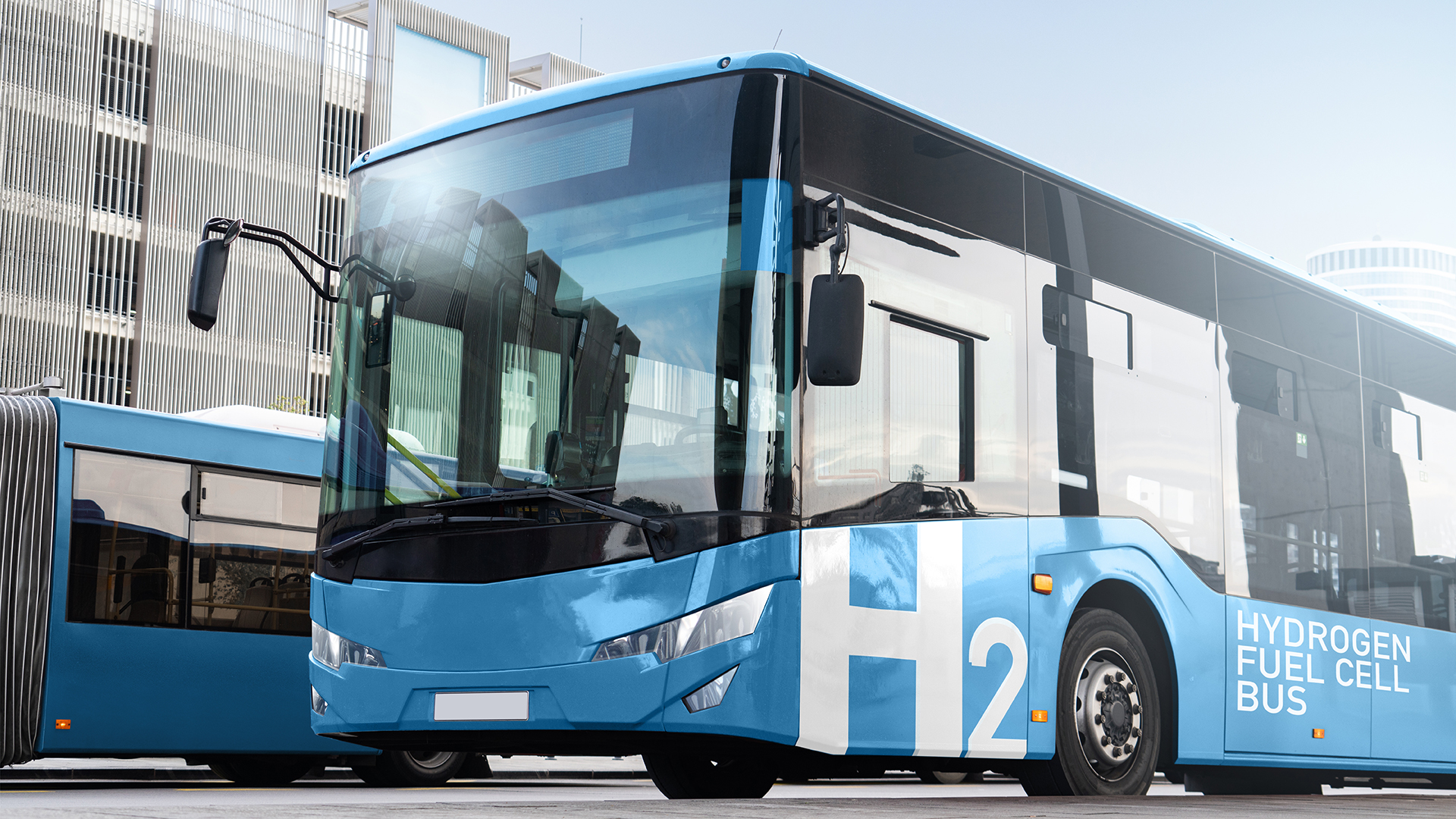
    These include the integration of hydrogen technologies in various transport means, such as road, maritime, and aviation. This involves creating fuel cell vehicle platforms for buses and trucks.

    © shutterstock/Scharfsinn

    Additionally, the project focuses on developing high-performance fuel cell technologies that use hydrogen to generate electricity with enough power to move ships and locomotives.

    It also aims to develop next-generation onboard hydrogen storage solutions, particularly lightweight and robust tanks for aircraft, to ensure safety and efficiency during flights.

    Furthermore, IPCEI Hy2Move will advance technologies for producing hydrogen specifically for mobility and transport applications, ensuring on-site hydrogen refuelling stations can be supplied with pressurised, 99.99% pure, fuel-cell-grade hydrogen.

    The overall IPCEI is expected to be completed by 2031, creating around 3,600 direct jobs and many more indirect opportunities.

    [ad_2]

    Source link

  • Green ammonia: Maritime fuel and energy storage for a zero-emission future

    Green ammonia: Maritime fuel and energy storage for a zero-emission future

    [ad_1]

    Green ammonia is a new energy vector and a game changer for the hydrogen economy. The CAMPFIRE alliance develops ammonia technologies along the entire value chain for a better tomorrow.

    Green ammonia has emerged as a game-changer for the uprising global hydrogen economy. The favourable properties of ammonia overcome many technological hurdles that still exist for hydrogen.

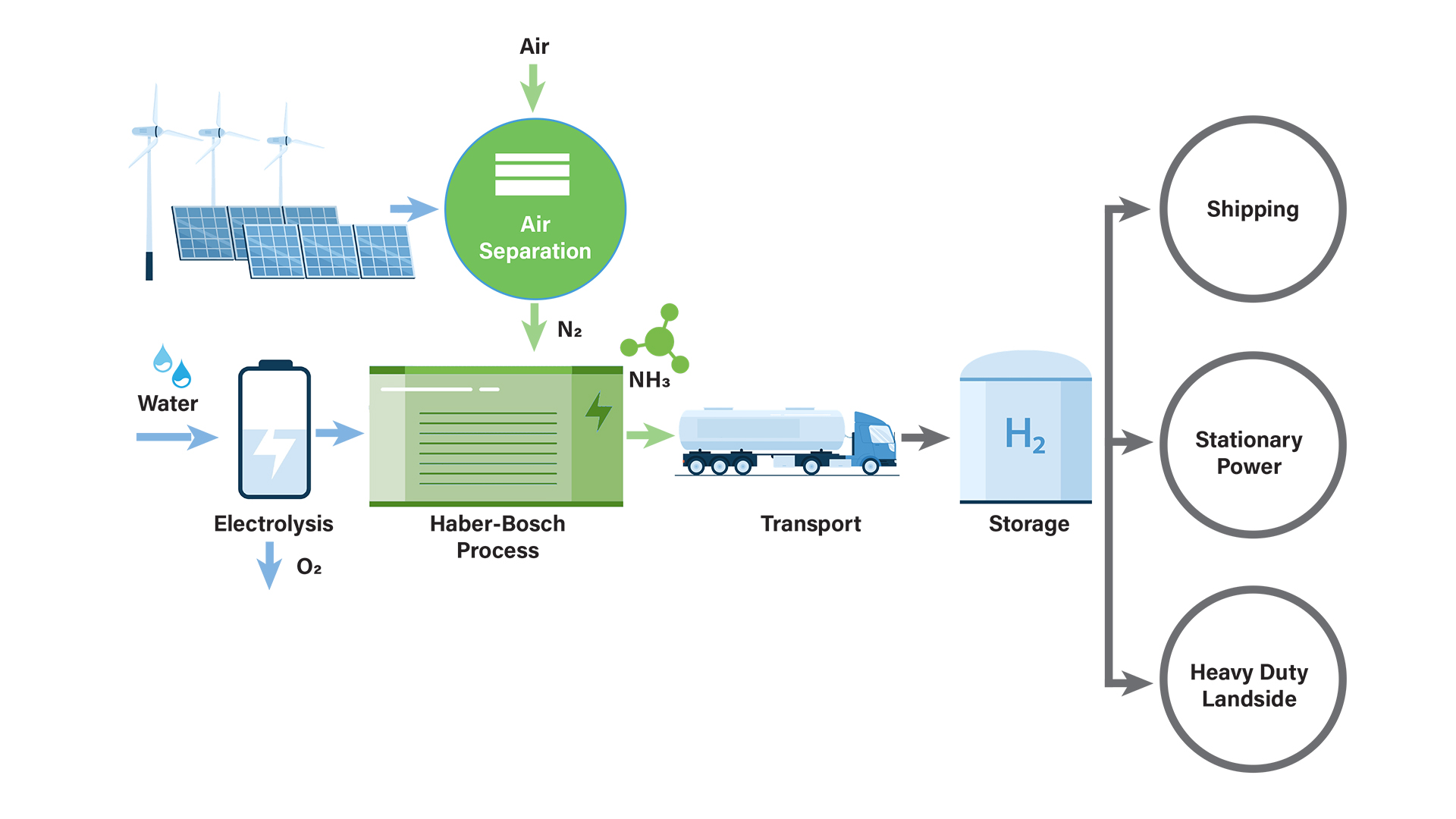
    Ammonia is increasingly considered as renewable fuel for shipping, heavy-duty land-based transport, and power generation. With a hydrogen content of around 18%, it offers a great compromise between energy density and production costs and, unlike other synthetic fuels, does not cause any CO2 emissions for the consumer. As a raw material for fertiliser production, around 180 million tonnes of ammonia are already produced annually, and is transported worldwide by pipeline, rail, road, and ship via an established infrastructure. Whilst grey, blue, or turquoise ammonia is produced from natural gas or coal, green ammonia is made by means of renewable energy from atmospheric nitrogen and water.

    It is increasingly valued as the major player for the future roll-out of a hydrogen economy, and key to the security of supply in Europe from 2026 onwards. It is truly carbon-free and hydrogen 2.0. Since nitrogen, water, wind and solar are available in abundance, an endless and sustainable supply of ammonia is possible – as fuel and energy storage for a zero-emission future.

    The CAMPFIRE alliance

    Founded in 2018 as part of the German programme WIR! Wandel durch Innovation in der Region – Regional Development through Innovation of the Federal Ministry of Education and Research, the CAMPFIRE alliance brings together more than 70 partners for the development and implementation of new technologies for the regional production of green ammonia and its use as a marine fuel and energy storage.

    The partners are developing innovative products for green ammonia as an energy vector for implementation in renewable energy generation, plant engineering, the chemical industry, shipbuilding and shipping, metal construction, fuel cell and combustion engine producers, lightweight construction, measurement and control technology, and engineering services. They are mostly based in the North-East, but also throughout Germany and Europe. Within the frame of 25 joint projects, technologies are developed for power-to-ammonia and ammonia-to-power.

    For small- and medium-scale ammonia production from renewable energy, new catalysts, reactors and plants are developed by the partners ENERTRAG, sunfire, KIT, Gesmex, University of Rostock, INP, and ZBT. New reactor designs involve 3D printed flow guiding elements and shell-and-plate heat exchangers and are coupled with solid oxide or alkaline electrolysers as well as solar thermal technologies for increased efficiency.

    green ammonia

    Developing ammonia technologies

    The focus of the CAMPFIRE alliance is on technologies for direct utilisation of ammonia. Ammonia can be used directly in turbines, fuel cells, and internal combustion engines such as in ship propulsion. To address the poor combustion properties of ammonia, CAMPFIRE partners develop a dual-fuel operation with ammonia and hydrogen as an accelerator. Fuel cells are a class of new marine propulsion technologies.

    New Enerday — a SME company in the North-East of Germany developed a solid oxide fuel cell system that can be operated directly with ammonia, offering high efficiencies and currently awaiting its market introduction. In co-operation with partners HanseYachts, autosoft, FVTR, IKEM and ISC as well as research institutes ZBT and INP, an ammonia-cracker-ICE-SOFC marine drive was developed and implemented on board of the yacht ‘Ammonia Sherpa’ in 2023.

    The CAMPFIRE cracker-ICE propulsion concept will also be implemented to an inland water way vessel, and ammonia bunkering ship ‘Odin’ in 2026.  Currently, a retrofit approach is developed by Tamsen Maritim, Spetrans, DST, DNV, University of Applied Science Stralsund, ISV, KIT, University of Rostock, Liebherr, ABZ Aggregatebau, ELDATA, GaskraftEngineering, FVTR, ZBT, IKEM, and INP for the integration of a cracker-ICE and all required infrastructures.

    The propulsion system consists of an ammonia-powered high-speed combustion engine that drives a generator. To improve ignition and efficient conversion of the ammonia in the engine, a cracker is developed by the partner ZBT, which breaks down part of the ammonia into hydrogen and nitrogen, and feeds this mixture to the combustion engine as pilot fuel.

    The generator feeds up to 350kWel into a hybrid electric drive train in order to reduce load fluctuations of the cracker-engine unit and to enable distribution to several propeller drives for the shallow-water operation typical of inland waterway vessels. The project also addresses safety, peripheral and tank systems, ship design and training concepts for personnel.

    On this base, the partners develop a blueprint for the modification of inland vessels in accordance with project results, the outcome of a parallel economic feasibility study and the procedures required within the existing safety and legal framework. In the future, this blueprint can also be used on seagoing vessels to facilitate the rapid implementation of the new technology for zero-emission shipping and reduce the effects of shipping on climate change.

    Partner projects

    In the project GreenBalticCruising, CAMPFIRE aims to develop a concept for the Port of Rostock in Northern Germany as a blueprint for a bunker port for green ammonia, ship design and the technological and economic concept for an ammonia-powered cruise ship and a ferry line in the Baltic Sea region. A detailed review of the Baltic Sea countries and suitability of their port structures regarding ammonia was carried out by Port Rostock, DNV and MET to take an important step towards ammonia-based cruise shipping on an international level.

    Project partners Carnival Maritim and ZBT conducted a technical evaluation of a new propulsion system for cruise liners consisting of an ammonia cracker and a low-temperature polymer-exchange membrane fuel cell (PEMFC). The overall objective is to open new economic potential for small and medium-sized enterprises (SMEs) in the region by establishing new value chains with equal partnerships in the Baltic Sea Region.

    To achieve this goal, partners University of Greifswald, IKEM and INP examined the national strategies for reducing greenhouse gas emissions and the respective climate targets of the neighbouring states, and will identify relevant political, scientific and economic stakeholders. In addition, the legal framework was refined and measures recommended for further development to enable ammonia as a marine fuel in shipping and create new business models through sustainable tourism.

    CAMPFIRE partners also develop solutions for stationary energy generation based on combined cracker gas engine CHP for remote off-grid generation. Partners Jenbacher Innio, ZBT, LEC and INP are developing a stationary remote off-grid application in the power range of 1MW.

    The development steps include various evaluation steps of critical components of the gas engine, up to the detailed design and implementation of the container CHP plant including the integration of the NH3 cracker and necessary safety equipment. After multi-stage commissioning, various test runs are carried out in which the general mode of operation is tested and operating strategies, including stationary and flexible start/stop operation, are optimised. The focus will be on optimising efficiency and minimising exhaust emissions.

    Finally, the results will be used to plan further or comparable plants.

    Ammonia refuelling, transport, and storage

    CAMPFIRE is also developing ammonia refuelling systems and shoreside and seaside safety systems, including sensor technology for the application in ammonia drives. Based on data on the current supply of fossil fuels, the temporal and spatial demand for green ammonia was forecasted by the partners DST, ISV, Göhler, Elaflex, Dettmer Reederei und Bunker One.

    In a first phase of the ramp-up, moderate quantities are initially expected to be supplied to a limited number of ships. For this purpose, a mobile solution in the form of a container module for bunkering the ships, for example by truck, is being developed. As soon as there is a sufficiently large demand for ammonia on the part of the ship fleet, distribution with special bunker ships is advantageous and a corresponding ship design is developed for this purpose. The bunker barge is set to achieve a high safety level in all operating conditions and is flexible in use.

    Another project under the CAMPFIRE umbrella focuses on the development of an ammonia-to-hydrogen refuelling station.
    A cost-effective fine purification technology for the optimisation of the product gas from an ammonia cracker is key enabling technology developed by partners ZBT, PSL Lasertechnik and Exentis. At its core are CuPd membranes and a novel manufacturing process based on laser welding and 3‑D screen printing for production of the module.

    The ultrafine purification system also involves a salt storage tank for ammonia and a high-pressure hydrogen refuelling system. With the determination of the costs for the supply of hydrogen and the derivation of a roadmap for the introduction of ammonia-to-hydrogen refuelling stations in selected regions of Europe.

    The future of the ammonia industry

    In order to utilise green ammonia as a transport and storage solution for green hydrogen, an efficient infrastructure and a logistics concept geared to the specific framework conditions are required.

    Another aim of CAMPFIRE is therefore to develop an economical, sustainable, and ecological logistics and infrastructure concept and to define and investigate associated future scenarios for the transport of green ammonia.

    In this context, the needs of industry and transport as well as the already existing and future required sea- and land-based transport facilities, storage, bunkering and transhipment structures are analysed by partners University of Applied Science Wismar, DST, ISC and Dettmer Reederei.

    The new concept is based on the evaluation of different scenarios and configurations with regard to the distribution of ammonia in Germany and the associated key figures determined by means of a logistics simulation. The logistics simulation can thus be used to generate essential system knowledge for the construction and coupling of the energy infrastructures. In the future, it can be used to estimate the contribution of ammonia as a transport and storage solution for green hydrogen.

    CAMPFIRE partners will continue to develop ammonia technologies as an important key for short-term measures to replace fossil fuels and open economic medium- and long-term avenues for a fast-track decarbonisation of the global energy system. As such, ammonia is an increasingly important global energy carrier for the future economic system. First movers must be supported by strong partnerships across the value chain sharing costs, benefits, and risks.

    Please note, this article will also appear in the 18th edition of our quarterly publication.

    [ad_2]

    Source link

  • Optimising green fuel cells in the fight for sustainability

    Optimising green fuel cells in the fight for sustainability

    [ad_1]

    Bramble Energy recently completed an APC-funded project to optimise fuel cell stack construction, advancing hydrogen in the fight for sustainability.

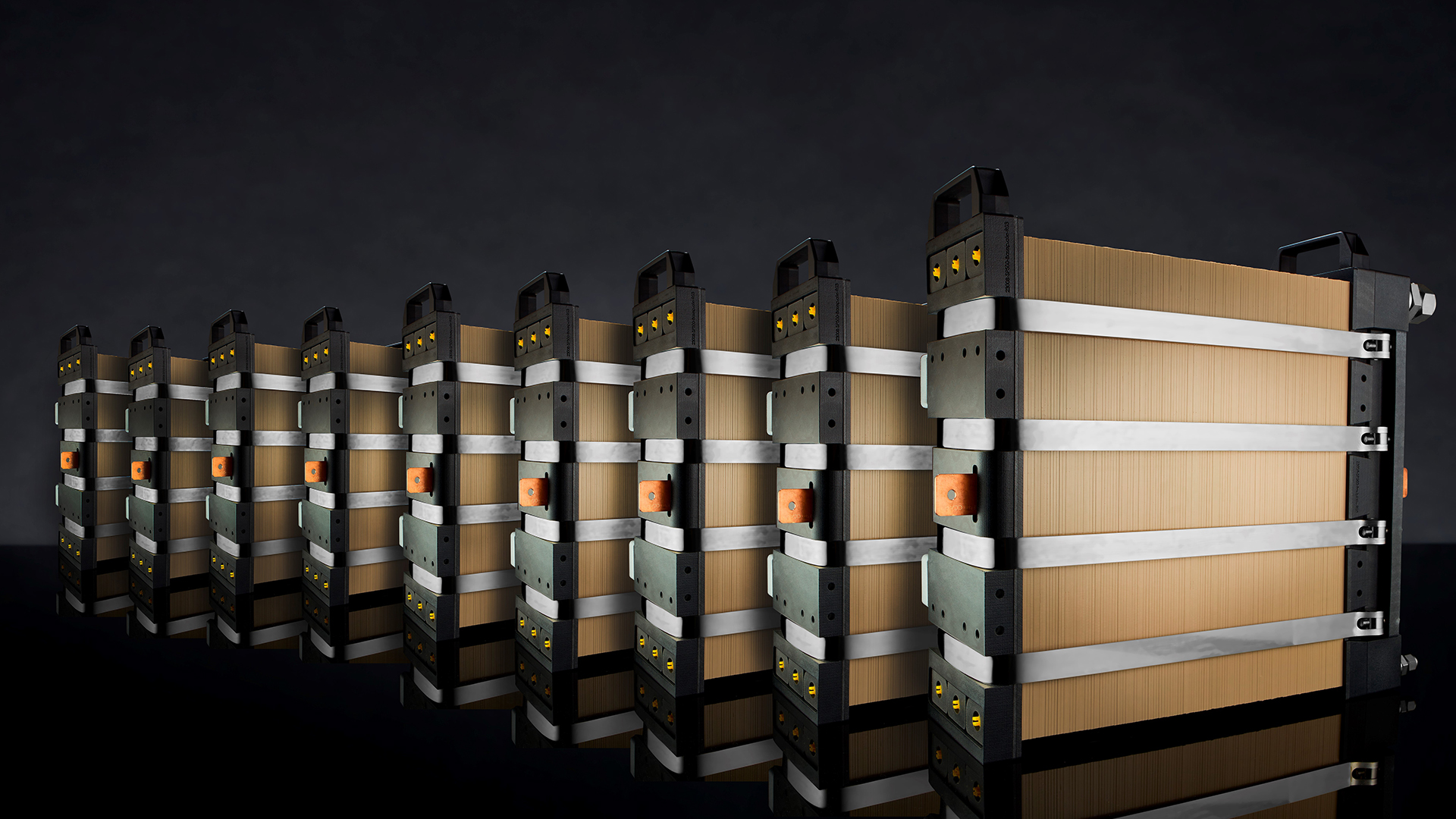
    In a recent press release, Bramble Energy disclosed the success of a project that developed their Printed Circuit Board Fuel Cell technology, leading to the development of an optimised fuel cell stack assembly capable of producing up to 2,000 50kW stacks per year.

    The Innovation Platform’s Assistant Editor, Matt Brundrett, sat down with Dr Tom Mason, CEO of Bramble Energy, to discuss hydrogen power and its future, along with Bramble’s place in it.

    Hydrogen holds immense potential for clean energy applications but also faces challenges. What is the best way to address these challenges?

    The biggest challenge we’re facing now is cost reduction. Efforts are centred on reducing the cost of hydrogen production and distribution to make it more competitive against conventional fuels. To do this, technological innovation is paramount, and more investment in research and development is needed to improve hydrogen production technologies, such as electrolysis.

    Looking at the EPO-IRENA ‘Innovation trends in electrolysers for hydrogen production’ report, investment costs for electrolyser plants can be slashed by up to 40% in the short term and 80% in the long term through various strategies. Whether it’s through improved design, economies of scale, material substitution, enhanced efficiency, or operational flexibility, if we can make electrolysis cheaper, we can make green hydrogen cheaper and more accessible on a large scale. This affordability will not only drive widespread adoption of hydrogen fuel as a clean energy carrier but also facilitate its integration into various sectors, including transportation, industry, and energy storage.

    However, we also need the cost of renewables to fall further to work with electrolysis technologies. Again, more R&D is needed to drive costs down, such as developing next-generation solar panels with higher efficiency and lower manufacturing costs or more efficient wind turbine designs.

    Policy support is vital here – with government policies and incentives playing a crucial role in driving down the cost of renewables – but it is also needed to promote the adoption of hydrogen fuel cells and encourage investment in infrastructure and technology development. Supportive policies such as subsidies, tax incentives, and regulations all help drive innovation in the renewable energy sector.

    As the hydrogen economy continues to evolve, there are concerns regarding the sustainability and scalability of hydrogen production methods. What is being done to minimise any environmental impacts that the creation of hydrogen and hydrogen fuel cells may have?

    Currently, 98% of the world’s hydrogen production is grey – the environmental impact of which is huge given the release of CO2. With the urgency of addressing climate change and transitioning to a low-carbon economy, there’s a growing recognition that we need to phase out grey in favour of green.

    To scale up the production of green hydrogen – which should be the ultimate goal – we need continual innovation and collaboration between policymakers, public institutions, and private investors. Also, looking at the changes in electrolysis technology, there needs to be more focus on the use and development of electrolyser types that are not reliant on precious metals and difficult materials so that we do not create more issues later down the road. And the same goes for fuel cell technology.

    Bramble’s recent press release mentions its commitment to creating commercially viable solutions for the transportation sector. Considering the infrastructure required for the widespread adoption of hydrogen fuel cell vehicles, what strategies is Bramble Energy employing to facilitate the development of hydrogen refuelling stations and infrastructure?

    Bramble Energy sees the development of the hydrogen economy as a vital piece of a clean energy future, which is why our PCB-X™ Platform technology works not only with the development of fuel cells but electrolysers as well. Our goal is to work to deliver an end-to-end solution to further close the gap that currently hinders the successful integration of these clean energy solutions into mainstream use.

    fuel cells

    We also choose to work with prominent OEMs and the global markets who have made strides in supporting these innovations but are also developing the required infrastructure concurrently.

    Hydrogen fuel cells are often touted as a key technology for decarbonising hard-to-abate sectors such as heavy industry and long-haul transportation. How does Bramble Energy envision the role of hydrogen fuel cells in these sectors, and what are the main challenges to be addressed in scaling up hydrogen adoption outside of the automotive industry?

    Hydrogen has the ability to completely revolutionise the way in which we transport goods and people across the globe. Because of its centralised refuelling nature, hydrogen fuel cells could also be deployed at rail, marine, and aero depots. But there is no silver bullet technology. As such, I think we need to place importance on developing fuel cells for the correct applications and where they make the most sense.

    It’s also important to remember that since the inception of commercial hydrogen fuel cell products, the landscape has been dominated by industry costs, which—as mentioned—are the largest barrier to widespread adoption. Simply put, even in hard-to-abate sectors such as transportation, until costs are aggressively slashed, they will continue to stand in the way of implementing hydrogen technologies at scale.

    The cost of hydrogen fuel cells has been decreasing, but it remains higher than conventional technologies. How can the cost of hydrogen fuel cells be reduced further to make them more viable?

    Bramble Energy’s main offering focus is decreasing the cost of manufacturing hydrogen fuel cells. This target has defined and continues to define Bramble Energy’s business to date.

    Bramble Energy’s PCB-based fuel cell technology aims to solve this problem by using a revolutionary approach to the design, materials selection, and manufacturing routes not only for fuel cells – the engines of the hydrogen economy – but also for the production of hydrogen through electrolysis.

    By using a standardised Printed Circuit Board (PCB) material set, we’re able to achieve an inherent cost advantage compared to the competition. Firstly, we have the enormous economies of scale inherent within these materials, and secondly, we’re able to utilise a pre-existing manufacturing route – which means no CAPEX investment is required.

    Collaboration and policy support are essential for the success of the hydrogen economy. How does Bramble Energy engage with policymakers, industry stakeholders, and research institutions to advocate for policies that promote the development and adoption of hydrogen fuel cell technology?

    As a spin-out of two world-leading institutions, Bramble Energy recognises the importance of the work being carried out at institutions globally to develop groundbreaking technology and highlight the threat of climate change.

    As such, we’ve delivered and continue to work with the government on projects that help shape and further policy focused on the development of the hydrogen economy.

    Prominent industry players are making substantial strides in fuel cell technology and also have the global reach to deploy at scale, which is why we form partnerships with identified partners to remove those existing barriers to mass deployment.

    Please note, this article will also appear in the 18th edition of our quarterly publication.

    [ad_2]

    Source link

  • SwRI researchers pioneer hydrogen engine for long-haul trucking

    SwRI researchers pioneer hydrogen engine for long-haul trucking

    [ad_1]

    The Hydrogen Internal Combustion Engine (H2-ICE) produces ultra-low NOx and CO2 emissions while simultaneously producing enough torque and power for trucking applications.

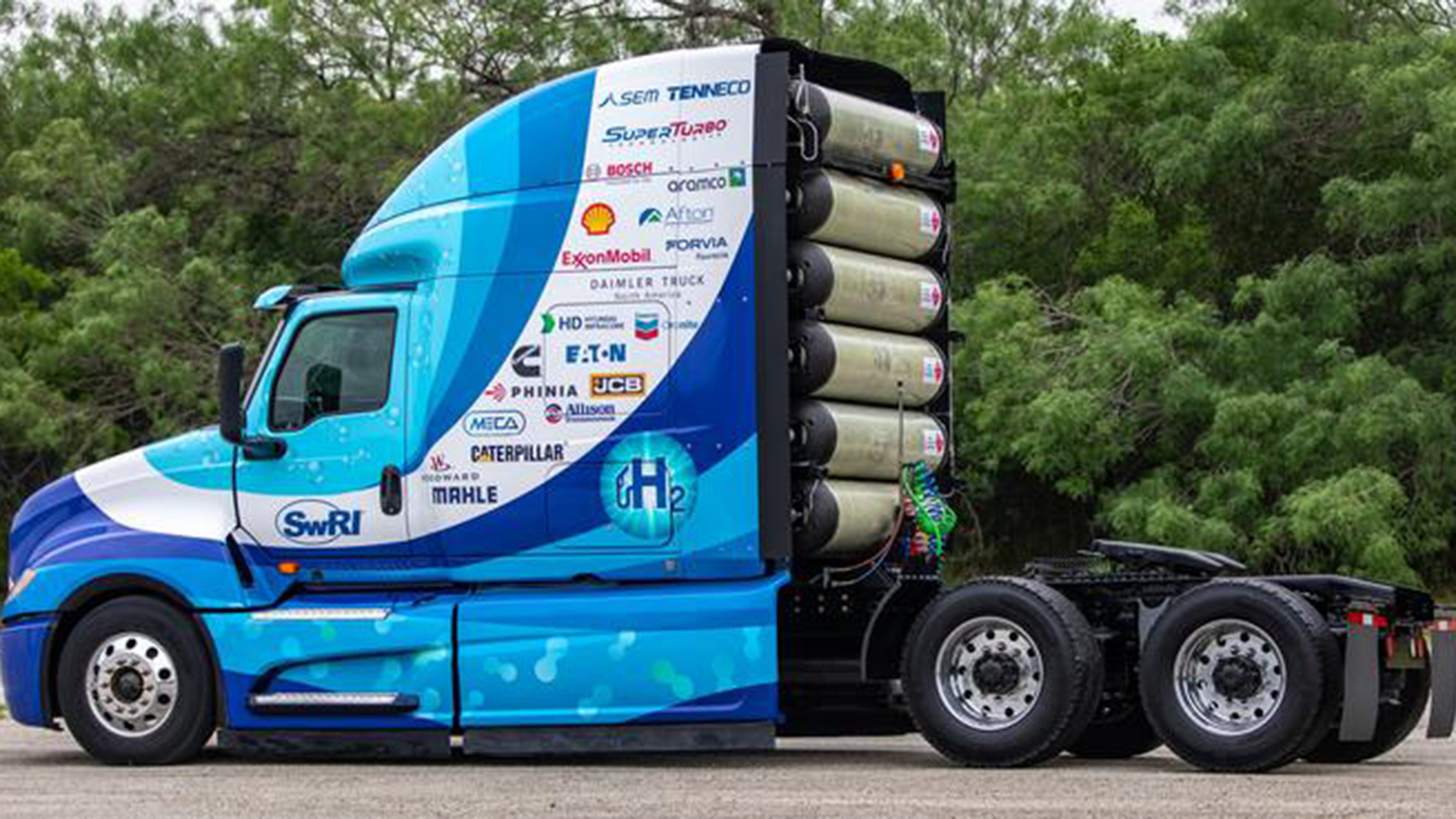
    Developed under the H2-ICE consortium, the hydrogen engine has been shown to power a hydrogen-fuelled Class-8 demonstration vehicle successfully.

    The innovation could prove instrumental in significantly curbing the sizeable emissions generated in the trucking industry.

    Hydrogen engine development

    To manufacture the H2-ICE, the consortium combined a vast array of experts, including engine and truck manufacturers, fuels and lubricants providers, and Tier-I suppliers.

    The focus of the project was to demonstrate the potential of hydrogen-powered vehicles to complement other zero-emission vehicles on the road toward decarbonisation.

    The researchers set a target for the engine to achieve the California Air Resource Board’s (CARB) Ultra-Low NOx designation of 0.02 g/hp-hr (grams per horsepower-hour).

    Ryan Williams, an SwRI Powertrain Engineering Division manager, and the H2-ICE consortium’s program manager, explained: “We wanted the programme to align with the Environmental Protection Agency’s Phase-3 greenhouse gas policy, so we knew our timeline was ambitious.

    “It took incredible planning by the integration teams to ensure that the build proceeded smoothly.”

    To achieve this, they advanced a truck engine provided by consortium member Cummins to run on port-injected hydrogen using components provided by other members.

    From custom-built parts and prototype components to specially formulated lubricants, this has truly been an industry-wide effort,” said Williams.

    “We could never have completed the demonstration vehicle in the short time that we did without the support and collaboration of the consortium.”

    Exceptional performance to decarbonise long-haul trucking

    The H2-ICE vehicle offers a compelling zero-GHG solution for the challenging long-haul trucking market.

    Its 370-horsepower engine, producing 2,025 Newton-meters of torque, is ideal for heavy-duty applications with an efficiency above 40%, peaking at 43%. Exhaust emissions are minimal, at about 1.5 grams of CO₂ per horsepower-hour.

    Additionally, SwRI leveraged previous low-NOx project experience to create a novel after-treatment system for the hydrogen exhaust.

    This system, combined with the low emissions of the hydrogen engine, reduces NOx levels to 0.008 g/hp-hr with aged catalysts, far below the 2027 EPA limit of 0.035 g/hp-hr, marking an industry first.

    By producing ultra-low NOx and CO2 emissions while maintaining high power and efficiency, the hydrogen engine demonstrates the potential to reduce the sizeable emissions associated with long-haul trucking significantly.

    [ad_2]

    Source link

  • Ohmium to supply PEM electrolysers for green hydrogen in Croatia

    Ohmium to supply PEM electrolysers for green hydrogen in Croatia

    [ad_1]

    Ohmium has been selected to supply PEM electrolysers to IVICOM, a Croatian engineering and construction company, for a project to build a 10 MW green hydrogen plant at the INA Rijeka refinery.

    As part of the project, PEM electrolysers will be coupled with a new solar power plant to produce green hydrogen that will help decarbonise the INA refinery in Rijeka and provide sustainable fuel for the growing Croatian transport market.

    The green hydrogen project and the associated solar plant are supported by the Croatian Government’s Recovery and Resilience Facility, which includes measures to improve the sustainability and diversity of EU Members’ energy supplies.

    Green hydrogen production to achieve climate neutrality

    “The installation of green hydrogen at the Rijeka refinery will be an excellent example of the green transition in Europe,” explained Arne Ballantine, CEO of Ohmium.

    The project also advances the goals of Croatia’s national hydrogen strategy by installing hydrogen production plants with a capacity of 70 MW by 2030 and increasing this to 2750 MW by 2050 in order to achieve climate neutrality by 2050.

    Dinko Čondić, CEO of IVICOM, stated: “This partnership is in line with our company vision to prioritise green projects and green hydrogen innovations for a sustainable future.”

    The role of PEM electrolysers in enhancing the strategy

    “The synergy between IVICOM’s technical expertise and Ohmium’s state-of-the-art PEM electrolyzer technology will be the key to successful project implementation,” said Čondić.

    Ballantine added: “Ohmium is pleased to work with leading companies such as IVICOM and INA on this groundbreaking project.

    “Our PEM electrolysers are ideal for combining with solar energy to promote refinery decarbonisation and green transportation.”

    [ad_2]

    Source link

  • GOLIAT project to explore liquid hydrogen refuelling and handling for aviation industry

    GOLIAT project to explore liquid hydrogen refuelling and handling for aviation industry

    [ad_1]

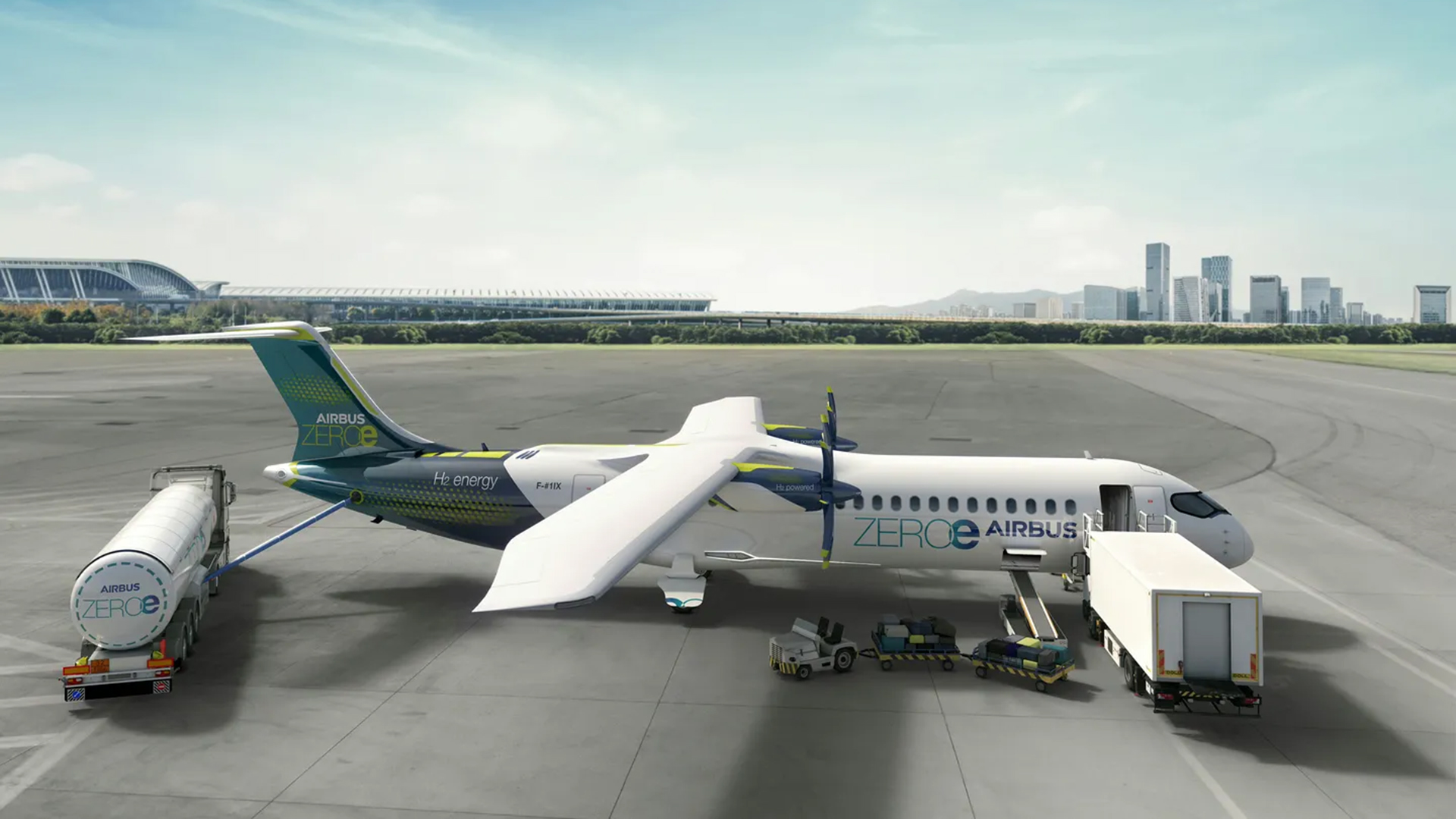
    Airbus has announced it will spearhead a project that will demonstrate the viability of liquid hydrogen refuelling and handling for the aviation industry.

    The GOLIAT (Ground Operations of LIquid hydrogen AircrafT) project has been awarded €10.8m via the EU’s Horizon Europe Programme to demonstrate small-scale liquid hydrogen aircraft ground operations at three European airports.

    The utilisation of liquid hydrogen in the aviation sector could prove instrumental in significantly decarbonising the industry.

    Karine Guenan, Vice President of ZEROe Ecosystem, Airbus, explained: “We continue to believe that hydrogen will be an important fuel for the future of short-haul aviation.

    “We welcome the opportunity to help build the operating case for the widespread daily use of liquid hydrogen at airports.”

    Benefits of liquid hydrogen

    The drive to decarbonise the economy and enhance Europe’s energy independence is accelerating the adoption of hydrogen for mobility and stationary applications.

    Hydrogen will be key to decarbonising short- and medium-haul aviation, advancing low-carbon aviation operations.

    As a clean and efficient fuel, liquid hydrogen presents a promising solution for reducing greenhouse gas emissions and reliance on fossil fuels in airport operations.

    Its high energy density supports long-range air travel. However, widespread deployment of liquid hydrogen at airports requires addressing operational, regulatory, economic, and safety challenges, as well as evaluating the capacity and performance of relevant technologies.

    Aims of the GOLIAT project

    The GOLIAT project will be run by a consortium of ten partners from eight countries, including:

    • Airbus
    • Chart Industries
    • Leibniz University Hannover
    • Royal Schiphol Group
    • TU Delft
    • Rotterdam The Hague Airport
    • Vinci Airports
    • Stuttgart Airport
    • H2FLY
    • Budapest Airport

    The project will run for four years and will explore how high-flow liquid hydrogen refuelling and handling technologies can be safely and reliably used for airport operations.

    GOLIAT will explore how these technologies can be scaled up to support large commercial aircraft and ground operations at airports.

    Additionally, the project will develop the standardisation and certification framework for future liquid hydrogen operations and address the economic challenges of the hydrogen value chain for airports.

    [ad_2]

    Source link