Nature, Published online: 04 December 2024; doi:10.1038/d41586-024-03847-8
Could breast cancer survival rates be improved simply by timing treatment to a specific stage of the menstrual cycle? Mouse and human data suggest sensitivity to chemotherapy is affected by fluctuations in ovarian hormones.
The SONIA study shows that early use of inhibitors that target both CDK4 and CDK6 (hereafter, CDK4/6) in metastatic breast cancer prolongs time on treatment but does not improve patient outcomes. Postponing innovative treatments to a later stage of the disease could thus safely reduce the time on treatment, the number of adverse effects for people with breast cancer and the burden on health-care resources.
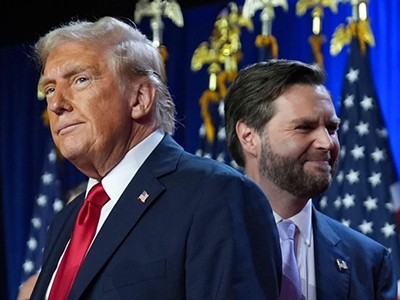
Donald Trump will take office on 20 January 2025.Credit: Chip Somodevilla/Getty
The re-election of Donald Trump as US president raises the prospect of big changes in US science, in terms of policy, funding and research. Nature asked six life scientists which priorities they’d like to see the administration focus on once Trump takes office in January next year.
AMANDER CLARK: Support education and reproductive care
Amander Clark implores Donald Trump to not dismantle the Department of Education.Credit: Don Liebig
Policy promises that president-elect Donald Trump made on his campaign trail stand to affect my professional life greatly — both as a professor at a public university and a principal investigator of a stem-cell laboratory. Now that the election is over, I am eager to learn which of those promises will come to fruition.
On the topic of education, I would urge Trump to not dismantle the Department of Education, as he has proposed. Instead, he should consider ways to enable students to attend university without going into debt — for instance, expanding funding for federal Pell grants, which are awarded to students in financial need. At the University of California, Los Angeles, where I work, we are committed to supporting first-generation college students and under-represented populations to provide them with the tools that are needed for success.
How the world will weather Trump’s withdrawal from global agreements
On science funding, I would implore the incoming president to raise funding for the National Institutes of Health (NIH) to a level that is consistent with the cost of doing science. After the last increase to the NIH budget in 2023, funding levels were 1.8% less than they were 20 years ago, when adjusted for inflation (see go.nature.com/3uvk5rr). Asking scientists to do more with less stifles creativity and poses a threat to the United States’ position as a world leader in biomedical research and innovation.
And, finally, on reproductive health and science, I urge Trump to support basic research. For too long, federal policies have restricted the ability of scientists to develop technologies that can improve fertility care, and to research ways to expand contraceptive choices, eliminate reproductive diseases and promote healthy reproductive ageing. As a result, individuals and their families remain burdened by unaffordable and inaccessible reproductive treatments, including in vitro fertilization (IVF).
In October, Trump recognized the value and importance of IVF to millions of Americans. I hope he will prioritize policies that will expand access to reproductive care and IVF and guarantee that this care is available for all.
ERIC TOPOL: Embrace medical AI
Eric Topol hopes that the incoming administration can provide funding for artificial-intelligence technology to help transform US health care.Credit: Scripps Research
Health care in the United States is remarkably inefficient and is plagued by millions of serious diagnostic errors each year. It has a lack of clinicians, pervasive inequities and the worst outcomes of any rich country for life expectancy and maternal and infant mortality.
Yet, we are on the brink of a seismic shift. Soon, it will be possible to use multimodal artificial intelligence (AI) to integrate all of a person’s data into one model — their electronic health record, laboratory tests, genome, social determinants of health, environmental exposures and more. The incoming Trump administration should provide financial backing for this technology, to accelerate AI’s transformation of US health care.
Scientists must hold President Trump to account with courage and unity
Unimodal AI, which analyses just one data type, has already been shown to significantly improve the accuracy with which physicians can interpret medical data, such as scans and pathology samples (E. J. Topol NatureMed. 25, 44–56; 2019). It can also substantially reduce the time that physicians need to spend on administrative work — such as dealing with insurance companies and note taking — so that they have more time to focus on patient engagement and care.
Multimodal AI models, which integrate several data types, have the potential to do much more. For instance, it’s hoped that they will enable more-accurate diagnoses. These tools will use technologies such as digital twins — virtual models of a person — to optimize treatments and outcomes. They will be capable of personalized medical forecasting, helping to prevent age-related diseases. These models might also reduce the need for hospital stays by enabling people to be monitored remotely.
The opportunities that lie ahead are extraordinary — improved efficiency, productivity, accuracy and outcomes and hugely reduced health-care costs. Still, more testing in real-world medical settings is needed. This clinical research is essential not only to validate AI models and fulfil regulatory requirements, but also to work out how multimodal AI can be used in ways that preserve an individual’s privacy and security, avoid bias and reduce health inequities. The government should make such work a priority.
HANK GREELY: Protect patients
Hank Greely is concerned that Donald Trump’s proposed budget cuts could decimate biomedical research.Credit: Eleanor Greely
I work on ethical, legal and social issues arising from the biosciences. The Trump administration’s top priority in this area should be to reassure people that the federal government will continue to support bioscience research, while maintaining the regulations needed to avoid exploitation of — and harm to — consumers and people receiving care. Uncertainty about what is to come, fed by statements such as Robert F. Kennedy Jr’s message that the “FDA’s war on public health is about to end,” can cause great damage even if threatened actions are not implemented. It can demoralize those who seek to improve public health, encourage people to retire or change careers and devastate public confidence in scientifically proven medical and public-health measures.
‘We need to be ready for a new world’: scientists globally react to Trump election
I have three main concerns about the incoming administration’s effects on bioscience and medicine.
First, some people in its coalition could attempt to ban or restrict some useful things that they consider to be immoral — including fetal tissue research, embryo research, discarding of IVF embryos, preimplantation genetic testing to select healthier embryos, interstate transportation of abortion pills and more.
Second, the administration might decide to protect company profits over the interests of people receiving medical care and consumers, and as a consequence it could gut regulations that protect people by preventing the sale of harmful or ineffective drugs, medical devices, nutritional supplements and a broad range of other unproven practices. The administration has the power not only to change an array of laws and regulations, but also to cripple the agencies, such as the Food and Drug Administration (FDA), that enforce them.
Third, it could decimate biomedical research if Trump’s administration really makes huge cuts in the federal budget — even if those cuts fall short of the US$2 trillion that Elon Musk says could be slashed. This would mean a slowdown in the research of life-improving and life-saving innovations — at least in the United States — not immediately, but inevitably, and soon. US health statistics are already bad enough; the new president shouldn’t act to make them worse. I will be (pleasantly) shocked if the incoming administration avoids that result.
SALIM S. ABDOOL KARIM & QUARRAISHA ABDOOL KARIM: Prepare for the next pandemic
Quarraisha Abdool Karim and Salim S. Abdool Karim urge Trump to fund pandemic prevention.Credit: Elana Schilz
The world has seen first hand how pandemics can affect livelihoods and derail even the best-laid economic plans. In our view, three current epidemics have pandemic potential: AIDS, mpox and antimicrobial-resistant organisms. Respiratory pathogens such as influenza, along with coronaviruses and resurgent, vaccine-preventable measles, are also cause for concern, as highlighted by the World Health Organization (WHO; see go.nature.com/4fvcj22).
Combating these pandemic threats will require a worldwide effort, in which the United States should have a leading role. We urge the incoming Trump administration to invest in pandemic prevention, preparedness and response, in the United States and globally.
What Trump’s election win could mean for AI, climate and health
First, the administration should provide more funding to the WHO, especially its Health Emergencies Programme. This would help the WHO to undertake effective pathogen surveillance around the world, generate information about possible future pandemics and deploy teams that can respond to emerging pandemic threats across the world — a key line of defence.
Second, it should support the US Office of Pandemic Preparedness and Response Policy, which was established in 2023 to advise the president and ensure that the United States can respond to a pandemic threat effectively. In practice, this means giving the office the necessary funding, authority and autonomy to develop evidence-based plans.
Third, the administration should ensure that the US President’s Emergency Plan for AIDS Relief (PEPFAR) and the Global Fund to Fight AIDS, Tuberculosis and Malaria are financially supported in their aim of ending AIDS as a public-health threat by 2030 — one of the United Nations’ Sustainable Development Goals. George W. Bush’s administration demonstrated bold leadership in creating PEPFAR in 2003. The programme needs secure support up to 2030, at least, to build on its global gains and complete its mission.
The incoming administration has articulated bold economic plans — but these could be at risk if a pandemic emerges. The best time to stop a pandemic is before it becomes one.
RAMANAN LAXMINARAYAN: Be smarter with antibiotics
Ramanan Laxminarayan advocates for improving access to effective antibiotics.Credit: Ramanan Laxminarayan
In Trump’s first presidency, much progress was made in biomedical sciences. NIH funding grew by nearly one-third in nominal terms, for instance — I don’t see funding decreasing significantly in the coming years.
And consider Operation Warp Speed. This public–private partnership, initiated in May 2020, incentivized pharmaceutical companies to take risks to expedite the development of vaccines, therapeutics and diagnostics to fight COVID-19.
The issue of antimicrobial resistance is particularly close to my heart, owing to my work with the One Health Trust, which is a public-health organization that addresses the interconnected world of humans, animals and environmental health. In my view, the first Trump administration gave this issue no more or less attention than the preceding or succeeding Democratic administrations.
This time around, improving access to effective antibiotics — both in the United States and globally — should be the single biggest priority for the incoming administration.
Drug-resistant pathogens don’t respect country borders. So it is in the United States’ best interests to ensure that, around the world, antibiotics are used only when appropriate. A programme on the scale of PEPFAR could improve diagnostics, surveillance of antibiotic-resistant microbes and guidance around antibiotic use in low- and lower-middle-income countries in Africa and Asia. Funding for the development of AI and other digital tools could enhance the usability of point-of-care diagnostics, and ensure that the correct antibiotics are used in the correct situations and in the best ways.
Financing access to antibiotics globally could help small US biotechnology companies that make these drugs to survive and thrive. This, in turn, will benefit people in the United States who desperately need new antibiotics, because the companies will have more money available for drug development.
We sometimes — incorrectly — equate impact with spending. For less than US$1 billion dollars a year, the US government could transform access to existing and new antibiotics worldwide.
Due in part to strong institutional collaborations and industry presence, the United States has maintained its lead in health sciences, with the Boston metropolitan area (MA) taking the top spot with a Share of 676.43. However, the Massachusetts capital — which is home to numerous biotech companies, leading universities, and more than 20 hospitals — is the only US city within the top 10 to have recorded an increase in adjusted Share between 2022 and 2023 (+6.6%). The New York MA and Baltimore–Washington, the 2nd and 3rd-ranked cities, respectively, have both recorded minor declines in their adjusted Share since 2022, while the San Francisco Bay Area, in 5th place after the London MA, has recorded a decrease in adjusted Share of 13.2% between 2022 and 2023.
China is one to watch in the health-sciences space. Although Beijing, China’s leading health-care city, in 6th place, is still more than 430 Share points away from the Boston MA, it has recorded an increase in Share of 17.6% between 2022 and 2023.
Copenhagen is one of the fastest rising cities in health sciences, increasing its adjusted Share by 33.9% between 2022 and 2023. Denmark boasts a remarkably large health-care sector for its relatively small size, which will put it in good stead for continued growth in the subject.
Much of the Boston MA’s strength in the health sciences comes from the collaboration between the Massachusetts Institute of Technology (MIT) and Harvard University — by far the city’s most significant partnership in the subject. Harvard is a pillar of health-science research in the city and is involved in its four leading institutional partnerships in the health sciences.
Source: Nature Index; Data analysis: Aayush Kagathra; Data visualization: Tanner Maxwell and Simon Baker
The Harvard–MIT match up also significantly outperforms other leading cities’ top collaborations in the subject, with a BCS of 139.24. Baltimore–Washington’s top institutional partnership, between the Johns Hopkins University and Johns Hopkins Health System Corporation (BCS 87.45), is the second-strongest pairing.
London’s leading research collaboration, between University College London and the University College London Hospitals NHS Foundation Trust (BCS 22.81) is almost equal to the New York MA’s Columbia University and New York–Presbyterian Hospital pairing (BCS 22.37).
Source: Nature Index; Data analysis: Aayush Kagathra; Data visualization: Tanner Maxwell and Simon Baker
This article is part of Nature Index 2024 Science cities, a supplement produced with financial support from the Beijing Municipal Science & Technology Commission, Administrative Commission of Zhongguancun Science Park. Nature maintains full independence in all editorial decisions related to the content. For more information about Nature Index, see the homepage.
Nature, Published online: 20 November 2024; doi:10.1038/d41586-024-03555-3
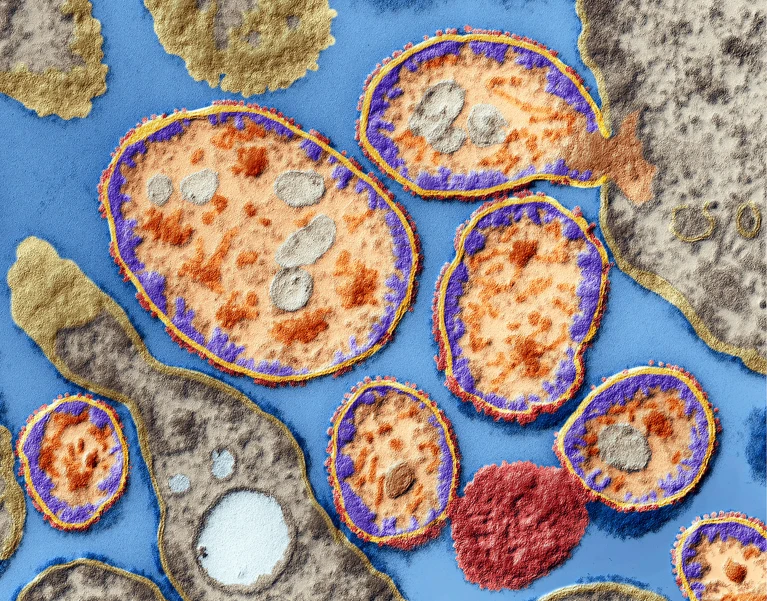
Antibodies from malaria-exposed individuals have been found to target a diverse family of proteins from the malaria-causing parasite. These proteins cause severe disease by enabling infected blood cells to bind to blood vessels.
An analytical chemist works in the lab of biotech company Arcaea, which is based in Boston, Massachusetts.Credit: Boston Globe/Getty
When a delegation of scientists from Japan recently visited Harvard University in Cambridge, Massachusetts, they asked their hosts a familiar question: what are the secret factors that make the Boston area, which includes Cambridge, such a hotbed for health-sciences research and innovation? In response, George Daley, dean of the Faculty of Medicine at Harvard Medical School, gave the half-joking answer he normally uses when asked similar questions: “Just incubate two of the most important educational institutions on the planet, support them for 200 years, and watch the magic happen.”
The Boston area is home to a critical mass of leading universities, hospitals, biotechnology and pharmaceutical companies, and independent research institutions that all interact synergistically, says Dan Barouch, an immunologist at Harvard Medical School and director of the Center for Virology and Vaccine Research at Beth Israel Deaconess Medical Center in Boston. “The quality, depth and sheer breadth and scope of research in Boston is just astounding.”
Nature Index 2024 Science cities
It’s no surprise, then, that the Boston metropolitan area leads the Nature Index Science Cities rankings in health sciences, based on 2023 research output in journals tracked by the database. According to the findings, the New York City metropolitan area ranks second after Boston, followed by the urban area formed by Baltimore and Washington DC; London; the San Francisco Bay Area; Beijing and Shanghai.
Science cities is tracking health sciences for the first time this year after data from journals in the subject were added to the Nature Index in 2022, but already, the data reveal some new trends. For one, US cities and London take the top five positions, whereas for most other tracked disciplines — including chemistry, physical sciences and Earth and environmental sciences — China now dominates the top positions.
Science cities rankings are not adjusted for population size, which means large cities such as Beijing and Shanghai — with populations of 21.5 and 26.3 million, respectively — have strong advantages for research output. But this also highlights the oversized contribution to health-sciences research by smaller leading cities such as Boston, whose greater metropolitan population is just 4.9 million. Boston is clearly “still very dominant in this area”, says Yiming Dong, a Chinese studies researcher at King’s College London. But this could change soon, with Dong emphasizing that China is moving quite quickly in the subject.
A tremendous anthill
Lots of cities around the world have good universities, smart people and some industry and capital for research, but few possess “this alchemy that creates, effectively, gold out of these regular materials”, says Paul Sagan, a senior adviser at General Catalyst, a venture-capital firm founded in Cambridge, Masachusetts. Scale, in terms of a concentration of elite scientific research institutions, and repetition, in terms of spinning out a continuous stream of new ideas — some of which succeed and spawn new biotech companies, are key to transforming a city into a true hub of excellence for science and innovation, Sagan continues. Among such hubs for health sciences and biotechnology, he adds, it’s clear “that Boston has sped ahead of everyone”. There are several probable reasons for this, he continues, including the presence of elite research institutions, start-ups and international companies with headquarters there, and a number of government initiatives over the years that have promoted and supported biotech research.
The Boston metropolitan area contains a familiar list of the leading institutions in the health sciences. Harvard University ranks first in the world in the Nature Index for the subject by a large distance and the leading two health-care facilities — Brigham and Women’s Hospital and Massachusetts General Hospital — are located nearby. Boston’s biotechnology sector is also growing quickly, Daley says, and most of the top pharmaceutical companies have established major research centres there.
A large and growing pot of venture capital also fuels health-sciences innovation in Boston. “Because drug development is so expensive, public research funding will never carry all the costs,” says Andrea Braun Střelcová, who studies science policy and research collaboration, with an emphasis on China, at the Max Planck Institute for the History of Science in Berlin. “So, the role of the market is really important.”
Although California has a strong venture-capital presence, too, “the big difference” for the Boston area is the presence of leading pharmaceutical companies — many of which are just a walk from the Massachusetts Institute of Technology (MIT) and Harvard, says Nobel laureate Phillip Sharp, who holds an emeritus position at MIT’s Koch Institute for Integrative Cancer Research.
The size of Boston’s talent pool is also notable, Daley says. Harvard’s full-time medical faculty alone numbers 10,000-plus — more than three times the size of other large medical schools in the United States. Considering all the other Boston-area health-sciences institutions, “you’ve got tens of thousands of clinicians and scientists working towards common goals in confronting disease and solving fundamental biomedical questions”, Daley says. “That’s just a tremendous anthill of activity all within a very small radius.”
Entrepreneurial and cool
Other top cities for health-sciences research possess the same features that make Boston stand out —only on a smaller scale. The New York City metropolitan area, for example, has Memorial Sloan Kettering Cancer Center, ranked sixth in the world among health-care institutions in the Nature Index for health sciences, and the Mount Sinai Health System, ranked eighth. Experts at many top-ranked institutions collaborate, too, which amplifies their impact and output. In the health sciences, collaborations between Harvard, MIT, Johns Hopkins University in Baltimore and the University of California, San Francisco, are among the most productive in the world, according to Nature Index data.
Like its US counterparts, London also has top-notch universities and strong biotechnology and pharmaceutical industries, says Rebecca Shipley, director of the Academic Health Science Centre at UCLPartners in London — an organization that brings together universities and health-care providers to accelerate the translation of research into improved outcomes. Unlike in the United States, researchers in London can benefit from the United Kingdom’s National Health Service, which operates across the country and makes it easier to obtain patient data and run clinical trials. Shipley predicts that London will continue to hold its spot among the leading five science cities in health sciences and has the potential to rise even higher. For example, the UK National Institute for Health and Care Research, which is the major funder of research to improve the population’s health, has awarded nearly £800 million (US$1 billion) in funding over 5 years to 20 university-hospital research centres around the United Kingdom — seven of which are in London — to translate basic discoveries into real-world patient care. There is also an increasing investment in London and nationally to build infrastructure to make patient data better available for research and innovation, Shipley says. This includes secure access for researchers to NHS patient data on a national level through a specialized platform, as well as a London-specific information-sharing hub called OneLondon that connects health and care staff to patient records, among other things. “There’s a real appetite in London to be innovative and build on this momentum,” Shipley says.
Visitors view a medicine and health exhibition at the 2024 Beijing Science and Technology Week, held in Beijing, China.Credit: NurPhoto/Getty
Indeed, for any sort of innovation hub to take off, there has to be a culture of entrepreneurialism and a mindset of “not being afraid to fail”, Sagan says. To attract and retain talent, the hub itself also must be somewhere that people want to live. “There are great research universities that might have some innovation, like the University of Illinois Urbana-Champaign, but by and large, that’s not a place where people aspire to live because it’s a small town, and small towns are limited, by definition,” Sagan says. “Not to demean small towns, but most ambitious entrepreneurs and researchers want to go to top-tier cities like New York City, Boston, or Silicon Valley because they are places where their partners can also get good jobs, their kids can go to great schools and their community offers great cultural diversity — and it’s just cool to be there.”
Surprising slips
The United States is showing some puzzling trends for health-sciences research output, however. Unlike the Boston metropolitan area, which increased its adjusted Share in the Nature Index by 6.6% from 2022 to 2023, the other leading four US cities lost ground. The San Francisco Bay Area experienced the steepest decline of 13.2%.
One explanation is likely to be that the Nature Index represents a relatively fixed set of research articles. If cities in one part of the world, such as China, are rapidly increasing their Share then others must fall to compensate. This makes Boston’s performance even more remarkable.
Stacie Bloom, the vice-provost for research and chief research officer at New York University, says she is surprised by New York’s results and that “all the messaging we get indicates that things are going in a more positive direction”. Daley also says that his perspective is that the US cities experiencing a drop in adjusted Share remain strong. “New York City has been on fire, and the Baltimore–Washington DC corridor is a hotbed of innovation,” he says. The San Francisco Bay Area also remains Boston’s “main competition” for cutting-edge biotechnology.
Daley adds that another explanation is health-sciences research from 2022 to 2023 was probably still affected by problems linked to the COVID-19 pandemic. The pandemic caused significant supply-chain issues for biomedical materials, he says, and across many industries, including in science, some people changed careers or took a while to return to work. Boston was probably more insulated from these impacts than other US cities, he adds, because of its higher density of people and institutions.
Daley expects that any decline in top US cities’ health-sciences research output will be “a momentary blip”, and that those hubs of innovation will “return to productivity and growth very soon”.
China rising
For now, cities in the United States, alongside London, still lead in health sciences, but experts predict that China will continue to gain ground. Logistically, this makes sense, says Yu-Xuan Lyu, a scientist at the Southern University of Science and Technology in Shenzhen, who studies ageing. It’s only in the past 10 to 15 years that China rapidly expanded its international research presence and rose to the top in natural-science subjects such as chemistry, which don’t require a close collaboration between universities, hospitals and industry. It has taken a bit more time for China to lay the structural groundwork to conduct world-class health-sciences research, but now that that is beginning to take shape, “the conditions are really good for China to start performing even better”, Střelcová says.
Beijing increased its health-sciences research output in the Nature Index by 17.6% between 2022 and 2023, while Shanghai’s contribution rose by nearly 4%. The southern city of Guangzhou, which is currently ranked 12th in the world for health-sciences research, is also growing quickly, with a 32.4% increase in the year to 2023. This growth is largely because health care and health-sciences research are priorities for the Chinese government, Dong says. “They’re spending a huge amount of money on this.” Health-sciences research accounted for 36%, or 97.6 billion yuan (US$13.8 billion), of the 2024 budget for the National Health Commission — an executive department under the State Council that’s responsible for health policies and health-related emergency management in mainland China.
Scientific advancement in health research is a key pillar of the Healthy China 2030 plan, a set of strategic public health goals first published in 2016. The country’s 14th five-year plan — which outlines overall objectives for long-term domestic economic development and innovation — also includes health-sciences goals, including specific plans to address China’s ageing population and improve health care. China’s National Health Commission’s science strategy also highlights similar goals, and the government is additionally investing in studying and developing traditional Chinese medicine. Some of the largest research grants in the health-sciences field in China are currently being given by the Ministry of Science and Technology and other public funders to university–hospital collaborations for translational research in service of these goals, Lyu says.
In 2022, construction also began in Shanghai on the first of a nationwide network of hospitals that are intended to act as comprehensive national medical centres. Some of the people who work there are likely to be expat Chinese scientists who are being attracted back from the United States or other Western countries, Dong says, through more than 100 talent-recruitment programmes operating at the national, provincial and city level, and also by high salaries offered by Chinese universities and research institutions. Many of these experts have left corporate positions abroad or vacated tenured roles at top-tier American universities, Dong says, including Harvard and MIT.
China’s provinces and cities can also introduce their own targeted priorities, and in both Beijing and Shanghai, that includes biosciences, says Glen Noble, the founder and director of Noble Endeavours, a London-based consultancy focused on research and academia in the United Kingdom, European Union and China. Both cities have “huge amounts of leeway and resources” to implement things such as tax breaks, subsidies, talent-recruiting programmes, science parks and research funding, Noble says. This allows health-science researchers to tap into support from multiple initiatives and levels of government.
Collaborations in China between academia and industry have also started “booming” over the past year or so, Lyu says, and grants are specifically set up to encourage and enable these partnerships. China still has issues regarding intellectual property (IP) protections that draw criticism from the United States and the West, Střelcová adds, including concerns over IP theft and economic espionage. On the other hand, she continues, over the past decade or so, China has “improved and professionalized” the IP protection landscape compared with the past, especially through its regulatory framework and enforcement. “The caveat is that the intent is not confined to intellectual-property rights protection itself, but rather to the overall desire to strengthen national security and increase the country’s competitiveness,” Střelcová says. Regardless of the intent, though, this is a boon for innovators, Dong says, because of the size of China’s market.
Regardless of whether Chinese cities do overtake locations in the United States and other Western cities such as London in health-sciences research, Noble hopes that researchers around the world will be able to maintain strong international collaborations despite political tensions. Currently, however, policies around research security in the West “are primarily calibrated around preventing China accessing Western technology — as if China wasn’t already a scientific power in its own right, across many disciplines”, he says. “Increasingly, we need the science happening in China to be disseminated back to us in the West.”
The US National Institutes of Health, located in Bethesda, Maryland, is composed of 27 institutes and centres.Credit: Duane Lempke (CC0)
The world’s largest public funder of biomedical research seems poised for a major overhaul in the next few years.
US funders to tighten oversight of controversial ‘gain-of-function’ research
Proposals from both chambers of the US Congress, as well as comments made by the incoming administration of US president-elect Donald Trump show that there is significant appetite to reform the National Institutes of Health (NIH) and its US$47-billion research portfolio. What’s less clear is how this transformation will unfold; proposals have included everything from shrinking the number of institutes by half to replacing a subset of the agency’s staff members.
Reflecting this increased scrutiny by the government, on 12 November, the NIH launched a series of meetings at which an advisory group of agency insiders and external scientists will consider the various proposals and offer its own recommendations for reforms.
It will be a mad dash to the finish line among these parties in terms of whose vision will win out, says Jennifer Zeitzer, who leads the public-affairs office at the Federation of American Societies for Experimental Biology in Rockville, Maryland. “There’s absolutely movement on Capitol Hill to discuss how to optimize and reform the NIH,” she says. “We now also have the agency participating in that conversation.”
Shrinking and cutting
The NIH advisory meeting comes in the wake of Republicans winning control of both chambers of Congress and the White House for 2025. This year, two separate legislative proposals to reform the agency were put forward by Republican congressional members — one led by representative Cathy McMorris Rodgers of Washington State and one by senator Bill Cassidy of Louisiana. These proposals have in part been fuelled by discontent over the agency’s response to the COVID-19 pandemic and the perception that its oversight of research on potentially risky pathogens has been lax.
McMorris Rodgers’s plan would collapse the number of institutes and centres at the NIH from 27 to 15, allow its parent agency to cancel any grant determined to be a threat to national security, impose a 5-year term limit on institute directors that can be renewed only once and enact stricter oversight of research involving risky pathogens. For his part, Cassidy, who is set to become the chair of the US Senate’s committee charged with overseeing health issues in 2025, said that he would introduce more transparency into processes that the agency uses to review research grant proposals.
If these plans — which are laid out in white papers — come to pass, they would represent the first major reform of the NIH in nearly 20 years. The last time an overhaul happened, in 2006, the US Congress passed the legislation with bipartisan support, establishing a review board and requiring the agency to send updates to lawmakers every two years. The same support from both sides of the political aisle is unlikely to happen with the proposals currently under consideration, however.
Robert F. Kennedy Jr., an environmental lawyer, was picked by US president-elect Donald Trump to lead the US Department of Health and Humans Services. He will need to be confirmed by the US Senate to assume that office.Credit: Bryan Dozier/Variety via Getty
The NIH has been a frequent target of Trump and his Republican and other allies. Robert F. Kennedy Jr., who Trump has chosen to run the US Department of Health and Human Services (HHS) — the NIH’s parent agency — said in 2023 that he would seek an eight-year pause for infectious-diseases research at the NIH so that the biomedical funder can instead focus on chronic diseases such as diabetes and obesity. He also said on 9 November that he would seek to replace 600 employees at the NIH. (Neither Trump nor his appointees can currently fire career staff members at the agency, whose jobs are protected by law, but that might change if Trump makes good on a promise to reclassify the federal workforce.)
Harold Varmus, a cancer researcher at Weill Cornell Medicine in New York City and a former head of the NIH, tells Nature that he is “alarmed” by Kennedy’s comments. “We may need congressional Republicans and even Democrats who are traditional supporters of NIH to speak up for the agency and its importance for public health.”
Dash to the finish line
At this week’s meeting of the NIH’s advisory committee, called the Scientific Management Review Board (SMRB), panel members met for the first time since 2015 to review the agency’s structure and research portfolio and to provide recommendations to the NIH director and the HHS. Congress requested that the agency kick-start this process.
New NIH chief opens up about risky pathogens, postdoc salaries and the year ahead
NIH officials hope that the group will meet five more times during the next calendar year so that they could draft a report of their findings and recommendations by November 2025. This ambitious timeline suggests that “there’s a recognition that the SMRB is going to have to move quickly to catch up with Congress, or risk Congress making decisions that they don’t like”, Zeitzer says.
In fact, several committee members noted their trepidation during the 12 November meeting that Congress would act before the group delivers its report. Kate Klimczak, the NIH’s director of the office of legislative policy and analysis, tried to reassure the committee: “the authors of the different [congressional] proposals clearly wanted this board to be re-established and wanted this board to do their work,” she said. “We have to take them at their word that they’re looking forward to getting [a report] from you.”
NIH director Monica Bertagnolli, who will probably resign before Trump takes office, noted her disapproval with the proposals to collapse the number of institutes. She said that the current system offers people with diseases and patient-advocacy groups the ability to coordinate with a dedicated institute for their cause, for instance the National Institute of Mental Health or the National Institute on Aging. “If we were to collapse, we would definitely lose something in terms of our engagement with the public,” she said.
It’s unclear what direction the SMRB will go with its recommendations, but there were hints at the meeting. Several panellists were taken aback by the legislative proposals. For example, the McMorris Rodgers white paper says that “decades of nonstrategic and uncoordinated growth created a system ripe for stagnant leadership, research duplication, gaps, misconduct and undue influence” at the NIH. James Hildreth, president of Meharry Medical College in Nashville, Tennessee, called this language “almost offensive”. He added: “I know we’re not supposed to allow politics to creep into what we do, but how could it not?”
A child in Amuria, Uganda, is treated for malaria.Credit: Jake Lyell/Alamy
Scientists have detected resistance to artemisinin, a key malaria drug, for the first time among children in Africa with severe disease. The continent accounts for 95% of all deaths from malaria globally, and children are the most badly affected.
Resistance to front-line malaria drugs confirmed in Africa
“If this is verified by other studies, it could change guidelines for treatment of severe malaria in African children, and they are the biggest target group by far,” says Chandy John, a specialist in paediatric infectious diseases at Indiana University in Indianapolis. John is a co-author of the study, published in JAMA1 and presented today at the Annual Meeting of the American Society of Tropical Medicine and Hygiene, in New Orleans, Louisiana.
Artemisinin resistance has been detected in children in Africa previously, but the fact that it has now been identified specifically in children with severe malaria raises the threat level. The parasite that causes malaria, Plasmodium falciparum, is contracted through the bite of a mosquito. For treating ‘uncomplicated’, or non-severe, cases of malaria, the World Health Organization recommends a course of pills containing an artemisinin derivative, which rapidly eliminates most malaria parasites in the body, combined with a ‘partner’ drug that circulates in the body for longer and kills the remaining parasites. These regimens are called artemisinin-based combination therapies (ACTs).
For severe malaria, which can involve symptoms such as convulsions, breathing problems and abnormal bleeding, treatment is more intensive. Physicians administer intravenous artesunate — a fast-acting version of artemisinin — for at least 24 hours. This is followed by a course of ACT. Treating severe malaria rapidly is crucial for recovery, researchers say.
Tough to treat
The latest study, in Jinja, Uganda, looked at children aged 6 months to 12 years with severe malaria. The researchers found that 11 of the 100 participants, or about 10%, showed partial artemisinin resistance. This term refers to a delay in the clearance of the malaria parasite from the body after treatment; a partially resistant infection is classified as one in which the drug takes longer than 5 hours to kill half of the malaria parasites.
How to defuse malaria’s ticking time bomb
In the past, researchers have connected specific mutations in P. falciparum proteins with the emergence of partial artemisinin resistance2 — meaning that the parasites are evolving to evade the ‘gold standard’ malaria treatment. John and colleagues analysed the genomes of the parasites infecting children in their study, and found that ten participants had one of two types of these mutations. One of the mutations, detected in eight participants, was associated with artemisinin taking longer than usual to clear the parasite.
Another group of ten children in the study had a malaria infection that recurred after their treatment concluded. These cases were not attributable to the presence of any known artemisinin-resistance mutations. Instead, John thinks the recurrence might have been caused by resistance to lumefantrine, a partner drug administered orally in the ACT step of the treatment regimen for severe malaria. But more studies are needed to evaluate that possibility, John says. “What the recurrence suggests to us is that maybe that partner drug is not working as well as it should, because the parasites are coming back,” he adds.
Since resistance to artemisinin was first identified in southeast Asia in the 2000s, scientists’ biggest concern has been how it will affect the treatment of severe cases of malaria, says Philip Rosenthal, a malaria specialist at the University of California, San Francisco. “Even if the drug still works, that slower action could make a difference and lead to higher levels of mortality,” he says.
But the study by John and his colleagues doesn’t provide a definitive answer to whether artemisinin resistance is already leading to worse clinical outcomes, Rosenthal notes. The study size was too small, and all the children analysed eventually recovered, even if this process sometimes took longer than expected. That just shows that current treatments for severe malaria aren’t “quite as good as we might have hoped”, he says.
Rosenthal and others are still worried about this news, however. “The emergence of artemisinin partial resistance in Africa is a major threat to malaria control,” he says. “We are now only starting to understand what’s going on.”
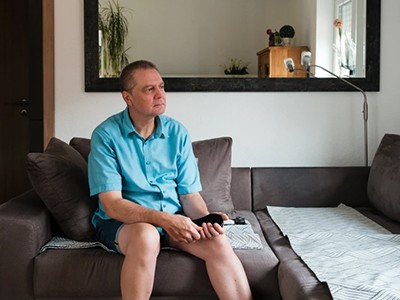
Scott Imbrie still remembers the first time that physicians switched on the electrodes sitting on the surface of his brain. He felt a tingling, poking sensation in his hand, like “reaching into an evergreen bush”, he says. “It was like I was decorating a Christmas tree.”
Back in 1985, a car crash shattered three of Imbrie’s vertebrae and severed 70% of his spinal cord, leaving him with very limited sensation or mobility in parts of his body. Now, thanks to an implanted brain–computer interface (BCI), Imbrie can operate a robotic arm, and receive sensory information related to what that arm is doing. Imbrie spends four days a week, three hours at a time, testing, refining and tuning the device with a team of researchers at the University of Chicago in Illinois.
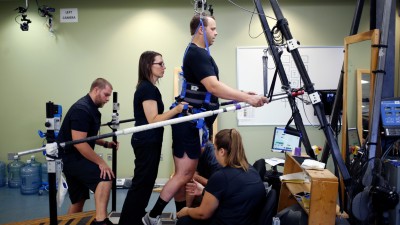
Scientists have been trying to restore mobility for people with missing or paralysed limbs for decades. The aim, historically, was to give people the ability to control prosthetics with commands from the nervous system. But this motor-first approach produced bionic limbs that were much less helpful than hoped: devices were cumbersome and provided only rudimentary control of a hand or leg. What’s more, they just didn’t feel like they were part of the body and required too much concentration to use.
The brain-reading devices helping paralysed people to move, talk and touch
Scientists gradually began to realize that restoring full mobility meant restoring the ability to sense touch and temperature, says Robert Gaunt, a bioengineer at the University of Pittsburgh in Pennsylvania. Gaunt says that this realization has led to a revolution in the field.
A landmark study1 came in 2016, when a team led by Gaunt restored tactile sensations in a person with upper-limb paralysis using a computer chip implanted in a region of the brain that controls the hand. Gaunt then teamed up with his Pittsburgh colleague, bioengineer Jennifer Collinger, to integrate a robotic arm with the BCI, allowing the individual to feel and manipulate objects2. “It meant they could perform motor tasks much faster,” says Collinger. Around the same time, studies in people with limbs that have been amputated showed how restoring tactile inputs into peripheral nerves also drastically improved control of prosthetic hands3.
But researchers haven’t fully cracked the code on how to interpret or create natural sensations that truly benefit people’s lives. Somatosensation — the collection of senses that interpret touch, temperature, pain and body position — is dauntingly complex. Imagine trying to encode information that could discern a soft kiss from a painful pinch, or the needles of a pine tree from the bristles of a paintbrush. To create safe and stable interfaces with the brain and body, researchers need to make major advances in engineering as well as in understanding the sensorimotor system, says Rochelle Ackerley, a neuroscientist at Aix-Marseille University in France. And as developers look to increase the size of implanted-device trials, stakeholders have yet to solve ethical issues around the risks of BCIs and high-tech prosthetic devices.
A battery to the tongue
Prosthetics developers are beginning to create sensations that feel real and natural, but it’s a work in progress. When Imbrie thinks back to the first tests of his BCI, he says that the sensations were a bit “like holding a battery to the tongue; not painful, but more like electricity”.
One of the first challenges is the plethora of information that needs to be encoded. “When we touch an object, different sensory neurons in our skin code its shape, pressure and texture,” says Giacomo Valle, a neuroengineer at Chalmers University of Technology in Gothenburg, Sweden. Valle has been attempting to mimic these neural codes, then deliver them to the brain, either through the body’s sensory nerves or directly to the cortex.
Pedestals on Scott Imbrie’s scalp lead to electrode arrays in motor and sensory areas of his brain.Credit: Taylor Glascock for Nature
Valle worked with Imbrie during his postdoc in the laboratory of Sliman Bensmaia who was at the University of Chicago, drawing knowledge from decades of animal research about how to create different types of tactile sensation. He learnt that tweaking the parameters of electrical impulses creates very specific sensations of textures, pressures and stroking directions. When constructed together, these impulses form sensations of objects. Valle and his colleagues’ latest study4 shows just how far this approach has come. Through the electrodes in Imbrie’s brain, physicians were able to create the sensation of touching the edge of a shape or feeling the motion of an object dragged across Imbrie’s fingertips. Imbrie remembers the vivid feeling when Valle drew certain letters on the interface for Imbrie to interpret. “I said, ‘Oh my, Giacomo, you just drew an O on my fingertip’, and I could see the grin coming from his face,” says Imbrie.
The principle is exactly the same in people who have had an amputation, but technically more straightforward because tactile signals can be routed into residual nerves in the part of a person’s limb that remains. This technique is allowing individuals to better manipulate and detect objects with bionic hands, or have better balance and gait with bionic legs.
Vision without colour
Going beyond tactile inputs, researchers including neuroengineer Solaiman Shokur at the Swiss Federal Institute of Technology in Lausanne (EPFL) are beginning to bring back other aspects of somatosensation, such as discerning temperature. Shokur thinks that restoring multisensory inputs will return all the warmth and feeling that somatosensation gives us. “Touch without temperature is like vision without colour,” he says.
Shokur has created warm and cool sensations in the ‘phantom’ hands of people with an upper-limb amputation by stimulating nerves in their remaining limb with a thermal device5. These stimulations triggered very real and natural thermal sensations that people interpreted as coming from their missing hand.
By chance, one of the participants in Shokur’s trial had also participated in Valle’s trials recreating touch sensations. “Her first reaction with thermal sensation was, ‘Wow! This was what was missing the whole time’,” says Shokur.
Embodied prosthetics
Hugh Herr, an engineer at Massachusetts Institute of Technology in Cambridge is not convinced that restoring every facet of somatosensation, such as cooling or warmth, is the most important goal for helping people. Herr says that the priority should be restoring those sensory inputs that most improve mobility and function. Above all, he says, it’s important to have prosthetic limbs that feel to users like they’re part of their body, and not just bionic, artificial attachments — a sensation known as embodiment. “When amputees experience natural sensations from their prosthesis as if it was their own limb, and when people can think and move their prosthesis with little error, it gives them a sense of ownership and agency,” says Herr.
He is acutely aware of how painful poorly designed prosthetics can be: both his legs were amputated after a rock-climbing accident, and he has spent 30 years researching ways to build functional prostheses.
Herr says that the current revolution in this field stems from successes in integrating sensory components into prostheses. Designers are merging multiple tissues of the body — muscle, tendon, bone and nerves — with synthetic technologies to drive human–machine integration to the next level. Herr’s research team is focusing on surgical techniques and implants that improve on the electrodes used in current bionic-limb systems, which either penetrate the peripheral nerves or wrap around them. “We’re reimagining how limbs should be amputated and bionic limbs constructed,” he says.
Imbrie’s implants allow him to manipulate objects but also provide tactile feedback.Credit: Taylor Glascock for Nature
Herr’s group, along with collaborators such as Matthew Carty at Brigham and Women’s Hospital in Boston, Massachusetts, have developed a method of restoring sensory inputs by regrowing nerves in the residual part of an amputated leg, sometimes referred to as the stump. The idea is to make the stump sense when a prosthetic limb hits the ground while walking, but have the sensation felt in the phantom foot rather than in the stump. The approach involved taking parts of the person’s heel skin and surgically attaching them to intact sensory nerves in the stump. The skin graft is connected to a muscle–computer interface, which contracts the muscle to mechanically activate the sensory nerve. “When that muscle fires and applies a strain on the skin, the person feels heel strike,” says Herr. Initially developed in rats, the method is now being tested in a clinical trial. It’s early days, but unpublished data suggest that people can feel toe movements and heel pressures. Herr is now testing how this affects bionic-limb embodiment and motor capabilities.
In a publication in July6, Herr and his colleagues demonstrated a similar approach that aims to reproduce the sense of limb positioning, known as proprioception. It had “remarkable” results on bionic legs, restoring almost all mobility, he says. “If we restored just 18% of total proprioception into the nerve, patients could run up and down steps without a handrail,” says Herr. However, the BCI didn’t restore naturalistic sensations — individuals didn’t consciously feel the proprioceptive inputs.
How a revolutionary technique got people with spinal-cord injuries back on their feet
Gaunt says that Herr’s system is an impressive demonstration of how restoring proprioception can improve overall function of prosthetic limbs. The benefit, he says, is that the improvement comes through surgery combined with non-invasive neural prosthetics, but he questions how scalable the approach is.
Studies are also showing a somewhat unexpected outcome of creating more embodied prosthetic limbs — alleviating phantom-limb pain3. This pain, which feels like it comes from the part of the limb that is missing, is a major issue for many people with amputated limbs. “Peripheral-nerve stimulation can decrease phantom-limb pain by recovering lost or erroneous signals at the site,” Ackerley says. It’s becoming clearer, she adds, that bionic devices that stimulate peripheral nerves can also improve affective and social touch, increase comfort and reconnection with a missing limb and prevent ‘telescoping’, which is the feeling of a phantom limb ‘shrinking’ into the stump. “Embodiment and pain are major issues that bionic devices can tackle, providing ways to make prosthetic limbs useful on a more psychological level,” Ackerley says.
E-skins
Integrating sensory inputs into a prosthetic limb, either through BCIs or by connecting with peripheral nerves, goes a long way towards replacing a lost arm or leg, but creating a realistic limb, complete with simulated skin, is what many consider the ideal. Zhenan Bao, an engineer at Stanford University in California, talks of the mark that science-fiction films, such as those in the Star Wars franchise, have left on the field. Luke Skywalker’s bionic hand in Return of the Jedi (1983) still serves as the “moonshot idea” of a bionic limb gloved in synthetic skin, she says. Electronic skins, or e-skins, pull together advances in neuroscience and engineering and could open up the capabilities of prostheses. Although first developed in the 1970s, the field entered a new phase with e-skins when Bao showcased7 a high-tech example in 2023.
“We’re starting to create artificial materials that look and feel like skin. They’re capable not only of sensing information from the environment but can also generate signals to directly communicate with the nervous system to create natural sensations,” says Bao.
The brain-reading devices helping paralysed people to move, talk and touch
A handful of labs are working on improving the capabilities of various integral components of e-skin, including environmental sensors, microcircuits that convert the sensory signals into digital outputs and electrical interfaces to connect the sensors with peripheral nerves. Nitish Thakor, a neuroengineer at Johns Hopkins University in Baltimore, Maryland, who works on e-skins, says that progress has only been possible because of breakthroughs in two major domains. First, in nanomaterials and electronics, through “making flexible and organic transistors that act like a touch receptor in the skin”, and can self-heal when damaged8. Second, in neuroscience, by converting sensory information into digital data “as spikes that can be used to stimulate the nervous system”, he says.
Bao is most excited about the idea of using e-skins to “go beyond human capabilities”. One of the studies she was involved in showed an e-skin that is so tightly packed with mechanical sensors that it can read entire words in Braille, instead of one letter at a time9. “You can also imagine other sensors allowing us to know things like the chemical contents of objects,” says Bao.
Thakor highlights one glaring issue with e-skins, however: none has yet been trialled in humans or integrated into prosthetics. Bao says that she aims to test commercially produced e-skins in people fitted with prostheses in the next two years.
Challenges ahead
Although developments in BCIs, neuroprostheses and e-skins have been remarkable, the field is a long way from using them to improve people’s daily lives. Individuals who benefit from these technologies only do so as part of clinical trials, often with intensive, expensive in-lab testing schedules. It’s not yet clear how or when they could take their devices home without the need of scientists “twiddling knobs”, says Gaunt.
A major problem that researchers are trying to solve is neural interfacing. Currently, scientists can create precisely localized sensations only by stimulating the somatosensory cortex, not through peripheral nerves. But they are testing a number of techniques, such as optogenetics — a way to control the activity of specific sets of neurons with light, and high-resolution electrodes to selectively stimulate individual nerve fibres. Bao, for one, is working on these approaches, but says that they’re still early in development.
Abandoned: the human cost of neurotechnology failure
Outside the lab, the most pressing issues for individuals relates to ethical and access concerns, says Jennifer French, executive director of Neurotech Network, a patient advocacy and support organization in St. Petersburg, Florida. “We’re at a pivotal point of moving towards clinical trials, testing these devices in larger groups of patients, but there are many questions around understanding the spectrum of risks versus benefits,” she says. French listed many complex ethical questions, such as what are the clinical pathways for being fitted with devices? What should the clinical trial endpoints be? And how will health services make decisions about whether to pay for such devices?
Another concern is what happens when devices fail, or the makers of a device go bankrupt and the person is left with unsupported or non-working implants. “This is a real risk, and we have seen it demonstrated,” says Gaunt.
French is working with regulatory partners, funders, patient-advocacy groups and other stakeholders to create clinical and research frameworks. “We need guidance,” she says, both for device developers and clinicians. “But we don’t have solutions yet.”
Imbrie is positive about the changes he has experienced since he first started testing the bionic arm that interfaces with his brain. Four years worth of tests have even helped him to relearn some of the natural sensations in parts of his body. “When I started, my right side — it always felt dull or numb compared to the left side. Now when the doctor does the same test, both sides feel identical,” he says. And these sensations are feeling increasingly real. “I can feel my brain getting reprogrammed to feel different types of stimuli. It’s like being a child learning to touch, but I have the language and imagination to describe how I’m perceiving things,” he says.
Herr mirrors Imbrie’s optimism. With innovative interfaces between machine and flesh emerging, Herr is hopeful that restored function will soon become more than just a laboratory trick.
Viruses such as measles (pictured here) can be used to attack cancerous cells. Credit: Eye Of Science/Science Photo Library
A scientist who successfully treated her own breast cancer by injecting the tumour with lab-grown viruses has sparked discussion about the ethics of self-experimentation.
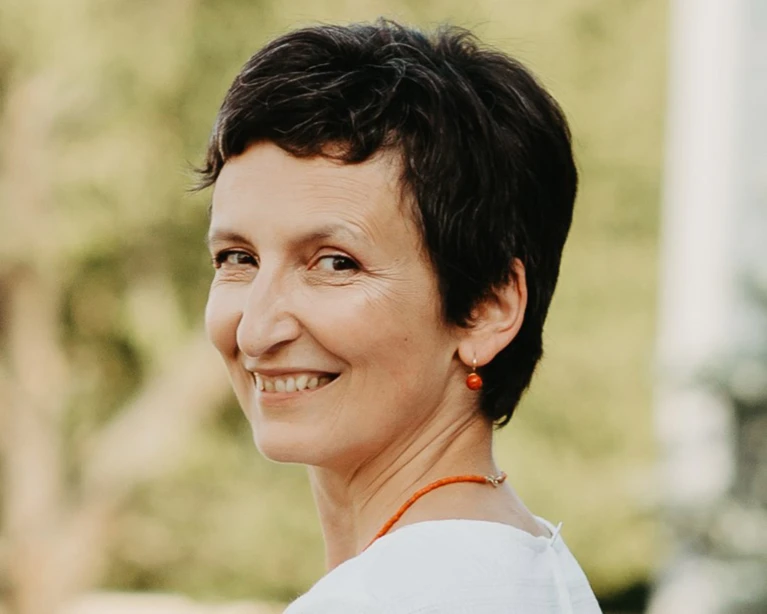
Beata Halassy discovered in 2020, aged 49, that she had breast cancer at the site of a previous mastectomy. It was the second recurrence there since her left breast had been removed, and she couldn’t face another bout of chemotherapy.
Halassy, a virologist at the University of Zagreb, studied the literature and decided to take matters into her own hands with an unproven treatment.
A case report published in Vaccines in August1 outlines how Halassy self-administered a treatment called oncolytic virotherapy (OVT) to help treat her own stage 3 cancer. She has now been cancer-free for four years.
In choosing to self-experiment, Halassy joins a long line of scientists who have participated in this under-the-radar, stigmatized and ethically fraught practice. “It took a brave editor to publish the report,” says Halassy.
Up-and-coming therapy
OVT is an emerging field of cancer treatment that uses viruses to both attack cancerous cells and provoke the immune system into fighting them. Most OVT clinical trials so far have been in late-stage, metastatic cancer, but in the past few years they have been directed towards earlier-stage disease. One OVT, called T-VEC, has been in approved in the United States to treat metastatic melanoma, but there are as yet no OVT agents approved to treat breast cancer of any stage, anywhere in the world.
Halassy stresses that she isn’t a specialist in OVT, but her expertise in cultivating and purifying viruses in the laboratory gave her the confidence to try the treatment. She chose to target her tumour with two different viruses consecutively — a measles virus followed by a vesicular stomatitis virus (VSV). Both pathogens are known to infect the type of cell from which her tumour originated, and have already been used in OVT clinical trials. A measles virus has been trialled against metastatic breast cancer.
Halassy had previous experience working with both viruses, and both have a good safety record. The strain of measles she chose is used extensively in childhood vaccines, and the strain of VSV induces, at worst, mild influenza-like symptoms.
Halassy’s experience with self-treatment has changed the focus of her research. Credit: Ivanka Popić
Over a two-month period, a colleague administered a regime of treatments with research-grade material freshly prepared by Halassy, injected directly into her tumour. Her oncologists agreed to monitor her during the self-treatment, so that she would be able to switch to conventional chemotherapy if things went wrong.
The approach seemed to be effective: over the course of the treatment, and with no serious side effects, the tumour shrank substantially and became softer. It also detached from the pectoral muscle and skin that it had been invading, making it easy to remove surgically.
How a trove of cancer genomes could improve kids’ leukaemia treatment
Analysis of the tumour after removal showed that it was thoroughly infiltrated with immune cells called lymphocytes, suggesting that the OVT had worked as expected and provoked Halassy’s immune system to attack both the viruses and the tumour cells. “An immune response was, for sure, elicited,” says Halassy. After the surgery, she received a year’s treatment with the anticancer drug trastuzumab.
Stephen Russell, an OVT specialist who runs virotherapy biotech company Vyriad in Rochester, Minnesota, agrees that Halassy’s case suggests the viral injections worked to shrink her tumour and cause its invasive edges to recede.
But he doesn’t think her experience really breaks any new ground, because researchers are already trying to use OVT to help treat earlier-stage cancer. He isn’t aware of anyone trying two viruses sequentially, but says it isn’t possible to deduce whether this mattered in an ‘n of 1’ study. “Really, the novelty here is, she did it to herself with a virus that she grew in her own lab,” he says.
Ethical dilemma
Halassy felt a responsibility to publish her findings. But she received more than a dozen rejections from journals — mainly, she says, because the paper, co-authored with colleagues, involved self-experimentation. “The major concern was always ethical issues,” says Halassy. She was particularly determined to persevere after she came across a review highlighting the value of self-experimentation2.
That journals had concerns doesn’t surprise Jacob Sherkow, a law and medicine researcher at the University of Illinois Urbana-Champaign who has examined the ethics of researcher self-experimentation in relation to COVID-19 vaccines.
Huge leap in breast cancer survival rate
The problem is not that Halassy used self-experimentation as such, but that publishing her results could encourage others to reject conventional treatment and try something similar, says Sherkow. People with cancer can be particularly susceptible to trying unproven treatments. Yet, he notes, it’s also important to ensure that the knowledge that comes from self-experimentation isn’t lost. The paper emphasizes that self-medicating with cancer-fighting viruses “should not be the first approach” in the case of a cancer diagnosis.
“I think it ultimately does fall within the line of being ethical, but it isn’t a slam-dunk case,” says Sherkow, adding that he would have liked to see a commentary fleshing out the ethics perspective, published alongside the case report.
Halassy has no regrets about self-treating, or her dogged pursuit of publication. She thinks it is unlikely that someone would try to copy her, because the treatment requires so much scientific knowledge and skill. And the experience has given her own research a new direction: in September she got funding to investigate OVT to treat cancer in domestic animals. “The focus of my laboratory has completely turned because of the positive experience with my self-treatment,” she says.