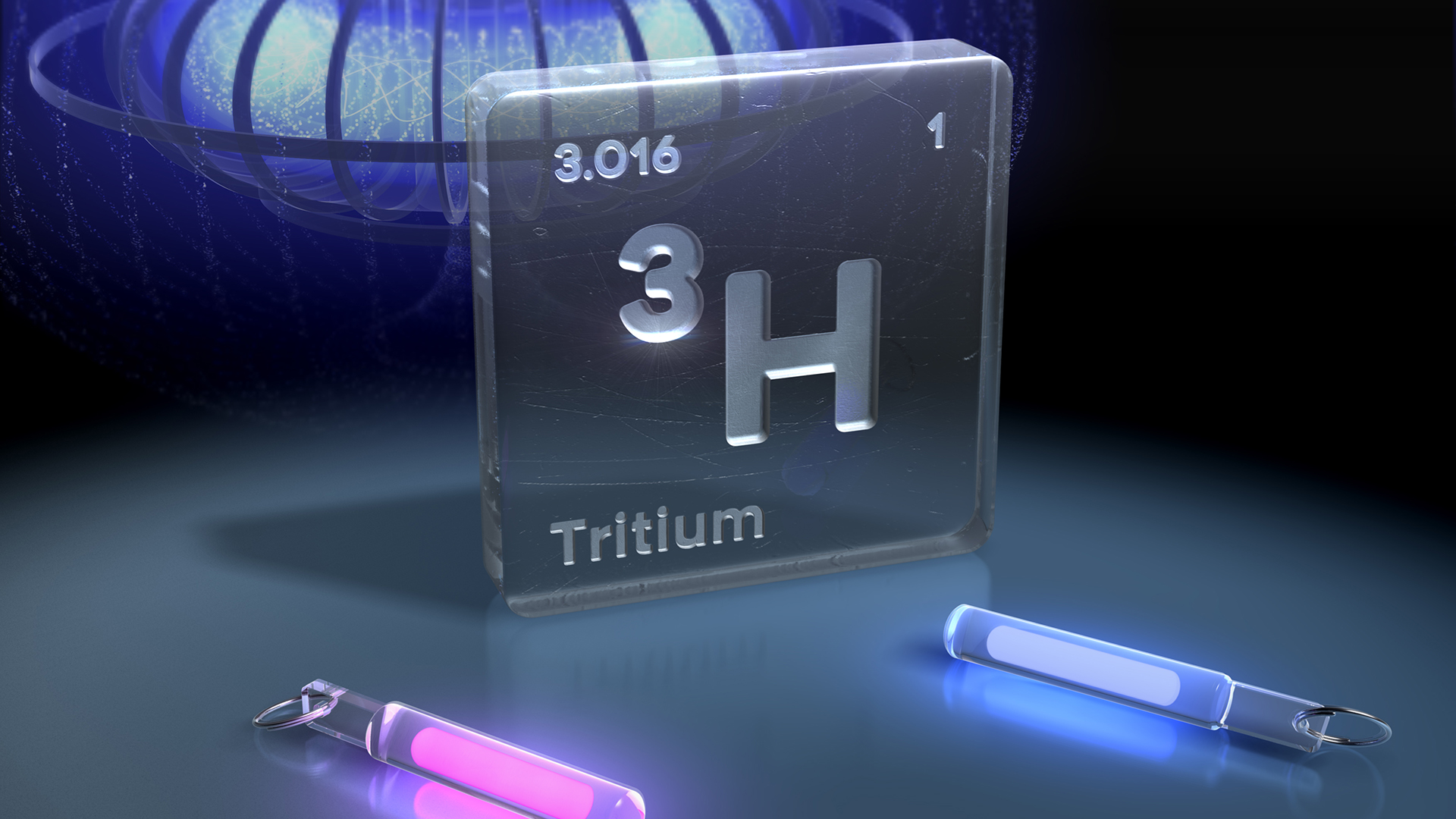
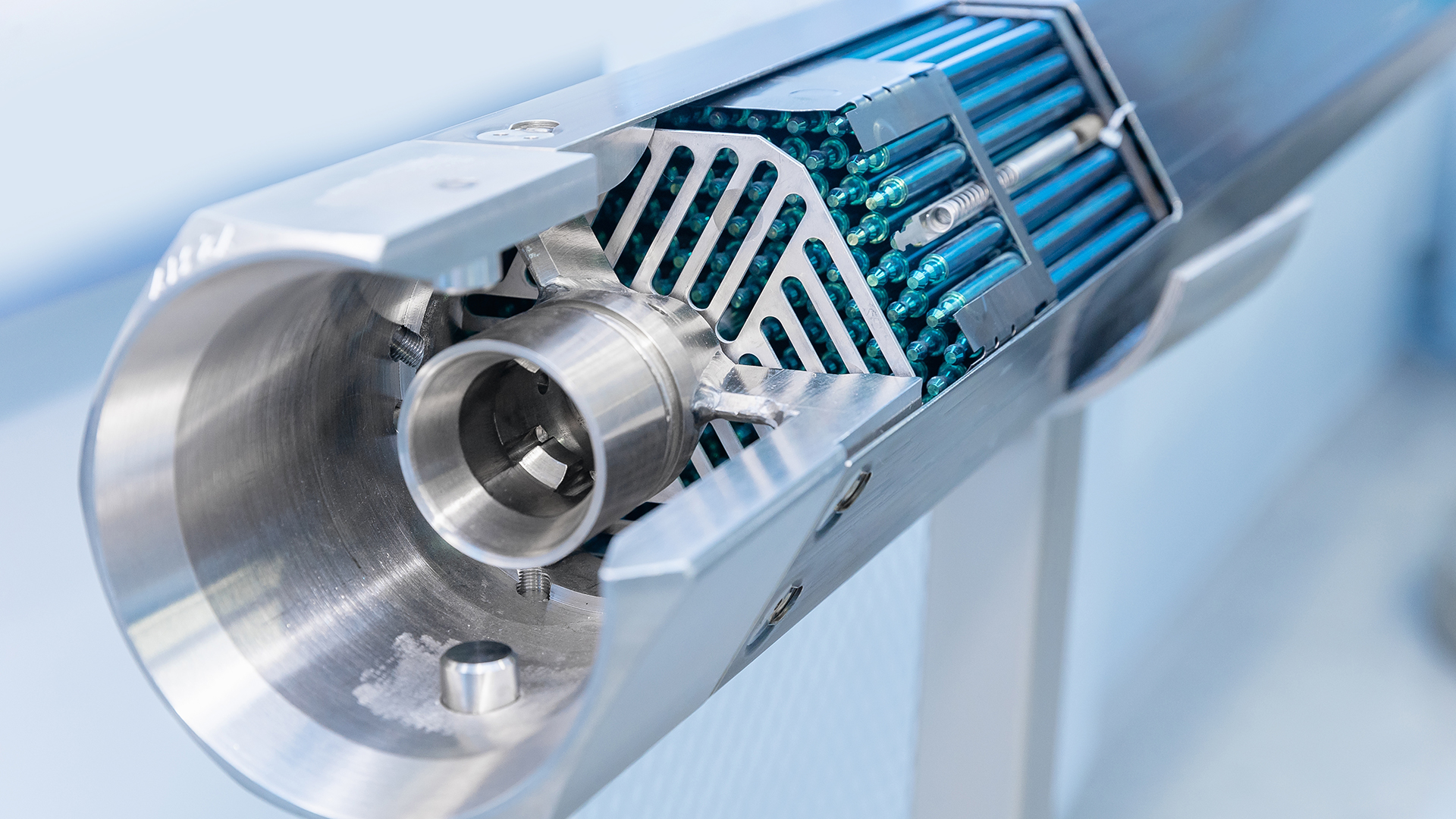
Tritium, the radioactive hydrogen isotope, is crucial for nuclear fusion, promising limitless clean energy. For over three decades, the Tritium Laboratory Karlsruhe has pioneered safe tritium handling and fuel cycle research.
Protium, deuterium, and tritium are three isotopes of hydrogen. Although protium and deuterium are stable and plentiful on Earth, tritium stands out as a beta emitter with a half-life of approximately 12.3 years.
It is formed naturally only in the upper atmosphere and, consequently, its procurement heavily relies on technical sources. Tritium is produced in nuclear reactions and is a valuable by-product in fission reactors. Most importantly, tritium emerges as an essential component in the pursuit of commercial fusion power generation. The deuterium-tritium fusion reaction stands out as the foremost and most viable pathway to achieving the goal of limitless, clean energy.
Development of a safe and efficient fuel cycle for fusion reactors
In today’s rapidly evolving fusion landscape, an astonishing variety of confinement types is being explored through numerous public and private experimental initiatives. However, technical requirements and challenges associated with the tritium fuel cycle are largely unaffected whether a magnetic or inertial confinement is chosen.
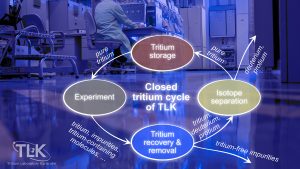
In any case, tritium must be stored, injected into the reaction location, and the exhaust gas – which is a complex mixture of unburned fuel, helium-‘ash’, other by-products, and many secondary impurities – must be processed efficiently. In addition, an outer loop must be established where tritium, bred through the reaction of fusion-born neutrons with lithium, is purified and prepared for reinjection. In a DEMO-like reactor with a thermal power of approximately 3GW, hundreds of grams of tritium are both consumed in the reactor and generated from lithium daily. This process involves handling a couple of kilograms of tritium as it continuously cycles through the processing loops.
Over 30 years of tritium handling and research at Tritium Laboratory Karlsruhe The radioactive nature requires one to face challenges in safely and efficiently handling large amounts of tritium. This necessitates dedicated technology advancements that encompass every facet of the tritium cycle, including its production, secure storage, precise detection, and efficient processing.
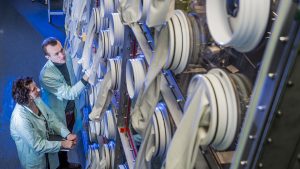
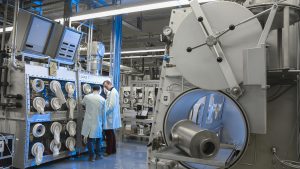
In the early 1990s, the Tritium Laboratory Karlsruhe (TLK) was founded with the mission to develop the deuterium-tritium fuel cycle for nuclear fusion. Today, the TLK has a handling license for 40g of tritium and currently maintains an extensive stock of about 30g. With this and its extensive infrastructure systems and experimental facilities, TLK is a worldwide unique large-scale research facility. Early pioneering research and development endeavours at TLK targeted the inner fuel cycle of ITER, resulting in the provision of its integrated design. What were once merely experimental systems have now evolved to become the robust backbone of TLK’s closed tritium cycle. These advanced systems permit a multitude of sophisticated experiments with high-purity tritium. With an area of 1,600m² hosting over 20 specialised gloveboxes, many experiments are run in parallel and are set up and dismantled again. This is vital in a rapidly developing environment such as research with and on tritium. TLK is the host for the Karlsruhe Tritium Neutrino Experiment (KATRIN), which has achieved worldwide visibility through its recent successes in direct neutrino mass measurement running since 2018. Until June 2024, more than 1,000 days of tritium circulation were achieved with an unprecedented total throughput of 31kg of tritium (98.5% purity).
In addition to the work for KATRIN and on the fuel cycle for nuclear fusion, TLK conducts research in the areas of astroparticle physics with tritium and fundamental properties of tritiated molecules. Furthermore, TLK is developing techniques and components to overcome the challenges in the handling and processing of tritium on an industrial scale. TLK is leading the development and application of tritium analytics embedded in these processes.
Addressing present technological challenges of tritium
To address challenges related to tritium for future nuclear reactors, tritium research at TLK is organised in four strategic thrusts:
Tritium properties and material interactions
Instead of studying tritium, hydrogen and deuterium can serve as surrogates for physical and chemical properties. However, the use of tritium is inevitable due to complex radiochemistry. Ultimately, there is no substitute for performing the experiments using tritium. Tritium data empowers scientists and engineers to model and design tritium processes and components up to the system level. Ongoing studies of fundamental tritium properties encompass understanding the viscosity of tritium as well as the solubility of tritium in materials. Understanding the latter is paramount for any blanket concept and design.
Research with and processing of tritium requires dedicated analytical methods. TLK is leading the development and in-field testing of tritium-tailored technologies (e.g. Raman, IR, and beta-induced X-ray spectroscopy systems) for rugged application in accurate process monitoring. Additionally, TLK aims at the development of comprehensive accountancy strategies specifically designed for high-throughput tritium loops in fusion reactors. These are needed to ensure reliable tracking and management of tritium inventory, as it will be mandatory by the regulatory body. Many ongoing tasks are focused on devising tritium analytics and analytical concepts tailored to ITER, the current biggest experimental effort on the path to fusion power. By the nature of TLK’s closed tritium loop, both novel and commercial detectors can be characterised for tritium service under relevant process conditions.
Tritium qualification of processes and scaling-up of systems to technical scale
TLK is bridging the gap between small-scale experimental research and plant-scale process systems. It offers a multitude of experimental rigs for full-tritium qualification of processes, components, and entire systems to public and private research endeavours. Current examples include the development of permeation barrier concepts to reduce tritium migration and the implementation of established and novel isotope separation systems to increase the recycling factor of the tritium plant. A primary research thrust will address the pressing question of the extraction of tritium from the blanket purge gas.
Tritium decontamination, safety and waste management
Finally, TLK is developing end-of-lifecycle solutions for tritium-facing components to reduce contaminated waste. Currently, we establish UV/ozone cleaning methods for the removal of large-area surface contamination and enable in-situ decontamination. In addition, we study decontamination by advanced vacuum furnace treatment.
For a safe, efficient, and economical tritium fuel cycle, these fundamental open questions must be addressed, and a wide range of tritium technologies need to be developed and established. In addition to driving forward technological research, we also need to start training and building the knowledge of the future workforce and tritium experts today. Located in Germany and funded by its Helmholtz Association, TLK stands as a key player in tritium research for Europe. Our team is not just prepared but passionately motivated for the transition from fundamental research toward commercial fusion applications.
Please note, this article will also appear in the 19th edition of our quarterly publication.
The UK’s Nuclear Decommissioning Authority (NDA) is investing £30m to drive research and innovation across the sector.
NDA is awarding contracts to pioneer new methods to facilitate safe, sustainable and economical nuclear decommissioning.
The initiative is part of the UK’s wider target of cleaning up the country’s oldest nuclear energy sites.
These nuclear power projects were developed without decommissioning in mind, creating challenges that require innovative technological solutions.
The NDA funding aims to solve these technical problems effectively and efficiently, saving costs in the process.
Kate Canning, Head of R&D at the NDA, explained: “We are delighted with the high quality of the submissions received, including from many new organisations alongside those established in the nuclear sector.
“It’s an exciting time for the nuclear industry, and we believe the range of organisations involved in the frameworks will provide a diverse range of experience and knowledge to deliver innovative research that supports the delivery of the NDA mission.”
Advancing innovation and skills in nuclear decommissioning
Annually, the NDA invests £100m into Research & Development (R&D) as part of its decommissioning programme.
The NDA Research Portfolio (NRP) competition plays a crucial role in the strategic research agenda. By directly funding research, the NRP supports the NDA’s key objectives, including fostering innovation across multiple sites and developing a diverse skill set within the supply chain.
Focus areas of the contracts
The newly awarded contracts, spanning four years, replace the previous Direct Research Portfolio (DRP) from 2020. These contracts focus on three key areas:
University Interactions: Enhancing academic research to build skills in the nuclear decommissioning sector.
Enabling Decommissioning, Waste Management, and Remediation: Supporting research on radioactive waste management and advanced decommissioning techniques.
Spent Fuels and Nuclear Material: Facilitating research on spent fuel storage, disposal, and strategic development for plutonium and uranics.
Collaboration across sectors
The seven successful consortia involve over 60 organisations, including established nuclear companies, global cross-sector corporations, UK universities, national laboratories, and small to medium-sized enterprises.
This collaboration is expected to bring a wealth of experience and innovative solutions to the industry.
Building on past successes
Previous NRP achievements include developing new treatment technologies for uranic materials and a non-contact asbestos detection system using hyperspectral techniques. These innovations have significantly contributed to the NDA’s decommissioning efforts.
Aligned with the NDA’s University Research Strategy, the NRP also addresses broader R&D needs identified by the Nuclear Waste and Decommissioning Research Forum (NWDRF).
This group aims to enhance the coordination of R&D and technical programmes across the UK’s site decommissioning, remediation, and integrated waste management activities.
The UK Government has unveiled plans to develop the Chapelcross nuclear power station into a hub for green energy.
The project, backed by £15.3m combined funding from the UK and Scottish Governments, looks to transform the Chapelcross nuclear site into a leading beacon of renewable energy.
Plans for the site, outlined in the ‘Chapelcross Masterplan’, include developing hydrogen production storage, advanced manufacturing, and energy and enterprise campuses to accelerate the UK’s net zero ambitions.
Repurposing the former nuclear plant will generate growth in the local economy and create lucrative green energy job opportunities for the region.
Chapelcross: A rich history in clean energy
Located near Annan, Chapelcross nuclear power station, Scotland’s pioneer in atomic energy, emerged from the Cold War era.
Built as a sister plant to Calder Hall in England, its primary function was the production of plutonium for the UK’s nuclear weapons programme.
The plant, which began operating in 1959, also generated electricity, supplying the National Grid. Its four reactors and iconic cooling towers became emblematic of Britain’s embrace of nuclear power.
However, Chapelcross was more than just a power station. It was a strategic asset, a key component in the nation’s nuclear deterrent.
While the plant made significant contributions to the UK’s energy supply, the Chapelcross nuclear site ceased operation in 2004, with its four cooling towers demolished in 2007.
A landmark of UK energy innovation in the 20th century, Chapelcross now has the opportunity to become a key player in the nation’s energy transition.
Developing a major UK green energy hub
Chapelcross spans 210 hectares in size, with the land owned by the Nuclear Decommissioning Authority (NDA).
The site is currently being safely and securely decommissioned by Nuclear Restoration Services (NRS), a subsidiary of the NDA.
Now, the NDA is looking to attract a strategic developer to provide expertise and private finance to help transform the site into a clean energy powerhouse.
NDA CEO David Peattie explained: “We are committed to decommissioning our sites safely, securely and sustainably – leaving a positive, long-lasting legacy for future generations.
“Our ultimate aim is to free up our land for reuse, delivering benefits to local communities, the environment, and the wider economy. The green energy hub will enable us to deliver this at Chapelcross.
“The masterplan marks tangible progress in making the hub a reality and is a testament to the value of working in partnership. Selecting a strategic developer will enable us to build on this further and leverage the benefits of public and private sector collaboration.”
Strategic Developer Proposals must be submitted by 25 October 2024, and the NDA plans to make an appointment early in 2025.
Work performed within the ANItA project identifies SMR designs suitable for electricity production in Sweden and points out the need for further research.
In one of the ongoing initial projects within ANItA, a Swedish national competence centre for nuclear power technology, work is performed to identify small modular nuclear reactor (SMR) designs that are suitable for Sweden’s electricity generation in the relatively near future. The aim is, furthermore, to point out novelties compared with the current Swedish reactor fleet that might need further investigation.
Suitable SMR designs
SMRs are considered an option for adding new nuclear capacity in Sweden. The SMRs can be used for different purposes. In addition to electricity generation, the heat produced can be used for district heating to heat homes and commercial buildings or be supplied to various industrial processes, including hydrogen production. All these applications are investigated within ANItA.
Various types of SMRs have been proposed, some based on the technology of current nuclear reactors and others intended for use in future Generation IV nuclear power systems. The types based on the technology of existing nuclear reactors usually belong to the classification known as Generation III+ reactors. Design descriptions of many, but not all, proposed SMRs have been compiled by IAEA.¹
As the name suggests, SMRs differ from large-scale reactors in that they are smaller and more modular. This means that they have a smaller physical size as well as power output and, to a larger extent, will be built using pre-fabricated modules that will be assembled at the reactor construction site. These features imply potential advantages over large-scale reactors. The smaller size and output often make it easier to design reactors that are easier to operate and more easily can be used for other purposes than only electricity production. Importantly, the increased modularity also allows for shorter construction times.
There are currently six operable large-scale reactors in Sweden, and six permanently shut down. All of these started operation between 1972 and 1985 and are of the type light-water reactor, meaning that they use light-water (i.e. normal water) as coolant and to moderate the energy of the neutrons released in the fission process taking place in the nuclear fuel. The term light-water reactors is used to distinguish them from heavy-water reactors, which use heavy water instead (i.e. water enriched in the hydrogen isotope deuterium).
There are two main varieties of light-water reactors: boiling water reactors (BWRs) and pressurised water reactors (PWRs); both of these are used in Sweden. Light-water reactor technology is the most common reactor technology not only in Sweden but also worldwide.
As the legislation in Sweden is adapted to land-based (as opposed to marine-based) light-water reactors, it will, from a licensing perspective, be less of an effort to deploy this type of SMR compared with other types. Additionally, to be easily deployable, the design needs to be at an advanced stage. Furthermore, the SMR should be developed by an organisation that has the capability of delivering the reactor, and that is based in a country from which it is politically acceptable to acquire nuclear technology.
More than 25 land-based light-water SMR designs have been proposed. Of these, one BWR and four PWRs are used as reference designs in the work performed in this project. The five SMRs are (with the developing organisation within parentheses):
In the proposed light-water SMR designs, there are several notable novel features compared with the current and previous Swedish reactors. Some of these features are or have been in use in other reactors outside Sweden, whereas some are novel to the world. Many of the novelties can be expected to lead to a simplified construction or operation of the reactors. However, before they can be employed in a real reactor, it is necessary that the novelties are well understood from a technical perspective and that there are no regulatory hurdles to implement them.
Notable novel features of the proposed SMR designs compared with the current and previous Swedish reactors, apart from the smaller size and increased modular construction, include:
• Enhanced use of natural circulation • Increased passive safety • Novel reactor containment designs • Integral PWR designs • Novel types of water chemistry • Having several reactors located in a common reactor building and controlled from a common control room • Increased load-following capability • Dry storage of used nuclear fuel
Natural circulation means that no pumps are used to circulate the reactor coolant. It allows for a simplified reactor design and operation with fewer components and less maintenance need. Additionally, it allows for increased safety, not relying on the pumps.
Passive safety, such that no operator action, external supply of electricity, or other auxiliary systems are needed to keep the reactor core cooled for three days or longer, is implemented in the SMR designs. Passive safety is, to a large extent, enabled by the use of natural circulation. Other features enabling passive safety include gravity and pressurised systems.
The reactor containment is a structure that has the function of containing radioactivity in case of an accident. All Swedish reactors have containments made of pre-stressed concrete, whereas the SMR designs have containments made of steel or steel–concrete composite materials.
In integral PWR designs, some of the main components, e.g., steam generators, drive mechanisms for control rods, and pressuriser, are located inside the reactor pressure vessel. Integral PWRs are much more compact than normal PWRs and the reactor is designed to be delivered as one unit that is connected to the non-nuclear parts of the power plant.
The most notable novelty in water chemistry is the proposed use of boron-free PWR coolant in some SMRs. Boron is used in current PWRs to control the reactivity, i.e., the rate of the fission process. Some other novel types of water chemistry are also proposed. Water chemistry needs to be optimised to keep material degradation at a minimum. This is essential for the long-term operation of the reactors.
Having several small reactors located in one common reactor building and controlled from one common control room can be efficient from the perspectives of construction and operation. The single control room makes it possible to operate the reactors using less staff.
Load-following capability is the capability of adjusting the electrical output to the grid depending on the demand for electricity. To some extent, this flexibility already exists in current reactors. There are two main ways of load-following, one being to reduce the reactor power when the electricity demand decreases and the other to maintain the reactor at maximum power and use the steam for purposes other than producing electricity, for example, to produce hydrogen or provide heat to other industrial processes.
The used nuclear fuel in Sweden is stored in water pools (so-called wet storage) at the interim storage facility Clab in Oskarshamn. Some SMR designs include dry storage of used fuel at the reactor site, as is done in several other countries. There are two major benefits of introducing dry storage in Sweden. Firstly, there will be no need to expand Clab or build a new wet-storage facility once its capacity is reached. Secondly, transportation of spent nuclear fuel will be less frequent. This could be especially beneficial if SMRs are deployed at new sites that are not connected to the current transportation infrastructure by sea.
Need for further investigation
Novel features can affect one or more of nuclear reactor licensing, construction, and operation. Maintenance of reactor components and management of radioactive waste are here considered part of the operation of the reactors.
All of the novelties listed above, as well as the smaller size and the increased use of modularity, can affect the licensing and operation of the SMRs. The smaller size, the increased use of modularity, and the new containment designs will also affect the construction of the power plants.
To successfully deploy SMRs in Sweden, it is important to address the potential barriers caused by the novel features. The novelties need to be well understood and their functionality proven, and they need to be permitted. There is thus a need for further investigation regarding technical features as well as the legislation concerning nuclear power. Additionally, the economic aspects of SMRs need to be considered. Some of the novelties and the corresponding potential barriers are the topics of other currently ongoing ANItA projects. Others are foreseen to be researched in future ANItA projects.
Summary and conclusions
SMRs are one option for adding new nuclear capacity to meet the future electricity demand in Sweden. Of the various SMR types proposed, light-water SMRs, i.e. reactors similar to but smaller and more modular than current large-scale reactors, are the most likely to be built in the relatively near future. Because of their similarities with current reactors, the proposed light-water SMRs should, for the most part, be rather straightforward to license, construct, and operate. However, there are some novel technical features in the proposed SMR designs that require further investigation for the successful deployment and operation of them in Sweden.
A report explaining the novel technical features and the need for investigation in more detail will be available at the ANItA website around the end of this year as this part of ANItA (Project A2) nears completion.
References
Advances in Small Modular Reactor Technology Developments, IAEA, 2022, https://aris.iaea.org/Publications/SMR_booklet_2022.pdf
Please note, this article will also appear in the 19th edition of our quarterly publication.
Using a new LIBS system, the measurement of salts within nuclear power systems can be easier than ever. Professor Phonigikaroon of Virginia Commonwealth University discusses this new system and the potential it holds.
Imagine being able to peer into the system of an advanced nuclear reactor design and monitor the composition of the molten salt that fuels it in real-time. This isn’t science fiction – it’s a capability that laser-induced breakdown spectroscopy (LIBS) could bring to the nuclear industry.
LIBS is a powerful analytical technique. It uses a high-powered laser to blast a sample into a plasma, releasing a flash of light that acts as a fingerprint and reveals which elements are present. Scientists have already explored LIBS to analyse nuclear materials in molten salt. Still, there’s a catch: most of these studies required removing the salt from the reactor, a time-consuming process with a risk of contamination.
A few scientists and engineers have attempted to use LIBS to analyse molten salt directly. They’ve pointed their lasers at the churning surface of the salt, but this approach has its downsides. The laser can create splashes, introducing errors and damaging equipment.
There’s a better way. What if you could create an aerosol from the molten salt and then analyse that instead? This approach has shown promise, but it needs refinement. That’s where the team at Virginia Commonwealth University (VCU) comes in.
VCU and the LIBS system
The VCU researchers are on a mission to perfect the molten salt aerosol-LIBS setup. They’re focusing on measuring the concentration of cerium, an element that mimics the behaviour of plutonium and can be safely handled. By optimising their technique for cerium, they can create a blueprint for monitoring other nuclear materials.
The potential impact is huge. Aerosol-LIBS could revolutionise nuclear engineering, replacing slow and dangerous sample extraction with real-time monitoring. It could make pyroprocessing technology and molten salt reactors both safer and more efficient. Opening up research opportunities to more students could also help train the next generation of nuclear scientists. The VCU team’s work is just the beginning – as they refine their technique and share their findings, they’ll bring the nuclear industry one step closer to a future where reactors run cleaner, safer, and smarter. And it’s all thanks to the power of a laser and the insight of LIBS.
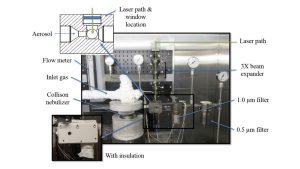
Fig. 1: Experimental setup within the glovebox
Experimental scheme
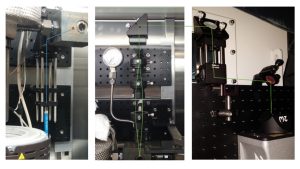
This study utilised a modified molten salt aerosol-Laser Induced Breakdown Spectroscopy (LIBS) system, building upon the design of Williams and Phongikaroon.1,2 Key modifications included a redesigned sampling chamber with a sudden expansion nozzle to minimise mixing and laser light obstruction (see Fig. 1). The chamber featured three 19mm sapphire windows for improved optical access and ease of cleaning. Dual filtration (1.0µm and 0.5µm) ensured complete aerosol removal with minimal pressure drop. The system was insulated for easy access and operated within an argon atmosphere glove box. A Nd:YAG laser (532nm, 50±5mJ) was used for excitation, with a 3X beam expander added to the optical path (see Fig. 2). Emissions were collected via a 75mm lens, redirected by an elliptical mirror, and focused onto a 50µm fibre leading to an Andor Mechelle 5000 spectrometer with ICCD detection.
Pressures were monitored at five system locations. The nebuliser inlet to sampling chamber differential was maintained at 12psi for consistent aerosol generation. System temperatures were controlled, with the sampling chamber operated below 500°C to prevent window damage.
Fig. 2: Optical configuration used in this work: (right) laser path exterior to the glovebox, (centre) turning mirror and 3X beam expander, and (left) plasma light collection
Experiments employed LiCl-KCl eutectic salt with CeCl3 as a surrogate, with concentrations spanning 0.1-5wt%. Salts were prepared in an inert glovebox, dried, melted, and homogenised. The nebuliser design required the salt ingot to be broken into smaller pieces for loading.
Initial experiments optimised the LIBS gate delay (100ns to 25µs). Calibration curves were then generated by averaging 300 shots per repetition, with seven repetitions per sample. Additional data was collected after five hours of operation for one sample. Post-experiment, deposited salt was recovered, and all components were cleaned. Material balance was tracked, though some loss was unavoidable due to thin film deposition on stainless steel components. Salt samples from various system locations were dissolved in nitric acid and diluted for ICP-MS analysis using an Agilent 7900 instrument.
Outcomes and achievements
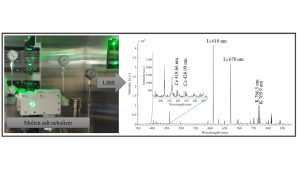
Univariate and multivariate calibration models were developed and successfully tested. The best univariate calibration curve was generated using the Ce 446.02nm line and yielded a limit of detection (LOD) of 0.013wt% Ce with a root mean squared error of cross-validation (RMSECV) – leave-one-out cross-validation – of 0.059wt% Ce. For the multivariate calibration approach, a partial least squares (PLS) model was generated using seven latent variables. The RMSECV for the PLS model was determined to be 0.052wt% Ce using Venetian blinds cross-validation with ten splits in the data and with 10% being left out per split. The LOD determined in this work are in the lower range for Ce – as found in the literature. This work has demonstrated that the molten salt aerosol-LIBS system is capable of quantitative measurements in real-time (see Fig. 3).
Fig. 3: Graphical highlight
References
A. N. Williams, S. Phongikaroon. 2017 “Laser-Induced Breakdown Spectroscopy (LIBS) in a Novel Molten Salt Aerosol System,” Applied Spectroscopy, 71, 744-749.
A. N. Williams, S. Phongikaroon. 2018 “Laser-Induced Breakdown Spectroscopy (LIBS) Measurement of Uranium in Molten Salt,” Applied Spectroscopy, 72, 1029-1039.
The U.S. Department of Energy (DOE) has announced it will fund up to $900m support the deployment of small modular reactors.
Then DOE issued a notice of intent to advance the development of Generation III+ small modular reactors, a move that will help the US increase its nuclear energy capabilities significantly.
In addition to driving clean energy goals, investments in small modular reactors will help create skilled job opportunities and position the country as a global leader in nuclear power.
Jennifer Granholm, US Secretary of Energy, commented: “President Biden is determined to ensure nuclear power—the nation’s single largest source of carbon free electricity—continues to serve as a key pillar of our nation’s transition to a safe and secure clean energy future.
“Today’s announcement will support early movers in the nuclear sector as we seek to scale up nuclear power and reassert American leadership in this critical energy industry.”
Importance of nuclear energy to the US
Nuclear power is the US’ largest source of carbon free electricity, with the industry directly employing around 60,000 people nationwide and hundreds of thousands more indirectly.
Nuclear energy is a viable option to meet this demand, with small modular reactors holding the potential to unlock the US’ nuclear potential.
Benefits of small modular reactors
Small modular reactors are versatile and can be safely deployed in various settings, from remote areas to urban environments, due to their small footprint, modular design, factory construction, and established fuel supply chains.
These features lower overall project costs. Small modular reactors can meet localised power demands, be scaled up for larger needs, or complement renewable energy sources.
How will the funding be used?
The Consolidated Appropriations Act of 2024, funded by the President’s Bipartisan Infrastructure Law, has enabled the DOE to offer funding in two tiers.
Tier 1, managed by the Office of Clean Energy Demonstrations (OCED), will provide up to $800m to support up to two first-mover teams, including utilities, reactor vendors, constructors, and end-users, to deploy a first plant and facilitate a multi-reactor, Gen III+ orderbook.
Tier 2, managed by the Office of Nuclear Energy (NE), will provide up to $100m to support additional Gen III+ deployments by addressing gaps in design, licensing, supplier development, and site preparation.
The DOE plans to release a funding solicitation in late summer or autumn of 2024.
European companies have agreed to establish a European Fusion Association to secure Europe’s long-term energy supply.
This initiative aims to tackle one of the biggest challenges for the coming decades: enhancing strategic autonomy for clean energy, with fusion energy being key to this ambition.
The European Fusion Association (EFA) seeks to build a strong, world-class European fusion ecosystem that ensures a sustainable long-term supply chain for fusion energy.
Establishing a Fusion Association based on shared beliefs
The founding members of this association include the following companies:
Alsymex (France)
ASG (Italy)
Assystem (France)
Bruker EAS (Germany)
Demaco (Netherlands)
Gauss Fusion (Europe)
IDOM (Spain)
Simic (Italy)
Subra (Denmark)
Trumpf (Germany)
At the ITER Private Sector Fusion Workshop, held in May 2024 at Cadarache, the idea was born to establish the European Fusion Association, driven by a shared belief that Europe covers all necessary technologies and know-how to develop a fusion energy system on the continent.
So far, the private fusion industry has attracted over €6bn in private investment around the world, while European public authorities are supporting public and private fusion initiatives with significant funding plans.
Making fusion a reality in Europe
By uniting European industry around a common vision, the European Fusion Association aims to make fusion energy a reality in Europe.
The association firmly believes that only a united Europe can achieve true success in this field and prevent the fragmentation of the European industry into isolated national entities.
A unified body in Europe is essential to representing the diverse interests of the fusion industry. It should encompass all stakeholders, from fusion power plant designers to technology developers and supply chain companies, in their dealings with Brussels and national governments.
The EFA will be formally established in the next few months and will welcome all interested actors involved in fusion.
This shows the importance of joining forces in Europe to guarantee energy independence for future generations.
European companies have agreed to establish a European Fusion Association to secure Europe’s long-term energy supply.
This initiative aims to tackle one of the biggest challenges for the coming decades: enhancing strategic autonomy for clean energy, with fusion energy being key to this ambition.
The European Fusion Association (EFA) seeks to build a strong, world-class European fusion ecosystem that ensures a sustainable long-term supply chain for fusion energy.
Establishing a Fusion Association based on shared beliefs
The founding members of this association include the following companies:
Alsymex (France)
ASG (Italy)
Assystem (France)
Bruker EAS (Germany)
Demaco (Netherlands)
Gauss Fusion (Europe)
IDOM (Spain)
Simic (Italy)
Subra (Denmark)
Trumpf (Germany)
At the ITER Private Sector Fusion Workshop, held in May 2024 at Cadarache, the idea was born to establish the European Fusion Association, driven by a shared belief that Europe covers all necessary technologies and know-how to develop a fusion energy system on the continent.
So far, the private fusion industry has attracted over €6bn in private investment around the world, while European public authorities are supporting public and private fusion initiatives with significant funding plans.
Making fusion a reality in Europe
By uniting European industry around a common vision, the European Fusion Association aims to make fusion energy a reality in Europe.
The association firmly believes that only a united Europe can achieve true success in this field and prevent the fragmentation of the European industry into isolated national entities.
A unified body in Europe is essential to representing the diverse interests of the fusion industry. It should encompass all stakeholders, from fusion power plant designers to technology developers and supply chain companies, in their dealings with Brussels and national governments.
The EFA will be formally established in the next few months and will welcome all interested actors involved in fusion.
This shows the importance of joining forces in Europe to guarantee energy independence for future generations.
The U.S. Department of Energy (DOE) launched a new vision to mark the two-year anniversary of the launch of the US Bold Decadal Vision for Commercial Fusion Energy.
The DOE Fusion Energy Strategy 2024 was released, marked by an event at the White House co-hosted by the White House Office of Science and Technology Policy.
At the inaugural event where the Bold Decadal Vision was unveiled, DOE launched a Department-wide initiative to develop a strategy for accelerating the viability of commercial fusion energy in partnership with the private sector.
The new strategy is organised around three pillars:
Closing the science and technology (S&T) gap to a commercially relevant fusion pilot plant
Repairing the path to sustainable, equitable commercial fusion deployment
Building and leveraging external partnerships
Reaching the ambitious goals of the Bold Decadal Vision
The White House event aimed to further build awareness and support for fusion energy development by recognising the tangible progress made to reach the ambitious goals of the US Bold Decadal Vision.
“With today’s announcements, DOE has shown once again that we are ambitiously implementing our Bold Decadal Vision for Commercial Fusion Energy,” said DOE Deputy Secretary David Turk.
“We will leverage major new advances in technologies such as high-temperature superconductors, advanced materials, and artificial intelligence to accelerate fusion energy.”
$180m funding for innovation in fusion energy
In support of the fusion energy strategy, DOE also announced a $180m funding opportunity for Fusion Innovative Research Engine (FIRE) Collaboratives.
The FIRE Collaboratives aim to support the further creation of a fusion innovation ecosystem by forming teams with the collective goal of bridging the Department’s Fusion Energy Sciences (FES) programme’s foundational.
Furthermore, they’ll enable science research that meets the needs of the growing fusion industry, including the technology roadmaps of the Milestone-Based Fusion Development Program awardees.
These collaboratives are envisioned as dynamic hubs of innovation to help bolster US-based manufacturing and supply chains, driving advancements in fusion research in collaboration with both public and private entities.
The FIRE Collaboratives Funding Opportunity Announcement can be found on the Funding Opportunities webpage and is open to accredited US colleges and universities, national laboratories, nonprofits, and private companies.
Predictive analytics is receiving an upgrade, thanks to the Garrick Institute for Risk Sciences. Ali Mosleh, the Director of the Institute at the University of California, tells us more.
Predictive analytics, in the broadest definition, is a branch of advanced analytics that uses available information and models to make predictions about future events. As such, it is forward-looking, using past events to anticipate the future, considering inherent uncertainties, and often using probability to codify such uncertainties. It has a long history going back at least four centuries when initial ideas on the formulation of the mathematical theories of chance events, statistics, and probability emerged. While originally, the development and application contexts were insurance and gambling, predictive analytics now play a central role in all branches of science.
The past 50 years have witnessed significant advances in various subdomains of predictive analytics, which are now firmly recognised as indispensable tools in the engineering of ultra-complex systems. Applications include system simulation for design, design optimisation under uncertainty, system control algorithms, system prognostics and health management, reliability assurance, risk control, digital twins, and autonomous operations and safety.
Predictive analytics methods for engineering applications include traditional statistical and probabilistic techniques, as well as more advanced data analytics such as machine learning and artificial intelligence (AI). In many cases, data analytics are used in conjunction with physical models, inductive and deductive logic models, and computer simulations. In the majority of cases, a primary objective is to predict possible trajectories or scenarios of system behaviour in time, covering both normal and anticipated or abnormal and unexpected.
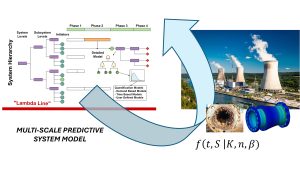
Fig. 1: Multi-level predictive modelling and simulation of complex systems
Ultra-complex systems, however, pose formidable predictability challenges stemming from complexity in topological, functional, and behavioural features, as well as limitations in the data and knowledge needed to understand the complexity. Examples of complex technologies that have benefited from or heavily relied on predictive analytics include nuclear power, petrochemical industries, space systems, numerous consumer products, communication networks, and autonomous transportation systems.
The scale and scope of models and data needed to apply predictive analysis to such systems vary depending on the end use and the level of resolution needed for the engineering application. In some cases, multiscale modelling and integration of many different types of analytical and numerical techniques might be required, almost always with the aid of highly advanced computational techniques and platforms. The following are some examples of successful implementations in a few complex technologies.
Nuclear power safety and reliability
Predictive analytics in the form of Probabilistic Risk Analysis (PRA) and Reliability Analysis play a pivotal role in design, operation, and regulatory compliance in the nuclear industry. In fact, the nuclear industry was the birthplace of the modern model-based PRA. Several techniques have found important applications in operational aspects. Plant Availability and Capacity forecasting and planning, Reliability Centred Maintenance, online risk monitoring, and refuelling shutdown management are examples. The conventional PRA approach in the nuclear industry is based on two primary modelling techniques, namely Event Tree (ET) and Fault Tree (FT) methods, to predict risk scenarios, i.e., the spectrum of evidence (including expert opinion and engineering analysis) are used to estimate the probability of the scenarios.
More recently, powerful simulation-based PRA methods (aka Dynamic PRA) have been explored, and some have been implemented in computational platforms. Dynamic PRA methods significantly improve plant PRAs by providing rich contextual information and explicit consideration of feedback arising from complex equipment dependencies, plant physical process variables, operator actions, and control software. The Accident Dynamics Simulator (ADS) developed by researchers at UCLA Garrick Institute is one such dynamic method. ADS couples a plant thermal-hydraulic model with an operations crew cognitive model to simulate plant response and operator performance during potential nuclear power plant accidents. ADS generates a discrete dynamic event tree (DDET) of a huge number of scenarios based on hardware/software failures, plant thermal and hydraulic response, operator decisions and actions, and stochastically varying timing of events. In ADS, the experience and training of each crew operator are captured in a computer knowledge base model that includes the information needed to assess the plant state, execute procedural actions, and match memorised response actions to perceived plant needs.
Compared to more traditional risk assessment methods (using linked ET and FT), dynamic PRA offers several significant advantages. Dynamic simulation methods more explicitly represent the timing and sequencing of events, can directly calculate the impact of variations of hardware and operator performance on the plant state, and are capable of capturing complex interdependencies. This results in the generation of high-fidelity and more realistic accident evolution scenarios, their consequences, and corresponding probabilities. Simulation-based DPRA has the potential to be the basis of a human operator decision support system and can even function as a virtual operator, particularly in the emerging multi-unit small modular reactors.
Civil aviation system-wide safety
The civil aviation system is an extremely complex web of private and governmental organisations operating or regulating flights involving diverse types of aircraft, ground support, and other physical and organisational infrastructures.
In contrast with many other complex systems, the aviation system may be characterised as an ‘open’ system, as there are many dynamic interfaces with outside organisations, commercial entities, individuals, physical systems, and environments.
Aircraft manufacturers, airlines, airport authorities, and regulatory/oversight agencies such as the US Federal Aviation Administration (FAA) are increasingly relying on predictive analytics to manage complex design and operational decisions. These methods include traditional statistical methods, operations research, reliability analysis, advanced machine learning techniques, and risk-informed decision-making.
One of the most advanced capabilities developed by the UCLA Garrick Institute researchers for the FAA is the Integrated Risk Information System (IRIS), a software platform to help the agency in risk-informing its safety oversight. IRIS uses a wide range of predictive analytics, including a new generation of system modelling known as Hybrid Causal Logic (HCL) methodology. HCL provides a multi-layered capability to fully and realistically capture the effect of factors that directly or indirectly impact civil aviation safety. The main layers include: • A model to define safety context. This is done using a technique known as the Event Sequence Diagram (ESD) method that helps define the kinds of accident and incident scenarios that aviation should be concerned with. • A model to capture the behaviours of the physicalsystem (hardware, software, and environmental factors) as possible causes or contributing factors to accident and incident scenarios delineated by the ESDs. This is done using common system modelling techniques such as Fault Tree. • A model to extend the causal chain of events to potential human and organisational roots. This is done using Bayesian Net (BN). BNs are particularly useful since they do not require complete knowledge of causes and effects.
The integrated model is, therefore, a hybrid causal model with the corresponding sets of analytical and computational procedures to quantify the event probabilities. IRIS offers a unifying framework for system safety assessment, hazard analysis, and risk analysis. As a causal model, it provides a vehicle for identifying cause-effect relations between various elements of the aviation system. Categories of causal factors include human activities (ground and flight crews, inspectors), organisational factors (airline management, FAA regulatory and oversight functions), hardware/software failures, and adverse conditions of the physical environment. IRIS software provides probabilistic answers to some of the most raised questions regarding aviation safety:
What is the current level of aviation safety?
What are the most important contributors to aviation risk and hazards?
What is the safety/risk impact of changing ‘x’ (e.g., introducing a new operating procedure)?
What are the likely causes of a given incident/accident?
How significant is a given ‘safety finding’ by inspectors?
What should we use as Safety Performance Indicators?
Is reducing the statistical rate of accidents (e.g., crash rates) the only way to know that we have improved safety? If not, how do we truly know that we have improved safety?
Fig. 2: Electric power network wildfire resilience management decision support platform
IRIS is:
A platform to answer the above questions, answers that are reproducible and supported by a broad base of shared knowledge.
A common platform for communication on safety and operational matters between the regulator (FAA) and the aviation industry.
A platform to support designing and monitoring risk-informed regulation and oversight.
A platform for communication of safety matters between the FAA and industry.
Expandable in scope and depth to assess safety, security, and operational risks, identify and rank hazards, and analyse accident ‘precursors.’
A platform that helps to identify common root causes in support of accident investigation.
A platform that supports the identification and quantification of ‘safety performance indicators’.
Electric power network wildfire resilience assessment and management
Another application of modern predictive analytics is in assessing and improving the resilience of the complex electric power transmission and distribution network with respect to natural hazards such as wildfires. Wildfire events have been growing in frequency and intensity worldwide in recent years and not only threaten public safety but have recently resulted in billions of dollars in direct and indirect damages for single events. In the past few years, a number of fairly advanced predictive analytics have been developed and applied by the owners and operators of electric power networks in order to identify and assess the effectiveness of current and proposed preventive and mitigating technologies such as undergrounding powerlines, vegetation management around powerlines and substations, and smart selective public safety power shutoff (PSPS).
As a major advancement in providing wildfire risk management capability to network operators, UCLA Garrick Institute in collaboration with the Pacific Gas & Electric public utility company has developed an integrated predictive analytics platform based on the Hybrid Causal Logic approach, which, as mentioned earlier, is also used for aviation systems safety management. The web-based software platform is designed as a decision support system in three different modes:
Planning Mode for long-term risk management and decisions such as asset management strategies and prioritisation of wildfire risk mitigation options.
Operational Mode for continuous risk monitoring and decision support based on real-time or near real-time information (e.g., meteorological conditions) to alarm operators of the changing risk levels and provide input to action decisions such as proactive PSPS.
Event Mode for decision support during an active fire situation, dynamic updating of risks associated with fire propagation and supporting decisions on evacuation of the threatened communities.
The current scope is the assessment and management of risks due to wildfires caused by equipment failure. Predictive scenarios generated by the software are based models for predicting the behaviour of the natural system, understanding causes of equipment failure, analysing deterministic and stochastic behaviour of wildfires, and understanding complex planning and decisions to mitigate the risks.
The software dashboard for Mode 1 (see Fig. 2) provides ranked wildfire susceptibility of the individual powerlines and the aggregated system-level risks for the entire power network. It also provides the operators with a window into the causes and factors contributing to the risk and a set of quantitative measures of the consequences in the form of risk curves for public safety, financial loss, and duration of power loss to customers.
Predictive analytics at the heart of digital twins
The National Academy of Sciences defines a digital twin as: “A set of virtual information constructs that mimics the structure, context, and behaviour of a natural, engineered, or social system, is dynamically updated with data from its physical twin, has a predictive capability, and informs decisions that realise value.”¹ In pairing physical and digital twins, the physical system is equipped with sensors, data acquisition and data fusion capabilities. In contrast, the virtual twin possesses features such as modelling and simulation, AI, and first-principle mechanistic and empirical models. The two systems communicate (normally in real-time), with sensor data sent by the physical system to the digital twin and automated control and decisions flowing from the digital twin to the physical system. Predictive analytics are clearly essential to digital twin concepts for predicting the behaviour of the physical system. In fact, the same scenario generation and quantification capabilities discussed earlier could be used as the core of a digital twin’s decision support capabilities.
Fig. 3: Digital Twins powered by predictive analytics
Challenges exist in computationally processing of large volumes of data, conducting large scale probabilistic simulation of system behaviour, and applying other predictive analytics techniques for complex systems. The magnitude of the challenge depends on the level of complexity of the engineered system and the required fidelity of the results. Efforts have been made to overcome these challenges with existing computational infrastructures, including parallel and cloud computing. In the long term, a possible solution could be found in quantum computation, emerging as a promising technology to address many of the most complex computational and system simulation challenges. Some key areas of focus include enhancing combinatorial optimisation solutions and accelerating sampling-based inferential approaches. This is also one of the areas of active research at UCLA Garrick Institute.
The UCLA Garrick Institute for the Risk Sciences (GIRS) is dedicated to providing methods and technology for assessing and managing risks to society for the purpose of saving lives, protecting the environment, and the overall betterment of society. Founded in 2014, the Institute is the umbrella organisation for risk, reliability, and resilience research and related educational activities at UCLA. It has over 80 core, adjunct, and affiliate faculty members with diverse expertise in engineering and scientific domains.
References
1. Committee on Foundational Research Gaps and Future Directions for Digital Twins et al., Foundational Research Gaps and Future Directions for Digital Twins. Washington, D.C.: National Academies Press, 2024, p. 26894. doi: 10.17226/26894
Please note, this article will also appear in the 18th edition of our quarterly publication.