Rolls-Royce SMR is partnering with the University of Sheffield to launch a major new manufacturing and testing facility in South Yorkshire.
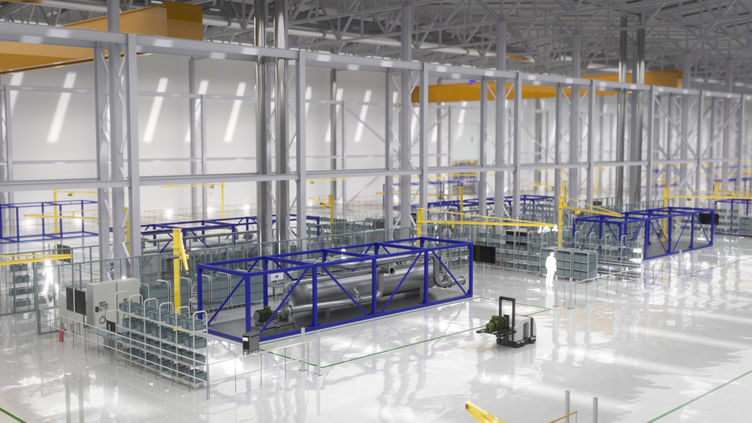
The Rolls-Royce SMR Module Development Facility (MDF), which will be housed in the University of Sheffield Advanced Manufacturing Research Centre’s existing Factory 2050, is set to manufacture and test prototype modules for small modular reactors.
The first phase is worth £2.7m and will be part of a wider £15m package that will further de-risk and underpin the Rolls-Royce programme.
The role of SMRs in the clean energy transition
SMRs are advanced nuclear reactors that are designed to be factory-built and transported to operational sites for installation.
The technology is seen as a clean energy solution that is easier to deliver and scale and is more affordable than building new, larger nuclear power stations.
Each Rolls-Royce SMR could provide enough low-carbon electricity to power a million homes for more than 60 years.
The new facility at the University of Sheffield AMRC will produce working prototypes of individual modules that will be assembled into SMR power plants.
First-of-its-kind homegrown technology
The programme is the UK’s first home-grown nuclear technology for over a generation and is another vital step towards deploying a fleet of factory-built nuclear power plants in the UK and around the globe.
Victoria Scott, Rolls-Royce SMR’s Chief Manufacturing Engineer, said: “Our investment in setting up this facility and building prototype modules is another significant milestone for our business.
“Our factories will produce hundreds of prefabricated and pre-tested modules ready for assembly on site. This facility will allow us to refine our production, testing and digital approach to manufacturing – helping de-risk our programme and ensure we increase our delivery certainty.”
Clean energy research at the University of Sheffield
The University of Sheffield is one of the UK’s leading universities for clean energy research and innovation.
Its AMRC, on the border of Sheffield and Rotherham, is a world leader in manufacturing R&D and works with companies of all sizes – including SMEs, start-ups and large-scale manufacturers – to help them improve their productivity.
The University of Sheffield AMRC’s Factory 2050
The AMRC’s Factory 2050 is the UK’s first state-of-the-art factory with reconfigurable spaces to enable collaborative research into digital manufacturing, machining technologies, and component manufacturing.
EDF in the UK details its plans for low-carbon electricity generation and discusses the partnerships helping them achieve this.
EDF in the UK is part of EDF Group, the world’s biggest electricity generator. In the UK, the company employs around 14,000 people at locations across England, Scotland, Wales and Ireland.
EDF is proud to be Britain’s biggest generator of zero-carbon electricity, with more than 1GW of renewable generation in operation and over 5GW in construction, planning and development across a range of technologies, including onshore and offshore wind, solar and battery storage.
It is in the midst of constructing the largest offshore wind farm in Britain – the 450 MW Neart na Gaoithe project off the Firth of Forth in Scotland that features 54 wind turbines and will be capable of powering up to 475,000 homes.
The power to succeed in generating low-carbon electricity
EDF is helping Britain achieve net zero by leading the transition to a cleaner, low-emission, electric future. In its drive to tackle climate change, EDF generates low-carbon electricity from five nuclear power stations, more than thirty onshore wind farms and two offshore wind farms.
It is further leading the UK’s nuclear renaissance with the construction of a new nuclear power station at Hinkley Point C, the first in a new generation of nuclear power stations.
It is also in advanced plans for a replica at Sizewell C in Suffolk. Hinkley Point C and Sizewell C will provide low-carbon electricity to meet 14% of UK demand and power around 12 million homes.
By replacing fossil fuel power, Sizewell C will avoid around nine million tonnes of carbon emissions each year, compared to a traditional gas-fired power station.
Easing its customers to a greener future
During its move towards a greener future, it is important that EDF provides its third-party intermediaries (TPIs) – including switching websites, energy brokers and energy efficiency advice providers – an optimum way to interact with end users.
Since the summer of 2023, it has been migrating its five million customer accounts onto the cutting-edge Kraken energy technology platform, which it licenses from Octopus Energy Group.
It was hoped that the Kraken platform would allow EDF to adapt to future energy requirements and help tackle climate change.
Yet, any large-scale migration is not without its problems. EDF, therefore, needed a secure and reliable solution to ease the migration to Kraken, as well as one that could provide ongoing portal maintenance and improvements. Plus, it wanted to ensure optimal market insight reporting to enhance our visibility.
The need for a dynamic solution
Matt Rose, Partner Success Lead at EDF, and his team looked at various solutions. However, it was the Sales360 platform from POWWR that stood out.
“We have a very strong and long-standing relationship with POWWR. We originally began working with them through a standard energy broker relationship and have since purchased a number of the company’s software and data services,” commented Rose.
Through the Sales360 Broker Portal, EDF can easily enter information, get pricing, accept deals, send contracts for signature, enrol in the billing system, and complete sales.
EDF can also discover which TPI is most readily quoting and selling its products and at what commission rate.
The analytics tool also allows EDF to compare its performance and offerings with the wider market to identify areas for improvement.
Being forward-thinking and innovative
By coupling the advances in science and engineering with the emergence of new digital innovations and leveraging the UK ecosystem of Research and Innovation through strong and strategic partnerships, EDF is delivering research and groundbreaking innovations to our internal business units, policymakers, partners and customers in order to help Britain generate low-carbon electricity for net zero.
POWWR’s Sales360 solution seamlessly integrates between EDF’s various systems, so that the company can obtain automated pricing, contract generation, data validation, and updated statuses.
“POWWR’s Sales360 web portal provides centralisation of our contract submission and maintenance activity, plus improved TPI accessibility to our various SME solutions,” explained Rose. “Sales360 Market Insights further provides us with vastly improved market intelligence so that we can align our business growth and development opportunities.”
EDF is looking to continue to further optimise its energy sales opportunities and tighten up on sales quality even more in the months to come. It has the perfect partner to ensure that.
The plan aims at attracting new talent to the UK nuclear energy industry, and upskilling current industry professionals to boost retention in the sector.
Addressing the nuclear skills gap will be pivotal as the UK strives to become a global leader in this powerful clean energy alternative.
Activities in the plan will be delivered by the Nuclear Skills Delivery Group (NSDG). This will support the UK’s nuclear programme, targeting improved national defence, energy resilience, boosting the economy, and achieving net zero by 2050.
Beccy Pleasant, Nuclear Skills Programme Director for the NSDG, commented: “The skills challenge can be met only if the sector works together to deepen and broaden the skills base.
“That is why the Skills Plan captures specific themes and projects the industry is now committed to.
“And this includes finding ways to align skills across the civil and nuclear defence sectors.”
Expanding the UK nuclear workforce
The roadmap aims to expand the industry’s workforce by nearly 50%. It also seeks to present the nuclear sector as a compelling and sustainable career choice.
To achieve these goals, the plan includes several key activities. The plan aims to double the number of apprentices in the nuclear sector, focusing on trades such as welding, electrical work, and engineering, by 2025-26.
Additionally, it aims to double the number of graduates entering the nuclear workforce within the same timeframe.
This will be supported by sponsorship and bursary programmes, alongside an increase in PhDs to ensure a high level of technical expertise.
Leadership development
A future leader scheme in the plan will cultivate the next generation of senior personnel in the industry.
The plan also includes initiatives to enhance the skills of individuals joining the nuclear sector mid-career.
The ‘Destination Nuclear’ campaign will highlight the diverse career opportunities available within the sector.
Project Lead for Destination Nuclear, Lynne Matthews, explained: “Destination Nuclear is a real game changer.
“The programme is the first sector-wide communications campaign for nuclear and has provided a focal point to create a national nuclear brand and shorten the journey from attraction to employment.
“Destination Nuclear showcases the wealth of opportunities the sector has to offer. It will help a broader range of people explore and enter a career which is challenging, rewarding and sustainable – and, importantly, help deliver the UK’s nuclear ambition.”
Additionally, establishing regional hubs will increase workforce capacity and capabilities according to local needs.
Enhancing training capacity for the sector is also a key focus. Promoting diversity and inclusion within the workforce is another critical aspect of the plan.
Nuclear power, and especially the material from its used fuel can be a subject of concern for many. The Innovation Platform dives a little deeper to see how concerning this material really is.
Nuclear energy is one of the most powerful energy-production methods we currently have. Due to various factors such as their ability to run constantly (unlike some renewable generation methods that rely on, for example, weather conditions), needing less maintenance, and needing less re-fuelling, a nuclear generation plant is able to output twice as much energy as a standard coal generation plant of the same size, due to higher capacity factor.
Yet, despite this immense potential of power, nuclear power faces a series of challenges. One of these issues is that of what to do with the nuclear fuel once it has been exhausted.
The Innovation Platform Assistant Editor, Matt Brundrett, investigates the treatment of used nuclear fuel.
Current methods of managing used fuel
World Nuclear Association (WNA) has established a Sustainable Used Fuel Management Working Group, whose role is to investigate and promote the development of the management of used fuel in a sustainable manner.
They find that, at the moment, there are two key strategies for managing used fuel before its final disposal: Interim storage and reprocessing/recycling.
Interim storage consists of simply storing the spent nuclear fuel safely and securely, either on-site or at a different location, where it will wait to be either disposed of or reprocessed. This method has many different technologies to support it, such as dry storage or spent fuel pools. Every technique for this has its own merits and drawbacks, dependent on the location and policy of the nuclear generation plant.
Reprocessing/recycling is a widely used technique whereby the used nuclear fuel is processed to extract uranium and plutonium. This will then be used to create new nuclear fuel for nuclear generators and can even provide materials for other nuclear applications. This is a popular choice, with sites in North America, Europe, and Asia. While the costs of this can seem high, as the market for nuclear fuel shifts, this may not always be the case.
Of course, reprocessed or not, this will all eventually lead to the final disposal, which is expected to be via deep geological disposal. Facilities for this are under development in Finland and Sweden with others planned elsewhere. Generally, this will be through a facility known as a Deep Geological Repository (DGR). These are simple concepts with complicated executions.
The waste is stored in a repository underground, with the purpose being to prevent radiation from reaching the surface. This means an enormous amount of blocking materials and rock is required, making these far more highly engineered than they may appear on the surface.
Future possibilities
The previously discussed techniques are currently the status-quo, and will likely remain so. Still, while there are very few real complaints about them, that does not mean that there is no room for improvement.
Aaron Erim, the Programme Lead for Recycling, Decommissioning, and Waste at WNA, said: “It’s important to recognise that used nuclear fuel is not waste, and there are opportunities to recycle and re-use as part of a closed fuel cycle, much like other circular economy and sustainability initiatives. For those cases where recycling is not pursued, there are many short- and medium-term solutions already available for handling used nuclear fuel, and long term-disposal options that are close to being operational.”
WNA’s Sustainable Used Fuel Management Working Group lists the following as potential future paths of improvement:
Advanced technologies for fuel recycling, including multi-recycling of valuable materials, uranium and plutonium in conventional light water reactors, or closed fuel cycle neutron reactors that make better use of natural uranium resources, reducing waste and toxicity
Other advanced options such as the transmutation of minor actinides show potential to further reduce waste, toxicity, and decay time of waste
Deep Borehole Repositories are conceptual repositories that, rather than engineering a relatively-close-to-surface repository, will simply be drilled much deeper to prevent the waste from reaching the surface. This technique would drill as much as ten times deeper than the standard DGR, but still need a lot of work to make them feasible
While many people might worry about the safety of the fuel used, and its disposal, the truth is that there is very little to worry about. The science, engineering, and practice of safe reprocessing and disposal is well developed, and the potential advancements can only make them safer.
Aspects such as this is why, coupled with renewable energy production plants, nuclear power will most likely prove critical to the transition to a more sustainable future in terms of power generation.
References
WNA | Used Fuel is Not an Obstacle to Nuclear Power
Power Technology | Global nuclear power faces unprecedented challenges
GOV.UK | Geological Disposal – a programme like no other
Ars Technica | Could deep boreholes solve our nuclear waste problem?
WNA | Plans For New Reactors Worldwide
Please note, this article will also appear in the 18th edition of our quarterly publication.
The UK Atomic Energy Authority (UKAEA) has signed a multi-year deal with Centrum výzkumu Řež (CVŘ) to further the development of the UK fusion energy plant called STEP.
STEP – otherwise known as the Spherical Tokamak for Energy Production – aims to deliver a prototype fusion energy plant in the UK, targeting operations in 2040.
The fusion energy plant will be built at West Burton in Nottinghamshire and will prove the viability of fusion for transforming the UK’s energy supply, providing low-carbon, safe, and near-limitless power.
The UKAEA’s deal with CVŘ, the Czech Republic’s research organisation, marks a pivotal milestone in the plant’s development.
The use-of-facility agreement will allow the testing of High Temperature Superconducting (HTS) tapes, which are essential for developing the prototype fusion energy plant.
Marek Miklos, Business Development Manager from CVŘ, commented: “Working in partnership with the STEP team is a fantastic opportunity to support the UK’s world-leading programme to develop a prototype fusion energy plant.
“The Hi-CrIS testing rig will open lots of opportunities for further material studies for fusion applications.”
Fusion energy and superconductors
The UKAEA and CVŘ will partner to develop Hi-CrIS (High neutron fluence Cryogenic Irradiation of Superconductors), a pioneering test rig.
This collaboration aims to evaluate the impact of a neutron spectrum relevant to fusion energy on the superconducting properties of HTS tapes.
The STEP project plans to utilise HTS tapes to confine fusion plasma, a superheated gas of hydrogen isotopes, within a tokamak.
At temperatures exceeding 150 million degrees Celsius, the isotopes fuse into helium, generating energy in the form of neutrons.
Hi-CrIS rig development
Expected to become operational in 2026, the Hi-CrIS rig will provide crucial data for optimising the design and lifespan of STEP’s superconducting magnetic components.
These components are designed to withstand cryogenic temperatures (-253°C) and high-energy neutron flux.
HTS tape samples will undergo irradiation with high-energy neutrons using CVŘ’s LVR-15 light water tank-type research reactor.
Throughout transportation and measurement, the samples will be maintained at 20 Kelvin to simulate their operating environment accurately.
The collaboration between UKAEA and CVŘ signifies a significant advancement in fusion technology testing, laying the groundwork for future developments.
To learn more about the STEP project, read our article from Paul Methven, CEO of UKIFS, a subsidiary of UKAEA.
A nuclear fusion reaction has overcome two key barriers to operating in a “sweet spot” needed for optimal power production: boosting the plasma density and keeping that denser plasma contained. The milestone is yet another stepping stone towards fusion power, although a commercial reactor is still probably years away.
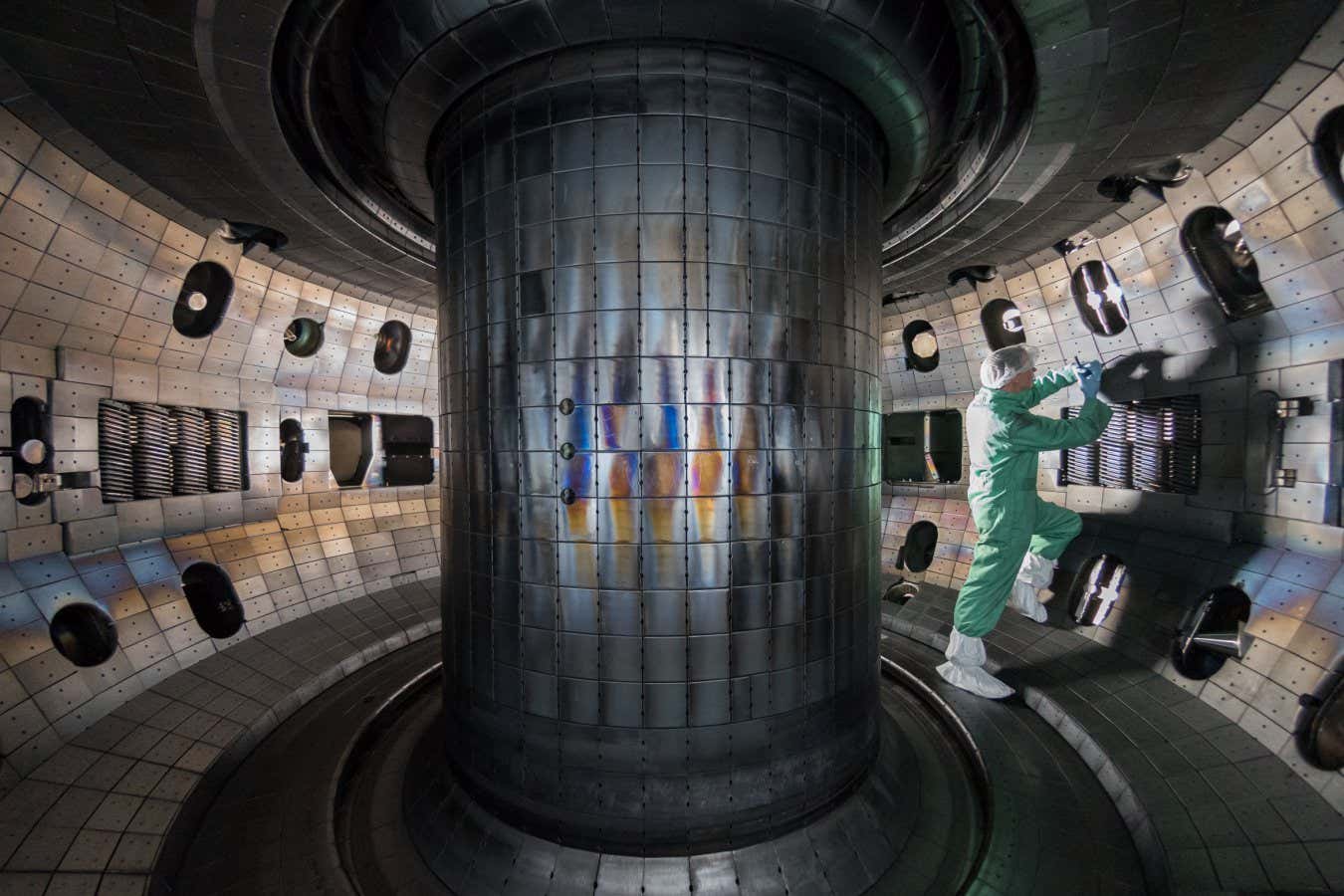
One of the main avenues being explored in efforts to achieve fusion power is using tokamak reactors. These have a doughnut-shaped chamber where plasma hotter than the surface of our sun is contained by vast magnets.
It had been thought that there was a point – known as the Greenwald limit – above which you couldn’t raise the density of the plasma without it escaping the clutches of the magnets, potentially damaging your reactor. But raising density is crucial to increasing output, as experiments have shown that the output of tokamak reactors rises proportionally with the square of the fuel density.
Now, Siye Ding at General Atomics in San Diego, California, and his colleagues have shown that there is a way to raise the plasma density, and proved that it can be stable, by running the DIII-D National Fusion Facility tokamak reactor for 2.2 seconds with an average density that is 20 per cent above the Greenwald limit. While this barrier has been passed before, with less stability and for shorter durations, this experiment crucially also ran with a metric known as H98(y,2) of above 1.
H98(y,2) is a complex blend of measurements and values that shows how well the plasma is contained by the magnets, says Gianluca Sarri at Queen’s University Belfast, with a value of 1.0 or above signifying that plasma is being successfully held in place.
“You’re now starting to show some sort of stable operation where you can consistently be in the sweet spot,” says Sarri. “This was done in a small machine. If you take these results and extrapolate it to a larger machine… that is expected to put you in a situation where gain and significant power production can be achieved over a significant amount of time.”
The DIII-D experiment relied on a mix of approaches that aren’t themselves new, says Sarri, but together seem to have created a promising approach. The team used higher density in the core of the doughnut shaped plasma, to increase output, while allowing it to dip at the edges nearest the containment vessel to drop below the Greenwald limit, therefore avoiding any plasma escape. They also puffed deuterium gas into the plasma to calm reactions in specific spots.
DIII-D’s plasma chamber has an outside radius of just 1.6 metres, and isn’t yet know whether the same method would work for ITER, the next-generation tokamak under construction in France, which will have a radius of 6.2 metres and is expected to create plasma as soon as 2025.
“These plasmas are very complicated,” says Sarri. “A small change in conditions leads to a big change in behaviour. And experimentally it has been more like a trial-and-error sort of approach, where you try many different configurations and basically see which one is best. It’s all about forcing the plasma to do something that is completely against its nature, that it really doesn’t want to do.”
Ding says the experiment bodes well for the future of fusion power. “Many reactor designs require simultaneous high confinement and high density. Experimentally, this is the first time it is realised,” he says. “The next step is expensive, and currently research is going in many different directions. My hope is that this paper will help focus the efforts worldwide.”
The work is another step towards a practical fusion power plant, says Sarri, but nobody should expect to see a commercial reactor in the next five, or even 10, years.
Researchers at the U.S. Department of Energy’s (DOE) Princeton Plasma Physics Laboratory (PPPL) have shown how two old methods can be combined to provide greater flexibility for managing fusion plasma.
The research is part of an ongoing quest to develop a range of methods for managing fusion plasma so it can be used to generate electricity.
While the two methods – electron cyclotron current drive (ECCD) and applying resonant magnetic perturbations (RMP) – have long been studied, this is the first time researchers have simulated how they can be used together to enhance plasma control.
“This is kind of a new idea,” said Qiming Hu, a staff research physicist at PPPL and the study’s lead author.
Ultimately, scientists hope to use fusion plasma to generate electricity.
First, they will need to overcome several hurdles, including perfecting methods for minimising bursts of particles from the plasma that are known as edge-localised modes (ELMs).
“Periodically, these bursts release a little bit of pressure because it’s too much. But these bursts can be dangerous,” said Hu.
ELMs can end a fusion plasma reaction and even damage the tokamak, so researchers have developed many ways to try to avoid them.
PPPL Principal Research Physicist Alessandro Bortolon explained: “The best way we’ve found to avoid them is by applying resonant magnetic perturbations, or RMPs, that generate additional magnetic fields.”
Magnetic fields generate islands
The magnetic fields initially applied by the tokamak wind around the torus-shaped plasma, both the long way – around the outer edge, and the short way – from the outer edge and through the centre hole.
The additional magnetic fields created by the RMPs travel through the plasma, weaving in and out like a sewer’s stitch. These fields produce oval or circular magnetic fields in the fusion plasma called magnetic islands.
Normally, islands in plasmas are bad. If the islands are too big, then the plasma itself can be disrupted.
However, the researchers already knew experimentally that under certain conditions, the islands can be beneficial.
The hard part is generating RMPs big enough to generate the islands. That’s where the ECCD, which is basically a microwave beam injection, comes in. The researchers found that adding ECCD to the edge of the fusion plasma lowers the amount of current required to generate the RMPs necessary to make the islands.
“Our simulation refines our understanding of the interactions in play,” Hu said.
“When the ECCD was added in the same direction as the current in the plasma, the width of the island decreased, and the pedestal pressure increased.
“Applying the ECCD in the opposite direction produced opposite results, with island width increasing and pedestal pressure dropping or facilitating island opening.”
Applying ECCD at the edge instead of the core
The research is also notable because ECCD was added to the plasma’s edge instead of the core, where it is typically used.
Hu explained: “Usually, people think applying localised ECCD at the fusion plasma edge is risky because the microwaves may damage in-vessel components.
“We’ve shown that it’s doable, and we’ve demonstrated the flexibility of the approach. This might open new avenues for designing future devices.”
This simulation work could ultimately lower the cost of fusion energy production in future commercial-scale fusion devices by lowering the amount of current required to generate the RMPs.
The US and Japan have revealed the two global scientific superpowers will combine to advance fusion energy capabilities.
The fusion energy deal was struck following a meeting in Washington between US Deputy Secretary of Energy David Turk and Japan’s Minister of Education, Sports, Science and Technology, Masahito Moriyama.
The partnership will see the US Department of Energy (DOE) and Japan’s Ministry of Education, Culture, Sports, Science and Technology (MEXT) work to accelerate the demonstration and commercialisation of fusion energy.
With the potential to reshape global efforts towards achieving net-zero carbon emissions, fusion energy stands as a linchpin in enhancing energy security and resilience.
Fusion energy is a promising yet elusive form of power generation that mimics the process that powers the Sun and stars.
At its core, fusion energy involves combining lightweight atomic nuclei, such as isotopes of hydrogen, to form heavier elements, releasing vast amounts of energy in the process.
The most commonly pursued fusion reaction on Earth involves the isotopes of hydrogen, deuterium, and tritium.
Unlike conventional nuclear fission reactors, which split atoms to release energy, fusion reactors produce energy by fusing atoms together.
This process generates immense heat and pressure, replicating the conditions found in the Sun’s core.
The primary advantage of fusion energy lies in its virtually limitless fuel supply. Deuterium can be extracted from water, while tritium can be produced from lithium.
However, despite decades of research and significant advancements, harnessing fusion energy for practical use remains a monumental challenge.
Achieving this milestone could unlock a nearly inexhaustible, clean, and safe source of energy with minimal radioactive waste and zero greenhouse gas emissions, revolutionising the global energy landscape.
US and Japan deepen collaborations
Collaboration between the United States and Japan in the field of fusion energy isn’t new. Over the years, both nations have engaged in a spectrum of joint activities, ranging from exchange programs to joint research initiatives.
Scientific and technical advancements: The partnership aims to address the complex scientific and technical challenges inherent in delivering commercially viable fusion energy
Shared access to facilities: Exploring opportunities for shared access and development of fusion research facilities to maximise mutual benefits
Harmonisation of regulatory frameworks: Promoting international harmonisation of regulatory frameworks and standards that are crucial for facilitating the smooth transition towards fusion energy deployment
Global supply chain development: Identifying and supporting the development of resilient global supply chains essential for the commercialisation of fusion energy
Public engagement: Fostering public engagement to garner support for fusion energy deployment and ensuring a smooth transition towards clean energy
Skills development: Promoting skills development to cultivate a robust, inclusive, and diverse workforce capable of driving the fusion sector forward
The strategic partnership between the US and Japan marks a pivotal moment in the journey towards fusion energy.
With innovation, collaboration, and a shared commitment to sustainability, both nations are poised to unlock the transformative potential of fusion on a global scale.
Through research and development, ANItA’s mission is to generate knowledge-based decision support to efficiently implement new nuclear power technology in Sweden.
The current Swedish nuclear power programme was developed in the sixties and fully implemented in the seventies and eighties. There were several reasons for this programme’s development, with an important one being the reduction of Sweden’s heavy dependence on fossil fuel imports for increased national security. Another was to reduce emissions of acidifying substances into the atmosphere. A third reason was the realisation that an increasingly expansive industrial sector needed to be supported in terms of energy without using the last remaining rivers in the north for hydropower production. One reason that probably lay in the background was to show the outside world that Sweden could develop, construct, and build high-tech reactors, thus adding value to the export industry.
To enable this development in a country with a relatively small population, close co-operation between the state, industry and academia was recognised as a determining factor. As a result, nine of the twelve reactors that have operated in Sweden were of Swedish ASEA design and manufactured with virtually only Swedish supply chains.
In recent years, the need for new nuclear power in order to meet the national environmental and climate goals has become increasingly apparent. It seemed like a good idea to recreate at least parts of the strategy used in the sixties, where state, industry, and academia once again merge and co-ordinate their resources for a common goal. This is where ANItA comes into the picture.
The Academic-industrial Nuclear technology Initiative to Achieve a sustainable energy future (ANItA), was conceptualised in 2021 and began operating in 2022. ANItA is a collaboration platform currently consisting of: Uppsala University (host), Royal Institute of Technology (KTH) and Chalmers as academic partners. The industrial partners are: Vattenfall, Uniper, Fortum, Westinghouse and Studsvik Nuclear. The state is represented by the Swedish Energy Agency, with Swedish and Finnish regulators, and Women in Nuclear as observers.
Through research and development, ANItAs mission is to generate knowledge-based decision support that facilitates efficient and timely implementation of new nuclear power technology in Sweden, particularly light-water small modular reactors (SMRs). Part of this mission is also to secure and develop the important supply of expertise in the nuclear power technology field. The collaboration also aims to facilitate a rational debate in society on the role nuclear power has in addressing environmental and climate issues while keeping high welfare ambitions intact. Between 2022 and 2026, ANItA is funded with one third each from industry, academia and the Swedish Energy Agency, and the total budget amounts to approximately €8m during these first five years.
To address the different aspects of the mission, a joint research portfolio was developed that met the interests of both industry and academia and was in line with the analyses carried out concerning the requirements of implementing a new reactor technology. The resulting research portfolio currently consists of 14 projects comprising research and development work within technical and non-technical subjects. The projects are staffed with PhD students and postdoctoral researchers with supervision and senior participation from both the academy and industry. In this context, it is important to point out that ANItA is not involved in the design or construction of SMRs. Instead, it relies upon relevant information from the current reactor suppliers to reach ANItA to establish realistic scenarios for the research and development work.
Research areas A-D cover a broad range of technical subjects relevant to light-water SMR utilisation. In brief terms, the projects deal with the following issues:
Optimised chemistry for LWR SMRs
Structural materials issues
Fuel assembly and core design optimisation for SMRs
Novel reactor monitoring techniques
Novel approaches to nuclear safeguards
Experimental methods for accelerating fuel development
Recycling of spent nuclear fuel
Applications beyond electricity generation
Studying the role of SMRs in hybrid energy systems
Design basis and beyond design basis scenarios, passive safety systems
While research areas A-D cover typical technical topics in nuclear engineering, research area E covers non-technical subjects directly impacting the implementation of SMRs and is therefore worth a brief review here. Research area E is divided into two projects, each dealing with the prerequisites for implementing SMRs in Sweden.
Implementation of SMRs and effects of serial production on the management of plant projects
The project includes studies on the mitigation of risks in SMR projects with, and risks related to, the construction schedule and budget emphasised here. The business case of SMRs relies heavily on serial production to premanufacture systems, components, and structures as much as possible in factories and then install them on-site, i.e., going from a ‘constructed on-site’ mindset towards ‘installed on-site.’ Such a shift may save costs and ensure that the project can be carried out on schedule and budget.
However, it requires new types of projects and financing models, including the roles and responsibilities of project parties. The benefits of serial production have been proven in other industry sectors, e.g., the shipping and aviation industries, and the experience gathered should be transferred to the nuclear industry. How to do this in an efficient and timely manner is one question to be answered within this research project.
Regulatory perspectives and licensing
To fully exploit the potential of SMRs, for local power and heat generation near end users, it is necessary to consider the location of the plants on untraditional sites. Now, virtually all infrastructure projects in Sweden are hampered by lengthy environmental assessment processes, which apply largely to new nuclear power. Therefore, changes in the law are paramount for the successful introduction of SMRs. Identification of necessary changes and how they correlate to Swedish and EU law will be researched, and proposals for changes in the legislation will be provided.
Successful licensing of SMRs is also needed before deployment. Swedish licensing has hitherto focused on power reactors individually, with separate licensing procedures for each unit. If a large number of identical units are to be installed at multiple sites, it makes sense to re-organise the licensing process into a generic phase with a type approval in a first phase, followed by a second phase restricted to site-specific issues. This would, however, challenge the current permitting processes used in Sweden, and this project aims to find viable ways to address this issue.
The types of challenges outlined above are not unique to Sweden. By addressing current and future requirements and safety standards, the activities within this research project aim to contribute to reducing possible risks and licensing difficulties at the early phase of SMR implementation in Sweden and potentially in other countries.
The required effort to carry out all the ANItA projects is significant. In fact, it is larger than stakeholders can generally manage, and the project requires a range of competencies that no one stakeholder alone can bring. ANItA’s main value lies in gathering and co-ordinating Swedish nuclear research, where a wide range of research and engineering expertise can be gathered under one umbrella and work coherently.
The research projects started in autumn 2023, and the first results are expected to be published in various peer-reviewed journals after the coming summer. In addition, project results and reports will be published on the ANItA website as soon they are available.
Additional research on nuclear power technology
At present, political and public opinion is in favour of introducing new nuclear power in Sweden. However, due to several decades of debate about nuclear power’s supposed dangers, high costs, etc., there are still doubts about new applications and the potential location of SMRs in people’s neighbourhoods. The societal aspects of implementing SMRs are one highly relevant field of research not yet covered by ANItA. Work is ongoing to incorporate researchers in social sciences into ANItA with the aim of creating an additional research area to the portfolio.
For completeness, it is worth mentioning that besides ANItA, there are two other research centres that encompass nuclear technology in Sweden. The Centre for Nuclear Technology (SKC), hosted by KTH, deals primarily with research connected to the current reactor fleet in Sweden. The Swedish Academic Initiative on Nuclear Technology research (SAINT) at Chalmers has a broader scope and largely comprises work within radiation sciences. Finally, although not a formal centre, it contributes to Swedish nuclear competence. The Sunrise project at KTH is funded by the Swedish Energy Agency.
Conclusion
The research projects of ANItA have been in full operation since summer 2023, and the first results are about to be published in scientific journals and at conferences. Besides the research and development work, ANItA has also been represented in various public meetings, symposia, and mass media platforms to be available to society on issues related to nuclear power technology in general, and SMRs in particular. There is increased interest from new stakeholders to join ANItA. Since ANItA is now recognised at the highest political level in Sweden, it seems reasonable to say that the ANItA concept has been successful in relation to its mission.
Please note, this article will also appear in the 18th edition of our quarterly publication.
Following the UK’s lead, the Energy Security Secretary, Claire Coutinho, met with European allies this week to discuss plans to transition away from Russian liquefied natural gas (LNG) and strengthen fusion energy security.
At a ministerial meeting of the International Energy Agency (IEA) in Paris, the Secretary of State also signed a landmark new fusion energy partnership with Canada, bringing the UK a step closer to developing a near-limitless source of clean energy.
The Memorandum of Understanding with Canada on fusion energy will seek to improve collaboration on research and development, harmonise the approach to regulation, and develop the workforce and skills base.
This will strengthen cooperation between the UK and Canada to support the deployment of fusion worldwide. It will also support the UK’s £650m fusion programme, cementing the UK as a world leader in this innovative technology.
Strategic partnerships will strengthen fusion energy security worldwide
The energy generated from fusion is many million times more efficient than burning coal, oil or gas and could generate a near unlimited supply of clean electricity – transforming global efforts to reach net zero and delivering long-term energy independence.
This is the UK’s second formal international fusion collaboration following the announcement of a partnership with the USA in November 2023.
The Energy Security Secretary also met with allies to discuss energy security and how to build on the progress made to date to target Russia’s energy sector, with the UK having led the way in banning all imports of Russian oil and gas after Putin’s illegal invasion.
It follows the UK recently announcing a £300m investment to become the first country in Europe outside of Russia to launch a high-tech HALEU nuclear fuel programme, driving Russia further out of global energy markets.
Energy Security Secretary Claire Coutinho said: “A more diverse and secure energy mix will bring down bills in the long term, and that’s why we are working closely with our European allies to end dependency on Russian gas.
“The UK is also leading the world in fusion energy security, which could provide a near limitless supply of clean energy.
“This landmark partnership with Canada will strengthen co-operation between our countries and support our record-breaking British research – bringing us closer to making fusion a reality.”
Other partnerships to accelerate the energy transition
The UK has provided £150m for Ukraine’s energy sector since the start of the full-scale Russian invasion and is a key partner in supporting Ukraine to rebuild and transition.
The UK also announced £12m at COP28 for the IEA’s Clean Energy Transition Programme to support developing countries to accelerate their green transitions – the biggest ever voluntary contribution.
The event in Paris was the first international meeting of energy ministers since COP28 and marks the 50th anniversary of the IEA.