Tag: Renewable energy

  • US energy sector bolstered against cybersecurity threats

    US energy sector bolstered against cybersecurity threats

    [ad_1]

    The US Department of Energy (DOE) has announced $45m for 16 projects to protect the nation’s energy sector from cybersecurity threats.

    In support of the Biden-Harris Administration’s Investing in America agenda, DOE’s investment will help develop new cybersecurity tools and technologies to reduce risks to the US’s energy sector.

    The selected projects will bolster the resilience of America’s energy systems, including the power grid, electric utilities, pipelines, and renewable energy generation sources like wind and solar.

    The announcement underscores President Biden’s commitment to securing the US’s energy and national security, ensuring that power flows safely and reliably to communities across the country.

    US Secretary of Energy Jennifer M Granholm said: “DOE is committed to strengthening the nation’s energy sector, including protecting it against current or emerging cyber threats that would threaten Americans’ access to secure, reliable energy.

    “With today’s announcement, the Biden-Harris Administration is helping help teams across the country develop innovative next-generation cybersecurity solutions for tackling modern day challenges.”

    Importance of preventing cybersecurity threats

    Cybersecurity threats can disrupt the reliable flow of energy to homes, businesses, and communities.

    The investment will address a wide range of current and emerging cybersecurity threats facing energy systems in the US.

    More investment into cybersecurity is vital to achieving clean energy and climate goals, as well as ensuring a reliable supply of energy for Americans across the country.

    Innovative cybersecurity solutions

    The projects, selected by DOE’s Office of Cybersecurity, Energy Security, and Emergency Response, will help to develop innovative solutions to address cybersecurity threats across the energy sector.

    The 16 projects are located across six states and aim to support the advancement of a secure, resilient, and reliable energy system.

    DOE is partnering with industry stakeholders, vendors, national laboratories, and academic institutions to tackle some of the most pressing issues in energy cybersecurity.

    Selected projects include:

    Electric Power Research Institute, Inc. (EPRI) (Palo Alto, CA)

    EPRI will develop an advanced AI and data processing capability to detect and respond to cybersecurity threats in control system endpoints at the grid edge.

    General Electric, GE Research (Niskayuna, NY)

    GE research will use quantum communication to securely communicate time-sensitive coordination messages. These are important to power grid resilience.

    Georgia Tech Research Corporation (Atlanta, GA)

    The group will develop a ‘DerGuard’ framework using AI techniques for automated vulnerability assessment in DER devices.

    Iowa State University of Science and Technology (Ames, IA)

    Iowa State University will develop technical solutions to be incorporated within the initial stages of the future DER-integrated grid infrastructure development lifecycle.

    This will enable a more resilient operation of critical control functions.

    Funding negotiation process

    Selection for award negotiations is not a commitment by DOE to provide funding.

    Before funding is issued, DOE and the applicants will undergo a negotiation process.

    DOE may cancel negotiations and rescind the selection for any reason during that period.

    [ad_2]

    Source link

  • An overview of Europe’s ocean energy revolution

    An overview of Europe’s ocean energy revolution

    [ad_1]

    Ocean Energy Europe, a network of over 120 organisations, discusses its work in developing a new sustainable energy industry and in which areas more support will be needed.

    In the battle against climate change, the key to keeping the global temperature rise to 2°C or below is to switch from primarily fossil-fuel-based energy production to sustainable, zero-emissions energy production.

    The recently-held COP28 reinforced this, with attendants agreeing that at least 50% of energy production needs to come from sustainable sources by 2030.

    As such, Ocean Energy Europe is doing its part to facilitate this shift. Here, they tell us more about the wave, and tidal energy industries, how they are growing, and what they need to continue.

    Renewable energy in Europe

    Transitioning Europe’s energy system away from fossil fuels and towards homegrown, renewable energy sources is vital, now more than ever. Putin’s war in Ukraine has demonstrated that price stability for gas is gone. Europe has been reminded the hard way that indigenous renewable energy sources are the best way to provide Europeans with affordable energy prices.

    Europe has always been a leader in renewable energy technology development, and today, wind and solar are Europe’s cheapest forms of electricity production. In fact, according to the IEA, building a new onshore wind or solar PV plant is now cheaper than operating existing fossil fuel plants.

    However, Europe can’t rely only on wind and solar to reach a stable 100% renewable energy mix. It will need support from other innovative renewable technologies that can reliably produce energy at different times.

    That’s where ocean energy comes in. Our oceans are the largest untapped source of renewable energy. By harnessing the power of the tides and waves, ocean energy could generate 100 GW in European waters by 2050 – that’s 10% of Europe’s current electricity needs.

    But ocean energy has more to offer than the number of gigawatts it can pump into the grid. Thanks to their unique characteristics, tidal and wave energy technologies are highly complementary to more established forms of renewable energy production, such as wind and solar.

    Tidal energy, for example, is entirely predictable decades in advance and completely independent of weather conditions since it relies only on the tides’ ebb and flow. This long-term predictability is invaluable to balancing a grid built around variable wind and solar production.

    Wave energy devices can be fitted in offshore wind farms as there is much unused space between the giant wind turbines. The wind drives waves, but they will keep coming for hours after the wind dies down, which means wave devices will keep producing long after the wind turbines stop.

    Building a new industry

    The European Union has always strongly supported ocean energy research and innovation. Just in the last year, the EU demonstrated its political support by naming ocean energy as a strategic EU technology in the Net-Zero Industry Act, setting a new innovative renewable energy target in the revised Renewable Energy Directive (RED III), and specific wave and tidal power deployment targets in its strategy for offshore renewable energy.

    Over the past year, ocean energy and its immense potential have made significant inroads. At the national level, governments are creating more market visibility and enabling ocean energy to take decisive steps towards commercialisation. Thanks to this new-found support, the sector is scaling up in major ways, with over 100 megawatts (MW) of installed capacity planned for deployments in the coming years.

    A rising tide of pilot farms

    Both France and the United Kingdom possess excellent tidal energy resources – some of the best in the world – and have now stepped up to develop and support their national tidal industries.

    In the United Kingdom, the Contracts for Difference (CfD) scheme provides revenue support to renewable energy projects. In 2023, 53 MW of tidal energy capacity, split between 11 projects, have been granted support and are planned for deployment between 2026 and 2028.

    Among these, the MeyGen tidal farm, which has been operating for nearly a decade, will increase its installed capacity to 50 MW. Building a farm this size means scaling up to a high-volume production. This will kickstart the cycle of cost reductions and drastically increase tidal energy’s competitiveness in the market.

    In France, the government announced their support for the FloWatt project, a 17.5 MW tidal farm led by technology developer HydroQuest. The French government will provide at least €65m of direct funding and dedicated revenue support. In addition to this direct support to FloWatt, French President Macron announced commercial tenders for tidal energy in the 2023 national energy strategy update. This is a game changer for France, which has been struggling to take advantage of its extensive resources due to a lack of political support for the sector.
    Increased national support is an important win, but continued support from the EU is still crucial. Thanks to the Horizon Europe programme, €40m were recently granted to develop pilot tidal farms in Europe. The two winners of the call are the EURO-TIDES and SEASTAR projects, led by Scottish companies Orbital Marine Power and Nova Innovation. EURO-TIDES will deploy 9.6 MW of tidal power, while SEASTAR will install an array of 16 turbines for a total of four megawatts in the next few years.

    Overall, the European tidal sector is looking stronger than ever. Tidal technology developers have been ready to scale up for several years, and now that national governments are sending positive market signals, they will move fast.

    Tapping into wave energy’s potential

    The potential of wave energy is truly astonishing, second only to wind energy. However, harnessing that energy is a complex task, mostly due to the harsh environments in which wave energy converters operate.

    Wave energy development is still mostly funded by the European Union, and this longstanding support has made Europe the global leader in wave energy technology. But interest in wave energy production has grown beyond Europe’s border over the past few years, and countries such as China and the United States are investing heavily in the sector. For Europe to retain its lead and wave energy to truly take off, national governments need to step in and provide long-term market visibility with deployment targets and earmarked revenue support schemes.

    The European wave energy sector has made great strides over the past year. Most existing projects are now using full-scale prototypes and are rapidly progressing towards the first-wave pilot farms. Over eight megawatts of wave energy are expected to deploy in the coming years, and that includes several wave farms. On top of that, the Horizon Europe funding programme will announce the winners of its wave energy pilot farms call later this year, which will help put even more wave energy devices in European waters.

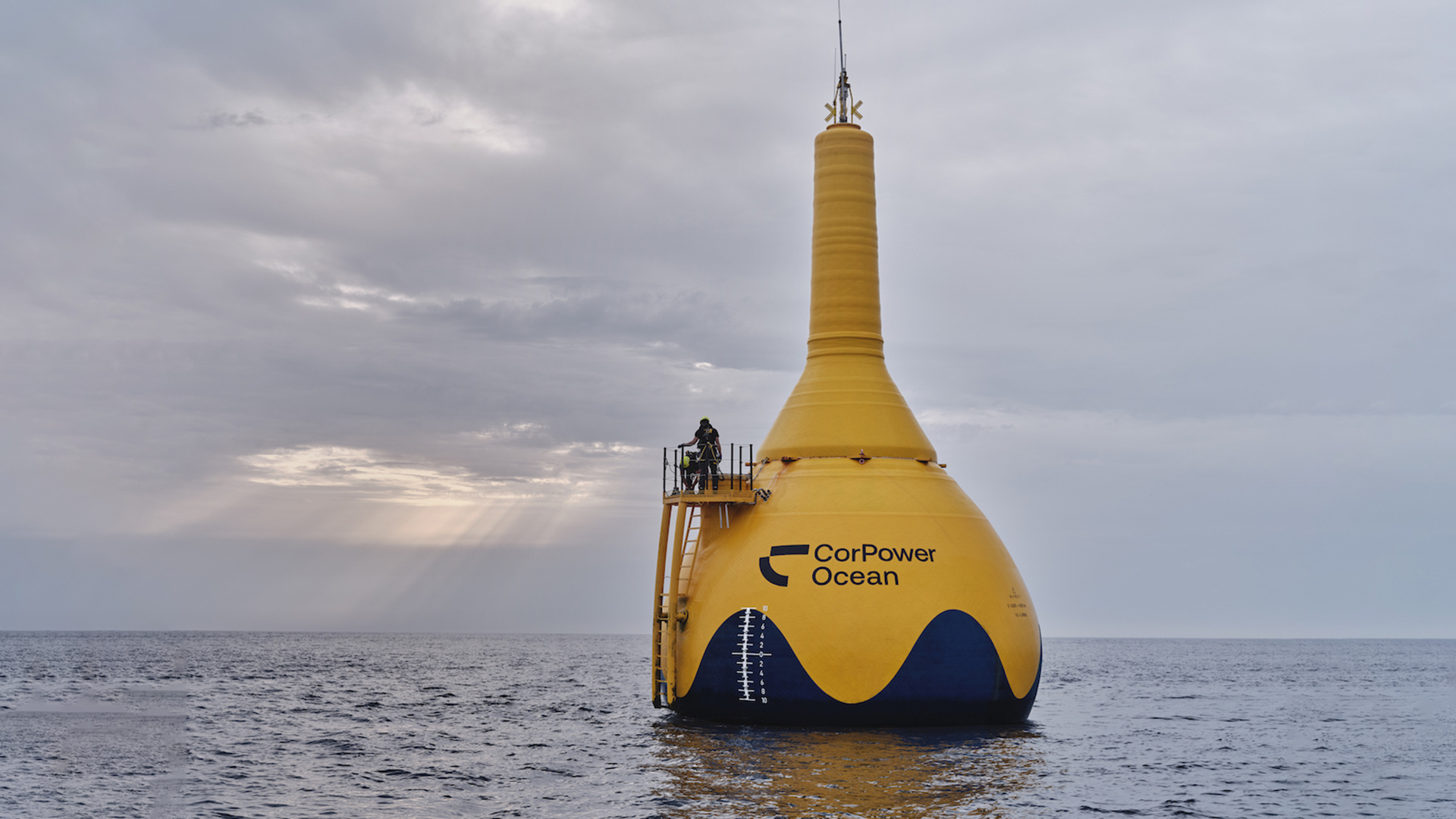
    Two of the current flagship wave projects are the HiWave-5 and Saoirse projects. Both are financed by EU funds – respectively FEDER and the Innovation Fund – and will use the wave energy technology developed by Swedish company CorPower Ocean. HiWave-5 will see the deployment of four 300 kW wave energy converters in northern Portugal by 2025, the first of which has already been installed. Saoirse will be Ireland’s first full-scale wave energy conversion test and demonstration project. A total of five megawatts of wave energy capacity will be installed off the coast of County Clare, powering 3500 homes.

    Another important upcoming wave energy project is called SEAWORTHY. Driven by Danish developer Floating Power Plant, it’s a commercial-scale demonstration project financed by the European Union’s Innovation Fund. The demonstrator technology integrates a 4.3 MW wind turbine, a 0.8 MW wave energy converter, and a hydrogen system on the same floating platform.  This deployment is planned for 2028.

    Supportive policy for the ocean energy sector

    Ocean Energy Europe has been advocating for national governments to create a supportive policy environment and give market visibility to the ocean energy sector for years. This is now starting to happen across Europe: in the UK with the CfD scheme, which provides direct revenue support; in France with dedicated funding and revenue support for the FloWatt tidal project; in Spain with a new €12.2m fund for wave energy projects; and in Portugal with a recent increase of the national wave energy target from 70 MW to 200 MW.

    As predicted, this new wave of support for ocean energy coupled with long-term market visibility has sparked interest from the big energy players. Companies such as Total Energies and Shell have started investing and partnering with upcoming ocean energy projects across Europe. French utility Qair supports the FloWatt tidal project in France, while Irish utility ESB is partnering in the SAOIRSE project. Eni is developing its own wave energy technology in Italy and is currently operating a 260 kW wave device connected to the grid in Pantelleria Island. SEV, the Faroe Islands utility, signed a power purchase agreement with Swedish tidal developer Minesto to build a tidal farm in Vestmannasund.

    All the pieces are starting to fall into place for ocean energy’s growth to accelerate and evolve into a fully commercial industry. Europe has some of the best ocean energy resources in the world and is home to cutting-edge technology developers who are leading the most advanced demonstration projects. Ocean energy is already bringing power and jobs to Europe.

    To fully tap into ocean energy’s potential, European governments must now deliver long-term visibility with deployment targets, investment aids, and revenue support for wave and tidal, as they have done in the past for wind and solar.

    Please note, this article will also appear in the seventeenth edition of our quarterly publication.

    [ad_2]

    Source link

  • US invests $24m to create clean energy jobs nationwide

    US invests $24m to create clean energy jobs nationwide

    [ad_1]

    The US Department of Energy (DOE) has allocated a significant $24m in funding to create clean energy jobs.

    This funding, sourced from the Bipartisan Infrastructure Law, is tailored to enhance training opportunities for clean energy jobs that do not require a four-year degree.

    The funding injection will primarily expand the existing Industrial Assessment Centers (IAC) network. This expansion will encompass various educational institutions, including union training programmes, community colleges, and trade schools.

    The IACs play a vital role in advancing the US’ objectives by assisting small and midsized manufacturers (SMMs) in identifying avenues to reduce costs and enhance productivity.

    How will the initiative create clean energy jobs?

    The enhanced IAC network will pursue two primary objectives to increase clean energy jobs:

    • Career training: Providing training to students and incumbent workers for careers in clean energy, energy efficiency, and advanced manufacturing that do not necessitate a traditional four-year degree; and
    • Support for SMMs: Assisting small and midsized manufacturers in saving costs, minimising energy waste, and improving overall productivity.

    Under the solicitation, the DOE’s Office of Manufacturing and Energy Supply Chains (MESC), in collaboration with the Office of Energy Justice and Equity (EJE), will extend funding to diverse workforce training institutions.

    These include community and technical colleges, trade schools, union training programmes, industrial apprenticeships, and related internships.

    DOE’s Partnership Intermediary, ENERGYWERX, will manage the solicitation process to assist applicants, particularly those with limited experience in accessing DOE funding.

    Awarded funds can be utilised for various purposes, including curriculum development, instructor recruitment, student wages, and equipment procurement.

    Tracks for application

    Applicants can apply under three distinct tracks:

    1. Planning and capacity building: One-year awards of up to $200,000 for institutions to devise strategies for establishing future IACs.
    2. Execution and scale: Three-year awards ranging from $500,000 to $2,000,000 for existing career training programmes to transition into IACs.
    3. Consortia and cohort: Three-year awards between $4,000,000 and $7,000,000 for collaborative initiatives to establish multiple IACs simultaneously.

    Applicants are strongly encouraged to forge partnerships with existing and prospective IACs, community organisations, workforce development boards, and industry stakeholders.

    Such collaborations are expected to yield superior workforce development outcomes and enhance technical assistance for SMMs.

    Jennifer Granholm, The US Secretary of Energy, commented: “When it comes to building up the nation’s workforce, there is no doubt that a clean energy transition means developing new, exciting opportunities.

    “More than half of the jobs created by President Biden’s Investing in America agenda won’t require college degrees—great news for anyone considering a career in the vast clean energy sector.”

    The DOE’s latest funding initiative underscores a concerted effort to nurture the green energy workforce to meet the nation’s goal of generating 100% clean electricity by 2035.

    [ad_2]

    Source link

  • The essential role of diversity in the energy sector

    The essential role of diversity in the energy sector

    [ad_1]

    Marine Cornelis, Executive Director at Next Energy Consumer, Digital Ambassador of the European Sustainable Energy Week 2024, explores the importance of diversity in the energy sector to drive the energy transition.

    In a world crying out for sustainable energy solutions, diversity, equity and inclusion (DEI) still represent an untapped potential. Why are those notions essential to a just energy transition? How can organisations promote these values to innovate and prosper?

    Embracing diversity in the energy sector: More than a trend

    The energy sector, a pivotal player in greenhouse gas emissions and historically suffering from a lack of diversity, with women representing only 22% of its workforce, faces significant challenges.

    In this context, diversity in the energy sector becomes critical for a successful and equitable energy transition. A diverse workforce fosters innovative, effective problem-solving and better solution adoption.

    This is echoed by the International Energy Agency (IEA), which stresses that DEI is key to addressing the urgent need for universal energy access by 2030, as highlighted in the joint IEA-IRENA-World Bank-WHO report on SDG7. However, the energy sector is lagging in implementing effective DEI initiatives, often limiting them to anti-discrimination measures.

    Intersectionality: A path to energy justice

    Beyond gender-based discrimination, the energy sector must embrace intersectionality – the recognition that various social categorisations like class, race, ethnicity, sexual orientation, and others intersect, leading to complex forms of discrimination.

    Acknowledging this is crucial for designing targeted, inclusive, and equitable solutions. As demonstrated by EU projects like EmpowerMed, CEES, Sun4All, or PowerUp, addressing intersectionality is vital in combatting energy poverty and promoting energy justice, ensuring the energy transition is inclusive and leaves no one behind.

    Inclusive practices in energy organisations

    Knowledge building and bias combatting are essential for the energy sector to mirror the diversity of the communities it serves. The European Commission’s Equality Platform for the Energy Sector or the European Solar Sector’s Diversity Award are examples of initiatives promoting equality.

    Organisations must foster inclusive cultures where diversity in the energy sector is valued and tokenism is avoided. This involves fair hiring practices, ongoing education, awareness programs, and mentorship opportunities. Leaders must be proactive in creating and adapting inclusive policies.

    Diversity: The fifth driver of energy transition

    The European Sustainable Energy Week has been instrumental in bringing forward the four drivers of the energy transition: democratisation, decentralisation, digitalisation, and decarbonisation.

    Joshua Atkins, the founder of the NGO “Pride in Energy” which advocates for LGBTQI+ rights in the sector, in the Energ’ Ethic podcast, suggests adding a fifth ‘D’: Diversity. Valuing diverse experiences and perspectives is crucial for the cohesive and effective advancement of the energy sector.

    Conclusion: Shaping a sustainable future

    Integrating DEI in the energy sector is not only a moral imperative but also a strategic necessity.

    It’s imperative for energy organisations to actively incorporate these values into their strategies, fostering a culture where diversity is celebrated, equity pursued, and inclusion is the standard.

    This approach to driving diversity in the energy sector will pave the way for a more sustainable and equitable future in energy.

    This article is a contribution from a partner. All rights reserved.

    Neither the European Commission nor any person acting on behalf of the Commission is responsible for the use that might be made of the information in the article. The opinions expressed are those of the author(s) only and should not be considered as representative of the European Commission’s official position.

    Useful links

    1. European Institute for Gender Equality https://eige.europa.eu
    2. EU Platform of Diversity Charters https://commission.europa.eu/strategy-and-policy/policies/justice-and-fundamental-rights/combatting-discrimination/tackling-discrimination/diversity-and-inclusion-initiatives/eu-platform-diversity-charters_en
    3. European Network Against Racism (ENAR) https://www.enar-eu.org

    [ad_2]

    Source link

  • The key to Europe’s decarbonisation efforts

    The key to Europe’s decarbonisation efforts

    [ad_1]

    Davide Sabbadin, Acting Policy Manager for Climate and Energy, and Alberto Vela, Senior Communications Officer for Climate and Energy at the EEB, a partner organisation of the EUSEW, discuss the vital role of energy efficiency for decarbonisation targets.

    Last year, Europe reduced its CO2 emissions by 8%. To do this, the region used and continues to use two powerful strategies: expanding renewables and reducing energy demand.

    Although renewables are often in the spotlight, energy efficiency has a vital role to play in Europe’s decarbonisation and energy security.

    However, good planning is required for energy reductions.

    The importance of energy efficiency

    Energy efficiency is the cornerstone of the EU’s triple climate target architecture – emissions reductions, renewables, and efficiency goals. This architecture reinforces and enables one another.

    Within this interplay, efficiency facilitates the role of renewables in achieving decarbonisation.

    As well as this, energy efficiency offers a clear solution to cut reliance on energy imports amidst energy insecurity. Although scaling up renewables is vital long-term, deployment takes time. In the short term, efficiency is necessary for cutting dependence on fossil fuels from petrol states.

    Using less energy to achieve the same results has many economic benefits for administrations, industries, and households. Energy efficiency also improves air quality, creates jobs, reduces energy poverty, and increases asset value.

    © shutterstock/Snapshot freddy

    What does energy efficiency entail?

    Energy efficiency encompasses the various measures taken to reduce wasteful consumption. This includes building insulation improvements to the use of more efficient appliances.

    It is already important to ongoing market transformations in Europe.

    Heat pumps using renewables are around five to seven times more efficient than gas and hydrogen boilers in terms of primary energy consumption. Electric cars are 60-70% more efficient than combustion vehicles.

    Electrifying our economy with current technology can achieve savings, given the significant energy losses from fossil fuel combustion.

    Improved energy savings are not a given

    Despite the introduction of an efficiency-first principle and compulsory targets in the EU Energy Efficiency Directive, improved energy savings are not yet given.

    Unrealistic cure-all technologies are distracting demand-side actions.

    For example, the EC’s proposed 2040 climate targets have been criticised for overselling carbon capture and storage. Funding for Small Modular Reactors has also been questioned.

    On the other hand, energy efficiency with renewables has proven to be climate-effective. The savings resulting from Ecodesign and Energy Label, for instance, have been so significant that all large economies have followed.

    Planning is required

    The Paris Agreement Compatible (PAC) scenario, a reliable decarbonisation model, suggests the EU can nearly halve its energy demand to achieve climate neutrality by 2040.

    The ‘Fit for 55’ package has spurred energy efficiency planning at local levels, such as for heating transition and building renovations. Despite this, the urgency to meet efficiency and renewable targets is straining ministries and local governments, who often lack resources for modelling and planning demand-side measures.

    The importance of energy modelling tools

    To move the energy transition forward, decision-makers are increasingly relying on energy modelling tools.

    REFEREE, the latest free online energy planner under development, will help users quantify the socio-economic impacts of efficiency policies in a specific region or country.

    Users will be able to use the tool to determine how many jobs a Member State could create by increasing the annual rate of building renovations, how the air quality index could improve by implementing energy-saving measures, or how public money could be saved by switching to energy-efficient public lighting.

    References

    1. https://refereetool.eu/
    2. https://eeb.org/library/saving-energy-for-europe-report-spring-2023-update/
    3. https://eeb.org/library/reality-check-the-case-for-a-targeted-use-of-carbon-capture-and-storage-ccs/

    [ad_2]

    Source link

  • How science is helping to farmers find a balance between agriculture and solar farms

    How science is helping to farmers find a balance between agriculture and solar farms

    [ad_1]

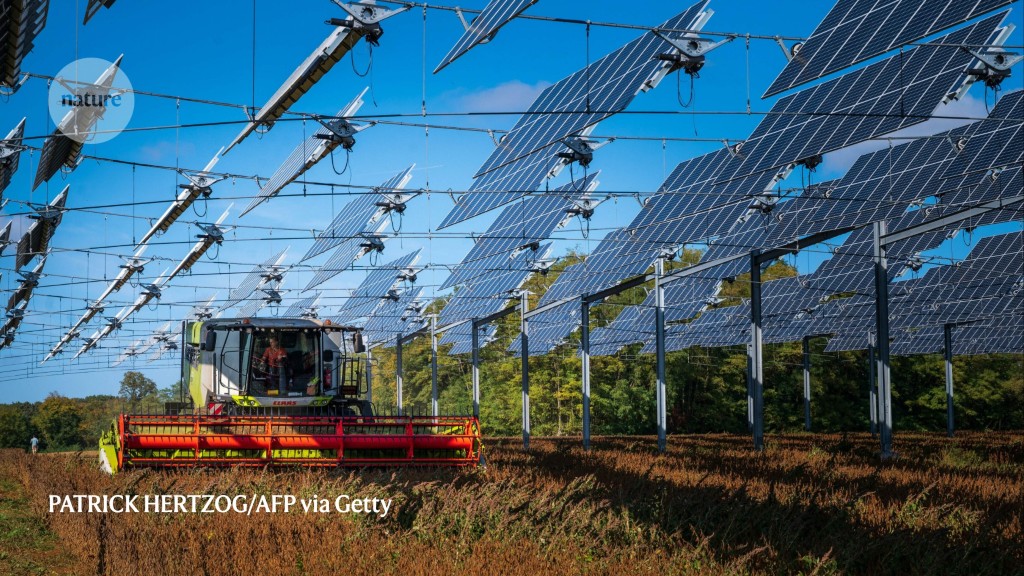
    A combine harvester in a field, under hanging solar panels.

    A farmer drives a combine harvester under hanging solar panels on an agrivoltaic site in Amance, France.Credit: PATRICK HERTZOG/AFP via Getty

    In March 2023, the French government passed a law requiring all solar projects on farmlands to provide some sort of service to agriculture: from improving yields to protecting crops from frost or heatwaves. The decree, entitled ‘On Accelerating the Production of Renewable Energies’, hopes to address a rising call to protect agriculture from an increase in the amount of land being used to harvest solar energy rather than crops.

    This trend has become common, thanks to the shrinking costs and growing profitability of the photovoltaic technology behind solar panels. In France, a landowner could make between 10 and 100 times more money per hectare renting out their land to an energy company than they’d make from conventional farming. This puts the future of agricultural land at risk.

    The bill hopes to build a compromise — aiming to meet the demands from energy companies to install solar panels, without damaging the yield of land used for food production. More laws on the issue are being drafted, including one that specifies the penalty that landowners might face for not meeting productivity targets.

    The government’s target to generate 100 gigawatts of solar power by 2050 looms large in discussions, but in a country where the agricultural lobby holds immense political power, any debate is fraught with political tensions. Furthermore, the changing balance between market forces in France might signal economic shifts elsewhere. As solar projects get cheaper to build, and as many of the world’s economies cry out for more renewable energy, how will conventional farmlands cope?

    And ongoing protests by farmers across Europe, particularly in France, might affect the coming debates around the use of solar technologies on farmland. Distrust of the new rules, as well as calls for better prices and access to affordable farmland, have fuelled the strikers’ outcry.

    According to the French Agency for Ecological Transition, solar projects contributed 16 gigawatts to the French grid in 2022. So far, only 1.3 gigawatts is expected to come from photovoltaics built on agricultural enterprises, some of which are still under construction. Around 61.4 gigawatts(45% of the country’s electricity) comes from nuclear power. Today, renewable energies account for only 20% of the total energy consumed in France, and the government has pledged to reach 33% by 2030. It also plans to comply with the more ambitious European Union’s target of 42.5% of energy from renewables by 2030.

    French researchers have been investigating how solar panels can be installed without damaging the growth of crops for decades. Farms make up half of France’s land, by far the easiest host for solar-power projects compared with the urban regions, forests or protected natural areas that blanket the rest of the country.

    Christian Dupraz and his team of agronomists at the French National Research Institute for Agriculture, Food and Environment (INRAE) in Montpellier research the benefits of temporary shade for plants, and how solar-based systems can help. In Occitania, in the south of France, the team has been experimenting with various ways of mitigating harsher temperatures caused by global warming. Shade structures equipped with solar panels are part of one such technique. With this system, nicknamed agrivoltaic by Dupraz, panels rise over crops to protect them from sunlight when required, rather than simply replacing farmland acreage.

    “Crops don’t use all the Sun’s rays. Their needs depend on life cycle, and some stages — such as grain filling and end of the production cycle — need less light than others,” Dupraz says. The panels also provide protection against weather hazards that come and go, such as night frosts, hail and heatwaves. The technical challenge is therefore to create structures that can harness the Sun’s energy as well as being smart enough to adapt to the needs of the crops growing beneath them.

    Agronomical tracking model

    Several companies are working on these models, including Sun’Agri, based in Lyon, France, which has operated a joint research programme with Dupraz’s team for more than ten years. Damien Fumey, an agronomist at Sun’Agri, says that fields in southern France equipped with mobile solar panels saw increased yields in perennial crops such as vines or fruit trees.

    INRAE also created a national cluster of 56 partners, including energy companies, for agriphotovoltaic research in February 2023. The director, agronomist Abraham Escobar-Gutiérrez, points to a 2023 Applied Energy publication1, which concluded that lucerne crops (Medicago sativa) — beansprout-like plants — alongside mobile panels showed slightly higher yields than those elsewhere, thanks to reduced evapotranspiration and the plant’s adaptation to shaded conditions.

    Although the agriphotovoltaic model seems to be an attractive compromise on the surface, it’s less appealing to the energy industry, because it produces lower electricity yields than do panel systems, which simply prioritize their placement to the Sun. Critics also point to the costs of such systems. Escobar-Gutiérrez estimates that a sophisticated agronomical tracking system is ten times more expensive than a standard solar farm.

    Another battle rages around the proportion of land that can be covered by solar panels. Energy companies are lobbying the French government to legalize covering up to 40% of farm plots in solar panels, in the name of the profitability. Agronomists counter that anything more than 25% will jeopardize agricultural production. Dupraz says that “by accepting a high coverage of panels while forbidding agronomic losses, the law could be unenforceable”.

    Japan — another country attempting to find a balance between sustainable agriculture and a green electricity transition — has chosen to regulate yield losses rather than land coverage. Since 2013, Japanese regulations have required farmers with solar panels in their field to comply with a yield reduction of less than 20% compared with the average yield of the surrounding farmland. Christian Doedt, a researcher at the Institute for Sustainable Energy Policies (ISEP) in Tokyo, says that Japanese farmers have concerns regarding this rule, especially about the threat to those who don’t comply. “The yield requirement of 80% and the legal possibility of dismantling agrivoltaics projects that don’t fulfil it are still a huge barrier to the expansion of agrivoltaics in Japan,” Doedt says.

    Fighting for the light

    And although legislation is being drafted, for some farming areas it is already too late. As solar panels started to become commercially affordable around 2000, many of the vast greenhouses that grew fruit and vegetables in France’s farmlands got kitted out with them by enterprising farmers. In 2018, the local authorities of the French department of Pyrénées-Orientales estimated that two-thirds of the greenhouses equipped with photovoltaic panels had been completely emptied of crops.

    Last year’s law aims to redress the balance and prevent this from occurring in the future. “Before the law of 2023, photovoltaic projects in agriculture were highly disparate across the country, with some local authorities allowing all projects to go ahead, and others systematically blocking them in the name of agriculture. The law is trying to find a bridge between the two,” explains Benoit Grimonprez, rural-law researcher at the University of Poitiers, France. Escobar-Gutiérrez says that he ‘is optimistic’.

    Whereas France and Japan’s regulatory approaches are motivated by protecting the quality and supply of food, a different market-driven trend is emerging in the United States and Germany, supported by the energy lobbies that want to have access to land at the lowest cost, says Dupraz. Germany accepts a one-third loss of yield in farms with solar-panel systems. But further legal and economic battles might arise in the coming years in countries with similar conflicts about land use.

    In some countries, there’s space for everyone. “The situation is different in countries with large uncultivable and unproductive areas, such as Spain and the USA,” Dupraz adds.

    [ad_2]

    Source link

  • Roundtables – Building a Cleaner Future: Better Batteries and Their Materials

    Roundtables – Building a Cleaner Future: Better Batteries and Their Materials

    [ad_1]

    The latest iteration of a legacy

    Founded at the Massachusetts Institute of Technology in 1899, MIT Technology Review is a world-renowned, independent media company whose insight, analysis, reviews, interviews and live events explain the newest technologies and their commercial, social and political impact.

    [ad_2]

    Source link

  • US invests $63m into manufacturing domestic electric heat pumps

    US invests $63m into manufacturing domestic electric heat pumps

    [ad_1]

    The US Department of Energy (DOE) has unveiled a significant move to accelerate the growth of domestic manufacturing of electric heat pumps.

    The DOE announced the availability of $63m funding aimed at ramping up the production of residential heat pumps, heat pump water heaters, and other related systems and components.

    This investment, facilitated through President Biden’s Inflation Reduction Act, utilises the authority granted by the Defense Production Act (DPA) to address climate change and reduce reliance on fossil fuels.

    It’s estimated that electric heat pumps could produce more than half of current heating emissions, a major step in the US’ journey to net zero emissions.

    The announcement is the latest in an array of clean energy projects, with the DOE recently announcing sizeable funding for geothermal energy.

    Building on prior success

    This funding opportunity builds upon the momentum of a previous investment round in November 2023, which saw $169m allocated to manufacturers of heat pumps and related components.

    Electric heat pumps, which play a pivotal role in reducing energy costs for households, decreasing reliance on fossil fuels, enhancing national security, and combatting the climate crisis, are at the forefront of this initiative.

    What are the environmental benefits of electric heat pumps?

    Heat pumps offer efficient heating and cooling solutions while significantly lowering greenhouse gas emissions.

    By transferring heat rather than generating it, these systems provide comfortable indoor temperatures across diverse climates, particularly in well-insulated homes.

    Electric heat pumps are poised to reduce emissions by up to 50% compared to the most efficient gas boilers, with the potential for a 75% reduction by 2030.

    Furthermore, heat pump water heaters exhibit two to three times greater energy efficiency than conventional electric water heaters, promising substantial energy savings for consumers.

    Creating skilled jobs

    Recognising the need to support the clean energy workforce, the funding opportunity encourages proposals aimed at developing the necessary workforce to meet the demands of expanding manufacturing facilities.

    Moreover, this initiative aligns with the US’ Justice40 Initiative, which prioritises directing benefits from federal climate and clean energy investments to disadvantaged communities disproportionately affected by pollution and underinvestment.

    Jennifer Granholm, the US Secretary of Energy, commented: “As part of the Biden-Harris Administration’s commitment to addressing the climate crisis, these Defense Production Act dollars will further amp up domestic heat pump manufacturing to meet increasing consumer excitement, reduce emissions, and create clean energy jobs across the country.

    “President Biden’s Investing in America agenda is working – it’s not only making heating and cooling technology more accessible, but it’s also growing high-quality job options for workers in underserved communities and helping supercharge America’s clean energy economy.”

    With this latest investment, the administration reaffirms its dedication to combating climate change, fostering economic resilience, and promoting equity across communities.

    [ad_2]

    Source link

  • US invests $60m in enhanced geothermal systems

    US invests $60m in enhanced geothermal systems

    [ad_1]

    The US Department of Energy (DOE) has selected three projects to receive $60m funding to demonstrate the efficacy and scalability of enhanced geothermal systems.

    The projects, funded under the landmark Bipartisan Infrastructure Law, will focus on utilising innovative enhanced geothermal systems to harness the Earth’s abundant heat resources.

    The goal is to showcase geothermal energy’s potential in providing reliable, cost-effective electricity to millions of US homes and businesses, aligning with the Biden administration’s ambitious objective of achieving 100% clean electricity by 2035.

    Jennifer Granholm, US Secretary of Energy, commented: “These projects will help us advance geothermal power, including into regions of the country where this renewable resource has never before been used.

    “These pilot demonstrations will help us realise the full potential of the heat beneath our feet to reduce carbon emissions, create domestic jobs, and deliver clean, cost-effective, reliable energy to Americans nationwide.”

    Harnessing geothermal energy resources

    Geothermal resources currently generate about four gigawatts of electricity in the United States. However, advancements in enhanced geothermal systems could potentially provide 90 gigawatts of firm, flexible power to the US grid by 2050, according to a recent DOE analysis.

    This is equivalent to powering over more than 65 million US homes and supporting heating and cooling solutions around the country.

    What are enhanced geothermal systems?

    Enhanced geothermal systems represent a cutting-edge approach to harnessing geothermal energy, expanding its potential beyond traditional geothermal reservoirs.

    Unlike conventional geothermal systems, which rely on naturally occurring high-permeability rock formations to extract heat, enhanced geothermal systems can be applied to areas with lower permeability.

    The technology involves drilling deep into the Earth’s crust, typically several kilometres down, to reach hot rocks. Water is then injected at high pressure into these boreholes, creating fractures in the rock formations and allowing for increased heat transfer.

    The heated water is then pumped back to the surface, where its thermal energy can be utilised to generate electricity or for direct heating applications.

    One of the key advantages is its potential to access geothermal resources in regions where conventional geothermal systems are not feasible, expanding the geographical scope of geothermal energy production.

    Additionally, enhanced geothermal systems can enhance the productivity and longevity of existing geothermal reservoirs by stimulating heat exchange in previously untapped areas.

    Selected projects

    The three projects that will receive funding include:

    • Chevron New Energies: This initiative will utilise innovative drilling and stimulation techniques to tap into geothermal energy near an existing field in Sonoma County, California;
    • Fervo Energy: Located in the Milford Renewable Energy Corridor in Utah, this project aims to produce at least eight megawatts of power from each of three wells, with no existing commercial geothermal power production in the area; and
    • Mazama Energy: Situated on the western flank of Newberry Volcano in Oregon, this project will demonstrate super-hot enhanced geothermal systems with temperatures exceeding 375°C, advancing the science needed to operate in extreme heat conditions.

    Geothermal electricity could become a clean, cost-effective option nationwide by improving and derisking enhanced geothermal systems technologies and reducing their cost.

    [ad_2]

    Source link

  • PV technology innovation driving the clean energy transition

    PV technology innovation driving the clean energy transition

    [ad_1]

    The ACT-FAST project brings together change makers from four EU leading PV researcher institutions to establish an impactful, innovative, all thin film PV tandem technology driving the clean energy transition.

    The Sustainable Antimony Chalcogenide Thin-Film TAndem Solar Technology (ACT-FAST) project, receiving funding from the European Commission, in the frame of the Clean Energy Transition Partnership, (CETPartnership) is targeting to provide scalable and impactful thin film tandem photovoltaic (PV) solutions with the highest potential of rapid transferability and mass adoption by the society.

    The power of PV

    Increasing the proportion of power generated by PV will reduce world carbon emissions and provide a green future for society.

    ACT-FAST project capitalises on European wide thin-film (TF) PV expertise to deliver a new type of solar technology capable of producing high power densities, with a wider application range than traditional Si based modules.

    We target a technology with excellent long-term stability, allowing PVs to be deployed in a wider range of settings e.g., flexible, or low weight modules more suitable for building integrated PV (BIPV), mobility and customised product integration applications (PIPV/IPV).

    ACT-FAST aims to develop high efficiency TF tandem solar cells, based on emerging earth abundant antimony chalcogenides, using novel and low-cost techniques, low environmental impact materials, high versatility, and scalable depositions processes. This will yield a technology compatible with a future upscaling for mass deployment and transferable solutions which are adopted by society.

    Achieving climate-neutral Europe

    In the fight against climate change, the European Union (EU) is committed to transitioning towards a sustainable, secure, and competitive energy system to achieve the goal of a climate-neutral Europe with net-zero emissions by 2050 outlined in the European Green Deal.1  2

    Photovoltaic (PV) energy represents a key technology to enable the decarbonisation of the energy system, as the most cost-effective solution. The key drivers towards widescale adoption of PV technologies are the continued reduction of cost per watt from module production and identifying alternative applications (e.g. building integrated or semi-transparent PV) to maximise usage of the technology and accelerate their adoption by the society.

    While substantial efforts in various PV technologies (such as silicon or thin film CdTe) have been devoted to increase cell PCE through optimisation in material quality and optics, the most direct route to enhance performance beyond the limit of single junction PV devices is tandem technology.

    Thin film PV technologies are adaptable

    Thin film PV technologies are ideally suited to meet this challenge as producing lower cost per Watt due to rapid production techniques, but also have a high degree of adaptability in available design and applications.

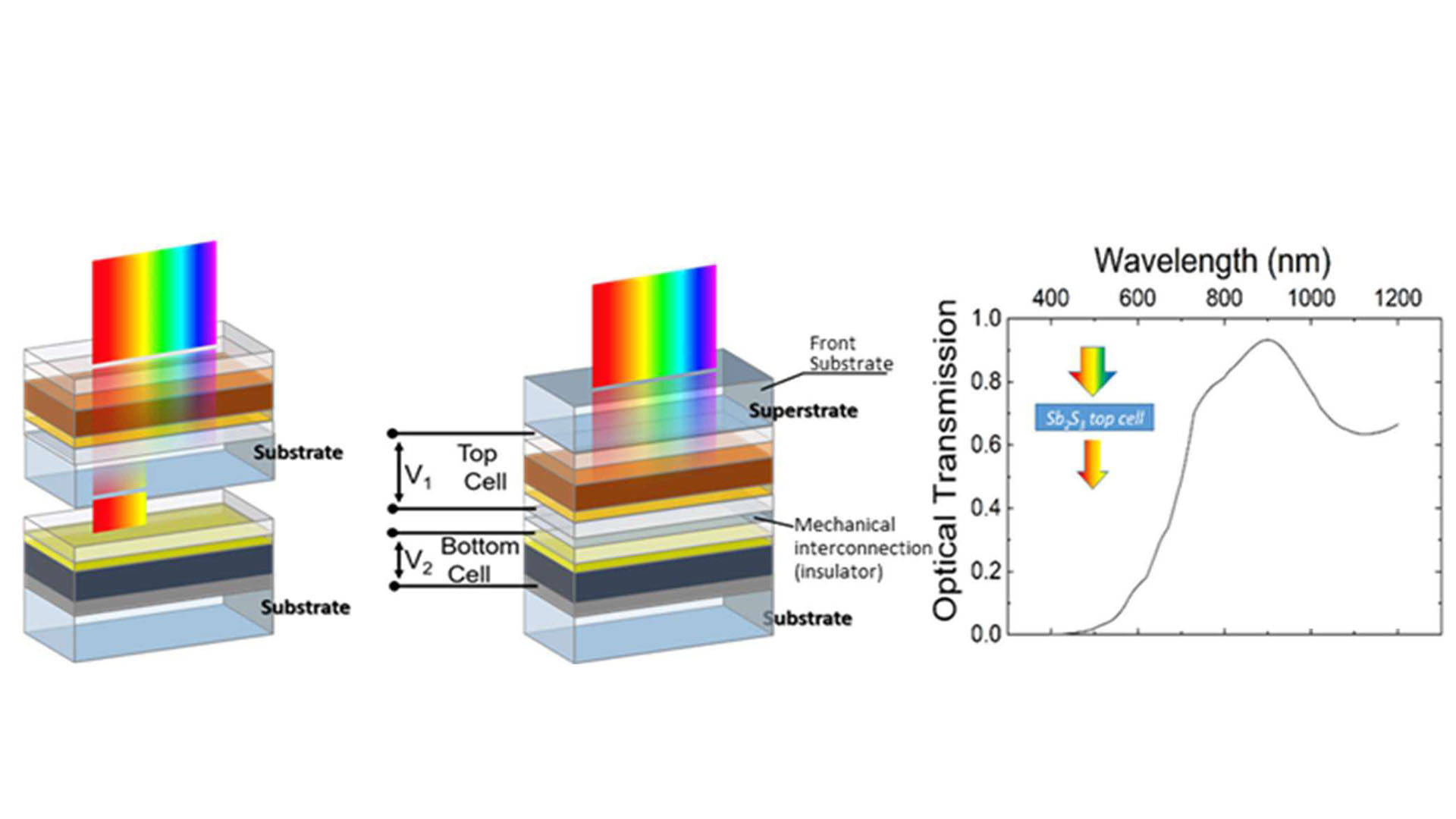
    ACT-FAST proposes an alternative approach to extend the concept of highly efficient tandem devices to novel thin-film PV technologies and to develop novel all TF tandem solar cells (SC) (Fig. 1) entirely based on emerging low temperature process antimony chalcogenides.

    Fig. 1: Tandem solar cell architectures proposed in ACT-FAST, offering several possibilities of integration in future BIPV, IPV and PIPV solutions, thanks to their flexibility in design and development on various substrate configurations.

    Long-term vision of the ACT-FAST project

    The long-term vision of the project is to deliver a new generation of TF tandem solar cells (SC) and modules reaching high levels of performance with power conversion efficiencies (PCEs) ≥25%, at low manufacturing costs of ≤€0.10/Wp.

    To reach the ambitious target, ACT-FAST brings together top research groups from Tallinn University of Technology (TALT), University of Liverpool (ULIV), Universitat Polytechnical de Catalunya (UPC), Institut de Recerca de l’Energia de Catalunya (IREC, and Università degli Studi di Verona (UNIVR), with the highest EU share of cumulative efforts on the development of emerging thin film PV technologies.

    This project takes the view that the long-term delivery of the technology needs to be considered during its development, not as an afterthought.  ACT-FAST will contributing towards:
    •   Building a sustainable and ultracompetitive mass production process for thin film tandem PV (i.e., based on a market-oriented roadmap);
    •   Boosting the European PV industry by providing a framework to convert EU-based expertise into products, services and innovations;
    •   Reducing the carbon footprint of tandem PV technologies;
    •   The positioning of Europe as a leader in the industrial production of TF PV along the entire European PV value chain; and
    •   Producing highly qualified human resources via research excellence and career development of researchers (following the gender balance principles) for leading roles in the reindustrialisation of Europe as a low-carbon economy.

    “This research was funded by CETPartnership, the Clean Energy Transition Partnership under the 2022 CETPartnership joint call for research proposals, co-funded by the European Commission (GAN°101069750), with the funding detailed on https://cetpartnership.eu/funding-agencies-and-call-modules and with the funding organisation Estonian Research Council, agreement No MOB3PRT2’’

    References

    1. Stepping up Europe’s 2030 Climate Ambition Investing in a Climate-Neutral Future for the Benefit of Our People, COM/2020/562 Final.
    2. Fit for 55 packages. https://www.consilium.europa.eu/en/policies/green-deal/fit-for-55-the-eu-plan-for-a green-transition/

    Please note, this article will also appear in the seventeenth edition of our quarterly publication.

    [ad_2]

    Source link