Dirk Vansintjan, President of REScoop.eu, EUSEW digital ambassador, and Stavroula Pappa and Felix Kriedemann, Policy Advisors at REScoop.eu, discuss the EU’s second generation of legislation recognising the role energy communities play in different activities.
First versus second generation of EU legislation for energy communities
The EU’s Clean Energy for All Europeans Package (CEP, 2019) introduced provisions for ‘renewable energy communities’ (RECs) and ‘citizens energy communities’ (CECs) for the first time, empowering citizens to take ownership of renewables instead of exclusively depending on corporations.
While energy communities have come a long way since 2019, several barriers still exist, including issues with accessing the grid, lack of funding opportunities, and complex administrative and regulatory procedures.
As indicated by REScoop.eu’s Transposition Tracker, several Member States have made considerable progress in transposing these provisions into national legislation.
However, most Member States have yet to develop an enabling framework allowing communities to participate in the market without discrimination compared to other market actors.
Since the CEP, Europe has experienced a global pandemic, the biggest war at our door since WWII and an energy and related cost-of-living crisis that exposed our dependency on expensive fossil fuels.
Many European policymakers have worked hard to soften the blow of these crises. Among these solutions were the REPowerEU, the Fit for 55 Packages, and the Electricity Market Design revision. Crucially, though, these laws reinforced the model of energy communities, further acknowledging that citizens no longer need to depend on corporate power for their renewable electricity, heating, or renovations.
We can now collaborate and take part in the local energy transition.
What can energy communities do?
There is a common misconception that energy communities only develop renewable projects at the local level. Positively, the second-generation EU legislation clarifies that citizen-led initiatives actively contribute to other activities, including renovations, the alleviation of energy poverty, energy efficiency, offshore wind and heating and cooling.
Community Heating and Cooling (CH&C) initiatives, where citizens own their local renewable heating infrastructure, are emerging all over Europe.
In Belgium, the energy community Beauvent raised €1m from its members in 30 minutes. As a result, it now supplies citizen-owned renewable heat to the municipality, 500 citizens, 25 Small and Medium Enterprises, and two hospitals in Ostend. Similar projects are succeeding in Greece, Italy, Denmark, France, and the Netherlands.
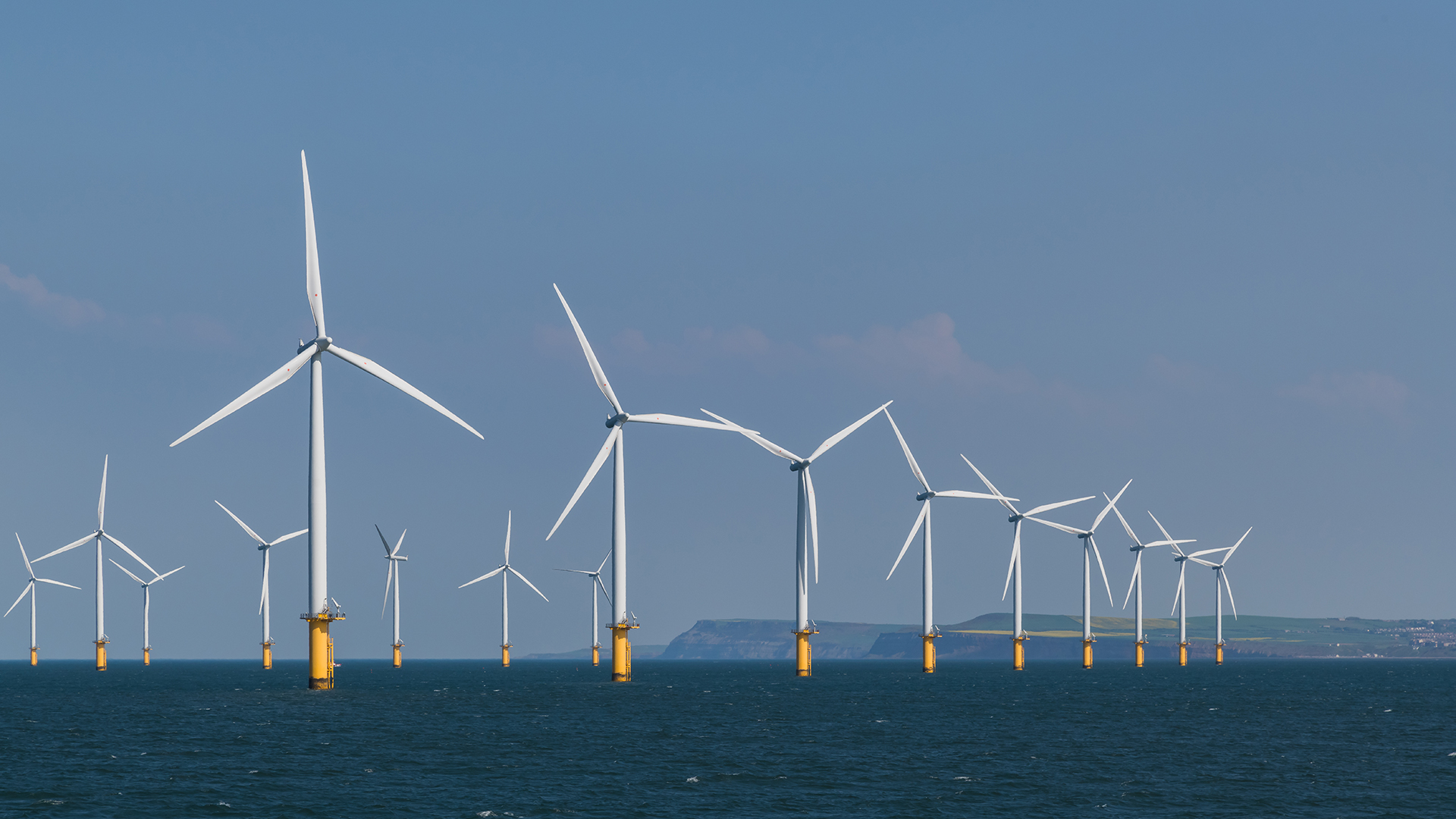
The revised Renewable Directive recognises the role of energy communities in the development of larger projects to improve public acceptance of the transition. To this end, Member States may include RECs in cooperation projects on offshore renewable energy.
Belgium stands out as an example. In 2019, the Royal Decree on new offshore zones included citizen participation as one of the tender criteria.
By 2022, the government published a law that transposed provisions for RECs at the federal level, solidifying citizen involvement as a critical selection criterion for offshore wind projects. A minimum of 1% of the capital raised for the project should be open to citizens. The tender criteria will allocate 10% of the points to citizen participation, and the RECs are entitled to contract 25% of the energy through a citizen purchase power agreement (PPA).
This groundbreaking approach ensures that wind energy profits can benefit citizens, communities and small businesses directly.
Moving forward, the Commission needs to ensure complete and adequate transposition, implementation, and enforcement of EU rules to create robust regulatory and enabling frameworks that remove obstacles for citizens and level the playing field for communities in the energy market.
The next step could be developing an EU-level strategy for how different EU and national actions can support the development of energy communities across the various areas of EU policy.
We must now live by Jean Monnet’s words and make citizens work together to show them that beyond their differences and geographical boundaries lies a common interest.
Dusan Jakovljevic, Co-Founder and Policy and Communication Director at Energy Efficiency in Industrial Processes (EEIP), EUSEW digital ambassador, discusses the challenges facing the development of the energy efficiency market in Europe’s industrial sector.
For over ten years, Energy Efficiency in Industrial Processes (EEIP) has been researching ways to improve European industrial energy efficiency, including through EU-funded Innovation Action initiatives.
Our main learning is that energy efficiency, although ‘common sense’ (especially for industrial and business energy users), does not happen spontaneously.
The energy efficiency market is missing. It very often feels like a Sisyphus task of endlessly pushing the boulder of innovation up the hill of market feasibility.
The hill: Market feasibility
This absence of a dynamic market for industrial energy efficiency stems from various interconnected challenges.
Companies often face significant barriers to investing in energy efficiency measures due to the high upfront costs involved in upgrading equipment and implementing new technologies.
Furthermore, skills and workforce shortages remain one of the key long-term barriers to decarbonising European manufacturing businesses.
Additionally, the lack of clear metrics for assessing energy efficiency improvements (benchmarks) and the uncertainty surrounding long-term energy prices further discourage investments.
The first steps have been taken. The European Commission’s Joint Research Centre, under Innovation Radar methodologies, has made a significant development with the creation of the Market Creation Potential Indicator. It has the potential to become a valuable asset in navigating complex market landscapes, driving sustainable investments and growth, and fostering a more resilient and dynamic EU economy.
We believe that every project should possess a strong understanding of the market and be market-oriented. This principle should underpin replication methodologies across all projects funded by the EU. Replication shouldn’t merely involve showcasing ideas and outcomes.
Actions are not taken based on good ideas and inspiring information. Competition for research funding between many actors, often comprising ‘commercial’ competitors (many of whom are non-profit), can be balanced with collaboration through a range of means and incentives.
One approach is to further emphasise shared goals or mutual benefits already in programme calls and in application processes, such as addressing common challenges by leveraging complementary expertise or insisting on references to existing recent work in similar areas.
Additionally, incentives like access to broader markets, cost-sharing opportunities, or enhanced reputation through joint replication efforts can motivate collaboration. The thematic workshop organised by CINEA, which centred on replication in the clean energy transition within business sectors (20-21 April 2023), brought together over ten diverse projects.
EEIP provided facilitation and moderation, showcasing an outstanding instance of collaboration among project consortia.
Ultimately, by emphasising the synergies and long-term benefits of energy efficiency, different project consortia can mitigate the adversarial aspects of competition for future projects.
Innovation becomes a success only when market opportunities are effectively created and mobilised. Promoting the perspective of market orientation for innovative energy efficiency developments would unquestionably enhance the value of project investments and results.
Fostering collaborative efforts for market development
The energy efficiency market can only be created and stimulated by actors working together. This would include everyone from research centres and sectoral associations to companies and investors. Regulatory and EU funding programmes should create an effective framework for this collaboration to flourish.
Industrial energy efficiency is already about collaboration. There are very few opportunities behind the factory gates. Connecting to other energy users to optimise energy use is often the best way forward. Industrial Symbiosis is a good example.
As energy efficiency makes common sense within a company, industrial symbiosis does the same in an energy and resource-connected circular economy.
EU-funded projects like EENOVA, which analyses the connections of value chains in optimising energy efficiency innovations in the food industry, or CORALIS, which connects decarbonisation for resource and energy-intensive sectors, are examples of replication building on the pre-existing interaction of multiple sectors and energy users.
Working together and learning from each other between research, factories and business enablers is a much-needed springboard for energising future energy efficiency markets.
As global stakeholders grapple with the urgency of climate change, climate finance emerges as pivotal in navigating the transition to a sustainable future.
Alba Forns Albuixech, COO & Co-Founder of Climatize, and Kristina Lyubomirova Lazarova, Head CEO Office at the Bulgarian National Electricity Company, both EUSEW Young Energy Ambassadors, explore how to bridge the gap in climate finance for a green future.
Almost €185tr is required to deliver net zero by 2050. Despite climate finance having grown consistently over the last decade, we are far behind what is needed to meet the goals of the Paris Agreement.
As the saying goes, ‘We can pay the bill now or pay dearly in the future.’ Let’s see how far we have reached and what stands in our way.
Understanding climate finance
The term climate finance refers to a wide variety of financial instruments distributed to address climate solutions.
These range from grants and loans from large public institutions, such as governments or multilateral funds, to green bonds, carbon taxes, or private funding.
All financial resources are either allocated to mitigate the impacts of climate change or build resilience and adaptation to the new reality we live in.
Although there has been an intensive and rapid allocation of funds, current financial flows must increase at least three-fold to achieve the Paris Agreement targets.
70% of the infrastructure investment needed for the low-carbon transition shall be deployed in emerging markets and developing economies that face multidimensional crises, including political and economic instability, corruption, and environmental challenges.
Climate finance flows have grown consistently over the past decade, but they still lag far behind what is needed to meet the goals of the Paris Agreement. It is estimated that €5.7tr of climate finance is required annually between now and 2030 and €6.7tr by 2050 to deliver net zero – a total of almost €185tr.
The actions regarding the effects of climate change on vulnerable communities and ecosystems shall be handled with priority and due justice. As a means to bridge the overarching gap, global cooperation and the role of climate finance in achieving sustainability goals must be strengthened to promote the economic and social benefits of climate action for all.
Key players in climate finance
Climate finance involves several stakeholders that play crucial roles in advancing the agenda on the way to net zero.
On the one hand, international entities such as the United Nations Environment Programme Finance Initiative (UNEP-FI), the European Investment Bank (EIB), and the European Bank for Reconstruction and Development (EBRD) provide blended financial solutions through increased public funding and mobilised private capital flows.
In addition, well-governed, enabling policy frameworks are crucial to help leverage public and private finance into meeting the climate-related pledges. Next, private investors contribute to the climate capital market due to the imposed Environmental, Social, and Corporate Governance (ESG) regulations.
Last but not least, social awareness, engagement, and acceptance are pivotal if we are to meet our goals in the foreseeable future.
Challenges and barriers
Market conditions and legal frameworks are, however, not always set right to foster climate finance.
Political and financial sector misalignment
There are relevant policies and regulations in the financial and corporate sectors; however, they are often ineffective because of piecemeal or lack of coordination.
This leads to misalignments with net zero objectives, impeding an effective mobilisation of public and private finance for climate solutions.
Surge in inequality and global trust erosion
There’s a significant lack of trust between the Global North and South regarding financing for the transition. The failure to fulfil the $100bn pledge made in Copenhagen in 2009 exemplifies strained relations.
Limited climate data and analytics
Gaps in climate data and analytics impede the development of credible transition plans, hindering effective scrutiny and execution of climate finance strategies while opening the door to corporate greenwashing.
Solutions
Public finance needs to unlock private finance by being deployed in an optimised manner and ensuring viability across every stage of development, from R&D to first-of-a-kind (FOAK) projects, public procurement and ongoing subsidies, and concessional funding mechanisms.
Policy needs to catalyse private capital flows transcending short-term political cycles. Laws and regulations must be calibrated to encourage clean energy investments.
The public sector should take the lead in paving the way for the private capital market by directing capital towards crucial decarbonisation technologies that currently lack commercial viability. This includes areas such as carbon capture, nuclear energy, green hydrogen, and industrial sectors like cement or steel.
This entails an expansion of funding mechanisms similar to those employed in the Just Transition Mechanism with the Just Transition Fund. These resources will be utilised to retire and decommission fossil fuel infrastructure, offering current workers financial support and employment opportunities.
Multilateral development banks and development finance institutions must secure additional capital to support these initiatives, directing their funding strategically to leverage private finance and amplify the impact of such programs.
Additionally, a well-informed and accountable ecosystem via investing in climate data infrastructure and transparency via public awareness will foster progress toward global climate goals.
Where do we go from here?
The shift towards an economy that is low-carbon, resilient, and equitable presents the greatest investment opportunity of our lifetime.
Concerted climate action and investment could add a net €20tr to the global economy, equivalent to a rise of up to 4.4% in global GDP by 2070 (relative to business as usual).
Solutions to close the financing gap are complex and multifaceted, ranging from stakeholder alignment, international cooperation, addressing knowledge, and keeping stakeholders accountable.
Institutions well prepared to embark on net zero pathways can leverage decarbonisation-focused policy shifts to become technology innovators and align their practices with ethical and social responsibility standards.
This article is a contribution from a partner. All rights reserved. Neither the European Commission nor any person acting on behalf of the Commission is responsible for the use that might be made of the information in the article. The opinions expressed are those of the author(s) only and should not be considered as representative of the European Commission’s official position.
UK renewable energy projects are set to benefit from over £1bn funding from the government, the largest financial support to date.
Confirmed during the Spring Budget, the sixth Contracts for Difference (CfD) allocation round of the renewable energy auction represents the most significant government investment in the sector.
The government says that this sizeable investment into UK renewable energy aims to provide more clean, secure, and affordable electricity to help grow the nation’s economy while protecting consumers from volatile prices.
The Allocation Round 6 Budget will provide:
£800m for offshore wind
£120m for onshore wind and solar technologies
£105m for floating offshore wind and geothermal technologies, including a ringfenced £10m budget for tidal energy
Energy Security Secretary Claire Coutinho explained the significance of the funding for the UK renewable energy industry: “When it comes to renewables, we have a record to be proud of. In 2010, just 7% of our electricity came from renewables; this is now up to over 40% today.
“We have the second largest renewables capacity in Europe, which is backed by £300 billion of investment since 2010, with £24 billion since September alone.
“We are sticking to the plan to deliver the long-term change our country needs to deliver a brighter future for Britain – securing more homegrown, green energy, we can protect billpayers from volatile gas prices.”
Focus on offshore wind developments
After a thorough examination of the most recent evidence, taking into account the influence of global events on supply chains, the government has designated a historic £800 million specifically for offshore wind projects, establishing a distinct funding pool.
This marks the largest allocation to date, with four times the budget available compared to the previous round.
This decision follows the adjustment of the maximum price for offshore wind and floating offshore wind in November and is aimed at sustaining Britain’s position as a leading force in wind energy.
The country is already home to five of the world’s largest offshore wind farm projects. This investment is also instrumental in achieving the UK’s target of generating up to 50GW of offshore wind power by 2030, including a potential 5GW from floating offshore wind technology.
Investments in green industries
Additionally, the government has reaffirmed support for the UK’s green sectors, allocating an additional £120m to the Green Industries Growth Accelerator.
This brings its total funding to over £1bn, enhancing advanced manufacturing within clean energy supply chains.
Minister for Nuclear and Renewables Andrew Bowie added: “This unprecedented renewables budget funding to the tune of over £1bn will keep the UK at the cutting edge of the industry.
“This announcement will ensure we offer certainty to developers and continue to attract investment in the UK.
“I am excited to see the opportunities that will open for our world-class renewable industries, reducing emissions and delivering reliable, clean energy for the British people.”
How the CfD scheme works
CfD contracts are allocated through competitive auctions, ensuring cost-effectiveness for consumers. This approach has driven down prices since the scheme’s inception, leading to solar and wind becoming some of the most economical forms of electricity generation in the UK.
The CfD initiative offers renewable energy projects a guaranteed price for the electricity they produce, encouraging investment in the UK renewable energy sector. Consequently, renewable electricity generation has surged from 7% in 2010 to over 40% today.
This two-way structure safeguards consumers and businesses from future uncertainties in the global energy market. For instance, when wholesale electricity prices surpass the agreed CfD price, generators reimburse the scheme.
This mechanism was evident during Winter 2022/2023 when CfD payments decreased the funding required for energy support schemes by approximately £18 per typical household.
EIT InnoEnergy has launched Repono, a pan-European energy storage systems company that aims to operate 100GWh of electricity by 2030.
In a move set to transform the landscape of European energy storage, Repono aims to standardise and accelerate the deployment of large-scale energy storage systems across Europe, promising to store gigawatt hours of excess renewable electricity and mitigate the risk of power outages.
Repono will apply a portfolio-based approach that can be replicated across regions, helping to level out energy prices and provide a balanced, 24/7 supply of clean electricity.
Diego Pavia, CEO of EIT InnoEnergy, commented: “The debut of Repono is another proof of EIT InnoEnergy’s strong commitment to trailblaze the energy transition.
“From day one, Repono will be embedded in the world’s largest sustainable energy ecosystem of 1200+ partners from industry, finance, research, and academia, have access to our 46+ investments in the energy storage sector as well as to the 800+ members of the European Battery Alliance.
“These unique starting conditions will greatly de-risk Repono’s business and enable the company to quickly replicate projects across Europe, doing its bit to accelerate the energy and industrial transition.”
This necessitates the rapid deployment of large-scale electricity storage solutions to accommodate the economy’s increasing electrification and the growing share of renewables.
Rasmus Bergstrom, CEO of Repono, explained: “Europe’s electricity system and grid were built for a steady feed-in of dispatchable energy sources, not to handle the massive influx of decentralised and intermittent renewables.
“Hence, Europe’s forceful shift away from coal, oil and gas puts our longstanding energy infrastructure under immense stress, leading to frequent curtailments of cheap, clean energy, volatile and unnecessarily high prices, and power outages.
“This puts a brake on the energy transition at large when we, as a society, have everything but the luxury of time. This is exactly where Repono steps in.”
Meeting the growing demand for energy storage
With a vision to capture a significant market share, Repono sets its sights on a 10% stake in the anticipated 1-terawatt hour (TWh) European market by 2030.
Its early backers include industry giants such as Schneider Electric, SIPLEC E.Leclerc, Stena Metall, Boryszew Group, and NTM GmbH, providing the necessary capitalisation for its initial operations.
Repono’s strategy encompasses three key areas. Firstly, it will leverage short-term spot markets to strategically manage its storage capacities, ensuring optimal utilisation by buying, charging, selling, and discharging electricity according to market fluctuations.
Secondly, its balancing services will play a critical role in maintaining grid stability and averting large-scale blackouts.
Lastly, Repono will integrate energy storage systems into power purchase agreements (PPAs), ensuring a reliable, 24/7 decarbonised electricity supply for industrial consumers.
Following its acquisition of BatteryLoop, Repono already boasts operational energy storage systems in the Nordics.
With a team of 25 highly skilled employees, Repono is poised to revolutionise energy storage practices across Europe.
Camilla Foster, Veolia’s Strategy Manager for Industrial Water and Energy, highlights the importance of attracting female talent in the energy industry and the role they can play in the green transition.
The energy industry plays a huge role in every sector, both in the UK and worldwide. It’s the number one cost in the water industry, and local loops of sustainable energy are a critical part of every company’s drive for net zero.
There are an incredible number of opportunities for people to play a role in decarbonising energy as every country and every industry needs to transition to greener, cheaper, and more resilient energy sources.
According to the Department for Energy Security and Net Zero, the UK energy industry supports around 734,000 jobs, with 166,400 people directly employed in the UK. In 2023, the entire energy sector supply chain contributed £150bn to the UK economy and since 2014, electricity has become the major energy contributor.
Looking at the 2022 statistics on employment in the energy sector, 43% of jobs were in electricity (including renewables), oil and gas extraction accounted for 25%, and gas accounted for 15%.
Women in the energy industry case study: Camilla Foster
My journey into the energy industry has not been your typical, linear career path and has involved many challenges and discoveries along the way. Over the last decade, the energy industry has evolved massively, with more drive for local, decarbonised solutions, new technologies and innovations, to name a few.
The potential for women to join the sector, and grow as the energy industry moves from strength to strength, will help address the need for diverse teams with new innovative ways of thinking. Veolia is regularly recruiting in areas such as engineering, technical and project management, which emphasises the projected growth of the industry.
Growing up, I always had a keen interest in how things worked, and I’ve always wanted to make a difference. I have been a Strategy Manager for over a year and half now but this wasn’t how I started out.
After graduating from the University of Central Lancashire, I moved into hazardous waste management to get my career rolling over 17 years ago. My first ever role was as a technical advisor, where I would classify hazardous waste streams and route their treatment/disposal. This was a great place to start, with an overview of our operations aligned with the customer interaction, to learn both the processes for effective Environmental management whilst understanding the customer challenges and needs.
After a period in hazardous sales, travelling around the UK, my energy career started, working closely with the Chief Operating Officer of Veolia’s Industrial, Water and Energy division. In this role, I have the privilege of working alongside some of the UK’s largest decarbonisation projects, such as the one at Eastbourne District and General Hospital.
To maintain patient treatment and care facilities hospitals require a secure and continuous supply of energy and to help decarbonise the hospital’s energy systems, a wide range of energy upgrades were set into motion, spanning from the introduction of solar arrays yielding 1.1MWp of renewable electricity to significant improvements in heating, and ventilation systems.
Additionally, a state-of-the-art dual-stage heat pump system was brought on board. On the infrastructural front, the hospital witnessed the addition of 17,300m2 of insulated roofing, the replacement of old single-glazed windows with an expansive 4,540m2 of high-efficiency double glazing, and the fitting of 12,972m2 of insulated cladding.
This groundbreaking project married technical teams, professionals and clients together to find the most effective solutions. By growing my network and learning from our people I have gained a knowledge base that I can now rely on for information and ideas. This gives me the ability to connect with key stakeholders to ensure the senior management team can function and deliver solutions with an impact.
Looking forward
The energy industry is so broad that you can’t always be the expert across each of the disciplines; it’s about having a network of experts at your disposal. With new legislation and increasing pressure on net zero targets, we need new experts and diverse teams, to find solutions for some of the most pressing challenges our sector faces.
I believe women can provide this new perspective and look at things strategically from different angles. As we all have similar skill sets, combining these dynamics can bring huge upside potential. The energy industry is no longer male-dominated, and we are constantly seeing influential, strong, and intelligent women joining the force, which is great for developing and combining ideas.
Clients are recognising they must do things differently and move away from traditional ideas where there is an expectation to no longer deliver basic services. New ways of working in energy are creating opportunities for fresh plans, which means we need people who can focus on sustainability and innovation.
I particularly enjoy working at Veolia as their strategies are aimed at preserving the environment, serving growing populations, and assisting customers to meet business demands in a more sustainable way. Veolia is also passionate about diversity and bringing together all creative minds to contribute to our wider goals. We need people coming out of learning now who are ready to start, whether that’s as an apprentice, graduate, intern or full-time employee. I’m always happy to be a mentor for anyone who is keen and motivated – my door is always open.
Today there are many new and interesting career opportunities in the energy sector that need filling including roles within engineering for energy and water, renewables and technical fields. The industry is looking for people who can excel in these jobs and bring their own new ideas and solutions.
Designers, developers, and planners also have opportunities to design the decentralised energy systems of the future and ensure we can make the necessary carbon reductions to protect the environment we all share.
Renewable energy is attracting more positive attention, which has created new opportunities across the sector. Electrical, mechanical, civil, and chemical engineers are needed to develop our future technology solutions, and there are excellent opportunities for women to get ahead of the curve and start now.
Considering a career in energy
The energy industry provides a fantastic green career opportunity to make a difference in a sustainable and growing sector. There are many new opportunities for ambitious women looking for a clear career path with prospects in a fast-moving industry.
If you have a desire to make a real difference and learn from experienced professionals around you, then a career in energy could be just the right fit, and there is no better time than now to start!
UK Chancellor Jeremy Hunt has unveiled a substantial £360m investment package to bolster the UK’s life sciences and manufacturing sectors.
The sizeable investment in the country’s life sciences and manufacturing capabilities is crucial to the government’s strategy to stimulate economic growth, enhance health resilience, and fortify job opportunities throughout the nation.
It was also confirmed that companies will soon be able to apply for a share of the £520m funding for life sciences manufacturing announced in the Autumn statement.
Hunt commented: “We’re sticking with our plan by backing the industries of the future with millions of pounds of investment to make the UK a world leader in manufacturing, securing the highly-skilled jobs of the future and delivering the long-term change our country needs to deliver a brighter future for Britain”.
Boosting life sciences manufacturing
A substantial portion of the funding, totalling £7.5m, is allocated to support the expansion plans of two prominent pharmaceutical companies investing a combined £84m to enhance their manufacturing capabilities within the UK.
Notably, Almac, a Northern Ireland-based pharmaceutical firm specialising in drugs to treat cancer, heart disease, and depression, is set to benefit from this investment.
Alongside Almac, Ortho Clinical Diagnostics in Pencoed, Wales, is gearing up to expand its facilities to produce testing products used in the identification of various diseases and conditions.
These initiatives are expected to create nearly 300 jobs across the UK, further strengthening the nation’s foothold in the life sciences sector.
Science Secretary Michelle Donelan added: “The UK’s £108bn life sciences sector is driven by the pioneering contributions of over 300,000 highly-skilled individuals who transform lives through groundbreaking advancements in drug discovery and diagnostics.
“We fuel this progress by fostering a dynamic environment where cutting-edge technologies like AI and genomics meet world-class research to create the next generation of healthcare solutions, including in our NHS.
“By investing in advanced manufacturing facilities, we are protecting our communities by ensuring we can rapidly respond to future health emergencies and deliver life-saving innovations when they are needed most.”
Accelerating automotive R&D
In addition to the life sciences investments, the government has earmarked almost £73m for cutting-edge automotive research and development projects.
These initiatives are aimed at advancing electric vehicle (EV) technology, fostering highly skilled job opportunities, and solidifying the UK’s position as a global hub for EV manufacturing.
Supported by over £36m in government funding awarded through Advanced Propulsion Centre UK (APC) competitions, companies like YASA and Empel Systems are spearheading projects focused on developing technologies for the next generation of battery electric vehicles.
Furthermore, projects led by Integrals Power are scaling up high-performance battery systems, enhancing safety, power density, and cost-efficiency.
Investment in aerospace
As part of today’s announcements, nearly £200m in joint government and industry funding is allocated to aerospace research and development projects.
These initiatives aim to drive advancements in energy-efficient and zero-carbon aircraft technology, facilitating the transition to net-zero aviation.
Notable projects include the development of zero-carbon aircraft engine technology led by Cambridge-based Marshall Group, and investments in Airbus-led projects focused on enhancing wing designs and carbon fibre production rates. The funding will be delivered through the Aerospace Technology Institute (ATI) programme,
Green Industries Growth Accelerator
Furthermore, the Chancellor has announced an increase of up to £120m in the Green Industries Growth Accelerator (GIGA) to support the expansion of low-carbon manufacturing supply chains across the UK.
This funding will contribute to lowering costs and accelerating the transition to a green economy. The total fund, now approaching £1.1bn, will be split between various clean energy sectors, including investments in electricity networks, offshore wind, carbon capture, utilisation, storage, and fuel production for advanced nuclear reactors.
Tiziana Toto and Mariano Votta from Cittadinanzattiva detail the NUDGE project’s exploration of behavioural interventions in encouraging consumers to make energy-efficient choices.
Sustainable energy behaviours are paramount for addressing our planet’s pressing environmental challenges. By embracing sustainable energy practices, individuals and communities contribute to mitigating climate change, reducing greenhouse gas emissions, and preserving natural resources.
Moreover, sustainable energy behaviours promote energy efficiency, leading to cost savings, improved energy security, and enhanced resilience to energy shocks. Beyond the environmental and economic benefits, embracing sustainable energy behaviours fosters social equity by ensuring access to clean and affordable energy for all.
However, how do we help consumers gravitate towards more sustainable energy practices?
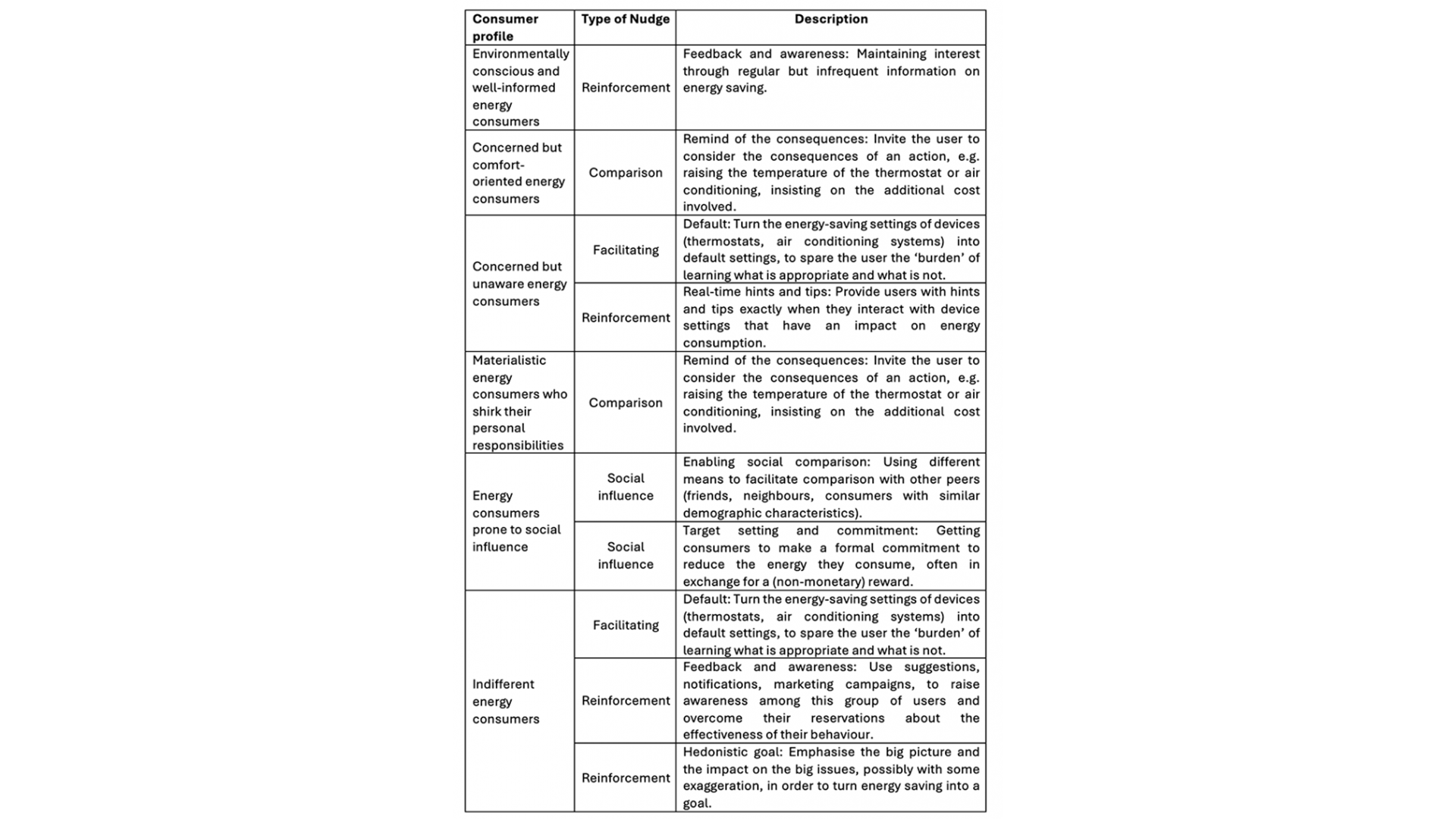
To understand consumer energy behaviours, the project started by conducting a comprehensive survey spanning 29 countries and available in 15 languages. This survey, completed by over 3,000 individuals, yielded invaluable insights into the complexities of energy consumption patterns, identifying six distinct consumer profiles and corresponding behavioural nudges necessary to promote sustainable energy behaviour effectively.²
Understanding energy consumer profiles
The survey revealed six primary consumer profiles, each characterised by unique attitudes, knowledge levels, and motivations regarding energy consumption:
Environmentally conscious and well-informed energy consumers: This group demonstrates a profound concern for environmental issues and possesses a strong awareness of energy-saving strategies. They prioritise energy efficiency and are willing to make sacrifices for environmental preservation.
Concerned but comfort-oriented energy consumers: While acknowledging the importance of energy conservation, individuals in this group may prioritise personal comfort over energy-saving measures, particularly concerning heating and cooling.
Concerned but lacking awareness energy consumers: Despite expressing intentions to save energy, this group lacks specific knowledge about practical energy-saving methods, hindering their ability to take concrete actions.
Materialistic energy consumers escaping personal responsibility: Despite understanding the environmental consequences of energy consumption, these individuals prioritise financial concerns over environmental responsibility. Nudges focusing on monetary savings may effectively promote energy-saving behaviours among them.
Prone to social influence energy consumers: This segment values social approval and is influenced by societal norms. Leveraging social pressure and setting clear goals could effectively promote energy-saving behaviours among these individuals.
Indifferent energy consumers: Individuals in this group demonstrate low intentions for energy-saving and lack environmental concern or awareness. Addressing their indifference may require multifaceted approaches to encourage behavioural changes.
From environmentally conscious to indifferent energy consumers, these six profiles embody the features that hinder energy-saving behaviours and encourage specific interventions on them.
Implementing behavioural interventions
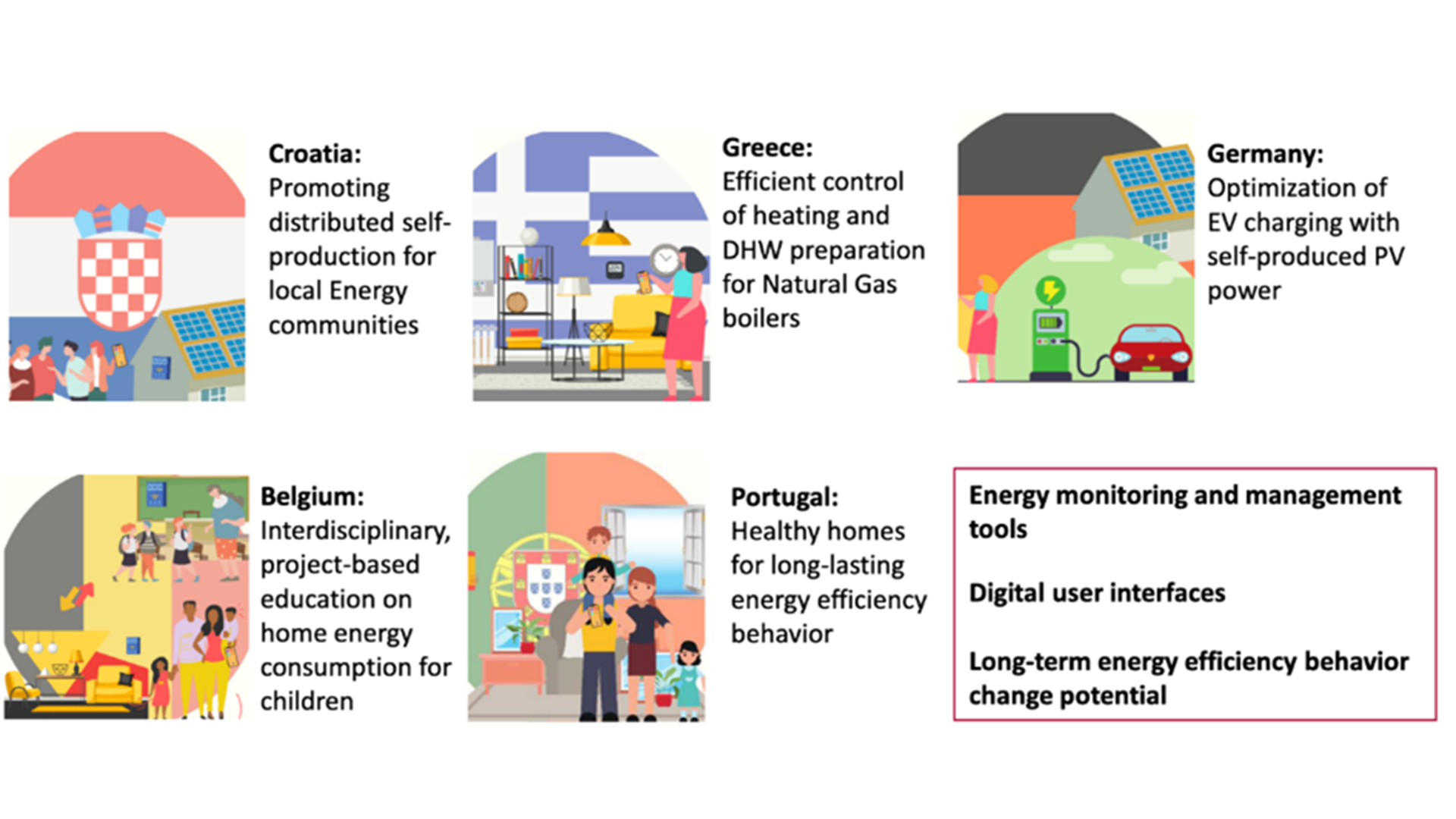
Building upon the insights from the survey, the NUDGE project initiated field initiatives across five EU countries, targeting diverse demographics and energy contexts.
The pilots targeted consumers in Greece, Belgium, Germany, Portugal, and Croatia, in different environments (residential, energy communities, schools), belonging to different age groups (including young children), belonging to different income classes (low, medium, high), served by different energy carriers (electricity, natural gas), with the inclusion of prosumers and drivers of electric vehicles.
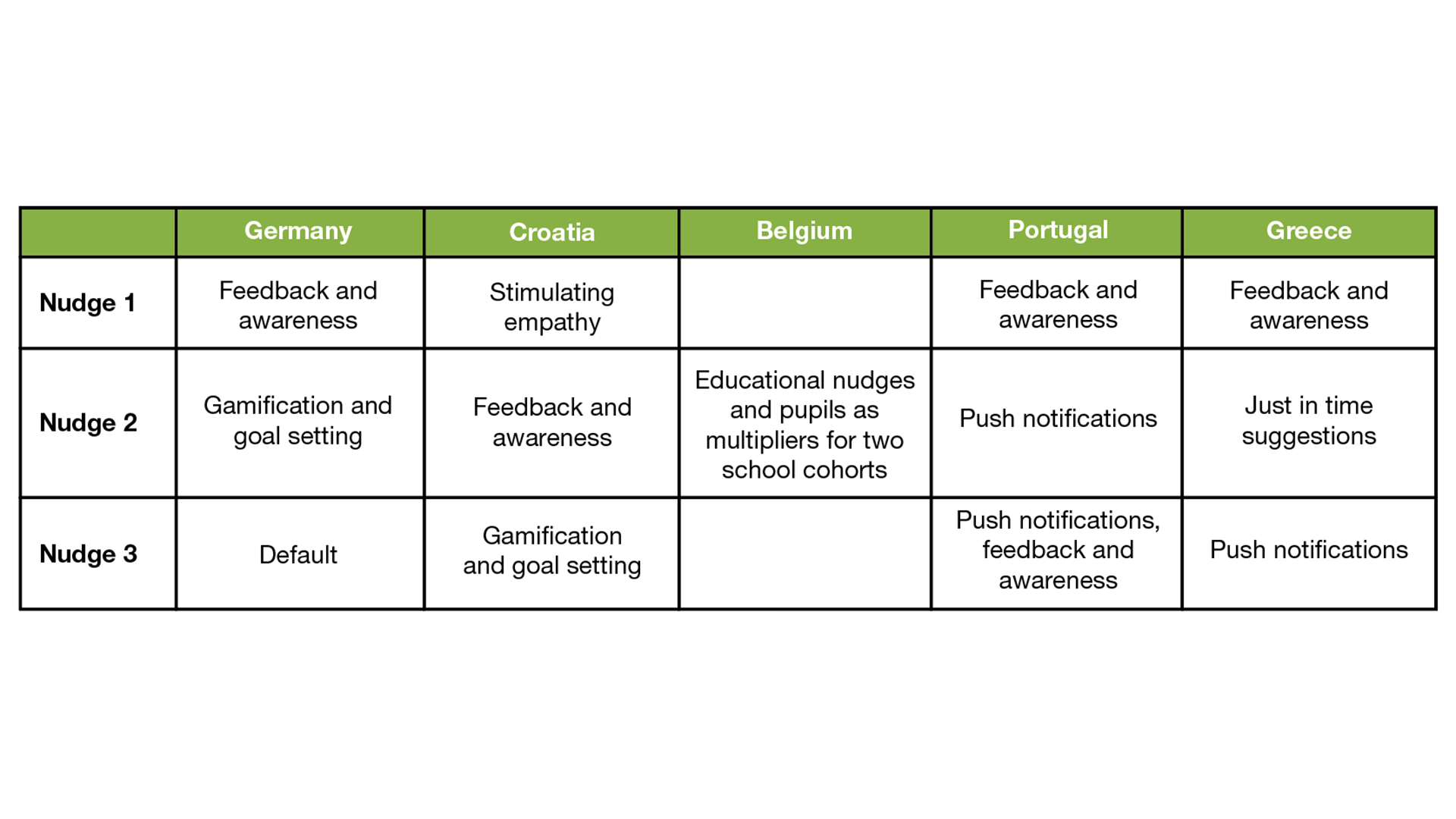
The pilot projects employed sequential nudging interventions, such as feedback mechanisms, awareness campaigns, gamification, goal setting, and push notifications tailored to each consumer profile. Aims of the pilots included:
Increasing self-consumption (Germany, Croatia);
Improving energy knowledge (Belgium);
Optimising the charging of electric vehicles with self-generated photovoltaic energy (Germany);
Reducing heating-related consumption (Belgium, Portugal, and Greece);
Reducing electricity consumption (Portugal); and
Improving indoor air quality (Portugal).
Three nudging interventions were tested in sequence in the four pilot projects, excluding the Belgian one, which provides educational nudges through courses during the school year.
Most of the pilot projects started with nudging interventions that provided feedback on participants’ energy consumption and aimed to increase their awareness. These were followed by more interactive nudges, particularly those with push notifications, just-in-time prompts, gamification, or goal setting.
While the results showed promising energy savings ranging from 0.4% to 3.5% and as high as 15% in the case of nudges aimed at electric vehicle smart charging, they highlight the importance of understanding diverse energy user profiles for effective intervention strategies.
Policy recommendations for promoting sustainable energy behaviours Drawing from the findings of the NUDGE project, several policy recommendations – focused on consumers and consumer associations – emerge to facilitate sustainable energy behaviours.³
Enhancing environmental awareness
Continued investment in information and awareness campaigns, coordinated at both European and national levels, is essential for fostering greater environmental consciousness among citizens. Collaborative efforts involving various stakeholders, including consumer and environmental associations, can amplify the impact of these initiatives.
Improving energy knowledge
Implementing educational initiatives, particularly within school curricula, can enhance understanding of energy consumption issues from an early age, empowering individuals to adopt energy-saving behaviours. Peer education programmes and community involvement can further reinforce these efforts.
Improving consumer perceptions
Promoting awareness of the impact of specific behaviours, such as lowering thermostat temperature by two degrees to save 15%, enhances individuals’ sense of personal efficacy in energy conservation efforts.
Regulators and energy suppliers should prioritise disseminating information on accessible tools for monitoring consumption, such as simplified bills and smart meters, to empower consumers to make informed decisions about their energy usage in real-time.
Designing tailored approaches
Conflicting motivations can hinder the adoption of sustainable behaviours, as personal comfort often takes precedence over environmental concerns, such as adjusting home temperatures for energy savings.
To address this, energy service providers should engage in prior consultations to understand users’ knowledge gaps and facilitate behaviour change. Training initiatives involving multiple stakeholders are effective, particularly with adult citizens, while early educational interventions can bridge the intention-action gap, especially among younger populations.
Providing effective feedback
Habits strongly influence behaviour, often more than intentions, as they are deeply ingrained and challenging to change. Nudges are most effective when creating new behaviours rather than altering existing habits. Therefore, prioritising timely and personalised feedback is recommended, with higher frequency and content tailored to individual energy consumption patterns.
Comparisons with others’ performance can enhance effectiveness, while focusing solely on economic benefits may be counterproductive due to the perceived insignificance of savings.
The pilots demonstrated that households with tools to monitor energy usage could consciously change their consumption habits. It’s recommended to make tools like smart meters accessible to all income groups to address energy poverty by enabling conscious energy consumption behaviour for those who need it most.
Data confidentiality
The NUDGE project survey revealed that the majority seems unwilling to share detailed energy data, i.e., on a daily to real-time basis. Concerning this aspect, the recommendation is to provide consumers with adequate information and evidence on how their data are processed in accordance with the legislation in their respective countries and to protect their right to privacy.
In conclusion, the NUDGE project underscores the complexity of altering energy consumption behaviours and emphasises the importance of tailored interventions, education, and collaboration across stakeholders. Addressing these challenges collectively is vital for promoting sustainable energy practices and achieving a lasting shift towards energy-conscious behaviours across diverse populations.
By implementing targeted strategies and fostering a culture of energy awareness, policymakers, energy service providers, and regulators can pave the way for a greener and more sustainable future.
The project “NUDging consumers towards enerGy Efficiency through behavioural science (NUDGE)” has received funding from the European Union’s Horizon 2020 research and innovation programme under Grant Agreement no. 957012. The sole responsibility for the content of this publication lies with the authors. It does not necessarily reflect the opinion of the European Union. Neither CINEA nor the European Commission are responsible for any use that may be made of the information contained therein.
This article is part of the exploitation activities carried out by Cittadinanzattiva/Active Citizenship Network in the context of the EU funded project “NUDging consumers towards enerGy Efficiency through behavioural science (NUDGE)” with the support of INNOVATION NEWS NETWORK.
For this special feature, the authors thank Jack Thomas of Innovation News Network; Bianca Ferraiolo, Head of the Representative Office to the EU at Cittadinanzattiva-Active Citizenship Network; Niklas Reinfandt from Fraunhofer ISI and co-author of the Policy Brief “NUDging consumers towards enerGy Efficiency through behavioural science (NUDGE)”; Filippos Anagnostopoulos from IEECP, co-author of the already mentioned Policy Brief & NUDGE project coordinator; For the design, the authors thank Anousheh Parsaei from IEECP.
References
The NUDGE consortium was composed by: Athens University Of Economics And Business – Research Center (AUEB); Domx Idiotiki Kefalaiouchiki Etaireia (DOMX); Fraunhofer Gesellschaft Zur Foerderung Der Angewandten Forschung E.V. (FRHF); Institute for European Energy and Climate Policy (IEECP); Interuniversitair Micro-Electronica Centrum (IMEC); Instituto De Ciencia E Inovacao Em Engenharia Mecanica E Engenharia Industrial (INEGI); MVV Energie AG (MVV); Springs-Stof (SSTOF); Zelena Energetska Zadruga Za Usluge (ZEZ); Cittadinanzattiva (ACN). www.nudgeproject.eu
Christine Lins, Co-Founder and Executive Director of Global Women’s Network for the Energy Transition (GWNET), discusses the importance of gender balance in the energy transition and opportunities for women in the sector.
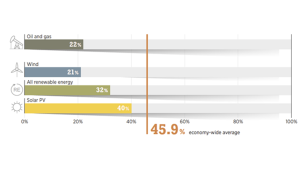
The energy sector workforce is characterised by a gender gap greater than most other sectors. As stated in the report Renewable Energy: A Gender Perspective by the International Renewable Energy Agency (IRENA), there are only 22% of women in the oil and gas sector workforce and 32% in the renewable energy workforce.
Share of women in the energy sector (Source: IRENA)
According to Ernst & Young’s Women in Power and Utilities Index, only 5% of board executives and 16% of board members of the top 200 utilities are women.
Supporting women in the energy sector
In the Global Roadmap for Accelerated SDG 7 Action in Support of the 2030 Agenda for Sustainable Development and the Paris Agreement on Climate Change, published in early November 2021 and taking into account the UN GA High-Level Dialogue on Energy, UN Secretary-General Guterres emphasises that “gender equality and women’s empowerment must be prioritised, including empowering women in the design, production and distribution of modern energy services, including for productive uses, as well as equal representation of women in decision-making processes in the area of energy”.
Women have a lot to offer the sustainable energy sector. Scientific research has found that a diverse workforce delivers better results, not only in terms of increased creativity and innovation potential but also related to better decision-making and greater profits.
Initial research findings have also led to conclusions that companies with more women on their board of directors are inter alia more likely to invest in renewable power generation, mitigate climate change and proactively address environmental concerns[1]. Still, this potential has not yet translated into a substantially narrower gender gap in the energy sector.
Creating more jobs through decarbonisation goals
The climate goals set in the Paris Agreement mean nothing less than a total decarbonisation of the energy sector by 2050. Renewables must play a major role in that process. National governments are increasingly recognising the economic and social benefits generated by renewable energy.
The deployment of renewables contributes to growth in gross domestic product and creates employment opportunities. In 2022, renewable energy employment increased to reach a record high of 13.7 million jobs[2].
Considering that the workforce in the renewable energy sector is predicted to grow from 13.7 million today to about 42 million in 2050, the attraction of female talent will be crucial to ensure a thriving sector.
The COP28 Global Stocktake reports called on all countries to accelerate the transition away from fossil fuels. At the same time, the Global Renewables Alliance sought commitments to triple renewable energy capacity globally and double the annual rate of energy efficiency improvements by 2030.
These goals mark the beginning of the end of fossil fuels, renewed momentum for renewable energy investment, and the creation of high-quality sustainable jobs.
According to converging projections by international organisations such as IRENA, IEA, and the European Commission, more jobs will be created in new energy fields throughout energy transitions than will disappear in the old sectors – coal, gas, and oil.
This will not happen automatically, however; new jobs will not spontaneously spring up where old jobs disappear. Planning energy transitions in an inclusive and participatory way is, therefore, of the essence; the people who are affected by the energy system transformation need to be included in all stages of the transformation process.
GWNET: Advancing gender balance in the energy transition
GWNET, the Global Women’s Network for the Energy Transition, works with partners from all around the world to make sure that energy transition recognises and harnesses all innovative talent available from both men and women.
The network, which currently consists of over 4,000 members from over 150 countries, is open to individuals and corporations who are committed to advancing the gender balance in the energy sector and who wish to connect with their peers to advance the energy transition more rapidly.
As solid data is fundamental for any political action, GWNET collaborates with international partners such as IRENA, the World Bank, OSCE and others to generate data on the status and role of women in energy.
Last but not least, GWNET leads the development of several regional and global mentoring programmes for women in energy to advance the role of women as agents of change in society and promote best practices within the sustainable energy sector.
In the last five years, more than 900 women from 90+ countries have participated in these mentoring programmes, and GWNET has built up a pool of over 750 mentors who volunteer some of their time to empower junior and mid-career women in energy.
The team believes the research will help inform policymakers and urban planners in identifying vulnerable communities, creating more sustainable building designs, and reducing the growing energy burden on citizens.
Siavash Ghorbany, a doctoral student in the Department of Civil and Environmental Engineering and Earth Science, explained: “The first step toward mitigating the energy burden for low-income families is to get a better understanding of the issue and to be able to measure and predict it.
“So, we asked, ‘What if we could use everyday tools and technologies like Google Street View, combined with the power of machine learning, to gather this information?’ We hope it will be a positive step toward energy justice in the United States.”
The growing energy burden for US households
Low-income households across the US are grappling with an energy burden that is significantly higher than the national average, recent findings from the US Department of Energy reveal.
A report found that more than 46 million households in the US are experiencing a substantial energy burden, defined as allocating over 6% of their gross income towards basic energy needs such as heating and cooling their homes.
How passive design can reduce home energy prices
Passive design strategies, such as natural ventilation and optimal use of sunlight, have emerged as potential solutions to mitigate home energy prices.
However, the scarcity of data on passive design effectiveness poses a challenge in assessing its impact on a broader scale.
To address this knowledge gap, a team of interdisciplinary experts devised a novel method employing AI.
Scalable model for energy auditing
The research concentrated on three pivotal elements in passive design—window size, window type (operable or fixed), and the extent of shading. The study utilised a convolutional neural network to examine Google Street View images of residential structures in Chicago.
Subsequently, various machine learning techniques were employed to determine the most effective prediction model. Their approach predicted home energy prices with an impressive accuracy rate exceeding 74%.
Notre Dame researchers analyzed Google Street View images of residential buildings in Chicago to predict household energy expenses. Credit: University of Notre Dame
Unlike conventional approaches that require meticulous building-by-building assessments, this model enables swift and scalable evaluations.
The findings underscore the significance of passive design attributes in predicting average energy burden, emphasising their indispensable role in predictive modelling.
Moving forward, the researchers aim to expand their analysis to include additional passive design elements such as insulation and green roofs.
Moreover, they envision scaling up the project to address energy burden disparities at a national level, with the ultimate goal of fostering sustainable and equitable energy practices across the country.