Tag: Renewable energy

  • Harnessing thermal energy from data centres should be prioritised

    Harnessing thermal energy from data centres should be prioritised

    [ad_1]

    Dr David Pugh, Director for Sustainable Industry at Digital Catapult, discusses the relationship between data centres and thermal energy, and how it can be leveraged to achieve net zero goals.

    Industries around the world are seeking innovative solutions to mitigate their environmental impact.

    One groundbreaking advancement lies in the symbiotic relationship between data centres and thermal energy.

    Traditionally recognised for their energy-intensive operations, data centres are now expected to revolutionise the renewable energy landscape, serving as hubs for sustainable energy production.

    At Digital Catapult, our focus lies in the intersection of renewable energy and advanced digital technologies, and with an increasing number of businesses committing to achieving net zero emissions by 2050, sustainable innovation has become paramount to business success.

    As such, there is a growing awareness among businesses around the potential to leverage heat from data centres to meet their environmental objectives.

    As businesses across multiple sectors seek ways to integrate AI-driven solutions for sustainable practices, it has become increasingly evident that using thermal energy from data centres could be the key to offsetting environmental consequences.

    Such a process will be critical to a business’s long-term commercial success and should be a priority for any business on the path to net zero.

    The energy intensity of the data centre

    Data centres house significant amounts of information and facilitate the seamless functioning of the digital world. This convenience comes at a cost, as data centres are notorious for their high energy consumption.

    The UK Energy Research Centre (UKERC), for example, estimates that data centres’ energy use accounts for around 1% of the world’s total energy consumption, underscoring the substantial impact data centres have on global energy demand.

    Data centres aren’t just impacting the environment, but the economy too. The UKERC also found that the cost of operating data centres in the UK amounts to billions of pounds annually, with estimates ranging from £4bn to £7bn per year.

    The combined economic and environmental impact of data centres makes clear the need to evolve their use for commercial and environmental gains.

    Leveraging symbiosis to generate thermal energy is one way to achieve this. Taking advantage of this renewable energy will be critical to achieving long-term success and sustainable business growth.

    © shutterstock/thinkhubstudio

    Thermal energy for sustainability and efficiency gains

    Data centres generate substantial amounts of heat through their operations, necessitating robust cooling systems to maintain optimal temperatures. This excess heat is traditionally expelled into the atmosphere, exacerbating environmental issues, but recent innovations have unlocked the potential to capture and repurpose this thermal energy for sustainability and efficiency gains.

    By integrating heat capture technologies such as heat pumps, heat exchangers, and thermal storage systems, data centres can effectively harness the surplus heat generated during operations.

    Rather than dissipating into the environment, this heat can be used for various applications, including space heating, water heating, and even power generation through district heating networks.

    Research has found that thermal energy storage tanks have a lifetime of 20-30 years, much longer than the four to ten-year life of batteries. This results in lower maintenance costs over the lifetime of the data centre, too.

    In my role as Director for Sustainable Industry at Digital Catapult, I work with businesses to explore how the symbiotic relationship between data centres and thermal energy could be used for improved operational efficiency and to achieve sustainability goals. This includes considering how thermal energy from data centres could be used to heat swimming pools and local infrastructure, and be integrated into district heating systems, maximising its use and reducing waste.

    Through collaborative research and development initiatives, we can assess how to unlock the full potential of this symbiotic relationship, driving innovation in the field of energy management, and contributing to a more sustainable future.

    Harnessing the benefits of thermal energy through innovation

    Digital Catapult is immersed in exploring the symbiotic relationship between data centres and thermal energy by leveraging AI to enhance operational efficiency and advance sustainability goals.

    Our work, with a range of partners, to pioneer the convergence of AI and other emerging technologies, such as with our Eco-metre solution, demonstrates our deep commitment to supporting organisations of all sizes in optimising their energy usage and reducing their carbon footprint.

    One innovative application involves using AI algorithms to analyse vast datasets on energy consumption patterns within data centres. Identifying inefficiencies and optimisation opportunities allows businesses to maximise energy efficiency and minimise waste.

    Through this symbiotic relationship, we’re not only achieving significant energy savings but also reducing carbon emissions, aligning with our commitment to sustainability and environmental stewardship.

    Moreover, through programmes like the Digital Supply Chain Hub and the Logistics Living Lab, we are also actively harnessing Artificial Intelligence’s potential to reduce emissions across various sectors by leveraging AI’s predictive capabilities and optimal control strategies. This enables businesses to make data-driven decisions that lead to substantial energy savings and enhanced sustainability.

    The symbiotic relationship between data centres and thermal energy stands as an important mechanism in the quest for sustainable innovation. As industries worldwide confront the urgent need to reduce their environmental footprint, harnessing the surplus heat generated by data centres is a promising solution.

    Through technological advancements and a commitment to leveraging data-driven insights, businesses can not only enhance operational efficiency but also contribute to the global effort to combat climate change. This will be key to any business on the path to net zero, and any business interested in learning more about how they can leverage thermal energy from their data centres can learn more here.

    [ad_2]

    Source link

  • How lightbulb efficiency will save billions on household energy bills

    How lightbulb efficiency will save billions on household energy bills

    [ad_1]

    The U.S. Department of Energy (DOE) has finalised energy efficiency standards for general service lamps (GSLs) to help Americans save billions on their household energy bills.

    These standards—which will go into effect in July 2028 for newly produced bulbs—are expected to save American families $1.6bn annually on household energy bills, significantly cut energy waste, and slash harmful greenhouse gas pollution.

    Over 30 years, DOE projects these updated standards will save Americans more than $27bn on their utility bills and cut 70 million metric tonnes of dangerous carbon dioxide emissions—equivalent to the combined annual emissions of over nine million homes.

    The new announcement represents the Biden-Harris Administration’s latest steps in delivering savings through appliance efficiency.

    Slashing household energy bills with efficient methods

    “Making common household appliances more efficient is one of the most effective ways to slash energy costs and cut harmful carbon emissions,” said US Secretary of Energy Jennifer Granholm.

    “Under President Biden and as directed by Congress, DOE is following the lead of lightbulb manufacturers, helping American families flip the switch on household energy bills through strengthened energy efficiency standards.”

    The new actions are part of a suite of energy efficiency standards advanced by the Biden-Harris Administration this term that DOE projects will together provide nearly $1tr in consumer savings over 30 years and save the average family at least $100 a year through lower household energy bills.

    DOE also estimates that the full set of standards will cumulatively reduce greenhouse gas emissions by 2.5 billion metric tonnes or more—roughly equivalent to the emissions of 18 million gas-powered cars, 22 coal-fired power plants, or 10.5 million homes over 30 years.

    These actions reinforce the trajectory of consumer savings, which forms a key pillar of President Biden’s Investing in America agenda.

    They also highlight the opportunities to lower costs for American families and businesses in ways that also cut climate pollution.

    Tips for lowering energy costs for families and businesses

    For more information on cost-saving resources, consumers can utilise DOE’s Energy Savings Hub—an easy-to-use online resource to access the cost-saving benefits of President Biden’s Investing in America agenda.

    household energy bills
    © shutterstock/Dean Clarke

    The website outlines clean energy tax credits and forthcoming rebates, helping people take control of their energy bills and have cleaner and more efficient options as consumers—whether they’re looking to purchase an electric vehicle, update an appliance, or make their home safer and more comfortable.

    To learn how you can drastically cut your energy bills and keep money in your pocket, visit www.Energy.gov/Save.

    [ad_2]

    Source link

  • University of Surrey awarded £1.1m to advance solar-thermal devices

    University of Surrey awarded £1.1m to advance solar-thermal devices

    [ad_1]

    A University of Surrey project has been granted £1.1m to innovate cutting-edge solar-thermal devices.

    Awarded via the Engineering and Physical Sciences Research Council (EPSRC), the project aims to advance solar-thermal devices to optimise the capture of solar energy.

    Solar-thermal devices will be key to unlocking the energy transition and have the potential to transform how we heat our homes and generate large-scale power.

    The project will be spearheaded by the University of Surrey in collaboration with the Universities of Bristol and Northumbria.

    The universities’ combined expertise in photonics, advanced materials, applied electromagnetics, and industry-leading nanofabrication facilities will be key to the project’s success.

    Professor Marian Florescu, Principal Investigator from the University of Surrey, explained the significance of the project: “Our project is not just about innovating; it’s about responding to a global necessity.

    “The sun showers us with a tremendous amount of energy every day, far more than we currently capture.

    “By developing these advanced solar-absorbing surfaces, we are opening up new, efficient ways to harness this abundant solar energy.

    “Our goal is to transform how we use sunlight, making it a powerhouse for clean and sustainable energy that meets our growing needs without harming the planet.”

    How do solar-thermal devices work?

    The primary objective of the project is to develop innovative surface designs capable of selectively absorbing sunlight while effectively emitting heat in the form of near-infrared radiation.

    Distinguishing itself from traditional solar cells that predominantly convert sunlight into electricity, these devices belong to the realm of solar-thermal technology.

    Unlike their photovoltaic counterparts, solar-thermal devices harness sunlight to generate heat, which can subsequently power mechanical engines or undergo conversion into electricity.

    This dual functionality not only broadens the applications of solar energy but also holds promise for enhancing overall energy efficiency and sustainability.

    Professor Marin Cryan, Co-Principal Investigator from the University of Bristol, added: “The University of Bristol has been developing thermionic solar cell technology for a number of years.

    “These use concentrated sunlight to heat materials to the point where thermionic emission of electrons occurs, which can form the basis of high-efficiency, low-cost solar cells.

    “This exciting project will develop very efficient solar selective absorbers, which will be an important component of the overall cell design.”

    Project targets

    The project encompasses several aims. Firstly, it seeks to pioneer the development of solar absorbers capable of operating effectively even under extreme temperatures.

    Secondly, the team endeavours to enhance the efficiency of its innovative solar-absorbing structures. This involves constructing prototype models to showcase their efficacy.

    Additionally, the project aims to deepen understanding of how these solar-thermal devices manage and function in response to the heat generated by sunlight, with the ultimate goal of refining their performance.

    [ad_2]

    Source link

  • Unbiased PEC Cells Achieve Unprecedented Efficiency

    Unbiased PEC Cells Achieve Unprecedented Efficiency

    [ad_1]

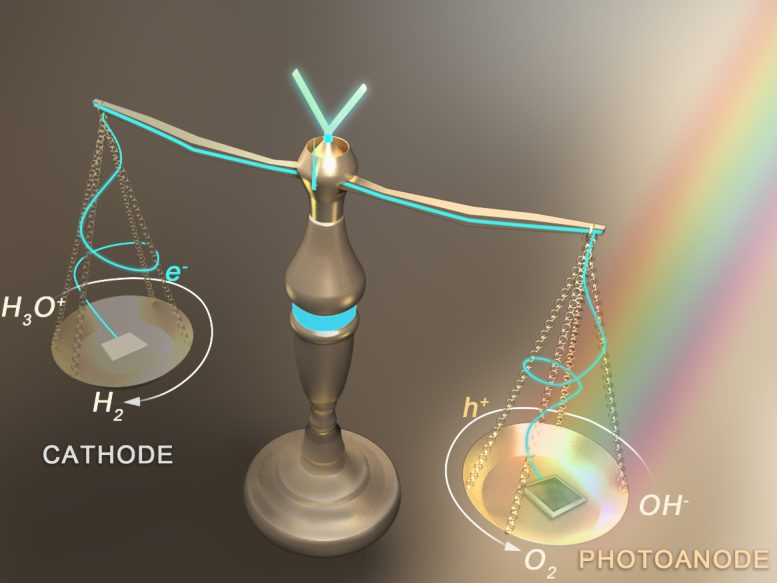
    Concept Art of the Bias Distribution

    The bias distribution of the anode and cathode in the PEC overall reaction cell is like two trays of the balance, and the fulcrum corresponds to the short-circuit potential of the PEC cell. Credit: Science China Press

    Over the last decade, the photoelectrochemical (PEC) process for overall water-splitting (OWS) has seen comprehensive development, particularly in the areas of new catalysts, methods of characterization,, and reaction mechanisms. When comparing the hydrogen evolution reaction (HER) to the oxygen evolution reaction (OER), the latter is considered the more challenging aspect of OWS, primarily due to its sluggish kinetics.

    To reduce the bias consumption of photoanodes, a series of OER alternative half-reactions have been developed, such as alcohols, urea, and ammonia oxidation reactions. The ultimate goal of photochemistry is to fabricate an efficient two-electrode unbiased PEC cell. However, most of the previous studies only focused on the properties of the working electrode in the three-electrode cell, while the polarization on the counter electrode was largely ignored. The synergistic mechanism between anodic oxidation and cathodic reduction half-reactions is still unclear.

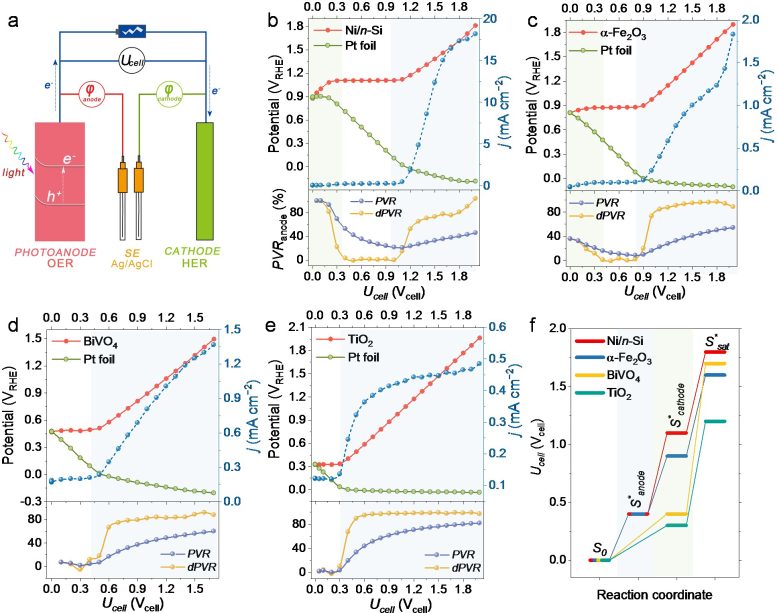
    Schematic of Bias Distribution Measurements and Typical Bias Distribution in PEC OWS Cells

    a) Schematic of bias distribution measurements. b–e) Bias distribution in PEC OWS cells with different photoanodes and f) corresponding OWS activation pathways. Credit: Science China Press

    Recently, Professor Yuchao Zhang’s group proposed an experimental method to measure the bias distribution in a two-electrode PEC cell, systematically studying the bias distribution between representative photoanodes and Pt cathodes in PEC OWS cells. For the first time, they showed that the OER half-reaction is not always the rate-limiting factor of the OWS, and the bias consumption of electrodes depends on the photovoltage of the photoanode and the Fermi level of the cathode.

    Further studies by using Ni/n-Si as the model photoanode showed that the bias distribution in the overall reaction can be effectively adjusted by tuning the electrolyte pH and coupled half-reactions. Accordingly, they proposed a descriptor to evaluate the compatibility between various half-reactions, which pointed out a general method for designing an efficient PEC overall reaction cell. Inspired by this, they fabricated an unbiased PEC cell consisting only of a Ni/n-Si photoanode and a Pt cathode with a photocurrent of 5.3 ± 0.2 mA cm−2.

    Reference: “Bias distribution and regulation in photoelectrochemical overall water-splitting cells” by Kun Dang, Siqin Liu, Lei Wu, Daojian Tang, Jing Xue, Jiaming Wang, Hongwei Ji, Chuncheng Chen, Yuchao Zhang and Jincai Zhao, 06 February 2024, National Science Review.
    DOI: 10.1093/nsr/nwae053


    [ad_2]

    Source link

  • Helping airports transition to sustainable aviation

    Helping airports transition to sustainable aviation

    [ad_1]

    Forever Flight helps airports save money and reduce emissions, and is working to eliminate scope 1 and 2 aviation emissions.

    According to the IPCC, aviation pollution is currently at its highest level of all time. With pollution expected to increase, Forever Flight and its distributed energy network provide solutions so airports can adopt cheap, clean technologies to reduce emissions now.

    More regulation and engineering is required for true zero emission aviation, and Forever Flight is at the forefront of this revolution. With their process, they are working to not just reduce carbon emissions at the airport terminal, but entirely eliminate them from the system by partnering with electric and green hydrogen aeroplane companies.

    Forever Flight develops the supply chains for hybrid electric, fully electric, and green hydrogen flight, and creates renewable energy hubs for resilient communities without needing to cut down any more trees. The team then provides waste management systems aimed towards our goal of rapidly eliminating scope 1 and 2 emissions from the worldwide aviation sector.

    Forever Flight on the frontline of sustainable aviation

    As the world leader in developing multi-modal transportation hubs, Forever Flight and its distributed energy network find unique sources of funding to save airports money and reduce emissions.

    Forever Flight’s goal is to upgrade every airport in the world into a renewable energy hub. Airports can then charge electric ground service equipment, electric work trucks, heavy duty EV trucks, and electric aeroplanes, without having to worry about getting price-gouged by the utility.

    Forever Flight is upgrading the Sun Ex Aviation facility in Jose Aponte Airport in Puerto Rico to be energy-independent and hurricane-resilient with the following hardware and software solutions:

    Choir’s Maestro Software

    Choir’s Maestro orchestrates energy efficiency with a software led, hardware supported, asset backed solution. It predicts energy demand two weeks in advance with 98% accuracy in order to hedge the need of renewables and standard energy assets. It then recommends advanced technology and materials resulting in an equitable green economy. The software can also provide dynamic tariffs for ongoing Energy Efficiency as a service.

    With an API business model capable of adapting to client needs, Maestro provides an easy way for clients to benefit and integrate with other energy efficiency partners. Maestro augments Forever Flight and airport infrastructure, allowing for new tech and materials to be added at any size airport, resulting in controlled costs and a reduction in GHG emissions.

    Fortress Power’s energy storage system

    Fortress Power’s eSpire 280 Energy Storage System integrates with solar, genset, wind, micro-turbines, utility, or other distributed energy resources. This outdoor-rated, modular solution can easily expand up to 4.2 MWH capacity (Max. 15 units in parallel) to reduce electricity cost, prepare for resiliency, and maximise return on investment.

    It is ideal for hurricane resilience because of its remote operation.

    Volatus charging system

    The Volatus Infrastructure & Energy Solutions charging system with battery wall can maintain and deliver power to vital airport and neighbourhood systems. By affordably reusing batteries removed from commercial transportation use, Volatus is able to provide affordable, power-dense power storage solutions to the market.

    Working together, these systems can help ensure that airports and airspaces stay open and operational during critical post-disaster times.

    Flooid Power’s ‘Tomorrow’s Solar’

    Flooid Power is building their ‘Tomorrow’s Solar’ solution. It converts solar thermal energy into electricity and makes renewable energy reliably, continuously, at utility- or microgrid scale, and anywhere on solid ground.

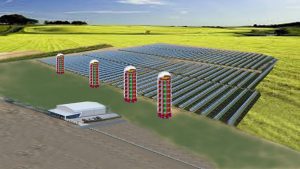
    Tower rendering

    The Flooid Tower is a patented device for converting the sun’s heat into electricity at high volumes, producing almost five times the output of PV on a quarter of the land. Solar thermal energy is captured, concentrated, and converted into electricity continuously. Extra heat is stored efficiently and long-term in a Phase-Change Material, meaning Flooid Power stores heat from the summer and converts it into electricity during the winter – no batteries required. The Flooid Tower is an ideal renewable power source for airports because the thermal panels are ‘Low-Glint,’ meaning they’re designed to minimise reflections that can interfere with pilots’ vision.

    PowerStack

    Many parts of an airport’s critical infrastructure are outdoors, disconnected from the building and often mounted on a pole. These technologies, such as lighting, security, communications, and controls, all require a reliable and hardy frame and anchor. Enter PowerStack.

    PowerStack USA is a Texas-based manufacturer of sleek, sturdy, and reliable solar and power storage poles. We help solve outdoor power availability for typically low wattage applications in both urban and remote areas where underground trenching or overhead wires for AC power are too expensive or undesirable.

    Our solar columns are self-powered with integrated solar and battery technology, eliminating traditional shortcomings by introducing vertical solar, encased in a durable, damage resistant polymer and in a slender profile that minimises wind drag; tested in 155mph winds. Further, the hinge design and concrete-free foundation make for fast and safe installation and service and relocatability.

    PowerStack, CapMetro

    In addition, the durable, vertical, and integrated solar is in its ideal form for hurricane-prone sites. That means less downtime and fewer repair expenses.

    Ampaire’s electric aircraft

    Ampaire’s mission is to move the world faster towards a sustainable future by being the world’s most trusted developer of practical and compelling electric aircraft.

    Ampaire’s vision is a sustainable future for aviation, with energy-optimised aircraft that make flying clean, quiet, safe, and affordable. Although we are developing all-electric trainer aircraft, in order to provide a valuable commercial product with current battery energy density, our commercial aircraft line is a plug-in hybrid.

    sustainable aviation
    Caravan first flight

    We use technology, infrastructure, regulations, and existing markets with immediate utility for airlines. This includes installing aircraft-specific chargers with multi-modal outlet arrays to support our flight programs at airports worldwide.

    Fordewind’s hurricane defence

    Fordewind specialises in fortifying airports against hurricanes through our comprehensive solutions for airport IoT platforms, sensors, and devices. We are experts in developing EV charging systems with backend control and billing, integrating OBDII devices for vehicle safety, and implementing Smart Grid Energy Management Solutions.

    We offer IoT software development services for airport owners to track savings over time. Our solutions include sophisticated billing mechanisms for transparent energy usage management and automated invoicing.

    These technologies all clearly perform their own separate function to bring value to airports and aircraft. When combined, they will help make air navigation facilities and vehicles as safe, cost-efficient, clean, and sustainable as possible.

    Our technologies will revolutionise the transition to sustainable aviation, and Forever Flight is committed to bringing this to reality.

    Please note, this article will also appear in the 18th edition of our quarterly publication.

    [ad_2]

    Source link

  • Prioritising energy efficiency for future sustainability

    Prioritising energy efficiency for future sustainability

    [ad_1]

    Emma Mooney, Energy Analyst at the International Energy Agency (IEA), spoke to Innovation News Network about strategies and initiatives aimed at promoting energy efficiency and leveraging behavioural insights to empower citizens towards sustainable energy transitions.

    Energy efficiency is long overdue and needs to be improved globally. It is important to mitigate environmental impacts and ensure sustainable energy use for future generations.

    The International Energy Agency aims to emphasise the importance of energy efficiency, with the goal of doubling energy efficiency improvements and tripling global renewable power generation capacity by 2030.

    Innovation News Network spoke to Emma Mooney to learn more about the IEA’s goals, strategies for reducing energy consumption, and insights gained from the EU-funded NUDGE project.

    The energy crisis should incentivise new solutions towards energy consumption. In your opinion, in what direction should EU institutions prioritise their efforts in the coming years?

    The energy crisis prompted governments around the world to step up efforts to improve energy efficiency, but accelerated action has long been overdue.

    And now, even faster progress is needed. The IEA advocates for our member governments, including the EU, to focus on key pillars to keep the Paris Agreement goal of limiting global warming to 1.5 °C within reach. This includes doubling the annual rate of energy efficiency progress this decade.

    It’s important to note that doubling is a global target. It necessitates swift action across all sectors and in all countries throughout the world. Support for emerging and developing economies is also needed to enhance their energy efficiency efforts.

    Additionally, access to energy is a high priority for the IEA. While Europe may not face this issue as severely, it remains a critical global concern.

    It’s not just about energy efficiency; it’s also about ensuring everyone has access to energy.

    At the 15th Citizens Energy Forum, the focus was on helping people with lower incomes manage their energy bills. How is the EU working to ensure that these solutions are available to everyone who needs them?

    Across the EU, many programmes aim to improve energy efficiency for lower-income and vulnerable people. However, globally, we see that the benefits of efficiency policies aren’t always distributed fairly.

    Our division recently updated its name to the Office of Energy Efficiency and Inclusive Transitions, reflecting our growing work on this issue. One major focus for us is ensuring affordability so vulnerable groups can benefit from energy efficiency measures.

    energy efficiency
    © shutterstock/Miha Creative

    Providing financing options for low-income households to take on retrofit projects, for example, can be very significant. It’s also important to make sure that people are aware of support schemes that might be available to them.

    Governments are taking steps forward, but there’s room for improvement. Energy efficiency can significantly impact people’s lives. It needs more work, investment, and funding.

    How does the NUDGE project help to reduce energy consumption?

    We are familiar with the concept of nudging and guiding people toward certain behaviours. NUDGE is one part of a broader set of actions aimed at boosting energy efficiency and reducing energy consumption.

    However, it’s important to understand that NUDGE isn’t a magic solution. There’s no one-size-fits-all fix.

    What I found particularly interesting about NUDGE was their analysis, where they identified that about 25% of people simply won’t change their behaviour, no matter what. So, they focused on understanding who would change and what interventions might work for them.

    We shouldn’t underestimate the importance of nudging to raise awareness about energy efficiency. When we consider the evolution of energy efficiency policies, they need to be more flexible and engage with people on a more personal level.

    NUDGE plays a crucial role in this by gently guiding behaviours without relying solely on regulations. And negative results are just as important as positive ones, we should pay more attention to what doesn’t work, as it helps us refine our approaches.

    Is understanding consumer energy behaviours an under-investigated aspect of building an energy policy?

    There’s a pressing need for greater engagement in energy policy. Individuals and businesses need to engage more closely with their energy consumption, and policymakers need to engage more closely with individuals and businesses. This requires substantial effort on everyone’s part.

    However, we must not let the pursuit of perfection hinder progress. Urgency is paramount; we need to act swiftly, analyse results, adapt, and keep moving forward.

    © shutterstock/Olivier Le Moal

    Moreover, we shouldn’t fear making mistakes, especially in the realm of energy efficiency. Some approaches will succeed, while others may not. However, doing nothing is the worst option.

    Among the main points of the Energy Efficiency Directive was the onus on increased focus on alleviating energy poverty. How important will the involvement of civic society (i.e. consumer organizations, etc.) be in achieving the goals outlined in this?

    It’s incredibly important. What I have observed is that when people actively engage with civic society, particularly through European projects like those under the Horizon framework, there’s a notable improvement in adoption, acceptance, and adaptability.

    Nonetheless, there will always be a percentage, ranging from 5% to 25%, who simply won’t respond, regardless of efforts. Therefore, we need policies that help reduce energy consumption from both the engaged majority and disengaged minority so that the world can move towards its climate targets.

    This might involve structural adjustments or choice architecture that encourage action even from those who aren’t actively participating – for instance, making public transport more accessible as an alternative to driving. It’s about striking a balance between engaging with civic society and finding ways to motivate those who aren’t already involved.

    Can you explain the International Energy Agency’s strategy to empower people towards the energy transition?

    From the perspective of the Office of Energy Efficiency and Inclusive Transitions, our engagement primarily targets government-level action. Our goal is to ensure that policymakers consider a holistic policy package approach. These Policy packages encompass regulation, information, and incentive measures for any policy.

    While regulation is typically a constant, we emphasise the importance of also disseminating information and providing incentives. We stress to governments that all three elements are essential for effective policy implementation.

    Regarding our inclusive transition efforts, we concentrate on ensuring that regulations and incentives prioritise the most vulnerable individuals and address those who are falling through the cracks. These are issues that will be on the agenda when we host a Global Summit on People-Centred Clean Energy Transitions later this month.

    Our overarching strategy is centred on prioritising the most vulnerable individuals and uplifting them – not solely for energy conservation purposes, but also because energy efficiency brings about multiple related benefits, such as improved financial security and health.

    In the Office of Energy Efficiency and Inclusive Transitions, we also want to ensure energy accessibility. While most people in Europe have access to energy, not everyone can afford it.

    We strive for people to have warmth, comfort, and security without the burden of energy poverty looming over them.

    With regards to accelerating the energy transition, what do you hope for the upcoming European elections?

    We currently enjoy strong co-operation with the institutions in the European Union, and we aim to maintain and even strengthen this collaboration, especially on energy efficiency. The EU helped lead the way in setting the doubling target and can now play a major role in showing what implementation looks like

    Additionally, we seek to enhance support for emerging and developing economies, recognising that energy efficiency is a global challenge. The EU should act locally and globally.

    © shutterstock/Proxima Studio

    Essentially, we aim to build upon our existing initiatives, amplifying them further, particularly by supporting efforts to double energy efficiency gains each year through 2030.

    We also need more accessible finance across the board for energy efficiency projects. This is an area in which Europe can help.

    In your recent publication, the IEA highlighted how awareness and behaviour campaigns can enable citizens to take energy action. What suggestions does the NUDGE project provide?

    While we were looking at government behaviour campaigns in our publication ‘Empowering people to act‘, NUDGE supports our findings in terms of the people that you can and cannot target and that increased efforts are necessary to drive change.

    Interestingly, NUDGE has shown effectiveness for a certain percentage of the population, warranting targeted strategies for this group. However, it’s important to recognise that NUDGE is just one component of a broader suite of strategies and not a standalone solution.

    The NUDGE project found that NUDGE actions need to be part of an integrated regulatory framework to avoid barriers to actual energy savings. From an educational point of view, the NUDGE project was very interesting and important.

    One of the most important things when looking at behavioural change is that behavioural insights need to be integrated at the policy design stage. We need behavioural insights for all types of energy policy because we are moving to an energy system that will require more flexibility to ensure reliability.

    The project “NUDging consumers towards enerGy Efficiency through behavioural science (NUDGE)” has received funding from the European Union’s Horizon 2020 research and innovation programme under Grant Agreement no. 957012. The sole responsibility for the content of this publication lies with the authors. It does not necessarily reflect the opinion of the European Union. Neither CINEA nor the European Commission are responsible for any use that may be made of the information contained therein.

    This article is part of the exploitation activities carried out by Cittadinanzattiva/Active Citizenship Network in the context of the EU funded project “NUDging consumers towards enerGy Efficiency through behavioural science (NUDGE)” with the support of INNOVATION NEWS NETWORK.

    [ad_2]

    Source link

  • US announce $4bn in tax credits to build clean energy supply chain

    US announce $4bn in tax credits to build clean energy supply chain

    [ad_1]

    The U.S. Department of Energy (DOE), the U.S. Department of Treasury, and the Internal Revenue Service (IRS) has announced $4bn in tax credits for over 100 projects across 35 states, which will accelerate a domestic clean energy supply chain and reduce greenhouse gas emissions at industrial facilities.

    Clean energy projects selected for tax credits under the Qualifying Advanced Energy Project Tax Credit (48C), funded by President Biden’s Inflation Reduction Act, include large, medium, and small businesses and state and local governments.

    All projects must meet prevailing wage and apprenticeship requirements to receive a 30% investment tax credit.

    Investments in traditional energy communities will power a clean energy supply chain

    Of the $4bn tax credits, $1.5bn supports projects in historic energy communities.

    These projects will create good-paying jobs, lower energy costs, and support the climate, clean energy supply chain, and energy security goals of the Biden-Harris Administration’s Investing in America agenda.

    “From direct grants to historic tax credits, the President’s Investing in America agenda is making the nation an irresistible place to invest in clean energy manufacturing,” said US Secretary of Energy Jennifer Granholm.

    “The President’s agenda places direct emphasis on communities that have traditionally powered our nation for generations, helping ensure those communities reap the economic benefits of the clean energy transition and continue to play a leading role in building up the next wave of energy sources.”

    DOE is partnering with the Treasury and the IRS to implement the Qualifying Advanced Energy Project Tax Credit (48C), which is funded by the President’s Inflation Reduction Act.

    Established by the American Recovery and Reinvestment Act of 2009, the 48C Program was expanded with a $10bn investment under the Inflation Reduction Act of 2022.

    At least $4bn of the total $10bn will be allocated for projects in designated 48C energy communities – communities with closed coal mines or coal plants.

    48C Round 1 allocations and application overview

    The DOE received approximately 250 full applications from projects requesting a total of $13.5bn in tax credits for the clean energy supply chain.

    The size and scope of projects varied greatly, with applicants requesting tax credits ranging from under $1m to over $100m. They included:

    • Clean energy manufacturing and recycling: Selected from applications requesting support for the buildout of US manufacturing capabilities critical for clean energy deployment and span clean hydrogen, grid, electric vehicles, and nuclear power
    • Critical materials recycling, processing, and refining: Selected projects are investing in multiple electrical steel applications, lithium-ion battery recycling, and rare earth projects, all critical areas for maintaining a secure, reliable energy system and advancing the clean energy transition
    • Industrial decarbonisation: Selected projects would implement decarbnorthation measures across diverse sectors, including chemicals, food and beverage, pulp and paper, biofuels, glass, ceramics, iron and steel, automotive manufacturing, and building materials. Low-carbon fuels, feedstocks, and energy sources are well-represented as a solution for decarbonisation across these projects

    The 48C programme will help to catalyse the nation’s equitable transition to a clean, secure, affordable, and resilient energy supply chain, reduce industrial greenhouse gas emissions, and create high-quality jobs across the country.

    For selected projects to receive the tax credit, information will need to be submitted to the 48C portal within two years to certify the project. Within an additional two years following project certification, the project must be placed in service.

    [ad_2]

    Source link

  • How climate change is affecting global timekeeping

    How climate change is affecting global timekeeping

    [ad_1]

    Download the Nature Podcast 27 March 2024

    In this episode:

    01:28 Inflammation’s role in memory

    How memories are stored is an ongoing question in neuroscience. Now researchers have found an inflammatory pathway that responds to DNA damage in neurons has a key role in the persistence of memories. How this pathway helps memories persist is unclear, but the researchers suggest that how the DNA damage is repaired might play a role. As inflammation in the brain is often associated with disease, the team were surprised by this finding, which they hope will help uncover ways to better preserve our memories, especially in the face of neurodegenerative disorders.

    Research Article: Jovasevic et al.

    News and Views: Innate immunity in neurons makes memories persist

    08:40 Research Highlights

    The effect of wind turbines on property values, and how waste wood can be used to 3D print new wooden objects.

    Research Highlight: A view of wind turbines drives down home values — but only briefly

    Research Highlight: Squeeze, freeze, bake: how to make 3D-printed wood that mimics the real thing

    11:14 How melting ice is affecting global timekeeping

    Due to variations in the speed of Earth’s rotation, the length of a day is rarely exactly 24 hours. By calculating the strength of the different factors affecting this, a researcher has shown that although Earth’s rotation is overall speeding up, this effect is being tempered by the melting of the polar ice caps. As global time kept by atomic clocks occasionally has to be altered to match Earth’s rotation, human-induced climate change may delay plans to add a negative leap-second to ensure the two align.

    Research article: Agnew

    News and Views: Melting ice solves leap-second problem — for now

    20:04 Briefing Chat

    An AI for antibody development, and the plans for the upcoming Simons observatory.

    Nature News: ‘A landmark moment’: scientists use AI to design antibodies from scratch

    Nature News: ‘Best view ever’: observatory will map Big Bang’s afterglow in new detail

    Subscribe to Nature Briefing, an unmissable daily round-up of science news, opinion and analysis free in your inbox every weekday.

    Subscribe to Nature Briefing: AI and robotics

    Never miss an episode. Subscribe to the Nature Podcast on Apple Podcasts, Google Podcasts, Spotify or your favourite podcast app. An RSS feed for the Nature Podcast is available too.

    [ad_2]

    Source link

  • Can we power our planet with clean geothermal energy?

    Can we power our planet with clean geothermal energy?

    [ad_1]

    In a paper presented last month at Stanford University, a geothermal scientist detailed the gaps in research and development that must be tackled before clean geothermal energy can potentially power the planet.

    Tapping into the clean geothermal energy below our feet as a form of renewable energy has been attracting greater attention as the world moves toward alternatives to fossil fuels in the battle against climate change.

    A 58-page report released on 18 March by the U.S. Department of Energy focuses on the potential of next-generation geothermal power to transform the US energy landscape.

    But there is still work to be done.

    The new paper highlights the challenges facing geothermal energy and what we must do to ensure it can be used.

    Trenton T Cladouhos, the paper’s author, said: “The tools to solve the scientific and engineering challenges are available. It’s a matter of international and multidisciplinary collaboration, system integration, and demonstration projects.”

    He added: “The industry is busy unlocking geothermal’s potential at all temperatures and places. It’s never been a better time to be in the geothermal industry.”

    Extracting superhot rocks

    Cladouhos’ remarks focused on the challenges associated with extracting clean geothermal energy from deep underground, where superhot rocks sit at temperatures of more than 375°C.

    Water piped through those areas would become supercritical. This steam-like phase can carry some five to ten times more energy than regular hot water, making it an extremely efficient energy source if it could be piped to turbines that convert it into electricity.

    The paper states: “Recovery of just 2% of the thermal energy stored in hot rock 3-10km below the continental US is equivalent to 2,000 times the primary US energy consumption.”

    One key problem to that end is simply getting there. The drills used by the oil and gas industries aren’t designed to withstand the extreme temperatures and pressures miles below, where the majority of clean geothermal energy is found.

    Researchers around the world are working on engineered geothermal systems (EGS), essentially underground radiators or heat exchangers, that aim to do just that. Companies such as Eavor and Fervo Energy are developing and using various approaches in the field, but none have been demonstrated at temperatures over about 200°C.

    “If we really want geothermal to be a game changer, we have to operate at superhot temperatures, or over 375°C,” Cladouhos said.

    Bridging R&D gaps to unlock clean geothermal energy

    Cladouhos’ talk addressed 14 gaps in research and development that must be bridged to unlock clean geothermal energy. These are organised into three categories: basic science, tools & infrastructure, and stimulation & reservoir technology.

    One key gap is the need for more data about rock mechanics at extreme depths and pressures. That data, in turn, will allow geothermal scientists to better model these systems.

    Another example involves stimulation design, or how to create the most economical system for moving water through superhot rocks to capture their energy. Some of the shallow geothermal systems in operation today involve creating fractures in the rock, which increases the surface area for heat transfer.

    According to Cladouhos, fracturing the rock at superhot depths and temperatures “is another unknown.”

    A third gap involves well completions, or how to stabilise wells exposed to the ultra-harsh conditions associated with the resource. Wells drilled to superhot temperatures in countries including Iceland, Japan, the United States, and Italy have all eventually failed.

    Revealing new knowledge

    Cladouhos emphasised that investors must understand that the path to accessing superhot rock will be iterative.

    “The first-of-a-kind superhot rock EGS project will fill many of the knowledge gaps and likely reveal some new gaps,” he said.

    “Reaching our commercial goals will require an iterative process of technology development and field tests.”

    Nevertheless, he and Callahan are optimistic about success: “Although superhot rock geothermal will push the limits of many subsurface tools and is beyond the bounds of current hydrothermal and EGS projects, it should be noted that humans safely and routinely operate equipment that contains materials above 375°C.”

    [ad_2]

    Source link

  • Empowering municipalities to lead European Green Deal implementation

    Empowering municipalities to lead European Green Deal implementation

    [ad_1]

    In the push towards achieving climate neutrality by 2050 and realising the ambitious objectives of the European Green Deal, municipalities are crucial protagonists in the journey towards a sustainable future.

    Mohamed Ridouani, Mayor of Leuven and President of the Energy Cities network, a partner organisation of EUSEW, highlights the pivotal role of municipalities in implementing the European Green Deal and emphasises the need for adequate resources and support.

    European Green Deal implementation

    In the past five years, the European Union has established the legislative framework to achieve climate neutrality by 2050 and initiate the European Green Deal.

    2024 marks the commencement of the implementation phase for the EU’s climate and energy policies, where municipalities are poised to play a significant role.

    As Mayor of Leuven, I am proud to say we are among those municipalities leading the way towards achieving those objectives.

    Through initiatives like Leuven 2030, the city has rallied its community around the shared goal of climate neutrality, as evidenced by the submission of the Climate City Contract to the European Commission in 2023.

    Nevertheless, we should not underestimate the effort and resources needed to make the EU Green Deal a reality.

    Challenges at the local level

    Almost every Directive or Regulation part of the European Green Deal has elements that concern local authorities.

    A new publication by Energy Cities and Eurocities provides a detailed analysis, but, as an example, a lot of effort is going to be needed at the local level regarding mapping, planning, building management, and renovation.

    European Green Deal
    © shutterstock/Dmitry Kovalchuk

    A 2022 study shows that each municipality in the EU would need around 2.5 additional full-time positions only to decarbonise their built environment.

    The success of the European Green Deal is also linked to social justice: how can we ensure it is not seen as a luxury but as the number one social policy that will bring long-term benefit for everyone?

    That is where municipalities can have a big impact, thanks to their proximity to the citizens and economic actors.

    They are best placed to coordinate the local ecosystem, unite everyone as active participants in the transition, and provide support.

    This role has been widely recognised in European legislation, but the issue of corresponding financial and human resources remains.

    Structural changes needed to empower cities at the EU level

    Some solutions have already been put on the table. The EU Social Climate Fund could be an opportunity for cities to finance their investments for a just and equitable transition.

    EU legislation, such as the Energy Performance of Building Directive, suggests that Members States provide training for local authorities.

    But at Energy Cities, we think that one-off measures are not enough. The upcoming discussions on the EU multiannual budget and the reform of the EU Cohesion Fund will make the perfect occasion to implement structural changes and equip local and regional authorities with the resources they need to make the European Green Deal a reality.

    Ridouani underscores the indispensable role of municipalities in driving forward the European Green Deal and calls for concerted efforts to provide the resources and support needed for effective local action.

    By empowering municipalities, the EU can ensure a just and equitable transition towards a sustainable future for all.

    This article is a contribution from a partner. All rights reserved. Neither the European Commission nor any person acting on behalf of the Commission is responsible for the use that might be made of the information in the article. The opinions expressed are those of the author(s) only and should not be considered as representative of the European Commission’s official position.

    [ad_2]

    Source link