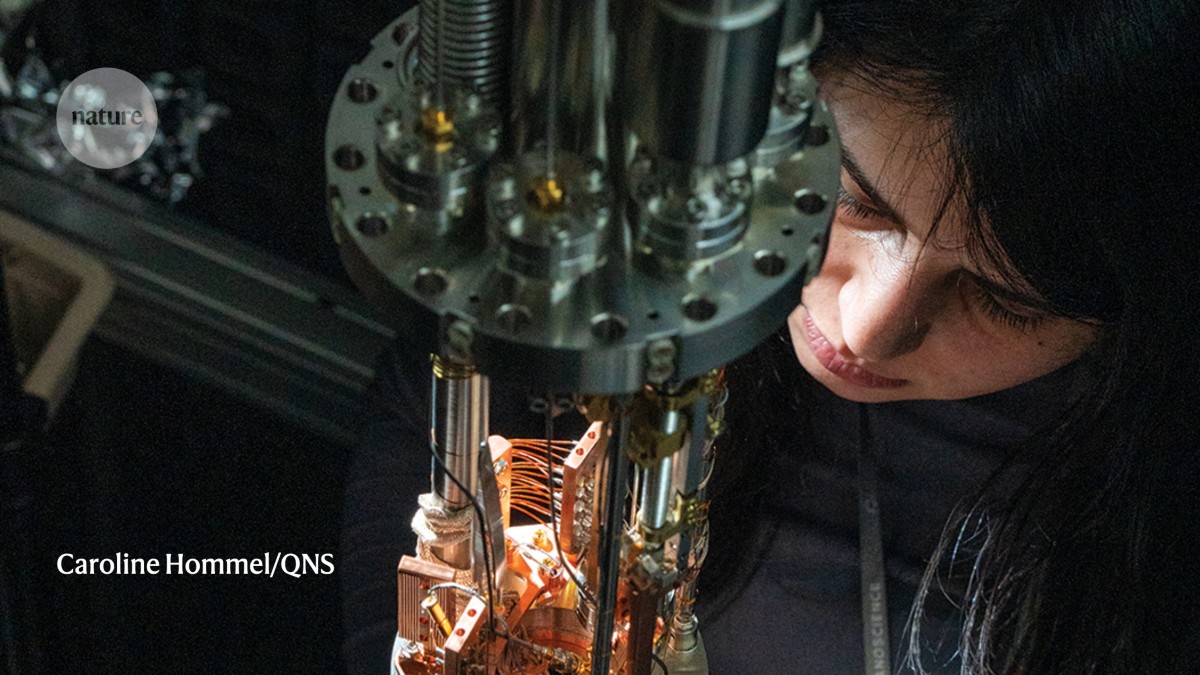
A scanning microscope at Center for Quantum Nanoscience in Ewha Womans University, Seoul.Credit: Caroline Hommel, QNS
With more researchers per capita and a higher spend on research and development than any leading country in the Nature Index, it’s clear that South Korea invests heavily in science. But its ‘bang for buck’ — judged by pitting research spend against output in the Nature Index, measured by Share — is surprisingly low.
Nature Index 2024 South Korea
This disconnect chimes with the many challenges that South Korea faces, including concerns over the country’s status as an innovation powerhouse and signs that its historically close ties between industry and academia might be faltering. Add to the mix the world’s lowest birth rate and declining student numbers, and South Korea seems to be at an inflection point, where it either pivots and adapts, or struggles to keep pace.
Many researchers would like to see the country engage in more diverse partnerships, in addition to those with the United States and China, its two strongest collaborators in the Nature Index. South Korea’s acceptance into the European Union’s Horizon Europe funding programme is a positive step, but domestic conditions need to improve to help it forge more international links. Foreign researchers cite language barriers and cultural divides as hindrances to staying long-term in South Korea, which is affecting recruitment at universities and companies.
What is arguably South Korea’s starkest weakness, meanwhile, could provide an opportunity for renewing its innovation potential: just 23% of its research workforce is female. Addressing the drop-off that occurs during women’s careers might be one way to cement the country’s place as a global leader in science.
When designing a research study, integrating sex and gender as variables, such as by including both female and male participants and ensuring transgender people and those who do not fall into binary categorizations are also accounted for, is key to ensuring robust and reproducible results. But this is not being done nearly enough. In medical research, for example, centuries of female exclusion have led to inadequate knowledge and funding of diseases that affect women. In the development of generative artificial intelligence (AI), a lack of sex and gender considerations has perpetuated biases and stereotypes in areas such as image creation and language translation. Such oversights not only skew research findings but also undermine opportunities for discovery. Significant advancements have been made in fields such as cancer immunotherapy, cardiovascular disease and osteoporosis as a result of using sex and gender analysis (SGA) in research, and it has revealed important differences in how men and women metabolize drugs, leading to safer and more effective doses.
Heisook Lee.Credit: GISTeR
Despite the clear need for SGA to become the norm in experimental design, there is much work to be done before the practice is standardized in research globally. In South Korea, SGA integration is encouraged and promoted through government initiatives, but more policy development and capacity building is needed to drive uptake. At the Korea Center for Gendered Innovations for Science and Technology Research (GISTeR) in Seoul, we are investigating the use of SGA in South Korean research. One analysis showed that between 2017 to 2021, just 5.65% of South Korean biomedical articles, on average, included SGA in the experimental or study design. This figure, which relies heavily on individual researchers choosing to engage with the practice, is lower than in countries where the integration of SGA is mandatory for research funding.
The increasing complexity of study designs makes SGA integration a challenge for scientists in South Korea, especially early career researchers, who are not typically taught the practice. The limited availability of sex-disaggregated resources — data, animals, cells and other materials that have been collected and analysed separately for male, female and non-binary participants — further complicates matters and emphasizes the need for training to encourage more researchers to consider SGA in their work. As the South Korean government ramps up funding and support for international collaboration, its researchers will need to get up to speed on SGA integration. Horizon Europe, the European Union’s flagship research-funding programme that South Korea joined in March, mandates SGA integration in the research it funds, for example.
Heajin Kim.Credit: GISTeR
Recent policy changes from the South Korean government have been encouraging, but they have not moved the needle much in terms of researcher and institution uptake of SGA. In 2020, amendments were made to the Korean Framework Act on Science and Technology to emphasize the importance of sex and gender characteristics. Two years later, Korea’s Fifth Science and Technology Master Plan, which outlines the country’s medium-to-long-term goals and priorities for 2023 to 2027, emphasized the importance of SGA integration.
We need buy-in from funding agencies, publishers and institutions to ensure that researchers are equipped and incentivized to implement the practice. We propose the following strategies. First, funding agencies in South Korea should consider mandating SGA integration in the research they fund, and more academic journals need to strengthen their editorial policies by requiring SGA integration in manuscript submissions.
The research community needs to ensure the management and standardization of resources, such as cells and biological models, and data that are sex or gender specific, so they can be used throughout the entire research process, from the initial design to the final analysis. At GISTeR, we are running training and outreach programmes in an effort to help researchers understand how to achieve this.
Source: Gendered Innovation for Science and Technology Research Center
Last, it is important that indicators of SGA integration in research outputs are being developed at a global level, mirroring established metrics on quantity and quality. This approach would highlight where SGA is needed and encourage its use.
It is crucial for South Korean science that improvements are made to SGA integration rates. This will not only elevate the quality of its outputs, but could help to solidify South Korea’s role in developing equitable and impactful solutions to the world’s most urgent societal challenges.
Malte Elson is blunt when it comes to science’s ability to self-correct. “The way we currently treat errors doesn’t work,” he says.
To prove his point, Elson, a psychologist at the University of Bern, highlights a well-known 2010 paper1 by economists Carmen Reinhart and Kenneth Rogoff at Harvard University in Cambridge, Massachusetts. “This paper became highly influential in financial policies in Europe,” says Elson, where it “promoted austerity measures to reduce national debt”. Three years later, Thomas Herndon, an economics PhD student at the University of Massachusetts Amherst at the time, tried to replicate the paper’s results for a class assignment and discovered an error in a crucial spreadsheet used in the paper. The authors had selected only 15 of the 20 countries they meant to include for a key calculation2. When this and two other errors were considered, the study’s conclusions were less strong than they initially appeared, Elson says.
Pay researchers to spot errors in published papers
Reinhart and Rogoff cooperated by providing their data and admitting to the errors, but they have maintained that their overall conclusion is sound. But, these errors might never have been discovered had Herndon not tried to reproduce the results.
This haphazard system of error detection makes no sense, Elson says. “We cannot seriously rely on coincidental discovery of errors.” Currently, looking for errors in published papers is neither systematic nor rewarded. Elson and his colleagues launched the Estimating the Reliability and Robustness of Research (ERROR) project in February to change that.
The ERROR project pays reviewers to check highly cited psychology and psychology-related papers for errors in code, statistical analyses and reference citations. The programme posted its first review in May — the first of 100 planned over 4 years. This month, the ERROR team aim to have the first 20 papers assigned to reviewers.
Maximizing impact
Led by Elson, Ian Hussey, a meta-scientist also at the University of Bern, and Ruben Arslan, a psychologist at Leipzig University in Germany, ERROR focuses on papers with a continuous stream of citations that were published in “important and respected journals in subdisciplines of psychology” since January 2015, Elson says. The ERROR team prioritizes highly cited papers to maximize the impact of its efforts, and contacts study authors asking for their permission to review their work. “For ERROR to be successful, it’s important that everybody is on board,” Elson explains — but the team also requires access to each paper’s underlying data and code, which only authors can provide.
‘Spell-checker for statistics’ reduces errors in the psychology literature
With funding from the Humans in Digital Transformation programme, a fund to drive a digitalization strategy at the University of Bern, which has offered the project 4 years of support and 250,000 Swiss francs (US$289,000), reviewers are paid up to 1,000 francs for each paper they check. They get a bonus for any errors they find, with bigger bonuses for bigger errors — for example, those that result in a major correction notice or a retraction — up to a maximum of 2,500 francs. This bonus is modelled on ‘bug bounty’ programmes that technology companies, such as Microsoft and Google, offer to hackers who can find and report vulnerabilities in their products.
Errors can include mistakes in code, discrepancies between the code and the wording in the manuscript, statistical analyses that do not support conclusions or are misinterpreted and inaccurate citations.
Authors are compensated as well: 250 francs for answering reviewer questions and making data available, with an extra 250 francs if the reviewer finds only minor or no errors.
Test case
ERROR posted its first review in May3 for a 2018 paper4 in the journal Psychophysiology that was authored by cognitive neuroscientist Jan Wessel at the University of Iowa in Iowa City. The process was exemplary, Hussey says, including the open-mindedness of Wessel and of cognitive neuroscientist Russ Poldrack at Stanford University in California, who performed the review and found only minor errors. Wessel even wrote a simulation study that found a 96% chance that there is at least one remaining error in his data set that even ERROR’s review has not caught. “This was a very cool mentality — exactly what we’re hoping to foster,” says Hussey.
Smart software spots statistical errors in psychology papers
Hussey expects to post three more reviews in September. To hit 100 papers in 4 years, the team will need to publish about one review every 2 weeks.
Although initially focused on psychology, the ERROR project is “actively working towards” expanding to other disciplines, says Hussey. The team has applied for funding from the Swiss National Science Foundation to expand into artificial-intelligence research and hopes to take on medical research as well. “More generally, we hope to demonstrate a scalable and transferable model for how to do this, so that other researchers can do it in their own field,” says Hussey. The team is also exploring the possibility of auditing manuscript preprints as well as published articles, Elson says.
Still, the project faces significant challenges. Few authors respond to ERROR’s e-mails asking for permission to review their paper, says Elson. So far, only 17 authors have agreed to have their study reviewed from 134 selected papers. Sometimes, the underlying data no longer exist or cannot be found. And sometimes, authors reply saying that third parties cannot have access to the data for legal reasons. Although there are technical solutions for this, Elson says he doesn’t press.
Reviewers needed
A further challenge is finding reviewers who have both the required technical expertise and no conflicts of interest with the study authors. Reviewers, Hussey says, might need more technical knowledge than the authors themselves, “because you have to know about the probabilities of different kinds of errors happening”. Often, such reviewers are PhD students or postdoctoral researchers, who might be put in a difficult career position if they cast doubt on a publication that is authored by more-established researchers. “We are acutely aware of the power dynamics involved,” Hussey says. “We’re trying our best to match that balance of power in who’s doing the critique and who’s being critiqued.”
NatureTech hub
In 2023, in an attempt to help grow the pool of potential reviewers, Hussey began teaching a master’s-level course on error detection at the University of Bern’s psychology department. The Institute of Psychiatry, Psychology and Neuroscience at King’s College London ran a similar course at a summer school in July.
Now, the ERROR team hopes to convince those who fund research to pay for error reviews of the research that they support. Funders will benefit from error detection because they pay doubly for errors, Elson says: once by wasting money on research that turns out to be incorrect, and again because they missed the opportunity to fund a different project. Since May (when Elson published a World View article5 in Nature on the project), Elson has spoken with both the German research foundation DFG, and Volkswagen Foundation, a private funder.
Compared with the current ad hoc approach, “meaningful discoveries per dollar spent would actually be higher with some degree of systematic error scrutiny”, Hussey says. And a serious error-detection system needs resources, says Elson. “We cannot expect it to work for free.”
Organizers of hybrid events need to incorporate opportunities for virtual networking and collaboration.Credit: Getty
Attending conferences is a crucial way to establish and build networks, especially for scholars early on in their careers. But not everyone who would benefit is equally able to attend. Many researchers have caring responsibilities. The impact is particularly pronounced for women with children, who often find it hard to juggle professional and personal commitments — thanks, in no small part, to persistent societal expectations that they will be a family’s principal carer. In a 2019 study of oncologists, Miriam Knoll, a radiation oncologist at Northwell Health who is based in New York City, and her colleagues found that women attended fewer conferences than did men, and were more likely to cite childcare responsibilities as the reason (M. A. Knoll et al. JAMA Oncol.5, 1503–1504; 2019).
What’s needed is a cultural shift, says Laura Pallett, an immunologist at University College London and one of the authors of a Careers Column published in Nature in May on the difficulties parents face with conference travel (L. Carter et al. Nature630, 517–518; 2024). That shift must include two things. First, more targeted support from institutions and funders for those with caring responsibilities who might otherwise not be able to attend conferences. Second, greater effort from conference organizers to make provision for a high-quality hybrid experience.
Researcher parents are paying a high price for conference travel — here’s how to fix it
On the first of these, some progress has already been made — but it needs to be built on and normalized, all of which requires resources. In the United Kingdom, funders such as UK Research and Innovation and the country’s science academy, the Royal Society, offer reimbursements covering childcare, family travel and other care costs incurred outside normal working patterns.
For a limited period this year, the African Academy of Sciences (AAS), based in Nairobi, offered funding for researchers who were breastfeeding to pay for someone to travel with them and help care for a child at conferences, says AAS executive director Peggy Oti-Boateng. Such support should be available for other events, and all funders should “enhance gender-transformative actions”, she adds.
Some universities do help to cover childcare costs for staff attending conferences. One is the University of Michigan in Ann Arbor, which does so through its Elizabeth Caroline Crosby Research Awards. Conference organizers can also play a part, by offering funding and childcare facilities, or at least a list of vetted childcare providers in the local area. “These kinds of programmes have an impact beyond the individuals they help,” says Reshma Jagsi, an oncologist and member of the US National Academies of Sciences, Engineering, and Medicine’s Committee on Women in Science, Engineering, and Medicine. “It’s not just the early-career faculty member who brings their child along to the meeting, but the myriad students who are trying to decide whether they can be happy and successful in a discipline.”
Being a parent is a hidden scientific superpower — here’s why
The alternative way to make conferences genuinely accessible is to offer more of them virtually, a practice that became widespread during the COVID-19 pandemic. This also has environmental benefits (M. Klöwer et al. Nature583, 356–359; 2020). Nevertheless, some organizers are beginning to step away from virtual meetings.
One reason is that it is difficult to organize hybrid events in a way that satisfies both in-person and online delegates, and doing so pushes up costs. A big draw of in-person conferences is the networking and collaboration opportunities, which are hard to replicate in an online or hybrid format. This needs to be addressed to ensure that virtual attendees do not suffer.
Another reason is that conference presenters are often reluctant to discuss unpublished research or work in progress in front of a virtual audience. Such work is the lifeblood of conferences, and in-person delegates are able to access and discuss it on the understanding that they respect any requests for data or results to be kept confidential.
But such problems exist to be overcome. We would encourage conference organizers to redouble their efforts to find technological fixes and to share best practices — and for attendees to highlight solutions that have worked for them. Organizing committees should prioritize making their events available online, not only for parents with childcare commitments, but also for people who lack the funds or visas, or are otherwise unable to attend in person.
The superhero skills needed to juggle science and motherhood
It will not always be possible to offer real-time hybrid events, especially for events held in locations with slow Internet connections or those that are volunteer-led and lack external funding. At a minimum, sessions should be recorded and made available to watch; funders could make this a condition for access to conference grants.
There are many potential solutions to the problem of conference accessibility, but their success is context-specific. Interventions should be rigorously monitored to see what works best. “This hasn’t been done before, so a learning agenda is critical,” says Amie Batson, president of WomenLift Health, a non-profit body based in Seattle, Washington, that promotes gender equity in leadership. “If there are several options on the table, I expect that in five years you’ll learn that three are super-valuable, two were worthless and two new ideas came up. What’s important is making sure that you’re creating the space to learn and respond to what works for women, families and organizations.”
To improve things, the first step is acknowledging some of the problems, according to researchers and institutions that Nature spoke to for this Editorial. Conference organizers and funders need to confront the reality that the childcare status quo disadvantages many researchers and harms science as a whole — and then start to change it.
People travel from across South Korea to receive medical treatment in Seoul.Credit: Will & Deni McIntyre/Getty
Later this year, South Korea is expected to sign up to the European Union’s research-funding programme, Horizon Europe. It’s a good time to reflect on the nature of large collaborative projects — and, in particular, when cross-border collaboration is most beneficial and when a deeper dive into local issues can be more rewarding.
Large international collaborations have unquestionably produced great breakthroughs. Sequencing the human genome, for example, took 13 years of work by 20 institutions in 6 countries1. But large consortia such as these are almost always established in the same few countries: the United States, the United Kingdom and others in Europe. For scientists working elsewhere, setting up a large international project can seem unachievable, given the billion-dollar price tags and the networks of contacts required.
And, sometimes, it is not the best solution. Global projects spearheaded in a few countries can have biases — for example, people of Asian descent are often under-represented in international genetic studies initiated in the West. National laws on acquiring data can differ, meaning that researchers need to conduct experiments differently in different regions, introducing biases. And the logistical complexity of coordinating a project across multiple countries in different time zones and with different work cultures can be problematic when rapid data collection and analysis are crucial2.
There is an alternative — set up a large local consortium in one nation.
Cancer research needs a better map
We’ve done just that in Seoul. Our single-cell atlas of immune diseases (SCAID) consortium is a multi-institutional effort led by one of us (J.-I.K.), alongside 23 others. Running since April 2022, the project now involves 120 South Korean clinicians, immunologists, geneticists and bioinformaticians (including S.L., H.L. and J.K., who work in J.-I.K’s group).
We aim to map gene expression in millions of individual cells from people who have immune-related diseases , including (but not limited to) rheumatoid arthritis, inflammatory bowel disease, interstitial lung disease and alopecia areata. Systemic immune diseases are thought to affect at least 1 in 20 people3. They are often incurable and cause debilitating symptoms, from chronic skin rashes to skeletomuscular changes. They can be fatal if they are not managed appropriately. We hope that our research will reveal similarities between 16 diverse diseases that manifest across the body, and help to uncover ways to use treatments more effectively.
Our experiences have shown us that a regional consortium can be an efficient way to ask crucial research questions. Here, we share two broad lessons that we hope will help others to build effective regional consortia.
Find a niche
To compete in international circles, local consortia need to focus on addressing research questions that they are in a unique position to answer. This might be because of the particular mix of expertise of local researchers. It might be the regulatory environment in a country. Or it might be specific to the geography of the place where the research is done.
In our case, we were inspired to set up SCAID by an international consortium called the Human Cell Atlas (HCA). Since 2016, it has been trying to map every single cell type in the human body using state-of-the art genomic technology. The next logical step is to create similar atlases for diseased cells. But this involves bringing in specialized clinicians for each disease and obtaining proper consent from a large number of people.
This can be hard to achieve in a global consortium, in which each country has distinct legislative frameworks, ethics committees and medical systems4. For instance, the International HapMap Project — a genome-sequencing project launched in 2002 with researchers from six countries — needed to spend months in community consultation in Nigeria before it was able to obtain ethics approvals5. It also faced concerns raised by community advisory groups in Japan and China around depositing biological samples in overseas repositories. Overcoming these obstacles took 18 months6.
For these reasons, most single-cell studies of disease data sets have focused on single diseases in single tissues, for simplicity. By contrast, restricting our study to a single country with one legislative framework has made it easier for us to gain ethics and individual approval, allowing us to study multiple diseases across multiple tissues.
Seoul National University Hospital is one of 56 general hospitals in the South Korean capital.Credit: Anthony Wallace/AFP via Getty
Seoul also has other benefits for such a project. First, it’s easy to enlist a diverse range of participants in the city. South Korea has a universal medical-insurance system that is mandatory for all residents7. This avoids biases that can arise when participants are part of a private health-insurance system. And people from across the country and all socio-economic classes travel to Seoul for treatment — the city’s cluster of 56 general hospitals can be reached from anywhere in South Korea in half a day.
The concentration of hospitals also makes it easy to transfer samples quickly from donors to our central laboratory for analysis — it is no more than two hours’ drive from any hospital. Such proximity is a great advantage in single-cell genomics, because RNA — which is analysed to ascertain gene expression — degrades within hours once a sample is collected. A US National Institutes of Health large-scale genetics project called the Genotype–Tissue Expression project, for instance, found variability in the quality of RNA in its samples, depending on the time between collection and processing. This variability could skew interpretations of gene-expression data, and the researchers had to develop ways to account for it in their analyses8.
Having a centralized hub prevents the problem of batch effects — undesired differences between samples — that can arise if samples are processed or analysed differently by different centres9,10. Handling batch effects is a big task for international consortia. The HCA, for instance, has a dedicated team of researchers to check for and minimize such effects11.
Exploiting this niche is already proving fruitful for us. So far, we’ve collected more than 500 samples from 334 donors. We have analysed more than two million cells — equivalent to the second-largest data set collected in the HCA project so far. Our early analysis hints at common features between diseases: although symptoms arise in different organs, we are identifying distinct immune profiles that group the diseases into a few major categories.
Unblock research bottlenecks with non-profit start-ups
Still, being small and nimble comes with challenges. Local consortia need to be aware that they might lack some expertise, and they need to be prepared to seek help. Our consortium faced obstacles in obtaining ethics approvals, because each hospital review board had different requirements and concerns. Getting approval from each board was arduous, and required persistence when asking for opinions of the boards themselves, along with those of the Korea National Institute for Bioethics Policy and Korean Bioinformation Center. Nonetheless, it was easier than grappling with multiple international rules around ethics and data collection.
To make this process smoother for others, it would help for institutions in a country to standardize their ethical-review processes and data-sharing agreements, ensuring that both comply with national regulations. Furthermore, institutions should establish collaborative networks to share best practices and discuss common challenges. These steps could ease the administrative burden on local consortia considerably, and accelerate their progress.
Not all countries will have the strong technical skills of the South Korean workforce, nor the established biobanking repositories for genetic and clinical data, which are essential in projects such as ours. For scientists in countries without this infrastructure, international consortia can be a valuable source of guidance. For instance, the HCA’s Equity Working Group specifically aims to engage diverse geographical and ethnic groups in its projects12. By participating in such initiatives, countries can gain access to expertise, resources and best practices, helping them to overcome technical challenges and build their capabilities.
Build in local benefits
Regional projects should reflect the needs of the local community, both for ethical reasons and to attract funding. Funders are more likely to invest in big projects that can benefit citizens. Researchers must make those benefits clear.
This might mean championing a field to governments and other funders. In South Korea, most research funding comes from the government — scientists propose broad topics that need funding, and the government selects those that align with its own goals and puts out funding calls, for which all researchers can apply. So genomicists, immunologists and bioinformaticians — not all of whom are members of the SCAID consortium — requested that the South Korean government fund a large-scale disease single-cell atlas. These scientists spelled out how the data could ultimately help researchers and clinicians to improve understanding of the disease predispositions that are unique to South Koreans. This will hopefully speed up the development of precision medicines tailored to the country’s own population.
South Korean scientists’ outcry over planned R&D budget cuts
In countries that do not have official channels for petitioning the government, raising the profile of a field might involve using networks of contacts to meet with funders, or publishing papers that outline a field’s potential. Persistence is key — scientists must keep voicing their needs and perspectives.
Researchers must also give careful thought to how their project will benefit local science. SCAID was designed to maximize the long-term benefits for the South Korean researchers and clinicians involved.
To develop researchers’ careers, we hold regular seminars and workshops focused on learning skills and network building. Cross-disciplinary collaborations are one focus. For example, bioinformaticians are working with clinicians on a strategy pinpointing the specialized data that should be collected for each disease — such as acquiring information on immune receptors for specific disorders. Bioinformaticians are also exploiting the expertise of clinicians to help interpret their analyses. This includes the identification of abnormal cell states, which can be hard to distinguish from artefacts in the data without a deep knowledge of disease. These networks of contacts will be useful for many projects long after SCAID is completed.
What next?
Once established, local consortia need not exist in isolation. They can complement existing global projects by adding diverse data, and can act as stepping stones for future global consortia. For instance, many scientists have approached us, intrigued by the scale and potential of our work, and enquired about possible collaborations.
We are keen for other regional groups to generate international databases from separate efforts led by those who understand their own local needs and niches best. We encourage them to start by seeking funding for a consortium to address the needs of their fellow citizens, and to eventually pool their knowledge.
Whatever the field, if a consortium is run well, it can cultivate a dynamic cluster of competent researchers, laying the groundwork for international recognition and collaboration.
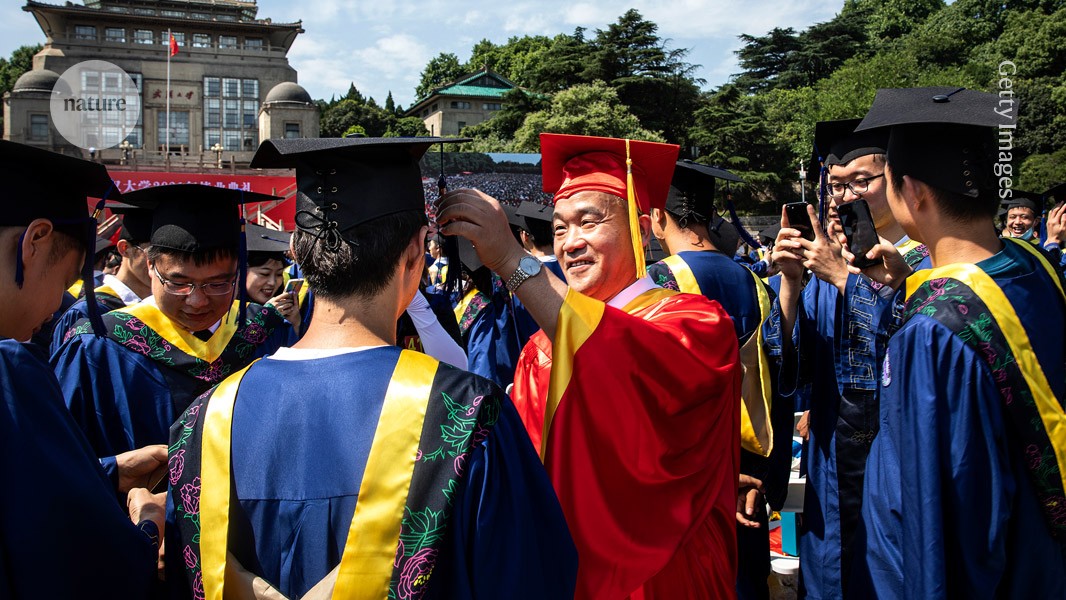
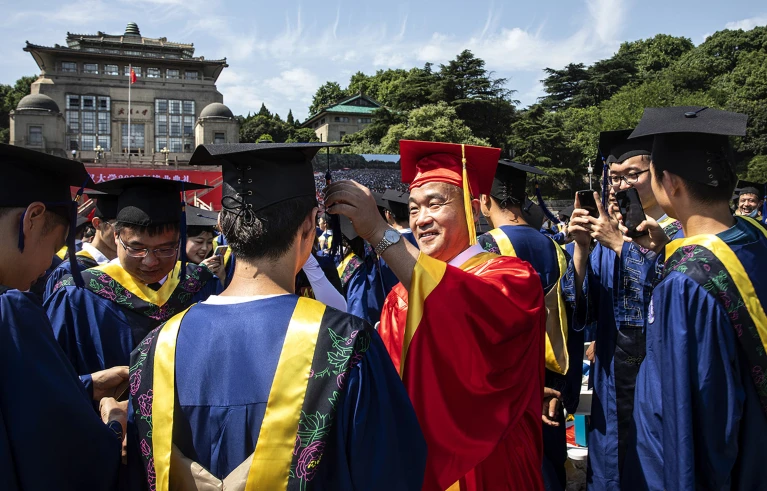
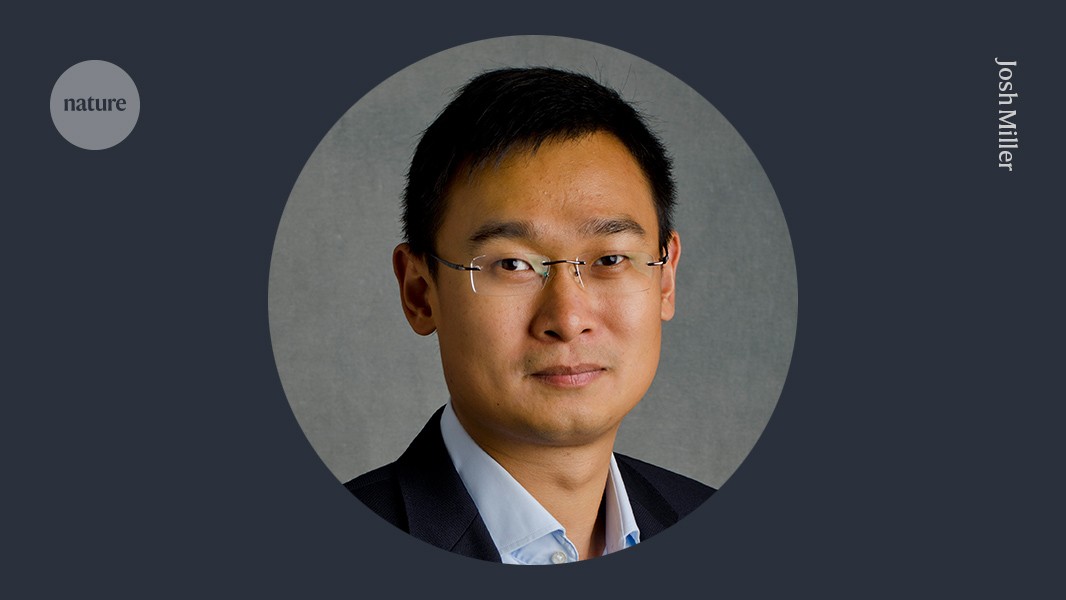
Before helming the NSFC, Dou Xiankang was the president of Wuhan University.Credit: Getty Images
Space physicist Dou Xiankang took the helm of the National Natural Science Foundation of China (NSFC) little more than a year ago, but has already introduced reforms to support young and early-career scientists, particularly female researchers. Among the changes are an extension to the Distinguished Young Scholars (DYS) programme, which gives outstanding young scientists an opportunity to pursue research of their choosing. DYS recipients are funded for five years, but up to 20% of them will now be eligible for a further five years of funding.
The NSFC is based in Beijing and is one of the country’s main funders of basic research. Dou spoke to Nature about what he hopes to achieve with these reforms and his plans to boost China’s investment in basic research.
What are your priorities for the NSFC in the next few years?
The NSFC has two major tasks: to fund basic research projects and to support excellent young scientists. Since the NSFC was established, almost 40 years ago, we have made achievements in these two tasks. The priority for me as president is to make sure that those previous success stories can be continued.
Over the past year, we have implemented measures to extend the funding and support available to young scientists. We have opened the Excellent Young Scientists Fund to researchers in Hong Kong and Macau. We have introduced measures to support and evaluate clinicians who also want to conduct basic research. And we have extended the age limit for DYS applications by 3 years to 48 years old for female applicants. We hope to encourage more participation from female scientists, who tend to shoulder more family responsibilities.
We have also piloted offering funding to undergraduate students to help them start research careers. The NSFC funded 129 undergraduate students across eight universities in China in 2023. Recently, we met with the German research foundation (DFG) to discuss the possibility of sending these undergraduate students to attend the DFG’s leadership programme.
What was the impetus for extending the DYS programme in some cases?
The programme is the most influential talent-cultivation programme of our foundation. We have already selected the most promising young scholars with our scientific criteria, so we wish to continue this practice.
One thing that needs particular attention is for young scientists to be encouraged and supported so that they can devote themselves to basic research in the long term. How can these scientists create an environment where they can focus on their research and come up with original innovations?
Our reform measure aims to provide long-term and stable funding.
What’s your response to concerns that increasing funding to the best and brightest makes it harder for the wider early-career research community to obtain grants?
I don’t think these two things are in conflict. Each year we award fewer than 450 DYS grants, so it is very limited. Two-thirds of the NSFC’s funding is used to support curiosity-driven research. In 2023, we funded more than 40,000 grantees across the Young Scientists Fund and general programmes, which support scientists who have good prospects. From these programmes, we can identify the top 1% most promising young researchers for further funding.
Among research-intensive nations, China’s investment in basic research as a proportion of GDP is relatively low. What steps are you taking to address this?
The Chinese government has always attached great importance to basic research. In 2024, the government’s budget allocation to science and technology increased by 10%, and the NSFC received 36.3 billion yuan (US$5 billion). Since the NSFC was established, the funding we have received from the central government has increased by almost 400 times.
I think the gap between China’s investment in basic research and that of other countries is caused by limited investment from the private sector. We have two initiatives to increase funding in basic research. One is to apply for more funding from the central government; the other is to establish joint funds with enterprises and local governments, with each contributing. For example, we could contribute 20% to the joint account, while the corporate sector or local government would provide the remaining 80%.
The objective of these joint funds is to leverage our limited resources and encourage more investment. By doing this, we can jointly initiate basic research projects that will ultimately benefit both enterprises and local governments.
How do you plan to expand international collaborations in basic research?
As China’s economy and investment in basic research grows, the Chinese research community should further contribute to international efforts, particularly in fields such as the life and health sciences, and sustainable development.
Last year, the NSFC established the Department of International Programmes to encourage Chinese researchers to forge international collaborations and to encourage international scientists to carry out their work in China.
In May, I led a delegation to the Annual Meeting of the Global Research Council, where we had a lot of discussions with our international counterparts. Such discussions are always conducted with the clear objective of expanding international collaboration, especially in funding basic research projects.
This article has been edited for length and clarity.
Success as an academic doesn’t have to come at the expense of family.Credit: Getty
How do you become successful in academia? At numerous international conferences, I’ve heard eminent scholars emphasize the necessity of prioritizing work above everything else, including family and children. One memorable instance occurred in 2018, at a large international conference in my field. At a session for postdocs and junior faculty members about obtaining tenure and building successful careers, someone on the panel advocated for meticulously scheduling personal life, including sex with romantic partners, to boost work productivity. Other advice included minimizing time with your children to allow you to revise and resubmit manuscripts. These tips were alarmingly well-received by many of the 300 young academics, both male and female, in attendance. I left the session questioning whether I was the only one who found the advice unsettling.
At various conferences and events, I have attended numerous workshops on achieving better work–life balance. I have noticed a stark gender disparity among the panellists — more than three-quarters are female. This is presumably because most of these panels address the greater challenges that women in academia face in balancing work and family life — and justifiably so. But what advice is there for emerging male academics? The typical advice that I received from senior scientists was straightforward: avoid taking parental leave, minimize your childcare responsibilities and stay steadily focused on research.
I understand the value of hard work in academia and beyond. But I am deeply concerned by the intensity with which this message — namely to disregard everything else — is delivered to younger scientists, along with how this advice seems especially geared towards men. Is having a singular focus on career, to the exclusion of family life, the only path to success? And even if it were, is it right?
I began my journey as an academic in 2017, when I earned a PhD in management and psychology. By 2020, I had achieved tenure at Maynooth University in Kildare, Ireland, a milestone that felt surprisingly anticlimactic, especially amid the COVID-19 pandemic. What had a much greater impact on me, my career and my perspective was becoming a father in 2021.
Fatherhood fundamentally altered my definition of success, challenging the advice I’d received to sacrifice family life for work. My wife, a manager at an international pharmaceutical company, and I committed early on to sharing parenting responsibilities as equitably as possible. In the year after my daughter’s arrival, I took night shifts for feedings and managing her colic. I fully embraced parental leave and rearranged my work schedule to avoid attending any meetings before 10 a.m.. Today, I start my workday after dropping off my daughter at day care and finish it in time to pick her up — a routine that has redefined my professional life. No more working on the couch while watching a movie with my wife. No more working on holidays or at the weekend. I work from 9 a.m. to 5 p.m. at the latest. The laptop stays closed after I come home.
Surprising consequences
So, did my career tank? Did I become less successful? Quite the opposite. I was offered a position as an invited associate professor at Católica Porto Business School in Portugal, where I conduct research on anxiety, leadership and personality. The number of papers I’ve had accepted at conferences, a metric I use to judge progress on ongoing research projects, has tripled over the last year. My journal-submission rate has doubled. Overall, the pace has picked up, not slowed down. This is down to, I think, my better work–life balance: I’m more productive in the limited time I devote to work.
Most importantly, however, my definition of success has evolved from focusing on publications and citations to prioritizing meaningful work that doesn’t compromise my family life. I’ve adopted a policy of transparent communication with my colleagues by openly discussing the need to adjust work commitments to accommodate family time. In doing so, I’ve noticed that others also feel more comfortable opening up and being more honest about their own family–work dynamics.
I now choose projects judiciously, declining those that require extensive travel or time away from my family. In the past, I might have joined projects that would have required me to sacrifice more of my personal life. Now, I won’t.
Dritjon Gruda and his daughter relax at the beach.Credit: Dritjon Gruda
This honest communication seems to have made me more relatable, particularly to senior colleagues who share these values and often express regret over not making similar choices. Some have said to me: “I wish I did the same when I first became a father.” And many female colleagues were surprised to hear about the changes I made after becoming a father. Some even expressed a degree of disappointment that their partners did not make similar changes when they first became parents.
I am in a privileged position to choose to step away from work: the ability to take a more balanced approach without jeopardizing my career is a luxury that is not available to everyone. Many academics with children face structural barriers or a lack of support from the other parent, or are at career stages with limited institutional support and flexibility. Nonetheless, I feel there is immense value in openly discussing the adjustments we make when parenthood reshapes our priorities — and this is particularly relevant for new fathers who are even less likely to voice their experiences. Only by sharing our perspectives can we encourage others to reconsider their own priorities and, over time, potentially influence institutional policies to foster more-supportive and equitable work environments.
An overemphasis on work to the detriment of personal life — an approach that is often called a ‘masculine work ethic’ — isn’t a hallmark of masculinity, but rather a path to personal and familial conflict. Male researchers who prioritize their roles as fathers and husbands while excelling in their academic careers are evidence that there is nothing masculine about working yourself to burnout or worse.
I love being an academic. I love the pursuit of knowledge and being paid to work on exciting research. But every day, my family shows what I tell doctoral students: prioritizing family life does not detract from professional success, it enhances it.
This is an article from the Nature Careers Community, a place for Nature readers to share their professional experiences and advice. Guest posts are encouraged.
From the Internet to CRISPR–Cas9 gene editing, many seeds of progress were planted initially in the ivory tower of academia. Could research be doing even more for society? I argue that it could — if universities used artificial intelligence (AI) tools to maximize the impact of their scientists’ outputs.
Each year, millions of grant proposals, preprints and research papers are produced, along with patents, clinical trials and drug approvals. Massive data sets storing details of these outputs can be scoured by AI algorithms to better understand how science and technology progress and to identify gaps and bottlenecks that hinder breakthroughs. Over the past few years, my colleague and close collaborator Ben Jones, my team and I have been working with large US universities to maximize their research impacts. We’ve already learnt a lot.
Revealed: the ten research papers that policy documents cite most
For example, during our pilot project at Northwestern University in Evanston, Illinois, we worked with one of its researchers in biology. She has published hundreds of papers and acquired tens of millions of dollars in research funding. By tracing her papers and grants and how her research has been used, we discovered an intriguing fact.
The researcher had never engaged with the university’s technology transfer office (TTO), yet her research had been used extensively by private companies worldwide — many of their patents cited her work. My collaborator Alicia Löffler, then head of the TTO, talked to the researcher. It turned out that she was unaware of those market impacts. Within one week of that conversation, the researcher filed her first invention disclosure with the university.
This episode raised several questions. How many scientists are in similar positions? Can researchers with untapped innovation potential be identified? And can the obstacles that hinder technological progress be addressed? To find out, Ben, Alicia and I, and our team, have expanded studies to other universities. Our preliminary work suggests that people in such positions are common.
Has your research influenced policy? Use this free tool to check
For one, the researcher is a woman. When we compared how often male and female faculty members patented their work, we found a disparity. Male faculty members typically patented their research two to ten times more often than did their female counterparts, although this rate varied by university and discipline. But when we measured the extent to which the two groups’ scientific publications were cited by patents, we found no statistically significant difference. In other words, female scientists’ work is just as close to the technological frontier.
Numerous factors can contribute to this gender gap, such as unequal access to education and mentorship, funding disparities, prevailing norms and stereotypes and structural barriers in patenting and commercialization processes. A better understanding of these challenges would help to broaden the pool of innovators.
Similarly, we see a large difference between tenure-track and tenured faculty members: tenured researchers patent their work at a higher rate. But one doesn’t magically become more innovative the moment tenure is granted. The causes of this gap are probably distinct from those of the gender one, and might include promotion incentives and what counts towards tenure. But both discrepancies point to untapped opportunities for innovation.
Want to speed up scientific progress? First understand how science policy works
Thus, data and AI tools can help institutions to identify people and ideas that are overlooked, both in a research institution and globally. But universities must take care. They have many roles and responsibilities — from educating future leaders to advancing fundamental knowledge — that must not be eclipsed by efforts to promote practical applications. Some people might argue that scientists don’t need to commercialize their ideas themselves, because industry can pick up the ball. Or there might be unintended consequences. Emphasizing what is useful could come at the expense of curiosity-driven research or result in flocking to what seem to be the hottest and most fruitful ideas today rather than to those that will help the world most in future.
But the role of science is changing. Many of today’s issues, from pandemics to climate change, are closely linked with scientific progress. The dichotomy of basic versus applied research is becoming inadequate. For example, advances along the science–society interface, such as discoveries that aid marketable applications (M. Ahmadpoor and B. F. Jones Science357, 583–587; 2017) or social-science insights that guide policymaking (Y. Yin et al.Nature Hum. Behav.6, 1344–1350; 2022), are highly impactful, as evidenced by high citation rates. By engaging more with use-inspired research, scientists can produce insights that both advance basic understanding and address societal needs.
Encouraging developments are under way. In 2022, the US National Science Foundation created the Directorate for Technology, Innovation and Partnerships to support use-inspired research and translate discoveries into real-world applications. Its Assessing and Predicting Technology Outcomes programme will fund innovative projects — including our work, which we plan to expand to more than 20 universities — to understand how investments in science and technology can best accelerate progress. Other nations, university leaders and policymakers must seize this opportunity, too. I think of science as ‘the little engine that could’. If research and development could be made even 5% more efficient, the returns could be immense.
Competing Interests
D.W. receives consulting fees from one of the universities he works with.
Model PI? Leonardo DiCaprio plays astronomer Randall Mindy, with Jennifer Lawrence as his graduate student Kate Dibiasky, in the disaster satire Don’t Look Up.Credit: Bluegrass Films/Entertainment Pictures/Alamy
It’s a well-trodden path for most people who aspire to a career in academic research: you first earn a PhD, then take a succession of fixed-term contract jobs. For a small minority, this eventually leads to the coveted role of principal investigator (PI) and the chance to set up your own research group. Many of the postdoctoral researchers you hire will harbour the same ambition. An increasing supply of talent chasing a relatively static number of permanent positions inevitably results in a tortuous route to professional status.
The process of becoming a PI is stressful and precarious, and, in many ways, not reflective of the increasingly collaborative nature of science today. Nor is it healthy for the long-term interests of the research enterprise, which, according to some scientists, is struggling to produce disruptive discoveries and innovations1.
What’s the state of hiring researchers in science? Share your insights with Nature
These observations are hardly new. Researchers at all career stages have described them in Nature’s pages. This week, our careers team has launched its first global survey of hiring managers and research leaders, hoping to capture their experiences of the recruitment process.
Research leaders have previously proposed solutions (see, for example, ref. 2), but these have had little success. Could at least part of the answer lie outside academia? In January, a team of researchers at the Tony Blair Institute for Global Change (TBI), a London-based think tank established by the former UK prime minister, came up with a proposal that some academics might call radical.
Creative block
The team delved into the structure and outputs of academic research. To their horror, the researchers uncovered a system that, in their words, “ends up rewarding administrators and empire-builders, not creative scientists actively engaged in research and mentoring”. They have much more to say in their report, A New National Purpose: Leading the Biotech Revolution (see go.nature.com/3vvnpy5), but this quote demonstrates their shock over how academia is structured and how it operates.
‘Disruptive’ science has declined — and no one knows why
The structure of academia is also attracting attention from high-level policymakers because science is increasingly seen as a way to boost economic growth. Growth is barely above 1% in many countries that are home to some of the world’s leading universities and science-based industries, such as aerospace and pharmaceuticals. Political leaders want to know how better partnerships between academia and industry, coupled with the potential of artificial intelligence, can accelerate growth. To reliably answer their questions, advisers need an understanding of how universities work and what the impediments to improvement might be.
One of the suggestions in the TBI report is to organize research and development (R&D) in some parts of academia similarly to how it is structured in some R&D-intensive corporations. Instead of distributing funding through a single PI, money and decision-making would be shared between senior leaders. According to this vision, pay and conditions would be better than in the current model, and there might also be more permanent roles available. A similar approach, called the Focused Research Organization, was described earlier this year in a commentary in Cell by Samuel Rodriques, a researcher at the Francis Crick Institute in London3.
Such models are not exclusive to corporations; they also exist in some government-funded national laboratories. These are devoted mainly to applied research, and their scientists’ employment status is similar to that of civil-service workers. However, this makes external collaboration harder.
A DARPA-like agency could boost EU innovation — but cannot come at the expense of existing schemes
Another model is seen in the US Defense Advanced Research Projects Agency (DARPA) and its increasing number of counterparts around the world. In this system, grant managers — picked from a pool of some of the most successful PIs — wield considerable power and influence. It could, therefore, be argued that this offers no real improvement over the PI model.
There are other models, too, and many associated issues to unpick. The current system, in which funders award large grants to one individual, who then employs 5, 10, 20 or more people, all with the ambition of becoming a PI, has served academia well, but will inevitably lead to an oversupply of researchers. Some might say that creating more highly qualified people is a good thing, regardless of whether they choose research careers, because their knowledge and skills will benefit them regardless of their occupation. Others might disagree, arguing that research should be subject to the kinds of recruitment limitations that exist in professions such as medicine. Another argument is that society would be better off taking resources that are going into research training and investing them in programmes, such as apprenticeships, that help people to develop more targeted skills.
We would like to hear your thoughts. Take part in our survey of hiring managers (see go.nature.com/3zq1x2z) or participate in our poll (see go.nature.com/linkedin). Do you agree that the PI model is broken? If so, what would you change and why? If you disagree, or can see downsides to the alternatives, what are you reservations? Your thoughts will inform our future coverage of this issue.
On a roll: Krista Bresock celebrates in her local skate park after graduating with a PhD in mathematics from West Virgina University, Morgantown, aged 41.Credit: Michael Germana
Krista Bresock sat crying in her professor’s office. She had to discuss one of five questions with her professor, in person. It was the concluding step of her final exam in functional analysis, the last course that she needed to complete for her PhD in mathematics. He’d shuffled a set of five cards, and she’d picked Card Number Two — corresponding to the one problem that she had not fully studied.
Unlike her fellow students studying intractable maths problems, Bresock was in her late thirties redoing coursework that she had failed years earlier. As a full-time maths teacher at West Virginia University (WVU) in Morgantown, she could find time to study only during nights and weekends.
“Problem Number Two was just collateral damage to being able to maintain this life of work full-time and be in grad school full-time,” Bresock remembers. She “fell to her knees” in relief when, a week later, she learnt she’d still got an A- in the course.
Many think of doctoral degrees as the domain of people in their twenties. Yet according to the US National Science Foundation, 17% of people who gained a PhD in science or engineering in the United States in 2022, the most recent year for which figures are available, were aged 36 or older. In some countries, including Colombia, Mexico, Portugal, South Korea, Iceland, Greece and Israel, the median age for entering a doctoral programme is 32 or higher, according to 2017 data from the OECD in Paris1.
Resources for mid-career scientists
A PhD requires a vast commitment of time and energy, often lasting five or more years. Stipends, when available, are often lower than salaries for other full-time jobs or professions. What’s more, students might have to move to another city, or even a different country, to attend their chosen course. Although difficult for any age group, those constraints can create different challenges for prospective students in their thirties, forties and beyond than for their younger colleagues.
At the same time, age often brings wisdom and self-confidence, qualities that can help older students to cope with a strenuous academic life. “The extra ten years that I was out doing other things gave me a lot of perspective and maturity to the way in which I think and live, and I think that was a big reason why I’ve succeeded,” says Peter Swanton, a 36-year-old graduate student working towards a doctoral degree in astrophysics at the Australian National University in Canberra.
Motivation is key
For Bresock, a doctoral degree represented “unfinished business”. She had struggled with alcohol and drug addiction from the age of 16, but hit a dangerous low point in early 2013, when she was a graduate student at WVU the first time round. She dropped out and checked herself into an in-patient programme, but still drank heavily afterwards. With the support of friends, family and Alcoholics Anonymous, she became sober in July 2013.
Bresock then taught maths at WVU, first as an adjunct and then as a full-time instructor, but she didn’t forget her incomplete doctorate. Finally, at the age of 37, she re-enrolled. “This little voice was like, ‘You have more to say. You have more to do. You have this thing sitting on the back burner that is kind of eating away at you,’” she says.
Despite her drive to finish the degree, motivating herself was “really hard sometimes”, she says, “because if I didn’t finish, no one would care: I would just not finish and still have this job and be fine.” One of her top tips for others looking to pursue a doctorate in mid-life is to fully understand and reflect on their motivations. If the goal is “more money”, that might not be enough, she says.
Before returning to his studies, Swanton held a variety of jobs, including hauling sugar cane, working in nightclub security and tutoring in secondary schools. He has this advice for anyone who’s considering a doctorate: make sure you’re “doing it because you love it”. For him, that has meant finding ways to combine telescopic investigations of cosmic objects, such as active galactic nuclei, with preserving folklore about the cosmos from the Gamilaraay, the people of his Aboriginal culture.
Peter Swanton, a 36-year-old graduate student in cultural astronomy at the Australian National University in Canberra, says that his previous work experience has given him the maturity to cope with the strains of academic life.Credit: Lannon Harley/ANU
Swanton’s heritage influences both his academic interests and the way in which he wants to communicate them. For example, the Gamilaraay language was originally a purely oral one. So, rather than just writing “a big block of text” for his dissertation, Swanton says that he would like to include elders and community members telling their own stories, and to bridge their knowledge with the Western understanding of the universe.
“My success has come down to finding something I am passionate about, and not concerning myself with future employability, which was the focus of my earlier attempts at academia and ultimately the reason why I didn’t succeed” at the time, he says.
Finding mentors
María Teresa Martínez Trujillo arrived at the Paris Institute of Political Studies to embark on a graduate programme in political science at the age of 32. Having spent her whole life up to that point in Mexico, she felt isolated from her classmates because of linguistic and cultural barriers, in addition to being the oldest student in her cohort. Martínez Trujillo had already had a career in the Mexican government, including working as an adviser to the secretary of the interior, yet she felt “less brave” than younger students, and had many more questions about reading materials.
She also felt ashamed about her lack of fluency in French. Over time, with the help of a therapist, she learnt to be less judgemental of herself and to overcome her impostor syndrome. Classmates helped her to proofread some of her assignments and she focused on improving her language skills.
Cultural and linguistic barriers left María Teresa Martínez Trujillo feeling isolated from her peers when she arrived from Mexico, aged 32, to embark on a graduate programme at the Paris Institute of Political Studies.Credit: Hiram Romero
Martínez Trujillo’s advisers — Hélène Combes and Gilles Favarel-Garrigues — were key for her as she dived into reading and fieldwork on the relationship between drug trafficking and the business world in Morelia, Mexico, for her master’s project. “They let me go to the ‘forest’ and spend time and lose myself,” she says, adding that when she felt lost or stuck, her advisers helped her to find her way.
Time and money
Finances often pose a problem for graduate students who don’t already have savings and support, including those who have worked previously. Even with tuition covered, and a stipend to help towards living expenses, making ends meet can be challenging, especially for students who have other financial responsibilities, such as providing for family members or maintaining a home.
Martínez Trujillo received a stipend, but she spent almost all of it on rent and didn’t want to ask her family for money. She worked as a nanny, consulted for a Mexican think tank and spent summers working in Mexico on friends’ projects. “I’d never have free days,” she says.
Bresock wishes she could have spent more time away from both work and studies. “I did a terrible job of that. Make sure you make time for yourself. That dissertation will still be there, if you go take a walk, or if you go swim or whatever, for an hour out of your life.”
Training: Data Analysis: Planning and Preparing
Like Bresock, Marc Gentile kept a full-time job while doing his PhD in astrophysics at the Swiss Federal Institute of Technology in Lausanne in his mid-to-late-fortiess. He needed to earn enough to support both himself and his wife, and to address other financial responsibilities.
“The top advice would be establishing effective work and study habits right from the start,” he says. “In my case, time was the most precious resource, and I had to be very well organized to make the most of it.”
Gentile would work on his doctoral assignments from 5 a.m. to 6 a.m. each weekday, before leaving for his day job. He would then read articles while commuting by train, and tackle more PhD tasks or further reading in the evenings. “I was told that I was, on average, more productive and better organized than most other, younger students, because you develop such skills when you work professionally,” he said.
Family matters
When Wendy Bohon walked across the stage to receive her doctorate in geology, she was nearly 38 years old and pregnant with twins. She wound up at Arizona State University in Tempe after beginning her career as an actor, and then becoming fascinated with earthquakes after one shook her apartment in 1999.
For her dissertation, Bohon conducted fieldwork in India on two large fault systems, focusing on how fast they had been moving, their intersections and their frequency of earthquakes — as well as the growth of mountains around them — over the past 34 million years. Today, she heads the Seismic Hazards and Earthquake Engineering branch of the California Geological Survey in Sacramento.
Wendy Bohon was nearly 38, and pregnant with twins, when she graduated from Arizona State University in Tempe with a PhD in geology.Credit: Linda Bohon
As a student, her desire to expand her family had put her in a different life stage from younger peers. She had met her husband, who already had a young daughter, while in her graduate programme. And whereas her classmates had wanted to avoid pregnancy, she had struggled to conceive. “That emotional disconnect and the difference in their reality and my reality — it was really tough,” she says. Ultimately, she and her husband chose to try the intensive process of in vitro fertilization, which Bohon mostly kept secret. At the same time, she was helping to co-parent her husband’s daughter, and the couple were given full custody of the girl when she was seven.
Bohon coped with parenting and finishing graduate school with the help of “a built-in village of people around who could step in to help us”. Other graduate students would play the card game UNO with the girl, or colour pictures with her. And Bohon’s mentor, along with the mentor’s husband, became the child’s godparents.
“In a lot of ways, it was easier to parent during my PhD, because my schedule was relatively flexible, so I could stay home with her when she was sick, or attend school functions,” Bohon says. What’s more, she adds, “having a kiddo that needed me helped me to set and keep healthier boundaries than I think I would have otherwise”.
Charlotte Olsen, a postdoctoral researcher in astrophysics at the New York City College of Technology, earned a PhD at the age of 42 and now investigates the factors that influence star formation and galaxy evolution. Olsen says that working on her doctorate presented challenges for her marriage. “I’m not gonna lie: grad school is really rough on a relationship,” she says — adding that, especially at the beginning, “it’s an incredibly stressful time”.
Among the responsibilities that older students might have is taking care of ageing parents. Olsen recalls that during her qualifying exams, she hadn’t heard from her mother, who was 76 years old at the time, for a while. She assumed that her mother wanted to give her space during that stressful time. Later, she found out that her mother’s appendix had ruptured, necessitating surgery and a stay in a hospital’s intensive-care unit.
Through it all, Olsen’s spouse was an invaluable source of emotional support. “Having somebody who is there with you along the way” helps a lot, she says.
What happens next?
Not everyone who gets a PhD stays in their field. Gentile, now 60, works as a data scientist for a Swiss television station. He had a postdoctoral research position for five years after graduation — but for several reasons, including financial ones, he could not find an academic job afterwards. “If I had really wanted to continue in astrophysics, then I would have had to move abroad; it’s difficult now,” he says.
Still, Gentile found the PhD experience rewarding and worthwhile. As well as acquiring problem-solving techniques, he learnt coding and data-science skills, such as machine learning and statistical methods. And he has used all of these in subsequent jobs, including his current one.
His graduate work also remains relevant. Some of the algorithms and software that he worked on during his PhD helped to inform the tools that scientists will use to analyse data from the European Space Agency’s Euclid observatory, which aims to explore dark energy and dark matter.
Bresock received a promotion at West Virginia University after earning her PhD in maths in December 2022, aged 41. Her dissertation examined how students understand the definite integral, a fundamental concept in calculus, when solving different kinds of problem.
Today, she has greater empathy for her own students because of her own struggles as a graduate student. Finishing her doctorate remains one of her most satisfying accomplishments, she says. “When people ask me what’s the biggest thing I’ve ever done in my life, it’s: get sober, and then, finish my PhD. That’s a close second.”