Tag: The Innovation Platform Issue 18

  • PFAS-free coatings for safe and sustainable food packaging and textiles

    PFAS-free coatings for safe and sustainable food packaging and textiles

    [ad_1]

    The ZeroF project is driving a paradigm shift in the food packaging and textiles industries, pioneering safe and environmentally friendly PFAS-free coatings.

    Co-funded by the European Union under Horizon Europe and the Swiss State Secretariat for Education, Research, and Innovation, the ZeroF project is combatting one of the most severe threats to human and environmental health – the prevalence of Per- and Polyfluoroalkyl Substances (PFAS).

    PFAS, otherwise known as ‘forever chemicals,’ are widespread in an array of everyday products. Due to their resistance to degradation, these chemicals can accumulate in the body and ecosystems over time, jeopardising their health.

    The ZeroF project aims to enhance environmental and health resilience in the food packaging and textiles industries, two sectors whose products contain PFAS, by innovating PFAS-free coatings.

    The 36-month project, which was initiated in 2023, involves 12 research and industry partners from nine countries collaborating to create a sustainable future.

    Addressing the dangers of PFAS

    PFAS are a growing concern due to their environmental persistence and potential health risks. These manufactured chemicals are widespread and found in numerous everyday products like nonstick cookware, water repellents, stain-resistant fabrics, firefighting foams, and food packaging.

    The danger of PFAS lies in their resistance to degradation. Unlike many other chemicals, they don’t easily break down in the environment and accumulate in our bodies and the environment. This persistence raises significant concerns, as studies suggest links between PFAS exposure and a range of concerning health problems.

    Increased cholesterol, changes in thyroid function, and certain cancers, including prostate, kidney, and testicular cancers, are among the potential effects linked to PFAS exposure. Pregnant women, foetuses, and children are considered especially vulnerable due to their developing bodies and immune systems. Exposure during these critical stages may lead to developmental delays, low birth weight, and problems with the immune system’s response to vaccines.

    While research is ongoing to understand the extent of these health risks fully, the widespread presence of PFAS in our environment necessitates further investigation and potential regulatory action. The persistence of these chemicals in drinking water sources and consumer products raises concerns about chronic exposure and long-term health consequences.

    Prevalence of PFAS usage in Europe

    The pervasive use of PFAS in Europe cannot be understated and is expertly illustrated by the Forever Pollution Map created by Le Monde and its 17 partners from the Forever Pollution Project.

    The map identifies 20 PFAS production facilities, 23,000 sites with confirmed PFAS contamination, 232 industrial sites utilising PFAS, over 21,500 presumptive contamination sites, and more than 2,300 hotspots where PFAS concentration levels exceed safety thresholds.

    The EU’s commitment to phasing out PFAS

    The European Union is taking a major step to combat persistent pollutants, classifying PFAS as substances of very high concern (SVHC), and is in the process of restricting the manufacture and use of certain PFAS through a REACH restriction.

    The European Chemicals Agency (ECHA) is moving forward with evaluating a proposal to restrict PFAS in Europe. The Agency’s scientific committees for Risk Assessment (RAC) and Socio-Economic Analysis (SEAC) will assess the proposal and consultation comments in batches, focusing on various affected sectors.

    Simultaneously, the five national authorities behind the proposal – the Netherlands, Germany, Norway, Denmark, and Sweden – are updating their initial report to incorporate consultation feedback, which will form the basis for the committees’ opinions.

    Nevertheless, despite the recognised health and environmental dangers, industry players and consumers hesitate to shift towards non-fluorinated products. This reluctance arises from the shortage of alternatives that deliver similar performance and cost-effectiveness.

    This lack of alternatives inspired the ZeroF project to devise PFAS-free coatings. The project was initiated in response to the harmful effects associated with PFAS contamination, as it is a powerful chemical, and its production and use are posing a threat to Europe’s food packaging and upholstery textile value chains.

    Goals of the ZeroF project

    ZeroF endeavours to curb the escalation of PFAS contamination by pioneering innovative coating technologies suitable for food packaging and upholstery textiles.

    The primary objective is to supplant PFAS with safe and sustainable compounds derived from renewable sources, all while upholding comparable performance and cost-effectiveness. A cornerstone of this initiative is the application of a Safe-and-Sustainable-by-Design framework, guiding the formulation process.

    A comprehensive suite of analyses, including life cycle assessments, cost evaluations, and environmental footprint assessments, will be pivotal in reducing the environmental impact by more than 25%.

    Collaborative efforts among project partners will elucidate incentives and challenges to streamline the adoption of PFAS-free coatings. This will culminate in the formulation of a certification and regulatory roadmap to anticipate evolving standards.

    Ultimately, ZeroF aims to innovate a credible PFAS alternative, alleviate industry and consumer apprehensions regarding PFAS-free products, and contribute to the gradual phasing out of PFAS.

    ZeroF project goals include:

    • Innovate organic-inorganic hybrid PFAS-free coating formulations tailored for upholstery textiles, prioritising safety and sustainability
    • Develop PFAS-free coatings to serve as effective water and oil barriers for packaging applications, ensuring safety and sustainability throughout
    • Refine coating methods and optimise processing conditions to enhance the application of novel coatings
    • Engineer prototypes meeting specified oil and water barrier requirements for both food packaging and textiles
    • Develop and demonstrate guiding principles, criteria, and tools promoting the creation of coatings aligned with safe and sustainable design principles
    • Foster increased market adoption and stakeholder buy-in for the newly developed coatings through strategic outreach and engagement endeavours

    ZeroF’s holistic approach to combating PFAS pollution through innovative coating technologies represents a significant stride toward a safer and more sustainable future.

    ZeroF aims to provide viable solutions and catalyse broader industry shifts towards PFAS-free products by prioritising safe and sustainable alternatives, rigorous analysis, and collaborative efforts.

    ZeroF endeavours to pave the way for a cleaner environment and healthier communities through continued dedication and partnership, underscoring the imperative of responsible innovation in addressing pressing environmental challenges.

    All ZeroF partners can be found at:
    www.zerof.eu/partners

    Disclaimer

    Co-funded by the European Union. Views and opinions expressed are however those of the author(s) only and do not necessarily reflect those of the European Union or the European Health and Digital Executive Agency. Neither the European Union nor the granting authority can be held responsible for them.

    Co-funded by the Swiss State Secretariat for Education, Research and Innovation (SERI). Views and opinions expressed are, however, those of the author(s) only and do not necessarily reflect the official views of the SERI.

    [ad_2]

    Source link

  • All-in-space solution: Revolutionising disaster response efforts

    All-in-space solution: Revolutionising disaster response efforts

    [ad_1]

    RSS-Hydro discusses a prospective all-in-space solution that leverages high-resolution satellites to revolutionise disaster response and enhance global security for a more resilient future.

    The Earth, a vibrant tapestry woven from diverse ecosystems, faces a growing threat from natural disasters.

    From the fury of hurricanes and tsunamis, to the silent creep of droughts, and the destructive force of wildfires, these disasters disrupt lives, displace communities, and inflict massive economic damage.

    While existing Earth Observation (EO) satellites offer valuable insights, their effectiveness is hampered by a silent enemy – latency.

    The time it takes to process data and deliver actionable information to those on the ground can be the difference between a well-co-ordinated response and a desperate scramble for resources. This delay can prove catastrophic in critical situations, hindering rescue efforts, jeopardising lives, and amplifying the overall impact of the disaster.

    Closing the latency gap: A high-tech network in space

    Now, with all possible space technology, we could start thinking about an innovative all-in-space solution that tackles latency head-on by creating a comprehensive network of satellites orbiting Earth; a constellation of satellites around the planet, constantly gathering information.

    These satellites are equipped with advanced sensors capable of capturing high-frequency, multispectral imagery, at high spatial resolution.

    Unlike traditional single satellite missions, this approach creates a detailed picture of the situation below by capturing data across multiple spectrums. Imagine the ability to not only see flooded areas in high resolution but also to identify the depth and potential flow patterns based on radar and thermal data.

    Additionally, radar sensors can penetrate cloud cover and debris, providing vital information during storms or landslides. This comprehensive data collection empowers near-real-time data acquisition – even in remote areas with limited infrastructure on the ground.

    This constant stream of new or updated information information empowers a faster response, minimising the window of opportunity for disaster to wreak havoc.

    Furthermore, the constellation design ensures frequent overpasses, increasing the likelihood of capturing critical data at the precise moment it’s needed.

    © shutterstock/Dima Zel

    Thinking outside the box: Onboard satellite processing

    The all-in-space solution’s brilliance extends beyond data collection. It breaks new ground by performing initial processing and analysis directly onboard the satellites,1,2 effectively transforming them into mini-analysis centres in space. This concept, known as ‘onboard satellite constellation processing,’ eliminates the latency associated with transmitting raw data back to Earth for processing.

    Consequently, the system can extract critical information and identify areas of concern much faster, providing decision-makers with near-real-time insights.

    Imagine receiving immediate alerts about flood zones, wildfire trajectories, or potential landslides, accompanied by critical data points like estimated water depth or predicted fire spread. This empowers rapid mobilisation of resources, potentially saving lives and minimising property damage.

    Additionally, onboard processing reduces the overall data volume that needs to be transmitted back to Earth, alleviating bandwidth limitations and further reducing latency.

    Unlocking the secrets of big data: Space age supercomputers

    The journey doesn’t end with onboard processing. The all-in-space solution could utilise powerful ‘orbital compute nodes’ – essentially supercomputers orbiting Earth. These nodes leverage cutting-edge machine learning algorithms to unlock the true potential of the vast amounts of EO data acquired by the satellites.

    Picture these nodes as analytical powerhouses in space, sifting through mountains of data and uncovering hidden patterns. This allows for a deeper understanding of the situation on the ground, leading to targeted responses that minimise damage and save lives.

    For example, the system could analyse historical fire data and weather patterns to predict the path of a wildfire with greater accuracy, allowing for targeted firebreaks and evacuations.

    Additionally, by analysing historical flood data and terrain information, the system could identify areas at higher risk of landslides or more flooding, enabling preventative measures to be taken.

    Seamless delivery: Putting information in the right hands

    The solution doesn’t stop at analysis. Advanced data transmission protocols and secure communication networks ensure critical information reaches those who need it most.

    Imagine a secure network delivering high-resolution images, flood maps, near real-time fire perimeters, and even potential landslide risk zones directly to the devices of disaster response teams. This empowers them to make informed decisions in the field and mobilise resources quickly and efficiently, saving lives.

    A search and rescue team could co-ordinate their efforts based on real-time data on flooded areas and potential survivors trapped in debris. These secure networks could also be integrated with existing communication infrastructure, ensuring that critical information reaches not only disaster response personnel but also government agencies, humanitarian organisations, and even local communities.

    This widespread dissemination of information fosters a collaborative approach to disaster response, maximising efforts and minimising losses.

    © shutterstock/lavizzara

    Beyond disaster response: A broader impact for a safer world

    The application of this technology extends far beyond flood mapping. This real-time, multi-sensor approach holds immense value for a wide range of civil security applications, such as real-time wildfire and deforestation monitoring, allowing for quicker intervention and environmental protection.

    Early detection of forest fires, for example, can significantly reduce ecological damage and potential loss of biodiversity. Tracking illegal activity at sea or monitoring critical infrastructure can be significantly enhanced with constant surveillance from space.

    This technology has the potential to revolutionise several critical areas:

    Combating illegal activities

    Illegal activities at sea, such as illegal fishing or human trafficking, could be significantly hampered. The ability to track vessels in real-time using a combination of optical and radar data would empower coast guards and law enforcement agencies to identify and intercept suspicious activity. This could significantly reduce illegal fishing practices, protecting marine ecosystems and ensuring sustainable fisheries.

    Additionally, real-time monitoring of shipping lanes could be used to identify potential piracy threats, enhancing maritime security.

    In fact, a number of new space companies and non-profit organisations are already developing services that use this type of technology in the marine surveillance sector.3, 4

    Protecting critical infrastructure

    Critical infrastructure, like pipelines, dams, and power grids, is vital for modern societies. This technology can be used to monitor these structures for potential hazards, allowing for preventative measures to be taken and potential disasters to be averted.

    For example, high-resolution radar imagery can detect subtle changes in ground deformation, potentially indicating an impending landslide that could threaten a vital pipeline. Thermal data could be used to identify hotspots along power lines, allowing for targeted maintenance and preventing widespread outages.

    Enhancing environmental monitoring

    The real-time, multi-sensor data collected by this system can be invaluable for environmental monitoring efforts. Imagine being able to track deforestation activities in real-time, allowing for quicker intervention and stricter enforcement of environmental regulations.

    Additionally, the system could be used to monitor natural resources like water levels in critical aquifers or track the health of coral reefs, providing valuable data for conservation efforts.

    Promoting global security

    The ability to monitor activity on a worldwide scale, particularly in remote or sensitive regions, has significant implications for international security. This technology could be used to track the movement of troops or military equipment, potentially deterring aggression and promoting peaceful conflict resolution.

    Additionally, real-time monitoring of nuclear facilities could enhance international oversight and non-proliferation efforts.

    The all-in-space-solution: Building a more resilient future

    This all-in-space solution isn’t just about technology but ushering in a brighter tomorrow. By revolutionising disaster response, enhancing global security efforts, and promoting environmental sustainability, it has the potential to create a world where we are better prepared for emergencies, more proactive in protecting our planet, and more secure as a global community.

    This innovative approach to an all-in-space solution is currently being actively explored by RSS-Hydro and its partners.

    References

    1. Mateo-Garcia, G., Veitch-Michaelis, J., Smith, L. et al. Towards global flood mapping onboard low cost satellites with machine learning. Sci Rep 11, 7249 (2021). https://doi.org/10.1038/s41598-021-86650-z
    2. Nafiseh Ghasemi and Jon Alvarez Justo and Marco Celesti and Laurent Despoisse and Jens Nieke. Onboard Processing of Hyperspectral Imagery: Deep Learning Advancements, Methodologies, Challenges, and Emerging Trends. Image and Video Processing, eess.IV (2024).
      https://doi.org/10.48550/arXiv.2404.06526
    3. Kroodsma, D.A., Hochberg, T., Davis, P.B. et al. Revealing the global longline fleet with satellite radar. Sci Rep 12, 21004 (2022).
      https://doi.org/10.1038/s41598-022-23688-7
    4. Paolo, F.S., Kroodsma, D., Raynor, J. et al. Satellite mapping reveals extensive industrial activity at sea. Nature 625, 85–91 (2024).
      https://doi.org/10.1038/s41586-023-06825-8

    Please note, this article will also appear in the 18th edition of our quarterly publication

    [ad_2]

    Source link

  • Advanced nanoplatforms for diagnosis and treatment of osteosarcoma

    Advanced nanoplatforms for diagnosis and treatment of osteosarcoma

    [ad_1]

    The Nano4Tarmed consortium aims to develop 2D nanoplatforms for active drug delivery, diagnosis and treatment of osteosarcoma.

    Osteosarcoma, a primary malignant bone tumour, poses a significant challenge in oncology due to its complex pathogenesis and often aggressive nature. Osteosarcoma primarily affects the long bones of adolescents and young adults, thus presenting unique clinical and therapeutic considerations.

    It accounts for approximately 5% of childhood tumours. More than 50% of these tumours in children and adolescents arise from the long bones around the knee. Osteosarcoma is rarely seen in soft tissue or visceral organs, and there appears to be no difference in presenting symptoms, tumour location, and outcome for younger patients (<12 years) compared with adolescents.

    As the most common primary bone cancer in children and adolescents, understanding its complexity and evolving treatment strategies is paramount for improving young patient outcomes and their quality of life.

    Treatment of osteosarcoma

    Successful osteosarcoma treatment generally requires the combination of effective systemic chemotherapy and complete resection of all clinically detectable diseases. Patients with proven or suspected osteosarcoma must first have an evaluation by an orthopaedic oncologist familiar with the surgical management of this disease. This evaluation, which includes imaging studies, should be done before the biopsy because an inappropriately performed biopsy may jeopardise a limb-sparing procedure.

    Additionally, protective weight-bearing is recommended for patients with tumours of weight-bearing bones to prevent pathological fractures that could prevent limb-preserving surgery. Randomised clinical trials have proven that both neoadjuvant and adjuvant chemotherapy are effective in preventing relapse in patients with clinically non-metastatic tumours.

    Interestingly enough, the Paediatric Oncology Group (POG) conducted a study in which patients were randomly assigned to either immediate amputation or amputation after neoadjuvant therapy. Many patients declined to be assigned randomly, and the study was stopped without approaching the stated accrual goals. In the small number of patients receiving osteosarcoma treatment, there was no difference in outcome between those who received preoperative and postoperative chemotherapy.

    Nonetheless, chemotherapy for osteosarcoma is usually performed by administering drugs with dual or triple-modal approaches and mechanisms of action. The major drawback of such approaches lies in the frequent side effects caused by the medicines’ toxicity to healthy cells and the limitations given by possible drug cross-interactions.

    All these limitations negatively affect osteosarcoma treatment and, thus, patients’ quality of life. The limitations described can be minimised by applying intelligent drug delivery systems, such as nanoplatforms, which can efficiently deliver multiple drugs to the tumour’s location without affecting healthy cells. These nanoplatforms are usually represented by 2D nanomaterials based on graphene derivatives.

    The project Nano4Tarmed, presented here for the first time, aims to develop theranostic approaches based on plasmonic and 2D nanomaterials for detecting and treating cancer diseases.

    Here, we would like to summarise the most important results obtained in the framework of the project Nano4Tarmed.

    osteosarcoma
    © shutterstock/crystal light_

    Detection of cancer diseases using plasmonic nanomaterials

    Surface-enhanced Raman spectroscopy is an advantageous analytical technique for detecting molecular targets at ultra-low concentrations. It works on the principles of interaction of analytes with plasmonic nanomaterials composed of metals, including silver and gold, where this physicochemical interaction dramatically enhances analytical signals frequently of several orders of magnitude.

    Here, we utilised this analytical technique in the multiplex detection of free prostate-specific antigen (fPSA) together with prostate-specific antigen (PSA) in whole human blood for a diagnosis of prostate cancer. It is well known that a currently and solely utilised biomarker, prostate-specific antigen (PSA), presents many benefits and some considerable limitations anchored in the generally high number of false-positive results. Including fPSA in the test set scheme could improve the method’s reliability.

    We have developed a novel method utilising magnetic nanocomposites Fe3O4@Ag, and we could detect fPSA and PSA at concentrations of both compounds as low as 0.5 ng/mL with the use of Raman microscopy and magnetic separation of the target compounds from the complex mixture represented by the human whole blood. The following developed method was based on applying ZrO2@Au nanocomposites for detecting gliomas in the fresh human brain tissue obtained during brain surgery.

    The combination of gold and zirconium atoms allows us to tune the plasmon frequency, which is one of the critical characteristics of the used plasmonic nanomaterial and a crucial parameter defining the signal enhancement factor. The applied ratio of both metals led to a shift of the plasmon frequency to a region of the used excitation laser (532nm) and maximised the signal enhancement effect.

    The developed method can discriminate between peripheral parts of the glioma with lower numbers of cancerous cells and the centre part, which usually holds higher populations of cancerous cells and is often affected by advanced demonstrations, including necrosis.

    Development of 2D nanoplatforms for intelligent drug delivery

    The development of drug delivery nanoplatforms presents one potentially exciting approach to cancer treatment. This approach allows the targeted drugs to go directly to the tumour site without affecting the surrounding healthy tissues. This approach considerably improves the efficacy of such treatment and, at the same time, minimises unwanted side effects that often negatively affect patients’ health. We focused on developing 2D nanoplatforms using graphene oxide that could deliver functionalised platinum complexes based on cisplatin scaffold, a leading worldwide chemotherapeutic drug.

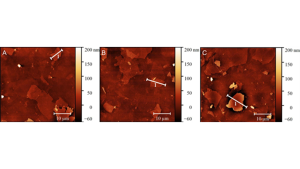
    Fig. 1 A-C: AFM images of the prepared nanoplatforms

    First, we focused on the synthesis of single-drug delivery platforms. The development nanoplatform consisted of the graphene oxide-based substrate functionalised using eight-armed polyethyleneglycol (PEG). The developed nanoplatforms were characterised using various analytical techniques, including atomic force microscopy (AFM; the illustrative results are shown in Fig. 1), scanning electron microscopy and vibrational spectroscopy.

    The platinum-based complexes were afterwards anchored covalently on the surface of the platform. Our recent publication (Zarska et al., Nanomaterials, 2022) showed a synergy effect between the nanoplatform and the bound drugs, increasing the therapeutic effect, as demonstrated in Fig. 2. The nanoplatform accomplishes excellent cellular proliferation inhibition in osteosarcoma, strictly related to increased cellular uptake. To a lesser extent, this cellular internalisation was seen in glioblastoma.

    Fig. 2: Microscopy images of the cancer cells treated with free Pt-based drug and cells treated using our nanoplatform

    It was also shown that the proposed GO@PEG nanoplatform is promising for inhibiting cell migration and minimising the metastatic process. Thus, the GO@PEG nanoplatform stands as an exciting tool in cancer treatment, with the possibility of targeting diverse types of cancers.

    Next, we shifted our focus to developing multi-drug smart-delivery systems, again based on applying graphene oxide. The selected transported drugs were Pt-based complexes, analogous to previous experiments, and Doxorubicin, another approved chemotherapeutic with a different mode of action. Both drugs were bound on the surface of the graphene oxide and functionalised using polyethyleneglycol to introduce chemical anchors for the chemotherapeutic agents. The results indicate that both drugs are delivered inside cancer cells with a considerable therapeutic effect.

    Conclusions and future perspectives

    The consortium Nano4Tarmed developed a new nanoplatform for the drug delivery of Pt-based and small organic anticancer drugs, including Doxorubicin. The nanoplatform is based on graphene oxide 2D nanomaterial functionalised using eight-branched polyethylene glycol to increase its biocompatibility and loading capacity. The platform now allows the delivery of two distinct drugs with various modes of action to cancer cells such as osteosarcoma, glioma and breast cancer cells.

    There is considerable potential for increasing the number of anchored and delivered drugs to three various molecules and further expanding its application potential in cancer treatment. During its first three years, the consortium also developed several nanotechnology-based plasmonic biosensors to detect cancer cells and important cancer biomarkers, including important markers of prostate cancer: PSA and fPSA.

    The future perspective aims to combine drug delivery systems with plasmonic-based diagnostic tools to create theranostic platforms to detect cancer cells and deliver drugs directly into their compartments.

    Please note, this article will also appear in the 18th edition of our quarterly publication.

    [ad_2]

    Source link

  • Helping airports transition to sustainable aviation

    Helping airports transition to sustainable aviation

    [ad_1]

    Forever Flight helps airports save money and reduce emissions, and is working to eliminate scope 1 and 2 aviation emissions.

    According to the IPCC, aviation pollution is currently at its highest level of all time. With pollution expected to increase, Forever Flight and its distributed energy network provide solutions so airports can adopt cheap, clean technologies to reduce emissions now.

    More regulation and engineering is required for true zero emission aviation, and Forever Flight is at the forefront of this revolution. With their process, they are working to not just reduce carbon emissions at the airport terminal, but entirely eliminate them from the system by partnering with electric and green hydrogen aeroplane companies.

    Forever Flight develops the supply chains for hybrid electric, fully electric, and green hydrogen flight, and creates renewable energy hubs for resilient communities without needing to cut down any more trees. The team then provides waste management systems aimed towards our goal of rapidly eliminating scope 1 and 2 emissions from the worldwide aviation sector.

    Forever Flight on the frontline of sustainable aviation

    As the world leader in developing multi-modal transportation hubs, Forever Flight and its distributed energy network find unique sources of funding to save airports money and reduce emissions.

    Forever Flight’s goal is to upgrade every airport in the world into a renewable energy hub. Airports can then charge electric ground service equipment, electric work trucks, heavy duty EV trucks, and electric aeroplanes, without having to worry about getting price-gouged by the utility.

    Forever Flight is upgrading the Sun Ex Aviation facility in Jose Aponte Airport in Puerto Rico to be energy-independent and hurricane-resilient with the following hardware and software solutions:

    Choir’s Maestro Software

    Choir’s Maestro orchestrates energy efficiency with a software led, hardware supported, asset backed solution. It predicts energy demand two weeks in advance with 98% accuracy in order to hedge the need of renewables and standard energy assets. It then recommends advanced technology and materials resulting in an equitable green economy. The software can also provide dynamic tariffs for ongoing Energy Efficiency as a service.

    With an API business model capable of adapting to client needs, Maestro provides an easy way for clients to benefit and integrate with other energy efficiency partners. Maestro augments Forever Flight and airport infrastructure, allowing for new tech and materials to be added at any size airport, resulting in controlled costs and a reduction in GHG emissions.

    Fortress Power’s energy storage system

    Fortress Power’s eSpire 280 Energy Storage System integrates with solar, genset, wind, micro-turbines, utility, or other distributed energy resources. This outdoor-rated, modular solution can easily expand up to 4.2 MWH capacity (Max. 15 units in parallel) to reduce electricity cost, prepare for resiliency, and maximise return on investment.

    It is ideal for hurricane resilience because of its remote operation.

    Volatus charging system

    The Volatus Infrastructure & Energy Solutions charging system with battery wall can maintain and deliver power to vital airport and neighbourhood systems. By affordably reusing batteries removed from commercial transportation use, Volatus is able to provide affordable, power-dense power storage solutions to the market.

    Working together, these systems can help ensure that airports and airspaces stay open and operational during critical post-disaster times.

    Flooid Power’s ‘Tomorrow’s Solar’

    Flooid Power is building their ‘Tomorrow’s Solar’ solution. It converts solar thermal energy into electricity and makes renewable energy reliably, continuously, at utility- or microgrid scale, and anywhere on solid ground.

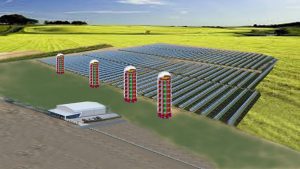
    Tower rendering

    The Flooid Tower is a patented device for converting the sun’s heat into electricity at high volumes, producing almost five times the output of PV on a quarter of the land. Solar thermal energy is captured, concentrated, and converted into electricity continuously. Extra heat is stored efficiently and long-term in a Phase-Change Material, meaning Flooid Power stores heat from the summer and converts it into electricity during the winter – no batteries required. The Flooid Tower is an ideal renewable power source for airports because the thermal panels are ‘Low-Glint,’ meaning they’re designed to minimise reflections that can interfere with pilots’ vision.

    PowerStack

    Many parts of an airport’s critical infrastructure are outdoors, disconnected from the building and often mounted on a pole. These technologies, such as lighting, security, communications, and controls, all require a reliable and hardy frame and anchor. Enter PowerStack.

    PowerStack USA is a Texas-based manufacturer of sleek, sturdy, and reliable solar and power storage poles. We help solve outdoor power availability for typically low wattage applications in both urban and remote areas where underground trenching or overhead wires for AC power are too expensive or undesirable.

    Our solar columns are self-powered with integrated solar and battery technology, eliminating traditional shortcomings by introducing vertical solar, encased in a durable, damage resistant polymer and in a slender profile that minimises wind drag; tested in 155mph winds. Further, the hinge design and concrete-free foundation make for fast and safe installation and service and relocatability.

    PowerStack, CapMetro

    In addition, the durable, vertical, and integrated solar is in its ideal form for hurricane-prone sites. That means less downtime and fewer repair expenses.

    Ampaire’s electric aircraft

    Ampaire’s mission is to move the world faster towards a sustainable future by being the world’s most trusted developer of practical and compelling electric aircraft.

    Ampaire’s vision is a sustainable future for aviation, with energy-optimised aircraft that make flying clean, quiet, safe, and affordable. Although we are developing all-electric trainer aircraft, in order to provide a valuable commercial product with current battery energy density, our commercial aircraft line is a plug-in hybrid.

    sustainable aviation
    Caravan first flight

    We use technology, infrastructure, regulations, and existing markets with immediate utility for airlines. This includes installing aircraft-specific chargers with multi-modal outlet arrays to support our flight programs at airports worldwide.

    Fordewind’s hurricane defence

    Fordewind specialises in fortifying airports against hurricanes through our comprehensive solutions for airport IoT platforms, sensors, and devices. We are experts in developing EV charging systems with backend control and billing, integrating OBDII devices for vehicle safety, and implementing Smart Grid Energy Management Solutions.

    We offer IoT software development services for airport owners to track savings over time. Our solutions include sophisticated billing mechanisms for transparent energy usage management and automated invoicing.

    These technologies all clearly perform their own separate function to bring value to airports and aircraft. When combined, they will help make air navigation facilities and vehicles as safe, cost-efficient, clean, and sustainable as possible.

    Our technologies will revolutionise the transition to sustainable aviation, and Forever Flight is committed to bringing this to reality.

    Please note, this article will also appear in the 18th edition of our quarterly publication.

    [ad_2]

    Source link
  • Shedding light on biogas’ key players

    Shedding light on biogas’ key players

    [ad_1]

    With the current climate crisis, pollution, and biodiversity loss, a new bioeconomy is essential. Biogas holds critical potential for sustainable solutions.

    Currently, about 10% of global energy comes from bioenergy. Biogas, specifically, is a potentially highly sustainable energy source due to it being created via the decomposition of waste products (manure, waste food, etc.) with natural bacteria.

    The University of Valencia’s Professor Manuel Porcar discusses the issues facing biogas production, and the solutions from their project: MICRO4BIOGAS.

    Biogas for sustainability

    The urgency of transitioning towards sustainability is undeniable; implementing effective strategies and tailored approaches promises a smooth transition with dual benefits for both the environment and the economy. Urbanisation continues to drive a surge in energy demand, exacerbated by rural-to-urban migration trends. Projections from the UUNN (2018) indicate that by 2050, 68% of the global population will live in urban areas. This massive increase in urban dwellers and the expected increase in world populations within the next decades will amplify the current challenges of waste generation and management. If not disposed of properly, waste poses a significant environmental and public health risk. However, amidst these challenges lies an opportunity – biogas, if strategically planned and managed, could potentially address both the rising energy demand and the escalating waste management crisis, turning both issues into a revenue opportunity.

    Revolutionising biogas production with MICRO4BIOGAS

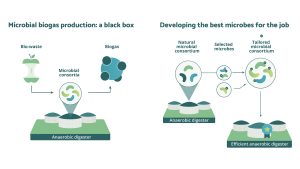
    At the forefront of sustainable energy initiatives stands anaerobic digestion (AD) of organic matter, a robust technology capable of synthesising biogas from various organic waste sources, ranging from sewage from water treatment to animal slurry or bio-waste. The main goal of AD is to produce methane, a renewable energy source that can generate electricity, heat or vehicle fuel. Biogas is a mixture of methane (CH4, 55 – 70% of the total volume), carbon dioxide (CO2, 30 – 40%) and traces of other gases. Despite the EU’s status as the world’s largest biomethane producer in 2018, producing 2.28bcm, there are many unknowns from an engineering point of view. The underlying microbial processes driving methane production remain opaque and are still considered a ‘black box’ subjected to a high degree of variability. Therefore, this industrial process presents opportunities for improvement in the systematic optimisation of yield, quality, speed and robustness.

    biogas, MICRO4BIOGAS

    Enhancing biogas production through innovation

    Enter MICRO4BIOGAS, an ambitious 48-month Research and Innovation Action poised to revolutionise European biogas production. By integrating the use of microbial consortia that naturally inhabit anaerobic digesters, and synthetic counterparts with improved capabilities for the first time, MICRO4BIOGAS aims to develop the basis for a user-friendly kit for bioaugmentation of biogas production (activities will be implemented at TRL3 with a TRL target of five-to-six). In other words, the project’s final goal is to develop the knowledge that allows complete control of microbial key players and the inoculation of selected strains, when needed. This project, aligned with the EU Bioeconomy Strategy and the European Green Deal, contributes to Sustainable Development Goals (SDG7: Affordable and clean energy; SDG13: Climate Action), and works towards circularity, resource efficiency, and sustainability across European countries.

    A collaborative effort for sustainable energy

    MICRO4BIOGAS brings together a diverse consortium comprising five leading research universities, seven SMEs, one large company, one non-profit organisation, the municipal authorities from a town hall, and partners coming from six European countries. Leveraging expertise spanning the microbiological and biochemical aspects of anaerobic digesters, including the use of novel culturing techniques and the handling of –omic data, the equipment required for small-scale biogas production, the ecological, social and economic implications of this technology and its transition to political bodies), market dynamics, and science communication, this collaborative effort aims to develop a novel bioaugmentation strategy. Based on natural and synthetic microbial consortia, this strategy will set the basis for developing biotech products to increase the yield and quality of the produced biogas through the selection of microbial consortia based on their efficiency, speed, and robustness. This holistic approach contributes directly to Europe’s renewable energy landscape, promotes circular economy principles through waste valorisation, and advocates for biogas production facilities’ economic and ecologic merits. The project expects to create a positive, deep impact on both policymakers and stakeholders, contributing to the much-needed growth of this renewable fuel.


    This project has received funding from the European Union’s Horizon 2020 research and innovation programme under grant agreement No 101000470.

    Please note, this article will also appear in the 18th edition of our quarterly publication.

    [ad_2]

    Source link

  • Data documentation and sharing for the circular economy

    Data documentation and sharing for the circular economy

    [ad_1]

    Onto-DESIDE addresses methodological and technical challenges related to trust and innovation in the circular economy (CE), focusing on semantic interoperability in data sharing. Project Coordinator Eva Blomqvist discusses the programme, its benefits, and innovations.

    Imagine an office building due to be renovated. What products and materials does it contain? Most likely materials and products from various industry sectors, including traditional construction materials and components such as windows, doors, and floor and ceiling tiles, together with interior design elements such as carpets and other textiles, or even furniture, as well as modern technology such as electronic devices for building control and entertainment.

    Can these building components be dismounted? Reused? Refurbished? Recycled? To answer such questions, we need information about the elements inside the building, including their material composition, how to dismount them, what industry actors might be able to transport, sort, treat, and whether they can further use or sell them.

    However, such information is not commonly available, at least not at the necessary level of granularity and detail e.g., due to confidentiality, limited market demand, complexity, and cost of setting up and maintaining the material inventory, or merely the time scale since the products were manufactured and put into the building.

    Even if some information is available, e.g., at the level of manufacturers, it is usually not easily accessed by actors involved in end-of-life scenarios. It is not easily understood nor linkable with other information to form the full picture of the building stock. As a result, a large manual effort is required in gathering, integrating, assuring quality, and analysing the information needed to select relevant circular strategies and to find the necessary value chain actors for setting up a successful circular value network.

    Particularly, semantic interoperability of data is acknowledged to be one of the biggest barriers towards data sharing in circular economy. Even if common data formats are used, the meaning of data differs between industry domains, countries, or even individual organisations. Such differences can range from assuming the use of different units of measurement, different scales, or different standards and code lists to more subtle challenges of divergence in the meaning of seemingly similar concepts.

    The Onto-DESIDE project provides the technical foundations for circular economy information flows by means of digitalisation and data sharing. The project leverages open standards for semantic data interoperability to establish a shared vocabulary, i.e., a network of ontologies for data documentation, as well as a decentralised digital platform that enables collaboration in a secure and confidentiality-preserving manner. These solutions will allow for the automation of discovery, planning, management, and execution of cross-industry circular value networks at a global scale.

    This interdisciplinary project also addresses the use of these technologies in a business context and studies CE as a complex system to develop integrated tools and methods for further enhancing CE. Apart from solutions that need to be technically feasible, the project also explores how such value networks can be designed and developed considering the interplay of the resource, information, energy and value flows, i.e. considering how the value network will behave as a system, where technology infrastructure is only one component.

    To ground our approach and gather CE-related data sharing needs across industry domains, the project studies three diverse settings, considering the textile, construction, and electronics and appliances industries. The textile-use case investigates the material and information flows, as well as information needs and barriers, within a scenario focused on recycling textiles from fibre to fibre in the footwear industry, represented by the partner Texon Italia.

    Similarly, the construction use case considers the flows related to reuse, refurbishment and recycling of floor tiles manufactured by our partner Lindner Group. The electronics and appliances-use case, involving the REIA organisation and its members, focuses on the flows related to speakers, highlighting rare earth-related components such as magnets. Additionally, our partner Ragn-Sells represents the perspective of a recycler, managing such flows across industry boundaries.

    Further, three companies with in-house software products and services are also involved: Circularise, Concular, and Circular.fashion, to capture current data exchange formats, and assess interoperability across sector-specific solutions. Interoperability with the Product Circularity Data Sheet (PCDS), as well as Digital Product Passports (DPP), is ensured by +Impakt. Based on this broad industry representation, we extract needs and requirements, test data, and evaluation scenarios for validating, assessing, and analysing the potential of the technologies and methods developed in the project.

    Ontologies, as computing artefacts, encode definitions of concepts and their relations, providing clear semantics to data and clarify what is described by a dataset, avoiding ambiguity and confusion. Ontologies are widely understood as a key technology to address semantic interoperability, to support automation, and can act as the common core for expressing mappings between concepts in different standards, as well as transformation rules for data exchange between different systems and formats.

    To make the use of ontologies scalable and flexible, an ontology network is a set of interrelated ontologies that are built using a modular architecture to separate concerns and to allow for ontology use and reuse at the right level of granularity and expressivity.

    The project therefore builds a set of core ontology modules for circular economy data documentation and sharing. The network is grounded in a set of basic ontology design patterns aligned to existing and emerging standards (e.g. the emerging ISO/FDIS 59004, including its CE vocabulary).

    The ontologies can be viewed as a concrete link between such standards and their technical implementation, as well as extending the standards to cover detailed data attributes, allowing their use with concrete CE-related data. A preliminary version of the ontology network is already published.¹

    In addition, the project adapts and extends the Solid family of emerging standard Web protocols for decentralised data sharing. The aim is to use the Web itself as the decentralised data-sharing platform for technically implementing a circular economy by adding an open circularity platform.²

    The platform is intended to function as an interchange layer for users and systems to share data annotated using the ontology network. For instance, the extended platform protocols could support the exchange of data between circular economy service providers, value chain actors, as well as manufacturers and suppliers who seek new resources to replace virgin materials.

    In addition to the technical level, the CE flows can be mapped and analysed using the Circularity Thinking methodology and tools. These tools are part of a larger framework for viewing CE from a complex systems perspective, called the Multi Flow Metabolism.

    In the project, we are operationalising this framework by identifying circularity factors and enablers that need to be put in place for the successful implementation of CE value networks. Complemented with training material on the technological side, this will allow for reuse, exploitation, and extension of the overall framework, supported by the technological infrastructure, even after the project’s lifetime.

    With one year left of the project, we are now revising the solutions and expect to make a final release of the complete project framework in the spring of 2025. Currently, ongoing efforts include aligning the ontology network to existing CE and materials ontologies (e.g. EMMO), as well as to the CE standards being released.

    This project has received funding from the European Union’s Horizon Europe research and innovation programme under grant agreement No. 101058682.

    References

    1. https://w3id.org/CEON/
    2. https://github.com/KNowledgeOnWebScale/open-circularity-platform

    Please note, this article will also appear in the 18th edition of our quarterly publication.

    [ad_2]

    Source link

  • Continuous direct lithium extraction technology: Quick and sustainable

    Continuous direct lithium extraction technology: Quick and sustainable

    [ad_1]

    Go2Lithium is at the heart of the developing lithium industry, and their cDLE technology is a testament to this and their commitment to improving lithium extraction processes.

    Go2lithium’s continuous direct lithium extraction technology demonstrates that lithium extraction can be quicker, cheaper, and more sustainable. They now work with several projects, including the Boardwalk Lithium Brine Project, ran by Lithium Bank.

    The Innovation Platform spoke to Livia Mahler, CEO of Go2Lithium, to find out more.

    What advantages does G2L’s lithium extraction technology provide for the Boardwalk Lithium Brine Project?

    Go2Lithium Inc (G2L) stands as a pioneer in the global lithium industry, leveraging cutting-edge technologies and strategic partnerships to maximise the value of lithium brine assets. At the core of G2L’s innovation lies the continuous direct lithium extraction (cDLE®) process, promising unmatched lithium recovery rates and cost efficiency, as showcased in Lithium Bank’s recently updated Preliminary Economic Assessment (PEA) for the Boardwalk Project.

    The implementation of cDLE® within the Boardwalk flowsheet has brought step-gain improvements to lithium extraction and purification processes. Notably, G2L’s technology has delivered the highest purity concentrated lithium solution (eluate) among the 15 technologies evaluated by the project team. This achievement is attributed to the optimisation of DLE adsorption and desorption processes, employing counter-current configurations.

    The adsorption step is further intensified using alternative process vessels and pH control to ensure near-complete extraction of lithium from the incoming brine, saturation of the mineral sorbent with lithium and suppression of the co-extraction of impurities.

    The process chemistry shift in the desorption step also facilitates partial purification. By precipitating impurities and leaving lithium in solution, cDLE® reduces the impurity burden on downstream refining processes. This translates into enhanced process efficiency, including improved recovery rates, reduced circulating loads, and lower processing costs for the refinery.

    Can you highlight the most significant improvements for the project?

    Adopting G2L’s lithium extraction technology into the Boardwalk flowsheet has bolstered project economics in two pivotal ways, positioning it for success, irrespective of short-term fluctuations in lithium price.

    Firstly, G2L’s technology builds upon our rich legacy in employing ion exchange methodologies for the extraction of valuable metals, such as uranium or gold, from dilute streams in hydrometallurgical facilities. This expertise has been integrated into the Boardwalk project, where our advanced DLE circuit boasts a remarkable lithium recovery rate exceeding 98%. This meticulous focus on recovery isn’t just a technical feat; it’s a strategic approach that significantly enhances project value. By maximising lithium extraction, we not only amplify revenue streams but also optimise the utilisation of resources, mitigating the capital and operating costs associated with brine extraction and processing.

    Secondly, G2L’s innovative technology introduces a diverse array of process vessel designs derived from various metal recovery applications. These designs are engineered to withstand challenges such as suspended solids and precipitate formation, ensuring robust performance even in the most demanding operational environments. In the context of the Boardwalk Project, this versatility has enabled a paradigm shift in process chemistry. By embracing cost-effective industrial reagents like quicklime and sulfuric acid, we’ve transcended the conventional reliance on sodium hydroxide and hydrochloric acid, slashing operating costs without compromising on performance. The cDLE approach has reduced the OPEX by 34%. When combined with increased lithium recovery, an additional $600m in NPV is delivered to the project.

    In essence, integrating G2L’s technology isn’t merely a technological upgrade – it’s a shift that unlocks the full potential of the Boardwalk project. Through improved recovery rates and optimised process chemistry, our lithium extraction technology paves the way for success throughout the asset’s life.

    What importance does the project’s location in Alberta have?

    Alberta emerges as a pivotal location for building a lithium project due to its strategic advantages and the global context of lithium deposits. Thinking about global deposits, we know that three-quarters of all lithium is associated with brine deposits, with the remaining one-quarter associated with hard-rock deposits, and whilst South America’s Lithium Triangle garners attention for its brine deposits, concerns over sovereign risk and environmental sustainability underscore the need for alternative sources. This is where Alberta’s Leduc Formation in western Canada shines.

    Canada, with its recognised expertise in extractive technologies, provides a solid foundation for such projects. Alberta’s history of over 50 years of large-scale industrial activity in the oil sands further solidifies its position as a nexus for energy transition resource development. For example, there are over 1,000 wells drilled on these claims during previous developments for oil and gas extraction. Emerging projects can benefit from rich historical data, expediting the delineation of a large-scale brine resource.

    By establishing a lithium production facility in Alberta, North America gains a crucial asset for its battery industry. The region’s resource-rich landscape offers a local and reliable source of lithium, essential for powering electric vehicles and energy storage systems. This move reduces reliance on imports and strengthens domestic manufacturing capabilities, aligning with broader efforts towards self-sufficiency in strategic metals.

    What measures are being taken to reduce the project’s carbon footprint?

    Direct Lithium Extraction (DLE) offers some distinct environmental advantages over existing lithium production technologies and methods, such as spodumene mining and conventional evaporation of brines.

    DLE emerges as a disruptive green technology due to its remarkable energy efficiency and reduced environmental impact. DLE processes require minimal energy input, leading to a carbon footprint equivalent to or even lower than that of conventional evaporation methods.

    Furthermore, DLE boasts a significantly lower water footprint, alleviating stress on local water sources and ecosystems. By circumventing the need for extensive evaporation, DLE mitigates the environmental drawbacks associated with some traditional lithium extraction methods.

    Overall, DLE promises a sustainable approach to lithium production, aligning with the global imperative to reduce carbon emissions and conserve water resources. Its adoption not only facilitates the transition towards cleaner energy solutions but also addresses environmental concerns associated with conventional extraction methods, fostering a more sustainable future for lithium production.

    What are the next steps outlined by LithiumBank Resources Corp. for value creation and derisking efforts for the Boardwalk project?

    Pilot plant operation is the next big step in the Boardwalk project’s value creation and derisking efforts. The cDLE® pilot plant was designed and constructed in Australia in late 2023 and arrived on-site in Calgary in early 2024.

    The Calgary facility fit-out is well-advanced. Once completed, the pilot facility will permit processing of up to 10,000L/d of brine and yield equivalent to 3kg/d LCE. This means the Calgary facility will represent one of the largest DLE pilot plants in North America. The scale also represents an approximate 1:5000 scale of the future commercial production modules, which is consistent with scale-up factors used in other hydrometallurgical processes. Within the pilot plant itself, sufficiently large ion exchange equipment has been installed to permit direct scale-up of these process steps to the commercial plant, accelerating the Boardwalk Project development.

    The facility is expected to be operational during the second quarter of 2024. Several piloting campaigns are planned as the Boardwalk Project advances into its feasibility studies phase of development. The company also anticipates that the facility will accelerate the company’s Park Place, and Saskatchewan lithium development properties.

    Please note, this article will also appear in the 18th edition of our quarterly publication.

    [ad_2]

    Source link

  • Select Power Systems and the future of EV charging

    Select Power Systems and the future of EV charging

    [ad_1]

    One of the aspects of transitioning to a sustainable world involves creating the infrastructure to support it. Select Power Systems recognises this and provides efficient EV charging stations.

    In the ever-evolving landscape of energy consumption and sustainability, the integration of electric vehicles (EVs) has emerged as a pivotal solution. As the world shifts towards greener modes of transportation, the demand for efficient and scalable EV charging infrastructure becomes increasingly apparent.

    Amidst this paradigm shift, Select Power Systems stands at the forefront, pioneering innovative solutions that redefine the future of EV charging.

    This article explores the intersection of Select Power Systems and EV charging, delving into their transformative technologies and the profound impact they have on shaping a sustainable tomorrow.

    The rise of electric vehicles

    The journey towards mainstream adoption of electric vehicles traces back to concerns over environmental degradation and fossil fuel dependency. With advancements in battery technology, electric vehicles have become a viable alternative to traditional internal combustion engine vehicles.

    Governments worldwide are implementing stringent emissions regulations and offering incentives to accelerate the transition to electric mobility. Consequently, the automotive industry is witnessing a surge in electric vehicle production, driving the need for robust charging infrastructure.

    The importance of efficient EV charging

    Efficient EV charging infrastructure is the linchpin of the EV ecosystem. As electric vehicles become more popular, the demand for fast, reliable, and accessible charging solutions intensifies.

    Long charging durations and inadequate infrastructure pose significant barriers to widespread EV adoption.

    Thus, optimising charging efficiency and accessibility is imperative to encouraging consumer confidence and facilitating the transition to electric mobility.

    Select Power Systems: Pioneering innovation

    At the heart of the EV charging revolution lies Select Power Systems, an industry leader renowned for its cutting-edge solutions and unwavering commitment to sustainability.

    Leveraging advanced technologies such as smart grid integration, renewable energy integration, and dynamic load management, Select Power Systems delivers tailored charging solutions that cater to the evolving needs of electric vehicle owners, charging network operators and utilities alike.

    Smart grid integration: Empowering the future of EV charging infrastructure

    Smart grid integration lies at the core of Select Power Systems’ approach to EV charging infrastructure. By leveraging smart grid capabilities, Select Power Systems optimises charging processes, minimises grid stress, and maximises renewable energy utilisation.

    Through intelligent load management and demand-response mechanisms, Select Power Systems ensures efficient allocation of resources, enabling seamless integration of electric vehicles into the grid ecosystem.

    © shutterstock Jackie Niam

    Renewable energy integration: Driving sustainability

    As the world transitions towards renewable energy sources, the integration of renewable energy into EV charging infrastructure becomes imperative.

    Select Power Systems leads the charge by facilitating the seamless integration of solar, wind, and other renewable energy sources into its charging solutions.

    By harnessing clean energy sources, Select Power Systems reduces carbon emissions associated with electric vehicle charging, contributing to a greener and more sustainable future.

    Load management: Optimising charging efficiency

    Dynamic load management lies at the crux of Select Power Systems’ approach to EV charging optimisation. By dynamically adjusting charging rates based on grid conditions, energy demand, and user preferences, Select Power Systems minimises charging costs, reduces grid congestion, and ensures optimal utilisation of resources.

    Through real-time monitoring and predictive analytics, Select Power Systems optimises charging infrastructure performance, delivering unparalleled efficiency and reliability.

    The future of charging: Towards a sustainable tomorrow

    As electric vehicles continue to gain traction, the future of EV charging holds immense promise and potential. Select Power Systems remains at the forefront of innovation, driving advancements in EV charging infrastructure that are essential for realising a sustainable tomorrow.

    Through relentless innovation, strategic partnerships, and a steadfast commitment to sustainability, Select Power Systems paves the way for a future where electric mobility is accessible, efficient, and environmentally friendly.

    In conclusion, the convergence of Select Power Systems and EV charging heralds a new era of sustainability and innovation in the automotive industry. By pioneering transformative technologies such as smart grid integration, renewable energy integration, and dynamic load management, Select Power Systems is revolutionising the way we approach electric vehicle charging.

    As we navigate towards a greener and more sustainable future, the role of Select Power Systems in shaping the landscape of EV charging cannot be overstated. Together, we embark on a journey towards a future where electric mobility is not just a possibility but a reality, driven by innovation, sustainability, and a shared vision for a better world.

    Please note, this article will also appear in the 18th edition of our quarterly publication.

    [ad_2]

    Source link

  • Revolutionising the manufacturing of electric motors with MM-AM

    Revolutionising the manufacturing of electric motors with MM-AM

    [ad_1]

    Pasi Puukko, Senior Scientist and Project Coordinator at VTT, a Finnish-owned company with over 80 years of scientific and engineering experience, walks us through the MultiMag project and what it means for the manufacturing of electric motors.

    In the modern day, we are surrounded by numerous electric motors, although we rarely pay any attention to them as long as they work properly. Dishwashers and washing machines, computers, heat pumps, drills, drones, and even toothbrushes often rely on electric motors.

    Recently, electrification of mobility has become increasingly important, as it is considered one of the key approaches to reduce the consumption of fossil fuels and mitigate climate change and its consequences. Again, efficient electric motors play crucial roles, parallel to battery and other technological innovations.

    Limitations of conventional manufacturing of electric motors

    Different types of electric motors have been developed over the decades for a variety of purposes, but some trade-offs still must be made due to the limitations of conventional manufacturing technologies and the available materials.

    A significant challenge is that the most powerful permanent magnets rely heavily on rare earth element (REE) materials, such as neodymium and dysprosium. As these materials are mined from just a few places and are vital for many other applications, there is a clear supply chain and economic risk related to REEs. Although electric motors can be manufactured without permanent magnets, they play a vital role in some motor types, especially high torque-density motors.

    Due to the complex structure of electric motors, their manufacturing requires a lot of expertise. Several process steps can be automated using industrial robots and other automation, but this leads to rather rigid production structures which do not allow flexibility where needed. This inflexibility might hinder the adoption of new motor architectures.

    Manufacturing-related constraints can also lead to more conservative solutions, for instance, higher weight and larger footprints of the machines than would be ideal. Constraints in manufacturing can also cause higher inertia of rotors and thus increased losses or reduced performance of materials due to microstructural changes.

    Optimised structures and components

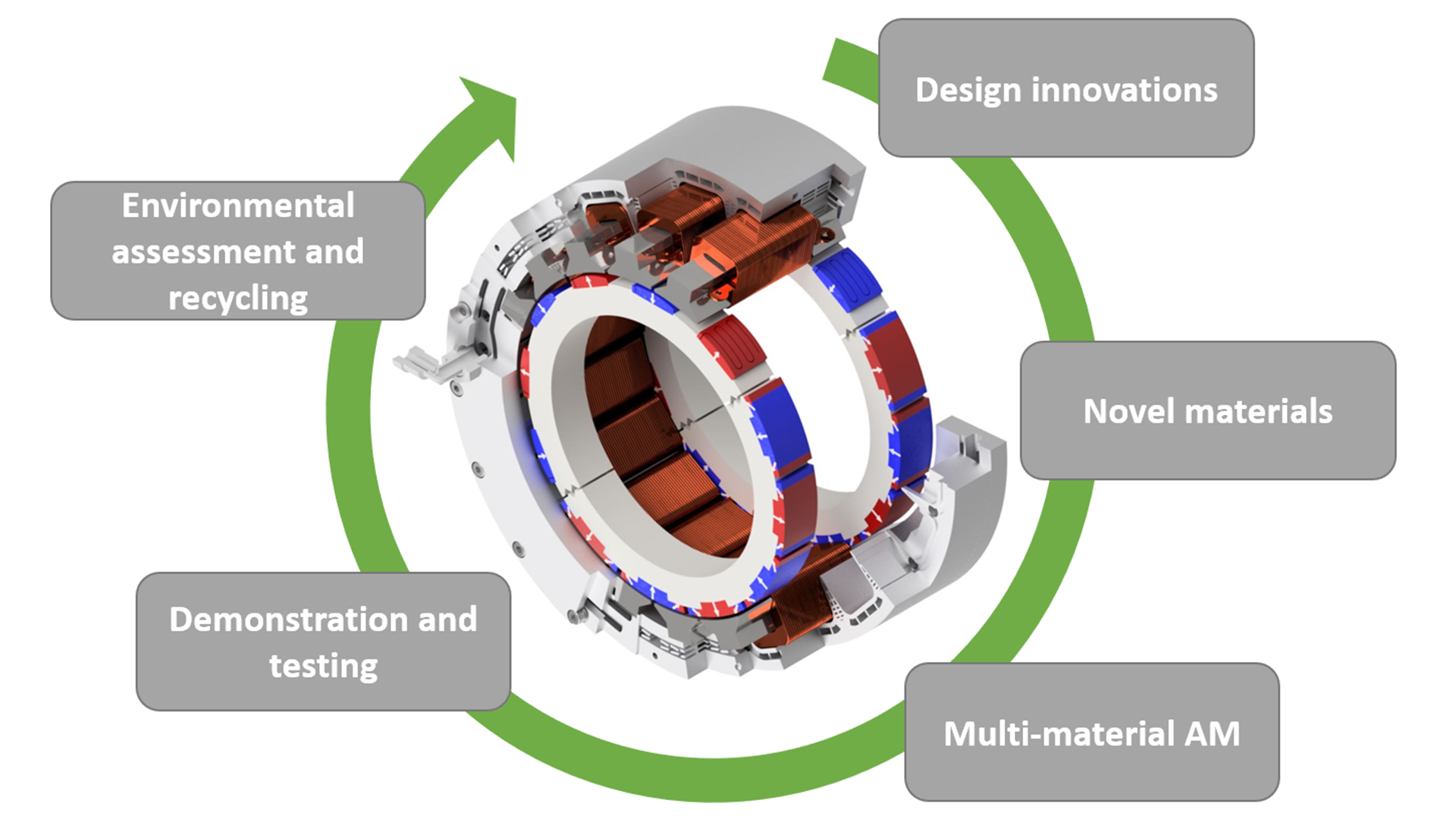
    Additive manufacturing (AM), also known as 3D printing, offers interesting possibilities for manufacturing structures and components for electric motors. This is especially the case when considering Multi-Material Additive Manufacturing (MM-AM), where two or more materials are joined together by AM technologies.

    Additive Manufacturing is defined as: “a process of joining materials to make parts from 3D model data, usually layer upon layer, as opposed to subtractive manufacturing and formative manufacturing methodologies.”1 Active parts of electrical machines comprise ferromagnetic cores, windings, and possibly permanent magnets.

    The ferromagnetic cores are typically done by stacking insulated electrical steel sheets together, forming a laminated structure that effectively guides the flux with tolerable losses. Interestingly, as the nature of Additive Manufacturing resembles that of the laminated cores with layers of ferromagnetic and insulating material, MM-AM can offer an interesting alternative for producing these structures.

    The traditional lamination reduces freedom related to stator geometry, and to some extent, could not be optimised to achieve full performance potential. MM-AM can combine stacked structures with macroscale complex geometries, allowing new designs.

    In addition, design freedom does not apply only on the macroscale but potentially also on the microscale. From a magnetic performance perspective, ideal structure may not be a simple laminated structure, where each soft magnetic and insulating layer are just stacked on top of each other.

    However, structures with 3D flux paths are not possible to manufacture with traditional laminations. Thus, using MM-AM, stacked structure can be designed anew, to better follow the actual magnetic flux paths inside the part, for example.

    Laminated structures do not only benefit stators and rotors but they can also be used for permanent magnets, also known as segmented magnets. This approach can restrain the temperature increase inside the magnets, which can be very beneficial in neodymium magnets. In addition to structures, several potential benefits can also be achieved at the part level. Rotors for synchronous reluctance motors can be designed more freely to follow flux paths. The weight of moving parts can be reduced by reducing material from areas where it is not needed, reducing inertia, and also leading to lighter and smaller motors.

    Although the potential of MM-AM is significant, several challenges need to be overcome before it can be used to its full potential. First, several AM technologies exist to produce multi-material parts from metallic and other hard materials, but they are not yet mature and flexible enough to be fully used for EM applications. Second, feedstock materials for MM-AM processes need to be developed to fulfil the functional requirements and the processability so that they can create strong joints with their counterpart materials. For end-of-life motors, we should be able to dismantle these joints and structures and recycle the materials back to use.

    Improved performance and production

    The MultiMag project has been set up to tackle these issues. The project goal is to develop a holistic approach to additively manufacture multi-material, multi-functional structures and components for electric machines, with remarkable advances in their performance, light-weighting, and lead time. At end-of-life, valuable materials can be effectively recycled.

    To guide the project towards high impact, the consortium has defined three real-life use cases representing different electric motor types. During the first year of the project, the development has focused especially on modelling and simulation of these use case motors, to improve their performance. Based on simulation results, a considerable 40% weight reduction of permanent magnets and 30% of active motor components seems to be feasible.

    Related to material and process development, material batches of permanent magnets, soft magnets, and insulating materials have been successfully produced and delivered for testing. Preliminary results of stacked bilayers of soft magnetic and insulating materials are promising in terms of magnetic properties and total losses.

    The project will continue towards demonstrating and validating various components in an industrially relevant environment. The consortium sees clear exploitation potential in the results, not only to improve the performance of current motors, but to develop new products for existing and new markets. Motors that will use less REE materials and provide improved power-to-weight ratio, leading our way towards a more sustainable Europe.

    References

    1. ISO/ASTM 52900:2021

    Funded by the European Union. Views and opinions however those of the author(s) only and do not necessarily reflect those of the European Union or the European Health and Digital Executive Agency (HADEA). Neither the European Union nor the granting authority can be held responsible for them.


    Please note, this article will also appear in the 18th edition of our quarterly publication.

    [ad_2]

    Source link

  • A Swedish National Competence Centre for nuclear power technology

    A Swedish National Competence Centre for nuclear power technology

    [ad_1]

    Through research and development, ANItA’s mission is to generate knowledge-based decision support to efficiently implement new nuclear power technology in Sweden.

    The current Swedish nuclear power programme was developed in the sixties and fully implemented in the seventies and eighties. There were several reasons for this programme’s development, with an important one being the reduction of Sweden’s heavy dependence on fossil fuel imports for increased national security. Another was to reduce emissions of acidifying substances into the atmosphere. A third reason was the realisation that an increasingly expansive industrial sector needed to be supported in terms of energy without using the last remaining rivers in the north for hydropower production. One reason that probably lay in the background was to show the outside world that Sweden could develop, construct, and build high-tech reactors, thus adding value to the export industry.

    To enable this development in a country with a relatively small population, close co-operation between the state, industry and academia was recognised as a determining factor. As a result, nine of the twelve reactors that have operated in Sweden were of Swedish ASEA design and manufactured with virtually only Swedish supply chains.

    In recent years, the need for new nuclear power in order to meet the national environmental and climate goals has become increasingly apparent. It seemed like a good idea to recreate at least parts of the strategy used in the sixties, where state, industry, and academia once again merge and co-ordinate their resources for a common goal. This is where ANItA comes into the picture.

    The Academic-industrial Nuclear technology Initiative to Achieve a sustainable energy future (ANItA), was conceptualised in 2021 and began operating in 2022. ANItA is a collaboration platform currently consisting of: Uppsala University (host), Royal Institute of Technology (KTH) and Chalmers as academic partners. The industrial partners are: Vattenfall, Uniper, Fortum, Westinghouse and Studsvik Nuclear. The state is represented by the Swedish Energy Agency, with Swedish and Finnish regulators, and Women in Nuclear as observers.

    Through research and development, ANItAs mission is to generate knowledge-based decision support that facilitates efficient and timely implementation of new nuclear power technology in Sweden, particularly light-water small modular reactors (SMRs). Part of this mission is also to secure and develop the important supply of expertise in the nuclear power technology field. The collaboration also aims to facilitate a rational debate in society on the role nuclear power has in addressing environmental and climate issues while keeping high welfare ambitions intact. Between 2022 and 2026, ANItA is funded with one third each from industry, academia and the Swedish Energy Agency, and the total budget amounts to approximately €8m during these first five years.

    To address the different aspects of the mission, a joint research portfolio was developed that met the interests of both industry and academia and was in line with the analyses carried out concerning the requirements of implementing a new reactor technology. The resulting research portfolio currently consists of 14 projects comprising research and development work within technical and non-technical subjects. The projects are staffed with PhD students and postdoctoral researchers with supervision and senior participation from both the academy and industry. In this context, it is important to point out that ANItA is not involved in the design or construction of SMRs. Instead, it relies upon relevant information from the current reactor suppliers to reach ANItA to establish realistic scenarios for the research and development work.

    The project portfolio

    ANItAs project portfolio is divided into five research areas according to:

    • A. SMR technologies and applications
    • B. SMR-specific core, fuel, and operation
    • C. SMR-specific reactor safety and safety systems
    • D. Fuel cycles
    • E. Deployment of new nuclear technology in Sweden

    Research areas A-D cover a broad range of technical subjects relevant to light-water SMR utilisation. In brief terms, the projects deal with the following issues:

    • Optimised chemistry for LWR SMRs
    • Structural materials issues
    • Fuel assembly and core design optimisation for SMRs
    • Novel reactor monitoring techniques
    • Novel approaches to nuclear safeguards
    • Experimental methods for accelerating fuel development
    • Recycling of spent nuclear fuel
    • Applications beyond electricity generation
    • Studying the role of SMRs in hybrid energy systems
    • Design basis and beyond design basis scenarios, passive safety systems

    While research areas A-D cover typical technical topics in nuclear engineering, research area E covers non-technical subjects directly impacting the implementation of SMRs and is therefore worth a brief review here. Research area E is divided into two projects, each dealing with the prerequisites for implementing SMRs in Sweden.

    © shutterstock/Natali _ Mis

    Implementation of SMRs and effects of serial production on the management of plant projects

    The project includes studies on the mitigation of risks in SMR projects with, and risks related to, the construction schedule and budget emphasised here. The business case of SMRs relies heavily on serial production to premanufacture systems, components, and structures as much as possible in factories and then install them on-site, i.e., going from a ‘constructed on-site’ mindset towards ‘installed on-site.’ Such a shift may save costs and ensure that the project can be carried out on schedule and budget.

    However, it requires new types of projects and financing models, including the roles and responsibilities of project parties. The benefits of serial production have been proven in other industry sectors, e.g., the shipping and aviation industries, and the experience gathered should be transferred to the nuclear industry. How to do this in an efficient and timely manner is one question to be answered within this research project.

    Regulatory perspectives and licensing

    To fully exploit the potential of SMRs, for local power and heat generation near end users, it is necessary to consider the location of the plants on untraditional sites. Now, virtually all infrastructure projects in Sweden are hampered by lengthy environmental assessment processes, which apply largely to new nuclear power. Therefore, changes in the law are paramount for the successful introduction of SMRs. Identification of necessary changes and how they correlate to Swedish and EU law will be researched, and proposals for changes in the legislation will be provided.

    Successful licensing of SMRs is also needed before deployment. Swedish licensing has hitherto focused on power reactors individually, with separate licensing procedures for each unit. If a large number of identical units are to be installed at multiple sites, it makes sense to re-organise the licensing process into a generic phase with a type approval in a first phase, followed by a second phase restricted to site-specific issues. This would, however, challenge the current permitting processes used in Sweden, and this project aims to find viable ways to address this issue.

    The types of challenges outlined above are not unique to Sweden. By addressing current and future requirements and safety standards, the activities within this research project aim to contribute to reducing possible risks and licensing difficulties at the early phase of SMR implementation in Sweden and potentially in other countries.

    The required effort to carry out all the ANItA projects is significant. In fact, it is larger than stakeholders can generally manage, and the project requires a range of competencies that no one stakeholder alone can bring. ANItA’s main value lies in gathering and co-ordinating Swedish nuclear research, where a wide range of research and engineering expertise can be gathered under one umbrella and work coherently.

    The research projects started in autumn 2023, and the first results are expected to be published in various peer-reviewed journals after the coming summer. In addition, project results and reports will be published on the ANItA website as soon they are available.

    Additional research on nuclear power technology

    At present, political and public opinion is in favour of introducing new nuclear power in Sweden. However, due to several decades of debate about nuclear power’s supposed dangers, high costs, etc., there are still doubts about new applications and the potential location of SMRs in people’s neighbourhoods. The societal aspects of implementing SMRs are one highly relevant field of research not yet covered by ANItA. Work is ongoing to incorporate researchers in social sciences into ANItA with the aim of creating an additional research area to the portfolio.

    For completeness, it is worth mentioning that besides ANItA, there are two other research centres that encompass nuclear technology in Sweden. The Centre for Nuclear Technology (SKC), hosted by KTH, deals primarily with research connected to the current reactor fleet in Sweden. The Swedish Academic Initiative on Nuclear Technology research (SAINT) at Chalmers has a broader scope and largely comprises work within radiation sciences. Finally, although not a formal centre, it contributes to Swedish nuclear competence.
    The Sunrise project at KTH is funded by the Swedish Energy Agency.

    Conclusion

    The research projects of ANItA have been in full operation since summer 2023, and the first results are about to be published in scientific journals and at conferences. Besides the research and development work, ANItA has also been represented in various public meetings, symposia, and mass media platforms to be available to society on issues related to nuclear power technology in general, and SMRs in particular. There is increased interest from new stakeholders to join ANItA. Since ANItA is now recognised at the highest political level in Sweden, it seems reasonable to say that the ANItA concept has been successful in relation to its mission.

    Please note, this article will also appear in the 18th edition of our quarterly publication.

    [ad_2]

    Source link