New weight-loss drugs may bypass the need to inject
Richard Levine/Alamy
It may feel like there has been a stream of stories about drugs used for weight loss in 2023, but get ready for double helpings in 2024. A more potent fat-busting injection will probably enter clinics and we will see further trial results for a smorgasbord of treatments in the pipeline.
Semaglutide, possibly the most talked-about medicine of 2023, was developed to treat diabetes and sold as the self-injectable Ozempic. It works by mimicking the action of a gut hormone called…
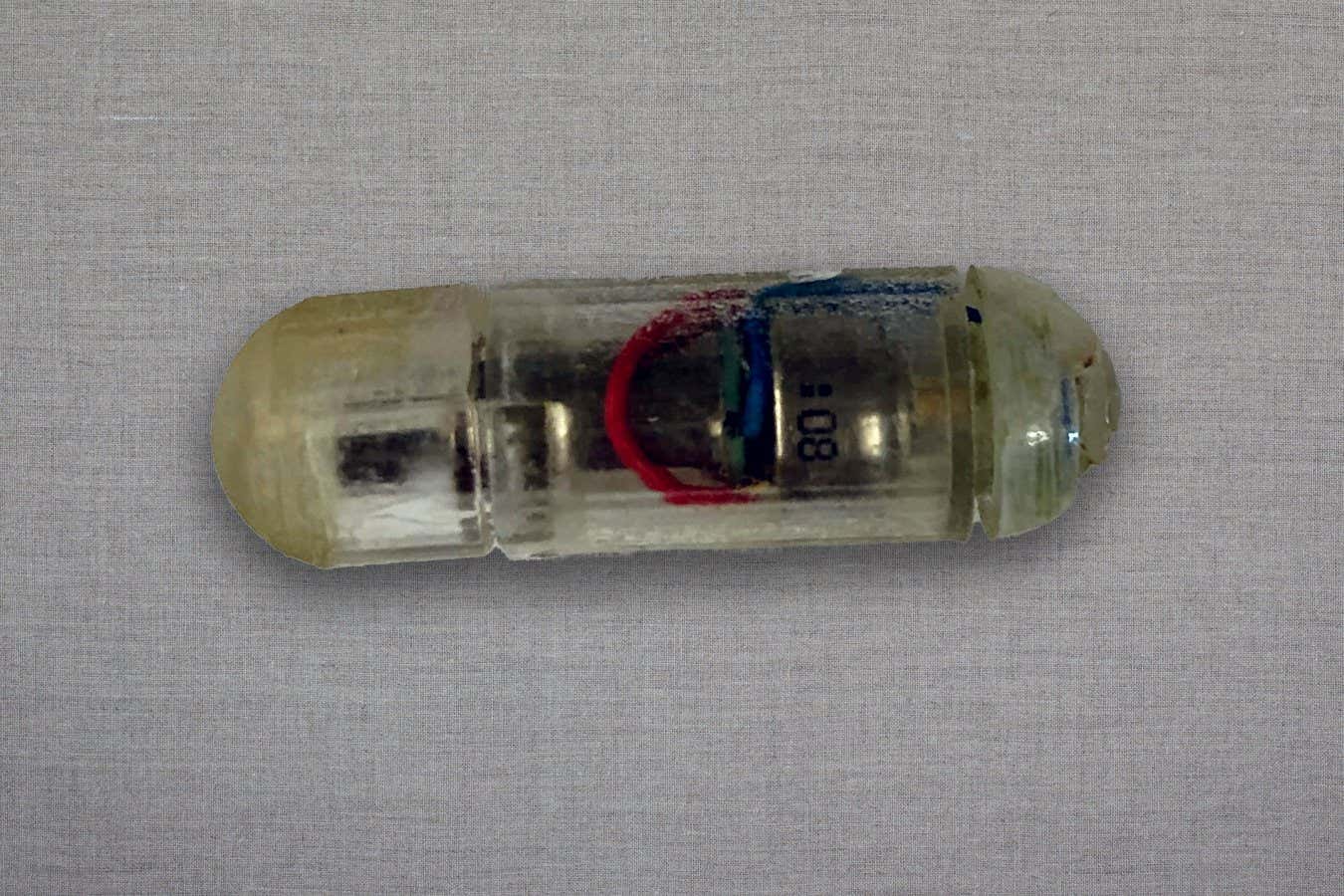
The pill contains a vibrating motor powered by a small silver oxide battery. When it reaches the gut, gastric acid dissolves its outer layer. This causes an electronic circuit to close, which starts the vibration
Shriya Srinivasan, Giovanni Traverso, MIT News
A vibrating pill that tricks the brain into thinking the stomach is full could one day treat obesity. The approach would be considerably less invasive than gastric bypass surgery and potentially cheaper and less prone to side effects than drugs such as Wegovy and Ozempic.
Giovanni Traverso at the Massachusetts Institute of Technology and his colleagues have developed a pill around the size of a standard multivitamin that houses a vibrating motor powered by a small silver oxide battery, which is safe to swallow. When the pill reaches the gut, gastric acid dissolves its outer layer. This causes an electronic circuit to close, which starts the vibration.
In an experiment in pigs, some of the animals were given the pill 20 minutes before being given access to food. These pigs ate around 40 per cent less compared with those that weren’t given the pill. They also had higher levels of hormones in their blood that typically signal satiety.
The researchers hope to test the pill in people “soon”, says Traverso, believing it could have potential as an obesity treatment. “It’s an enormous health problem, with over 40 per cent of the US population, for example, being affected.”
The pill’s vibration activates the same receptors that detect when the stomach lining is distended after a big meal, passing signals to the brain that it is full, he says. The prototype version vibrates for 30 minutes before its battery runs down and it is passed naturally.
According to Traverso, future versions could be adapted to remain in the stomach semi-permanently and be turned on and off wirelessly as needed. The reaction to the device will probably be unique to the individual, he says, but it could be automatically turned on for a short period every day to generally lower appetite or even be controlled by a smartphone app to target hunger pangs.
Previous research by the same group found that electrical stimulation of the stomach lining can actually activate feelings of hunger, potentially leading to treatments for a lack of appetite among people with cancer. “I think it’s really exciting because we’re just learning what we’re able to do through stimulation of, in different ways, different parts of the GI [gastrointestinal] tract,” says Traverso. “When we eat, we feel full, and the question is: can we induce that sense of feeling full? Can we create that illusion?”
Ozempic is a diabetes treatment, but it is often also used to help with weight loss
fcm82/Shutterstock
Weight-loss and diabetes injections such as Wegovy and Ozempic (both semaglutide) may have wider medical benefits than we first thought, after work in mice suggests they act on the brain to lessen body-wide inflammation.
The finding could explain why this class of drugs seems to reduce heart attacks more than would be expected from their weight-loss effects alone.
It also lends support to their use in combating a wider range of health conditions that involve inflammation, including Alzheimer’s disease and Parkinson’s disease, which is being investigated in trials.
Semaglutide works by mimicking a gut hormone called GLP-1. Normally released after eating, GLP-1 lowers appetite, makes people feel full and triggers the release of insulin, a hormone involved in blood sugar regulation.
Several studies have suggested that, as well as causing people to lose weight, semaglutide lowers inflammation, which is a mild rise in certain kinds of immune system activity. For instance, semaglutide lowers the level of a compound in the blood called C-reactive protein (CRP), an established sign of inflammation, says Daniel Drucker at the University of Toronto in Canada.
A growing body of work suggests that inflammation is involved in numerous conditions that hadn’t previously been linked to the immune system, including heart disease and Alzheimer’s disease, although this has yet to be translated into new treatments for clinical use.
Obesity is also linked with inflammation, so the effect of semaglutide on CRP could just be a side effect of people losing weight, rather than the drug itself reducing inflammation.
To find out, Drucker and his colleagues investigated how several GLP-1 mimics affect inflammation in mice. First, they injected bacteria from the mice’s guts into elsewhere in their abdomens, causing them to have a bacterial infection of the blood. This leads to a strong immune response, raising inflammation.
In some mice, they also injected a GLP-1 mimic, either semaglutide or another member of this drug class called exenatide.
The GLP-1 mimics reduced the animals’ inflammatory response to the infection, but this failed to happen when the researchers used mice that had been genetically modified so they lacked the receptor for GLP-1 on their brain cells.
The reduction of inflammation also failed to happen if the experiment was done using genetically normal mice that had a compound that blocks the GLP-1 receptor injected into their brains.
Together, these results show that GLP-1 mimics such as Ozempic reduce inflammation by acting on brain cells, and it isn’t just a side effect of weight loss.
“Weight loss is good, but you don’t need to have the weight loss to have the benefits,” says Drucker. For instance, in a recent randomised trial of Wegovy, the drug started preventing heart attacks within the first few months, before people would have lost much weight, he says.
“It was a known effect of these drugs, that they act on inflammation,” says Ivan Koychev at the University of Oxford. “This paper is helpful because it’s clarifying the underlying mechanism.”
In theory, medicines that dampen inflammation could cause people to get more infections, although this hasn’t been observed so far in people having the injections for weight loss or diabetes, says Koychev.
Wegovy shortages have seen “off label” use of the diabetes drug Ozempic
dpa picture alliance/Alamy
Weight management was transformed in 2023, with soaring use of the drug Wegovy, or semaglutide. Never before has there been an approved weight loss medicine that is so effective and yet also considered reasonably safe. “The medical therapy of obesity has been revolutionised,” says Daniel Drucker at the University of Toronto, Canada.
Amid near constant media coverage, demand for Wegovy rose so much that supplies in some pharmacies ran out in the US, where the drug was launched in…
There are TikTok hashtags with millions of followers, endless column inches over celebrities’ waistlines and streams of media coverage when trial results come out. It is rare that a new medicine gets so much attention. Then again, it is even rarer that a licensed drug causes safe and rapid weight loss with minimal effort.
A year ago, most people hadn’t heard of semaglutide, a drug developed to treat type 2 diabetes around a decade ago under the brand name Ozempic. Then, in 2021, it was approved in the US as a weight-loss aid under the name Wegovy. The medicine can cause people to lose a whopping 15 per cent of their body weight.
The impact of this new class of medicines could be unprecedented – potentially bringing to an end the world’s growing obesity epidemic. “I don’t think it’s fully sunk in yet,” says Jonathan Campbell at Duke University in North Carolina, who investigates how these drugs affect the body.
For one thing, Wegovy was just the start. The next generation of these drugs is in development and will be cheaper, easier to use and, crucially, even more potent. What’s more, emerging evidence suggests Wegovy and its ilk work better when given at a younger age, so doctors are exploring their use in teenagers and young children. This raises the prospect of switching from obesity treatment to prevention. “We have watched the obesity landscape change dramatically over the last 40 years,” says Campbell. “Now, maybe we’re at a turning point where that goes backwards.”
Why obesity is on the rise
The rise in obesity has been happening since about the 1970s…
Previous studies have produced mixed results on the weight-loss benefits of fasting
Getty Images/iStockphoto/Dobri Dobrev
Eating all meals between 7am and 3pm at least five days per week can drive weight loss while lifting a person’s mood and energy levels, according to a study in people who are obese.
Intermittent fasting is an increasingly popular weight-loss tool. One example is the 16:8 diet, which involves eating within an 8-hour window and fasting for the remaining 16 hours of the day.
FEW of life’s milestones are as unappealing and unceremonious as arrival in middle age. Our skin becomes noticeably looser, grey hairs more numerous and, of course, our clothes typically start to feel a bit tighter – especially around the waist.
The last of these is known as middle-aged spread, the commonly accepted idea that we start to pack on the pounds around the abdomen as we get older. This excess weight is said to be easy to put on and harder to shift than when we were younger, the thinking being that our once-perky metabolism gets sluggish with age. We can no longer get away with as much, and our efforts to ditch the belly with diet or exercise become a losing battle.
So far, so miserable. But then, last July, a study of over 6000 people around the world blew the idea out of the water. It showed that metabolism stays remarkably stable as we age, at least until our 60s. “The amount of calories you burn per day from age 20 to 60 remains about the same,” says Herman Pontzer at Duke University in North Carolina. “We’ve shown that you have much less control over metabolism than we thought.” The idea that your metabolism is just as active as you approach your 60s as it was in your 20s should be welcome news for anyone nearing middle age – usually defined as the period from 45 to 65 years of age – and facing the dreaded spread. But it leaves a burning question: if metabolism isn’t to blame, then what is? And what can be done?