

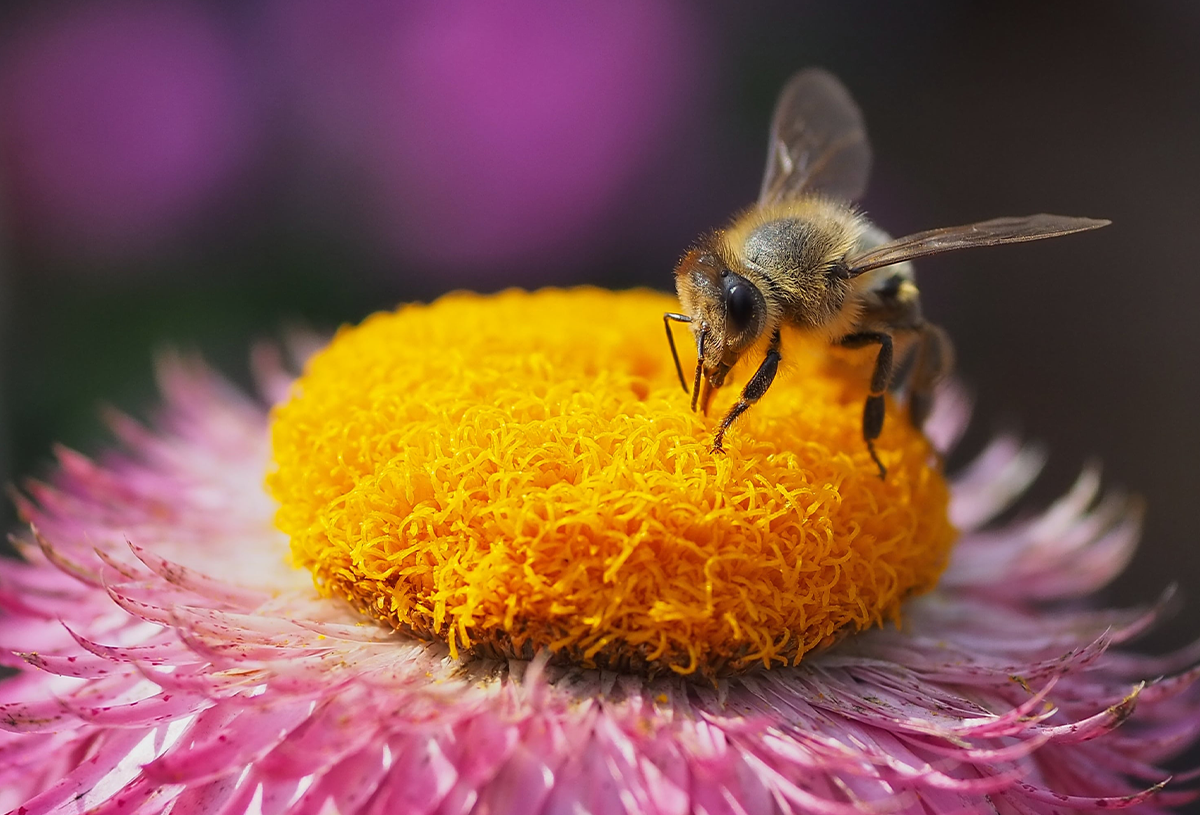
Almost 20 years ago today, beekeepers in the United States (not to mention anyone in the country who liked to eat) were on the brink of a catastrophe. A mysterious illness struck honeybees in the winter of 2006-2007 claiming the lives of 30 to 90 percent of some hives. The humble honeybee, and imported species from Europe, have been employed as essential pollinators of more than 130 food crops—one third of the crops we eat—in the U.S. for generations.
By early 2007, scientists and government officials had sprung into action. And by July, the U.S. Department of Agriculture announced a plan to study and combat the scourge, known as colony collapse disorder (CCD).
“There were enough honeybees to provide pollination for U.S. agriculture this year, but beekeepers could face a serious problem next year and beyond,” the USDA’s under secretary for research, education, and economics, Gals Buchanan said in unveiling the effort. “This action plan provides a coordinated framework to ensure that all of the research that needs to be done is covered in order to get to the bottom of the CCD problem.”
Read more: “How Are the Bees?”
The USDA’s plan included conducting surveys and data collection to gather as much information as possible on CCD, analyzing samples from affected hives to determine the pressures (including pests, pathogens, pesticides, or other factors) they experienced, experimenting potential causes of CCD, and developing approaches to increase the health of bees so that they could more successfully stave off the ruinous effects of CCD.
At this point, researchers were unsure as to the cause of CCD, and had little clues to go on. A hive that was struck by CCD was typically found with no or few adult, worker bees but with immature bees and queens often still present, unattended and doomed.
A constellation of causes for CCD emerged in the ensuing years. Chief among them was the varroa mite, a hive pest and one that can carry an assortment of nasty pathogens into hives. These pathogens include Israeli Acute Paralysis virus and a gut parasite called Nosema. Researchers also identified pesticides that could contribute to CCD as well as stresses induced by the relocation and transport—often by semi-truck—of hives across the agricultural landscape, changing habitats, chronic pesticide exposure, and poor nutrition. All of these stressors may have been contributing to weakened bee immune systems that could have been at a disadvantage to fending off pathogens that paid visits to hives.
Read more: “The Fungal Evangelist Who Would Save the Bees”
Hive losses to CCD have fluctuated since it appeared on the scene in 2006. While the hive losses attributable to CCD dipped to about 31 percent in 2013 according to the U.S. Environmental Protection Agency, that number rose above 40 percent in 2019-2020. In the next few seasons, CCD losses to hives may have topped 50 percent. One nationwide survey reported that commercial operations experienced an average loss of 62 percent of hives between June 2024 and February 2025. But recent, though preliminary, estimates for the 2025-2026 season put the number at 39.9 percent, with Minnesota and Oklahoma being among the hardest hit states.
Suffice it to say, colony collapse disorder is still a looming threat to U.S. beekeepers and agriculture writ large. Despite nearly 20 years of focus by the U.S. federal government and many researchers and managers, the problem has proven to be complex, intractable, and capable of sowing economic, ecological, and commercial havoc.
Enjoying Nautilus? Subscribe to our free newsletter.
Lead image: beasternchen / Pixabay