
Dark Mode Light Mode

Keep Up to Date with the Most Important News

By pressing the Subscribe button, you confirm that you have read and are agreeing to our Privacy Policy and Terms of Use
How To Watch the 2026 FIFA World Cup Semifinals: France vs Spain
The Nautilus Guide to the Best Books on the Science of Art
Join us on a journey where chemistry meets creativity, and the wonders of science unfold. Quench your intellectual thirst with thought-provoking articles that transcend the boundaries of conventional knowledge.

The Nautilus Guide to the Best Books on the Science of Art

The Nautilus Guide to the Best Books on the Science of Art The Nautilus Guide to the Best Books on the Science of Art


In one light, the science of art is strange. When you analyze an experience too much it loses its magic. And experiencing art is one of the great joys of life. Why ruin it? But we are a curious lot, humans, and feeling curiosity, and satisfying it, is also a timeless joy. There’s always so much to know.

Learning about why art moves us, what it stirs in our biological anatomy, especially our brain, the auteur of the show, is fascinating. The best science writing about art is a genuine journey into our unique selves. It allows us to understand why we’re moved by one piece of music over another, why one painting lights up our minds while another just seems cliched.

Every one of these 10 books makes its case for why art makes you feel the way you do. They explain how art lights up your nervous system, memory, culture, and why in human evolution it seemed like a good idea for art to rouse your emotions. Not all these authors agree with one another, and you may find some of their arguments more persuasive than others. But if art is a big part of your life, and you want to investigate why, these are the books to check out.

Inner Vision: An Exploration of Art and the Brain by Semir Zeki

AbeBooks

This 1999 book is the place to start. Zeki, a neurobiologist at University College London, pioneered “neuroaesthetics,” the theory that locates artistic experience in the brain. Artists are like neurologists, he writes, and the function of art is an extension of the function of the brain—“the seeking of knowledge in an ever-changing world.” Zeki exhibits the brain’s visual system at work in a gallery of artists—Vermeer, Cezanne, Picasso, Mondrian—and for your first encounter with neuroaesthetics, it’s all very provocative. Does your experience of art really boil down to brain function?

Vision and Art: The Biology of Seeing by Margaret Livingstone

AbeBooks

Harvard neurophysiologist Livingstone is not much interested in that question. Rather, in this seminal book, she takes you on a detailed tour of the physics of light and the anatomy of the brain’s visual system. She writes about artists to illuminate not aesthetics but how their works (featured in large reproductions) reflect the different properties of color and luminance, visual perspective and dimension. While she’s more scientist than art critic, you emerge from the book with keen new insights into the iconic methods of Leonardo da Vinci, Renoir, Monet, Van Gogh, and Lichtenstein.  

The Art Instinct: Beauty, Pleasure and Human Evolution by Denis Dutton

Bloomsbury Publishing

Let me just quote American philosopher Dutton (he died in 2010) on art being an evolutionary adaptation. Not every evolutionary biologist buys Dutton’s thesis, but he wrote vibrantly, and his book is nothing short of a pleasure to read and ponder: “The evolution of Homo sapiens in the past million years is not just a history of how we came to have acute color vision, a taste for sweets, and an upright gait. It is also a story of how we became a species obsessed with creating artistic experiences with which to amuse, shock, titillate, and enrapture ourselves, from children’s games to the quartets of Beethoven, from firelit caves to the continuous worldwide glow of television screens.”

This Is Your Brain on Music: The Science of a Human Obsession by Daniel Levitin

Penguin Random House

This 2008 book by Levitin, a musician and neuroscientist, alive with personal stories from both the science lab and concert hall, remains the most accessible explanation of why we love music. Levitin shows how various aspects of music—rhythm, timbre, tempo, pitch—spark specific brain regions to construct emotions that feel transcendent and lodge in our memories. Groove, for instance (Prince’s “1999”), involves variations of timing. “Just as the rat has an emotional response to a violation of the rhythm of the branch hitting his house, we have an emotional response to the violation of timing that is groove,” Levitin writes in the kind of anecdote that defines the book. “The rat, with no context for timing violations, experiences it as fear. We know through culture and experience that music is not threatening, and our cognitive system interprets these violations as a source of pleasure and amusement.”

Sweet Anticipation: Music and the Psychology of Expectation by David Huron

Penguin Random House

Violation of expectations, the trigger of emotions, is just the starting point for this exceptional book by the late Canadian arts and humanities professor. Huron takes you on a deep dive into the evolutionary phenomenon of anticipation and surprise, which emerges from a mix of physiology and culture, and guides our decisions. In an uncertain world, Huron writes, like “a grumbling naysayer, nature tends to assume the worst.” So, “it is better to respond to a thousand false alarms than to miss a single genuinely dangerous situation.” Nature’s “knee-jerk pessimism,” he continues, “provides the engine for much of music’s emotional power—including feelings of joy and elation.” Not incidentally, I saw philosopher Daniel Dennett give a talk not long before his death in 2024, and he mentioned that Sweet Anticipation was one of his favorite books.

The Age of Insight: The Quest to Understand the Unconscious in Art, Mind, and Brain, from Vienna 1900 to the Present by Eric Kandel

Penguin Random House

After winning a Nobel Prize in Physiology or Medicine in 2000 for uncovering the electrochemical mechanisms of memory, Kandel began thinking deeply about his own memory. As I wrote in a 2014 profile of Kandel, The Age of Insight details the rise of neuroscience out of Freud and the medical culture in fin de siècle Vienna, and then focuses on Gustav Klimt and his artistic disciples, whose paintings mirrored the age’s brazen ideas about primal desires smoldering beneath conscious control. The book gets inside the artists’ minds and reveals how viewers recreate the artists’ visions with shared brain mechanisms. Our individual lives and memories, though, will always shape our responses, as they have for Kandel, who as a kid escaped the Nazi occupation of Vienna.

The Aesthetic Brain: How We Evolved to Desire Beauty and Enjoy Art by Anjan Chatterjee

Oxford University Press

One of the many wonderful insights in The Aesthetic Brain is the brain mechanisms that evolved for survival things—like eating and dodging predators—over time would power our feelings about things that are not utilitarian, like standing in rapture before a Joan Miro painting. How this aesthetic experience evolved is the main subject of Chatterjee’s book, and as he explained to Nautilus, art is not its sole trigger, “it can be a natural object. It can be a beautiful garden that you’re completely immersed in.” In other words, in our modern lives, we can be nourished by beauty for beauty’s sake.

Patterns in Nature: Why the Natural World Looks the Way It Does by Philip Ball

The University of Chicago Press

Thankfully, Philip Ball, a Nautilus contributor, is here to show us the natural world in all its beauty and explain the laws of physics and chemistry that led to the art all around us, such the hexagons of a honeycomb, the spirals of a seashell, and the branching veins of a leaf. Humans create art out of existential crises. But, well, so does the slime mold Dictyostelium discoideum. Ball informs us that when “these primitive cells find themselves short of nutrients, heat, or moisture, they do a remarkable thing. They become artists. That’s a bit of a fanciful way to put it, perhaps—but there’s no denying that the patterns formed by Dictyostelium cells under stress are beautiful.” Take that, Jackson Pollock.

Proust and the Squid: The Story and Science of the Reading Brain by Maryanne Wolf

HarperCollins Publishers

We were never born to read, psychologist Wolf tells us. It’s again the evolution of the brain, and its shape-shifting nature—discovered in large part by scientists in the 1950s studying the squid to determine how neurons fire and transmit to each other—that ultimately allowed us to get lost in the words and worlds of books. Wolf’s story, equal parts neuroscience and cultural history, is how humans became readers. The magic of reading, which Proust so magnificently demonstrates, is that it takes us out of ourselves, and when this happens, Wolf writes, “we are no longer limited by the confines of our own thinking. Wherever they were set, our original boundaries are challenged, teased, and gradually placed somewhere new. An expanding sense of ‘other’ changes who we are, and, most importantly for children, what we imagine we can be.”

Strange Tools: Art and Human Nature by Alva Noe

Macmillan Publishers

I put Strange Tools last on the list because American philosopher Noe wants you to know that you are not your brain and neuroaesthetics was a bad idea from the get-go. “It’s domesticating and damaging art,” Noe told me in an interview. “Art is revolutionary. It’s the seed. It’s where humans break the molds, which we have created for ourselves.” In the domain of artistic experience, Noe said, “there’s something intellectually bullying about neuroscience. Artworks aren’t triggers, they’re opportunities. Opportunities for bringing the artwork into focus. Opportunities for bringing yourself into focus. Art is an opportunity for conversation, for looking and thinking. That’s where the aesthetic experience is.” In Strange Tools, Noe makes his philosophical case for art as opportunity with evocative examples from Rembrandt to Matisse, Bach to David Bowie. Strange Tools is indeed a tonic counterpoint to the brain chatter.

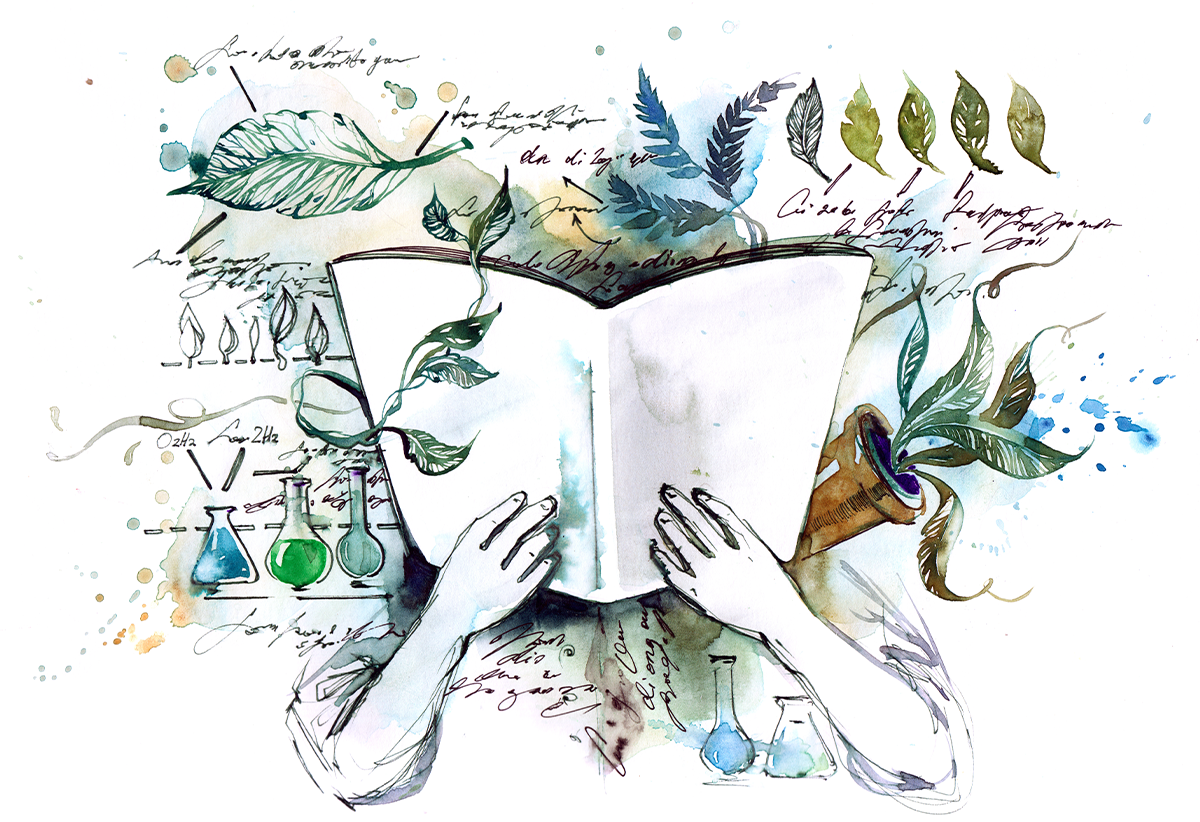
Lead image: okalinichenko / Adobe Stock



Source link

Keep Up to Date with the Most Important News

By pressing the Subscribe button, you confirm that you have read and are agreeing to our Privacy Policy and Terms of Use
Add a comment Add a comment

Leave a Reply

Your email address will not be published. Required fields are marked *

Previous Post
How To Watch the 2026 FIFA World Cup Semifinals: France vs Spain

How To Watch the 2026 FIFA World Cup Semifinals: France vs Spain

Advertisement