

Of all the many forms cancer can take, those that arise in the brain can be among the hardest to treat.
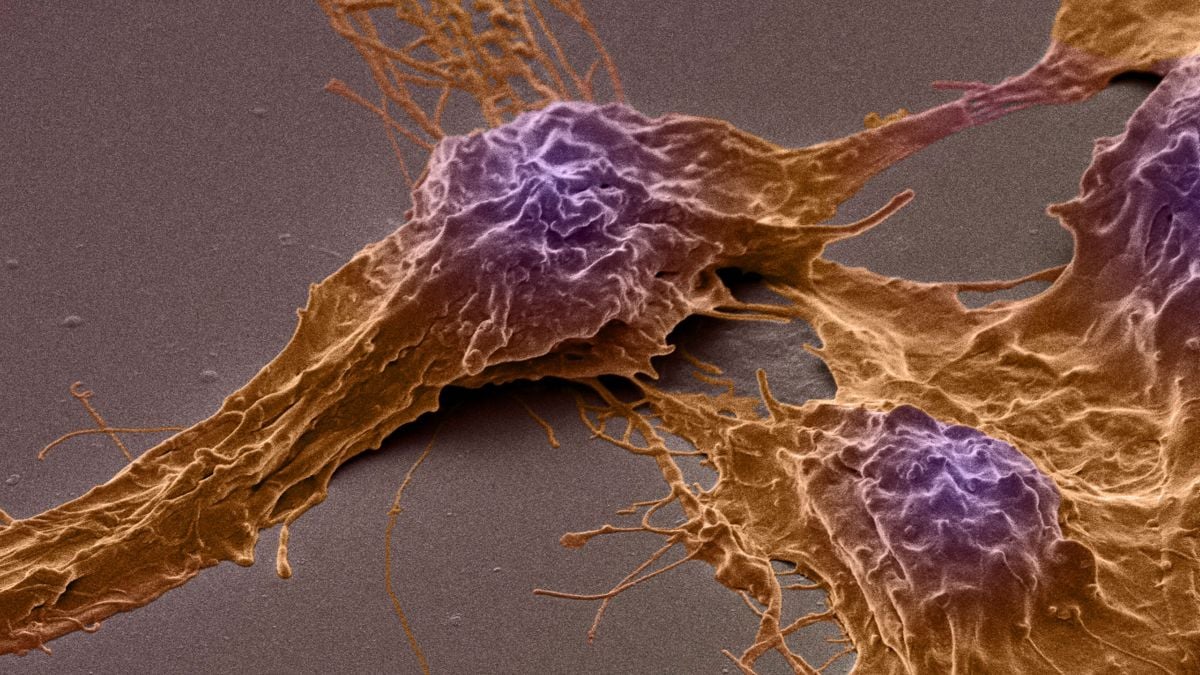
A type of tumor known as glioma is a particularly formidable example. These malignant growths arise from glial cells or their precursors in the brain or spinal cord; the worst form – glioblastoma – has a 5-year survival rate of just 5 to 7 percent.
Part of the reason gliomas are so insidiously difficult to treat is that they actively exploit the brain’s crucial functions to feed their growth.
Now, in a new paper published in Nature Neuroscience, scientists have uncovered one of the mechanisms that makes this exploitation possible. And, they believe, the identification of this mechanism could create new opportunities for treatment.
Glial cells are non-neuronal cells that make up the brain’s support system. They perform a vast range of jobs that support the brain’s neurons, including helping to insulate, protect, and feed them.
One type of glial cell is the oligodendrocyte, which produces the fatty myelin sheath that insulates nerve fibers. These develop from oligodendrocyte precursor cells, or OPCs, that respond to neuronal activity.
Many gliomas are thought to arise from OPCs, and these tumors retain some of the ability of OPCs to respond to neuronal activity. Previous research has shown that active neurons release a protein called neuroligin-3 (NLGN3), which promotes glioma cell proliferation.
Exactly how the glioma cells detect NLGN3 and convert it into a growth signal, however, has remained unclear.
To find out, a team of researchers led by bioengineer Yoon Seok Kim of Stanford University (now at the Swiss Federal Institute of Technology Lausanne) and Stanford neuroscientist Shawn M. Gillespie cultured patient-derived human glioma cells in the lab.
They then used NLGN3 as bait to see which proteins from the membranes of those glioma cells would bind to it.
One protein stood out: chondroitin sulfate proteoglycan 4 (CSPG4), which is abundant on the surface of both OPCs and glioma cells.
When NLGN3 attached to CSPG4, something interesting happened. The glioma cell membrane physically tightened.
That physical change helps trigger what happens inside the cell – because that increase in membrane tension activates an ion channel named PIEZO1. This conversion of physical force into a biological response is known as mechanotransduction.
The resulting ion flow activates signaling within the cell that promotes glioma cell proliferation.
The researchers then tested whether PIEZO1 actually made a difference to glioma growth. Using gene editing, they produced patient-derived glioma cells that lacked PIEZO1, and implanted them into the brains of mice alongside control experiments using otherwise comparable cells with PIEZO1 intact.
Four weeks later, the glioma cells without PIEZO1 were proliferating significantly less than those with the intact channel.
At this point, the researchers wanted to know why the NLGN3-CSPG4-PIEZO1 machinery existed in the first place.
They went back to healthy OPCs and found the same machinery at work there. NLGN3 attaches to CSPG4, which activates PIEZO1, but the signaling inside the cell has a different effect.
Rather than causing OPCs to proliferate, the pathway causes cells to remain immature OPCs – suppressing their maturation into oligodendrocytes. This may help the brain maintain a healthy reserve of OPCs.
To confirm, the researchers then genetically deleted NLGN3 from OPCs in mice – and found that the OPC reserves in their corpus callosum dropped by around 30 percent.

This means that the cancer cells are not inventing their own machinery from scratch. They commandeer and subvert the brain’s normal machinery for their own purposes.
And that gives scientists a potential new vulnerability in glioma to investigate: its dependence on mechanosensitive signaling.
Related: This Common Drug Seems to Fight One of The Deadliest Brain Cancers
However, in a demonstration of why cancer can be so difficult to treat, doing so will need caution. Because healthy brain cells use the machinery too, turning the discovery into a treatment may require finding a way to inhibit the cancer without disrupting the normal OPC population.
“The findings presented here underscore a critical role for an NLGN3-CSPG4-mechanotransduction pathway in the interplay between neuronal activity and glioma progression, advancing understanding of a key mechanistic pathway by which gliomas exploit neuronal signals for growth,” the researchers write.
“The identification of mechanotransduction as an important mediator in this process suggests new therapeutic opportunities, highlighting the potential for targeting mechanosensitive pathways in glioma and possibly in other cancers.”
The findings have been published in Nature Neuroscience.
This article was fact-checked by Peter Dockrill and edited by Peter Dockrill. While we pride ourselves on our process, we are only human. If you spot a mistake, please let us know.