

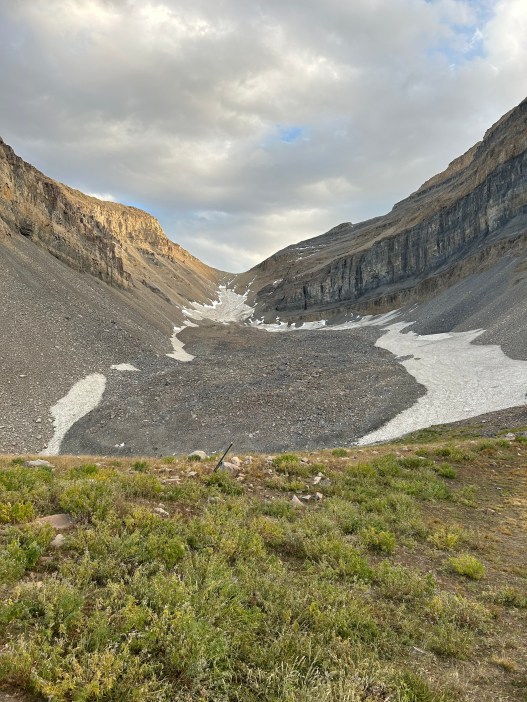
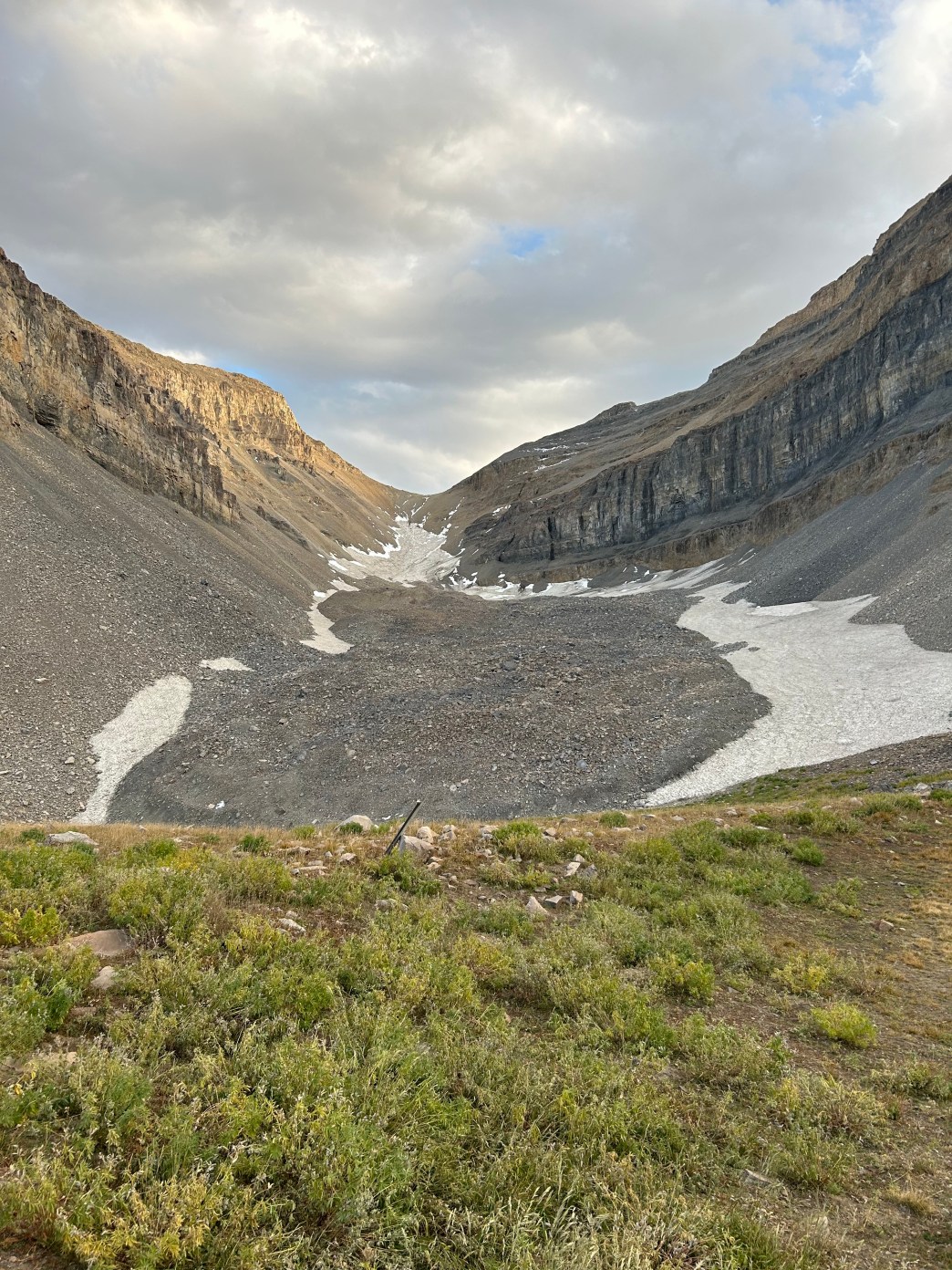
There’s a monster hiding in the mountains of Utah: the Timpanogos Glacier. Unlike most glaciers, visibly sprawled across mountaintops or slowly coursing through valleys, Timpanogos is a bit shy. It’s a rock glacier, or a glacier that’s hidden beneath layers and layers of loose rock that can be tens to hundreds of feet thick.
By some estimates, there are roughly 51,000 of these hidden glaciers spread across the planet (836 in Utah alone), and they’re pretty important. Rock glaciers serve as climate-resilient reservoirs of water as well as vital habitats for alpine wildlife. Unfortunately, because they’re buried, they’re difficult to measure. Now a new study published in the Journal of Geophysical Research is revealing just how much water is hiding there.
To measure the Timpanogos Glacier, a team of geologists led by researchers from Utah University developed a novel technique that relied on detecting gravity. The team carted sensitive equipment across the rocky surface, measuring tiny variations in gravitational acceleration between the ice and rock at over 230 locations in a grid pattern. The differences in gravity were so minute, they had to take into account the positions of the sun and the moon.
Read more: “The Stories Rocks Tell Us”
“There is a large contrast in mass density between the rock that makes up Mount Timpanogos and the much lower density ice that is in the rock glacier adjacent to it,” study author Michale S. Thorne said. “When we measure the gravitational acceleration over the rock glacier, we see a larger decrease in that gravitational acceleration as we make measurements over areas with thicker ice.”
The result was a three-dimensional map. According to the team’s measurements, 17 percent of Timpanogos Glacier is surface rock and the remaining 83 percent is ice, which is a lot. According to their estimates, the glacier contains about 1.5 million cubic meters of frozen water, enough to fill 600 Olympic swimming pools.
But what about the rest of the planet?
The researchers were able to model relationships between the surface area and the ice beneath, and that allowed them to estimate how much water might be hiding in other rock glaciers worldwide. The answer: 48 billion metric tons, or enough to fill 400,000 Olympic swimming pools.
Basically, there are a bunch of oceans hiding in our mountains.
Enjoying Nautilus? Subscribe to our free newsletter.
Lead Image: