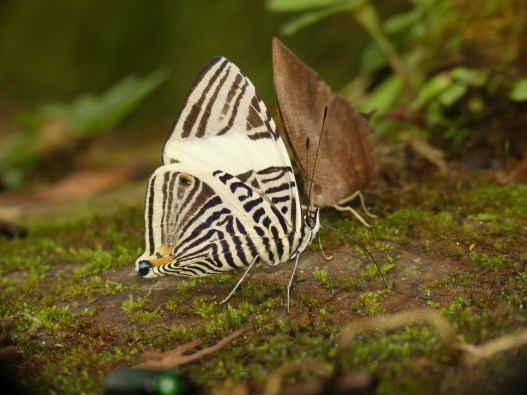


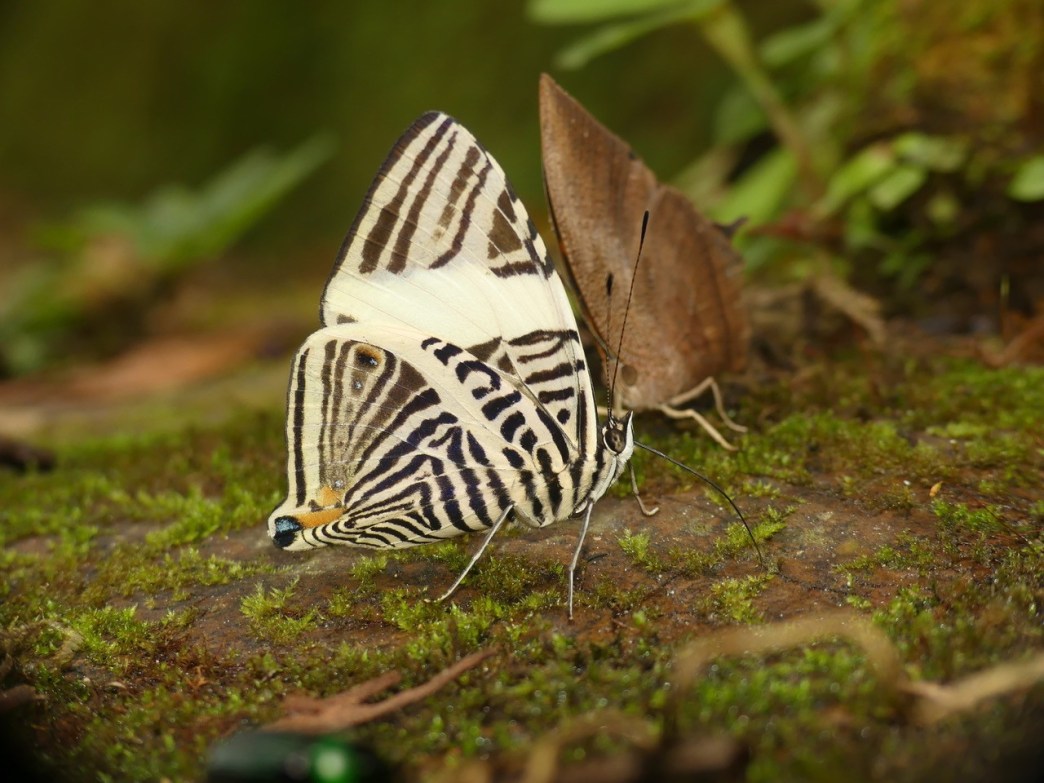
Sometimes discovering a new species is a question of looking a little bit closer at wildlife we already know all about—which is how the Colobura cryptica butterfly has been identified in the tropical rainforests of Central and South America.
Butterflies of the Colobura genus are found all over these areas, and for more than 250 years, C. cryptica has been hiding in plain sight as the Colobura dirce species. In 2001, researchers realized that C. dirce populations actually included a second, distinct species, which was formally named Colobura annulata in 2001. Now, we have a third.
Read more: “What a Massive Butterfly Count Reveals”
It was caterpillars being studied in Venezuela that offered a big clue: They lacked the pale body markings seen on the other two species. As adults, these butterflies are harder to tell apart (what are known as cryptic species), but the differences in the caterpillar patterns prompted researchers to take a fresh look at 670 specimens stored in museums.
Alongside DNA analysis of those collected in the field, as well as careful comparisons of the wings of adults, the third species emerged. “It’s crazy to think about,” study author Anisha Sapkota said in a statement. “These butterflies look almost exactly the same and are found in the exact same place at the same time.”
In adult butterflies, C. cryptica is tricky to spot even for experts. All that tells it apart physically is the uniformity of the width of a gray band along the wing, and how well the wings reflect ultraviolet radiation. As disguises go, it’s pretty effective. The genetic comparisons were definitive though, and so, the new species is official—the end result of some careful caterpillar observations.
Now that researchers are aware of all three species, they can start to look at how their distributions and habits vary across Central and South America. The study authors think that even though there’s a lot of overlap in where these species live, that vertical stratification may have played a role in their isolation and eventual speciation. C. cryptica and C. annulata are usually found in forest canopies, while C. dirce more typically live in the undergrowth.
Another open question is how the butterflies recognize mates of the same species, with such minor physical differences. It’s possible that UV coloration is involved here too. UV-reflecting scales are relatively common across moths and butterflies.
Whatever the case, they’re certainly three of a kind.
Enjoying Nautilus? Subscribe to our free newsletter.
Lead Image: David Geale