

Dark Mode Light Mode
Chemistry, medicine, materials and the technology shaping tomorrow — the best science stories from trusted sources, every day.

Why AI-enabled scientific research is a double-edged sword

Why AI-enabled scientific research is a double-edged sword Why AI-enabled scientific research is a double-edged sword


OpenAI has sparked a backlash in the mathematics community by apparently using AI to solve more than 700 longstanding maths problems in a short space of time. A recent open letter signed by 28 recipients of the Fields Medal (one of the highest honours in maths) goes some way to explaining why.

Mathematicians who have gone through some of the solutions offered by AI say they are opaque in their reasoning. As the open letter explains: “Solving problems is only a tool and proxy for achieving the primary goal of conceptual understanding and insight.”

As famed mathematician and Fields Medal winner Terence Tao put it: “These companies are dumping carcasses of raw meat onto our communal village table and saying: ‘Here you go, I solved your food problem.‘”

OpenAI said it had consulted with the community prior to announcing the latest three results, one of which was in my own field of computer science.

Nevertheless, mathematicians are having to adapt fast to the disruptive arrival of AI in their field. This challenge extends far beyond mathematics and into all other disciplines of science and research.

The impact AI has had on software development through tools such as Claude and Codex, is undeniable. Industry software teams are now routinely using AI tools in their work.

But now, AI is already having a major impact on the practice of science itself. Academic journals and conferences are dealing with exponential increases in submissions from researchers, in a system largely based on volunteer effort for reviewing and editing.
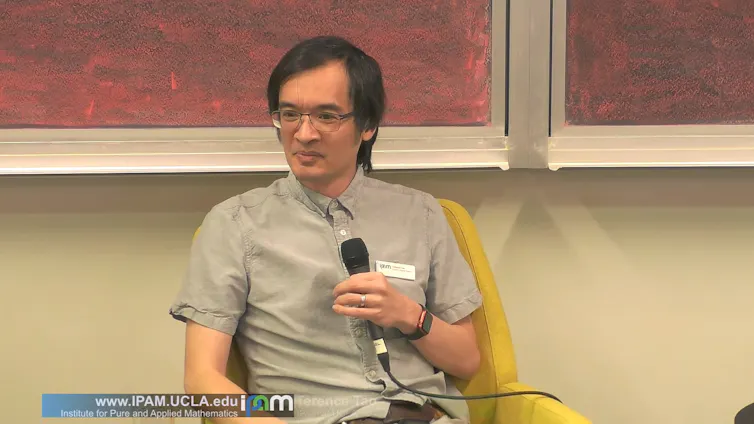
Terence Tao
Terence Tao is among the leading mathematicians who signed an open letter expressing concern about the impact of AI on the field.
Institute for Pure and Applied Mathematics, CC BY-SA

Breaking peer review?

This year, the International Conference on Learning Representations, a leading academic meeting on AI, received 60,000 submissions. This has increased from 490 in 2017. One researcher, commenting on the figures, said: “AI is breaking traditional academic peer review.”

This doesn’t seem to be a special case. In 2024, Mark A Hanson, from the University of Exeter, and colleagues, published a paper titled: “The strain on scientific publishing”. In it, the authors note that the total number of available academic articles has grown exponentially in recent years.

This is in part the result of a decades-long trend, predating modern generative AI, with many factors playing a role – including pressure on researchers to publish large numbers of academic articles, known as “publish or perish”. In 2022, just before ChatGPT launched, the number of papers published was about 47% higher than in 2016. The increase has occurred while the number of practising scientists has seen little growth. But AI is undoubtedly accelerating the process.

Yet this raises questions about whether the current trajectory is sustainable – and whether the quality of science will suffer. One academic conference has been testing whether AI could be part of the solution as well as the problem. This year, the NeurIPS meeting, which focuses on AI and machine learning, introduced a voluntary AI-assisted review for those submitting conference abstracts.

Afterwards, scientists evaluated the quality of the review and how helpful it was. But some in the field believe this could compound current problems.

Protecting critical thinking

Anecdotal evidence suggests some members of the public who are not professional scientists are using AI to produce and submit their own academic papers and write books on science. Citizen scientists make valuable contributions in areas such as biodiversity monitoring and astronomy.

But AI should not be viewed as a substitute for the formal training, daily research work, critical thinking and expert input from colleagues that academia offers. While AI and related technologies are powerful tools for democratising knowledge, it took me 13 years from my PhD to write my first book (the only one I have written so far), whereas now the same can apparently be done in weeks. But, as with peer review and maths proofs, humans have to check and interpret these.

As this story plays through and repeats, we may need to resort to new modes of scientific dissemination to deal with the new methods of creating research.

This brings me to the critical thinking that research requires. Currently, I provide the ideas, but increasingly rely on my AI assistant to do a lot of the work of thinking for me, or at least appear to. But the results of AI-enabled research can be obtuse, as the Terence Tao quote above illustrates, or even plain wrong. They can only be sorted out with human time and domain expertise.

I increasingly wonder what this means for the role of the researcher and for training the future generation of scientists, mathematicians and engineers. I am finding that a challenging, long term student project that would normally take several months to complete is at risk of being able to be almost completely automated through providing judicious prompts to an AI agent.

If I am guiding the student while they provide the prompts to an AI system, what do they learn from the process? And in my own research, where AI enables me to undertake projects I would not otherwise have the resources to, if I am providing the ideas but the AI is doing a lot of the “thinking” for me, am I even doing my own research anymore?

This could have an impact on the future generation’s ability to generate novel research questions, as well as their capacity for critiquing AI’s attempts to answer them.

One of my favourite sci-fi short stories is Profession, by Isaac Asimov. In it, the author imagines a future where young adults are educated by direct upload into their brains using technology known as magnetic tapes – which could be seen as a stand-in for AI. At one point, the main protagonist, George, tries to convince another character that humans can learn in other ways – by reading books, for example.

The other person is baffled, seeing this only as an unnecessary expense. Through the narrative, Asimov reveals the risks in the “direct upload” approach to learning. He also explores what is needed for society to progress when some forms of knowledge can be gained so easily.

We seem to be arriving at the science fiction future I once looked forward to where, like a science officer on a starship exploring unknown corners of the universe, or a billionaire genius tech superhero, I can just provide the ideas while getting the computer to do the heavy lifting. Like others, I am exhilarated by this, but also concerned about what it means for the practice and future of my discipline.


Source link

Previous Post
This One Sleep Factor Matters More Than How Many Hours You Get, Study Suggests

This One Sleep Factor Matters More Than How Many Hours You Get, Study Suggests

Next Post
The US-China AI race is real – but Trump’s recent moves on ‘super intelligence’ are unlikely to give America any advantage

The US-China AI race is real – but Trump’s recent moves on ‘super intelligence’ are unlikely to give America any advantage