

Dark Mode Light Mode

Keep Up to Date with the Most Important News

By pressing the Subscribe button, you confirm that you have read and are agreeing to our Privacy Policy and Terms of Use
Join us on a journey where chemistry meets creativity, and the wonders of science unfold. Quench your intellectual thirst with thought-provoking articles that transcend the boundaries of conventional knowledge.

Why pulses could play a bigger role in healthy and sustainable diets

Why pulses could play a bigger role in healthy and sustainable diets Why pulses could play a bigger role in healthy and sustainable diets


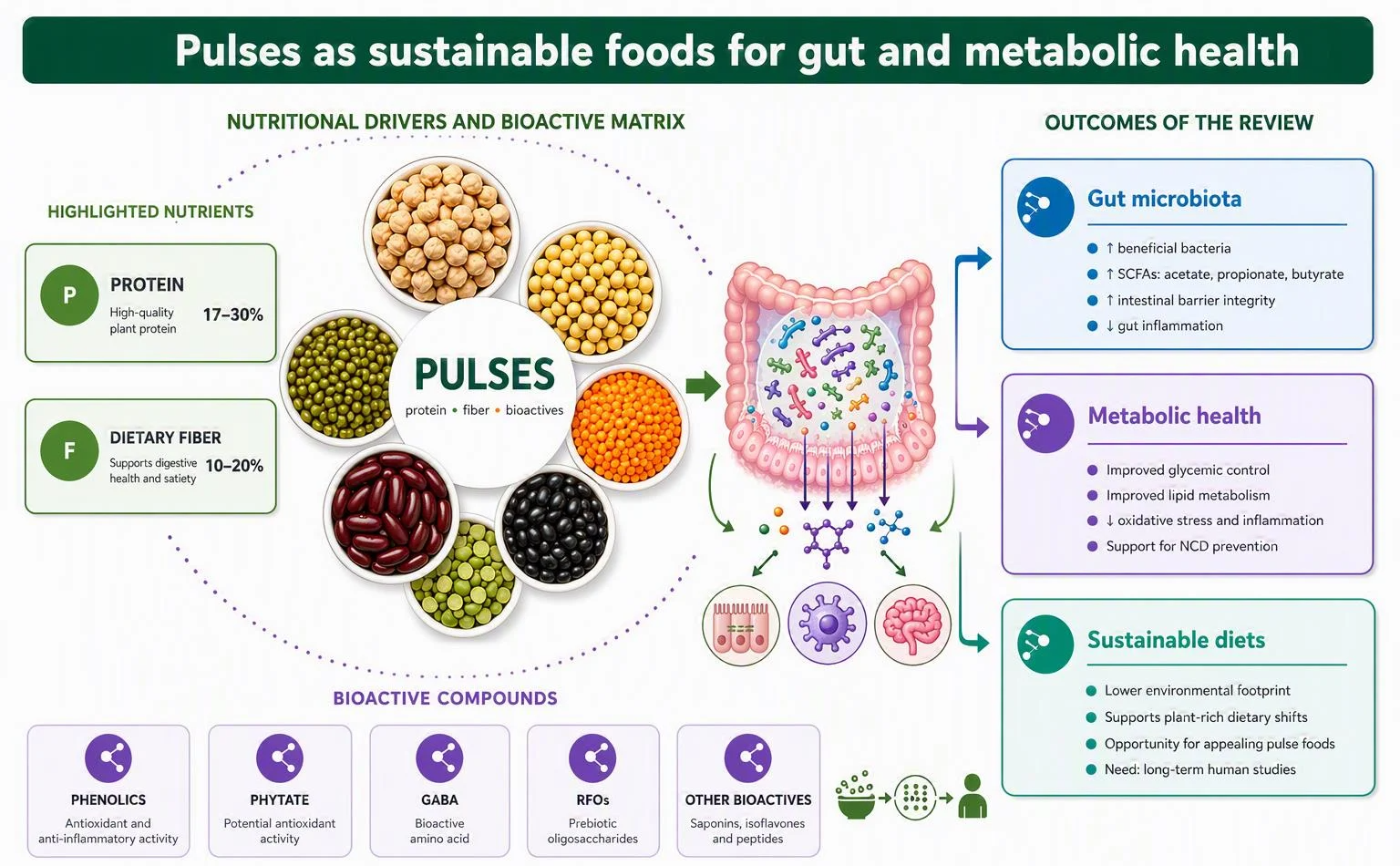
From feeding beneficial gut microbes to improving selected metabolic markers, pulses combine nutrient density with sustainability, but researchers say stronger long-term human trials are still needed to confirm many proposed health mechanisms.

Study: Transitioning Towards Sustainable Diets: Pulses, Their Role in Modulating Gut Microbiota and Metabolic Health

A narrative review published in the journal Nutrients provides a summary of evidence reported over the past 10 years on the role of pulses in supporting a sustainable, healthy diet.

Background

Pulses are the dried edible seeds of legumes such as peas and beans. Traditional diets often depend heavily on pulses, and these are part of the global food chain. Their excellent nutritional composition, with high concentrations of protein, fiber, and multiple plant nutrients, lends them great appeal as sustainable and healthy foods, especially when coupled with their generally lower environmental footprint compared with animal-based protein foods.

Protein is critical for growth and development, as well as the maintenance of physiological functions. However, the sources of protein in the diet vary widely from animal-based foods in many high-income regions, including parts of Europe, to plant-based foods like pulses and cereals in many tropical and low- and middle-income regions. This reflects, in part, the proportion of land available for pasture versus arable land.

Shift to plant-based diets

Currently, environmental consciousness and greater awareness of the health impact of current food production and distribution systems have led to a shift toward plant-rich diets in much of Europe. These diets are generally associated with a lower environmental footprint. They can also provide a broad spectrum of nutrients, micronutrients, and bioactive compounds that provide nutrition and may help prevent chronic disease.

Role of metabolites and antinutrient factors

Some of these effects may be mediated by gut health. For instance, fiber in pulses can modulate the gut microbiota, enhancing its diversity and increasing microbial production of beneficial compounds, such as short-chain fatty acids (SCFAs). These contribute to intestinal epithelial barrier integrity and to the regulation of immune and metabolic function.

Pulses also contain so-called antinutritional factors (ANFs) such as phytates and tannins. These can form complexes with minerals like iron, zinc, and calcium, reducing their bioavailability. However, these compounds may also have antioxidant and anti-inflammatory activity while favorably influencing the gut microbiome, depending on their dose, food matrix, processing, and the individual consuming them.

Traditional processing practices involving soaking, germination, cooking, and fermentation all improve the nutritional profile of these foods by balancing the functional versus less desirable properties of these foods.

Currently, there are numerous highly processed foods made from plant-based ingredients that look and taste like animal-based foods. However, concerns have been raised about their nutritional quality, degree of processing, and environmental impact.

In comparison to such alternatives, pulses are nutrient-dense, sustainable, yet highly functional foods. Yet their consumption remains low in Europe overall. The current review sought to bring together evidence from multiple areas that supports the health-promoting role of pulses.

Consumption patterns

About 96 million tons of pulses were produced worldwide in 2022, for a mean per capita consumption of 20 g/day. This is projected to rise to 125 million tons by 2032, potentially increasing consumption to 25 g per day per capita. However, pulse consumption is high (about 35 g/day) in Latin America, the Caribbean, Sub-Saharan Africa, and South Asia, whereas in Europe it ranges from 1 to 18 g/day.

In contrast, European guidance varies, with recommendations ranging from several servings per week to around 100 g/day.

Nutritional and functional properties

Pulses yield 17-30% protein in contrast to the 7-15% of cereals. They also contain high levels of complex carbohydrates, dietary fiber, minerals, and multiple bioactive compounds, all within a framework that remains shelf-stable for long periods.

Pulse proteins are relatively rich in lysine, which is often limited in cereals. Conversely, pulses contain low levels of sulfur-containing amino acids, such as methionine and cysteine, which are supplied by cereals. Thus, traditional pulse-cereal combinations can provide a more balanced amino acid profile and improve overall dietary protein quality.

With 10-20% dietary fiber, 45-65% complex carbohydrate (mostly starch), and multiple essential micronutrients like vitamin A, vitamin E, and the B vitamins, besides potassium, iron, and zinc, pulses are nutrient-dense foods. They also contain phenolics, anthocyanins, and other bioactive compounds with potential anti-inflammatory and antioxidant effects.
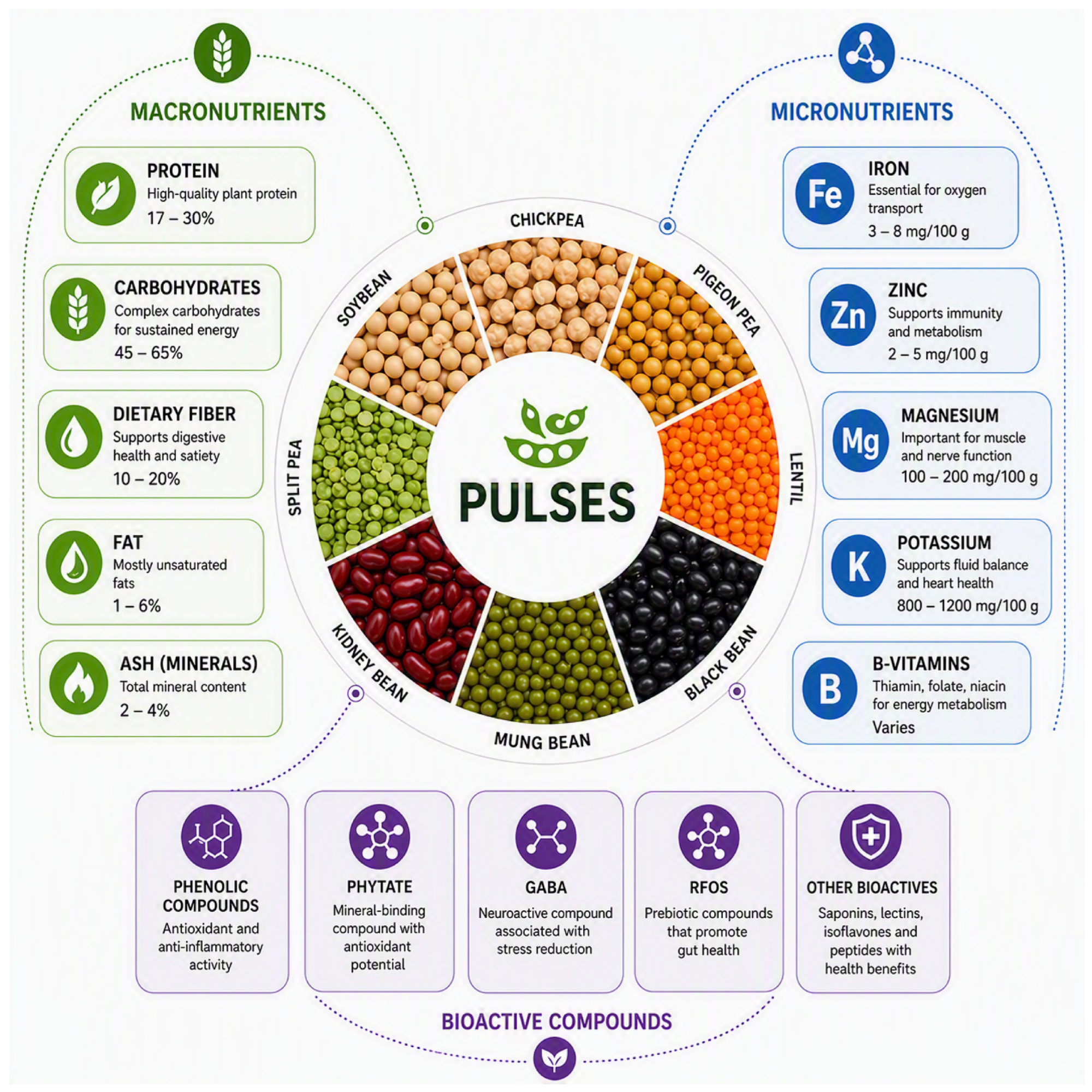
Overview of the major macronutrients, micronutrients, and bioactive compounds present in pulses. Note. Values are approximate ranges (per 100 g).

Overview of the major macronutrients, micronutrients, and bioactive compounds present in pulses. Note. Values are approximate ranges (per 100 g).

Metabolic health and disease risk

Increased pulse consumption has been associated with a lower risk of some non-communicable diseases and favorable metabolic outcomes. Human trials suggest that pulse interventions can improve selected cardiometabolic measures, including blood glucose and lipid levels, although findings vary by pulse type, dose, food format, study duration, population, and background diet. Animal and cell studies have additionally reported effects on weight gain, oxidative stress, bone-related outcomes, and cancer-cell proliferation, but these findings do not establish equivalent benefits in humans.

In vitro studies suggest that germination can enhance the anti-inflammatory properties of pea protein fractions. Faba beans, in particular, may have antidiabetic and antihypertensive effects, though available evidence is largely from preclinical studies.

Effects on the gut microbiota

Dietary fiber and oligosaccharides are among the nutritional components in pulses that can nourish beneficial commensals, such as Bifidobacterium and Lactobacillus species. The presence of these compounds, in combination with phenolics, may synergistically enhance the production of short-chain fatty acids (SCFAs) such as butyrate and propionate.

Butyrate, in particular, provides energy to colonocytes and can support gut barrier function and reduce inflammation. The intact pulse food matrix can delay digestion and may increase delivery of fermentable substrates to the distal colon, potentially supporting sustained SCFA production and downstream signaling that may improve metabolic health. Milling, fractionation, or extraction can disrupt this structure, altering the timing and site of digestion and fermentation.

Some pulse interventions have also reduced potentially harmful protein fermentation metabolites, including indole, in animal studies. Notably, human evidence directly linking whole-pulse consumption to SCFA receptor-mediated metabolic effects remains limited, and future studies are required to establish this. However, current evidence suggests that “pulses improve fasting glucose, HbA1c, LDL cholesterol, and total cholesterol in some contexts, with emerging evidence that these effects are partly mediated by microbiome composition, carbohydrate-active functions, SCFAs, bile acids, and amino-acid metabolites.”

In poultry studies, low-phytate pea varieties demonstrated increased iron bioavailability, perhaps due to their lower phytate content, along with fiber and protein that stimulate beneficial microbes.

Fermentation benefits of pulses

Fermentation is one of the traditional methods of processing pulses that makes use of microbes to digest carbohydrates into organic acids and other metabolites. This can reduce the negative impact of ANFs on mineral and micronutrient absorption.

This can increase the digestibility of proteins, improve the bioavailability of minerals and phytochemicals, such as polyphenols, by releasing them from bound forms, reduce ANFs like phytates, tannins, and protease inhibitors, and generate or increase the concentration of new bioactive compounds with antioxidant and anti-inflammatory activity. It also alters the profile of gut-fermentable carbohydrates, including raffinose-family oligosaccharides (RFOs), which may have prebiotic effects but can also contribute to gastrointestinal discomfort at high intakes.

The outcomes of fermentation depend on the pulse and microbes used, as well as the temperature and duration of fermentation. However, direct evidence of improved health is limited, mostly from animal studies.

These include improved intestinal health, metabolic outcomes (such as reduced visceral fat and serum lipid concentrations), and healthier protein fermentation. In some experimental models, fermentation was associated with increased SCFA production and a rise in beneficial bacteria.

More studies are required to determine the risk-benefit ratio of pulse fermentation and identify processes that preserve appropriate levels of ANFs while enhancing mineral bioavailability and maintaining nutritional quality. The standardization of fermentation processes and appropriate quality control are also essential to maximize the quality of fermented pulses, ensure safety, and clarify their effects on gut and metabolic health.

The adoption of pulses throughout the world faces barriers due to cultural unfamiliarity, a narrow range of products, and the growing popularity of ready-to-eat ultraprocessed plant-based alternatives, despite concerns about the nutritional adequacy of some of these products and their use of additives.

Limitations

The study has several limitations. It did not follow a systematic review protocol and included heterogeneous studies that used different types of pulses processed by different techniques, with varying study designs and study outcomes. This may introduce selection bias and hinder comparability across studies.

The researchers call for multi-omics approaches, well-designed long-term intervention studies, and a clearer policy focus on increasing the use of pulses as part of a healthy, sustainable diet.

Conclusions

The authors show that pulses are not only protein-dense foods, but note that soybean, chickpea, and lupin in particular showed relatively consistent gut-related effects: “across studies, these pulses promoted microbial taxa associated with health benefits, increased SCFA production, microbial modulation, and supported intestinal barrier integrity.” Consuming a variety of pulses may support gut health through these multiple mechanisms, although much of the evidence remains preclinical, and further human studies are needed.

Journal reference:

  • Lazarte, C. E., Rane, R., Hallenius, F., et al. (2026). Transitioning Towards Sustainable Diets: Pulses, Their Role in Modulating Gut Microbiota and Metabolic Health. Nutrients. DOI: 10.3390/nu18152571, https://www.mdpi.com/2072-6643/18/15/2571



Source link

Keep Up to Date with the Most Important News

By pressing the Subscribe button, you confirm that you have read and are agreeing to our Privacy Policy and Terms of Use
Add a comment Add a comment

Leave a Reply

Your email address will not be published. Required fields are marked *

Previous Post
New drug delivers promising survival gains in pancreatic cancer

New drug delivers promising survival gains in pancreatic cancer

Next Post
Simple biological age score flags higher cognitive decline risk in older adults

Simple biological age score flags higher cognitive decline risk in older adults

Advertisement