
Dark Mode Light Mode

Keep Up to Date with the Most Important News

By pressing the Subscribe button, you confirm that you have read and are agreeing to our Privacy Policy and Terms of Use
Join us on a journey where chemistry meets creativity, and the wonders of science unfold. Quench your intellectual thirst with thought-provoking articles that transcend the boundaries of conventional knowledge.

Will wearable technologies transform clinical trials?

Will wearable technologies transform clinical trials? Will wearable technologies transform clinical trials?


Digital wearables are currently used to monitor glucose, but could potentially be used to measure substances such as glutamate and cortisol.Credit: Halfpoint Images/Getty

The year is 2036. Researchers conducting a randomized clinical trial issue 200 volunteers with wearable devices to capture metrics on their heart rate, blood pressure, hormone levels and activity. Doses of a drug to prevent heart failure are personalized to each individual on the basis of the real-time data collected. Artificial-intelligence tools help to select the cohort, clean the data and power interactive virtual health-care assistants that provide participants with a clear explanation of their results.

Technophiles have long predicted a future in which most clinical studies can be done without participants leaving their homes. This vision gained momentum around ten years ago, during a period of sensor-technology improvements and rapid expansion of the market for digital wearables — fitness trackers and smartwatches capable of monitoring physiological data such as heart rate. Researchers increasingly began to use these devices in trials, alongside dedicated remote medical trackers. “If we can empower patients to do trials in their own communities, we can get better data and reduced dropout rates, and achieve cost savings,” says Prachi Desai, a Mumbai-based clinical data management specialist at Quanticate, a contract research organization in Hitchin, UK.
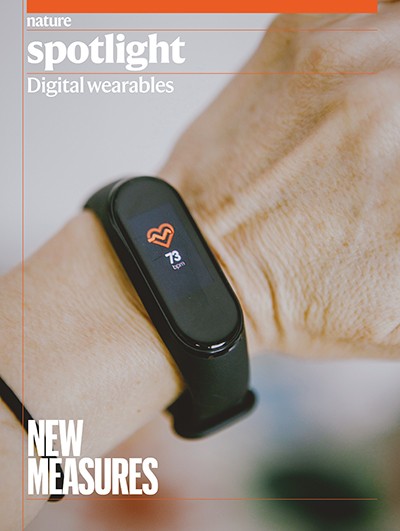
Today, digital wearables include smartwatches, wristbands, rings, chest straps, adhesive patches, head-mounted devices and clothing, all of which contain embedded sensors. Accelerometers and gyroscopes track physical movement. Heart rate, heart rate variability, sleep stages and peripheral blood oxygenation can be assessed through photoplethysmography (PPG), which measures light absorption and reflection by blood vessels near the skin’s surface. Barometric-pressure sensors can provide data on vertical movement and posture, whereas temperature sensors can help to monitor sleep–wake cycles, fever and inflammation, as well as hormonal changes during the menstrual cycle.

Despite the technology’s promise, a decade or so on from this surge of interest, the vision of wearables as a key clinical aid is still some way from becoming a reality. Although their use in trials has increased, it has been a gradual change. When researchers at the Icahn School of Medicine at Mount Sinai in New York City trawled the registry website ClinicalTrials.gov, they found that trials of drugs which involved data collection from wearables rose from fewer than 30 in 2014 to 128 in 20241.

Some sensor-technology researchers expect that their work will expand the ways that wearable devices can be used, and therefore drive greater adoption. Others, however, say that the obstacles to their increased use in trials are not due to their technological capabilities. Instead, they propose that issues centre on measurement and validation, regulatory challenges and ethical concerns surrounding privacy, data security and the expanding role of big tech companies in health care. “I’m an enthusiast for the technology,” says Martin Cowie, a vice-president at biopharmaceutical company AstraZeneca in Cambridge, UK. However, he says that “it’s about a lot more than collecting data”.

Wearable benefits

The adoption of wearable devices in clinical trials has its origins in the use of similar technologies in early telemedicine and remote patient-monitoring. Digital blood-pressure cuffs, which pump air into an inflatable band and display readings on an attached screen, and weighing scales connected to telephones and modems have been in use for decades. Advances in communications and sensor technologies, alongside the wider growth in popularity of personal-data tracking, or ‘self-quantification’, laid the groundwork for a surge in the use of digital wearables in clinical research around 2015.

The types of sensor in wearables define the medical areas in which they are used. A 2025 review of the application of smartwatches in clinical trials found that cardiology saw the greatest device use (28.7%), followed by 21.8% in neurology and 11.5% in oncology2. Cardiology has led the way in part because heart-rate tracking through PPG was included in many early fitness bands and smartwatches, says the study’s lead author Manuel Cossio, an AI engineer at Cytel, a contract research organization in Zurich, Switzerland.

In one study, Dipak Kotecha, a cardiologist at the University of Birmingham, UK, and his colleagues used wrist-worn Fitbit fitness trackers, alongside other methods, to test the effectiveness of heart-rate medications digoxin and bisoprolol (a β-blocker) in people with a heart condition called permanent atrial fibrillation and symptoms of heart failure.

The study found the two drugs were equally effective at controlling heart rate and that physical-activity data from the Fitbit were as good as those from standard clinical tests at predicting heart failure severity3. “This was the first time it’s been shown that digoxin was equivalent to standard care with β-blockers,” says Kotecha. “That couldn’t have been done without the 150 million data points on heart rate collected with the wearable.”

Close-up of forearm and hand with a black blood pressure monitor positioned on the wrist. A second hand is touching the monitor.

Wrist-worn devices can be used to track blood pressure and pulse rate.Credit: Ying Tang/NurPhoto via Getty

Kotecha and his colleagues’ 2024 paper highlighted the ability of wearables to collect around-the-clock data as study participants go about their everyday lives. Continuous data-collection can enable a more natural picture of physiological metrics compared with the brief snapshots available in the unfamiliar environment of a research facility, says Georgia Mitsi, chief executive of Mirawell Health, a medical device start-up firm in Wellesley, Massachusetts.

“Wearables provide the only way to really understand what is happening in patients’ lives throughout the day,” Mitsi says. She has carried out several studies that incorporate wearable technology, including one that used a shirt with embedded sensors to monitor people with the lung condition chronic obstructive pulmonary disease (COPD) overnight4.
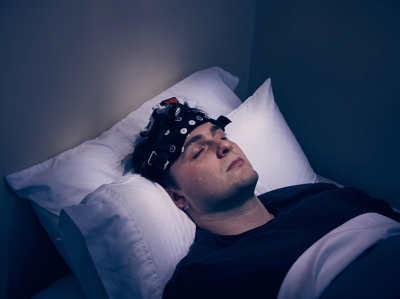
Wearable technology can generate huge, and sometimes challenging, amounts of data. But in some clinical trials, this information can also be life-saving. Desai says that AI tools can be used “to quickly identify data from wearables outside safe limits and generate alerts so patients can receive emergency care”.

Such devices can also enable financial savings and can motivate volunteers to continue participating in studies. The cost of running trials at research centres varies widely according to therapeutic area, location and scale. A 2025 analysis of 101 vaccine and drug intervention trials found that site costs accounted for 34% of overall costs5. With phase III trials costing around US$10 million to run, the use of wearables is likely to provide large savings despite the extra cost of providing devices and teaching participants to use them, researchers say. “One of the most expensive parts of clinical trials is organizing participant visits and follow-ups,” says Kotecha.

Challenges to adoption

Alongside potential benefits, there remain significant obstacles to wider adoption of wearables in clinical research. Mitsi learnt this the hard way while working on a study investigating the use of an anti-seizure drug given in addition to a primary therapy for epilepsy4.

One of the trial’s aims was to evaluate the ability of wrist-worn wearables to detect seizures compared with the standard participant diaries used by physicians to shape treatment plans. An unexpected firmware update at the start of the trial caused the app recording seizure data to crash, requiring devices to be recalled and leaving participants needing individual technical support. “It was a nightmare,” says Mitsi. “It’s already difficult to recruit patients for a trial, and when you get a technical glitch, you can lose them, which is costly.”

Technical simplicity and around-the-clock assistance are not the only important factors. If researchers want to use wearable-device outputs in clinical trials to support the development of treatments, they must overcome challenges set by regulators such as the US Food and Drug Administration (FDA) and the European Medicines Agency (EMA). This includes showing that the devices can accurately and reliably measure physiological parameters, that they are appropriate for target populations and that they support a measurable trial goal — known as a clinical end point — such as decreased pain.

Close-up of the back of a smartwatch, on a plain background.

A device’s sensors define how it is used.Credit: Gado/Getty


Source link

Keep Up to Date with the Most Important News

By pressing the Subscribe button, you confirm that you have read and are agreeing to our Privacy Policy and Terms of Use
Add a comment Add a comment

Leave a Reply

Your email address will not be published. Required fields are marked *

Previous Post
I who have never known trees

I who have never known trees

Next Post
Is it safe to use consumer wearable devices for research?

Is it safe to use consumer wearable devices for research?

Advertisement