


It is highly likely that a preventative cancer treatment, originally targeted at women, is now also protecting men.
The human papillomavirus (HPV) vaccine is the first medicine in the world developed specifically to prevent cancer by targeting a virus.
It was approved by the US Food and Drug Administration in 2006, but at first, it was only given to girls and women.
At the time, scientists hoped the experimental vaccine would block several dangerous strains of HPV from leading to cervical cancer – and it did.
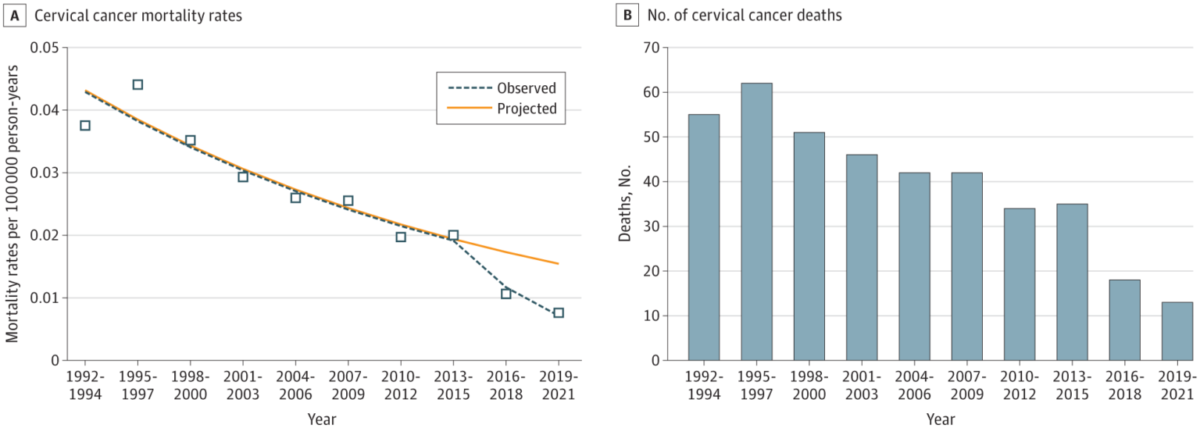
Twenty years after the first jabs were given, cervical cancer deaths among young women have plummeted, and in some nations with high rates of vaccine uptake, cases have dropped by nearly 90 percent.
Elimination is near.
Now, new research provides some of the best evidence yet that men who are vaccinated are getting fewer cancers, too.
An observational study in the US has shown that the HPV vaccine is associated with a nearly 70 percent reduction in head and neck cancers.
These are some of the fastest-rising cancers among men in the US.
Each year, HPV leads to roughly 11,100 cervical cancers, but according to the US Centers for Disease Control and Prevention, this virus also causes 16,000 oropharyngeal cancers.
Roughly 85 percent of those cases are among males.
“HPV vaccination is associated with a substantially lower risk of head and neck cancers – most pronounced for oropharyngeal squamous cell carcinoma and among younger recipients,” conclude the study authors.
“These findings suggest that broad HPV immunization coverage may provide potential public health benefits by reducing the risk of head and neck cancers.”
To be clear, no direct evidence has yet established that the HPV vaccine can prevent head and neck cancers, but the virus plays a key role in some oropharyngeal cancers, and already, the vaccine has worked wonders for cervical cancer rates.
In 2020, given this strong rationale, the US Food and Drug Administration fast-tracked the official expansion of the HPV vaccine to include prevention of head-and-neck cancers in both sexes.
Now, emerging data support that move.
In the recent population analysis, researchers from China analyzed the health data of 1.4 million people in the US, aged 9 to 45.
Among more than 700,000 individuals vaccinated for HPV, they identified 40 cases of head and neck cancers.
Whereas among an age-matched cohort not vaccinated for HPV, there were 130 cancer cases.
That’s a difference of nearly 70 percent.
Longer and larger observational studies are needed to see if those associations last, but for at least a decade after vaccination, the HPV vaccine seems to help prevent cancer.
HPV is highly infectious, and while almost everybody encounters the virus at some point without serious consequences, some strains are more dangerous than others.
The high-risk ones can be transmitted through sexual contact, infecting the cervix, vagina, vulva, and penis, and they can also infect the throat and tonsils, most clearly through oral sex and possibly kissing.
In a minority of people, the virus can lie dormant in cells for years, gradually disrupting growth.
Decades later, some of those infected cells may become cancerous.
 frameborder=”0″ allow=”accelerometer; autoplay; clipboard-write; encrypted-media; gyroscope; picture-in-picture; web-share” referrerpolicy=”strict-origin-when-cross-origin” allowfullscreen>
Unlike HPV-associated cervical cancer, scientists don’t have a test like a Pap smear to screen for precancerous entities in the head and neck.
That makes vaccine coverage all the more important.
In the US specifically, the HPV vaccine is now recommended for all young people up to age 26 to help prevent deadly cancers.
In 2024, 77 percent of adolescent males and 79 percent of adolescent females had received at least one jab.
Yet many people still do not realize what the HPV vaccine can do for their cancer risk.
A survey study in 2025 found that more than a third of US adults are unfamiliar with HPV, and more than 70 percent were unaware it could cause oral cancers.
“Something I’d never heard of almost killed me,” a male patient who survived HPV-related throat cancer recently told CIDRAP, the Center for Infectious Disease Research and Policy at the University of Minnesota.
“I made damn sure that all of my nieces and nephews know about the vaccine,” he added.
“Who in the world wouldn’t want to do everything they possibly can not to get cancer? There are certain things you have no control over. This one you do.”

While some nations, like the US, the UK, and Australia, have expanded coverage to include both males and females, many have not.
At a global level, the focus of HPV vaccination coverage is still largely on one sex.
The World Health Organization’s current target is to have 90 percent of young girls fully vaccinated against HPV worldwide by age 15.
But the organization doesn’t set a similar threshold for both genders; instead, it classifies boys as “secondary targets”, “where feasible and affordable”.
Related: Cancer Threat From Oral HPV Is a Lifelong Risk, But Can Be Prevented
A global campaign led by advocacy groups is urging the WHO to change its policy to be gender-neutral.
“From an epidemiological perspective, when both males and females are at risk of HPV, it is illogical to immunize girls alone,” reads the site for End HPV Global.
“We have the means to protect everyone – whatever their sex or gender – from high-risk HPV infections and the cancers they cause.”
HPV has grown synonymous with cervical cancer, but that just brushes the surface of what this virus is capable of.
The study is published in The International Journal of Infectious Diseases.
This article was fact-checked by Clare Watson and edited by Clare Watson. While we pride ourselves on our process, we are only human. If you spot a mistake, please let us know.