






Cold fusion: Now there’s an idea I hadn’t thought about in a while. It came back onto my radar in spring 2026. I had written an article on how scientists tend to be risk averse, and Huw Price, a philosopher at Trinity College at the University of Cambridge, responded to it on Bluesky, citing a paper he’d recently co-authored on attitudes toward cold fusion. He thinks scientists have been overly dismissive not only of cold fusion, but also of the claim that they have been overly dismissive of cold fusion. As if to prove his point, a journal had just rejected his paper. I’ve long admired Price’s work on the nature of time and causation, so I was intrigued.
When the cold-fusion controversy erupted in 1989, I was in the middle of backpacking off the grid for six months. (You could do that back then.) By the time I caught up on the news, it was over. In March, two chemists had called a press conference to announce a simple tabletop experiment that released too much energy to be a mere chemical reaction. They said it had to be nuclear: hydrogen nuclei fusing to form helium. It promised limitless clean, cheap power. Physicists were stunned. That sort of thing wasn’t supposed to be possible under such pedestrian conditions. Politicians proclaimed the end of all our energy woes. But then labs across the globe tried to replicate the experiment and couldn’t, and an almighty takedown ensued. The whole thing only lasted a few months. Not having experienced the episode in real time, and being a contrarian by nature, I initially sympathized with the plucky maverick scientists. But then I read about their rookie mistakes, their fudging of a crucial graph, and their threats of lawsuits against skeptics. Experiments that initially corroborated the results were retracted, in one case amid indications of deliberate spiking with fake fusion products.
Although cold fusion was a pathological case, fusion in general has been a graveyard of dreams. I grew up on the dream it evoked. Whether it occurs at room temperature, as it was supposed to have done in the cold-fusion episode, or at center-of-the-sun temperatures, as in conventional thermonuclear reactors (and bombs), fusion doesn’t require strip-mining (and disposing of) uranium or escorting oil tankers through the Strait of Hormuz. All you would need, ideally, is a bit of seawater. Fascinated, I once built a “fusor” in my basement based on an article in Make magazine. Fusors are real, the one legitimate tabletop fusion technology. In them, a high voltage creates a hot plasma that smashes nuclei together. My unit didn’t achieve fusion, but with work it could have, although it would have produced negligible power. I loved showing guests its glowing purple plasma, but the more I learned about fusion, the more a sense of disillusionment grew in me. A couple of years later, a friend at a private fusion company gave me a tour of an actual experimental fusion reactor. It was complex and costly. So much for cheap. It produced intense, deadly neutron radiation. So much for clean. And it required tritium fuel, which does not occur naturally and has to be manufactured. So much for just a bit of seawater.
So how did a nice philosopher like Price get mixed up in a business like this? Over Zoom, he explained that his interest dates to 2011, when he and other luminaries were hatching the idea for the Center for the Study of Existential Risk. This research group frets over nuclear winter, engineered bioweapons, massive volcanic eruptions, and artificial intelligence takeover — it rang that alarm bell long before it became fashionable. Price told me he saw parallels between doomsday scenarios and cold fusion. They may seem improbable, and studying them is a lonely or even fringe activity, yet the consequences are huge, so we should give more weight to them than might strictly seem warranted.
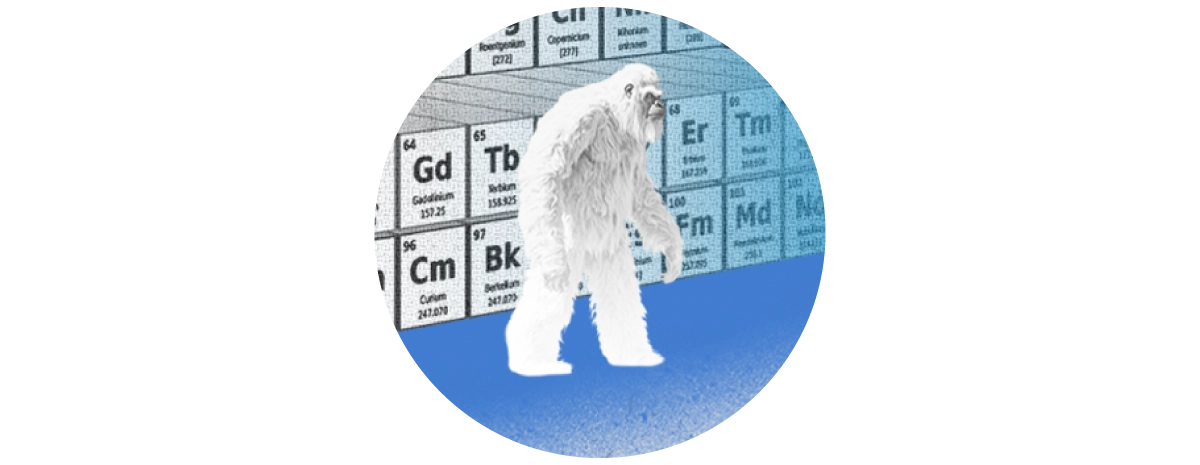
I’m all for open-mindedness, but Price’s argument troubled me. There must be a thousand other anomalous phenomena that are as likely to be real as cold fusion and, if they are, to transform the world. Why focus on this one? The only reason we are talking about cold fusion at all is that we were lied to in 1989. The initial mistruth created a kind of psychological anchoring effect, causing us to entertain a possibility that we otherwise wouldn’t have. It is as if I said I saw Bigfoot in my backyard, then confessed I hadn’t, but people started holding annual cryptozoological conferences nearby anyway. I found it jarring that a deception could conjure an entire academic research program. How is this any different from the antivax movement, which also started with data that turned out to be faked and should have just packed up once that became known?
But having started down this rabbit hole, I figured I might as well keep going. Price suggested I talk to Matt Trevithick.

Trevithick is a co-founder of Leitmotif, a venture capital firm in Palo Alto. I don’t normally speak to venture capitalists, but I quickly saw that his approach aligns with Price’s. Trevithick wants to usher in the fusion age and supports a range of technologies that might make it happen. In our conversation, he also had a very Silicon Valley tendency to keep addressing me by name.
A decade ago, while working at Google, Trevithick organized a project to reevaluate cold fusion, culminating in a Nature paper in 2019. It didn’t find any unexpected nuclear reactions or other anomalies, but that wasn’t the only goal. Trevithick said the 1989 debacle had cast a pall over certain research topics that perhaps shouldn’t be so easily dismissed. For instance, cold fusioneers used the element palladium in their experiments, and it has a wondrous ability to absorb hydrogen like a sponge, an ability that is no less wondrous for its association with a scientific wild goose chase. Trevithick sought to lift this taboo, and he said the project ultimately produced 28 academic papers on hydrogenated metals and other phenomena. “George,” he said. “We destigmatized a field.”
So I went through the references in the Nature paper and looked up topics I might not have given a second thought to before. The one that captivated me was muon-catalyzed fusion. I recognized it as the original meaning of the term “cold fusion” before it was co-opted by the 1989 studies. As I unpacked what it meant, I discovered a lively research program within physics that creates exotic breeds of atoms and molecules, sometimes to try to fuse them together, but more broadly to search for new fundamental laws of nature.
Still wary of the dubious reputation of cold fusion, I reached out to physicists I trusted to learn more. One was Cătălina Curceanu of the Italian National Institute for Nuclear Physics near Rome. I had visited her three years before to see her experiments testing the foundations of quantum mechanics. She gently reminded me that she had told me about exotic atoms back then, too. I guess I was so focused on her other work that I failed to follow up. “It’s a whole world to discover,” she said. “Sometimes I call them ‘genetically modified atoms,’ but I stopped doing that because, you know.”
The core idea that builds to muon-catalyzed fusion is simple. Ordinary atoms consist of a positively charged nucleus orbited by negatively charged electrons. But there’s no reason they have to be electrons. Other negatively charged particles serve just as well. In the Standard Model of particle physics, the electron has a sibling called the muon that can stand in for it. Physicists have also swapped in particles from other families, such as kaons, pions, and Xi baryons. They have even created hybrids of matter and antimatter, in which a nucleus containing protons is orbited by negatively charged antiprotons. In short, you can have regular hydrogen, muonic hydrogen, kaonic hydrogen, antiprotonic hydrogen, and so on.
“That’s like a new periodic table,” said Daniel Swetz, an experimental physicist at the National Institute of Standards and Technology in Boulder, Colorado, who builds ultraprecise detectors to measure radiation emitted by these exotic atoms. “You’re almost building it out in the third dimension.”
The main difference in these exotic atoms is that the electron substitutes are much heavier. A muon is 207 times as massive as an electron; an antiproton, 1,800 times. According to quantum mechanics, every object is ultimately wavelike, and the greater its mass, the shorter its wavelength. Consequently, a muonic atom is as much as 207 times smaller than its vanilla counterpart, depending on the chemical isotope; an antiprotonic atom, as much as 1,800 times smaller. When physicists want to get across the scale of atoms, they often compare the nucleus to a marble and the whole atom to a football stadium around that marble. With antiprotonic atoms, however, the atom is not a football stadium, but just a football.
“The whole system is collapsed down,” said Nancy Paul, a physicist at the Kastler Brossel Laboratory in Paris. She is exploring using even heavier negatively charged particles to shrink atoms still further. “It’s so rare in physics, especially nowadays, where you get something where nothing has been done.”
Shrinking atoms intensifies the electric field within them. According to Coulomb’s law, which is the electric counterpart of Newton’s law of gravity, the electric field strengthens as the inverse square of distance. For a kaonic or antiprotonic atom, then, it scales up a millionfold. That provides a stress test of a central pillar of modern physics, quantum electrodynamics (QED), or how electromagnetism behaves at the quantum level. “It is the strongest Coulomb field that you can create in the lab to probe QED,” Paul said.
In fact, it breaches the so-called Schwinger limit, the threshold at which quantum effects go berserk and empty space becomes unstable. Particles begin to materialize spontaneously out of nothingness. “You’re boiling the vacuum with the stronger field,” she said. Physicists predicted this particle effervescence in the 1930s and have yet to observe it directly, but they have discerned a closely related phenomenon using exotic atoms. In spring 2026, Curceanu and her colleagues did so using kaonic fluorine that was experiencing an electric field above the Schwinger limit.
Shrunken atoms open a window into other aspects of fundamental physics, too. The muons, kaons, or other electron substitutes orbit the atomic nucleus so tightly that they become sensitive to its interior structure. This was how the radius of the proton was measured in 2019. Like a miniature planet, the nucleus can be layered, with an outer crust or “skin” of neutrons. “You have a really beautiful microscope of seeing what’s happening at these neutron skins,” Paul said. Shrunken atoms might allow researchers to pick up on wholly new physics, such as deviations from Newtonian gravity or the existence of particles beyond the Standard Model. “We are looking into unknown physics at the extreme precision limit,” Curceanu said. “It’s complementary to extreme high energy.”
Even creating these atoms inverts the intuitions of particle physics. CERN’s flagship instrument, the Large Hadron Collider, revs up particles almost to light speed to initiate those high-energy interactions. Paul’s team instead relies on a lesser-known machine called the Antiproton Decelerator that slows particles to a crawl, so that they become able to infiltrate atoms instead of blasting them apart. In some ways, it’s a harder job. “Acceleration is easier than deceleration,” said Lars Jørgensen, an experimentalist at CERN who helped to develop the decelerator.
It took him an hour to walk me through the stages of the process. The system creates antiprotons and gradually bleeds off their energy. Some stages act on entire clumps of particles to slow them down, while others act within a clump to keep it from spreading out. One technique is to flood the chamber with electrons, which cool the antiprotons like so many ice cubes. Magnetic fields and an extreme vacuum — so extreme that no pressure gauge can measure it — ensure that the antiprotons don’t prematurely encounter ordinary protons, which would annihilate both. In 2021, CERN began operating the Extra Low Energy Antiproton ring, or ELENA, to do the final braking. Creating and slowing other electron surrogates such as muons is easier because they don’t pose the annihilation challenge.
At that point, inserting these particles into atoms is easy. Atoms are surprisingly klutzy when it comes to their electrons. They are apt to lose them for all sorts of reasons, and exotic-atom formation exploits this tendency, with the novelty that the lost electron is replaced with an incoming particle. If the atom was originally in its lowest possible energy state, the new arrival immediately defines a new set of energy levels, like a fire-escape ladder that suddenly descends. The atom drops through the newly established energy levels. In the process it ejects all its remaining electrons and emits a series of X-rays.
The atom eventually stabilizes again, but not for long. In an antiprotonic atom, the antiproton reaches such a tight orbit that it touches the nucleus and annihilates. In other types of exotic atoms, the electron substitute quickly decays. Muons last a mere 2 microseconds, and other species are even more fleeting. But during these truncated lifespans, exotic atoms can even form short-lived molecules.
I heard about them from Shinji Okada, a physicist at Chubu University in Japan. In spring 2026, his team used Swetz’s detectors and the Japan Proton Accelerator Research Complex to measure the structure of muonic hydrogen molecules, with the hydrogen taking the form of the isotope deuterium — the first direct measurement of X-rays emitted by such molecules. When they were smashed into molecules consisting of two ordinary hydrogen atoms, the muonic atoms implanted themselves within those molecules and assimilated one of their hydrogens. This created what Okada called a “matryoshka molecule” — an exotic molecule embedded inside a larger ordinary molecule.
And this brings us back to the idea that got me started: muon-catalyzed fusion. In other experiments, when the exotic molecule reaches its final configuration, it is so compact that the two hydrogens fuse almost instantly. This process happens at room temperature, so in that sense it is “cold,” but otherwise it’s very different from the 1989 experiment — not least because it really does happen. The muon is typically ejected, freeing it to create a new exotic atom and restart the cycle; thus, the muon is acting as a catalyst, a nuclear matchmaker. If it could repeat the trick 300 times or more, the process would produce more energy than it consumed. Most physicists doubt it could reach 300, but Okada said he and his team don’t entirely rule it out. Still, the particles released by the fusion reactions could be harvested to synthesize medical isotopes or process nuclear waste from fission reactors. “Even without reaching energy breakeven, muon-catalyzed fusion could be useful,” Okada said.
And that’s important because, although physicists first observed muon-catalyzed fusion in the 1950s, few studied it, deeming it a mere curiosity. What good could it be if it couldn’t generate energy? The main development of recent years has not been a breakthrough on muon recycling but a realization that we don’t need any such breakthrough.
I think that carries a general lesson for evaluating developments in science. What makes headlines — Abundant energy! Humanity saved! — isn’t what you should focus on. Instead, ask: Will this research program be interesting, even if the main claim falls short? Is it an all-or-nothing gamble on a single result, or a portal into a wider area of science?
Cold fusion, as presented to the world in 1989, failed this test. Those two chemists never articulated why their experiment might be interesting even if it didn’t herald energy salvation. That task fell to Trevithick 30 years later, when his project showed that a cold-fusion type of experiment, if pursued on its own merits, could reveal fascinating material properties.
Muon-catalyzed fusion passes the test, because exotic atoms and molecules enrich our view of the universe even if they never produce a watt of electricity. The scientists I spoke to were clearly not driven by any expectation of fame and fortune, but rather by curiosity and wonder. “Isn’t that remarkable?” Okada told me. “Atomic, molecular, and nuclear physics all come together in a single reaction cycle. That interplay is what has captivated me.”