

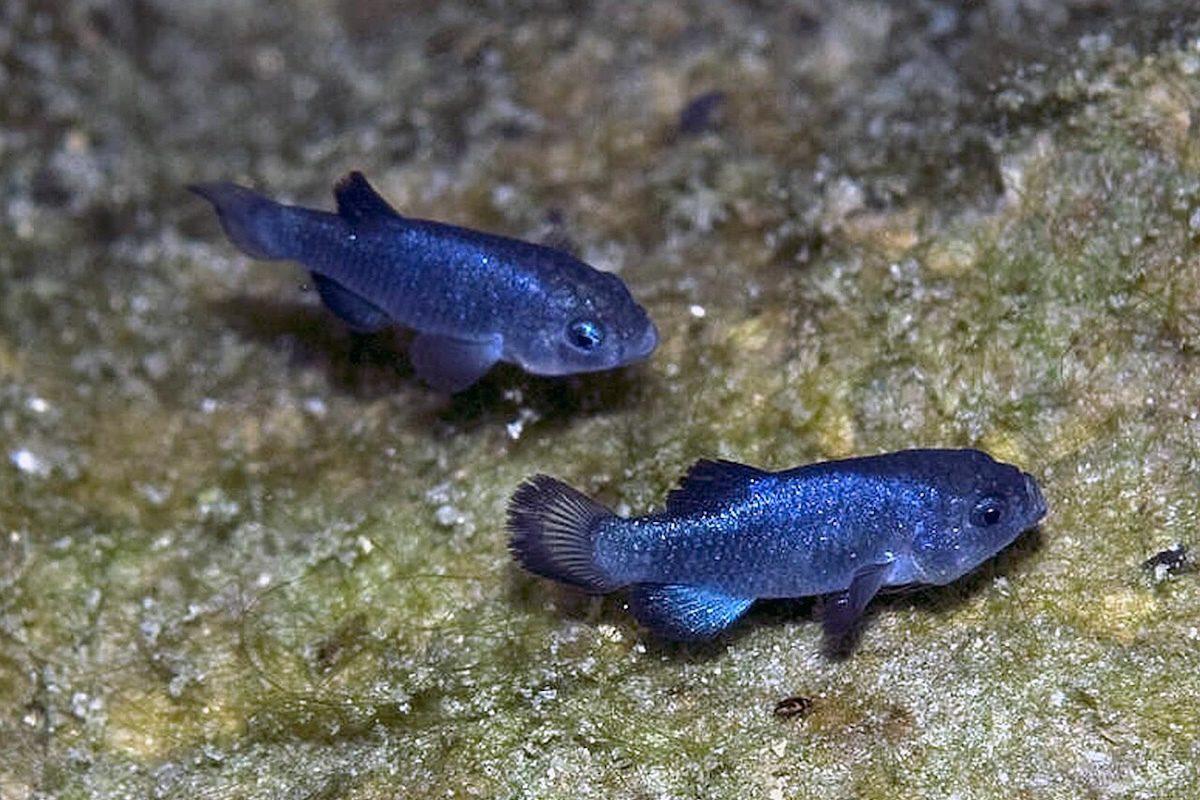
Death Valley, California, a sprawling desert and one of the hottest places on Earth, is an unlikely home for a fish. And yet in a water-filled cavern that extends deep underground, the Devils Hole pupfish is not only surviving, but growing in number.
The two-inch-long fluorescent blue pupfish are among the rarest fish on Earth and are classified as endangered because they are highly vulnerable to disturbance. The fish have been threatened by the overpumping of groundwater at nearby farms, which has lowered water levels inside Devils Hole, part of a limestone cavern that is more than 500 feet deep. They have also been imperiled by distant earthquakes that generate waves inside the cavern, dislodging algae that pupfish feed on. Reverberations from earthquakes in 2024 and 2025 reduced their population to fewer than 40 individuals.
Conservationists have sought to boost the ranks of the pupfish by introducing captive-raised fish. They have also provided the fish with supplemental feed made of mysid shrimp, water fleas, and blood worms. Their efforts are paying off.
In a survey conducted in the spring, scuba divers plumbed Devils Hole to tally pupfish. Working with researchers at the surface, they counted 77 fish. In the latest survey, undertaken last month, they counted 137, nearly double the earlier total.
Why are there fish in the desert in the first place? Some researchers speculate that the fish were carried to the cavern on rivers and lakes that converged in Death Valley during a wet period. Others think the fish were brought there by birds or humans.
ALSO ON YALE E360
What Is Driving the Global Resurgence of Mangrove Forests?