-Feature-CPG--Tears-as-the-next-generation-of-diagnostics-and-monitoring---439100-1:Widescreen?$responsive$&qlt=90,0&resMode=sharp2&fmt=webp&op_sharpen=1 "Our tears can help diagnose cancer, Parkinson’s, and Alzheimer’s")


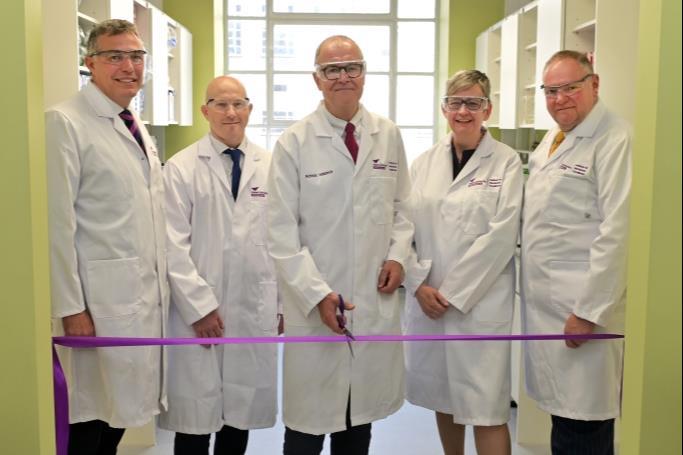
Aston University has officially opened a new research facility focused on developing and studying membranes, for applications such as water purification and drug discovery. Officials hope that the lab’s open-plan design will help foster collaboration between scientists and accelerate scientific discovery.
In 2024, Aston received £10 million in funding from Research England to establish the new facility, known as the Aston Institute for Membrane Excellence (Aime). After two years of construction, the UK’s minister for science, Patrick Vallance, has now officially opened the £6.1 million laboratory. Aime will house around 60 scientists, including PhD students, postdoctoral researchers and technicians.
Research will focus on designing and studying the properties of biological and synthetic membranes, including those involved in disease, waste remediation and purifying water. For example, biochemist Alice Rothnie is developing techniques to extract cell membrane proteins without damaging their structure, which could help scientists better understand how drugs work.
Vallance noted that the Aime Laboratory is an important moment ‘for the research expertise based here in Birmingham and for the wider UK science community – helping drive growth and delivering the innovations that will improve lives’.
The opening of the lab comes one year after Aston stopped admitting chemistry undergraduate students owing to financial struggles and ‘changes in educational focus and alignment’.
Directors of the new facility, Roslyn Bill and Paul Topham, think that Aime will ‘transform’ the way that science is carried out. ‘By bringing together researchers from across biology, chemistry, physics and engineering in a purpose-designed environment, we have created the conditions for ideas to be exchanged more freely, collaborations to develop more naturally and discoveries to be translated more rapidly into real-world impact.’ In the eyes of Bill and Topham, ‘the laboratory itself is an active partner in the research it enables’.





.jpg "Influencers Are Promoting Straws They Claim Will Protect Against Electromagnetic Radiation")