Dark Mode Light Mode

Keep Up to Date with the Most Important News

By pressing the Subscribe button, you confirm that you have read and are agreeing to our Privacy Policy and Terms of Use
Join us on a journey where chemistry meets creativity, and the wonders of science unfold. Quench your intellectual thirst with thought-provoking articles that transcend the boundaries of conventional knowledge.

Blood p-tau217 levels signal cognitive impairment risk years before symptoms emerge

Blood p-tau217 levels signal cognitive impairment risk years before symptoms emerge Blood p-tau217 levels signal cognitive impairment risk years before symptoms emerge


A six-cohort analysis links higher baseline p-tau217 to rising 5- and 10-year risks, bringing presymptomatic risk models closer while showing why routine screening is not yet ready.

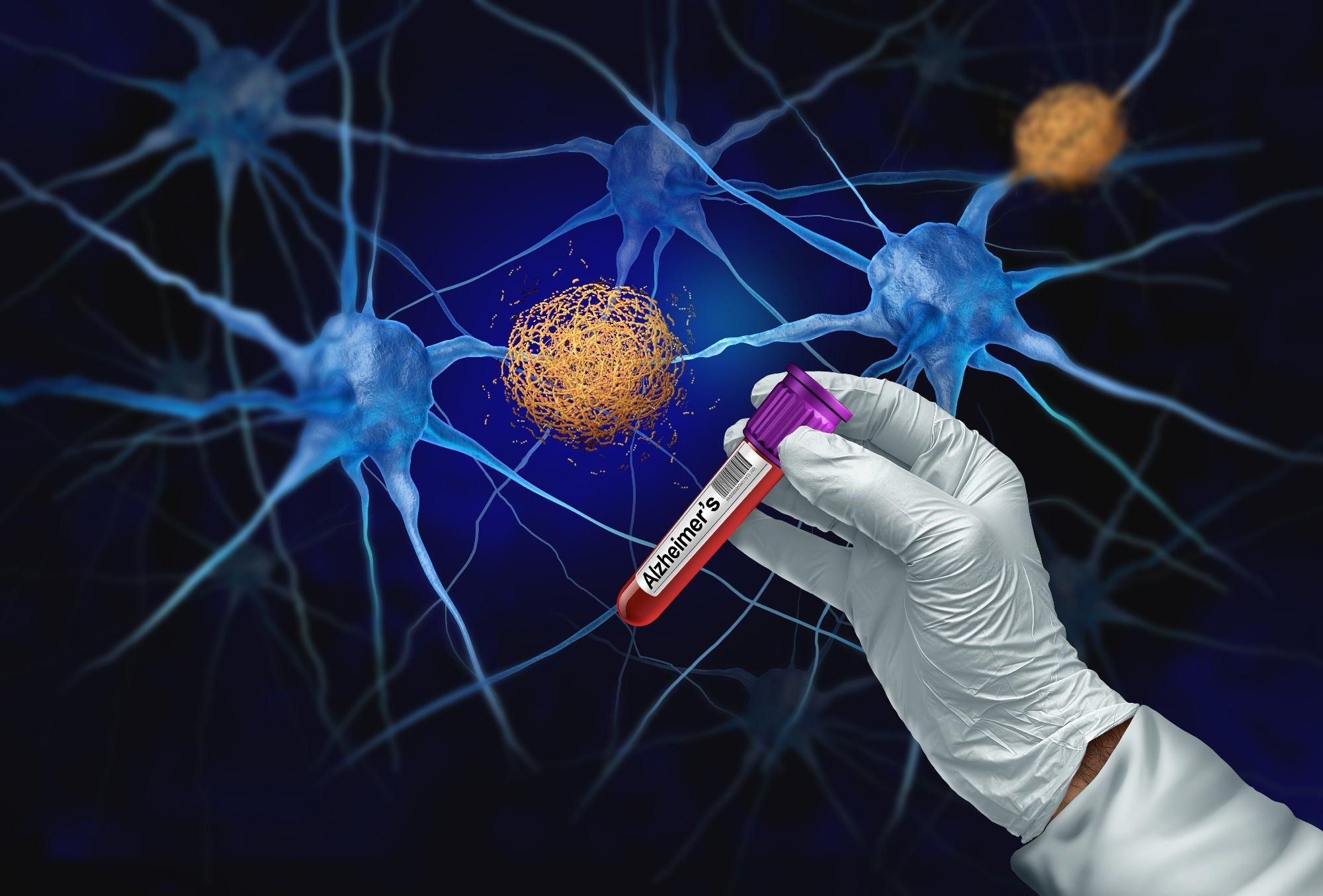
Study: Prognostic Value of Blood-Based P-Tau217 Levels for Progression to Cognitive Impairment. Image Credit: Lightspring / Shutterstock

In a recent study published in the Journal of the American Medical Association, researchers found that baseline concentrations of a blood-based protein biomarker, plasma phosphorylated tau 217 (p-tau217), were associated with the future risk of cognitive impairment in cognitively unimpaired older adults.

The study pooled data across six international cohorts (n = 2,684 participants) and found that higher baseline p-tau217 levels were associated with long-term clinical progression after adjustment for APOE ε4 status and amyloid PET imaging. While further validation in unselected, representative populations and the development of assay-specific thresholds are required before p-tau217-based estimates can guide individual prognosis, these findings may support the development of prognostic models and the design of preclinical Alzheimer disease trials.

Background

Despite decades of neurobiological research aimed at understanding the mechanistic underpinnings of cognitive decline, scientists still find the early identification of individuals at higher risk of Alzheimer’s disease (AD) and dementia a substantial diagnostic challenge.

AD pathology can accumulate in the brain long before clinical symptoms such as memory loss or confusion manifest.

While current biomarker-based diagnostic approaches, such as positron emission tomography (PET) brain scans and cerebrospinal fluid (CSF) analysis following lumbar puncture, can detect AD-related brain pathology and help identify individuals at higher risk of future cognitive decline, these methods may be costly, resource-intensive, or invasive, necessitating the development of more accessible alternatives.

Furthermore, while these approaches can help estimate the risk of future cognitive decline, they cannot establish precisely when impairment will occur.

Recent advances in ultrasensitive biomarker assay technologies are allowing researchers to develop blood tests capable of measuring AD-related proteins, including p-tau217. However, p-tau217 testing is not currently recommended for cognitively unimpaired people outside research studies or clinical trials.

About the Study

This study aimed to address these diagnostic needs by conducting a harmonized multi-cohort analysis to determine whether baseline plasma p-tau217 measurements in cognitively unimpaired older adults could be used to estimate their absolute risk of progression to cognitive impairment over 2, 5, and 10 years, as well as their rate of cognitive decline.

The pooled sample comprised standardized data from six international observational and clinical trial cohorts, totaling 2,684 older adults without cognitive impairment, with a median age of 69.6 years, an interquartile range of 66.2–74.2 years, and 63% of participants were female. Participants included in the study underwent blood collection at enrollment to quantify baseline levels of phosphorylated tau 217 (p-tau217). At baseline, 43% of participants were amyloid-positive.

Participants also had amyloid-beta PET scans within two years of baseline to measure cerebral amyloid burden and genetic testing to identify the apolipoprotein E epsilon 4 (APOE ε4) allele, a well-known genetic risk factor for dementia.

Subsequently, participants underwent annual cognitive follow-up, with a maximum duration of 13.5 years, to track their progression from cognitively unimpaired status to incident cognitive impairment, herein defined as a cohort-specific diagnosis of mild cognitive impairment (MCI), dementia, or two consecutive global Clinical Dementia Rating scores of 0.5 or higher.

Study Findings

The study’s long-term follow-up revealed that, over a median of 5.4 years, 478 of the 2,684 enrolled participants progressed to clinical cognitive impairment. Using Cox proportional hazards models, the study found that higher baseline plasma p-tau217 levels were associated with an increased risk of clinical progression. Elevated p-tau217 was also associated with faster cognitive decline on the latent Preclinical Alzheimer Cognitive Composite. However, the estimated 2-year absolute risk remained low across all p-tau217 categories, ranging from 1% to 4%.

Specifically, every standard deviation increase in p-tau217 was associated with a 38% higher hazard of progression, with a hazard ratio (HR) of 1.38, a 95% confidence interval (CI) of 1.30–1.46, and p < 0.001.

The association remained statistically significant after additional adjustment for amyloid PET imaging, with an HR of 1.32 (95% CI, 1.24–1.41; p < 0.001).

In model-based group estimates, participants whose baseline p-tau217 concentrations fell within the “very high” category, defined as at least 2.5 standard deviations above a cohort-specific reference derived from amyloid-negative participants younger than 70 years, faced an estimated 38% absolute risk of developing cognitive impairment within 5 years, with a 95% CI of 33%–43%.

The estimated risk was higher at 10 years, reaching 78% in the very-high group, with a 95% CI of 69%–84%. However, only 5% of participants had at least 10 years of follow-up, mostly from one cohort, so these longer-term estimates should be interpreted cautiously. The findings indicate that baseline p-tau217 provides clinically relevant prognostic information beyond demographic factors, APOE ε4 status, and amyloid PET, although it is not yet suitable for individualized prediction.

Conclusions

The present study extends earlier single-cohort research by providing harmonized, time-specific absolute risk estimates across multiple selected cohorts and assay platforms. A single baseline p-tau217 measurement was associated with long-term progression risk, but the study did not evaluate serial monitoring or establish Alzheimer’s disease as the cause of every impairment event.

The findings suggest that plasma p-tau217 could contribute to future models estimating group-level 5- and 10-year risk alongside clinical and biomarker information. However, these estimates are not yet precise enough to guide individual prognosis or clinical decision-making.

An important caveat is that current clinical practice guidelines recommend against p-tau217 testing in cognitively unimpaired individuals outside research studies or clinical trials, while disease-modifying treatments are still being evaluated at preclinical stages.

Beyond these current limitations, this study may inform future research on presymptomatic risk stratification and support the design of prevention trials. Because the selected cohorts differed in recruitment, assay platforms, and outcome ascertainment and had limited demographic and socioeconomic diversity, further validation in population-representative cohorts, with assay-specific thresholds and explicit consideration of comorbidities and death as a competing risk, is required before p-tau217-based estimates can guide routine care.




Source link

Keep Up to Date with the Most Important News

By pressing the Subscribe button, you confirm that you have read and are agreeing to our Privacy Policy and Terms of Use
Add a comment Add a comment

Leave a Reply

Your email address will not be published. Required fields are marked *

Previous Post
Timing of regenerative cues may be key to better healing from injury

Timing of regenerative cues may be key to better healing from injury

Next Post
A wife’s account reveals the hidden burden of young-onset Alzheimer’s caregiving

A wife’s account reveals the hidden burden of young-onset Alzheimer’s caregiving

Advertisement