

In 2023, a team of physical chemists came up with a simple-sounding challenge that would break the established boundaries of computational photochemistry: could anyone predict the plot of a molecular movie?
To make a molecular movie scientists target a compound with a pulse of light to kick off a photochemical reaction. They then collect thousands of snapshots over the next few quadrillionths of a second to show in minute detail how molecules move, energies change, and bonds break and form. Theorists are very good at figuring out what molecular storylines are hiding in raw experimental results. But they had never seriously tried to predict the results of an experiment that was yet to run.
The challenge sparked a frantic six-month race that pushed theoretical models to the limits. ‘People threw everything at it,’ recalls challenge co-organiser Basile Curchod from the University of Bristol, UK. ‘We thought that it would be hard, but not extraordinarily hard,’ adds co-organiser Todd Martínez from Stanford UniversityStanford University, US. ‘It turned out that it was harder than we thought.’
The efforts of dozens of researchers revealed aspects of theory that are worth fighting over (and which ones maybe aren’t), and showed how very close the field is to being able to map out molecular plotlines before the cameras start rolling.
When light kicks a molecule into an excited state, ‘everything that we love in ground-state theoretical chemistry goes in the bin,’ Curchod says. This is because light-induced processes can’t lean on the Born–Oppenheimer approximation like ground-state reactions do. The approximation assumes that electrons are so light and fast that they instantly adapt to the sluggish movement of the atomic nuclei. But in photochemical reactions, the movement of electrons and nuclei becomes much more interdependent and the approximation breaks down.
This makes the theoretical underpinnings of light-induced reactions fundamentally more complex. Simulating these systems helps to interpret experimental results: that’s how the ‘squiggles on the oscilloscope’ that are recorded during an experiment are turned into a coherent molecular storyline, Martínez says.
But predicting the photochemistry of a molecule from scratch, for an experiment that hadn’t been run yet, is territory that only few theorists had occasionally strayed into. ‘Everybody would ‘predict’ things after they’d already been done, which is not really what the word predict means,’ Martínez jokes. He wanted to challenge his fellow theorists to make real predictions.
Because filming molecular movies requires intense bursts of electrons or x-rays from a particle accelerator, the experiments are extremely expensive, with a large energy footprint and a long planning phase. Ultimately, knowing in advance when and how the most exciting parts happen during a reaction could make for better experiments.
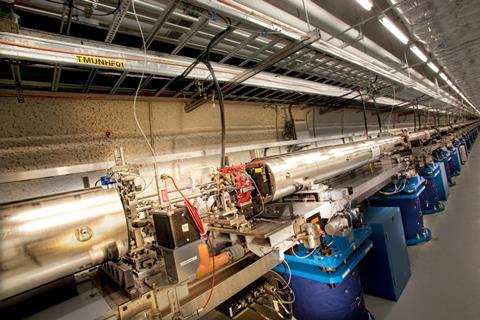
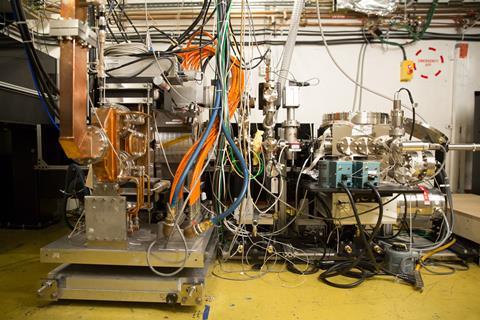
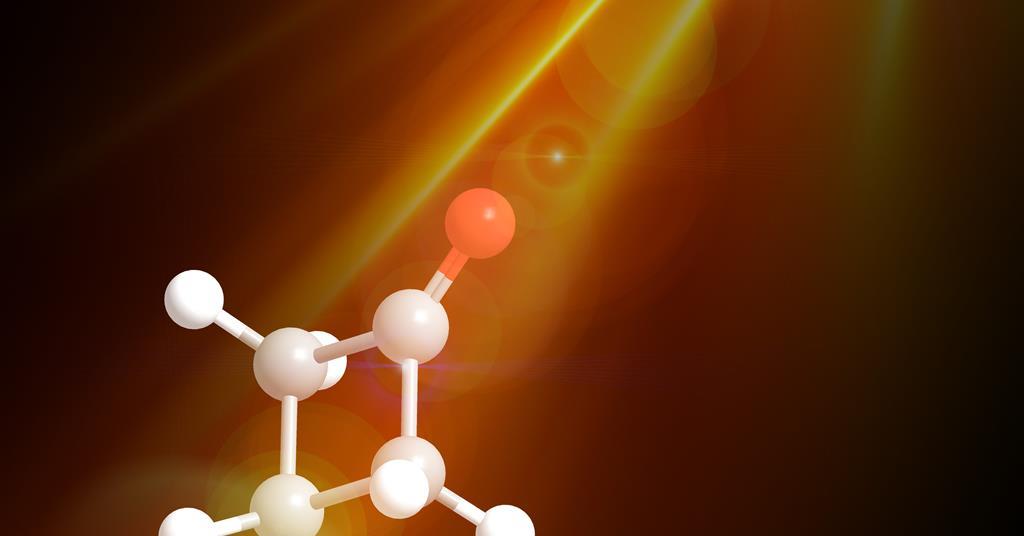
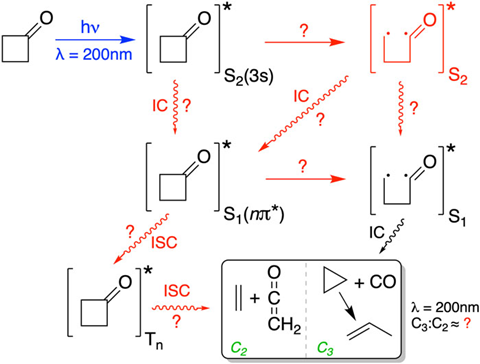
Martínez soon found out about an upcoming experiment that seemed perfect for a prediction challenge: chemists at the Slac National Accelerator Laboratory in California, US, were going to study cyclobutanone’s photochemical breakdown under 200nm ultraviolet light.
‘We’re interested in carbonyls, particularly because they’re common functional groups in secondary organic aerosols, prominent atmospheric pollutants,’ says Alice Green – now at the University of Edinburgh, UK – about her team’s reasoning for choosing cyclobutanone. ‘Studying simple cyclic carbonyls helps keep the complexity down when we’re performing and interpreting advanced experimental techniques.’
I’m sure people had nightmares about it
Cyclobutanone’s photochemistry had been studied in the past: the molecule is a prime example for the Norrish reaction. But few in-depth experiments had looked at what happens during the reaction’s first few hundred femtoseconds. ’As physical chemists, we like to pick systems that we know we can solve … nobody would [have picked] this molecule,’ Curchod says. ‘I’m sure people had nightmares about it.’
Theorists had six months to make their predictions – an extremely tight timeline. The complex calculations behind the predictions can take months even when you have access to a lot of computing power, explains challenge participant Patricia Vindel-Zandbergen from New York University, US. If things didn’t work out as planned, there was no time for second attempts: ‘You just had to pick [a method] that kind of works and then go for it,’ she says.
‘I was thinking that there would be maybe two or three contributions,’ Curchod admits. In the end, more than 70 researchers got involved, submitting a total of 15 predictions. ‘I was surprised to see how many people participated,’ Vindel-Zandbergen recalls. ’I remember seeing all the papers appearing on arXiv. I was one of the last ones to submit mine, so I was trying not to look at the others because I didn’t want them to bias my analysis.’
Then, the participants waited. For over a year, the experimentalists worked in secret and consciously avoided the theorists’ predictions.
For Green and her colleagues, not having theory to draw upon created unique problems. ‘Not really understanding exactly the signals made it challenging to know exactly what we wanted to do next,’ she says. It showed how deeply experiment and theory are intertwined. ‘We were worried about the theory relying on the experiments, but it’s actually more interdependent,’ Martínez says.
When the experimental results were finally published, theorists were eager to evaluate their predictions. ‘There was definitely some hit and miss,’ Curchod says.
Small details
Cyclobutanone, as it turns out, has a tricky little energy barrier after its initial photoexcitation 200nm that briefly traps the molecule before it returns to the ground state where it breaks down – either into ethenone and ethene, or into carbon monoxide and propene or cyclopropane. Most of the differences between the prediction attempts came from the way electronic structure methods describe this tiny barrier, Curchod explains.
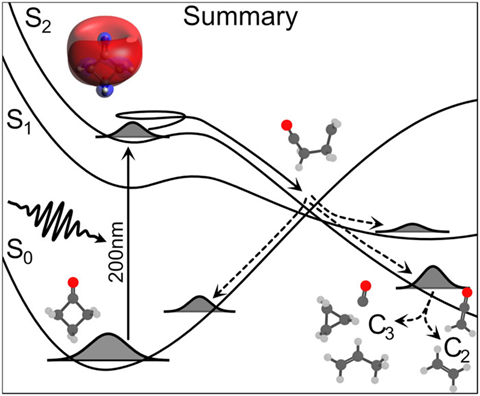
‘Some methods overestimated this barrier, meaning that the molecule will stay there forever. That’s why, in some cases, nothing happens,’ he says. ‘In other cases, everything happens, but extremely fast. The difference between them is nothing – it’s a very, very small value in correction on the barrier.’
A good prediction hinged on correctly mapping out the reaction’s potential energy surface. ‘People had underestimated the degree to which, if you get the electronic structure wrong, everything is going to be wrong,’ Martínez says. ‘What you do in the dynamics [which plots how atoms move around energy surfaces] is not going to actually have a huge effect on the outcome.’
‘It was interesting because [in the dynamics community] we have the tendency to fight over small details,’ Curchod says. ‘And yes, perhaps these small details are important, but there are bigger things to worry about.’
‘I think that it’s fair to say that in the end, no one really nailed it,’ Martínez concludes. But he and the other challenge organisers refused to rank or rate the predictions in any way. ‘I lost a lot of sleep over this because it was like: what is that going to mean when we have all these predictions and we’re not going to be able to say who the winner is? Does that defeat the whole point?’
In mid-2025, all challenge contributors met on neutral ground in Switzerland to discuss their predictions. ‘It really felt like a community event, not like a competition’, Vindel-Zandbergen recalls.
‘To see that people are so happy to be criticised, and take that criticism and develop and push further, that was really fantastic to see,’ Curchod says. ‘And the colleagues at Slac loved the fact that, instead of doing incremental work on a molecule that nobody really cares about, we may be able to write more pages in a textbook in terms of what we learned from one of their experiments.’
Curchod thinks the field is now nearly ready to make true predictions, at least for gas-phase photochemistry. ‘I predict that next time we do [this challenge], the results of the predictions will be both closer to each other and closer to the experiment’, Martínez says. ‘I predict that the third time we do this, it will basically be within experimental error – and then it will be time to change the challenge.’