


It’s a well-established fact that there’s a lot of carbon dioxide floating around and more being released every day.
Scientists have been looking to CO2 as a carbon source for making chemicals and fuels. But there has been relatively little research into using the molecule’s two oxygen atoms. “CO2 is actually an oxygen-rich molecule,” says Shoubhik Das, who researches carbon dioxide utilization at the University of Bayreuth. But the scientific literature provides relatively few examples of CO2 splitting, and nearly all of them involve energy-intensive conditions.
A team of researchers led by Das and Matthias Beller of the Leibniz Institute for Catalysis designed a light-activated iron catalyst that plucks oxygen atoms from CO2 at room temperature and uses them to oxidize carbon-carbon double bonds in small organic molecules (Science 2026, DOI: 10.1126/science.aed6068).
The new oxidation method is selective for carbon-carbon double bonds and avoids other easy-to-oxidize groups that other methods might not spare.
Oxidative cleavage, which splits one alkene into two carbonyl compounds, is a staple of synthetic chemistry. There are a number of ways to do it. Ozonolysis is the most well known; the most atom-efficient methods use molecular oxygen. But O3 and O2 both pose flammability risks when they’re used on a large scale. Das believes that CO2 could be a safer alternative.
The researchers created their catalyst by embedding iron atoms in a polymeric carbon nitride scaffold, along with 2-amino-5-(trifluoromethyl)benzonitrile to create an electron-deficient coordination environment. Iron has a high affinity for oxygen. The researchers hypothesized that the catalyst would grab onto CO2 by one of its O atoms and essentially snap the oxygen off. That oxygen atom could then be transferred to an alkene to carry out oxidative cleavage.
The reaction produces ketones or carboxylic acids, depending on the substitution pattern on the double bond. The researchers found that their CO2-based oxidation works on a variety of molecules and doesn’t alter other easy-to-oxidize groups such as alcohols, aldehydes, and alkynes.
By using carbon dioxide labeled with 18O, the researchers verified that the oxygen in the products comes from CO2. They also tracked the chemical species formed over the course of the reaction using nuclear magnetic resonance spectroscopy and mass spectrometry to verify the mechanism, which starts with O adding to the alkene to make an epoxide.
“Overall, I think it’s an excellent paper,” says Jianliang Xiao, a catalysis expert at the University of Liverpool who was not involved in the work. The conditions are “surprisingly mild” given how energetically difficult it is to break up CO2. In addition, the reaction is selective and the catalyst is highly recyclable and relatively easy to make, so other labs should be able to try it, he says.
The reaction isn’t without its downsides, Xiao cautions: it uses toxic chloroform as a solvent and proton source, and produces methane and perchloroethane—also toxic—as by-products. But he is hopeful that future work will make the reaction greener, which Das says he and his team are working on now that they have established proof of principle.
He and his group are in talks with industrial collaborators to work on making the reaction suitable for scale-up, Das says. “I am pretty sure that this chemistry will have quite high application potential.”
UPDATE
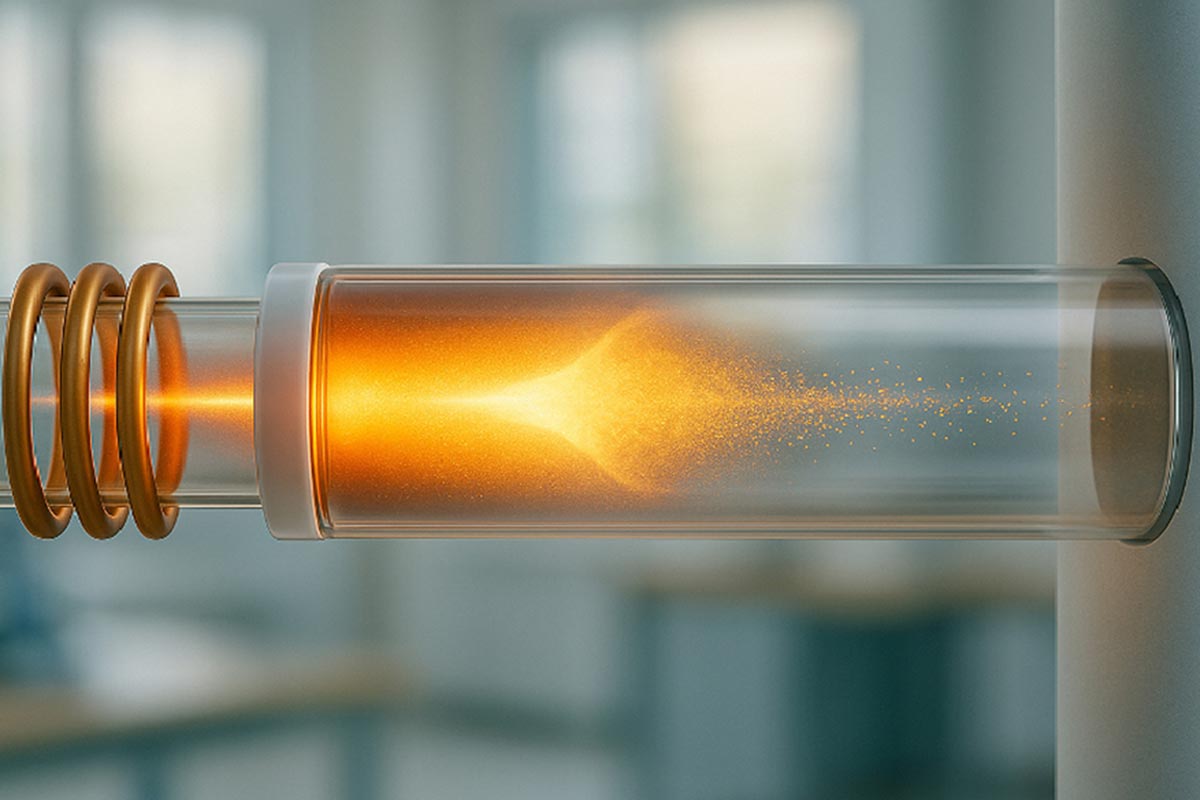
The image in this story was updated on June 9, 2026, to show a carbon dioxide molecule with the standard linear geometry, not a bent geometry.